
Banff is spectacularly good at making people who don’t hike feel as though they have somehow chosen the wrong mountain destination. You start looking at turquoise lakes and enormous peaks, then discover that half the internet wants to hand you an elevation profile, a pair of trekking poles and a three-hour climb described with the deeply suspicious phrase “pretty easy.”
The good news is that Banff doesn’t actually work that way.
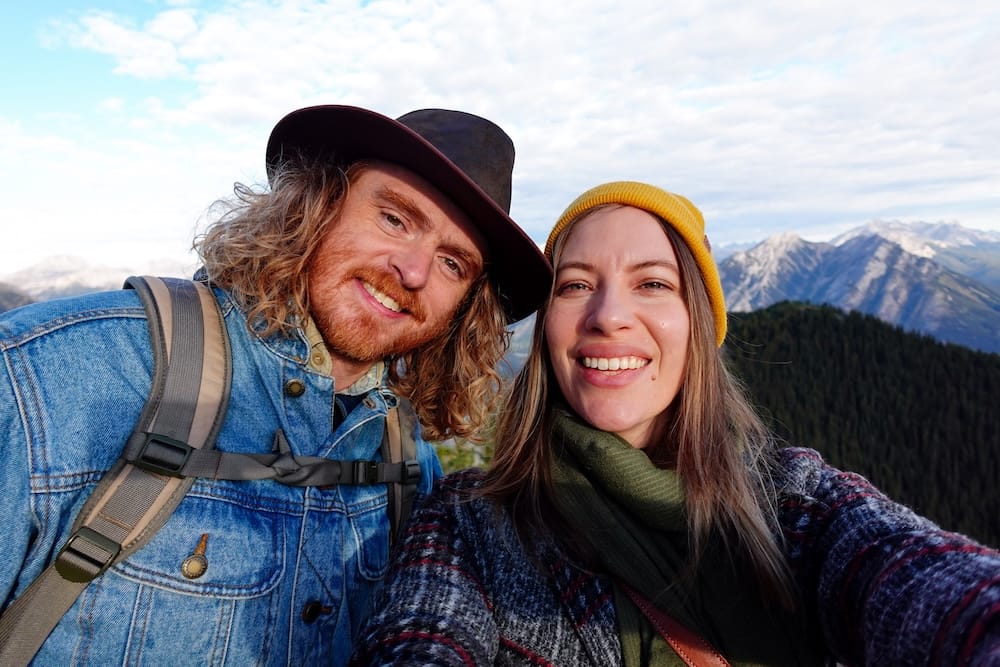
Audrey and I have explored the park on several very different trips. We’ve driven between lakes with family, wandered beside the Bow River, visited Bow Falls, ridden the Banff Gondola, explored the summit of Sulphur Mountain and visited Lake Louise and Moraine Lake more than once. I’ve also carried Aurelia up the steep Fairview Lookout trail above Lake Louise, which gave me a particularly vivid reminder that short and low effort are not remotely the same thing.
That distinction matters much more than whether somebody calls something a walk or a hike. If you don’t consider yourself a hiker, I wouldn’t approach Banff by trying to eliminate walking altogether. You’d throw out too many worthwhile experiences. I’d ask a more useful question instead: how much effort do I have to put in before I get the main scenic payoff?
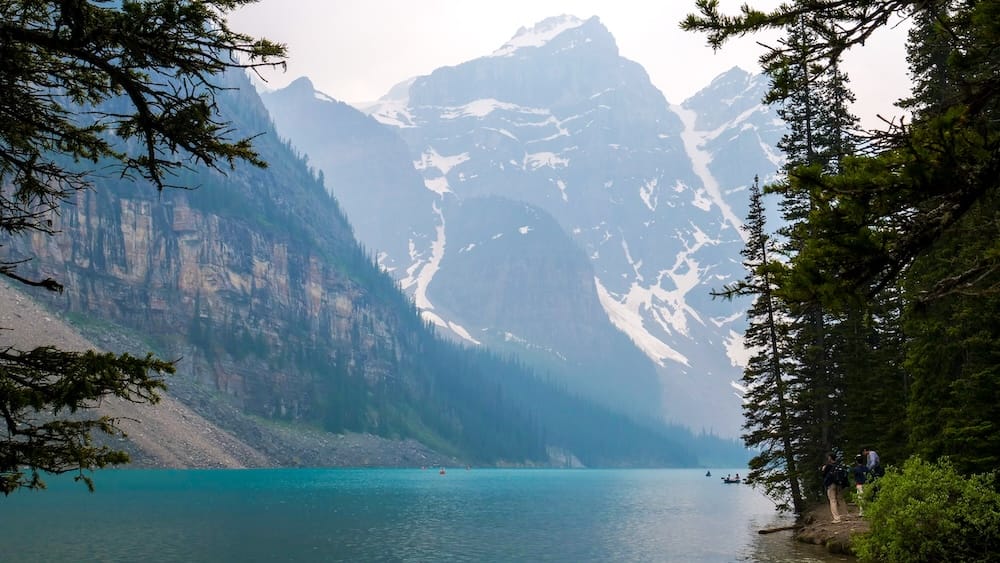
Sometimes the answer is almost none. A gondola can gain hundreds of vertical metres while you stand there doing nothing more athletic than looking out the window. Lake Louise is already Lake Louise when you arrive at the shoreline; nobody is withholding the turquoise water until you prove yourself on a switchback. Scenic roads can put you beside lakes and mountain viewpoints without requiring a trail at the other end, while walks around Banff town can be as short or as long as your legs feel like making them.
Then there are the grey areas: a boardwalk with hundreds of stairs, a short Rockpile climb or a compact trail that looks harmless on a map but gains a surprising amount of elevation. Those are exactly the places where the word “easy” starts becoming less useful.
You can see an enormous amount of Banff without making hiking the main event. You just need to know where the scenery arrives before the exertion.
Non-hiker does not mean zero walking
There is a big difference between somebody who doesn’t want to hike for three hours and somebody who wants to minimize walking almost completely. A traveller might happily wander beside a river for half an hour, cross a boardwalk or climb a few flights of stairs while having absolutely no interest in spending the afternoon marching uphill.
Those travellers are all likely to search for some version of “Banff without hiking,” but they are not asking quite the same question. It is also important not to lump non-hikers, older travellers and people with limited mobility into one imaginary group. Formal accessibility depends on the specific attraction, surface, slope, stairs and infrastructure; Audrey and I finding something easy does not magically make it easy for everybody else.
Our own Banff experiences happen to cover a useful range. The Banff Gondola did virtually all of the major climbing for us, after which we could decide how much of the summit area we wanted to explore. At Moraine Lake, I found the Rockpile so modest that I described it at the time as more of a wander uphill than a proper hike, while Audrey pointed out that it involved steps rather than scrambling. Bow River was gentler still: we could simply walk, listen to the river and turn around whenever we felt like it.
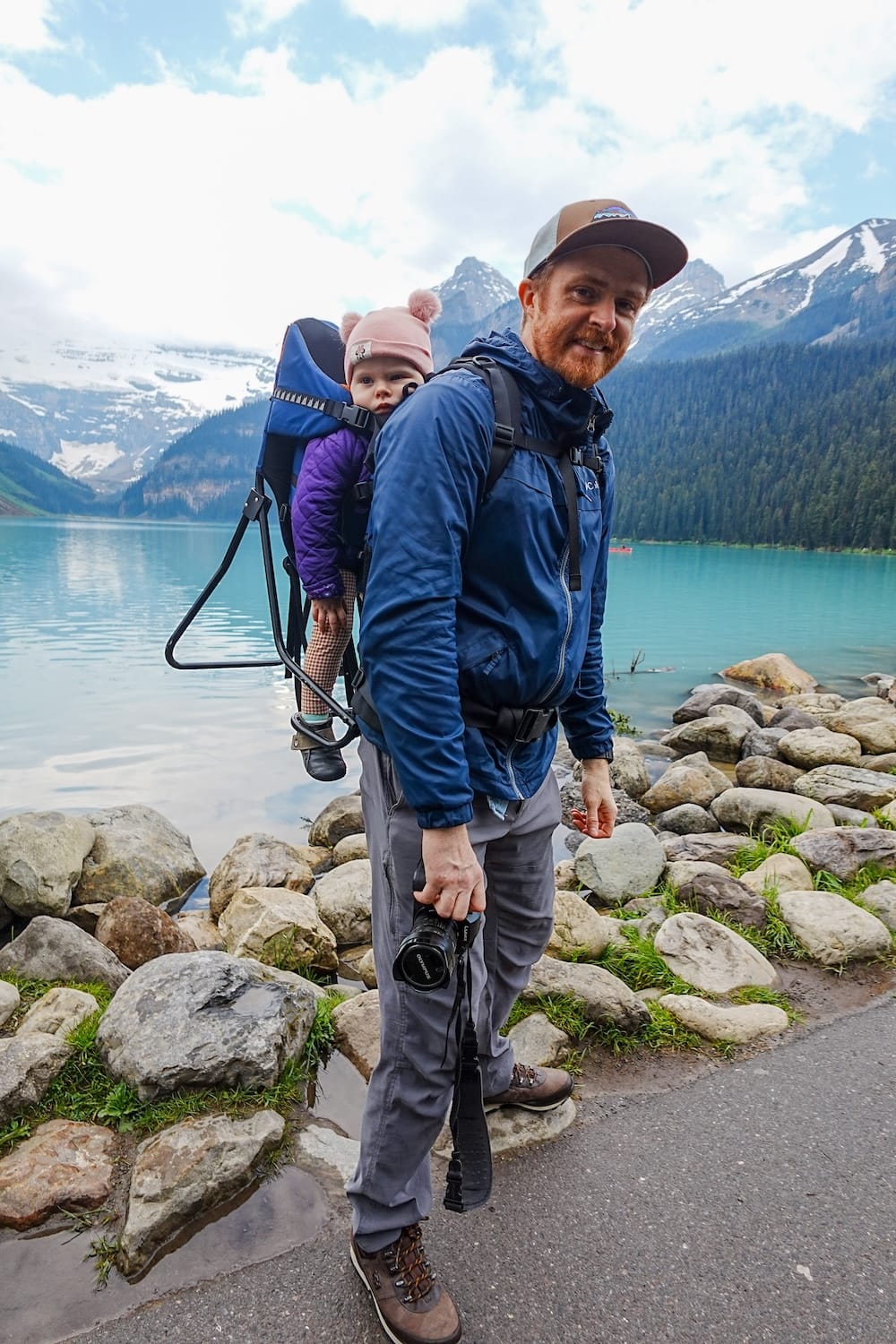
Fairview Lookout was different. The trail above Lake Louise is only 1.2 kilometres each way, which looks wonderfully innocent when written down. It also gains roughly 100 metres, and I happened to be carrying Aurelia—about 25 pounds at the time—on my back. The lookout was absolutely worth it, but “short” did not stop my legs from noticing what was happening.
So that is the standard I’d use throughout Banff. Forget the labels for a moment and look at the physical reality: what do I need to do before I get the view, and what additional effort am I choosing afterward?
Two gondolas can do the climbing for you
If your biggest concern is missing the high mountain scenery because you don’t want to climb a mountain under your own steam, Banff has a fairly convincing technological answer.
Let the gondola handle the vertical part.
Banff Gondola: the mountain without the mountain hike
Audrey and I rode the Banff Gondola up Sulphur Mountain, and it remains one of the cleanest examples I can think of where paying for an attraction fundamentally changes the physical equation.
The ride takes roughly eight minutes and gains about 698 metres of elevation, climbing from around 1,583 metres at the lower terminal to 2,281 metres at the top. That is an enormous amount of uphill removed from your day before you have done anything more taxing than getting into a gondola cabin.
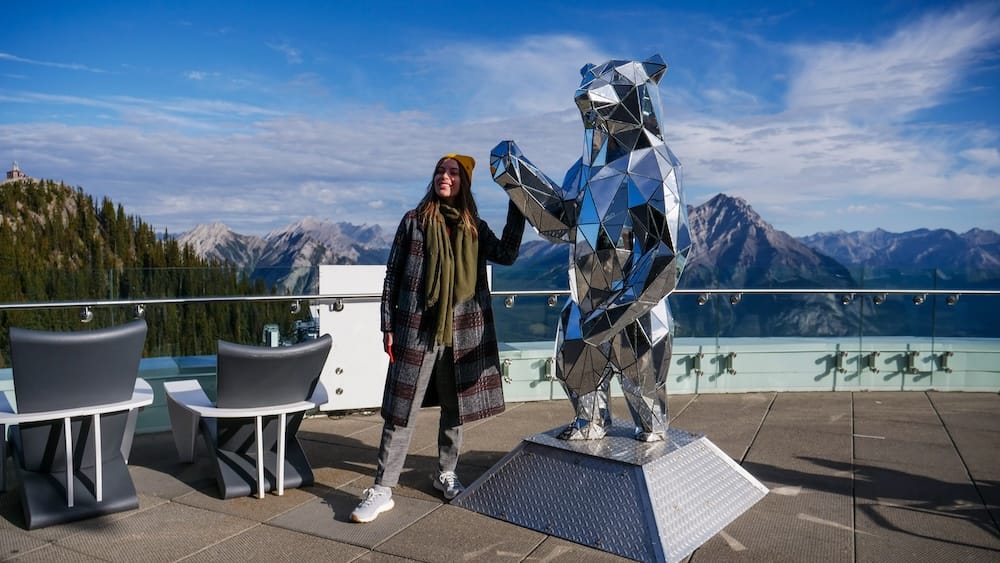
Once you reach the summit, the building itself gives you mountain views without requiring you to head straight onto a trail. There are multiple levels, elevators and places to sit, so somebody interested in the high-elevation experience does not have to complete every outdoor extension to make the ride worthwhile.
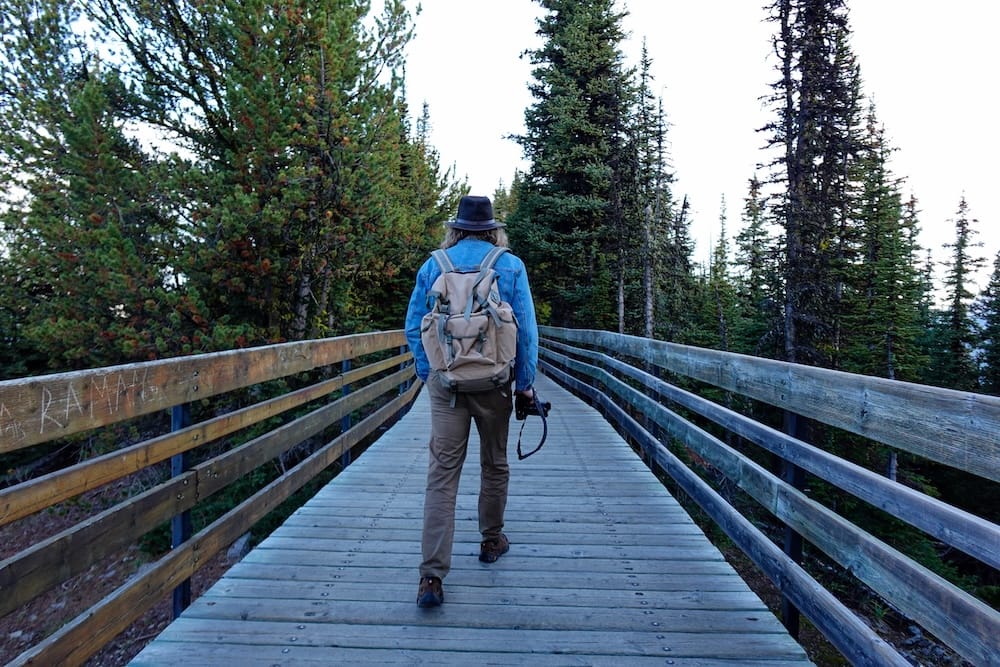
The summit boardwalk is where the physical commitment changes. Audrey and I did it, and she ended up enjoying that part much more than she expected. She joked about our “little hike” at the top of the mountain and later said the boardwalk was far cooler than she had imagined. I liked exploring farther along the summit too, but the word boardwalk makes it sound a little flatter than reality.
The current route involves 368 shallow stairs each way. For plenty of people, that will still be completely manageable; for somebody specifically trying to avoid repeated stairs, it is a very different proposition from simply riding up and enjoying the summit complex. The important thing is that you have a choice: the gondola has already delivered the big elevation gain and substantial mountain scenery before you commit to the stair-heavy extension.
If the Gondola is one of the low-effort mountain experiences you want to build around, you can check current Banff Gondola ticket availability once your dates are taking shape.
Weather can also add its own version of difficulty. Temperatures at the summit can be several degrees colder than they are at the bottom, and conditions can shift quickly. Low exertion does not mean the mountain has agreed to behave like a climate-controlled shopping centre.
Lake Louise Summer Gondola: another way up, with rougher terrain at the top
The second option is the Lake Louise Summer Gondola, which resolves another useful misconception: the Banff Gondola is not the only way to get mechanically lifted into higher mountain terrain.
We haven’t ridden this gondola ourselves, so I wouldn’t pretend to rank the actual experience against Sulphur Mountain. What I can say is that it fits this article’s job very well. For the 2026 summer season, the gondola runs from early June into October and carries visitors to roughly 2,101 metres.
As with the Banff Gondola, the machine performs the major climb. What happens once you step off is somewhat different, because the upper-mountain paths can be steep and gravelled rather than an entirely smooth, level sightseeing environment. There are optional hiking routes from the top, but they remain optional; you do not have to climb the mountain from the bottom simply to reach the upper area.
This is also a good example of why I wouldn’t casually use “gondola” as shorthand for “fully accessible.” The Lake Louise operation can accommodate wheelchairs and strollers under certain conditions, but the upper mountain itself is not completely wheelchair accessible and some of the paths are rougher and steeper.
For a non-hiker, though, the basic appeal is straightforward. Both gondolas remove the enormous uphill component. The Banff Gondola has the stronger firsthand case for us and a summit complex that can be enjoyed without committing to its 368-stair boardwalk, while Lake Louise provides another summer option for reaching upper-mountain scenery before deciding whether you want to walk farther.
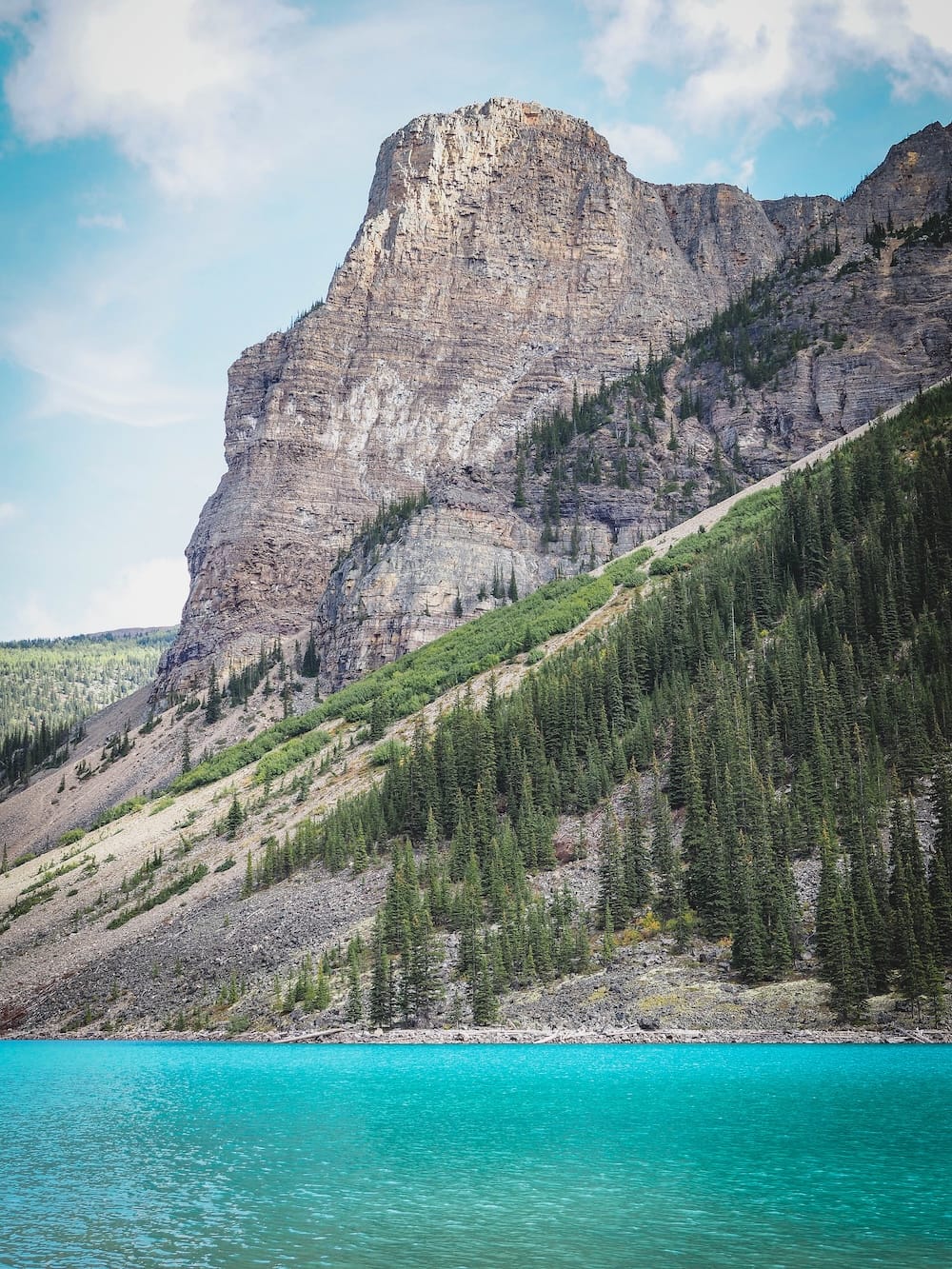
Lake Louise and Moraine Lake do not make you hike for the headline view
The two famous lakes might be surrounded by hiking trails, but the lakes themselves are not rewards reserved for hikers. That sounds obvious when written down, yet a lot of Banff planning quietly turns “visit Lake Louise” into “choose which Lake Louise hike you are going to do.”
You are allowed to just go to the lake.
Lake Louise: arrive first, decide about hiking later
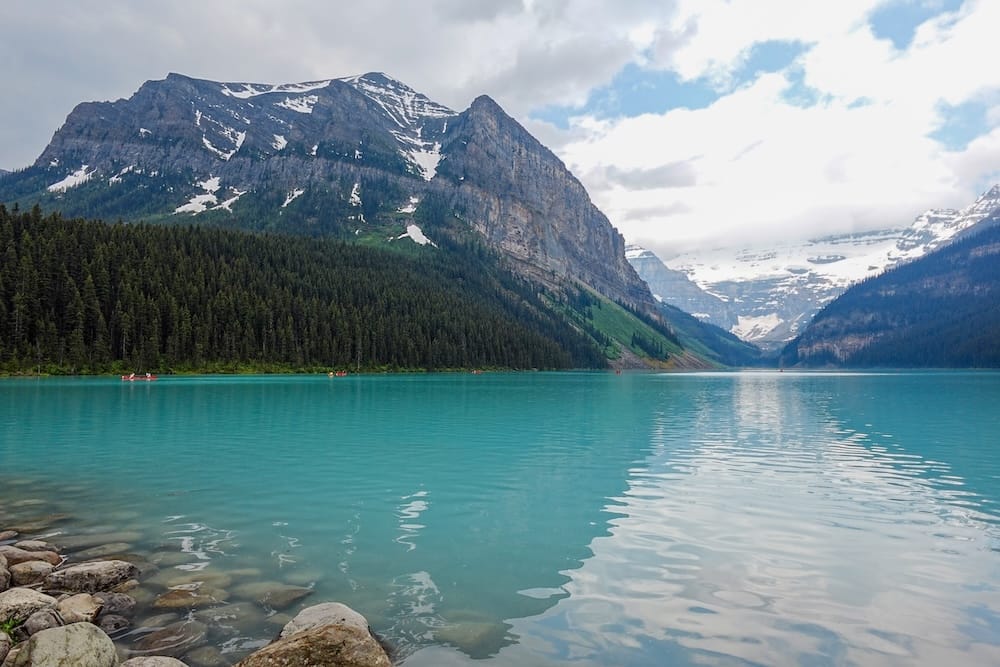
Audrey and I have visited Lake Louise on different trips, including our recent family day with Aurelia and her grandfather. On that visit, we arrived at the shoreline, looked across the turquoise water toward the mountains and took in the scene before anybody had to climb anything.
That is the basic non-hiker experience right there.
The current public transport setup reinforces it. Parks Canada shuttles terminate at Lake Louise Lakeshore, while Roam’s Route 8X also serves the lakeshore from Banff. The transport is bringing you to the attraction itself rather than depositing you at the bottom of a mountain and announcing that the real scenery begins after 500 metres of climbing. Because the access system changes over time, I would check the current Parks Canada information for Lake Louise and Moraine Lake when planning the trip.
You can still drive to Lake Louise, but I would not build a supposedly relaxed day around the assumption that you will simply arrive and park beside the water whenever you feel like it. Parking is heavily constrained: during summer 2025, roughly 75% of vehicles attempting to reach Upper Lake Louise were turned around once the limited lot was full.
That statistic belongs to that particular summer rather than functioning as some permanent daily probability, but it illustrates an important distinction. Lake Louise can be physically straightforward once you arrive while still being logistically annoying to reach.
After reaching the shore, how much farther you go is entirely your decision. You can spend time around the lake without beginning an uphill trail, or add more walking if you feel good and want another perspective.
We chose the second option on our recent visit and climbed to Fairview Lookout. I’m glad we did, but I certainly wouldn’t tell somebody who dislikes climbing that they need Fairview to make Lake Louise worthwhile. The lake does not suddenly become the budget version of itself because you stayed at water level.
Moraine Lake: difficult logistics, modest physical demands
Moraine Lake takes that distinction between logistical effort and physical effort even further. The current access rules are restrictive: Moraine Lake Road is closed to ordinary personal vehicles year-round, so getting there requires an approved transport option such as Parks Canada shuttle service, qualifying public transportation or a licensed commercial operator.
Planning that can be a pain in the backside. Walking around Moraine Lake is a completely different question.
On our recent visit, I climbed the Rockpile for the elevated view over the water. I found it extremely easy in my own circumstances and described it at the time as more of a wander uphill than what I personally think of as a proper hike. Audrey described it as steps rather than scrambling.
The current measurements help put that reaction into context. The Rockpile route is roughly a 0.7-kilometre loop with 35 metres of elevation gain, with about 30 minutes suggested for the outing.
Thirty-five metres is still thirty-five metres. If stairs bother your knees or balance, my experience should not overrule your body simply because I happened to find it easy. What matters for this article is that the Rockpile remains an optional viewpoint rather than a toll booth for seeing Moraine Lake.
Skip it and you still have Moraine Lake.
There is also a lakeshore route of roughly 1.3 kilometres one way with minimal elevation change, which gives you another way to stretch your legs without turning the stop into a serious climb.
Moraine Lake is therefore one of the strongest non-hiker choices in Banff despite having some of the most annoying access logistics. It can be surprisingly difficult to organize and relatively gentle to experience once you are actually there. If you would rather solve the transport side through one commercial booking instead of navigating the public systems yourself, you can compare current Moraine Lake and Lake Louise tour and shuttle options.
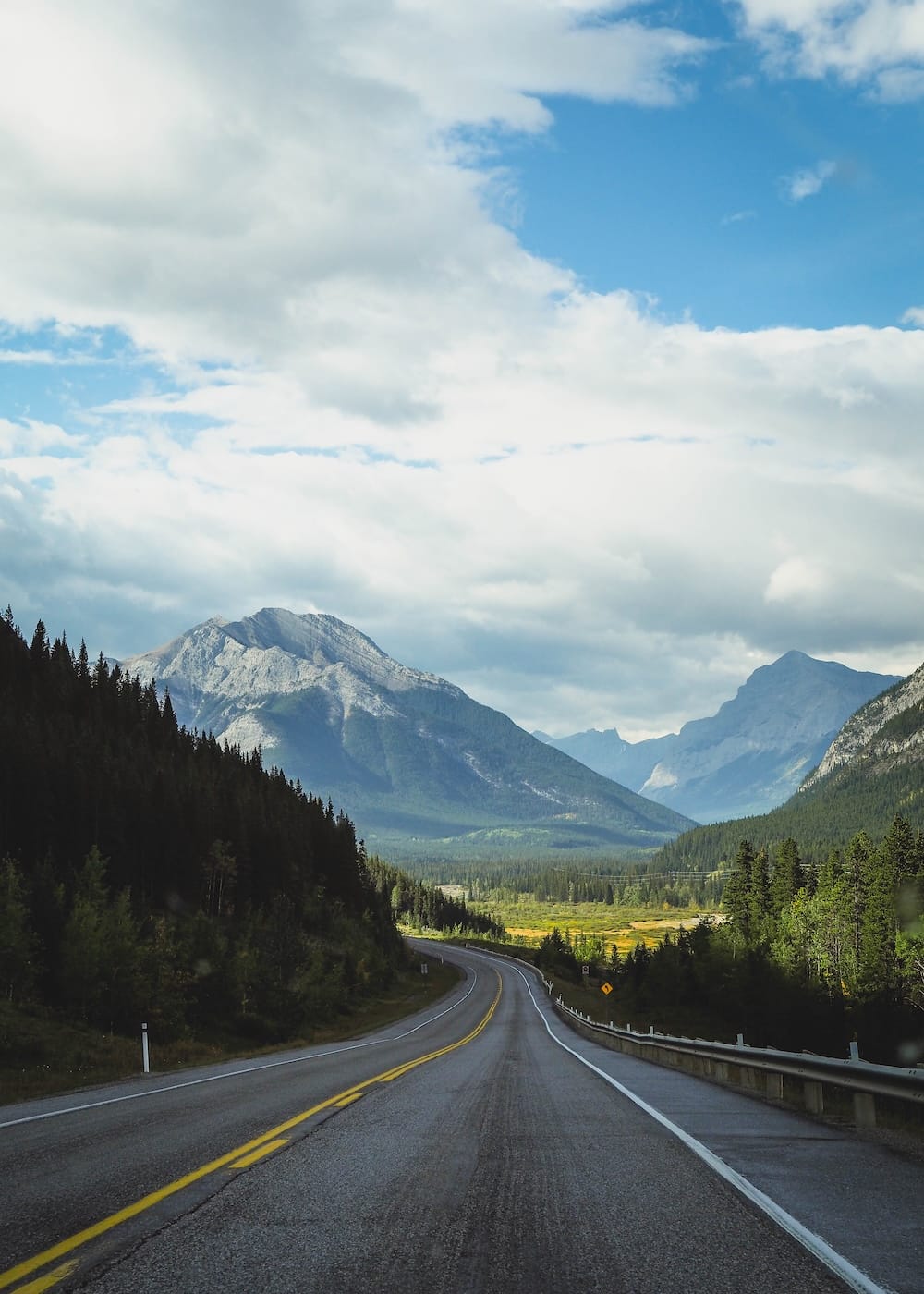
Scenic drives let the road carry more of the workload
Some of my favourite Canadian Rockies days have involved far more driving than hiking. On our older family road trip, we moved between Banff town, Cascade Ponds, Lake Minnewanka, Moraine Lake and Lake Louise, stopping for scenery rather than treating every destination as a trailhead.
The access systems around the major lakes have changed dramatically since that trip, so those old parking memories are history rather than current advice. What has not changed is the basic advantage of road-based sightseeing: Banff has places where getting out of the vehicle already feels like arriving somewhere rather than beginning the work required to reach it.
If those road-based stops are an important part of your own Banff plan and you are not already travelling with a vehicle, you can compare current car rental options around Banff National Park. A car is useful for this particular style of sightseeing, but remember that it does not solve Moraine Lake access because ordinary personal vehicles are prohibited there.
Lake Minnewanka and Cascade Ponds
Lake Minnewanka is a useful example because the lake itself is the destination. You can reach the day-use area, see the water and mountains, use the bathrooms or picnic facilities, and decide whether you want to do anything more ambitious.
Parking can fill during busy summer periods, so this is not a promise of frictionless sightseeing, but there is no requirement to turn the visit into a hike. Stewart Canyon is one optional extension, running about 1.6 kilometres one way with roughly 30 metres of elevation gain. Parts of the route become rougher with roots and rocks beyond the easier initial section, which means “we’re going to Lake Minnewanka” and “we’re hiking Stewart Canyon” should remain two separate decisions.
If you want to make the lake itself the activity without adding a trail, there is also a current sightseeing cruise. You can check current Lake Minnewanka cruise availability rather than automatically attaching a hike to your visit.
Cascade Ponds is simpler still. When our family stopped there on our road trip, the setting itself was the activity rather than a starting gate for something larger. The area currently has picnic tables, shelters, toilets and direct water access, making it well suited to a day when you want to be outside among the mountains without constantly asking everybody to lace up their hiking boots.
One seasonal restriction is worth knowing if you are driving this part of Banff: the western section of Minnewanka Loop Road currently closes to vehicles from November through May for wildlife-corridor protection. If your trip falls outside summer, check the current Banff National Park seasonal closures before building the drive into your day. That is exactly why I am wary of turning a lovely summer road-trip memory into timeless driving instructions.
Vermilion Lakes Drive: a scenic drive that stays a scenic drive
Vermilion Lakes Drive is another particularly good fit for this style of trip, although it is one I’m including from current information rather than pretending Audrey and I personally drove it during the experiences above.
The road is only about 4.3 kilometres long, operates year-round and has places to stop near the lakes, including benches, docks and interpretive points. Parking is limited in places, so you should not assume every pull-off will be sitting empty awaiting your arrival, but the basic design is exactly what I want from a low-effort scenic drive.
You drive through the scenery, stop where it makes sense and enjoy what is immediately around you. There is no unspoken second stage where the “scenic drive” turns out to be merely transportation to a two-hour hike.
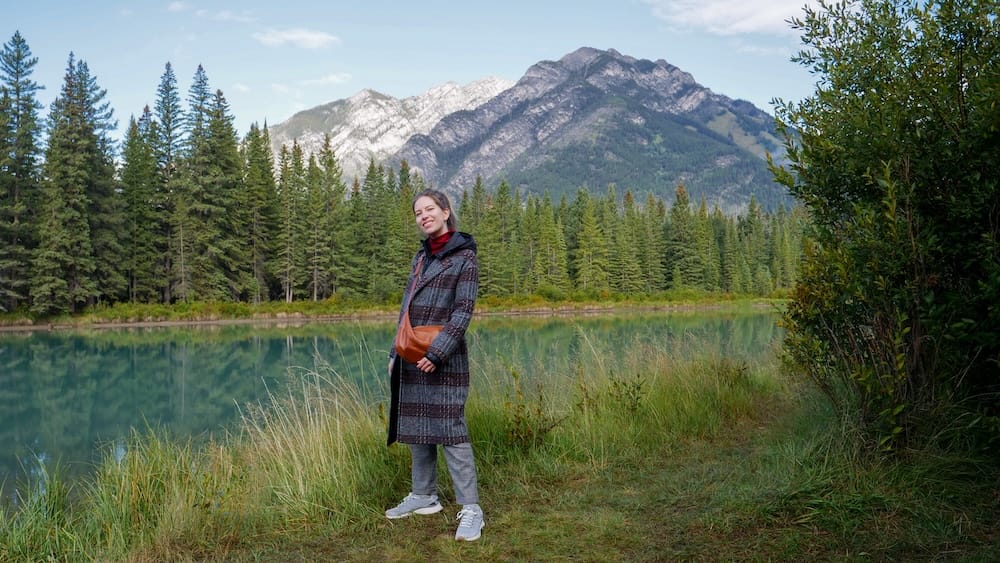
Easy walks around Banff town can stay easy
I also wouldn’t make the mistake of treating a non-hiking trip as a vehicle-only trip. Some of our easiest Banff time has been on foot, particularly around the Bow River, where you can get movement, water and mountain scenery without needing a summit at the end to justify having gone outside.
Audrey and I have wandered beside the river without much of an agenda, listening to the water and birds and stopping when we felt like it. I like that sort of walking because the distance remains yours to control. Nobody awards a medal for reaching some arbitrary endpoint; if twenty or thirty minutes feels right, you can turn around and you have still had the experience.
Bow Falls is a good example of how even an apparently simple attraction can have more than one physical version. If you walk there from Central Park in Banff, the route is approximately 1.2 kilometres one way with 50 metres of elevation gain, taking around half an hour each way. There is also a wooden staircase along the route. For many people that will still qualify as a very manageable walk, but it is more useful to know those details than to be told vaguely that Bow Falls is “easy.”
You can also approach Bow Falls by road and reduce the walking considerably.
Same waterfall, very different commitment.
That is one of the most useful habits for planning Banff without substantial hiking: don’t automatically delete an attraction because the first route you find involves more walking than you want. Sometimes there is a gentler way to experience the same place.
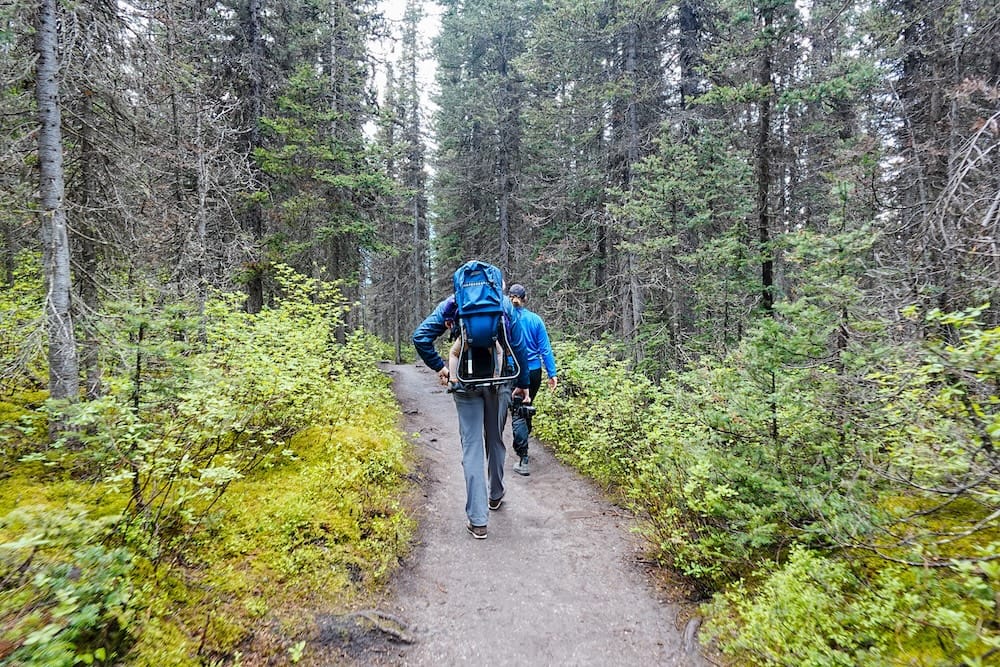
Fairview Lookout is why I don’t trust distance by itself
Fairview Lookout deserves to be in this article largely because I would not put it in the same physical category as a Bow River stroll.
We climbed it from Lake Louise on our recent trip, with Aurelia riding on my back. She weighed about 25 pounds at the time, so every uphill section came with the bonus feature of carrying what felt like a decent-sized dumbbell with legs.
The route is only around 1.2 kilometres each way, which is the number most likely to lull you into thinking very little is happening. The more revealing number is the approximately 100 metres of elevation gain packed into that distance.
It is a short, steep climb, and that description matches my experience. We reached the viewpoint, I thought it was completely worth the effort, and I was also very happy to stop climbing.
I wouldn’t automatically tell non-hikers to avoid Fairview. Somebody who dislikes long trails but does not mind a sustained uphill section might find it perfectly reasonable. The point is to identify which part of hiking you actually dislike. If distance is your enemy, Fairview is short; if climbing is the problem, those 100 metres matter considerably more than the kilometre count.
And if neither appeals to you, Lake Louise is still waiting below in all its turquoise glory.
Which Banff experiences give you the most scenery for the least effort?
I wouldn’t reduce these places to a universal “easy, medium, hard” scale because people’s bodies are too different for that to be useful. A better comparison is where the main scenic reward appears and what you have to add physically if you want more.
| Experience | Do you get the main scenery before a substantial hike? | Physical commitment | What extra effort buys you | Main friction |
|---|---|---|---|---|
| Banff Gondola | Yes | Gondola ride and movement around summit complex | Boardwalk exploration; 368 stairs each way | Mountain weather and attraction logistics |
| Lake Louise Summer Gondola | Yes | Mechanical ascent | Steeper/gravelled upper paths and optional trails | Summer-season operation |
| Lake Louise | Yes | Arrival at or near the lakeshore | More shoreline walking or uphill viewpoints | Busy access and limited parking |
| Moraine Lake | Yes | Transport to the lake | Rockpile: 0.7 km loop and 35 m gain; longer lakeshore walking | Personal vehicles prohibited |
| Lake Minnewanka | Yes | Road/day-use access | Stewart Canyon and other trails | Busy summer parking; seasonal road restriction |
| Cascade Ponds | Yes | Road-accessible day-use area | Extra wandering if you feel like it | Weather and season |
| Vermilion Lakes Drive | Yes | 4.3 km scenic drive | Short stops around docks and viewpoints | Limited parking |
| Bow River | Yes | Flexible walking | Continue for as long as you want | Distance depends on your route |
| Bow Falls | Yes | Drive close or walk from town | Town walk: 1.2 km each way, 50 m gain and stairs | Your access choice changes the effort |
| Fairview Lookout | No—the elevated view requires the climb | 1.2 km each way, 100 m gain | Elevated view over Lake Louise | Short but genuinely steep |
What I like about Banff is how often stopping before the “full” version of an attraction still gives you the reason you went there. You can ride the Banff Gondola and decide the summit boardwalk has too many stairs, stand beside Lake Louise without accepting an invitation from every trail sign pointing uphill, or reach Moraine Lake and decide that the shoreline is plenty. If you are feeling good that day, you can always add the Rockpile, a boardwalk or another short extension afterward.
The same logic works around Lake Minnewanka and Banff town. You can visit the lake without automatically continuing into Stewart Canyon, and you can spend twenty minutes beside the Bow River without transforming a pleasant stroll into some grand athletic objective.
There is nothing second-rate about travelling Banff that way. In fact, if I were deliberately planning a non-hiking trip, that would be my rule: choose places where the scenery arrives before the exertion, then add walking only when the extra view or experience feels worth it to you.
Banff gives you far more room to do that than all those elevation profiles might have you believe.
Frequently Asked Questions
Can you enjoy Banff without doing major hikes?
Yes. Banff Gondola, Lake Louise, Moraine Lake, Lake Minnewanka, Cascade Ponds, scenic drives and flexible walks around the Bow River all provide substantial scenery before you commit to a long or steep hike.
How much walking is involved after riding the Banff Gondola?
The gondola removes the major climb up Sulphur Mountain, and the summit complex itself provides mountain views. The optional summit boardwalk adds much more effort, with 368 shallow stairs each way.
Do you need to hike to see Lake Louise?
No. The main Lake Louise scenery is available at the lakeshore, and the current public transport systems bring visitors to Lake Louise Lakeshore. Uphill routes such as Fairview Lookout are optional additions.
Can you drive your own vehicle to Moraine Lake?
No. Moraine Lake Road is closed to ordinary personal vehicles year-round, so you need an approved transport option. Once you arrive, however, the lake itself does not require a substantial hike.
How difficult is the Moraine Lake Rockpile?
I found the Rockpile very easy in my own circumstances, but that is not a universal difficulty rating. The route is roughly a 0.7-kilometre loop with 35 metres of elevation gain, so the steps can still matter for some travellers.
What are some easy walks around Banff town?
The Bow River is easy to adapt because you can simply turn around whenever you have walked enough. Bow Falls can also be approached by road, or reached from Central Park on a roughly 1.2-kilometre one-way walk with 50 metres of elevation gain and a wooden staircase.
This guide is also available in Spanish. [Leé la versión en castellano: Banff para quienes no hacen trekking: góndolas, lagos, rutas panorámicas y caminatas fáciles]
This article contains affiliate links. If you book through one of these links, I may earn a commission at no extra cost to you.