
When Audrey and I rode the Banff Gondola up Sulphur Mountain, I had a fairly standard viewpoint experience in mind. We would get out at the top, find the big panoramic view over Banff, take a ridiculous number of mountain photos that would later be almost impossible to tell apart, wander around for twenty or thirty minutes and head back down.
The views alone would have made that perfectly worthwhile. These ended up being some of my favourite high-vantage views near Banff Town. What surprised me was that reaching the upper terminal did not feel like reaching the end of the attraction. It felt more like arriving at the starting point.
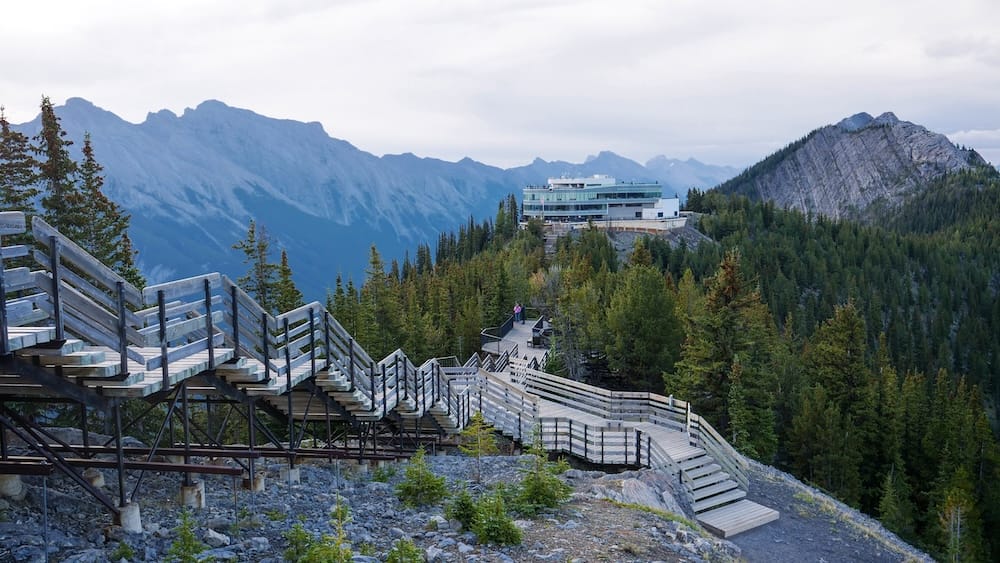
A wooden boardwalk continues along the ridge toward Sanson’s Peak, and as we followed it the experience kept opening up. There were stairs, changing perspectives, increasingly expansive mountain views and, during our visit, fewer people the farther we walked. Instead of being confined to one observation deck, we suddenly had a mountaintop to explore.
That is what makes the top of the Banff Gondola so much better than many towers and viewpoints I have visited elsewhere. Plenty of those places are impressive, but after twenty minutes you have looked north, south, east and west, moved six feet to the next window and essentially completed the experience. Sulphur Mountain gave us somewhere to go.
If you have the time and the physical ability, I would not rush the summit. I would give it roughly one to two hours and make the boardwalk part of the reason you are going up. If you already know the Gondola is going into your Banff plans, you can check current Banff Gondola ticket availability and choose your time with the summit experience in mind rather than treating the ride itself as the whole attraction.
The Summit Building Is Only the Beginning
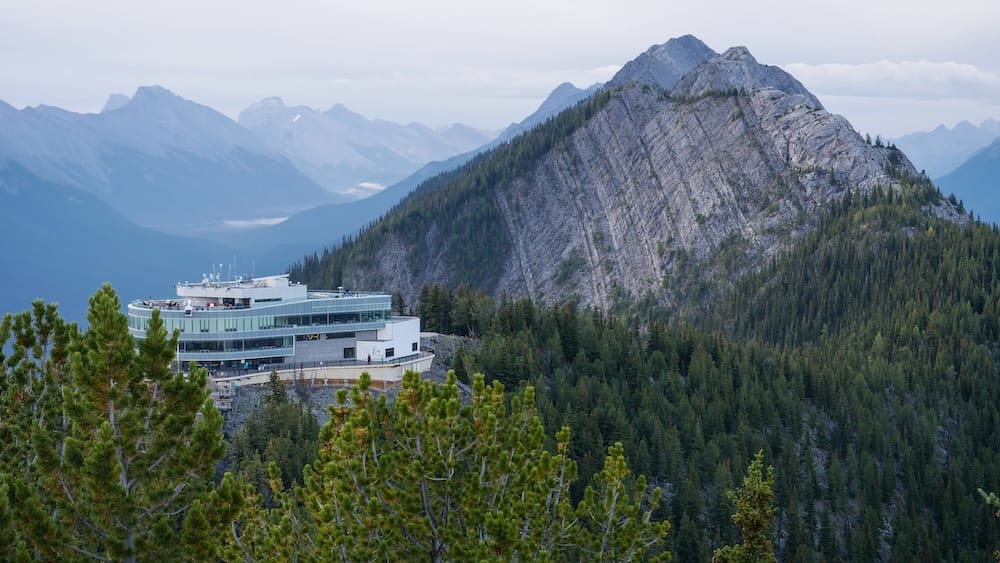
You do not have to walk far to get the payoff from the Banff Gondola. Around the upper terminal there are indoor viewing areas, interpretive spaces and a rooftop observation deck, so somebody who does not want to tackle the boardwalk can still get the elevated perspective over Banff and the surrounding mountains.
That distinction matters because the summit is not an all-or-nothing experience. If stairs are difficult for you, or you simply want a shorter visit, staying around the upper terminal can still make sense. It just would not be my preferred version.
We honestly thought the panoramic viewpoint was going to be the main event. Once we realized there was a boardwalk continuing away from the building, our little sightseeing stop turned into what we jokingly thought of as our summit hike. Calling it a hike might be generous if your normal weekends involve serious mountain trails, but it changed the feel of the outing completely.
We stopped standing around admiring the mountain and started moving through it. That was the point where the Banff Gondola became much more memorable for me.
The Sulphur Mountain Boardwalk Changes the Whole Experience
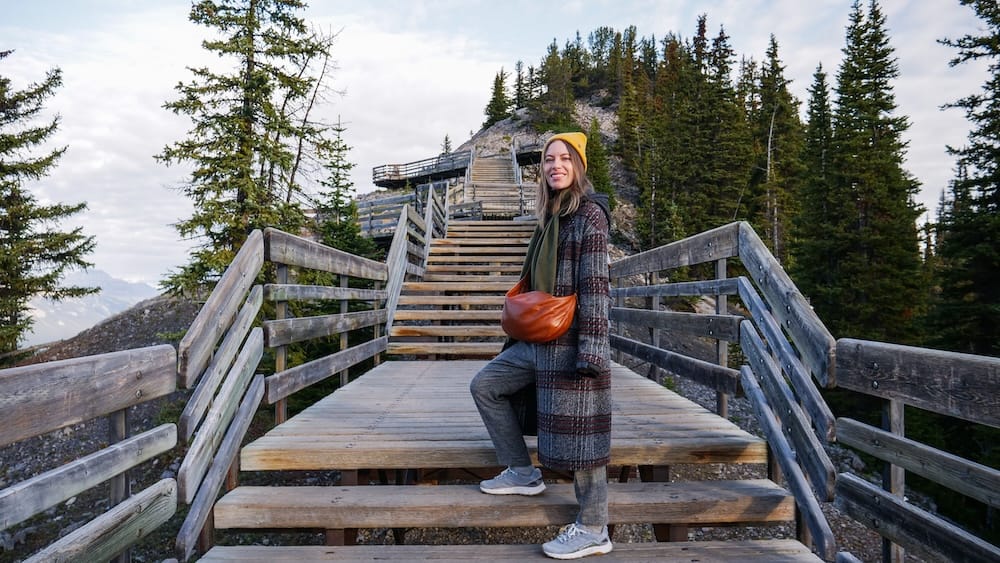
The boardwalk toward Sanson’s Peak is about 500 metres one way, so you are looking at roughly a kilometre of walking if you go out and back. That is hardly backcountry mileage, but it is enough distance to separate the summit from the usual observation-platform experience.
More important than the distance is the staircase count: there are currently 368 shallow stairs in each direction.
“Boardwalk” does not quite prepare you for that. The word makes me picture a flat wooden promenade where the greatest physical threat is dropping an ice cream cone. This is still a developed route with railings and wooden steps, but it rises and falls repeatedly as it follows the ridge. You are very much doing more than wandering around a flat viewing deck.
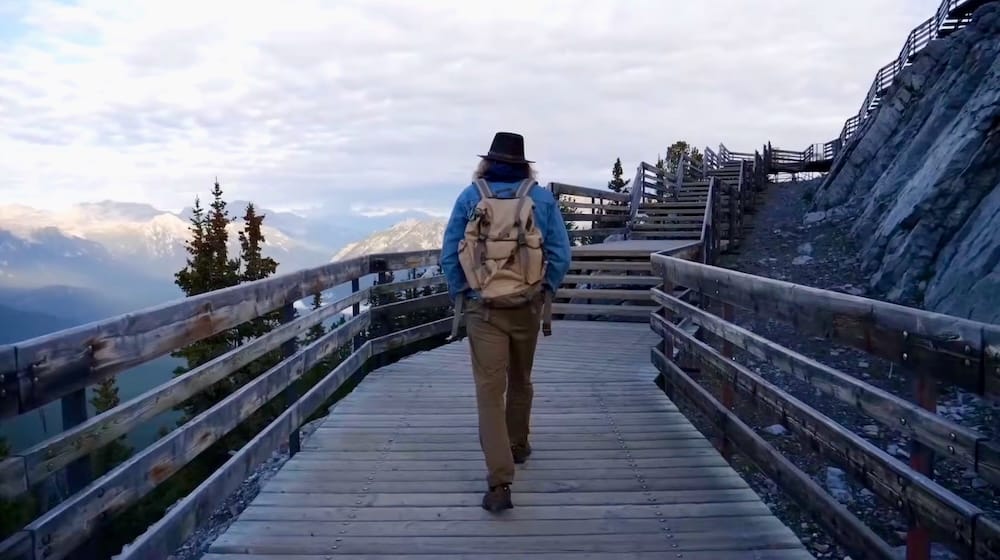
I liked that because the walking gave the summit momentum. Every time we climbed another section, there was another angle or another stretch ahead of us. We never reached that awkward viewpoint stage where you know you have basically finished, but you keep lingering because it feels ridiculous to leave five minutes after paying to get there.
The stair count is also a much more useful measure than simply calling the walk easy. Somebody comfortable with stairs may cruise through it without much thought, while somebody with bad knees or limited mobility may look at 368 steps each way and make a completely different decision.
The outdoor boardwalk is not wheelchair accessible, although the summit building itself is much more accessible, with elevators connecting its levels. That means you can still experience the Gondola and elevated viewpoints without completing the ridge walk. The two experiences should not be treated as the same thing.
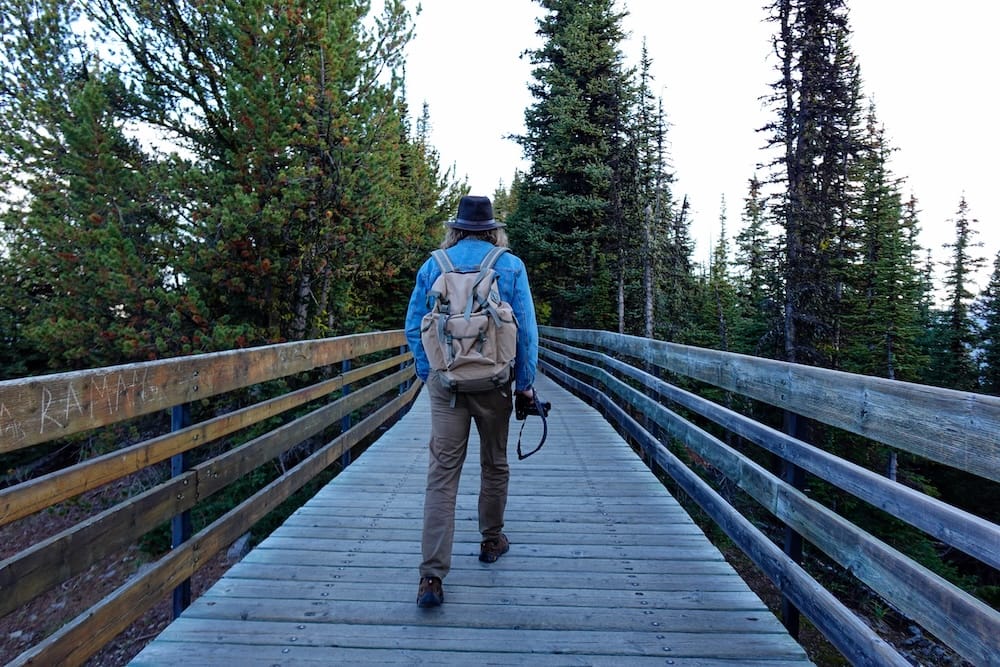
During our visit, the boardwalk became quieter as we went
Another reason I enjoyed walking farther was the space. I would never promise that you are going to find the Sulphur Mountain boardwalk empty. Banff has a remarkable ability to remind you that several thousand other people also had the brilliant idea of visiting Banff.
During our visit, though, the crowds noticeably thinned once Audrey and I started moving farther away from the immediate summit area. We climbed more stairs, continued along the ridge and eventually reached stretches where nobody else was right beside us. At certain moments it really did feel like we had the place to ourselves.
That changed the atmosphere considerably. There is a big difference between admiring a view while everyone is funnelled toward the same railing and having enough room to stop where you want, take your time and move on when you feel like it. The quieter stretches are part of what I remember so fondly, but I would treat them as something we were lucky enough to experience rather than a predictable feature of the boardwalk.
The Views Get Better Because You Keep Moving
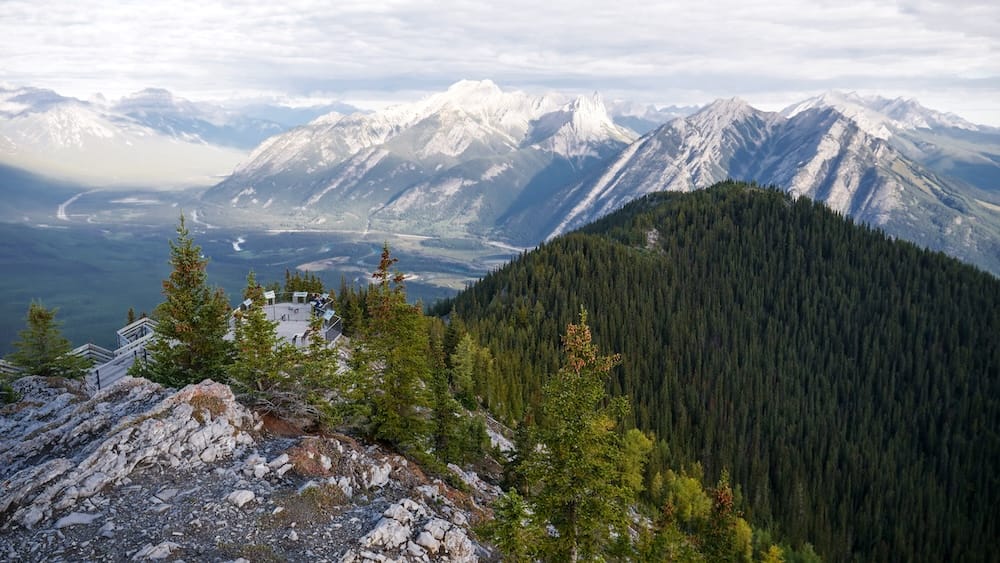
The boardwalk would be a nice extra even if the scenery stayed basically the same, but that was not our experience. The views kept changing as we moved along the ridge.
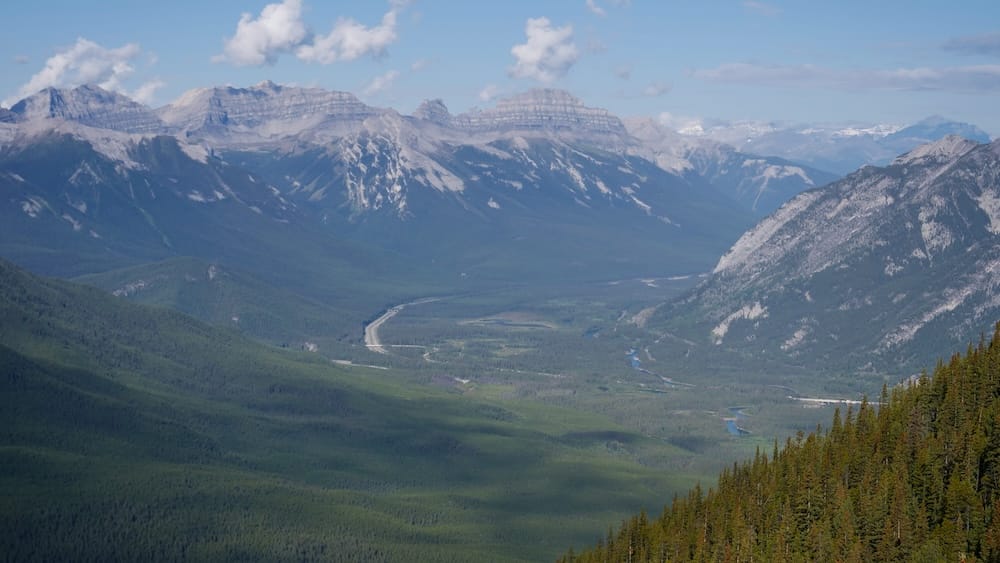
From the top of Sulphur Mountain, Banff and the Bow Valley suddenly make sense from above in a way they simply do not when you spend the day walking around town. You are no longer looking up at the mountains from the valley floor. You can look over Banff, across neighbouring valleys and, when visibility allows, pick out places such as Lake Minnewanka and Two Jack Lake within the much broader landscape.
For me, these were the best elevated views we experienced near Banff Town. I am keeping that claim deliberately local. I am not trying to place Sulphur Mountain above Moraine Lake, Lake Louise and every hiking viewpoint in Banff National Park as though Canadian Rockies scenery needs a playoff bracket. They are completely different experiences.
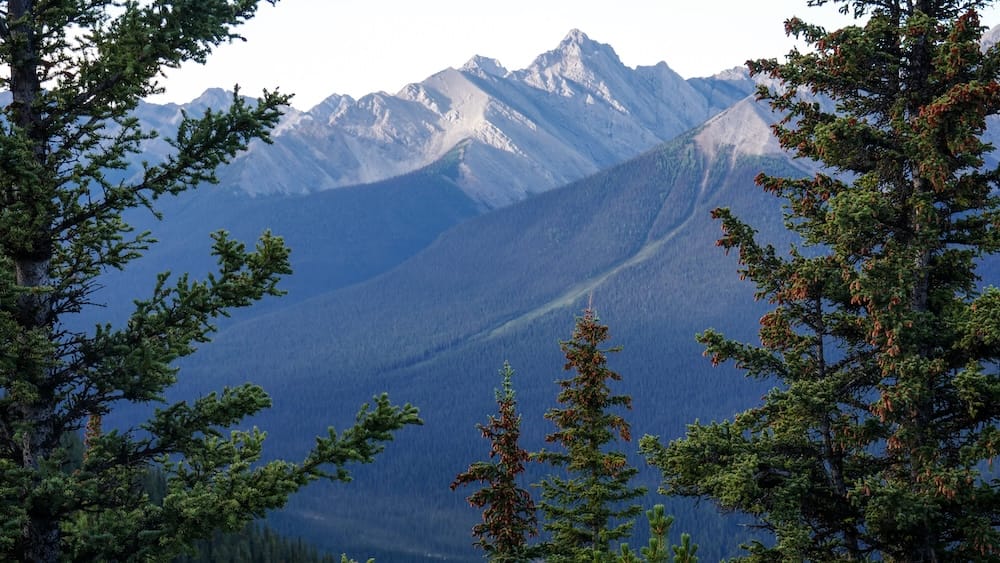
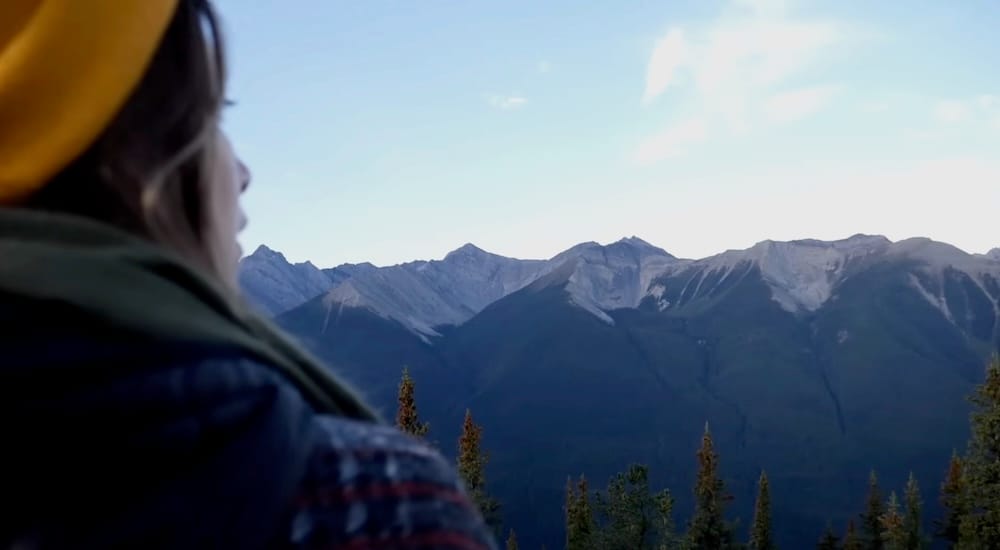
What I loved here was the perspective. We had already spent plenty of time around Banff looking at mountains. From Sulphur Mountain, we were finally looking across them, over the town and into layers of ridges and valleys beyond. It gave me a much better sense of how the landscape around Banff fits together.
The best part was that the panorama was not frozen in place. As we continued walking, our angle shifted and the views opened differently. We kept having the same basic reaction: the farther we went, the better the perspective seemed to get.
You do not gain a massive amount of additional elevation between the upper terminal and the Sanson’s Peak area, but you do not need to. Moving along a ridge changes the relationships between everything in front of you. Mountains overlap differently, sections of the valley appear and disappear, and the town shifts beneath you.
That is far more interesting to me than rotating around one observation deck and deciding which direction wins.
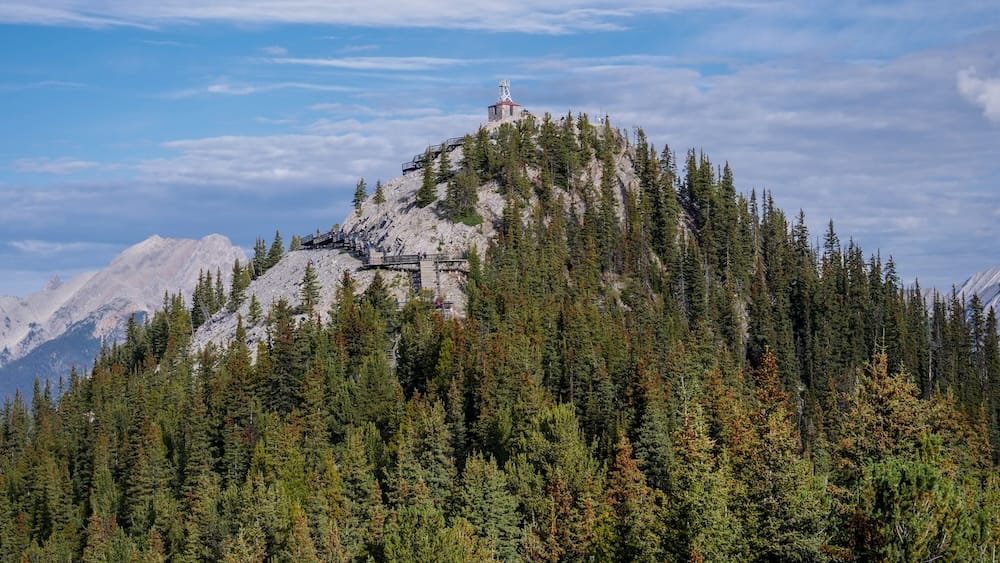
Sanson’s Peak Gives You an Actual Destination
The other thing I like about the boardwalk is that you are not simply wandering around for the sake of extending your visit. You are heading toward Sanson’s Peak.
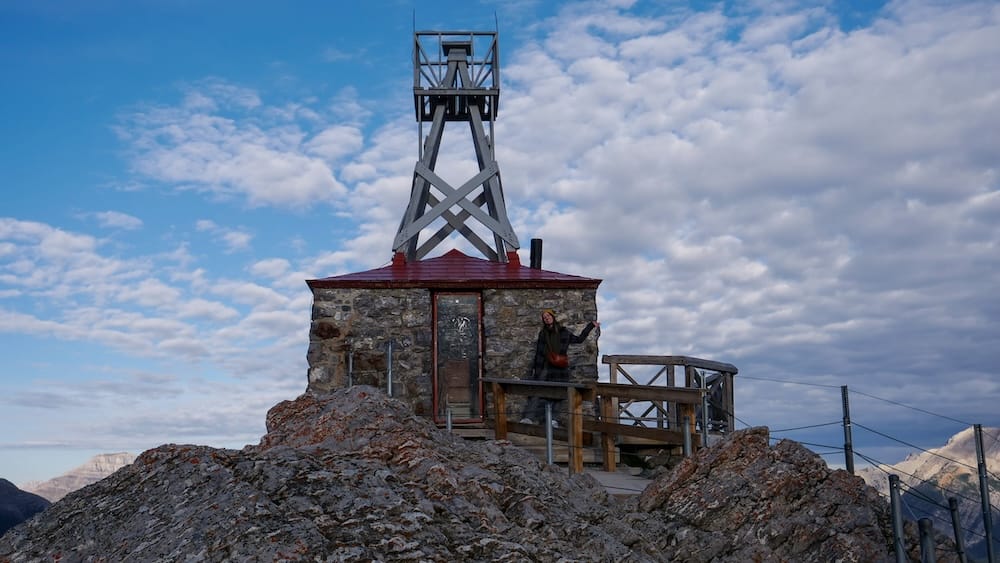
Audrey and I completed the boardwalk to Sanson’s Peak during our visit, which gave the walk a satisfying sense of progression. We left the summit complex, followed the ridge, climbed the stairs and eventually reached the historic Weather Observatory.
The peak is named after Norman Sanson, who repeatedly climbed Sulphur Mountain to make weather observations and also served for many years as curator of the Banff Park Museum. Standing up there after being whisked most of the way up the mountain in a Gondola cabin certainly makes those repeated climbs sound a little more serious.
27:03 – Cosmic Ray Station
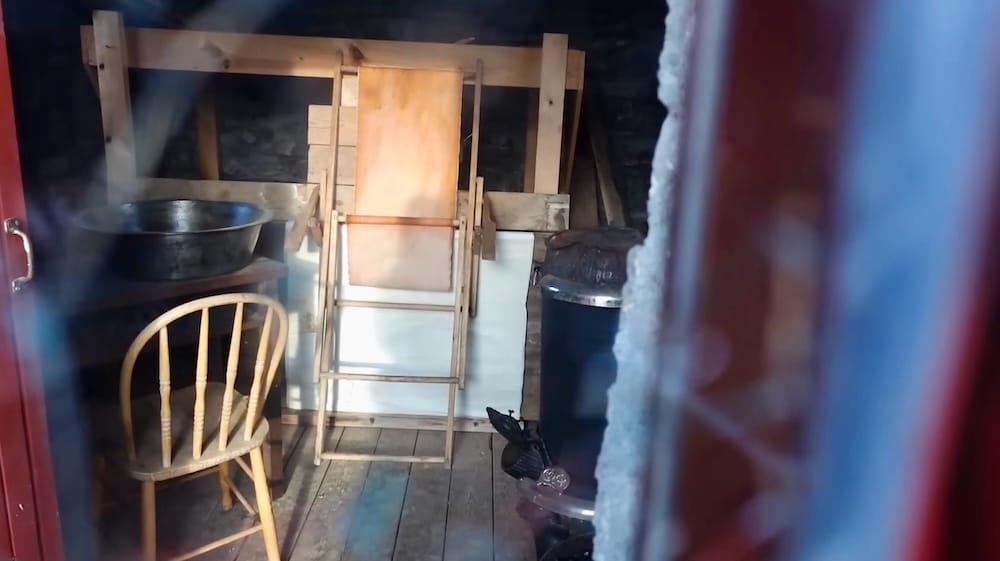
During our visit, we could approach the old Weather Observatory and look through the window at the preserved interior. I remember the room being remarkably simple: a wood-burning stove, bunks, a desk and chair. After coming from the polished modern Gondola complex, it was a fascinating contrast.
There is an important change for anyone visiting now. The public boardwalk no longer lets visitors approach the Observatory exactly as we did. The current route ends at a natural viewpoint between the Cosmic Ray Station area and the historic Weather Observatory, so older photographs and videos—including ours—can show access that you should not expect today.
The reason for continuing toward Sanson’s Peak has not disappeared, though. You still get the walk along the ridge, the changing perspectives and the feeling of moving toward a destination rather than simply circling the summit building.
One other point is worth clearing up because the names can make the geography confusing: Sanson’s Peak is not the true summit of Sulphur Mountain. The boardwalk heads toward the Sanson’s Peak area, while reaching Sulphur Mountain’s actual summit involves continuing by a different route.
For most Banff Gondola visitors, the boardwalk toward Sanson’s Peak is the obvious outdoor extension of the experience.
How Much Time Should You Spend at the Top?
This is where I think it is easy to underestimate the Banff Gondola. If you imagine the summit as a single viewpoint, twenty or thirty minutes sounds perfectly reasonable. Ride up, take the panorama in, get your photos and leave.
You can absolutely visit that way, particularly if you are short on time or the stairs are not a good fit. I just think you would be missing the part that made the attraction stand out for us.
The current planning baseline for the Gondola plus boardwalk is around 1.5 hours for the broader experience. If I were arranging my own day again, I would personally be comfortable protecting roughly one to two hours at the summit itself if the schedule allowed it.
That is not me claiming our original summit visit lasted exactly that long. I did not time it. It is simply the amount of space I would give myself now because I know where the value was for me.
A short visit gets you the immediate panorama. Completing the boardwalk adds roughly a kilometre of walking, hundreds of stairs and multiple stopping points. An unhurried visit adds something harder to quantify: the freedom to stop because the view is good instead of because your itinerary says you have seven minutes remaining.
That is usually where my travel planning goes wrong. I schedule the impressive thing correctly and then forget that I might actually want to stand there enjoying it. I would rather finish twenty minutes earlier than expected than spend the boardwalk repeatedly checking the time because I booked something else too close behind it.
If that slower version sounds more like your style, it is worth choosing a Gondola time that leaves enough room around the rest of your day. You can see current Banff Gondola ticket times before locking the summit into your itinerary.
What I Would Do at the Top of the Banff Gondola
If I went back, I would not overcomplicate the summit. I would enjoy the first views around the upper terminal, then head onto the boardwalk toward Sanson’s Peak if everyone in my group was comfortable with the stairs.
After that, I would let the mountain dictate the pace more than the clock.
The views were what convinced us to ride the Banff Gondola, but the freedom to keep exploring was what made the summit better than I expected. The scenery changed as we walked, our particular visit became quieter farther from the terminal, and the experience never felt confined to one observation platform.
That is why I would give the top more time than I normally give a tower or paid viewpoint. The Gondola gets you onto Sulphur Mountain, but simply arriving is only part of the experience.
The good part is realizing you can keep going.
Frequently Asked Questions
What can you do at the top of the Banff Gondola?
The upper terminal has indoor viewing areas, interpretive spaces and a rooftop observation deck, but I would also walk the Sulphur Mountain Boardwalk toward Sanson’s Peak if the stairs suit everyone in your group.
How long should you spend at the top of the Banff Gondola?
I would allow roughly one to two hours at the summit if you want an unhurried visit with the boardwalk and time to stop for views. A much shorter visit is possible if you stay around the upper terminal.
How long is the Sulphur Mountain Boardwalk?
The boardwalk toward Sanson’s Peak is about 500 metres one way, so completing it out and back involves roughly one kilometre of walking.
How many stairs are on the Banff Gondola boardwalk?
There are currently 368 shallow stairs in each direction. That is why I think the stair count is more useful than simply describing the boardwalk as an easy walk.
Is the Sulphur Mountain Boardwalk wheelchair accessible?
No. The outdoor boardwalk is not wheelchair accessible, although the summit building has elevators connecting its levels, so visitors can still enjoy elevated viewpoints without completing the ridge walk.
Can you still walk right up to the historic Weather Observatory?
Not in the same way we did during our visit. The current public route ends at a natural viewpoint between the Cosmic Ray Station area and the historic Weather Observatory.
Is Sanson’s Peak the true summit of Sulphur Mountain?
No. The Banff Gondola boardwalk heads toward the Sanson’s Peak area, while reaching Sulphur Mountain’s true summit involves continuing by a different route.
This guide is also available in Spanish. [Leé la versión en castellano: Qué hacer en la parte superior de la Banff Gondola: pasarela, vistas y Sanson’s Peak]
This article contains affiliate links. If you book through one of these links, I may earn a commission at no extra cost to you.