
Banff has a funny geography problem. People say they’re “going to Banff,” but that can mean anything from drinking coffee on Banff Avenue to standing beside Moraine Lake or driving hours north along the Icefields Parkway. All of those belong to a bigger Banff trip, but they’re not the same thing as actually spending time in Banff town.
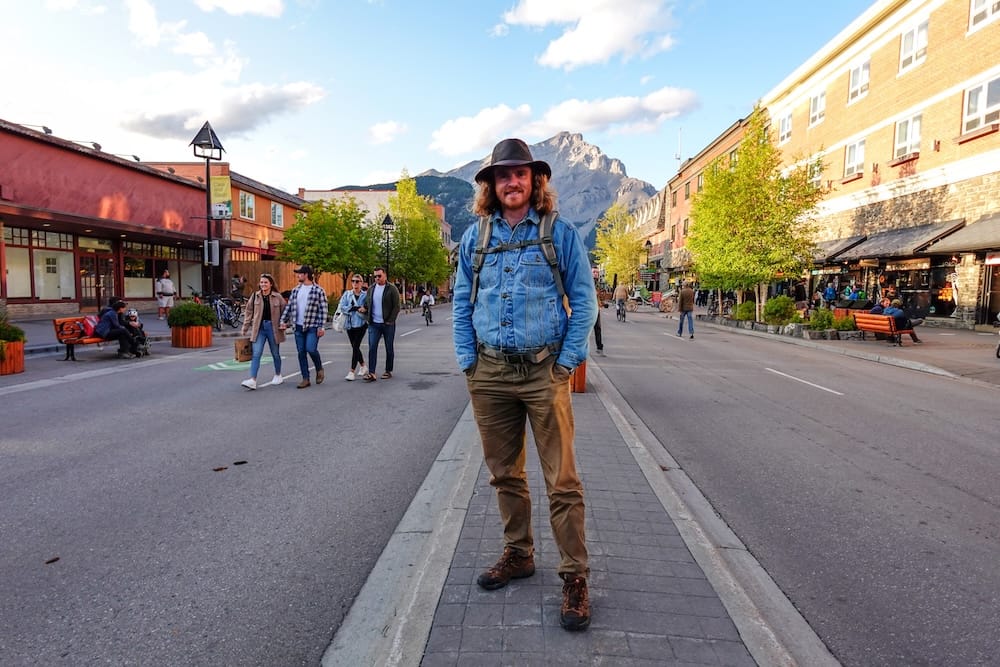
I’m drawing that line quite strictly here. You won’t find Lake Louise or Moraine Lake on this list, and I’m not sneaking in the Banff Gondola, Upper Hot Springs or Cave and Basin just because they’re nearby and everyone mentally throws them into the same Banff bucket. This is about what you can genuinely do in town.
And Banff town deserves that treatment. Audrey and I have visited several times, and some of our most enjoyable hours here haven’t involved chasing another giant mountain attraction. We’ve wandered beside the Bow River without much of a plan, explored museums that turned out to be far more interesting than anticipated, eaten everything from elk burgers to pho, and paddled upstream in a canoe large enough to require a small committee.
The advantage of Banff town is that you can slow down without completely leaving the Rockies behind. Mountains still surround you, the Bow River cuts straight through town, and you can mix scenery, museums, food and a few paid activities without turning every part of the day into a transportation project.
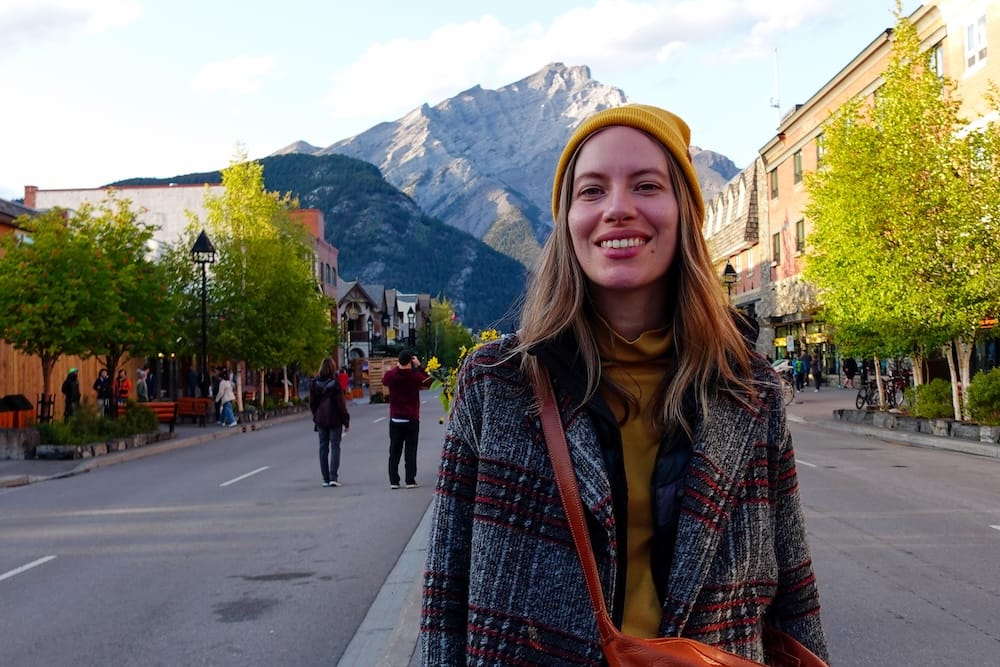
Walk Banff Avenue and Bear Street first
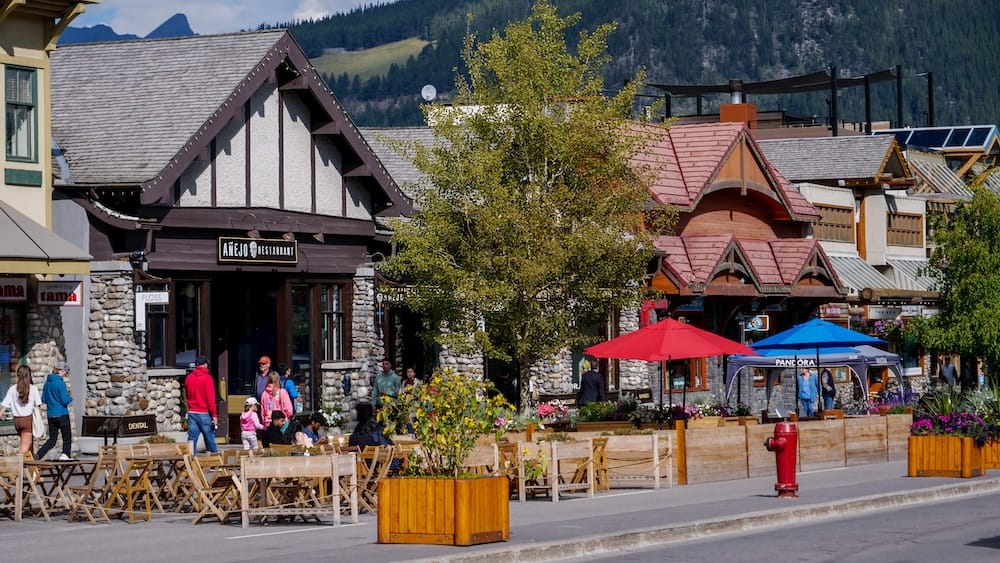
Most visits eventually pass through Banff Avenue, so it makes sense to begin there. This is the commercial spine of town, lined with restaurants, cafés and shops while Cascade Mountain sits rather dramatically at the end of the street, making even fairly ordinary errands look more impressive than they have any right to.
One thing has changed from a few years ago: Banff Avenue is no longer the seasonal pedestrian zone it became during and after the pandemic. Vehicles returned in 2024, so don’t arrive expecting the entire downtown core to be one giant walking promenade.
Bear Street, one block over, is a nicer place to slow down. It has been redesigned as a curb-free pedestrian-priority shared street, which means walkers get more space and the whole area feels less dominated by traffic. It isn’t completely pedestrian-only—cars and cyclists still use it—but I prefer the scale of it.
I wouldn’t devote hours to wandering the commercial streets unless shopping is genuinely your thing. Their bigger value is orientation: walk around, get a feel for downtown, decide where you might want to eat later, and then start branching toward the river and the quieter parts of town.
Parking is another reason not to keep moving the car around. Downtown parking can become expensive during the busy season, whereas the Banff Train Station has roughly 500 spaces where you can park free for up to nine hours. From there it’s about an eight-minute walk into downtown and only a couple of minutes to the Bow River Trail. For a town covering less than four square kilometres, constantly relocating your vehicle feels like a lot of effort to save very little walking.
If you’re deliberately choosing Banff town because you want restaurants, museums and easy walks close at hand, it also makes sense to stay in town rather than repeatedly driving in from another base. I haven’t personally stayed at a Banff town hotel, so I wouldn’t single out one property from experience, but you can compare current Banff accommodation and rates on Booking.com based on your dates and budget.
Wander along the Bow River with no real plan
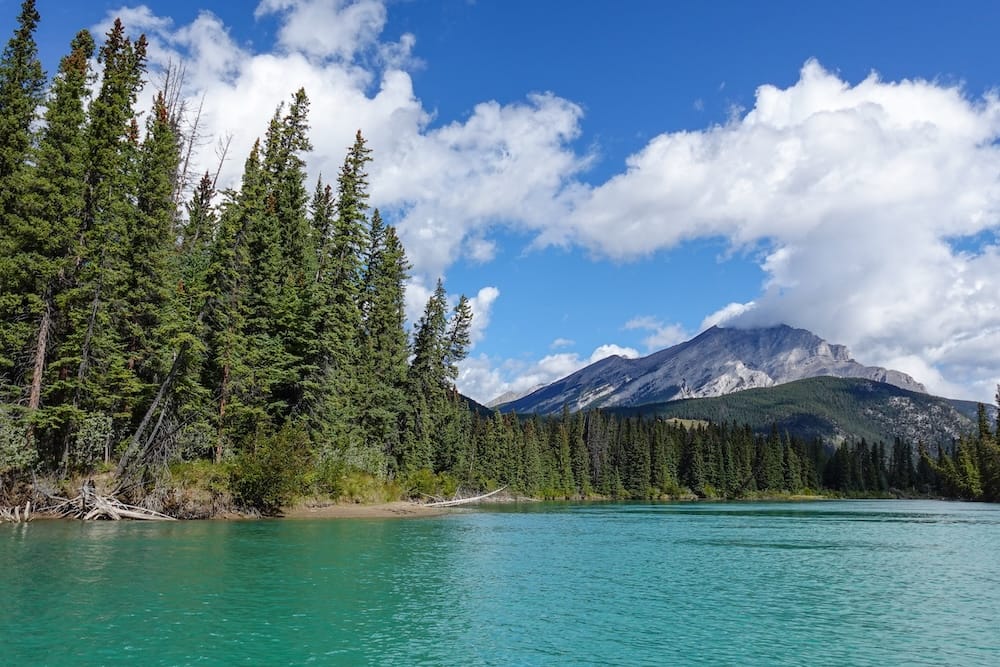
Some of my favourite time in Banff has involved remarkably little ambition. On one visit, Audrey and I started wandering along the Bow River without many preconceived plans. We crossed bridges, followed pathways, looked at artwork that had been installed along the river at the time and generally let the morning unfold without trying to optimize it.
We even commented that these unplanned mornings can sometimes be the most fun, and that still describes how I feel about the Bow River. Banff can become aggressively scheduled if you allow it: hotel reservation, transportation, dinner reservation, timed attraction, various schemes to beat everyone else to the same famous viewpoints. Before long, you’ve somehow turned a national park holiday into project management.
The river gives you permission to stop doing that. The Bow River Trail runs only a few steps from downtown but quickly feels calmer than Banff Avenue. Much of it is paved, there are benches along the route, and you can make the walk as short or as long as your day allows. One section running northwest from the Muskrat Street access is specifically identified as wheelchair-friendly, although that shouldn’t be taken to mean every stretch of the entire trail has the same accessibility.
We returned to the river corridor on another Banff visit as well. A local suggested that we cross a bridge and take a quieter side path, and within minutes we were walking through trees with the sound of birds and flowing water replacing the traffic of downtown. That contrast is part of what makes Banff town better than people sometimes give it credit for. You don’t need to get back into a car and drive toward another famous lake every time you want to feel surrounded by nature.
Stop in Central Park
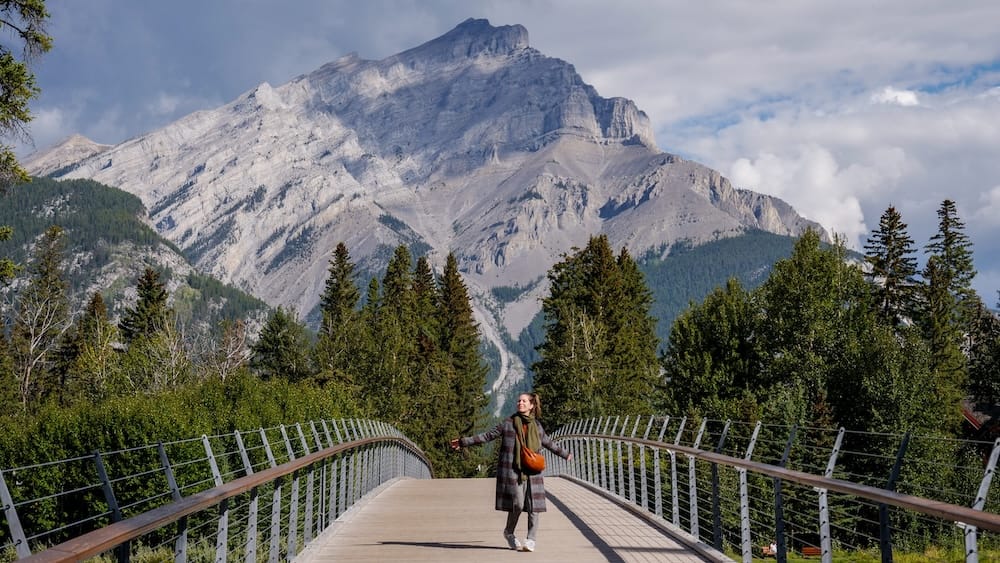
Central Park sits beside the Bow River and is useful in a wonderfully ordinary way. There are picnic tables, washrooms, water-bottle filling stations, paved pathways and a natural playground, which makes it particularly handy if you’re travelling with kids or just need somewhere to eat lunch without attaching another restaurant bill to the day.
The Nancy Pauw Bridge crosses the river here as well, giving pedestrians and cyclists another connection through the centre of town. When Audrey and I walked this area on an earlier visit, Banff’s Art in Nature installations added sculptures and other artwork to the riverside walk. We enjoyed stumbling across them, but don’t plan a current visit around that experience: the program is paused during 2026 while its future format is reconsidered.
I’d still leave some unscheduled time for the river. You may not come away calling it the single most spectacular attraction in Banff National Park, but that isn’t really the point. It’s one of the easiest places in town to stop treating your holiday like a race.
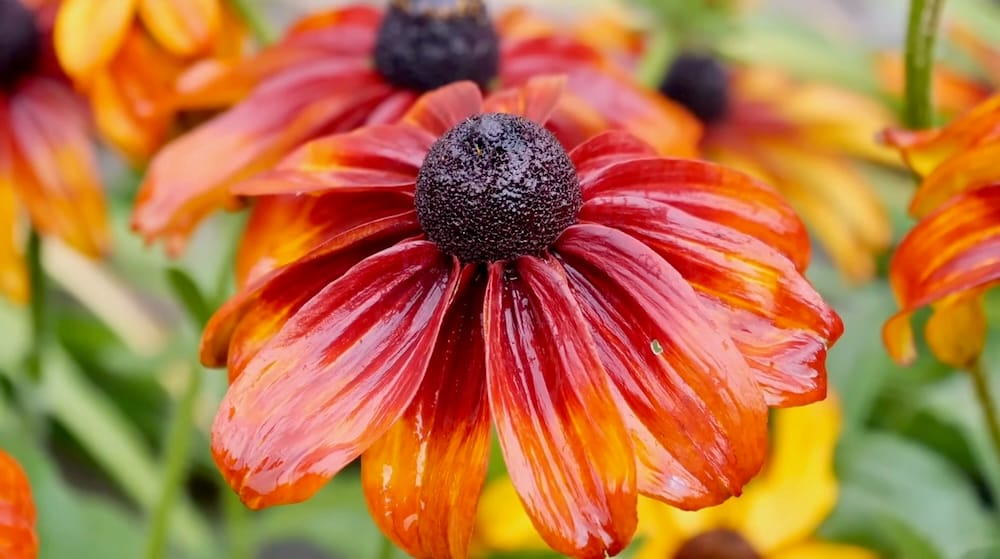
Explore Cascades of Time Garden
Cascades of Time Garden asks almost nothing of you, which is part of the appeal. There’s no major reservation to secure, no equipment required and no long drive before the scenery begins.
Audrey and I walked through its grand entrance and spent time exploring the terraces, stone pathways, flowers, ponds, bridges and little pavilions scattered around the grounds. With mountains surrounding Banff, even a formal garden ends up looking rather more dramatic than the average municipal landscaping project.
It’s also much bigger than you might assume from the entrance. The grounds cover nearly five hectares and contain cascading ponds, watercourses and more than 50,000 flowers during the growing season.
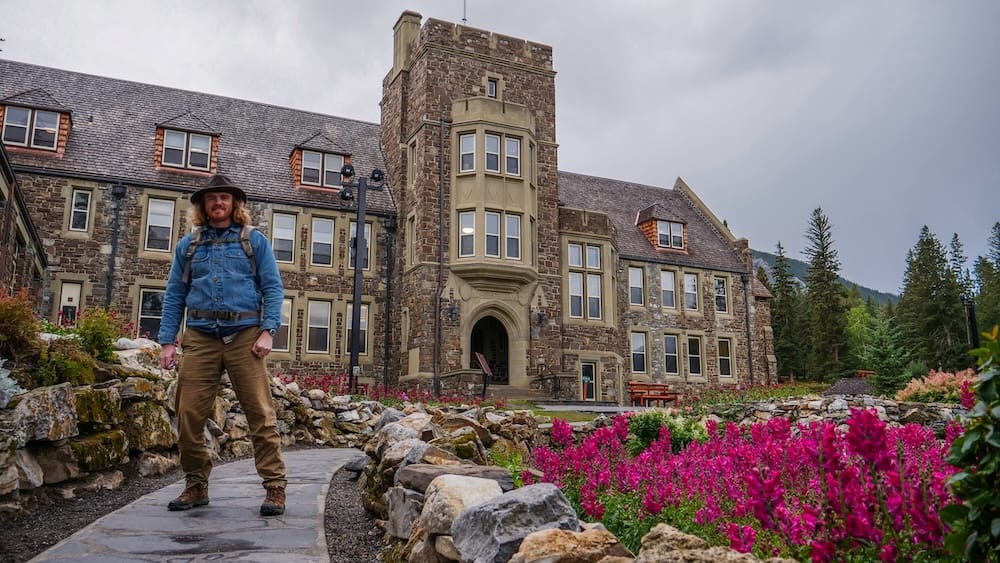
The garden is behind the Parks Canada Administration Building, directly across the river from downtown, so it slots naturally into the same walking circuit as Central Park and the Bow River. Parking immediately around the Administration Building is limited and often fills during the day, which gives you another reason to simply walk over.
I like this stop because Banff makes it very easy to associate “better” with “more expensive.” A garden full of flowers and mountain views is a useful reminder that you don’t need to buy a ticket every hour to justify being here.
Give Banff’s museums more time than you expect
I’ll admit museums are probably not the first thing most people picture when planning Banff. The destination sells itself rather effectively through mountains, lakes and wildlife, so spending part of a beautiful day indoors looking at historical displays can initially feel like questionable time management.
Audrey and I ended up enjoying Banff’s museums far more than I expected, partly because the three we visited are completely different from one another. They aren’t just interchangeable rainy-day backups.
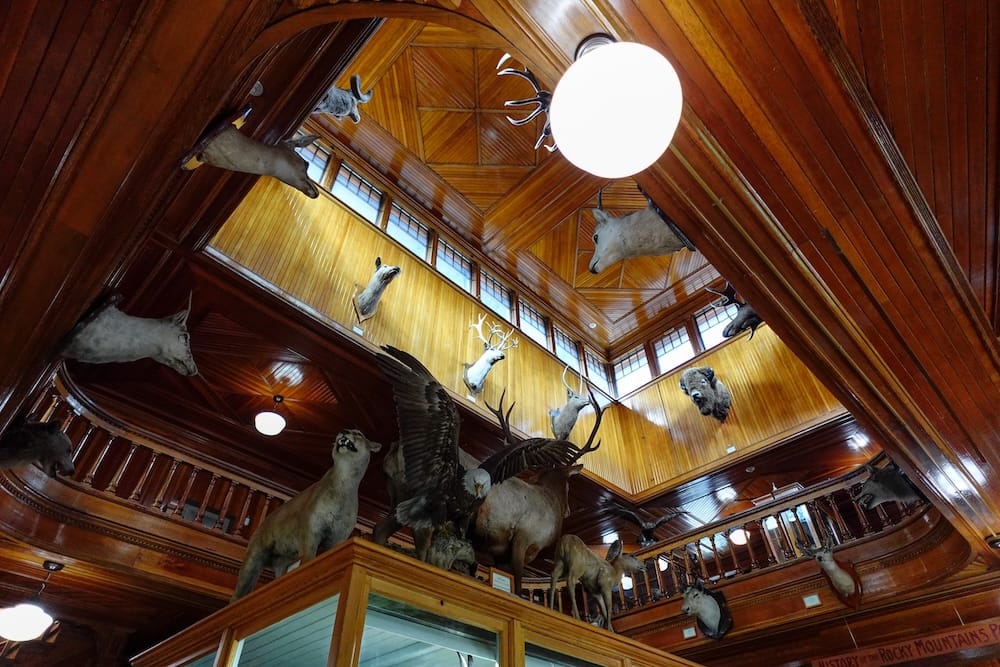
Banff Park Museum
Banff Park Museum is the strangest of the three, and I mean that affectionately. Walking inside really does feel like stepping back into an older era of natural-history museums. The collection contains more than 5,000 vintage botanical and zoological specimens, presented in a historic building that still reflects the way national parks interpreted wildlife around the end of the Victorian period.
What I remember most is the scale of the animals. The bison looked enormous. The bears were predictably imposing, but even the beaver surprised us with its size. We also spent time looking at the lynx and wolves, and one of the wolf specimens inevitably made us think of Togo, our German Shepherd. It was one of those museums where the physical reality of animals you’ve seen countless times in photographs suddenly becomes more obvious because you’re standing a few feet away from them.
You don’t need an enormous block of time here. The museum can be seen in about half an hour if you’re moving fairly quickly, although Audrey and I found enough oddities to slow us down.
The main planning catch is seasonality. In 2026, Banff Park Museum operates from mid-May to mid-October and closes for the rest of the year, so it isn’t a dependable year-round bad-weather option. When it’s open, though, I think it is one of the most distinctive little attractions in town.
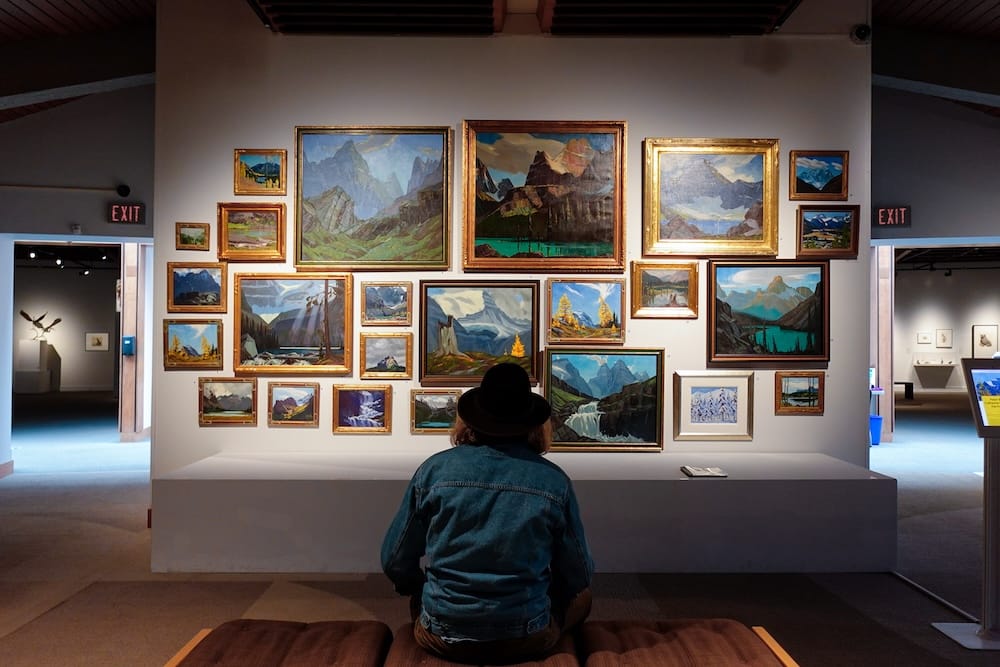
The Whyte
The Whyte works for almost the opposite reason. Instead of focusing on zoological specimens, it explores the art, culture and human history of the Canadian Rockies. Audrey and I particularly enjoyed the material associated with Peter and Catharine Whyte, the artists and philanthropists who founded the institution.
Their paintings made an impression on us because they connected familiar Rockies landscapes with actual people who spent their lives observing and painting them. Some of their Lake O’Hara work even left us wanting to visit that area on another trip.
The Whyte sits right on Bear Street and currently operates daily, which makes it one of the easiest indoor attractions to work into a downtown day. I wouldn’t choose between The Whyte and Banff Park Museum by asking which is objectively “better,” because they’re doing different things. If old natural-history displays and stuffed wildlife sound fascinating, I’d lean toward Banff Park Museum; if art and the human stories of the Rockies interest you more, The Whyte is the more obvious choice.
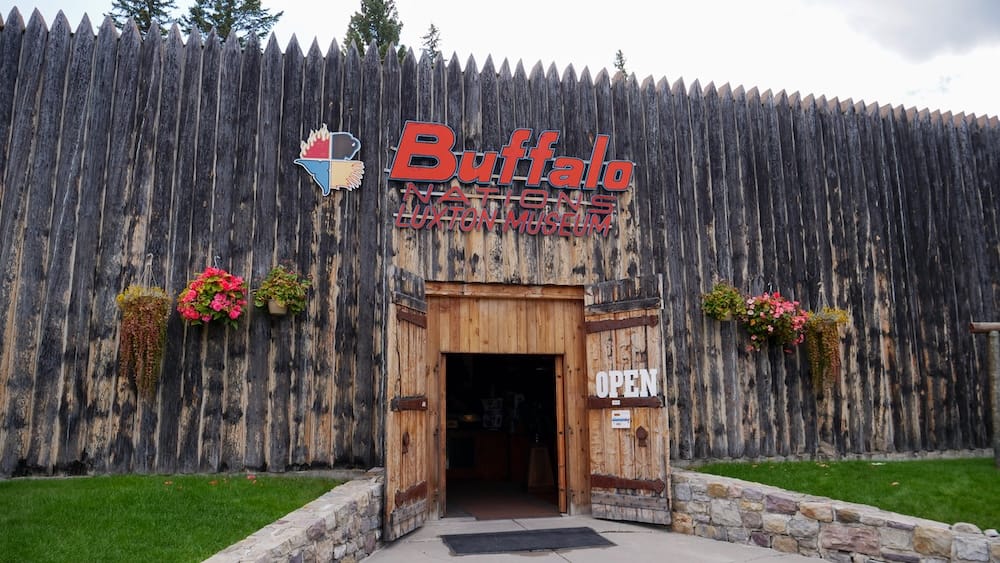
Buffalo Nations Museum
The third museum we visited is now known as Buffalo Nations Museum. You may still find its former name, Buffalo Nations Luxton Museum, on older travel information, which is worth knowing simply so you don’t assume they’re two different places.
The museum sits beside the Bow River across from Central Park and is owned and operated through the Buffalo Nations Cultural Society. Its focus is First Nations cultures, traditions and connections between past and present.
Audrey and I spent more than an hour here. We looked at clothing, beadwork, dioramas and language material, then stayed longer to watch part of a documentary about the Blackfoot.
It was an enjoyable visit, but I also wouldn’t treat this as another attraction to speed-run between lunch and a coffee. Banff’s international image is overwhelmingly built around natural scenery, yet the human history of this landscape is just as real. This is a place where slowing down and actually paying attention makes considerably more sense than trying to see how quickly you can get through the galleries.
If you’re already walking the Bow River and Central Park, the location also makes it easy to incorporate without turning the museum into a separate expedition.
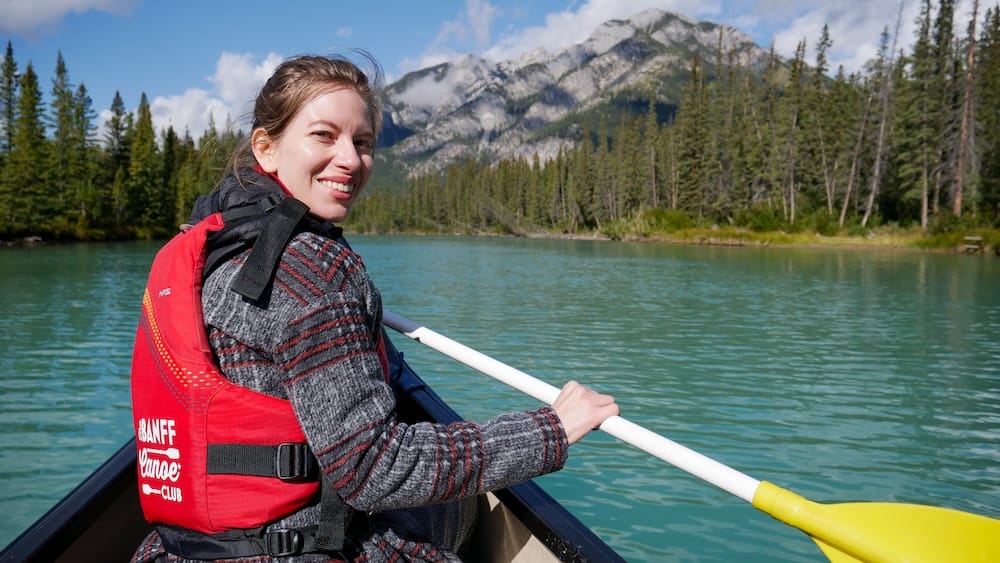
Paddle the Bow River in a giant canoe
Walking beside the Bow River is peaceful. Getting onto it gives you a completely different perspective.
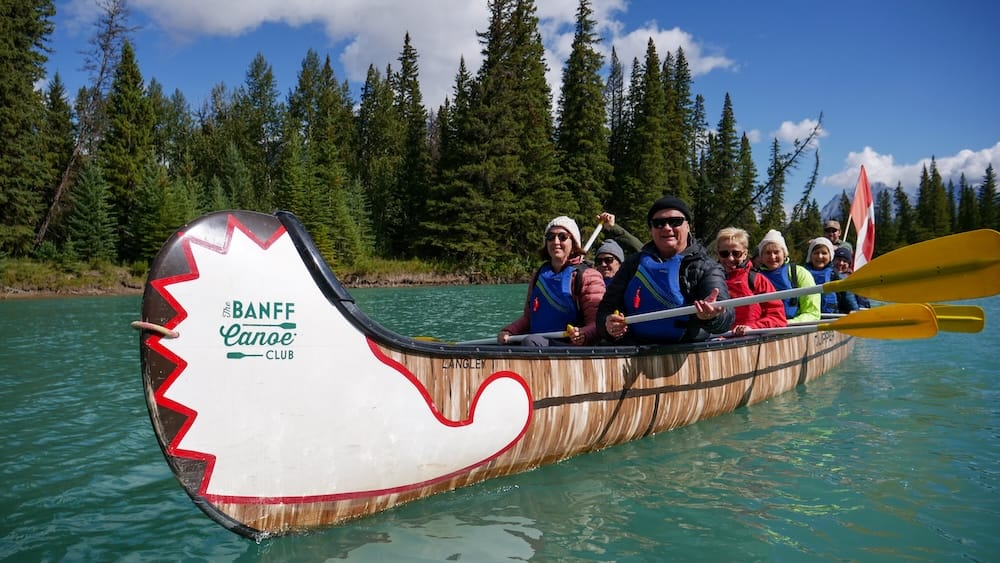
Audrey and I joined a guided Big Canoe trip from Banff Canoe Club, whose dock is at Wolf Street and Bow Avenue right in town. The current River Explorer Big Canoe Tour takes about 1.5 hours and doesn’t require previous paddling experience.
This isn’t a tiny romantic canoe for two. The boat carries a group, which means everybody gets involved. We were given a briefing, put on life jackets and paddled upstream together. Along the way we saw beaver dams and osprey nests, although wildlife in Banff should always be considered a bonus rather than something you schedule for 2:15 p.m.
The format really clicked for us on the way back. After doing the work paddling upstream, we could relax more and let the current help carry us home. Suddenly there was more time to look at the mountains, watch the riverbanks and enjoy being on the water instead of thinking about each stroke.
Our reaction afterwards was immediate: that was really fun. At the time, we even said floating back along the Bow might be one of the nicest ways we’d found to take in Banff’s scenery. I still think the distinction between the outward and return portions is what made it work so well—you get enough activity to feel involved, but it doesn’t become an endurance event.
This was a hosted Viator experience when we did it, so that’s part of the context of our original trip. The activity itself is operated by Banff Canoe Club, and an exact current River Explorer version is available through GetYourGuide. If this sounds like the one paid town activity you’d actually use, you can check current Big Canoe departure times and availability.
If you want to pay for one outdoor experience that genuinely starts in Banff town, this is the one from our own visits that I’d be most interested in doing again.
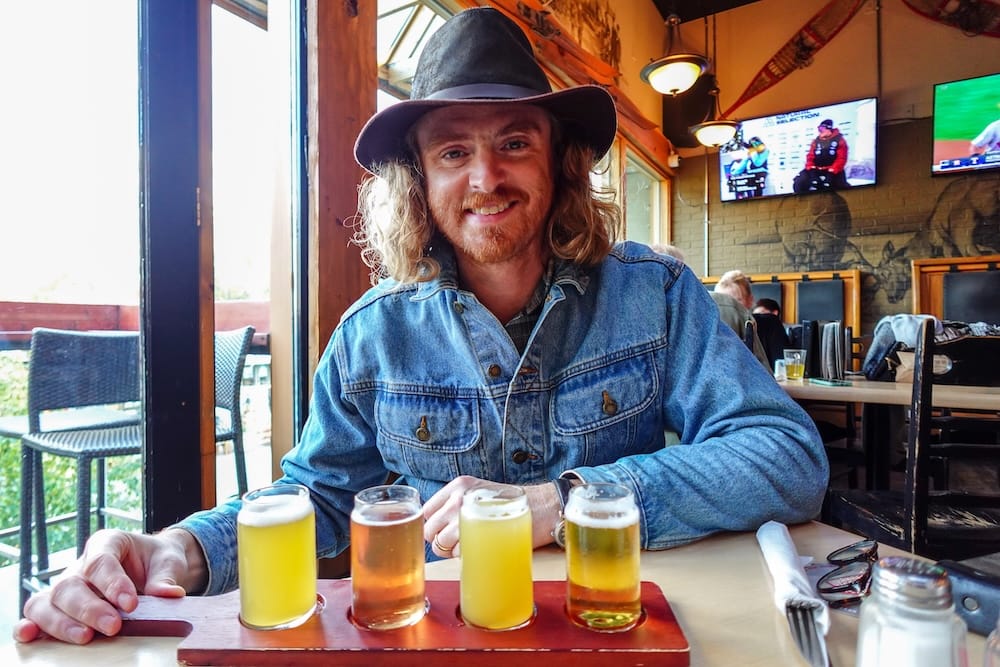
Eat your way through town
Banff gives you plenty of opportunities to eat like a cartoon version of a Canadian mountain traveller. There are burgers, poutine and beer waiting whenever you decide you’ve earned them, and we’ve certainly participated.
At Elk & Oarsman, Audrey and I went fully in that direction with an elk burger, poutine and a beer flight. The elk burger was excellent, and the poutine ended up being one of the best versions we ate on that particular trip, but our Banff meals have ranged much further than that.
At Peak Cafe, the weather had turned cold enough that Audrey wanted something hot, so pho was basically medicinal at that point. We also had bubble tea and ginger beef, which gave me an excuse to revisit a food I used to eat frequently when I lived in Edmonton.
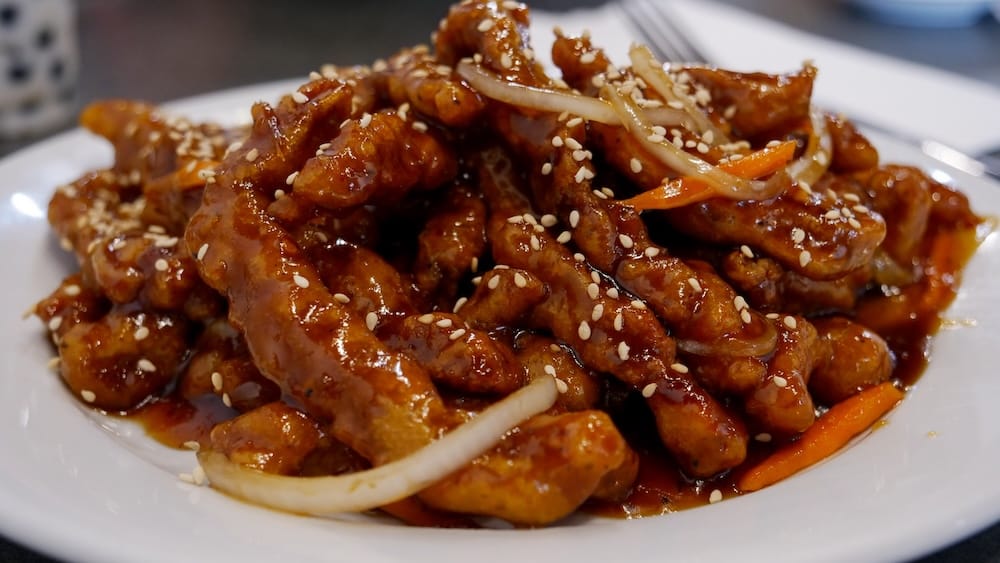
I had a habit back then of jogging down toward Chinatown and somehow converting exercise into a reason to eat Chinese food. Audrey’s assessment of that story was that it sounded exactly like something I would do. Fair.
At Shoku Izakaya we had a spicy shrimp roll, bibimbap and Korean-style fried chicken, while Añejo took us in yet another direction with tacos, chips and salsa. Audrey’s chicken taco immediately started leaking juice down her chin, giving me a useful preview of the engineering problems awaiting my own fish taco.
All four restaurants are still operating in 2026, although menus naturally change and I wouldn’t plan a trip around getting the exact dishes we ordered years ago. The bigger takeaway is simply that Banff’s food scene doesn’t have to mean eating elk beneath decorative antlers every night. Our own meals have covered Canadian pub food, Vietnamese, Chinese-Canadian, Japanese, Korean and Mexican food without leaving town.
After a major national-park day, that variety matters. Sometimes the most appealing evening plan is eating something hot and staying put.
A few more things to do in Banff town
The places above are the ones where Audrey and I have the strongest firsthand experience, but they aren’t the only things worth considering in town. A few others make sense depending on the season and how much time you have.
Stop at Surprise Corner
Surprise Corner gives you one of the classic views across the Bow River toward Fairmont Banff Springs. There are viewing platforms and a small parking area, and you can also approach on foot from town. I haven’t personally used it as a dedicated viewpoint stop, so I wouldn’t pretend to know exactly how long you’ll want to spend there. It looks much more like a quick scenic addition than something around which to organize half a day.
One part isn’t negotiable: don’t scramble onto the unstable cliffs above Bow Falls looking for a better photograph. The Town specifically warns people away from those slopes because they’re dangerous.
Get the Banff sign photo
The giant BANFF sign has moved, which matters because quite a lot of older photographs and travel advice show it beside Norquay Road. Since late 2025, the sign has been on the hill beside the Banff Train Station and its parking lot, making it much more practical if you’re already parking there before walking into town.
Is taking a photograph with a giant town sign one of the profound travel experiences of our age? Probably not, but plenty of people want the shot and there’s nothing wrong with that. At least the new location doesn’t require turning the beginning of your Banff day into a roadside logistics exercise.
Browse the Banff Farmers Market in summer
If you’re visiting on a Wednesday during the warmer months, Banff Farmers Market takes place in Central Park. For the 2026 season it runs from late May through the end of September. I haven’t personally visited the market, so I’d treat it as a seasonal bonus rather than a reason to rearrange an entire Banff itinerary.
Its location is what makes it useful. If you’re already exploring downtown and the Bow River, you can wander through without adding another journey to the day.
Go skating in town during winter
We haven’t visited Banff in winter, so I can’t give you a firsthand skating verdict. The town does maintain seasonal outdoor skating areas, along with indoor skating at The Fenlands, which gives winter visitors something active to do without heading out to a ski resort. Outdoor conditions obviously depend on temperature and snowfall, so check the current rink status before setting out.
One thing you shouldn’t do is improvise your own rink on the Bow River. Moving water makes natural river ice unreliable, and the Town warns against walking or skating on it.
How I’d choose between Banff town activities
The problem with many things-to-do lists is that everything ends up looking equivalent. A ten-minute viewpoint, a museum and a 1.5-hour canoe trip all receive the same heading and three enthusiastic paragraphs, leaving you with a longer list but not much help deciding what fits your day.
Here’s the distinction I find more useful.
| Activity | Cost | Time commitment | Setting | Effort | Best fit |
|---|---|---|---|---|---|
| Banff Avenue & Bear Street | Free to wander | Flexible | Outdoors | Very low | Orientation, shopping, cafés |
| Bow River Trail | Free | Flexible | Outdoors | Low | Easy scenery and unscheduled time |
| Central Park | Free | Short or flexible | Outdoors | Very low | Families, picnics, breaks |
| Cascades of Time Garden | Free | Short to moderate | Outdoors | Low | Gardens and easy sightseeing |
| Banff Park Museum | Paid | From about 30 minutes | Indoors | Very low | Wildlife and unusual natural history |
| The Whyte | Paid | Flexible | Indoors | Very low | Art and Rockies culture |
| Buffalo Nations Museum | Paid | Allow meaningful time | Indoors | Very low | First Nations culture and history |
| Big Canoe Tour | Paid | About 1.5 hours | Outdoors | Light paddling | One memorable scheduled activity |
| Surprise Corner | Free | Short | Outdoors | Low | Scenic viewpoint |
| Banff Farmers Market | Free to browse | Flexible | Outdoors | Very low | Summer Wednesdays |
| Seasonal town skating | Varies | Flexible | Indoors/outdoors | Moderate | Winter visitors |
If I only had a few hours and the weather was decent, I wouldn’t try to collect attractions. I’d walk downtown, get onto the Bow River, cross over to Cascades of Time Garden and choose whichever museum sounded most interesting.
With most of a day, I’d add another museum or the Big Canoe, then deliberately make time for a proper meal instead of treating lunch as dead space between activities. The museums also give Banff town more resilience than you might expect when the weather goes sideways. Banff Park Museum is only open seasonally, but The Whyte and Buffalo Nations Museum give you substantial indoor options when staring at mountains through rain has started to lose its novelty.
Banff town is better when you stop treating it as a waiting room
I understand why Banff town gets shortchanged. Lake Louise is extraordinary. Moraine Lake is extraordinary. The wider national park contains the attractions people have flown halfway around the world to see, and once you’ve rented a car or booked transportation it’s tempting to spend every available hour chasing them.
But town serves a different purpose. This is where Audrey and I have been able to wander beside the Bow River without checking the time, drift through gardens, get unexpectedly absorbed by museums, paddle a canoe, eat ginger beef or tacos and generally enjoy the Rockies without needing another logistical operation.
If I were planning another Banff trip, I wouldn’t sacrifice the great national-park excursions to sit around downtown all week. I would, however, protect some genuine town time instead of filling every gap with another drive.
Use the wider park for the enormous landscapes and the big excursions. Use Banff town for the hours when you still want the Rockies around you but don’t particularly feel like conquering anything, and leave a little room for wandering. Some of our best time here started because we didn’t have much of a plan.
Frequently Asked Questions
What are the best things to do in Banff town?
My favourite in-town experiences include wandering the Bow River, exploring Cascades of Time Garden, visiting Banff Park Museum, The Whyte and Buffalo Nations Museum, paddling with Banff Canoe Club, and making time for a good meal.
Can you explore Banff town without a car?
Yes. Banff town is compact, and many of the places in this guide connect naturally on foot. The Train Station also has a large free parking area, so parking once and walking is often simpler than moving the car around downtown.
What can you do in Banff town for free?
Good free options include Banff Avenue and Bear Street, the Bow River Trail, Central Park, Cascades of Time Garden, Surprise Corner and the Banff sign. The Farmers Market is also free to browse when it is running.
Which Banff museums are worth visiting?
They offer very different experiences. Banff Park Museum is the quirky natural-history choice, The Whyte focuses on art and Rockies culture, and Buffalo Nations Museum centres First Nations cultures, traditions and history.
How long does the Banff Big Canoe Tour take?
The River Explorer Big Canoe Tour takes about 1.5 hours and does not require previous paddling experience. We paddled upstream as a group and had a more relaxed return with the river helping us back.
What can you do in Banff town when the weather is bad?
The Whyte and Buffalo Nations Museum give you substantial indoor options, while Banff Park Museum is another choice when it is open. Banff Park Museum is seasonal, so it should not be treated as a year-round fallback.
Is Banff town worth spending time in if you are visiting the wider national park?
I think so. I would not sacrifice the major national-park excursions, but I would protect some genuine town time for the Bow River, museums, gardens, food and one or two activities instead of filling every gap with another drive.
This guide is also available in Spanish. [Leé la versión en castellano: Mejores cosas para hacer en el pueblo de Banff]
This article contains affiliate links. If you book through one of these links, I may earn a commission at no extra cost to you.