
Banff National Park’s biggest hits — Lake Louise, Moraine Lake, the Icefields Parkway — all require a car, a shuttle booking, or a tour. That’s fine if you’ve got one of those sorted, but it leaves out a real question: what can you actually do on foot, starting from wherever you’re staying downtown, with no driving involved at all?
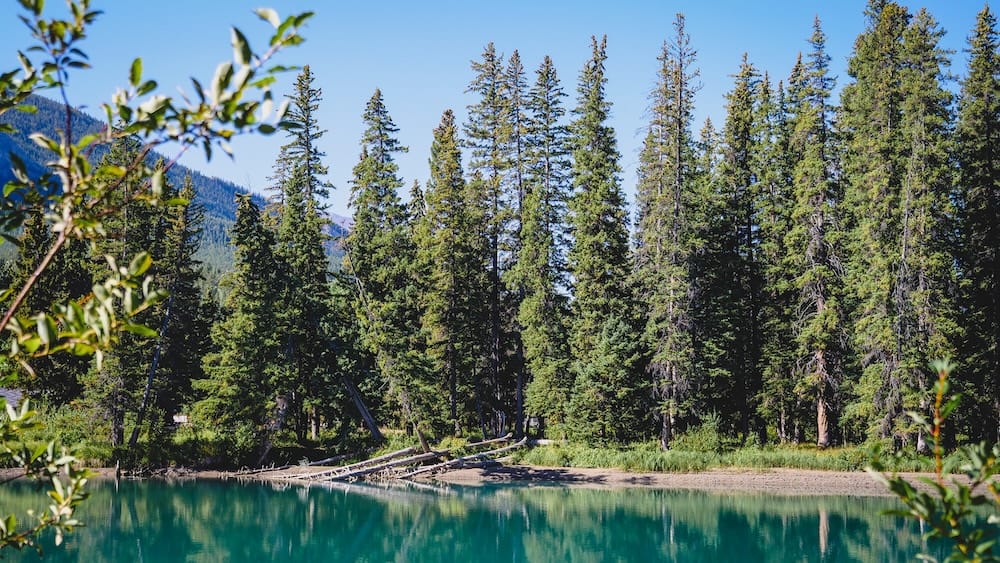
I’ve walked one stretch of this answer myself, more than once. The rest I’ve dug into properly rather than guess at, because a “best walks” list built entirely from one corridor wouldn’t be much of a list. Here’s what’s genuinely easy, genuinely car-free, and worth your time — and one popular option that gets lumped into “easy” lists where it doesn’t really belong.
One thing worth sorting before any of this matters: where you’re actually staying. Every distance below is measured from downtown, so a hotel out past the highway interchange puts you back in a car regardless of how flat these walks are. If walkability is part of why you’re here, it’s worth comparing hotels in central Banff before you book anything else.
What Actually Counts as “Easy” and “No Car Needed”
Worth saying up front: not everything marketed as an easy, car-free walk from Banff actually is. Tunnel Mountain is a good example. You can walk to its trailhead in about fifteen minutes from downtown, so it technically clears the “no car” bar. But the trail itself climbs 260 metres over 2.4 kilometres to the summit, and it can turn seriously icy underfoot. That’s a real hike, not an easy stroll, and it shows up on more than one “no car required” list as though it belongs next to a flat riverside path. It doesn’t, so it’s not on this one.
Everything below is flat or close to it, reachable on foot from downtown without a shuttle or a drive to a separate trailhead, and doable in regular shoes.
The One We’d Send You to First: The Bow River Corridor to Bow Falls
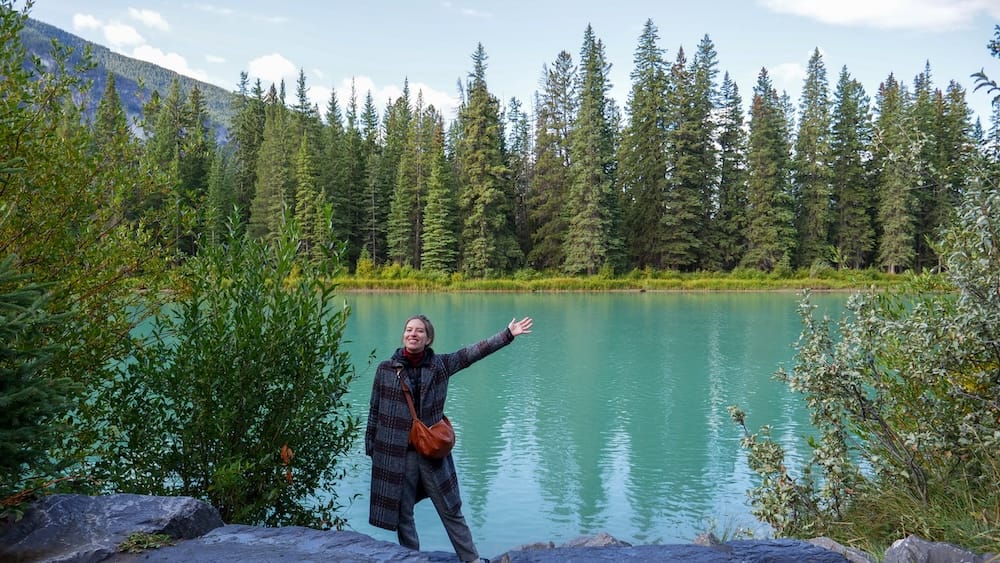
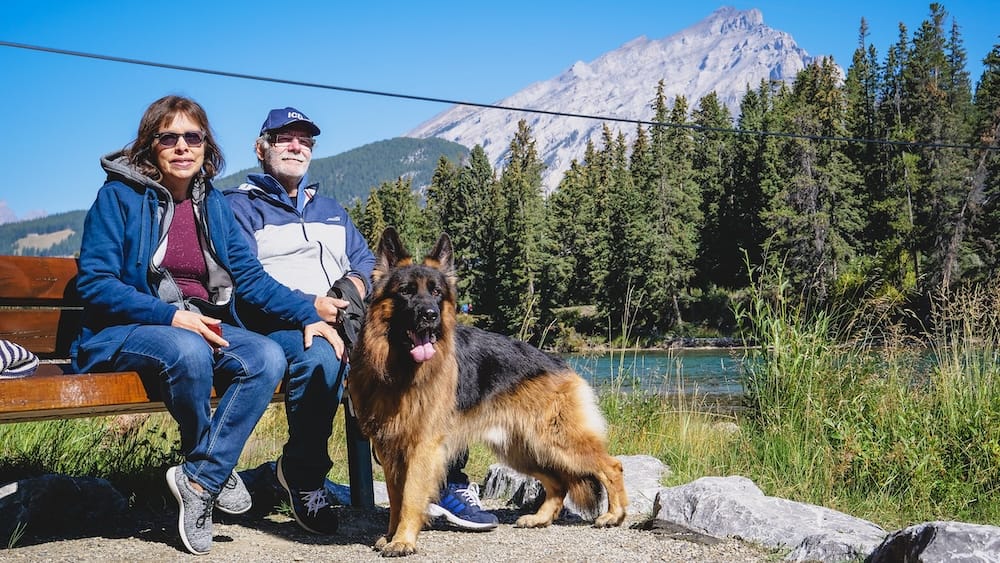
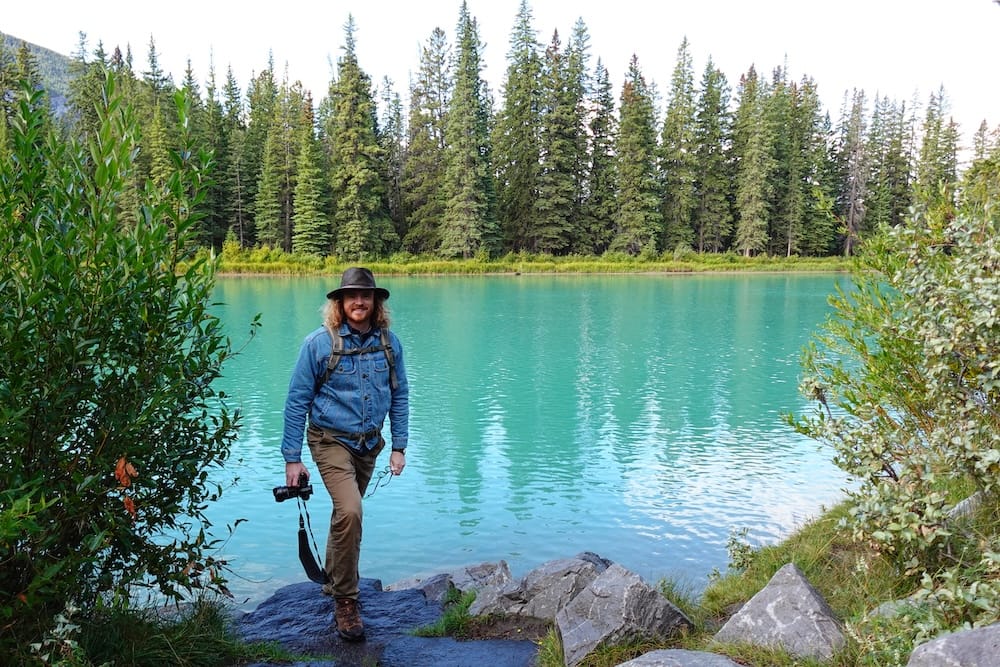
If you only do one walk from this list, make it this one. Audrey and I have walked this stretch three separate times across two different trips, and it’s held up every time — including the visit that mattered most, a family road trip with Audrey’s parents and our dog Togo, on our first morning in Alberta. We crossed the pedestrian bridge, Mount Rundle filling the skyline dead ahead, and a local stopped us there to say we should turn left after crossing for a quieter stretch he liked better than the main path. We took the tip. Twenty minutes later we were sitting on a riverside bench in the middle of actual forest, river running beside us, and Audrey’s dad — who’d wanted to see the Rockies for decades — said it was everything he’d hoped for. I remember feeling exactly the same way.
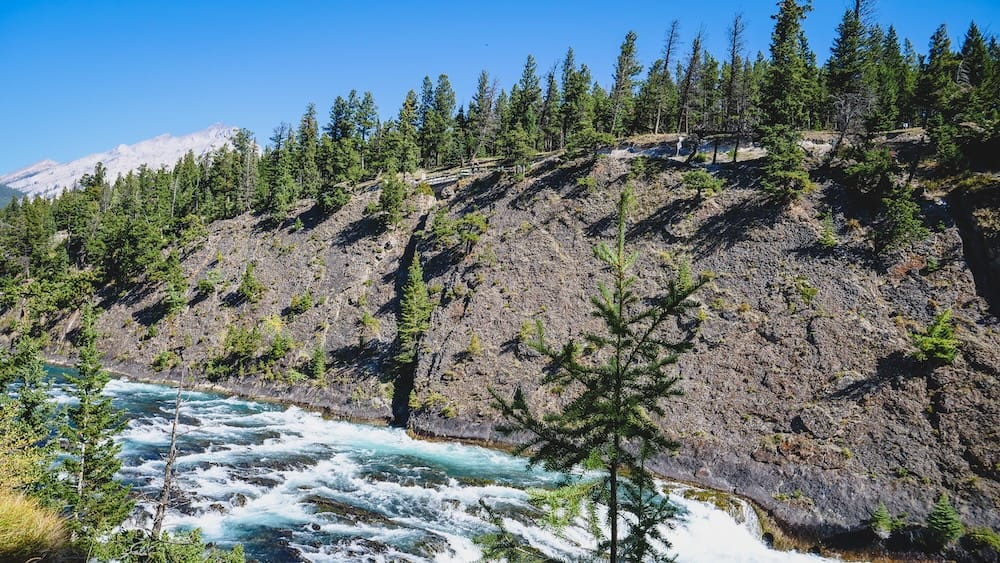
The walk itself is simple enough on paper: from just steps off downtown, along a quiet, mostly paved path, to Bow Falls at the far end — roughly 1.2 to 1.4 kilometres one-way, twenty to thirty minutes at an easy pace, and wheelchair-accessible for most of the route from the Muskrat Street access. There’s also a seasonal outdoor art exhibition that runs the same path in summer, which I’ve written about separately if the timing works out for you.
But the reason this is the one I’d send you to first isn’t the distance or the pavement. It’s that this is the only walk on this list where I can point to an actual moment — a stranger’s tip, a bench, a specific reaction from someone in my own family — instead of just telling you it’s nice. The other three, I’m about to tell you it’s nice. This one, I can show you why.
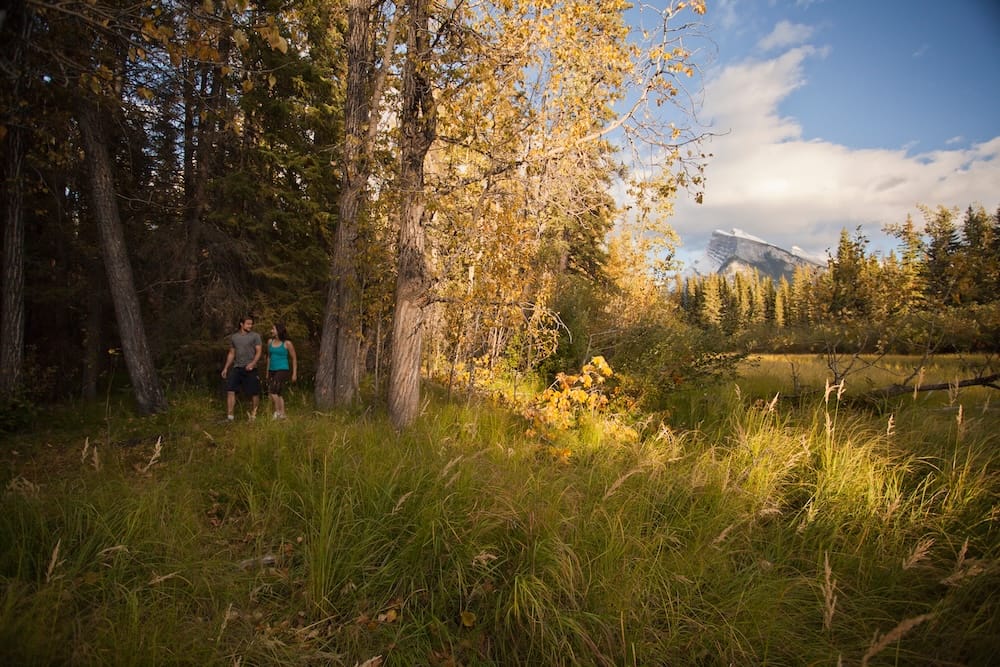
Fenland Trail: The Short, Flat Option
Fenland is the pick if you want the least demanding walk on this list, full stop. The trailhead sits about a twenty-minute, 1.5-kilometre walk from downtown, and the loop itself runs 2.1 kilometres with no elevation gain at all — not “minimal,” none. It’s wheelchair- and stroller-friendly for most of its length, running through old-growth spruce forest alongside a creek on a mix of packed trail and raised boardwalk. On paper, this is the flattest, easiest thing on this whole list, and if you’re travelling with young kids, a stroller, or just want zero elevation change in your day, it’s the obvious answer.
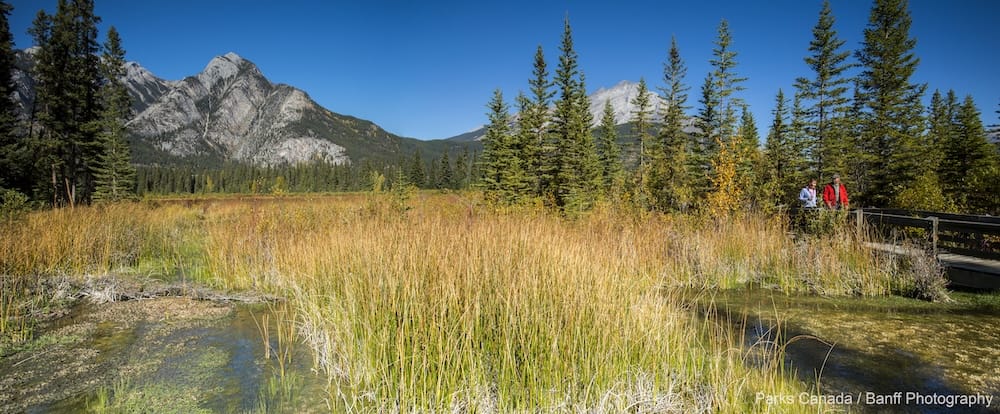
Marsh Loop: Wetlands and Wildlife Near Cave and Basin
Marsh Loop is a different kind of easy. The trailhead is at the Cave and Basin National Historic Site, about a thirty-minute, two-kilometre walk from downtown — noticeably further than Fenland — and the loop itself runs roughly 3.4 kilometres through wetland terrain, with boardwalks, small bridges, and a few short sets of stairs along the way. That last part matters: unlike Fenland, this one isn’t considered fully wheelchair-accessible, and it can get genuinely muddy after rain, since it sees a fair amount of horse traffic nearby.
What makes it worth including is the setting. It’s a marsh, not riverside forest, popular for birdwatching and wildlife sightings, and different enough from the other entries here that it’s not just the Bow River corridor wearing a new name. If you’ve got a bit more time than Fenland demands and don’t mind a few boardwalk steps, it’s a genuinely distinct option.
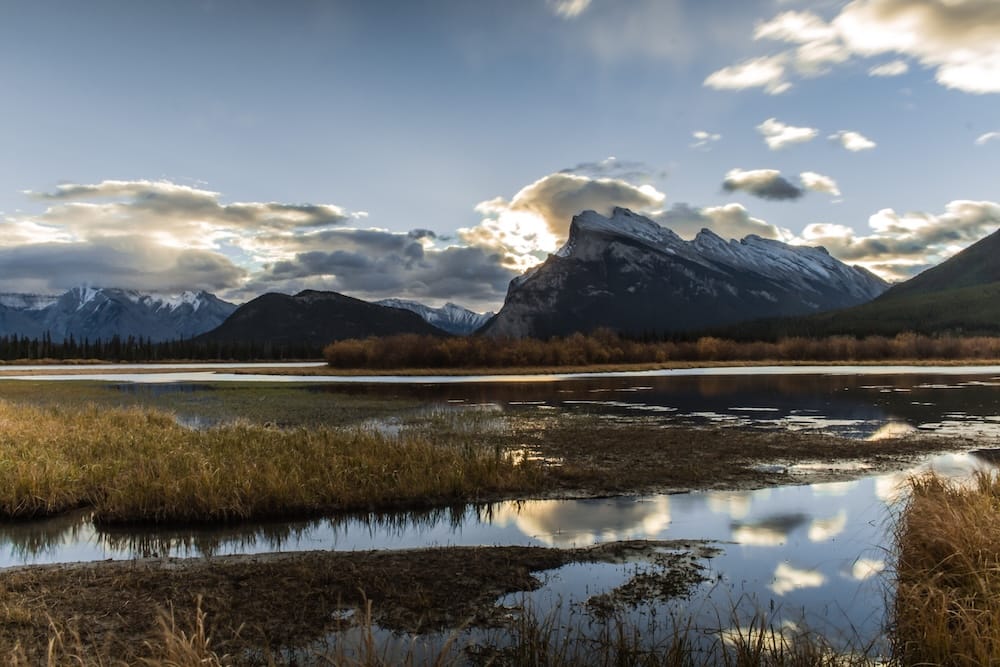
Vermilion Lakes: A Walk for the View
Vermilion Lakes isn’t really a trail in the forest-path sense. It’s a walk, or a bike ride, along a mostly quiet, paved road about thirty minutes from downtown on foot, running 4.3 kilometres past docks, benches, and interpretive panels. The draw is the view: Mount Rundle reflected in calm water, especially at sunrise or sunset, which is exactly the kind of shot that ends up on Banff’s own promotional material.
If the other three entries here feel too forest-and-trail for what you’re after, this is the one that trades trees for open water and a mountain view you don’t have to climb for. The flat, paved format also means it’s about as accessible as anything on this list.
Quick-Reference Comparison
| Walk | From Downtown | Length | Terrain | Best For |
|---|---|---|---|---|
| Bow River Corridor to Bow Falls | Steps from downtown | ~1.2–1.4 km one-way | Mostly paved, flat | First-timers, anyone short on time |
| Fenland Trail | ~20 min / 1.5 km | 2.1 km loop | Flat, no elevation gain | Strollers, young kids, zero-effort walks |
| Marsh Loop | ~30 min / 2 km | ~3.4 km loop | Boardwalk, bridges, a few stairs | Birdwatching, wildlife, a longer outing |
| Vermilion Lakes | ~30 min | 4.3 km paved road | Flat, paved | Mountain-reflection views, sunset/sunrise |
Before You Set Out
One thing that applies to all four of these, easy to overlook because none of them feel like “real” park excursions: Banff’s townsite sits inside Banff National Park, so a valid park pass covers your time on any of these walks, not just a drive through on the highway. It’s a small detail, but the kind that’s simple to miss when you’re just planning to stroll somewhere from your hotel.
If you’re staying long enough to fit more than one of these in, it’s worth building your base around that. Checking current availability for centrally located hotels makes it easier to fit a walk in before breakfast or after dinner without any driving at all.
If I had to rank these for someone with one afternoon and no car: start with the Bow River corridor, because it’s the one I can vouch for completely and it ends somewhere worth ending. If you’ve got a second afternoon and want variety, Fenland for the least effort, Marsh Loop for something with more texture, and Vermilion Lakes if a mountain reflection at golden hour is worth thirty minutes of walking to you. None of them require a car, a booking, or much more than a decent pair of shoes.
Frequently Asked Questions
Can you walk anywhere from downtown Banff without a car?
Yes, several genuinely easy walks start right from downtown Banff on foot, with no shuttle or drive to a separate trailhead required. The Bow River corridor to Bow Falls, Fenland Trail, Marsh Loop, and Vermilion Lakes are all reachable this way.
Which is the easiest walk from downtown Banff?
Fenland Trail is the flattest option on this list. Its 2.1-kilometre loop has no elevation gain at all, and it’s wheelchair- and stroller-friendly for most of its length.
Is Tunnel Mountain an easy walk from downtown Banff?
Not by this list’s standard. You can walk to its trailhead in about fifteen minutes without a car, but the trail itself climbs 260 metres over 2.4 kilometres to the summit and can turn icy, which makes it a real hike rather than an easy stroll.
How far is Fenland Trail from downtown Banff?
The trailhead is about a twenty-minute, 1.5-kilometre walk from downtown.
How far is Marsh Loop from downtown Banff?
The trailhead, at the Cave and Basin National Historic Site, is about a thirty-minute, two-kilometre walk from downtown, noticeably further than Fenland Trail.
Is Marsh Loop wheelchair accessible?
Not fully. Unlike Fenland Trail, Marsh Loop includes boardwalks, small bridges, and a few short sets of stairs, and it can get muddy after rain.
How long does it take to walk to Vermilion Lakes?
It’s about a thirty-minute walk from downtown along a mostly quiet, paved road, making it one of the more accessible options on this list.
Do I need a park pass for these walks?
Yes. Banff’s townsite sits inside Banff National Park, so a valid park pass covers your time on any of these walks, not just driving through on the highway.
This guide is also available in Spanish. [Leé la versión en castellano: Las mejores caminatas fáciles desde el centro de Banff]
This article contains affiliate links. If you book through one of these links, I may earn a commission at no extra cost to you.