
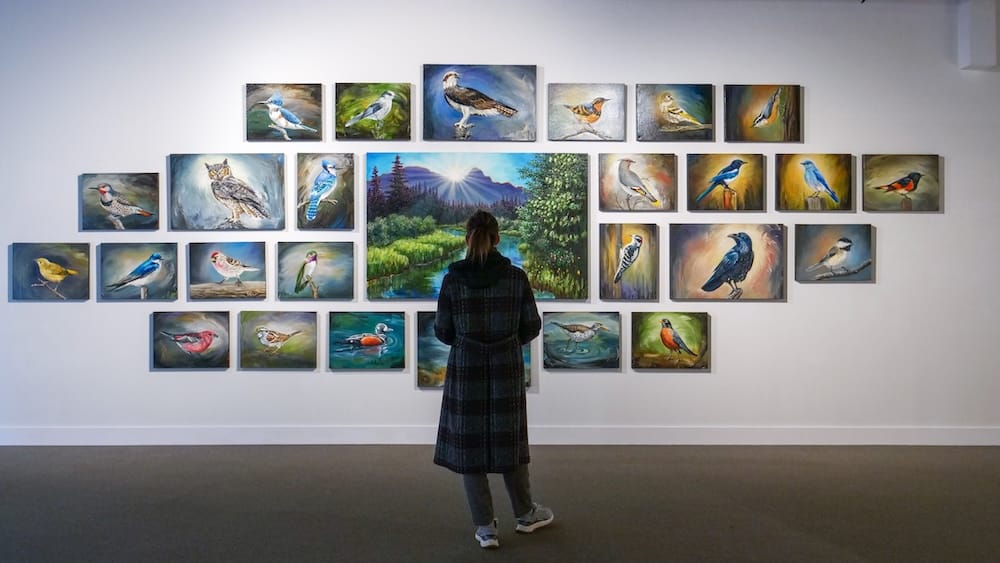
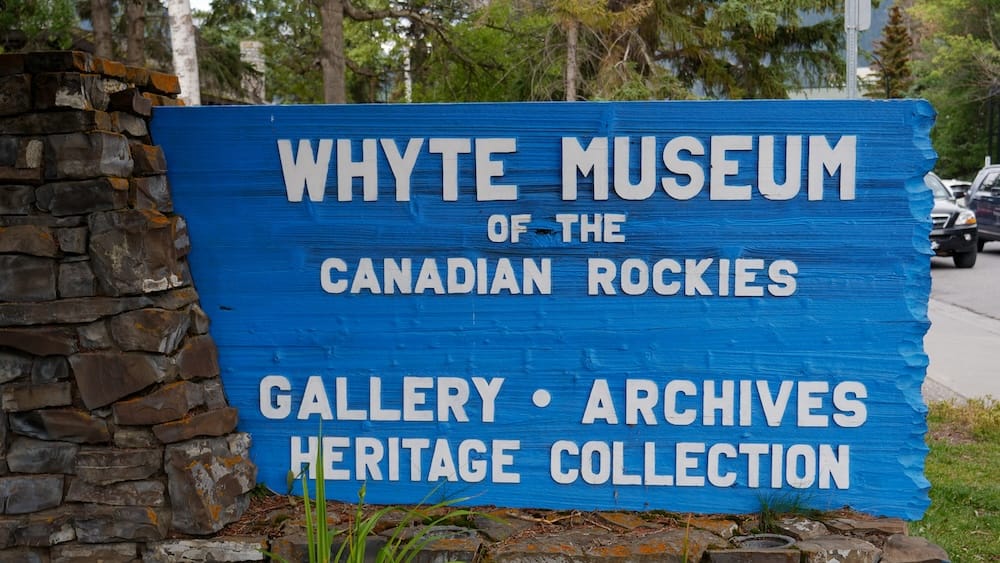
A museum built almost entirely around two people’s own paintings runs a real risk of becoming a shrine — one family’s work on the walls, with little to offer anyone who didn’t know them personally. That’s more or less what I expected walking into the Whyte Museum of the Canadian Rockies. It’s not what happened. What actually happened was smaller and more useful than I’d planned for: two paintings in one gallery room handed us a real place in the mountains we hadn’t been planning to visit. That’s the entire case for this museum, and it’s worth unpacking properly before you decide whether it earns a stop on your own trip.
Painted By the People Who Actually Lived Here
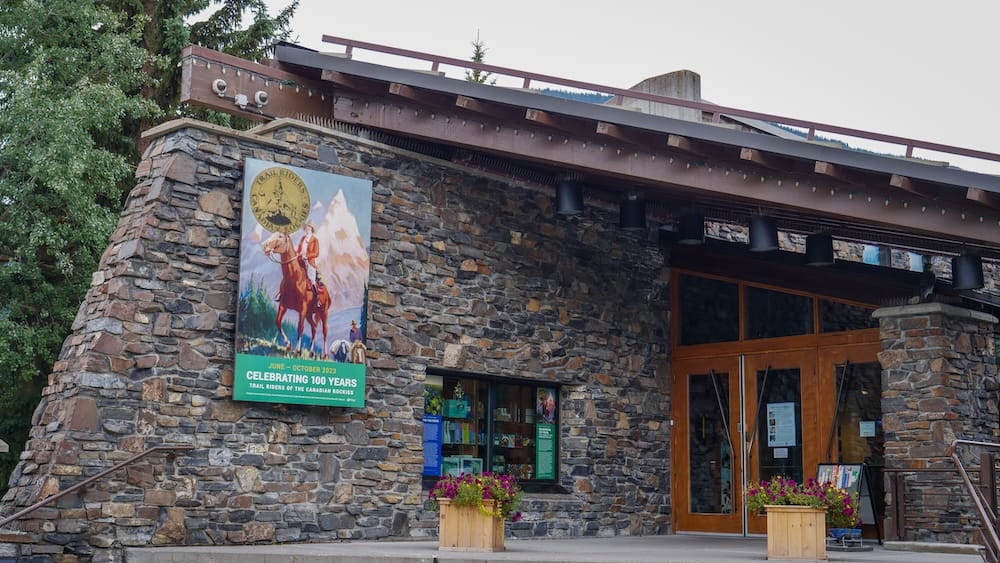
The museum exists because of two specific people, not an institution that hired artists after the fact. Peter Whyte grew up in Banff; Catharine Robb grew up in Massachusetts and met him at art school in Boston in 1925. They married in 1930, settled in Banff together, and spent years hiking into the surrounding mountains to paint — Lake O’Hara among the places they returned to again and again. Their own work, and the collection of regional art, photographs, and artifacts they built up around it over decades, became the foundation for the museum that opened in 1968 through the Peter and Catharine Whyte Foundation. That lineage actually matters once you’re inside. This isn’t a general Rockies art gallery that happens to display some mountain landscapes — it’s built from one couple’s specific, personal record of one specific place.
Inside the Founders Gallery
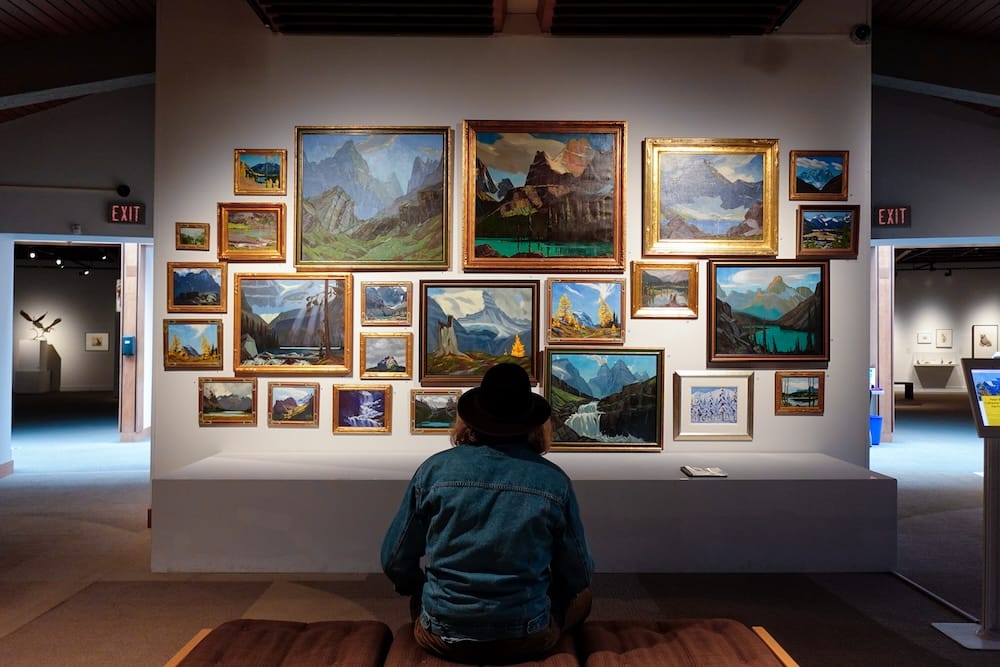
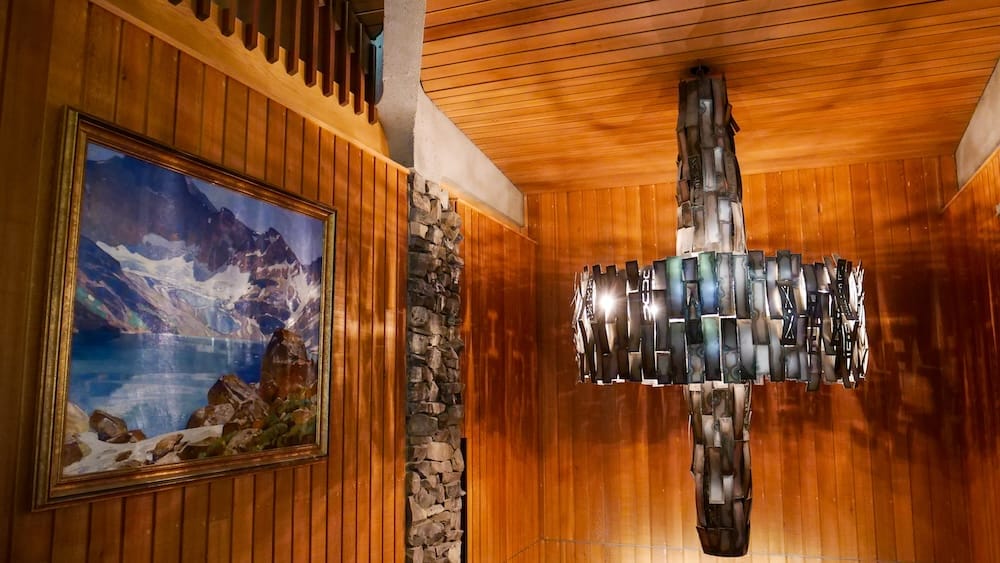
The room that stopped us was the Founders Gallery, where Peter and Catharine’s own landscape paintings hang — mountains, lakes, glaciers, the kind of dense mountain forest that shows up in a lot of Rockies art but rarely with this much texture. What sets their work apart isn’t technique so much as specificity. These aren’t invented or composited landscapes. They’re records of real places the two of them physically hiked to and set up easels in front of, sometimes for days at a stretch. That distinction doesn’t land right away, but it does eventually: you’re not looking at “a mountain scene.” You’re looking at somewhere you could, in theory, go stand.
Two Paintings, One New Travel Plan
Two paintings in particular caught our attention, both of a lake called Lake O’Hara. Neither of us knew the name going in. What we picked up in the gallery was that it sits on the British Columbia side rather than the Alberta side, which we weren’t entirely sure of at the time but turned out to be right — Lake O’Hara is in Yoho National Park, just across the provincial border from Banff and not far from Lake Louise. One of Peter Whyte’s actual Lake O’Hara paintings, dated 1930, is part of the museum’s permanent collection. It isn’t a generic mountain-inspired canvas; it’s a specific record of a lake he and Catharine kept coming back to in their early years together.
What made the moment stick wasn’t just the paintings themselves. It was what they did afterward, which was hand us a destination neither of us had on our radar. And Lake O’Hara isn’t a casual detour, either — access is managed entirely through Parks Canada’s own reservation system, with day-use shuttle seats allocated by a random draw each spring rather than sold as a tour product, or an 11-kilometre hike in on foot for anyone willing to walk it themselves. That keeps the area quiet, but it also means it takes real planning rather than a spontaneous stop on the way somewhere else. Worth knowing before two paintings talk you into anything: the destination they’re pointing at still requires its own homework, and that homework runs through Parks Canada directly rather than any tour operator.
Beyond the Founders Gallery
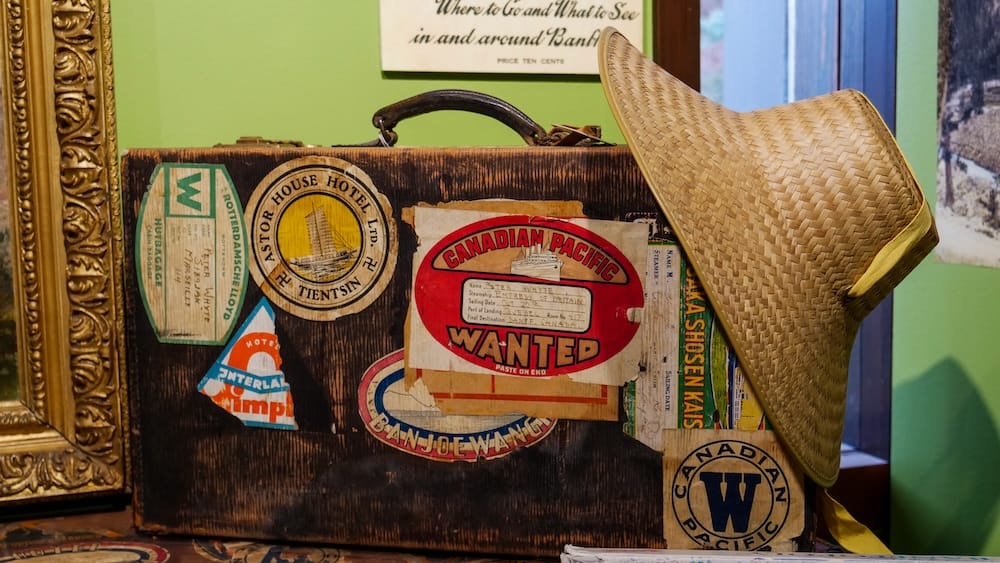
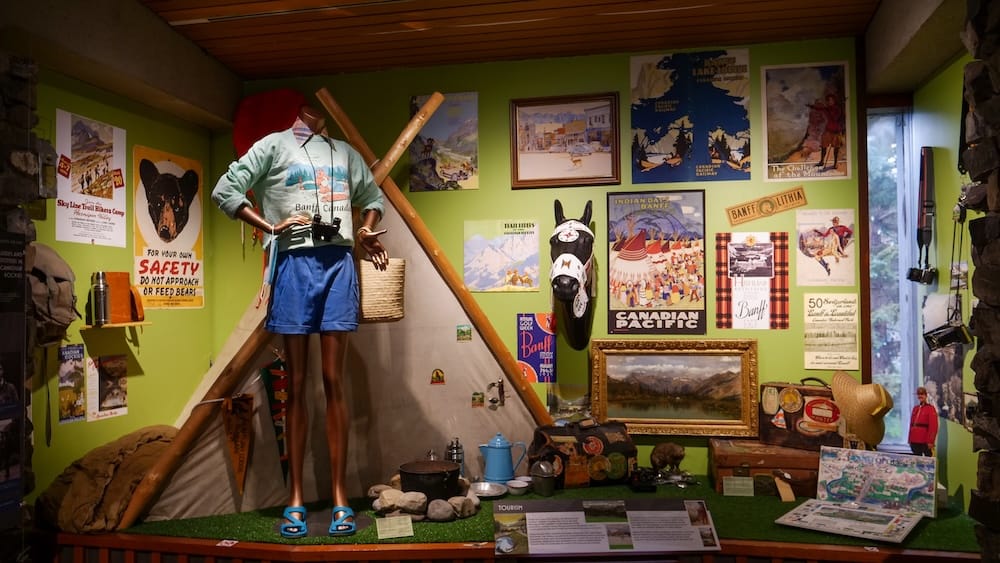
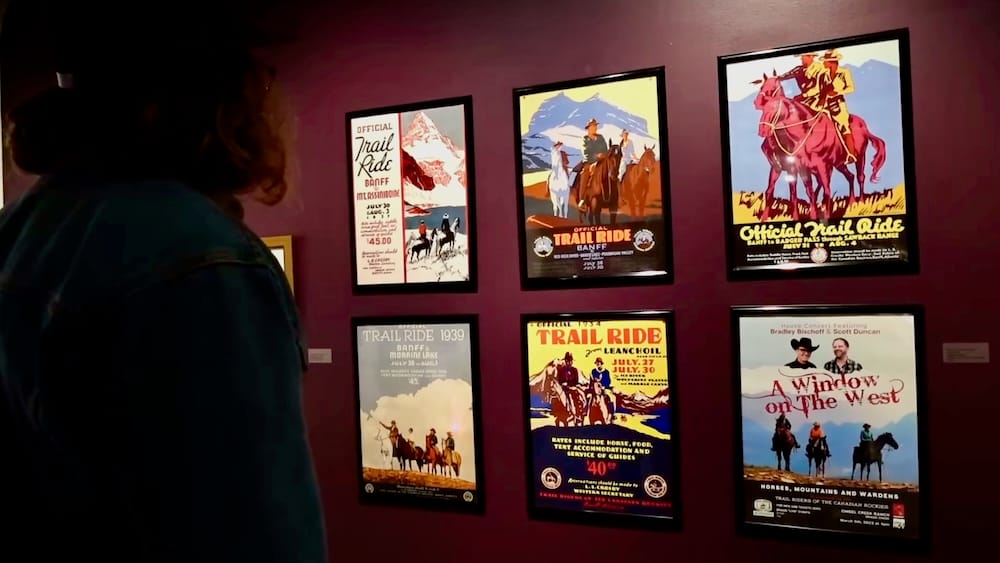
The Founders Gallery was the highlight, but it wasn’t the whole visit. We spent time in the Heritage Gallery too, which covers the region’s broader human history — Indigenous heritage, the railway era, the mountaineering and exploration that shaped early Banff — a noticeably different register than the intimate, personal feel of the founders’ own paintings next door.
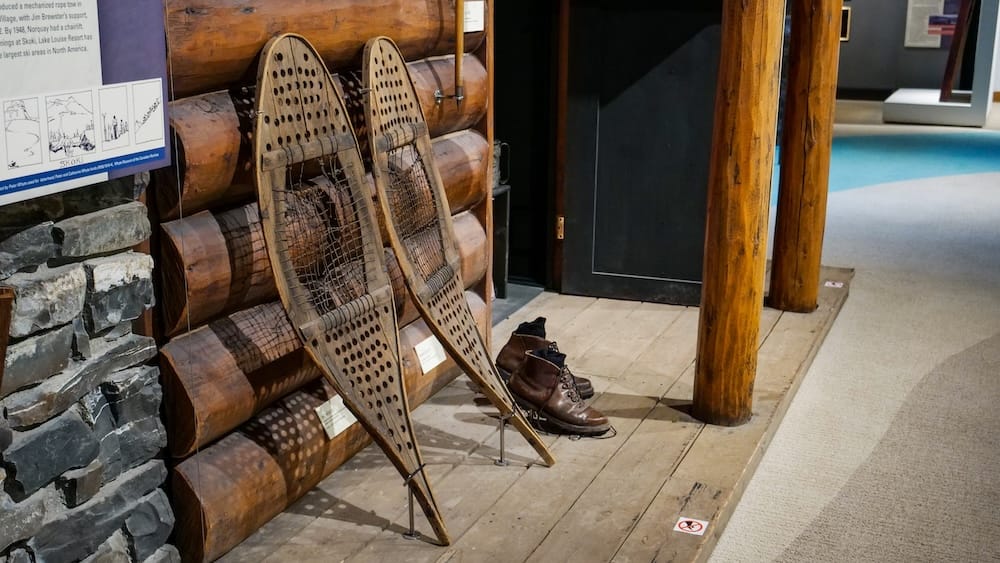
We worked our way through the archives corridor and the reading room as well, and out on the grounds we toured the two historic log homes that are open to visitors in summer, a genuine glimpse at what daily life actually looked like for the people who built up this stretch of the Bow Valley. None of it knocked the Founders Gallery off the top spot for us, but it’s worth knowing this museum earns its “more than paintings” reputation. There’s a full afternoon here if you want to spend it.
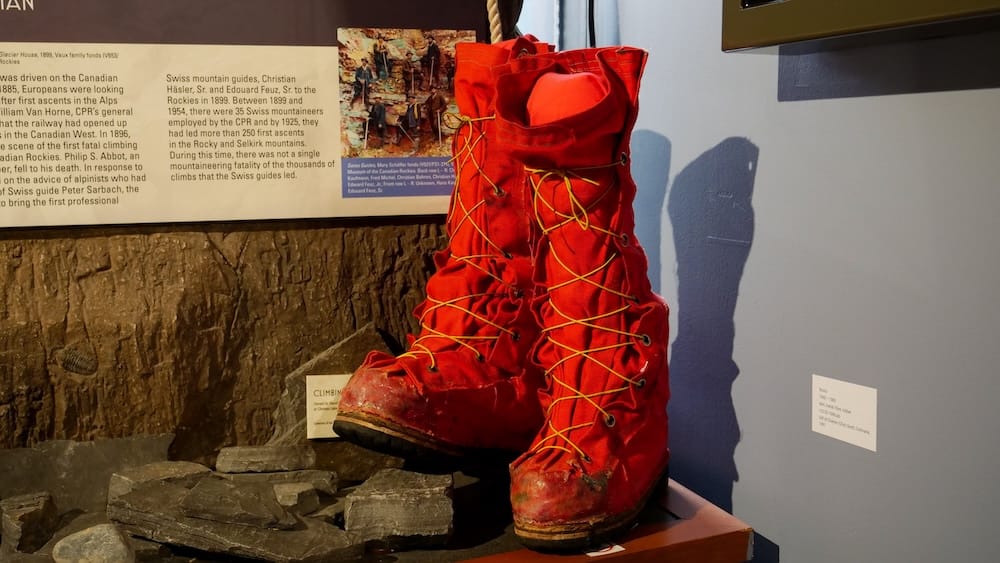
Having now seen the whole thing, I’d still say the founders’ own gallery is the part most likely to stay with you. It’s also fair to say the museum leans harder into Peter and Catharine’s personal story than a first-time visitor might expect from something billed as covering the whole region’s culture and history. If you’re hoping for an Indigenous and regional-history museum first and an art gallery second, budget your time accordingly. If you’re drawn to the founders’ own story, the balance is exactly right.
What a Visit Actually Costs
| Category | Details |
|---|---|
| Location | 111 Bear Street, Banff |
| Museum hours | Daily, 10 a.m.–5 p.m. (closed Sept. 30, Dec. 24–26, and Jan. 1) |
| Archives & library hours | Tuesday–Friday, 1–5 p.m., by appointment |
| Admission | Adult $15 · Senior/Student $12.50 · Local $10 · Youth under 17 free |
| Time needed | About an hour up to a couple of hours, longer with a guided tour |
| Good for | Art and Rocky Mountain culture enthusiasts; travelers who want the region’s human story, not just its scenery |
| Less ideal for | Visitors expecting the founders’ own art to take a back seat to broader regional history |
That admission price is worth pausing on: it runs noticeably higher than some of Banff’s other museum stops, which matters if you’re budgeting a multi-museum day rather than treating this as a quick add-on.
If you’re still working out where to base yourself for a day like this, the Whyte Museum sits close enough to central Banff that hotel location matters more than proximity to any single attraction — most downtown options put you within walking distance of it, Banff Park Museum, and the Bow River all at once. Travelers still deciding where to stay can compare current hotel options in Banff and sort by location or price before locking in a base for the trip.
Whether Two Paintings Are Reason Enough
For us, they were. Not because the museum lacks range — we worked through the Heritage Gallery, the archives, the historic homes, all of it — but because that one room, the Founders Gallery, did something the rest of the museum, good as it was, didn’t: it changed what was actually on our itinerary. If you’re drawn to Rocky Mountain art, or you like the idea of a gallery visit sending you somewhere rather than just filling an afternoon indoors, this delivers. Go in knowing it leans heavily on its founders’ own work rather than trying to be everything at once, and it’s a genuinely worthwhile stop — the kind where you walk out with a place on your map that wasn’t there a few hours earlier.
Frequently Asked Questions
What is the Whyte Museum of the Canadian Rockies known for?
It was founded by Peter and Catharine Whyte, two Banff-based artists known for their landscape paintings of the Rockies, and it grew out of their own work and the collection of regional art, photographs, and artifacts they built up over decades. The museum opened in 1968 and now includes an art gallery, a Heritage Gallery, archives, and two historic log homes on the grounds.
What’s inside the Founders Gallery?
The Founders Gallery holds Peter and Catharine Whyte’s own landscape paintings — mountains, lakes, glaciers, and dense mountain forest. These are records of specific real places the couple hiked to and painted in person, including Lake O’Hara.
Is the Whyte Museum just an art gallery?
No. Beyond the Founders Gallery, I also walked through the Heritage Gallery, which covers the region’s broader human history, along with the archives, the reading room, and two historic log homes open to visitors in summer. The founders’ own art is still the strongest part of the museum, but there’s a full afternoon of content here if you want it.
How is the Whyte Museum connected to Lake O’Hara?
One of Peter Whyte’s paintings in the Founders Gallery, dated 1930, depicts Lake O’Hara, a lake he and Catharine returned to repeatedly early in their time together. Lake O’Hara itself sits in Yoho National Park in British Columbia, not far from Lake Louise, and access is managed through a Parks Canada shuttle reservation system rather than a bookable tour.
What are the current hours and admission fees?
The museum is open daily from 10 a.m. to 5 p.m., with holiday closures around Christmas and New Year’s. Admission runs $15 for adults, $12.50 for seniors and students, $10 for locals, and it’s free for anyone under 17.
How much time should I budget for a visit?
Plan on about an hour up to a couple of hours, depending on how much of the museum you want to see. It runs longer if you add a guided tour of the historic homes.
Is the Whyte Museum of the Canadian Rockies worth visiting?
For me, yes — not because it covers everything comprehensively, but because the Founders Gallery specifically changed what was on my own itinerary. If you’re drawn to Rocky Mountain art or like the idea of a museum visit pointing you toward a real destination, it delivers. Just know going in that it leans heavily on the founders’ own story rather than trying to be a complete regional history museum first.
This article is also available in Spanish. [Leé la versión en castellano: Reseña del Whyte Museum of the Canadian Rockies: dónde vive el arte de las Rocallosas]
This article contains affiliate links. If you book through one of these links, I may earn a commission at no extra cost to you.