
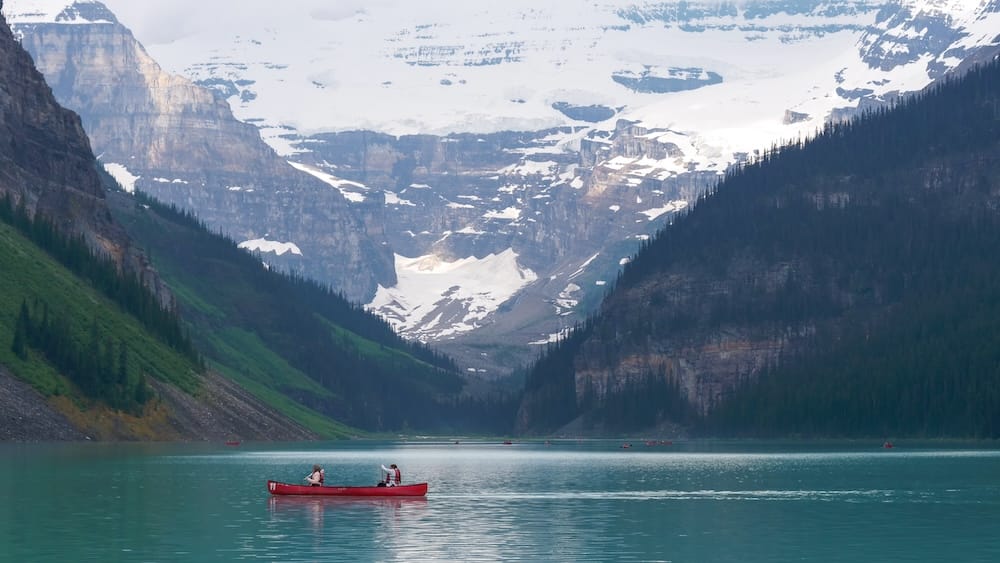
Our private tour guide quoted us a canoe rental price at Lake Louise, and before we’d even finished reacting to it, she’d already named a cheaper lake nearby offering roughly the same experience. That one small moment, price and alternative arriving in the same breath, has stuck with me more than almost anything else I’ve noticed about money in Banff. This isn’t a place where everything costs the same amount of “expensive.” It’s a place with a small number of genuinely worthwhile splurges sitting right next to comparably good, cheaper alternatives, and most visitors never get told which is which.
The honest starting point is that yes, Banff is expensive, especially where accommodation is concerned. Hotel rates across the region hit record highs this year. But there’s a wrinkle worth knowing if you’re coming from south of the border: a weak Canadian dollar means the actual out-of-pocket cost for American visitors has quietly gone down over the past few years, even as the sticker price in Canadian dollars keeps climbing. That’s not a reason to stop paying attention to cost. It’s a reason to pay attention to the right numbers rather than the first big one you see.
What a Room Actually Costs, and When the Upgrade Is Worth It
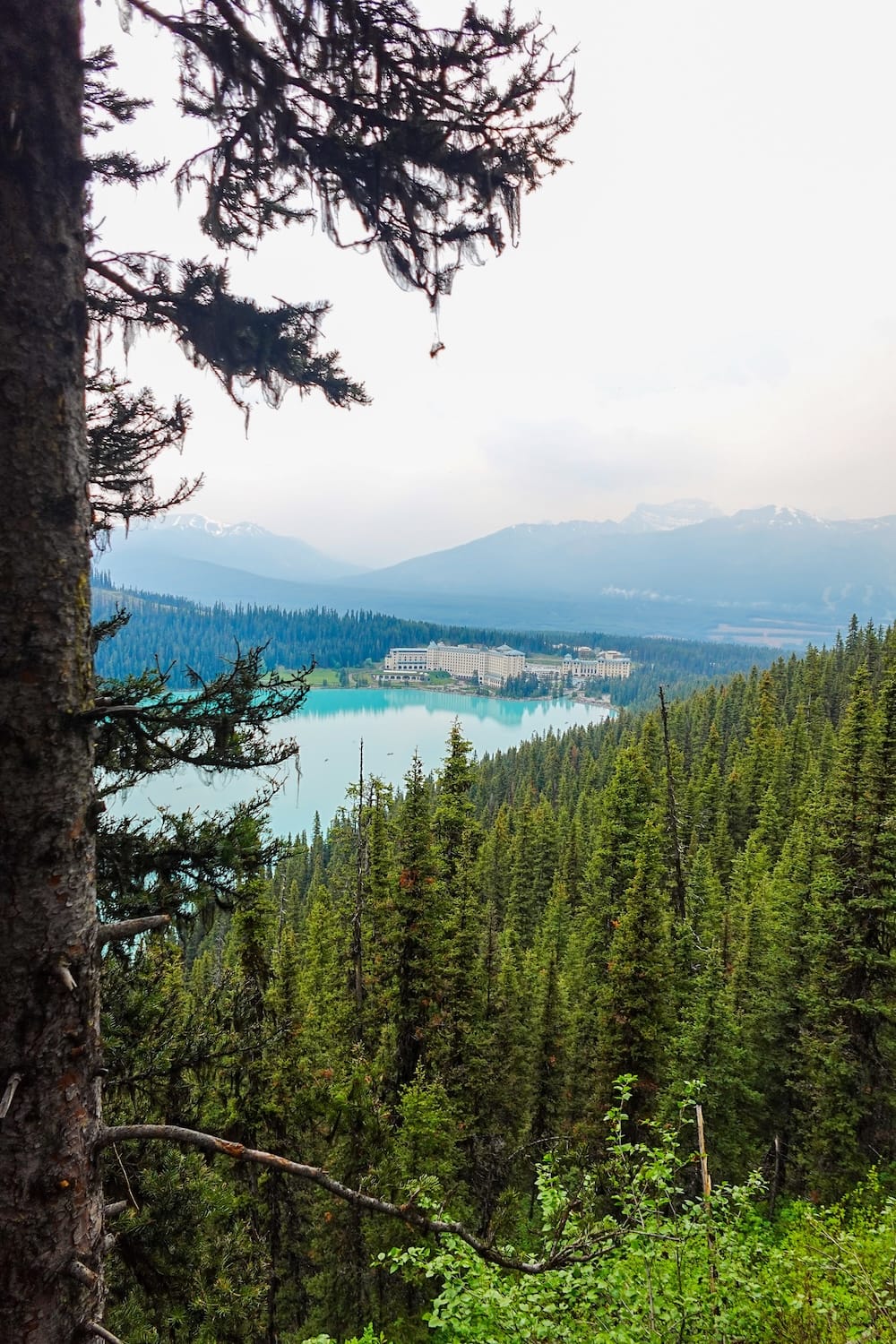
The number that actually made Audrey laugh was a different one, from the same tour. As we passed the Fairmont Chateau Lake Louise, our guide mentioned that some of the lake-view rooms go for around $2,500 a night in summer. Audrey’s response was immediate: “cha-ching,” followed by pricing it firmly out of our range and floating the idea of maybe staying there one day, during low season instead. That reaction has aged well. Peak-season rates at the Chateau still average somewhere around $1,400 a night, with the top room categories climbing well past $2,500 into the mid-three-thousands, and there’s now a $50-per-room, per-night resort fee stacked on top before taxes even enter the picture. It’s a beautiful hotel. It’s also not where most people’s Banff budget should go.
Below that tier, the picture changes considerably. Budget travelers can find campgrounds for roughly $27 to $43 a night, or hostel beds running $60 to $100 in peak season. Mid-range hotels in Banff townsite typically run $250 to $400 a night in summer, dropping to $120 to $200 in the quieter shoulder and winter months. The other Fairmont in town, the Banff Springs, starts around $400 and climbs past $800 on the busiest dates, putting it in roughly the same conversation as the Chateau without quite reaching its ceiling; if that tier of stay interests you, it’s worth being able to compare current luxury properties in Banff National Park side by side rather than booking the first name you recognize. If you’re willing to trade a twenty-minute drive for savings, hotels in Canmore typically run twenty to thirty-five percent cheaper than the equivalent room in Banff townsite, which adds up fast once you’re comparing several nights.
None of that makes the Fairmont a bad choice for someone who wants exactly what it offers. It just confirms Audrey’s instinct was the right one for us: the upgrade from a solid mid-range room to a lake-view suite buys you a specific, real thing, the view, the location, the full-service resort experience, and it’s worth being honest with yourself about whether that specific thing is what you’re actually paying for, or whether you’re paying for the name.
Where Food Spending Actually Changes the Meal
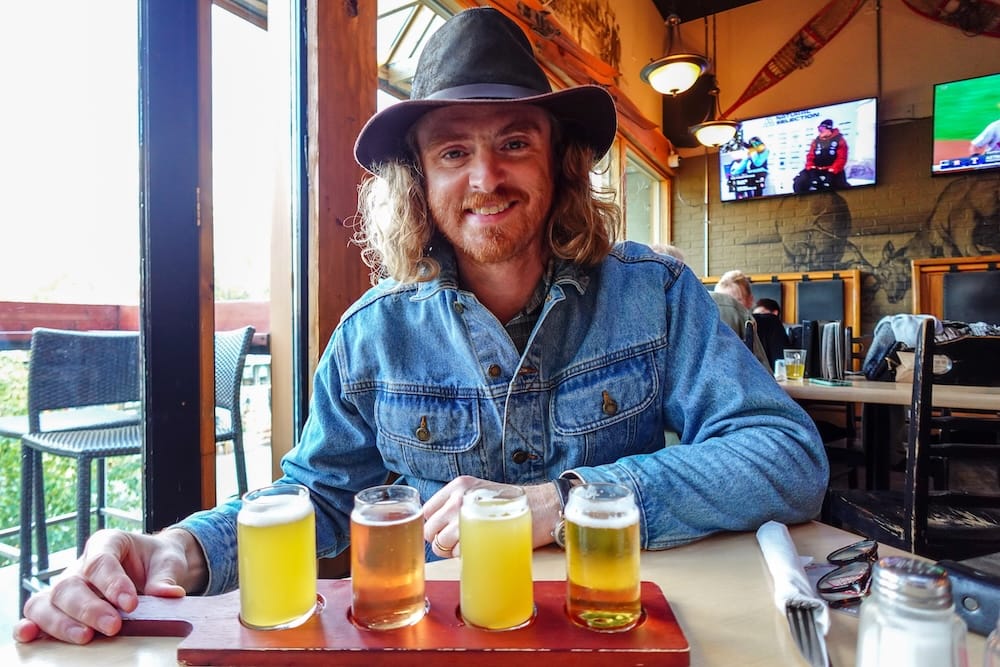
Food is where I have the least price data and the most enthusiasm, which is its own kind of useful information. Across a multi-day trip built around a Vietnamese lunch spot, a steakhouse dinner, and a separate izakaya night, I never once caught what any of it actually cost, but every single meal earned the same word: delicious. That consistency matters more than it might seem. It suggests Banff’s food scene doesn’t have a sharp cliff between “acceptable” and “actually good” the way some tourist towns do.
For planning purposes, expect roughly $70 to $100 a day for casual and mid-range dining, and $150 to $250 a day if you’re leaning into fine dining every night. The mistake I’d actually flag isn’t picking an expensive restaurant once. It’s stacking three restaurant meals a day for an entire trip without noticing how fast that adds up, an easy enough habit to fall into on vacation, and one of the quieter ways a Banff trip’s food budget gets away from people.
The One Splurge the Evidence Actually Backs: Going Deep, Not Wide
I should be upfront about something before making this case: my six-day backcountry horse trek came to me through a partnership with Banff Trail Riders, not out of my own pocket. That matters for how you read what follows, because the argument here isn’t “I paid four figures and it was worth it.” It’s closer to what I actually noticed happening to me over six days, which I think holds up regardless of who covered the bill.
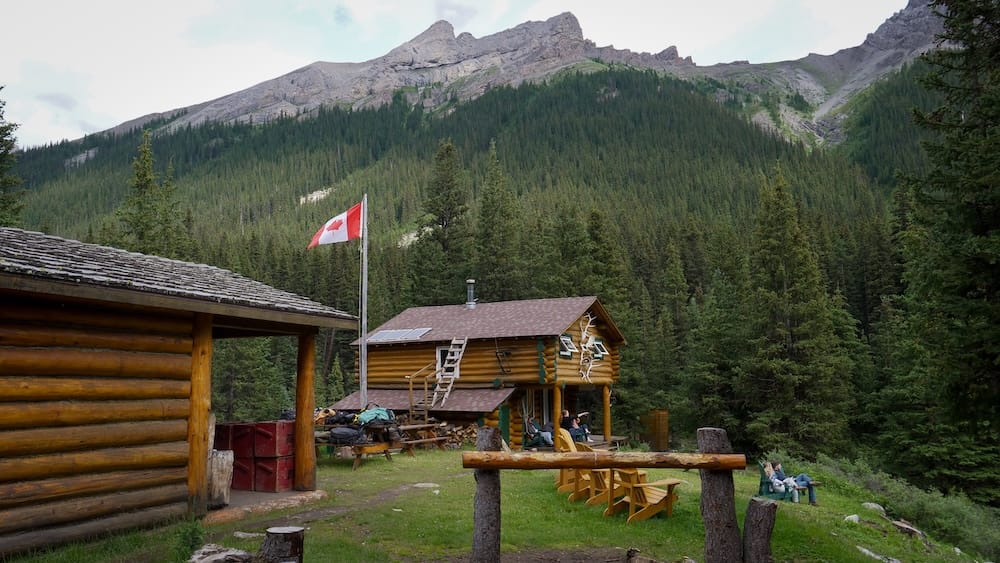
If you’d asked me halfway through whether the experience was worth what it costs, the honest answer changed by the hour. Early on, still adjusting to the saddle and the silence, I wasn’t sure. By the time I reached Halfway Lodge, and especially once I’d made it up and over Allenby Pass into terrain that felt almost prehistoric, the question had answered itself. That word kept surfacing unprompted, at different points on different days: worth it. Worth the effort to get up here. By the end, I wasn’t just satisfied. I was already thinking about doing it again.
For anyone actually booking this trip, it runs firmly into four figures. Comparable multi-day backcountry pack trips in this category currently land somewhere between $1,800 and $4,200 or more per person, all-inclusive of lodging, guiding, and meals, and I’d treat that as a rough planning range rather than an exact quote, worth checking directly with the outfitter before you book. That’s a serious amount of money for six days away, partnership or not, and the reason I’d still defend it without hesitation comes down to what that kind of investment actually buys. It isn’t comfort or status. It’s time. Real immersion doesn’t happen on day one. It happens somewhere around day four or five, once you’ve stopped mentally rehearsing whatever you left back home, and a shorter, cheaper version of that same trip can’t buy you that, because the thing being purchased is the fifth consecutive day itself.
What to Skip Without Missing Much
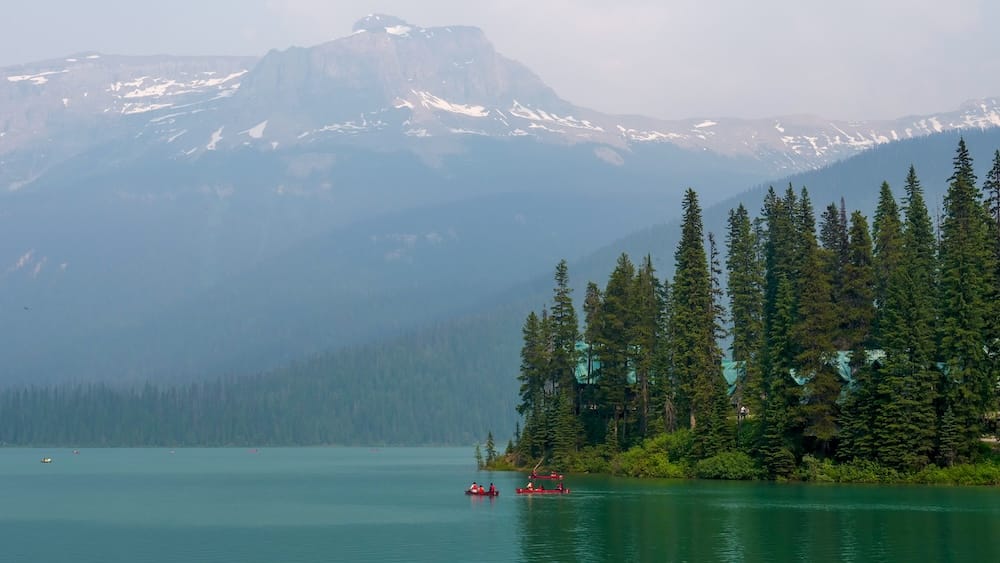
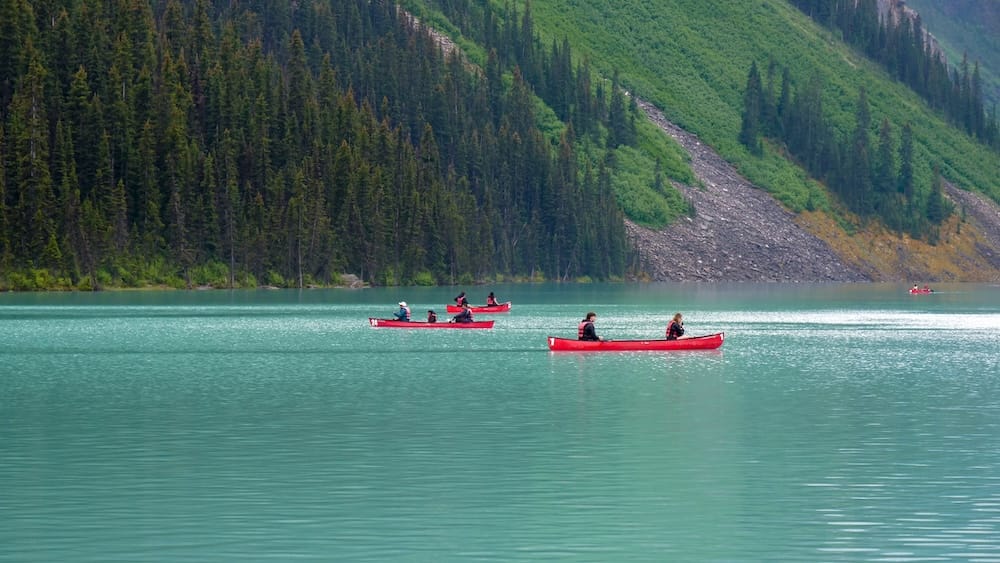
Not every expensive thing in Banff earns its price the way the trek did, and the guide who quoted us that canoe rental gave us the cleanest possible example of why. Canoeing at Lake Louise runs around $180 an hour. Emerald Lake, a short distance away, offers essentially the same experience for roughly $80. Same activity, same category of scenery, less than half the price, and nobody had to ask.
That instinct, more than any single tip, is the one worth carrying into your own trip. Banff rewards walking around more than it rewards booking around. The Bow River Trail costs nothing. So does wandering downtown, or sitting by Bow Falls, or simply looking up at the mountains that are, after all, the entire reason anyone comes here. For ten weeks this summer, running June 19 through September 7, Parks Canada is even waiving park admission entirely through the Canada Strong Pass, though that only covers the gate itself, not parking, food, or any of the activities inside it. The trap I’d actually warn you about isn’t any one paid attraction. A gondola ride, a boat tour, a spa afternoon, a guided walk, a canoe rental, a lift ticket: every one of those is defensible on its own. Stack five or six of them into a single trip without noticing, though, and you’ve built an expensive week almost by accident, out of choices that each looked completely reasonable in isolation.
Matching Spending to What Actually Matters to You
Put all of this together, counting accommodation and food as a combined daily spend rather than separate line items, and Banff sorts fairly cleanly into three real tiers, not just a vague sense that it’s pricey.
| Roughly what it costs per day | What it gets you | |
|---|---|---|
| Budget | $80–120 | Camping or hostel stays, self-catered or casual meals, free trails and viewpoints, one or two paid activities chosen carefully |
| Mid-range | $250–350 | A comfortable townsite or Canmore hotel, a mix of casual and sit-down meals, room for a paid activity or two without agonizing over each one |
| Luxury | $500–800 or more | Fairmont-level accommodation, fine dining most nights, and the freedom to book whatever catches your eye |
None of those tiers is the “correct” way to visit. What I’d actually tell you, after weighing Banff at several very different price points, is to stop asking whether Banff is expensive and start asking where your own money changes the experience. For us, that turned out to be a specific, honest, unglamorous answer: skip the lake-view room, take the cheaper canoe, and if you’re only going to spend big on one thing, spend it on enough days in one place to actually feel different by the end of them. That’s the upgrade that held up for me, partnership or not. Everything else was just a nicer version of something a cheaper option already did well.
Frequently Asked Questions
Is Banff an expensive place to visit?
Yes, especially accommodation, where hotel rates hit record highs this year. But it isn’t uniformly expensive. There are a small number of genuinely worthwhile splurges sitting right next to comparably good, cheaper alternatives, and the real skill is knowing which is which rather than assuming every price tag reflects real value.
How much does a hotel room cost in Banff?
Budget travelers can find campgrounds for roughly $27 to $43 a night or hostel beds for $60 to $100 in peak season. Mid-range hotels in Banff townsite typically run $250 to $400 a night in summer, dropping to $120 to $200 in the quieter months. Luxury properties like the Fairmont hotels start around $400 and climb well past $2,500 for premium categories. Staying in Canmore instead usually saves twenty to thirty-five percent over an equivalent Banff townsite room.
Is it worth staying at the Fairmont Chateau Lake Louise?
For us, no. A guide once quoted us a lake-view room rate of around $2,500 a night, and my honest reaction, along with Audrey’s, was to price it out of range rather than book it. Peak-season rates there still average around $1,400 a night, plus a $50 nightly resort fee. It’s a genuinely beautiful hotel, but the upgrade is paying for the view and the name as much as anything else, and that’s worth being honest with yourself about before booking.
How much should I budget for food in Banff?
Expect roughly $70 to $100 a day for casual and mid-range dining, or $150 to $250 a day if you’re eating fine dining every night. The bigger risk isn’t one expensive meal. It’s stacking three restaurant meals a day for an entire trip without noticing how quickly that adds up.
Is a multi-day horseback trip with Banff Trail Riders worth the cost?
Based on my own six-day trek, yes, though I should note that trip came to me through a partnership rather than out of my own pocket. Comparable multi-day backcountry pack trips currently run somewhere between $1,800 and $4,200 or more per person, and I’d treat that as a planning range rather than an exact quote. What makes the investment worth it isn’t comfort, it’s immersion, which genuinely takes four or five consecutive days to kick in.
Where can I save money in Banff without missing much?
Canoeing at Lake Louise runs around $180 an hour, while Emerald Lake nearby offers a similar experience for roughly $80. More broadly, walking Banff’s free trails and townsite delivers a lot without spending anything, and the real budget trap is stacking several individually reasonable paid activities, a gondola ride, a boat tour, a spa visit, until they quietly add up to an expensive week.
Does Banff waive park entry fees in 2026?
Yes, for ten weeks this summer, from June 19 through September 7, Parks Canada is waiving park admission through the Canada Strong Pass. That covers entry only, not parking, food, or paid activities inside the park.
This article is also available in Spanish. [Leé la versión en castellano: ¿Banff es caro? Dónde gastar más realmente hace la diferencia]
This article contains affiliate links. If you book through one of these links, I may earn a commission at no extra cost to you.