
A six-day horse trek sounds fairly simple when you reduce it to an itinerary. Ride from Banff to a backcountry lodge, keep going deeper into the mountains, spend a few nights at another lodge, ride over a mountain pass, take a rest day and eventually turn around.
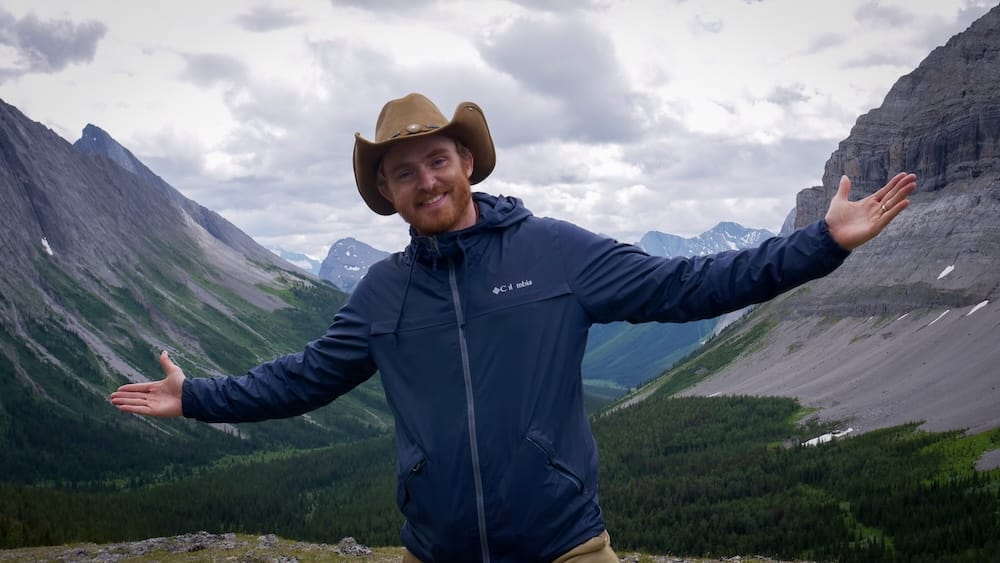
Actually living it felt nothing like checking off six boxes.
I joined Banff Trail Riders for a six-day, five-night trip through the Banff backcountry during summer. I expected the scenery to change as we moved deeper into the Canadian Rockies, but I hadn’t really thought about how much the rhythm of the trip would change too. The first day was partly about remembering how to ride a horse again. The second took us farther from Banff and included a memorable run-in with hornets. Day 3 brought the biggest mountain riding of the trip at Allenby Pass. Day 4 took the horses out of the equation completely while we hiked through cold rain. Then the final two days slowly reversed the journey.
That variety is what stopped six days from feeling like one enormously long horseback ride.
The current published itinerary still follows essentially the same structure I experienced: five riding days and one rest day based at Halfway Lodge. Mountain conditions can influence exactly how individual days unfold, so I wouldn’t assume every departure will play out minute for minute the way mine did, but this was my six-day sequence.
| Day | Main route or activity | Where I slept | Riding or off-horse | What defined the day for me |
|---|---|---|---|---|
| 1 | Banff to Sundance Lodge | Sundance Lodge | Riding | Meeting Hollywood and discovering what several hours in the saddle did to my legs |
| 2 | Sundance to Halfway Lodge | Halfway Lodge | Riding | Going noticeably deeper into the backcountry and dealing with the hornet incident |
| 3 | Allenby Pass | Halfway Lodge | Riding | The biggest mountain riding day of the trip |
| 4 | Lake Matthias hike | Halfway Lodge | Off-horse | Cold rain, a steep hike and a welcome break from the saddle |
| 5 | Halfway to Sundance Lodge | Sundance Lodge | Riding | Beginning the journey out and seeing familiar places differently |
| 6 | Sundance to Banff | — | Riding | The final return and realizing how quickly six days had disappeared |
If the full itinerary is already the kind of trip you’re considering, you can check the 6-Day Halfway Lodge Backcountry Trip by Horseback on Viator. If six days sounds intriguing but slightly unhinged as a first commitment to horseback riding, I’ve also included several shorter Banff options later in the article.
Day 1: Banff to Sundance Lodge
Day 1 had one very important job for me: get reacquainted with being on a horse without immediately throwing me into the deep end.
I hadn’t been riding extensively before this trip, and six days in the backcountry represented a pretty big leap from the shorter horseback experiences I’d done in the past. Before worrying about mountain passes or remote lodges, I first had to meet the animal who would be carrying me through most of it.
That was Hollywood.
Hollywood had character. He was experienced and dependable, but he also had an independent streak that became increasingly obvious as the trip went on. I remember trying to establish our relationship early with the sort of confidence you manufacture while secretly hoping the horse doesn’t notice he knows considerably more about this activity than you do. My strategy was basically: here’s how we become best friends. Apples. Let me give you apples.
The first stretch of riding was fairly forgiving and gave me some time to settle in. We followed the route away from Banff through the Bow River area toward Healy Creek, where we stopped for lunch. The current itinerary puts the full first-day route to Sundance Lodge at roughly ten miles, so even though the opening portion felt introductory, this was not an hour-long trail ride followed by an afternoon lounging around a lodge.
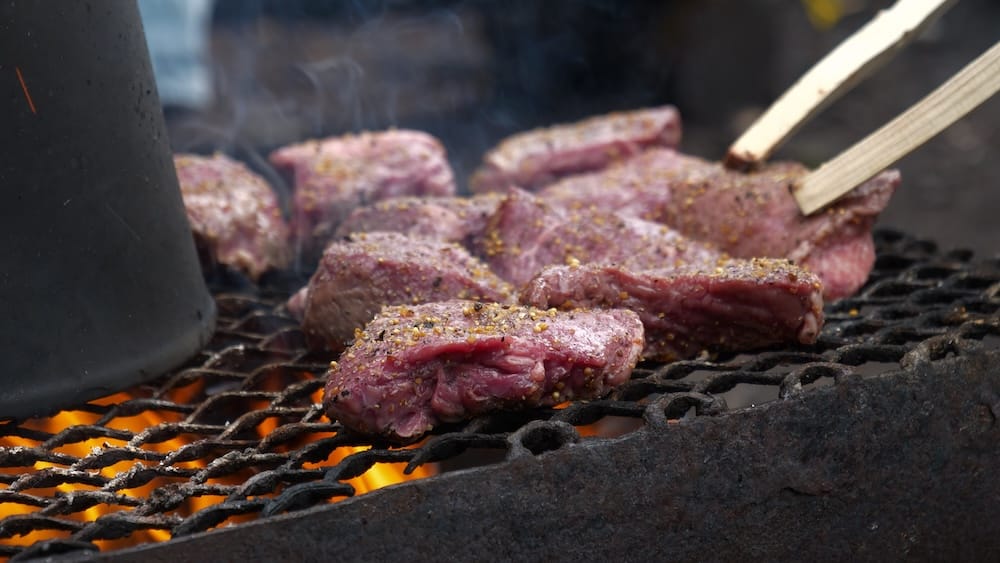
Lunch also introduced another recurring feature of the trip: horseback riding made me ravenously hungry. We had steak, potato salad, cowboy coffee and a cookie that looked as though it had been designed for someone who had recently crossed the continent in a covered wagon.
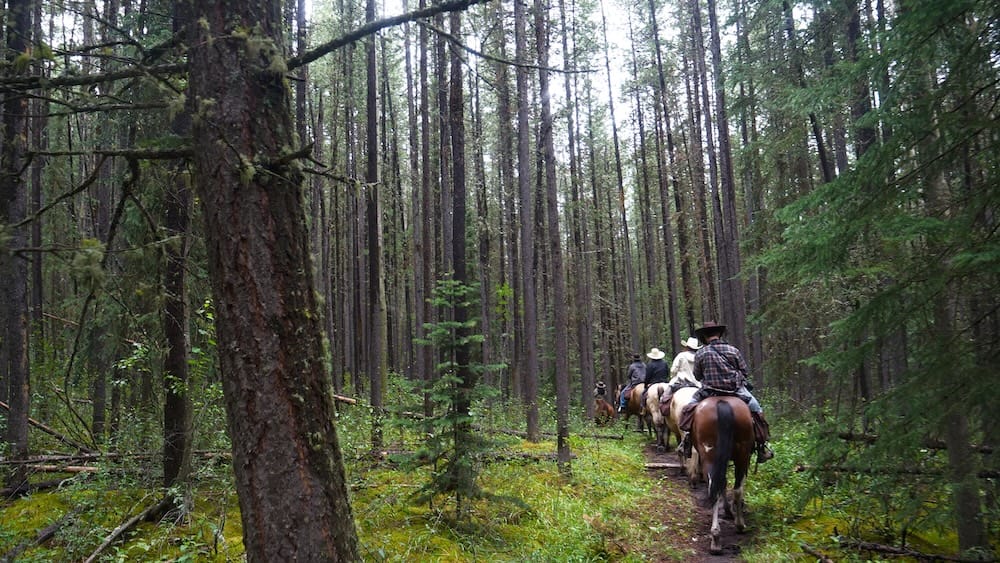
The weather wasn’t perfect. We had some rain, which limited how much I filmed, but after lunch the riding started to feel more like the adventure I had imagined. The trail twisted through denser forest, we crossed creeks and the mountains gradually stopped feeling like scenery sitting in the distance. We were travelling through them now.
By the time we reached Sundance Lodge, my confidence was doing considerably better than my legs. They felt like Jell-O, and getting off Hollywood after several hours in the saddle produced that strange wobbling sensation where your brain remembers how walking works but your lower body has apparently resigned from the project.
Stretching out near the fireplace sounded substantially more appealing than any heroic continuation of the day.
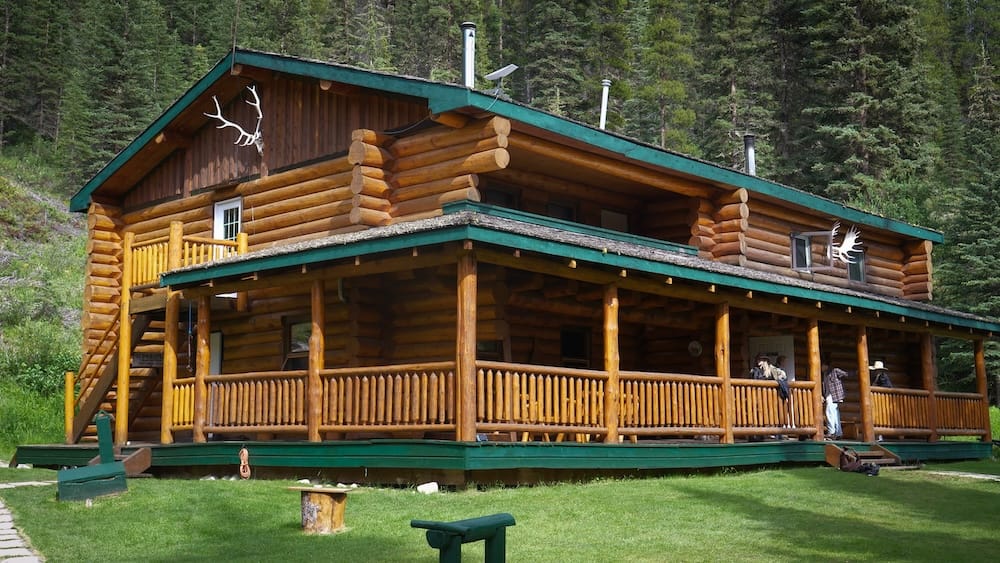
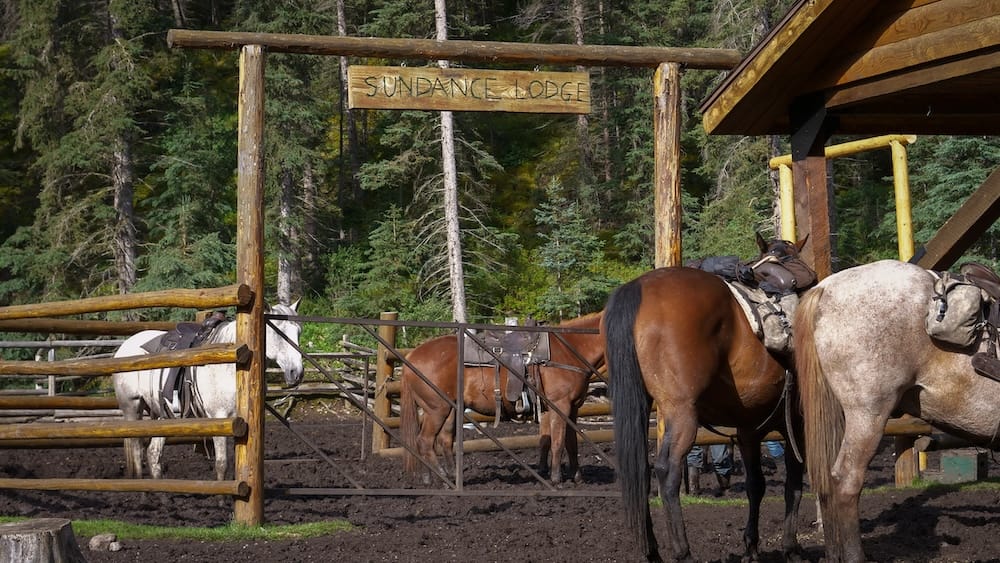
Sundance gave us our first taste of the rhythm that would define lodge life throughout the trip. People gathered around the fire, had drinks, ate together and talked about the day. I also managed a short walk to a nearby lookout, which was a useful reminder that I still technically possessed legs even if they were currently filing a complaint.
Dinner was exactly what I wanted after hours outside: soup, salad, salmon, rice, garlic bread and a cream-cheese cupcake. By then I was done. I went to bed early and slept like somebody who had suddenly discovered that sitting on a horse all day is not the passive activity it appears to be from a distance.
Day 1 wasn’t the most spectacular riding of the trip, nor did it need to be. It introduced me to Hollywood, exposed the first physical reality of spending hours in a saddle and moved us far enough away from Banff that the trip had already become something more substantial than a day tour.
The deeper backcountry part was still ahead.
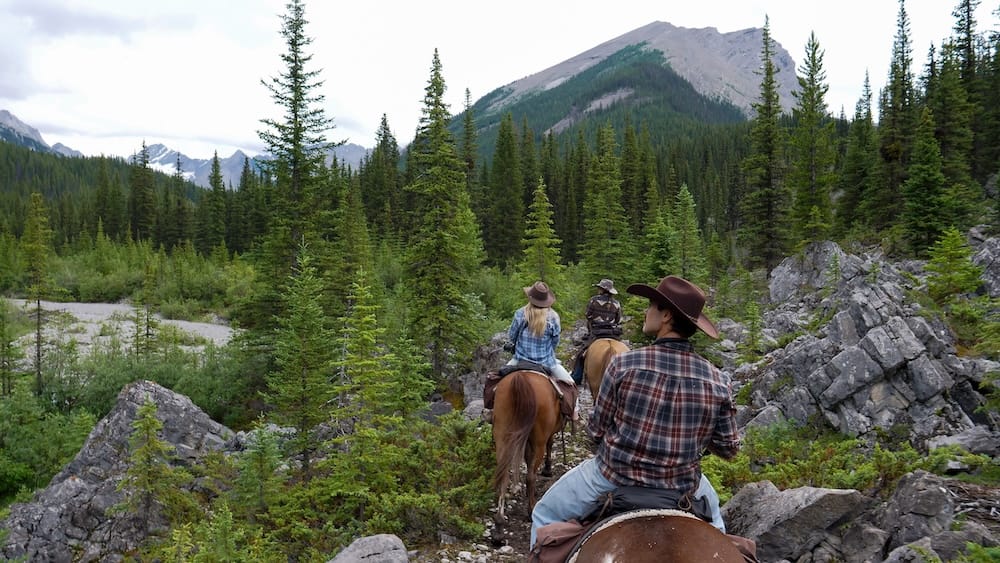
Day 2: Sundance Lodge to Halfway Lodge
I slept hard and woke up ready to eat again, which was fortunate because breakfast involved potatoes, eggs, bacon and homemade chocolate-chip muffins. Nobody was sending us into the mountains underfed.
Day 2 moved us from Sundance Lodge to Halfway Lodge. The current itinerary puts that transfer at roughly nine miles and about five to six hours on the trail including lunch. My own estimate at the time was around 16 kilometres, but there’s no need to wage war over the final kilometre. Either way, this was another full day of travelling by horse.
What mattered more was how different it felt from Day 1.
We moved through creeks, valleys and dense forest, gradually working our way deeper into the Banff backcountry. More mountain ranges were appearing around us, there were more creek crossings and the sense of remoteness kept building.
Then three horses got stung by hornets.
Hollywood was one of them.
That was a useful reminder that a horse is not an ATV with fur. Hollywood started swinging his head like a pendulum and became difficult to keep focused and moving forward. Other horses were reacting too, and for a brief period the orderly rhythm of the ride disappeared.
We eventually got everything under control and continued.
I wouldn’t take one incident and turn it into some sweeping warning about hornets on this trip. It was simply something that happened to our group, but it was also one of the clearest examples of the entire six days that horses have their own personalities and reactions. You can have an experienced animal beneath you and still need to respond when something unexpected happens.
Hollywood and I were getting to know each other. Getting stung by hornets was perhaps not the bonding exercise either of us would have selected.
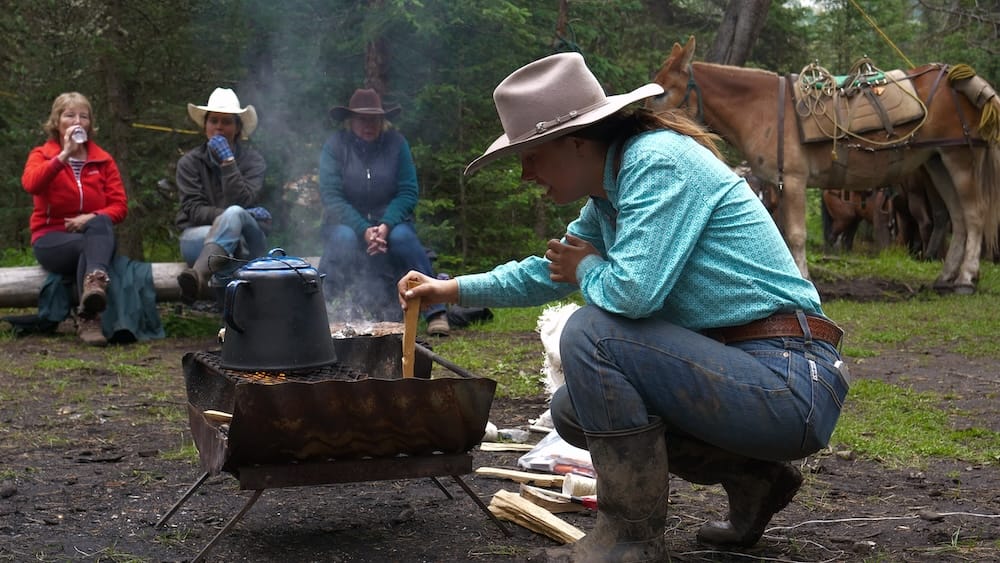
By lunchtime, things had settled down considerably. We stopped for grilled burgers, chips and Snapple, followed by coffee mixed with hot chocolate, which is the sort of beverage combination that makes increasing sense the longer you spend in the mountains.
Then we carried on through more forest, creeks and changing terrain. We passed the remains of an old backcountry cabin known locally as the Turtle Tom cabin, but what stayed with me more strongly was the growing feeling that Banff town was no longer simply somewhere behind us. It was becoming another world.
That became obvious when Halfway Lodge finally appeared.
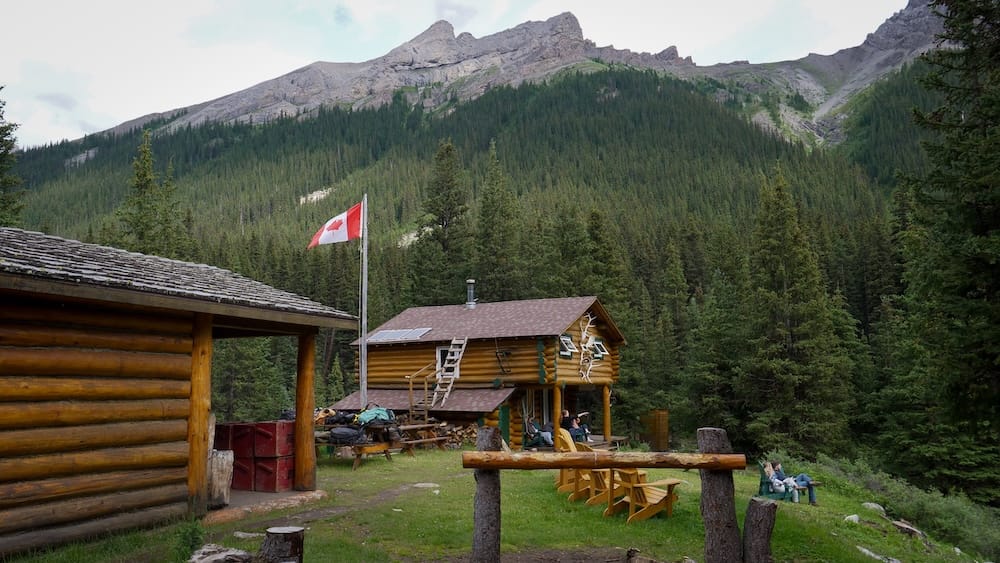
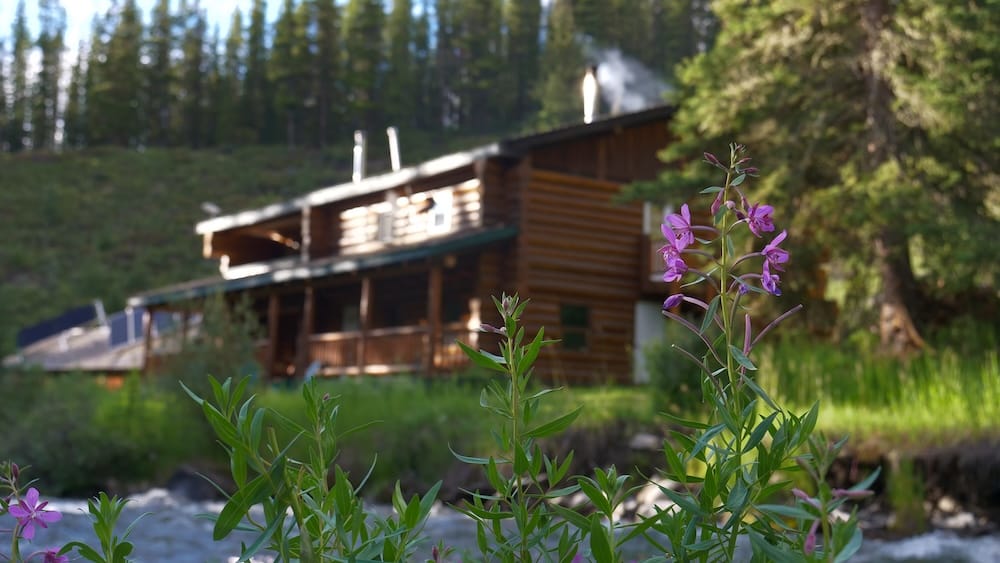
Mountains seemed to rise in every direction, with the lodge tucked into a beautiful valley surrounded by forest and steep rock. Sundance had already felt comfortably removed from mainstream Banff tourism. Halfway felt properly remote.
This was closer to what I had pictured when I signed up for a multi-day horseback trip.
Within about 20 minutes I was already saying I preferred the setting at Halfway. It felt more rustic, more isolated and more connected to the actual journey we were making. I wasn’t conducting a thoughtful accommodation comparison at that point. I had basically just gotten off my horse, looked around and thought, yes, this is it.
We were going to spend three nights there, which turned out to be important. Halfway wasn’t merely somewhere to sleep before immediately moving on again. It became our base for the middle of the trip.
And Day 3 was going to be a very different kind of ride.
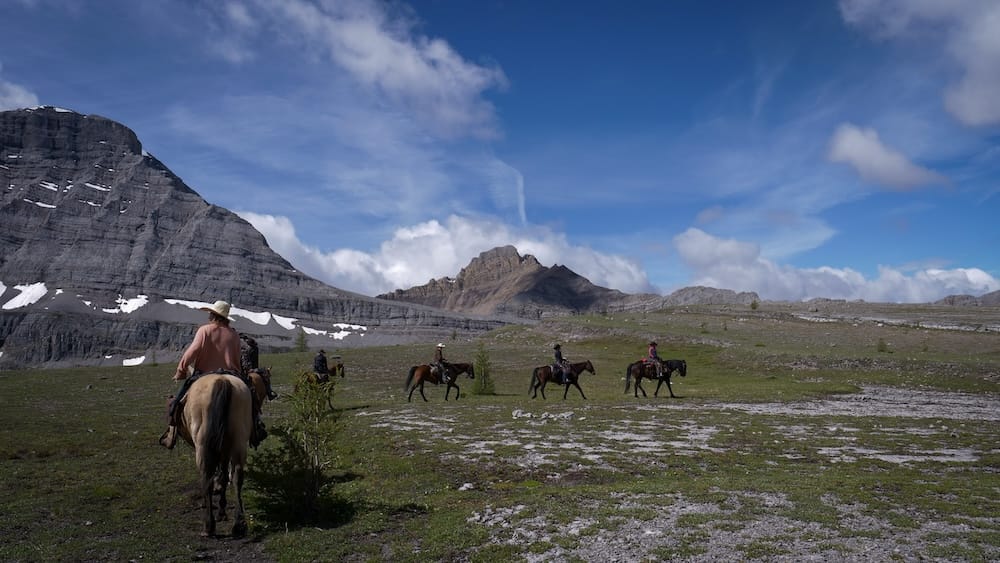
Day 3: Allenby Pass, the biggest riding day of my trip
I woke up after one of the best sleeps I’d had in ages. It was after 7:00 and I had slept straight through the night, which didn’t surprise me much after two full days on horseback. Halfway was peaceful, but my body had also reached the point where midnight negotiations were no longer on the agenda.
The plan wasn’t completely settled when I first got up. Weather and conditions mattered, and there had been discussion about whether we would be hiking or riding that day. After breakfast, Allenby Pass won.
Breakfast itself bordered on absurd in the best possible way: three coffees, chocolate-chip banana pancakes, scrambled eggs and a pork chop.
There are mornings when I eat yogurt. This was not one of them.
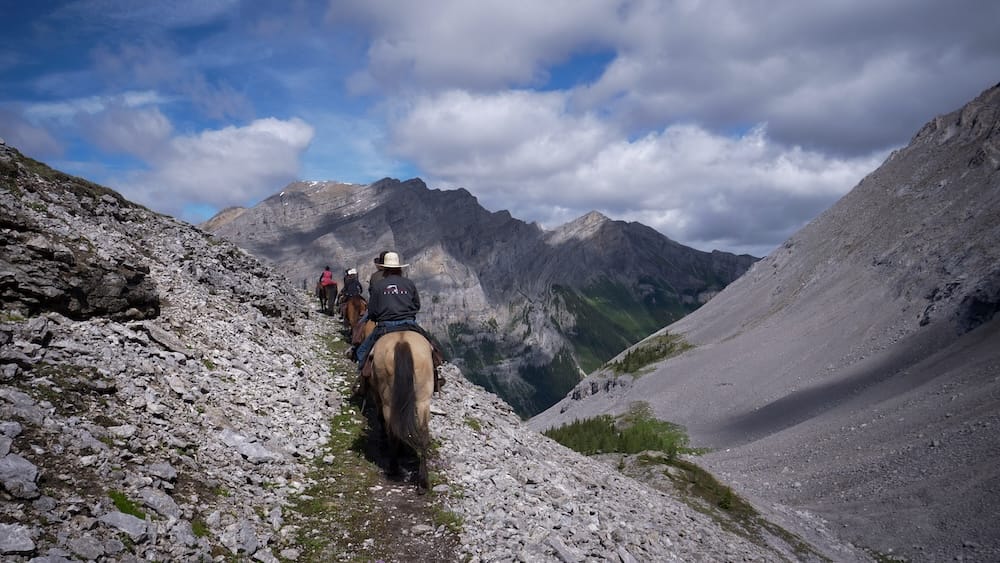
We headed out earlier than normal because poorer weather was expected later, and the difference between this ride and the previous two became obvious very quickly. Instead of mainly covering distance between lodges, we were climbing.
Around 20 minutes into the ascent I could look back and see Halfway Lodge already reduced to something tiny below us.
The current itinerary puts Allenby Pass at roughly 8,100 feet. Interestingly, depending on trail and seasonal conditions, the published riding distance can be only around three to five miles, yet the outing still takes approximately four to six hours plus lunch. That tells you far more about this day than mileage alone.
The horses were working hard enough that they needed regular breaks and water, and watching them climb gave me a completely different appreciation for what they were doing. We were sitting on their backs enjoying the increasingly ridiculous scenery. They were doing the actual labour of getting us up there.
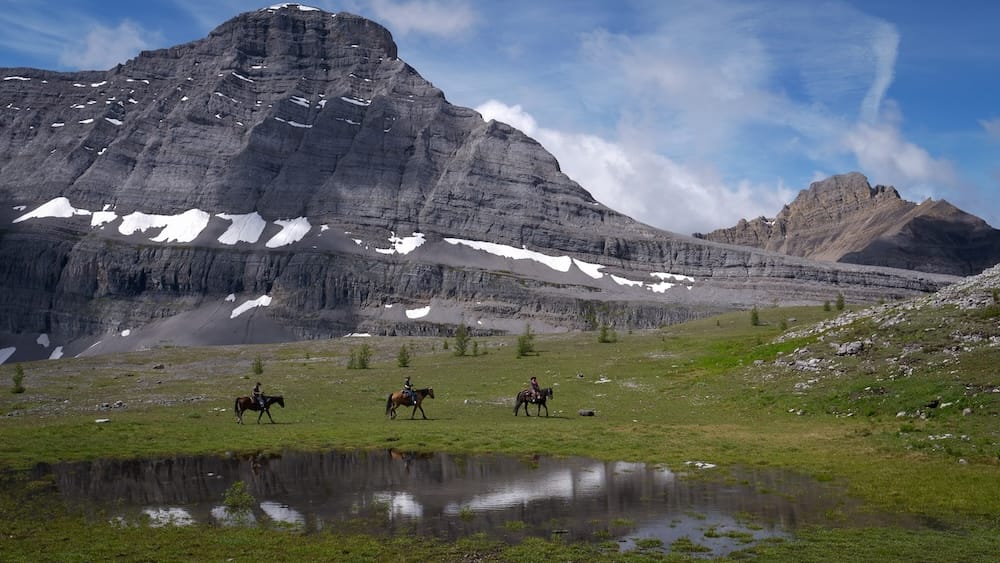
As we climbed, the vegetation gradually disappeared and the landscape changed almost completely. Forest gave way to exposed rock, and the mountains suddenly looked rawer, harsher and much more enormous. I remember thinking it resembled some sort of land before time, with giant slabs of rock rising around us and very little softening the scene.
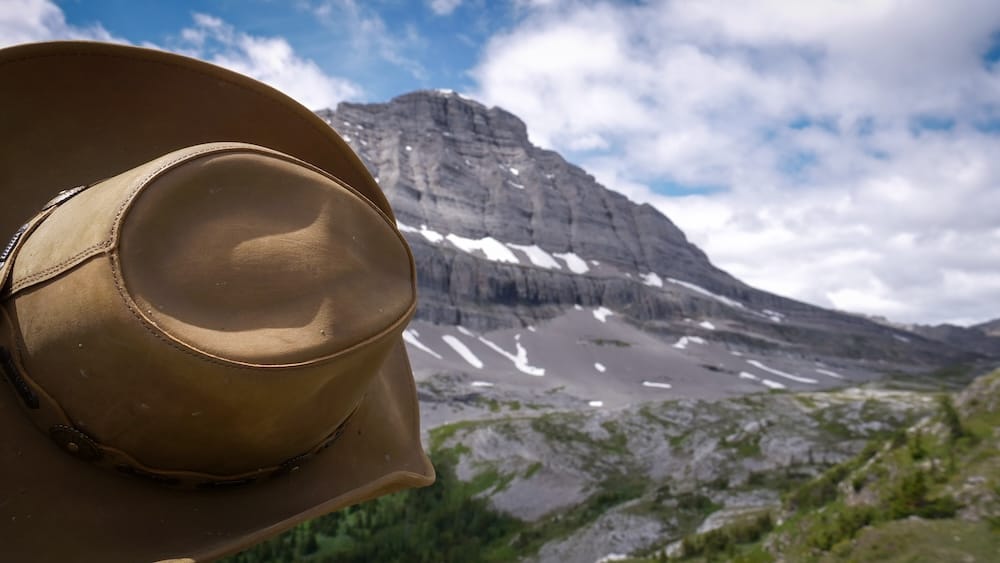
This was the horseback-riding moment I had imagined before the trip without actually knowing what it would look like.
Once we reached the high country, we had time to stop for lunch rather than immediately turning around. We made sandwiches and had jerky, Snapple and granola bars while taking in the views. After watching the horses work their way uphill, sitting there for a while felt earned for everybody.
Allenby also taught me that distance is a poor way to judge a horseback itinerary. Day 2 covered substantially more ground, yet Day 3 felt like the bigger ride because of the elevation, exposed terrain and sheer effort required from the horses.
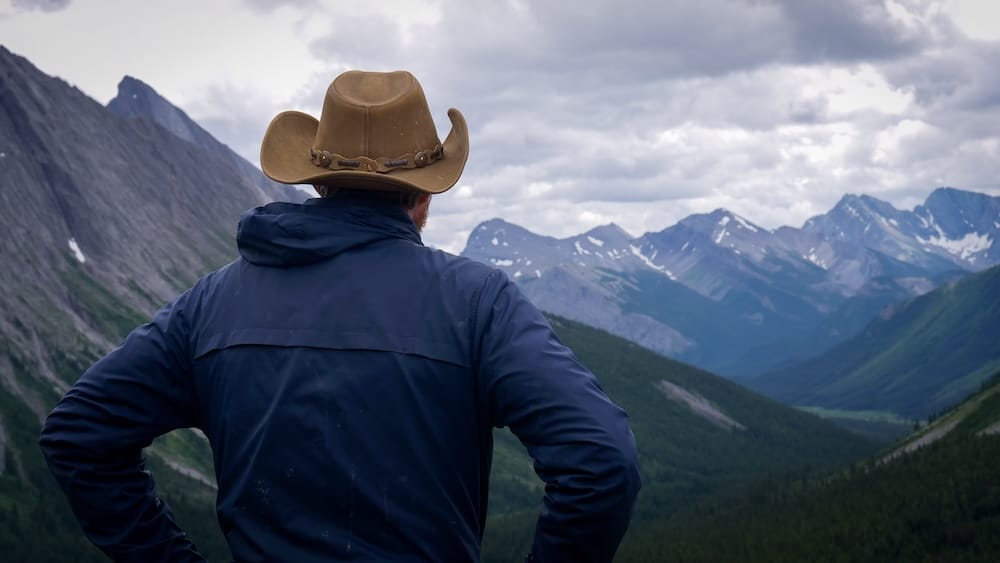
Eventually we started back toward Halfway, where the evening returned to the now-familiar lodge routine: get cleaned up, hang wet riding clothes wherever possible, warm up around the wood stove, eat and talk.
Dinner started with potato-leek soup and Caesar salad with bacon, followed by chicken and ravioli, then chocolate cake. This trip was doing a terrible job of supporting my assumption that backcountry travel should involve quietly suffering through dehydrated noodles.
By the end of Day 3, we had ridden on three consecutive days, travelled through two backcountry lodges and climbed into the most dramatic terrain I’d seen on the trip.
The horses were getting a break the next morning. I was perfectly happy to join them in spirit.
Day 4: A rest day for the horses and a hike to Lake Matthias
Day 4 changed the rhythm completely because, for the first time since leaving Banff, I wasn’t getting on Hollywood.
The horses had earned a rest after three riding days. We could spend the day around Halfway Lodge or head out on foot toward a glacial-fed lake at the end of the valley. Our group chose the hike, although the weather was making a fairly persuasive argument for staying beside the fire.
It was cold, wet and raining.
We spent part of the morning huddled around the fireplace drinking coffee and preparing ourselves to go outside, which takes a particular kind of motivation when you’re already warm and somebody has just explained that most of the climbing comes near the end.
My body was also carrying three days of riding by then, and this was where the rest-day concept became interesting. Walking actually felt restorative at first, not because my legs were doing nothing but because they were finally doing something familiar. There was no saddle under me, my hips could move normally and my body understood the assignment.
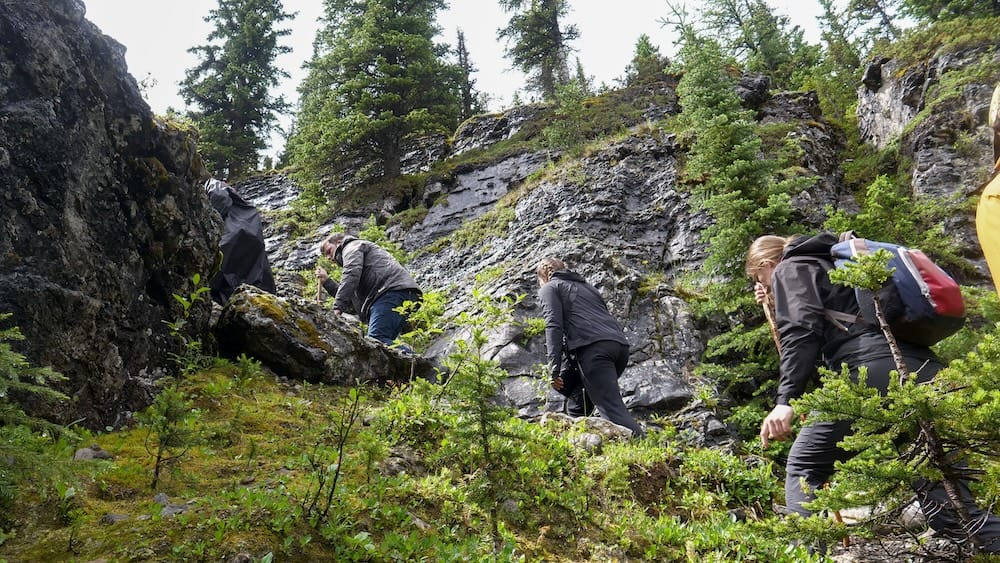
We knew the destination as Lake Matthias. The current six-day itinerary describes Day 4 more generally as a rest day at Halfway with an optional hike to a glacial-fed lake, so I wouldn’t assume that every guest or every departure necessarily follows our exact plan.
The first part of the hike was relatively manageable. Along the way we passed a waterfall and continued deeper into the valley before eventually reaching the much steeper final section.
At that point, calling this a “rest day” started becoming funny. The horses were definitely resting. We were not.
Everyone in our group decided to keep going, and eventually we reached the lake just as the weather began cooperating. The rain eased enough that we could actually see the surrounding basin rather than arriving after all that effort to enjoy a beautifully framed wall of grey.
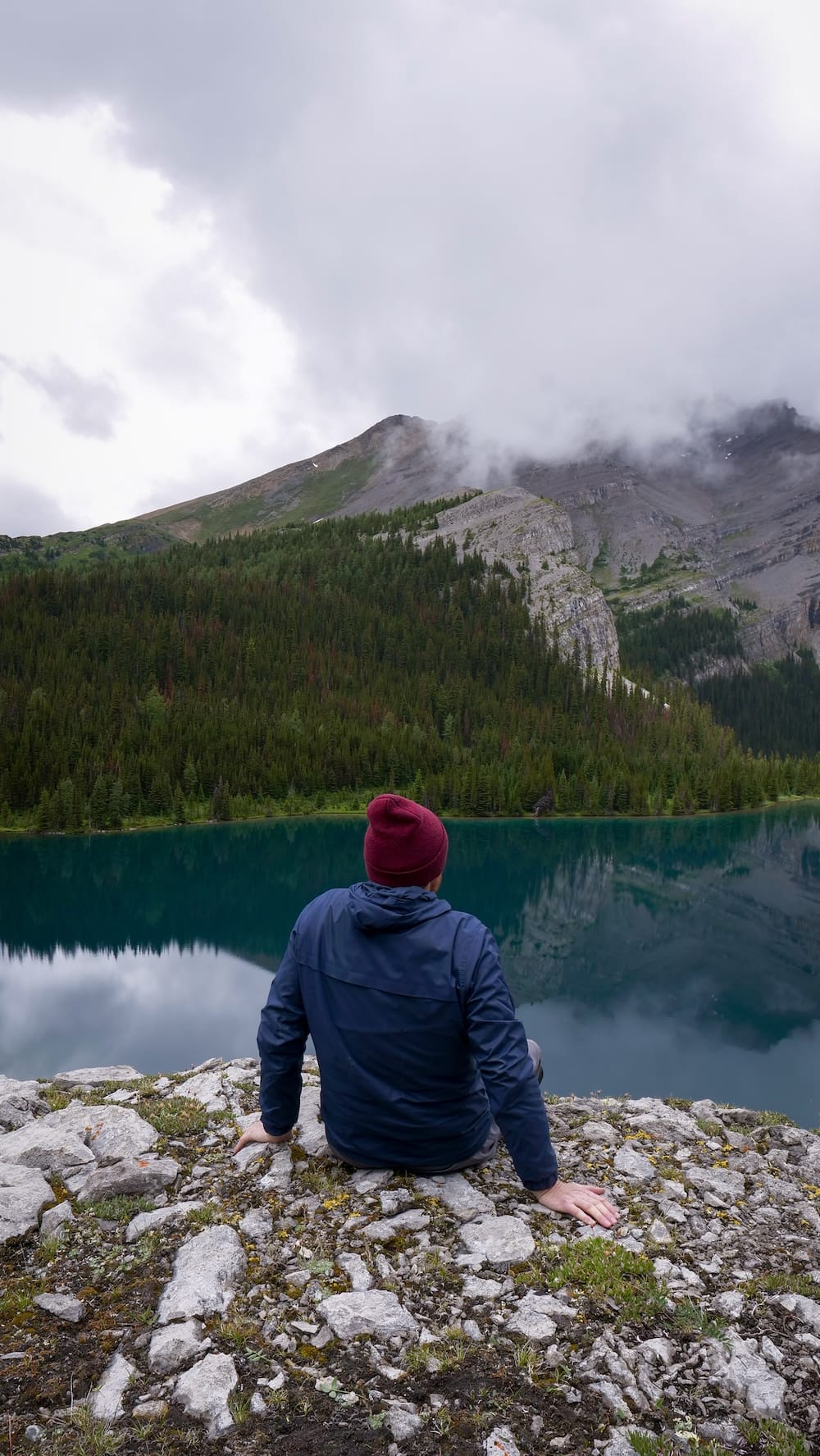
The setting was spectacular and reminded me of remote mountain lakes I’d encountered in Patagonia, mostly because of the sense of isolation. The terrain around us seemed to swallow almost everything human, leaving this cold body of water at the end of the valley.
We ate our picnic lunch, stretched out and spent some time exploring. A few of us scrambled higher for different vantage points, which presumably meant our legs had recovered enough to forget that this was supposed to be their day off.
What I liked most was how different the day felt from Allenby Pass. Both took us into dramatic mountain terrain, but Allenby had been about the relationship between rider, horse and elevation. Day 4 was boots on wet ground, rain gear, steep climbing and moving under our own power.
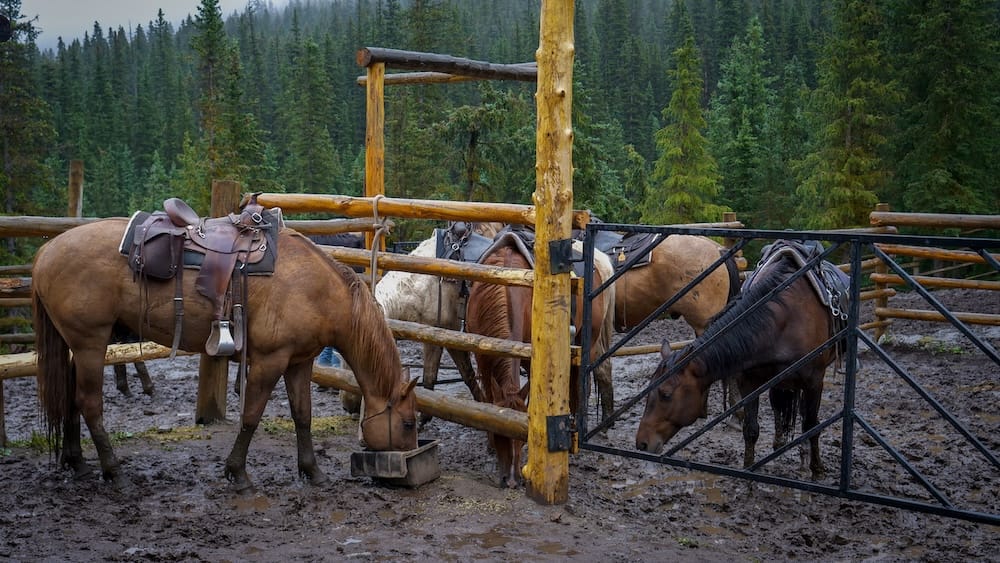
Back at Halfway, we also had the chance to see more of the horses’ routine while they rested and were fed. After three days of asking Hollywood to transport me everywhere, there was something satisfying about watching the horses spend a day doing absolutely nothing for us.
Good for them.
Removing horseback riding for a day didn’t make the horse trip feel interrupted. It made the itinerary feel better paced. By Day 4 I was genuinely happy to be walking, and by the end of the day I was ready to get back on Hollywood again.
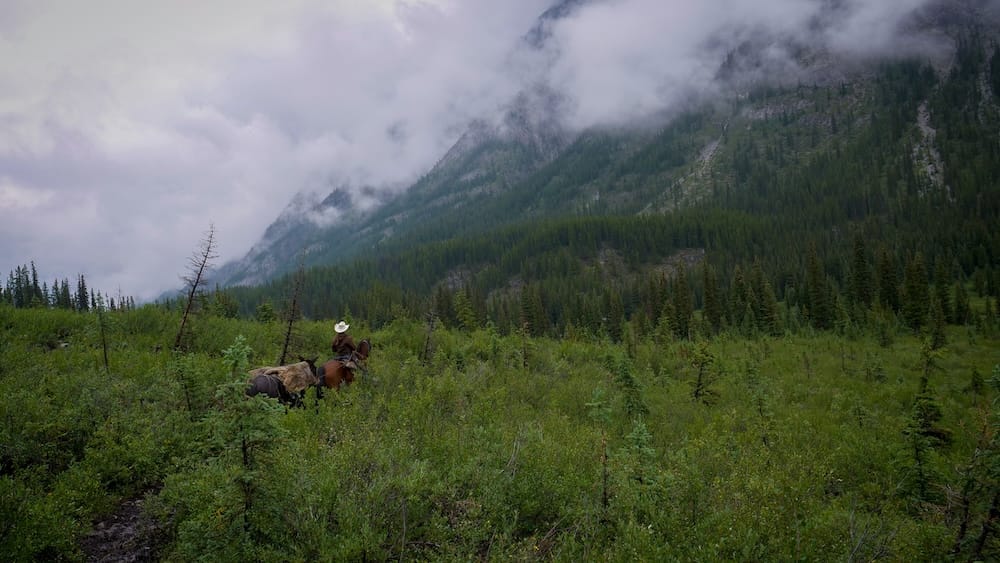
Day 5: Leaving Halfway Lodge and riding back to Sundance
Breakfast on Day 5 had a slightly ridiculous mood because nobody was particularly interested in leaving Halfway.
We had spent three nights there, which was long enough for the lodge to stop feeling like an exciting arrival and start functioning as our home base. People were joking over breakfast about finding some way to stay another night. My proposed solution was to intentionally hide my passport somewhere so I wouldn’t be allowed to leave.
There were several logistical weaknesses in this plan, but the sentiment was real.
After French toast, maple syrup and bacon, we packed up and prepared to ride back toward Sundance Lodge. The return follows the Brewster Creek area again, retracing country we had already travelled through on the way in.
Riding the same general route in reverse turned out to be more interesting than I expected because technically I had seen much of it before, yet almost nothing felt quite the same. On Day 2, we had been travelling toward Halfway without really knowing what waited at the end. Now I knew the lodges, knew Hollywood much better and had Allenby and the hiking day behind me.
We weren’t riding into the trip anymore. We were riding out of it.
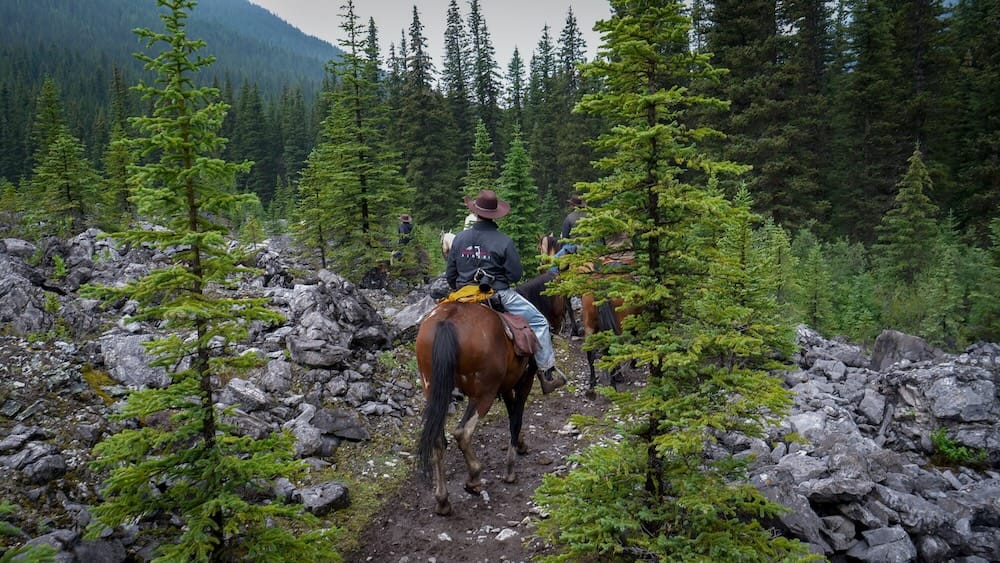
There had been talk of possibly stopping at a warden cabin along the way, but that isn’t what defines the day in my memory. What I remember much more clearly is the larger movement back toward Sundance and the strange change in how familiar things felt.
Lunch involved deli-meat sandwiches with extra bacon. At this point I’m not sure anyone on the trip considered bacon an optional food group.
When Sundance eventually came back into view, my perception of the lodge had changed too. On Day 1, it had felt rustic and remote. After three nights at Halfway, Sundance suddenly felt like a little slice of luxury.
I took about a 30-minute nap, had a hot shower and reunited with the bags that had been transported ahead. Under ordinary circumstances, none of that would qualify as extravagant. After several nights deeper in the Banff backcountry, it felt pretty spectacular.
Dinner continued the trend with brisket, Yorkshire pudding, roasted potatoes and carrots, red wine and an apple-crumble muffin.
Then came Spoons.
I had never played before, and my early performance suggested perhaps I should never play again. I was eliminated three times in a row during the practice rounds, somehow made it to the finals of the next game and then won the one after that.
From total incompetence to champion in the space of one evening. I retired at my peak.
More importantly, it was a fitting final night with the group. By then we had spent nearly a week riding, eating, getting wet, drying clothes, sharing lodge spaces and learning each other’s personalities. Sitting around the table drinking, talking, laughing and getting unnecessarily competitive over a card game felt far removed from the first evening when everybody was still relatively new to one another.
The next morning we were riding back to Banff.
Day 6: Sundance Lodge back to Banff
The first thing I remember about the final morning is being surprised that we had reached it so quickly. Six days had sounded substantial before the trip. Now it felt fast.
I remember saying I wished I had a couple more days, and I wasn’t the only person feeling that way. There was plenty of “I don’t want to go home” energy circulating around the group while we ate another hearty breakfast of eggs and pancakes drowned in syrup.
Then we packed up and got on the horses one final time.
The current itinerary puts the ride from Sundance back to Banff at roughly nine miles, so Day 6 isn’t a ceremonial little trot toward civilization. It is still a proper riding day through river and forest terrain, with a lunch stop in the Healy Creek area before the route eventually brings you back toward the stables.
What I remember most clearly, though, isn’t another dramatic pass or some final incident designed to give the trip a Hollywood ending. It’s how normal everything had become.
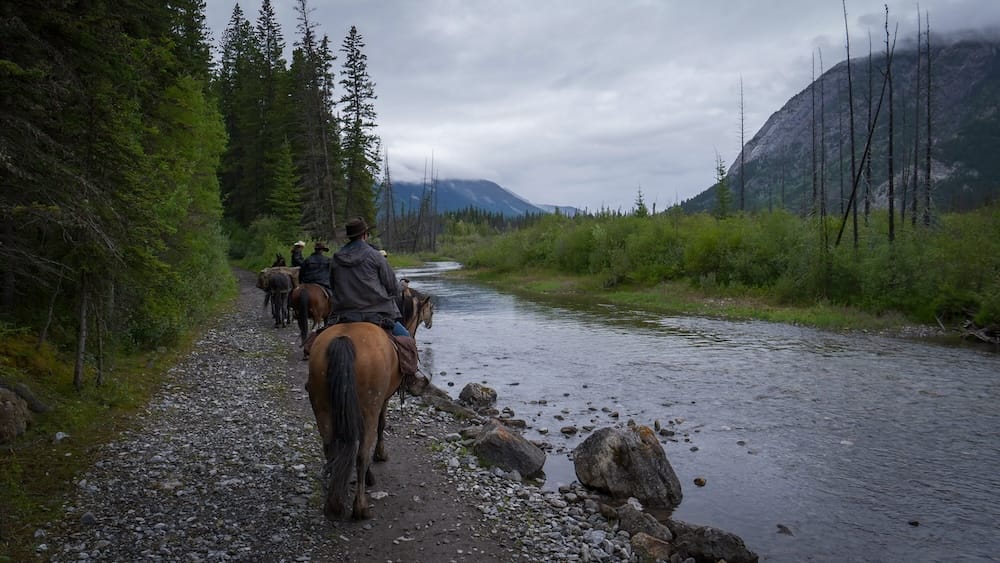
Hollywood was no longer simply the horse I had been assigned on Day 1. Getting into the saddle had become routine. The group that had started as a collection of people taking the same trip now had six days of shared meals, weather, horse stories, lodge evenings and bad card-game performances behind it.
Even riding felt different. On the first day I had been wondering what several hours in the saddle would do to my body. By the final day, I already knew.
There didn’t need to be another Allenby Pass waiting at the end. Day 6 was about closing the loop and watching normal life gradually reappear as we made our way back toward Banff.
If six days is more horseback riding than you want
A six-day lodge trip is obviously a major commitment of vacation time, money and saddle hours. If you like the idea of seeing Banff on horseback but aren’t ready to disappear into the backcountry for most of a week, GetYourGuide currently lists several much shorter rides ranging from one to four hours.
I did not personally take these exact short rides, so I’d treat them as current alternatives rather than extensions of my six-day experience. The useful distinction is simply how much riding you want to commit to and which part of Banff you want to see.
| Current shorter ride | Duration | What distinguishes it |
|---|---|---|
| Bow River Horseback Ride | 1 hour | A short introduction following the Bow River and passing the Cave and Basin area, with basic riding instruction included. |
| Spray River Horseback Ride | 1 hour | Another low-commitment option, this time near Bow Falls and the Banff Springs area with a Spray River crossing. |
| Sundance Loop Horseback Ride | 2 hours | Extends the experience along the Bow River and toward the slopes of Sulphur Mountain and Windy Knoll. |
| Bow Valley Loop Horseback Ride | 3 hours | A longer loop through Bow Valley terrain, forest and meadows, continuing toward the Sundance Canyon Trail and Windy Knoll. |
| Sulphur Mountain Intermediate Horseback Ride | 4 hours | The longest of these shorter options, with Spray River crossings and Bow Falls scenery. The current listing is aimed at riders with previous riding experience. |
If I were simply trying to find out whether I enjoyed being on a horse in Banff, the one- or two-hour rides would obviously be a much smaller experiment than committing to six days. Three or four hours starts to give you a better sense of sustained saddle time, although none of these shorter outings recreates the lodge-to-lodge rhythm, remoteness or multi-day progression that defined my trip.
Why the six days never felt repetitive
Looking back, the easiest way to misunderstand this trip would be to describe it simply as six days of horseback riding.
It wasn’t.
Day 1 was about getting comfortable in the saddle and figuring out Hollywood while my legs figured out what I had signed them up for. Day 2 pushed us considerably deeper into the backcountry and provided an unplanned lesson in how quickly horses can react when something goes wrong. Day 3 was the mountain-riding climax at Allenby Pass, where distance mattered much less than elevation and terrain.
Then Day 4 deliberately broke the pattern.
The horses rested while we hiked through rain toward Lake Matthias, and spending one day out of the saddle made me appreciate both walking and riding more. Day 5 began the retreat from Halfway, with Sundance somehow feeling more comfortable than it had on the way in, while Day 6 completed the return after the daily routines of riding and lodge life had started to feel strangely normal.
That is the part a simple itinerary struggles to communicate. The route matters, but the sequence matters just as much.
If Allenby had happened immediately, it wouldn’t have felt the same. Without the off-horse day, the physical rhythm would have been different. If Halfway had only been a one-night stop, we wouldn’t have settled into it the way we did. And without retracing some familiar country on Days 5 and 6, the sense of gradually leaving the backcountry wouldn’t have landed as strongly.
By the end, it hadn’t felt like six repetitions of one adventure. It felt like a journey inward, followed by a journey back out.
Frequently Asked Questions
How long is the Banff horse trek?
The trip I completed lasted six days and five nights. The current published structure is five riding days plus one rest day based at Halfway Lodge.
What is the day-by-day route on the six-day Banff horse trek?
My trip ran from Banff to Sundance Lodge on Day 1, Sundance to Halfway Lodge on Day 2, Allenby Pass on Day 3, a Lake Matthias hiking day on Day 4, Halfway back to Sundance on Day 5, and Sundance back to Banff on Day 6.
How long do you spend riding each day?
It varies by day. The current itinerary puts Day 2 at about five to six hours including lunch, while Allenby Pass is roughly four to six hours plus lunch depending on trail and seasonal conditions. Day 1 and Day 6 are roughly ten and nine miles respectively.
Do you ride horses on all six days?
No. Day 4 was a rest day for the horses. Our group chose the optional hike to a glacial-fed lake we knew as Lake Matthias, which gave my body a welcome change after three consecutive riding days.
Which day was the biggest horseback riding day for me?
Day 3 at Allenby Pass was the standout riding day for me. The route climbed into exposed alpine terrain around 8,100 feet, and the combination of elevation, rocky scenery and the effort required from the horses made it feel much bigger than the mileage suggests.
Did six days of horseback riding start to feel repetitive?
No. That was one of the biggest surprises of the trip. The itinerary kept changing from lodge-transfer days to the Allenby Pass ride, an off-horse hiking day, the return to Sundance and the final ride back to Banff, so each stage felt different.
This guide is also available in Spanish. [Leé la versión en castellano: Travesía a caballo de seis días en Banff: itinerario día por día y experiencia]
Disclosure: My six-day trip was hosted as part of a partnership with Banff Trail Riders. The departure also included other content creators. All experiences and opinions described here are my own.
This article contains affiliate links. If you book through one of these links, I may earn a commission at no extra cost to you.