
Two days in Banff is enough time to have a genuinely good first visit, but it is not enough time to stop making choices. Audrey and I have spent several very different trips in and around Banff, and one thing the place keeps reinforcing is just how quickly a sensible itinerary can turn into a ridiculous one. On one visit, we spent four action-packed days here and still left talking about everything we hadn’t managed to do.
If I had only two days for a first visit, I wouldn’t try to build the longest possible list of attractions. I’d divide the trip into two very different days. One would belong to Lake Louise and Moraine Lake, giving the major lakes enough time to feel like experiences rather than elaborate backdrops for a photograph. The other would stay closer to Banff, mixing Lake Minnewanka, Banff town and the Banff Gondola.
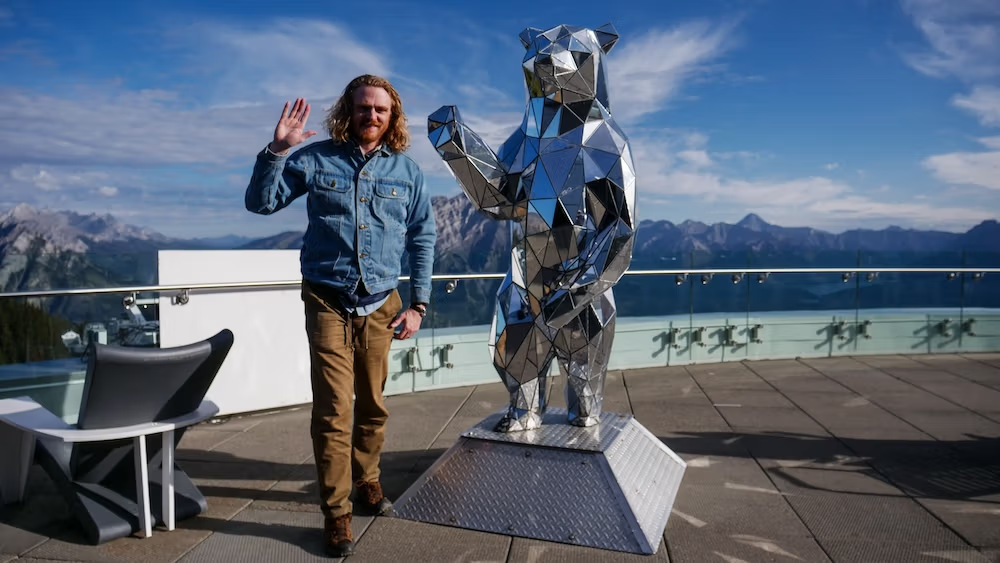
I also wouldn’t become emotionally attached to which one is officially Day 1. Mountain weather matters, so ideally I’d give Lake Louise and Moraine Lake the clearest full day. The catch is that Banff reservations can make last-minute flexibility more theoretical than real, which means this works best when you think about weather while booking rather than assuming you can casually reshuffle everything over breakfast.
One important limitation before we get started: this exact itinerary is primarily designed for the summer and early-fall period when regular Moraine Lake transportation is operating. Moraine Lake Road is closed to ordinary personal vehicles year-round, so current shuttle, transit or commercial transportation is part of the planning rather than an optional detail.
If you haven’t booked a base yet, Banff itself is the simplest fit for this particular itinerary because both days repeatedly start or finish around town and the transport options discussed below are Banff-based. You can compare current Banff accommodation options before locking in your lake transport and timed attractions.
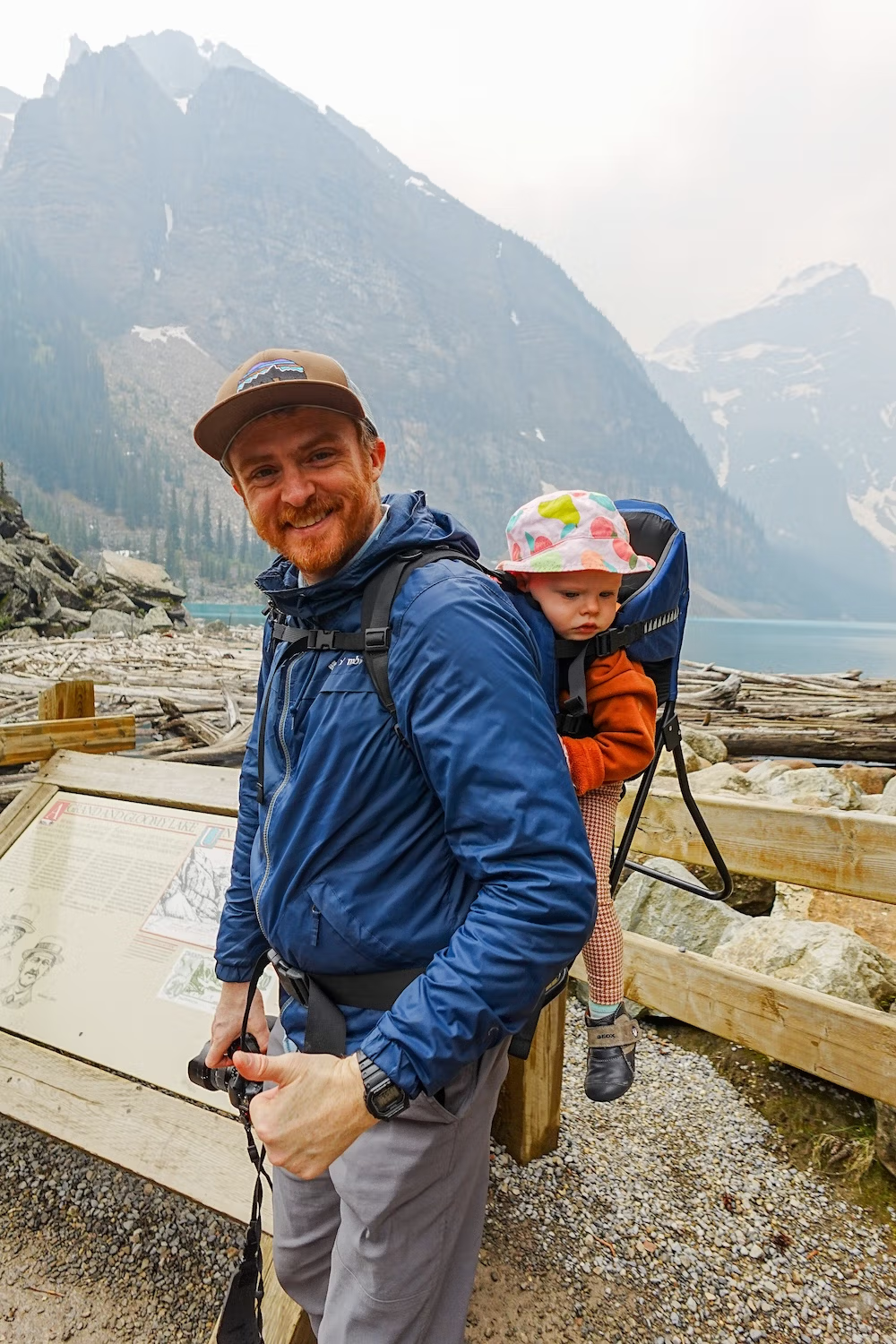
How I would split two days in Banff
The advantage of having a second day isn’t that you suddenly get permission to double the number of attractions. It’s that you can stop making some of the harsher compromises required by a one-day visit.
| Day | Protect | Add if it fits | Save for longer |
|---|---|---|---|
| Lake day | Lake Louise + Moraine Lake | Fairview Lookout | Bow Lake, Peyto Lake, Johnston Canyon, Gondola |
| Banff day | Banff town + meaningful nearby scenery | Lake Minnewanka + Gondola | Columbia Icefield, Yoho, major extra tours |
The first day has complicated access and deserves to remain focused. The second has more give: Lake Minnewanka can be a shorter scenic stop or a longer walk, Banff town can expand naturally, and the Gondola can move around whatever reservation and visibility you have.
That distinction is more useful than pretending every attraction has equal weight. Banff is full of worthwhile things, including museums, canoeing, horseback riding, Bow Falls, Western activities, the Columbia Icefield and neighbouring Yoho National Park. Any one of those could become part of your two days if it particularly matters to you.
Trying to fit all of them in is an exercise in futility.
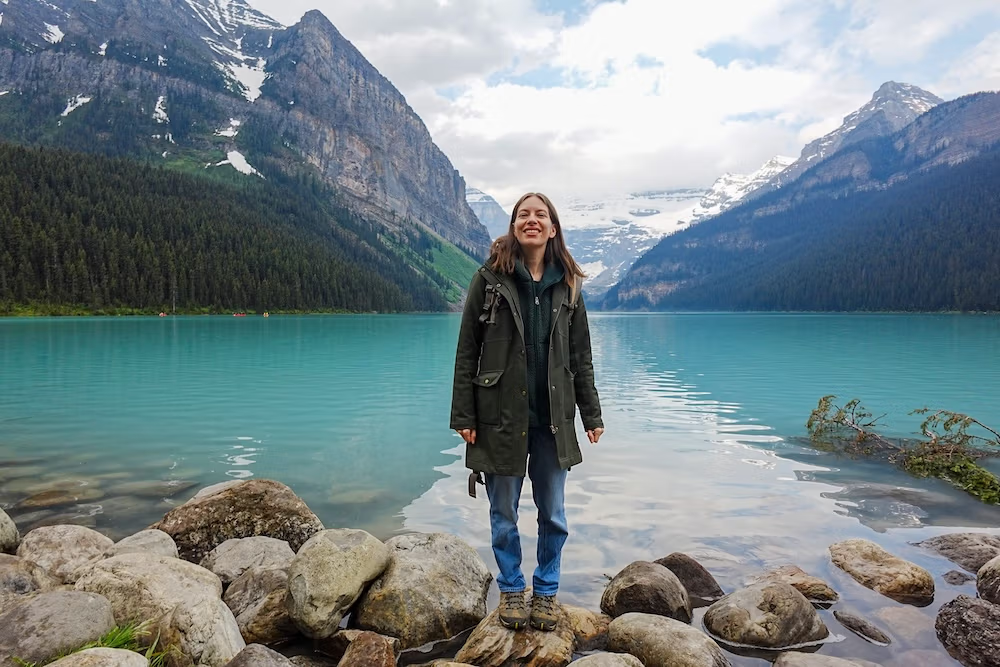
Day 1: Give Lake Louise and Moraine Lake a full day
Start with Lake Louise instead of treating it as a photo stop
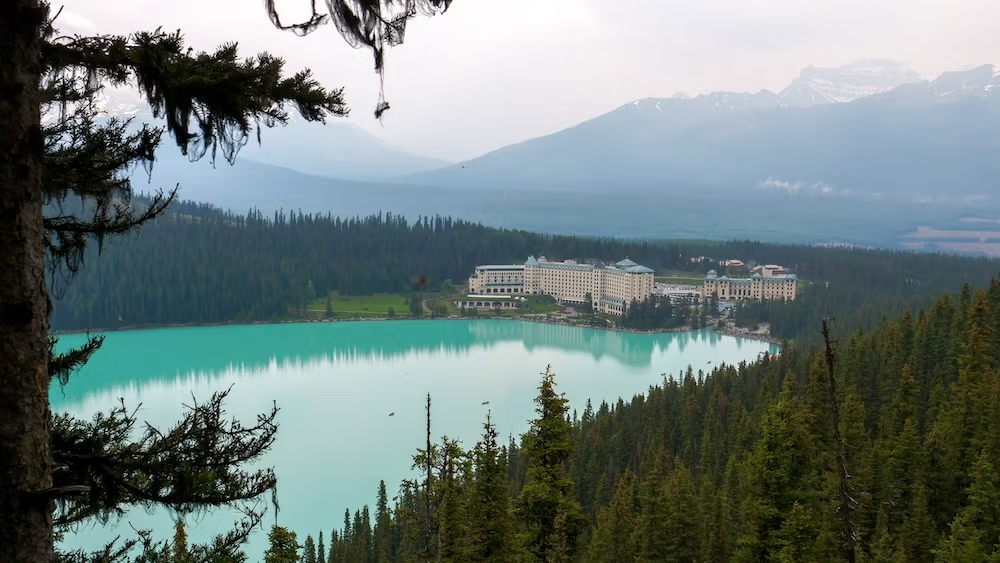
Lake Louise manages to be two things at once: ridiculously crowded and still worth seeing.
On our most recent visit, I called it the “selfie capital of Canada.” Around the classic shoreline viewpoint, that didn’t feel especially unfair. You can arrive at one of the most beautiful settings in the Canadian Rockies and immediately discover that half the continent appears to have arrived five minutes before you.
But I don’t think the answer is to take a quick photograph and flee. Our experience improved when we moved away from the shoreline and hiked up to Fairview Lookout. The trail is only about 1.2 kilometres each way, but it gains around 100 metres and is considered short but steep, with roughly 45 minutes suggested for the return trip. I was carrying Aurelia for much of the climb, which made the word “short” feel somewhat less relevant to my legs.
At the viewpoint, though, the entire experience changed. We were looking down over Lake Louise rather than straight across it, the crowds had thinned considerably, and I remember thinking it was probably the best view we’d found there. For me, that extra 45 minutes gave Lake Louise more depth than another rushed stop somewhere else would have.
I wouldn’t insist that everyone do Fairview. If you’re moving more slowly, don’t enjoy steep climbs or have a tight transport connection, it is an obvious thing to cut. What I would avoid is treating the Lake Louise shoreline as the complete experience simply because an itinerary tells you that 45 minutes is enough.
Visitor-use data has put the average stay at Upper Lake Louise at roughly two and a half hours. That’s not a recommended schedule, but it does show how artificial some hyper-compressed itineraries can become. People naturally spend time here.
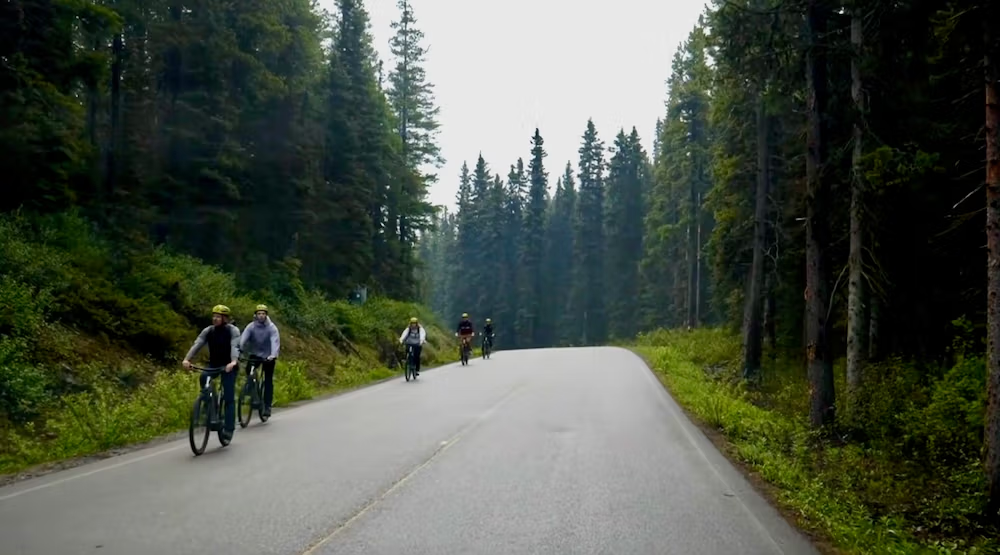
Sort out your lake access before building the rest of the day
This is the one part of the itinerary I would not leave vague. You cannot drive an ordinary personal vehicle to Moraine Lake and simply figure things out when you arrive. You’ll need confirmed shuttle, public transit or licensed commercial transportation, and popular options can sell out.
The current public systems also involve more than moving from Point A to Point B. There can be waits, boarding times and connections between Lake Louise and Moraine Lake, and during high-demand periods those waits can be meaningful. That hidden time is exactly what gets lost when an itinerary is designed from Google Maps and optimism.
Parks Canada shuttle reservations include access between the two lakes, while Roam’s reservable Banff-based Super Pass provides another way to reach Lake Louise and connect onward to Moraine Lake. The details change, so this is one part of the trip worth checking directly before your visit.
If the public reservation system doesn’t fit your dates, there are also commercial options. One current Banff departure provides round-trip transport with about 75 minutes at Lake Louise and another 75 minutes at Moraine Lake. I haven’t used this specific shuttle, so I’d treat it as a convenience option rather than a personal recommendation, but you can check the current Lake Louise and Moraine Lake shuttle from Banff. The obvious trade-off is that removing the access headache also gives you less control over how long you stay at each lake.
The important planning consequence is simple: once you know how your Lake Louise–Moraine Lake transportation actually works, build the rest of the day around it. Don’t do the reverse.
Add Fairview only if your timing and energy support it
For an active first-time visitor, Fairview Lookout is the extra I would prioritize at Lake Louise because it adds a different perspective without sending you into another destination system. That doesn’t make it compulsory. A traveller who wants more lakeshore time, has mobility limitations, is travelling with young kids or simply doesn’t feel like climbing should have no guilt whatsoever about skipping it.
This is where a two-day itinerary should start behaving like a real trip rather than a checklist. On our recent family visit, we had Audrey’s dad with us along with Aurelia, so we were dealing with different walking speeds, snacks, carrying a toddler and ordinary little breaks throughout the day. None of those things look dramatic on paper, but they are exactly how a theoretically perfect timetable starts slipping.
People need bathrooms. People get hungry. Toddlers have opinions.
Leave room for that.
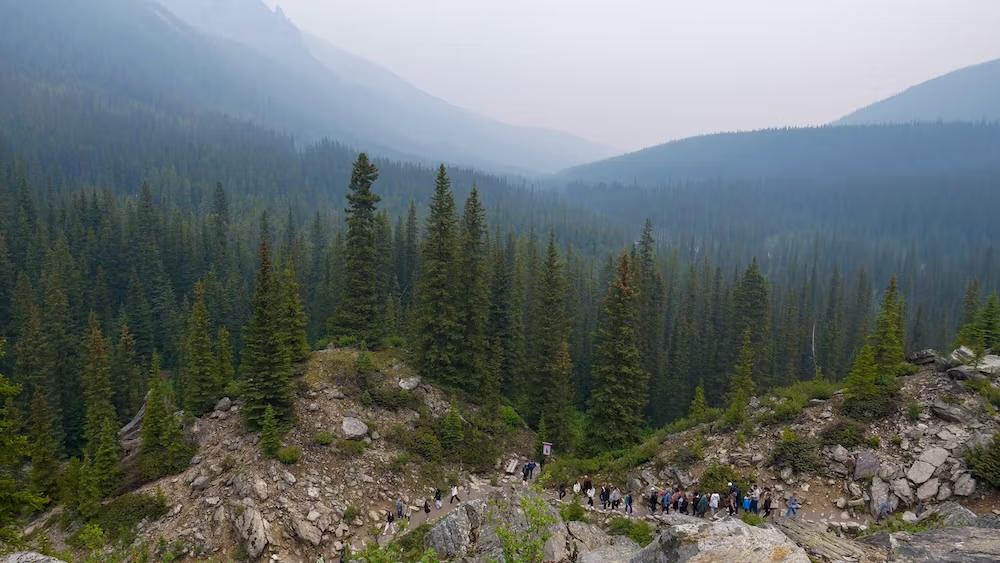
Continue to Moraine Lake and make the Rockpile the priority
Once you’re finished at Lake Louise, continue to Moraine Lake using whatever lake-connection system comes with your transport arrangement.
For a first visit, I’d make the Rockpile viewpoint the main priority. The walk itself is modest—about 0.7 kilometres with roughly 35 metres of elevation change and around half an hour suggested for the loop—but the view from above the lake is the one most people have come to see.
Our experience there couldn’t have been much more different from Fairview. The Lake Louise viewpoint had felt surprisingly peaceful, while the Rockpile was packed. I initially joked that it was ten times busier, then upgraded that to about a hundred.
And I would still go again.
The view is phenomenal, and this is one of those cases where crowds didn’t change my basic verdict. What they did change was the pace. You may need a little patience around the viewpoint, and once you’ve seen it, I’d also spend some time closer to the lake rather than immediately treating Moraine as completed.
Sit for a while. Have something to eat. Wander without turning every minute into another objective. The practical infrastructure at Moraine Lake is limited enough that bringing your own food and water is sensible anyway, and connectivity shouldn’t be something you depend on.
Finish the lake day before it turns stupid
This is where restraint starts getting tested. You’ve seen Lake Louise and Moraine Lake. Maybe it is still afternoon. Bow Lake suddenly doesn’t look that far away. Peyto Lake is tempting. Someone mentions Johnston Canyon. The Gondola has an evening slot.
Technically, you can keep adding things for quite a while. I wouldn’t.
Transport between the lakes has already consumed time that doesn’t appear in the scenic photographs, and you’ve probably walked more than the itinerary suggests. The whole point of having a second Banff day is that Lake Louise and Moraine Lake no longer have to share their day with the rest of the national park.
Head back toward Banff. Have dinner, wander around town if you still have energy or sit beside the Bow River and enjoy the fact that nobody is asking you to board another shuttle. There will be another morning.
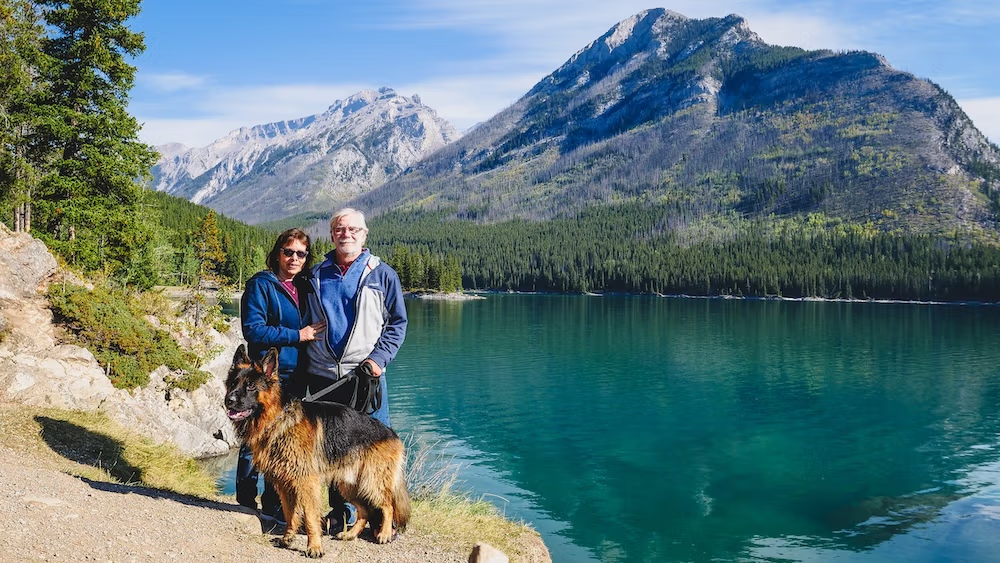
Day 2: Lake Minnewanka, Banff town and the Gondola
The second day should feel like a different trip. Rather than repeating the famous-lake formula, I’d start with Lake Minnewanka, spend a meaningful part of the day in Banff town and along the Bow River, and use the Banff Gondola as the major paid experience. The exact order can move around your Gondola booking and whatever the mountains are doing that day.
Start with Lake Minnewanka
Lake Minnewanka sits only about 10 kilometres northeast of downtown Banff, which makes it much easier to work into this day than another long-distance excursion.
We visited on an older family road trip, and what I liked was that it didn’t feel like we had simply arrived at another version of Lake Louise. The setting is different, the lake has its own scale and character, and it gives the second day some mountain scenery without requiring another elaborate access system.
You also don’t need to turn Lake Minnewanka into a full activity package. A cruise can make sense if that’s what you’re interested in, but a first-time visitor can simply spend some time along the shoreline and move on. If you want a little more walking, the trail toward Stewart Canyon gives you an easy-to-understand extension: the first section is about 1.6 kilometres each way and roughly an hour return.
If you would rather make the lake itself one of your booked activities, a current guided cruise takes about an hour and adds commentary while you travel across the water. We haven’t done that particular cruise ourselves, so I’m not treating it as a personal recommendation; you can check current Lake Minnewanka cruise availability if the format appeals to you. Otherwise, the shoreline visit works perfectly well for this itinerary.
Parking can fill during busy summer periods, while seasonal Roam Route 6 connects downtown Banff with Lake Minnewanka in roughly 25 minutes and also serves Cascade Ponds, Johnson Lake and Two Jack Lake.
Those extra stops are choices, not instructions.
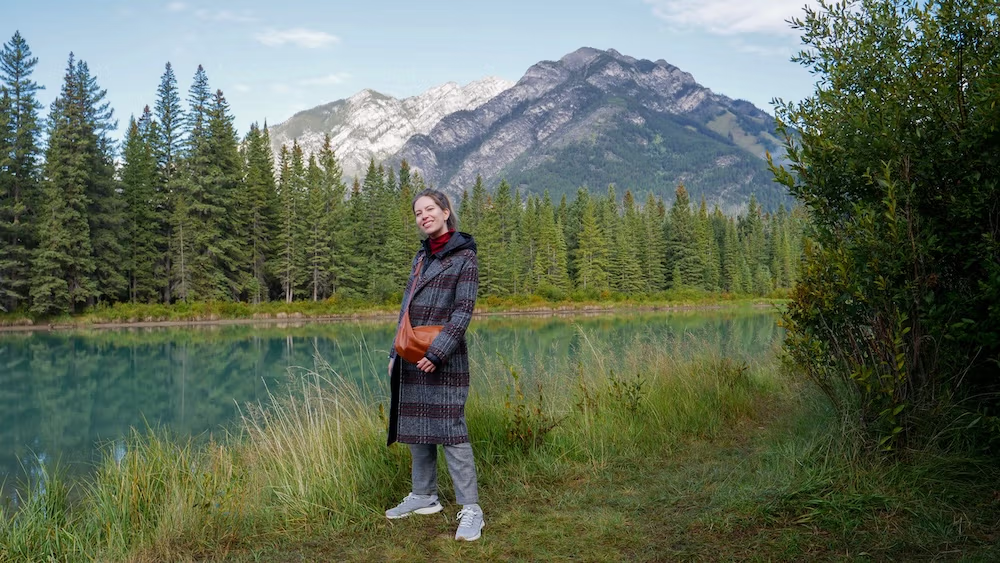
Give Banff town enough time to be part of the trip
It may sound strange to deliberately protect town time when you’ve come all the way to the Canadian Rockies, but I think Banff itself deserves more than being treated as somewhere you park, eat and sleep between landscapes.
We’ve had highly structured days here, but one of my favourite mornings was almost the opposite. Audrey and I walked along the Bow River, crossed pedestrian bridges, wandered around and didn’t have much of a plan. There was no major objective hanging over the morning, and that was part of what made it enjoyable.
Banff is particularly good for this because the town and river connect naturally. You can browse around Banff Avenue, walk beside the Bow, continue toward Bow Falls, stop for lunch or choose a museum if the weather turns.
I wouldn’t try to prescribe all of those things. Give yourself a couple of hours where the itinerary stops shouting at you.
This is also the most weather-tolerant part of the two days. A cloudy afternoon doesn’t stop you from having lunch, exploring town or walking beside the river. If it rains harder, the museums give you an indoor option. That flexibility becomes useful when your other major Day 2 attraction is extremely interested in whether you can see the mountains.
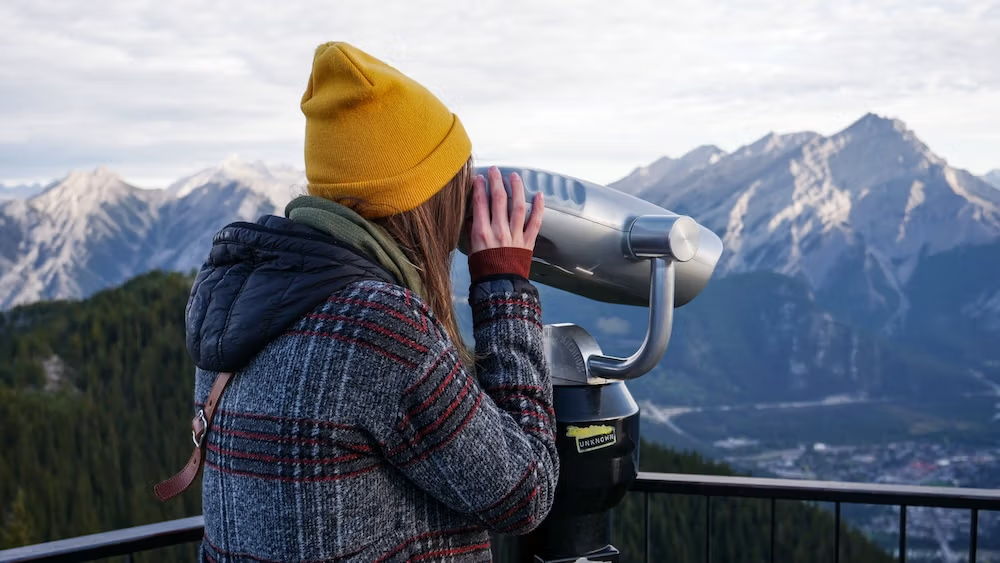
Use the clearest available window for the Banff Gondola
I liked the Banff Gondola more than I expected to. Obviously, the headline is the ride up Sulphur Mountain and the mountain views, but we found more to do at the summit than I had anticipated. The boardwalk toward Sanson’s Peak became one of my favourite parts because the perspective kept changing as we climbed higher.
For a straightforward Gondola ride plus summit boardwalk, I’d allow roughly an hour and a half. You can easily spend longer if you’re lingering, eating or taking a ridiculous number of photographs.
The weather rule here needs some nuance. I would still give Lake Louise and Moraine Lake the better full day because that entire day depends on mountain scenery and a complicated transport system. But I wouldn’t automatically send the Gondola to whichever day has worse visibility. If Sulphur Mountain has disappeared into cloud, you’ve rather undermined the main reason for riding up it.
Instead, use the clearest window you reasonably can on Day 2, within the limits of your reservation. We did the Gondola ourselves and I liked it enough that I’d book it again when the conditions made sense; if you already know it belongs in your second day, you can check current Banff Gondola tickets and availability before locking the rest of the afternoon around it.
Advance booking is sensible because desirable Gondola times can sell out, but the ticket also adds rigidity to what would otherwise be a very flexible day. Current tickets are timed and non-refundable, although changes are possible under certain conditions. Same-day ticket holders can also use Roam Route 1 to reach the Gondola without paying another transit fare, and seasonal downtown shuttle service can save you the hassle of parking at Sulphur Mountain.
If Day 2 starts getting crowded, remove something
Lake Minnewanka can easily take longer than expected if you’re enjoying yourself. Lunch in Banff can accidentally become a proper lunch instead of the 37-minute refuelling exercise some itineraries seem to envision. The Bow River may tempt you into another walk.
None of that means the day has gone wrong. What ruins it is responding to every delay by moving faster for the next six hours.
If you have a firm Gondola reservation, protect that and simplify what comes before it. If the Gondola isn’t booked or visibility is dreadful, town can absorb more of the day. Bow Falls, Cascade Ponds and the museums are all useful possibilities, but I would resist the urge to put them into the default itinerary simply because they are nearby.
A flexible day only stays flexible if you leave some space in it.
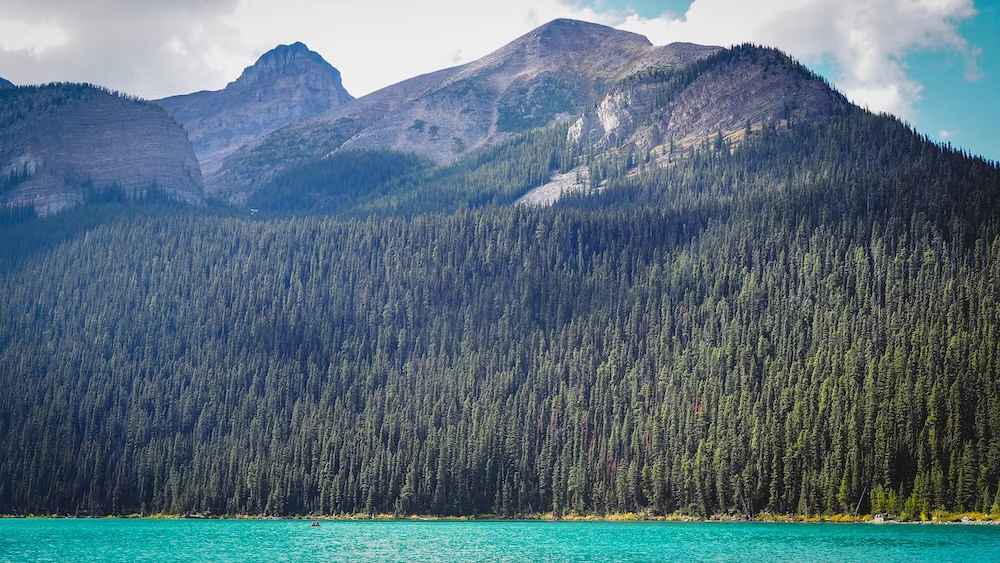
Which of the two days should come first?
If the forecast gives you one obviously clearer day, I’d try to use it for Lake Louise and Moraine Lake. We had the sky clear dramatically around our recent Lake Louise visit, and that bit of luck mattered because so much of the experience is visual.
The practical problem is that weather changes more easily than reservation inventory. Lake-access reservations can sell out, and although changes may technically be possible, another departure needs to have room. Roam’s reservable service can also sell out, while Gondola tickets come with their own timed-booking rules. So I wouldn’t make reservations months ahead and then confidently advise you to “just swap the days” when the forecast changes.
A better strategy is to think of the itinerary as two reversible blocks before you lock everything down. Use the forecast as one input when you can, secure the lake access that matters most and accept that the Canadian Rockies will retain some ability to ruin your spreadsheet.
They’re mountains. They do that.
What I’d leave out with only two days
This is where personal priorities matter most. I am not arguing that everything below is inferior to the recommended itinerary; in several cases, Audrey and I have done these experiences and really enjoyed them.
The issue is what they cost you in a 48-hour trip.
Columbia Icefield: excellent, but it takes a day
We have done the Columbia Icefield excursion from Banff, including the Athabasca Glacier experience, and I thought it was absolutely worthwhile. I would not squeeze it into this itinerary.
A current organized excursion from Banff runs for roughly 10.5 hours. Once an activity takes that long, it isn’t something you are adding to your second day. It is your second day.
If seeing a glacier is one of your main reasons for coming to the Canadian Rockies, make that choice. Replace the Banff town, Minnewanka and Gondola day with the Columbia Icefield and enjoy the trip you actually want.
What doesn’t work is pretending you’ve somehow kept both.
Yoho deserves the same honesty
We’ve also done a long private day combining Lake Louise and Moraine Lake with Spiral Tunnels, Takakkaw Falls, Emerald Lake and Natural Bridge in Yoho National Park. It was a fantastic day, and I don’t regret doing it.
But it was a genuine cross-park excursion, not a few bonus stops casually tacked onto Banff. Yoho is in British Columbia, and once you start combining the two parks you’re making a different itinerary choice: more regional variety, less time at each individual place.
With only two days and a first-time Banff focus, I’d normally save Yoho for later. If Emerald Lake or Takakkaw Falls matters more to you than my proposed Banff second day, that’s a perfectly legitimate swap.
Again, replace rather than accumulate.
The same rule applies to museums, canoeing and horseback riding
A museum lover should spend more of the town day inside Banff’s museums. Someone who has always wanted to paddle in the Rockies may care more about getting on the water than riding the Gondola. A traveller dreaming about horseback riding shouldn’t ignore that interest because some bloke with a travel blog created a neat two-day schedule.
Your own priorities are allowed to win.
What I would preserve is the structure: one major lake day and one complementary day. Once you insert a substantial alternative, remove something of similar weight instead of continually stretching the same 48 hours.
How to slow this itinerary down
If this still sounds too busy, you don’t need to abandon the whole plan. Start by removing optional pieces.
On the lake day, Lake Louise and Moraine Lake are the protected experiences. Fairview Lookout is the first thing I’d drop if your energy, mobility or transportation timing doesn’t support it.
On Day 2, Banff town is the flexible centre. Lake Minnewanka can become a quick scenic stop or a longer outing, while the Gondola is the major timed commitment. If poor visibility makes the Gondola unattractive, you’ve suddenly gained a large block of time for Bow Falls, a museum, a longer river walk or a very lazy meal.
Your transport choice can also change the feel of the lake day. Public shuttle and transit systems require more planning but generally give you more freedom over how long you remain at each lake. Some commercial transport products remove more of the logistical work but give you fixed dwell times; the Banff shuttle linked earlier, for example, allocates about 75 minutes at Lake Louise and 75 minutes at Moraine Lake.
That might be perfect if convenience matters more than hiking. If you want to spend about 45 minutes doing Fairview Lookout, however, you can immediately see how much tighter the Lake Louise stop becomes.
That’s the useful way to think about these choices. You’re not simply choosing transportation. You’re choosing how much control over your day you’re willing to trade for convenience.
Is two days in Banff enough?
For a first visit, I think two days can be excellent.
You have enough time to see Lake Louise and Moraine Lake without turning both into drive-by photographs, enough time to experience Banff town as something more than a staging area, and enough room to add Lake Minnewanka and the Gondola for a very different second day. That gives you iconic scenery, a mountain town, riverside time, another lake environment and a summit perspective without spending 48 hours sprinting between parking lots.
What two days will not do is finish Banff. Audrey and I once spent four action-packed days here and still came away thinking about everything we hadn’t managed to see, which is why I wouldn’t judge a short itinerary by how much territory it covers.
The real improvement over a one-day trip is simpler: you can divide Banff into two experiences that actually have room to breathe.
Give the major lakes their day. Use the other for town, Lake Minnewanka and the Gondola, then start saying no to perfectly good ideas.
In Banff, that’s part of planning well.
Frequently Asked Questions
Is two days enough for a first visit to Banff?
Yes. I think two days can make an excellent first visit if you divide them deliberately: give Lake Louise and Moraine Lake one full day, then use the other for Banff town, Lake Minnewanka and the Banff Gondola.
How should I split two days in Banff?
Use one day for Lake Louise and Moraine Lake, with Fairview Lookout if your timing and energy support it. Use the second for Lake Minnewanka, meaningful time in Banff town and the Gondola if visibility and your reservation cooperate.
Can I drive my own vehicle to Moraine Lake?
No. Ordinary personal vehicles cannot use Moraine Lake Road, so you need confirmed shuttle, public transit or licensed commercial transportation. Sort out that access before building the rest of your lake day.
Which day should I use for Lake Louise and Moraine Lake?
If one day has clearly better mountain visibility, I would try to use that full day for Lake Louise and Moraine Lake. Check weather before locking reservations where possible, because sold-out transport can limit last-minute changes.
Is Fairview Lookout worth adding to a two-day Banff itinerary?
For an active visitor with enough time, I think so. The roughly 45-minute return hike gave us a much quieter, elevated view of Lake Louise, but it is the first lake-day extra I would cut if energy, mobility or transport timing is tight.
Should I include the Columbia Icefield or Yoho with only two days in Banff?
Only if one matters more to you than the recommended second Banff day. The Columbia Icefield is effectively a full-day commitment, while Yoho becomes a genuine cross-park excursion, so I would replace part of this itinerary rather than pile either one on top.
This guide is also available in Spanish. [Leé la versión en castellano: Itinerario de 2 días en Banff: cómo dividir tu tiempo en una primera visita]
This article contains affiliate links. If you book through one of these links, I may earn a commission at no extra cost to you.