
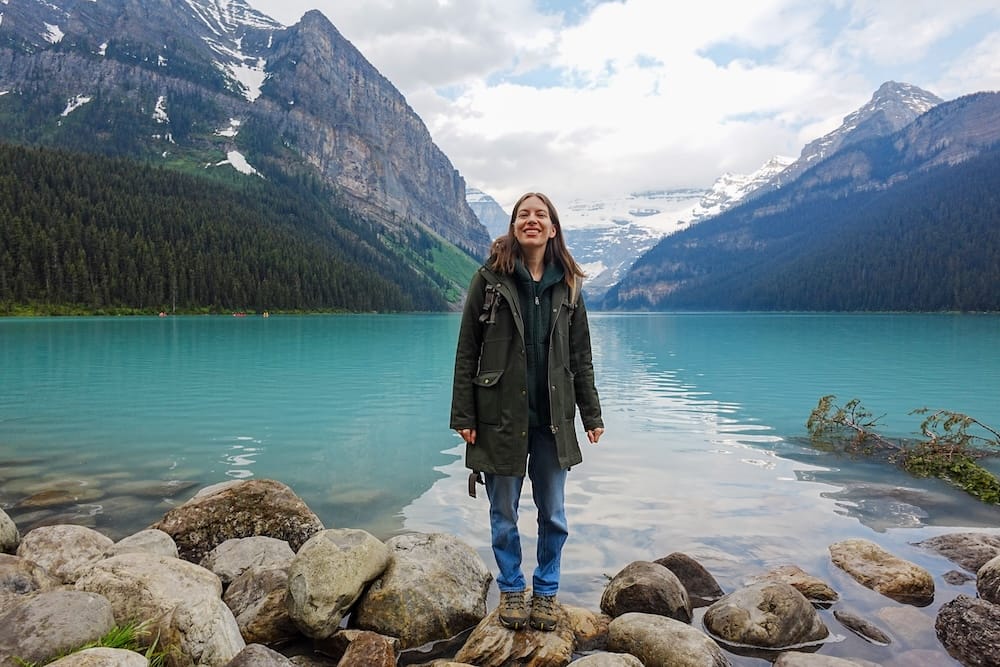
Audrey and I pulled into the Lake Louise parking lot at four in the afternoon on purpose. That wasn’t strategy so much as leftover superstition from earlier that same day, when we’d nearly been turned away at Moraine Lake and then watched a string of cars ahead of us get waved off before a few spots opened out of nowhere. By the time we reached Lake Louise, we’d learned the lesson the hard way: don’t show up at the obvious hour. We circled the lot, waited for someone to back out near the far end, and slid into the space like we’d won something. In a very small, very Canadian way, we had.
The Old Way of Doing This Doesn’t Work Anymore
That trip happened before Parks Canada built an entire reservation system around this lake, and it shows how little the underlying problem has actually changed. Lake Louise has always drawn more cars than it has parking spaces for, and the fix people my age remember — get there stupidly early, or don’t bother — was never really a fix. It was a workaround for a broken system, and it worked right up until it didn’t. These days there’s an actual system in place, with its own rules, its own booking window, and its own quiet ways of catching people out who show up thinking it’s still 2015.
There are four real ways to get from Banff to Lake Louise: drive yourself and take your chances on parking, book a seat on the Parks Canada shuttle, take Roam Transit’s public bus, or pay someone else to guarantee you a spot on a guided tour. What decides which one makes sense for you isn’t really price or speed. It’s your relationship to the reservation system underneath all of it — whether you’re working within it, competing against it, or paying to skip it entirely. That’s the actual decision here, and it’s worth understanding before you pick a method.
Driving and Parking at Lake Louise
Here’s the thing people get wrong first: you can still drive to Lake Louise and park your own car there. Unlike Moraine Lake, which has been closed to personal vehicles entirely, Lake Louise hasn’t gone shuttle-only. It’s just gotten a lot more expensive and a lot less forgiving to show up at without a plan.
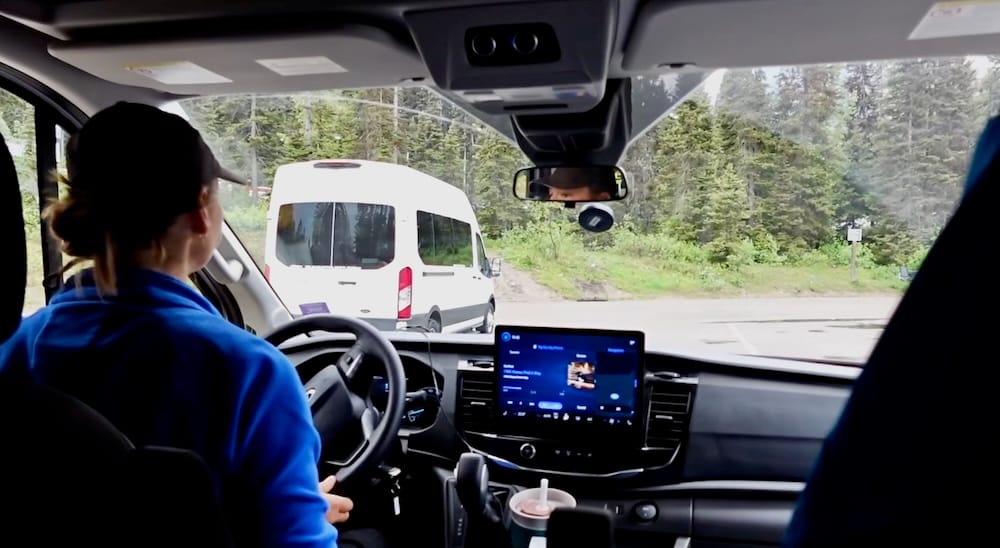
The car in our case was actually a rental, picked up for a much bigger trip — Audrey’s parents were along for a cross-Canada road trip that started all the way back in Ontario, and Lake Louise was one stop among many on a very long itinerary. That’s worth mentioning because plenty of visitors here are in the same boat: flying into Calgary, renting something with enough trunk space for the whole trip, and driving in rather than arriving with a car already parked in a Banff driveway. If that’s you, picking one up in Calgary before you head into the mountains is the common starting point, and it’s worth taking a look at current rental car options in Calgary before you commit to a pricier Banff pickup instead.
Paid parking runs from 3 a.m. to 7 p.m., May 15 through October 12 this year, and it isn’t cheap: $42 a vehicle per day, or $8 if you’re travelling with a valid accessible parking placard. It’s sold on-site only, day-rate, pay-by-plate — no hourly option, and no buying ahead of time, so you’re committing to the full daily rate the moment you park whether you’re staying twenty minutes or the whole day. Outside those hours, or if you’re staying in the village itself rather than at the lakeshore, parking is free. Small mercy.
The bigger problem is that the lot fills before 7 a.m. through most of the high season, and earlier than that on weekends and holidays. Once it’s full, staff start turning cars away at the Fairview day-use area before they even reach the lakeshore, and there’s no promised window for when access reopens — you might just be out of luck for the day. Overnight parking isn’t allowed, and if you’re driving anything oversized — an RV longer than about 20 feet or wider than about 79 inches with mirrors included — you can’t park in the public lots at all anymore; that rule showed up specifically because those vehicles were eating too much of an already tiny lot. Accessible parking exists and only requires a valid placard, but it’s first-come-first-served like everything else, so even that isn’t a guarantee.
None of this makes driving a bad option. It’s still the cheapest way to get there if you already have a car, and there’s something satisfying about doing it under your own power. What it isn’t anymore is a casual decision. Arriving at four in the afternoon worked for us on an old-regime trip with no reservations to worry about, and honestly, that instinct — go early or go late, never in the obvious middle — still holds up as the single best piece of parking advice for this lake regardless of what year it is. It’s still viable, still the cheapest option if the car is already yours, but it now comes with a real cost attached and a real chance of simply not getting in. So the honest question isn’t whether you can still drive there — it’s whether you’re willing to bet a morning of your trip on the answer.
The Parks Canada Shuttle
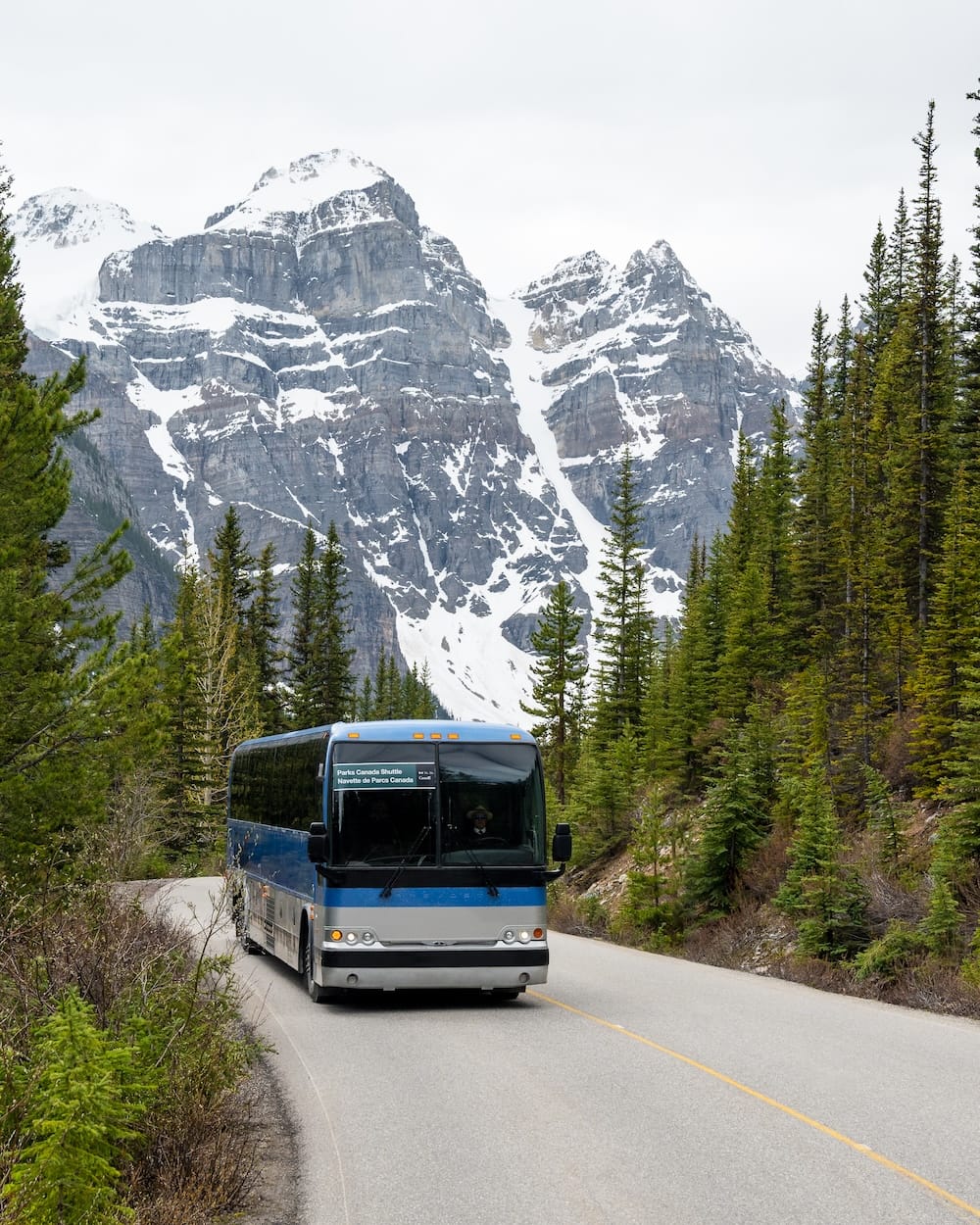
If you’d rather not gamble on a parking spot, Parks Canada runs its own shuttle, and it’s the most complete answer to the parking problem — but only if you understand where it actually leaves from, because it isn’t the lake.
The regular daytime shuttle, running 6:30 a.m. to 5 p.m., departs from the Lake Louise Park and Ride, which sits up at the Lake Louise Ski Resort, not down at the lakeshore itself. If you’re using this shuttle, you’re not parking at Lake Louise at all — you’re driving up to the ski resort, parking there for free with a valid reservation, and riding down. There’s a separate early option, the Alpine Start Shuttle, with 4 a.m. and 5 a.m. departures that actually do leave from the lakeshore’s upper lot instead — but that means the regular daily parking fee still applies there, and you have to book it by 3 p.m. the day before, no exceptions.
A reservation runs $12.75 for an adult, $6 for a senior, $4 for anyone 17 or under, plus a non-refundable booking fee — $3.50 if you book online, $5.50 if you call in. What that single reservation buys you is more generous than the price suggests: your ride in, unlimited use of the free connector shuttle running between Lake Louise and Moraine Lake all day, and your return trip back to the Park and Ride. Book once, see both lakes — a far better deal than driving yourself and then separately trying to figure out how to reach Moraine, which you can’t do in your own car under any circumstances.
Walk-up seats exist in theory — Parks Canada allows booking up to an hour before departure if space is available — but don’t build a plan around it. Seats consistently sell out well ahead of the actual travel date, and Parks Canada itself is upfront that walking up without a reservation is not a strategy they’d recommend. Treat it as what it is: a rare bit of slack, not a backup plan.
How the Reservation System Actually Works
This is the part that trips people up the most, and understanding it properly is worth more than knowing any single fact above.
Reservations for the entire season open at 8 a.m. Mountain Time on April 15, and when they do, only 40 percent of the season’s total seats get released. The remaining 60 percent trickle out later, on a rolling two-day window: seats for any given date open at 8 a.m. Mountain Time exactly 48 hours ahead. Want a shuttle for a Wednesday? Check back that Monday morning. This is true whether you’re booking early in the year for a trip months out, or scrambling two days before you’re already in Banff.
You’ll need an account to book through the Parks Canada Reservation Service — it accepts Parks Canada’s own login, but also Google or Facebook sign-in now, which speeds things up if you’ve never registered before. If you’ve got a trip planned, set the account up well before you actually need it. Launch days and release mornings get busy, and fumbling through account creation while seats are disappearing is not how you want to spend your first ten minutes of trying.
One thing worth flagging honestly, because there isn’t a clean answer for it: if you’re staying at a hotel right in the community of Lake Louise, whether you can board the shuttle without first going to the Park and Ride seems to depend on the property, not on a blanket park rule. Parks Canada’s own guidance is simply to ask your hotel’s front desk or concierge directly, which tells you this isn’t something they guarantee across the board. Don’t assume it works everywhere — confirm it with wherever you’re staying before you count on it.
The Roam Transit Option
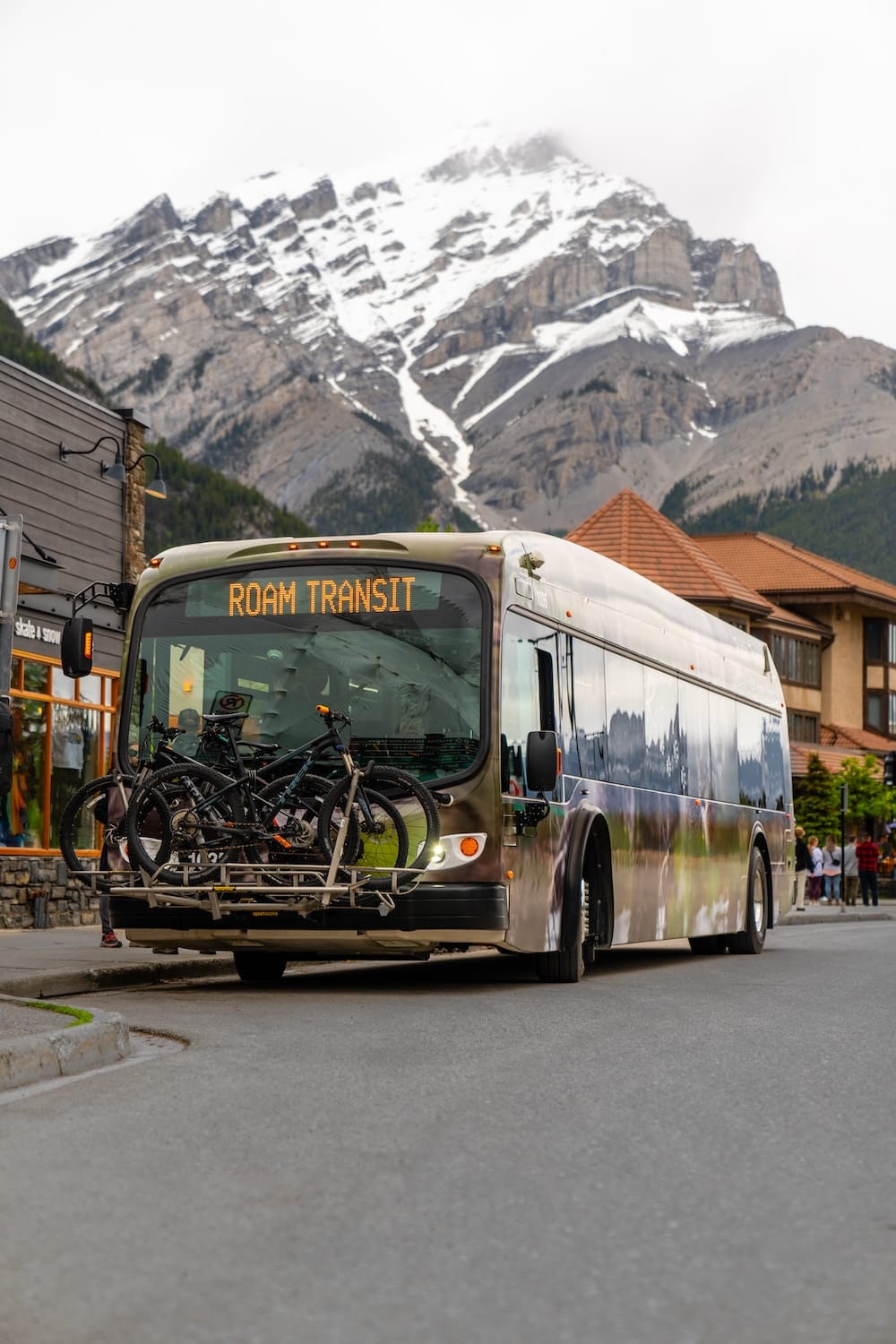
There’s a genuinely separate public transit option here, and it’s easy to overlook because it isn’t run by Parks Canada at all — it’s Roam Transit, the regional bus system, and its Route 8X runs daily, year-round, straight from downtown Banff to the Lake Louise Lakeshore. You catch it on the 300 block of Banff Avenue, and the ride itself takes somewhere around 50 minutes.
A one-way reservation costs $12.50 for an adult in 2026; kids 12 and under ride free but still need a reservation of their own. That basic fare gets you to Lake Louise and back, full stop. If you also want to reach Moraine Lake, you need the separate Reservable Super Pass instead, which runs $30 for an adult but covers unlimited travel on every Roam route for the day and is the only Roam product that connects into the free Parks Canada connector shuttle between the two lakes. Buy the wrong ticket and you’ll get to Lake Louise just fine, then discover at the lakeshore that you can’t get any further.
Roam does leave some room for the unplanned: roughly 40 percent of the seats on each departure go unreserved, first-come-first-served. But in summer, that can mean waiting up to two hours for an open seat, which isn’t really a backup plan so much as a last resort with a very long line attached. If you know you’re taking this route, book it ahead through Roam’s own reservation page the same way you would the Parks Canada shuttle.
Guided and Private Tours
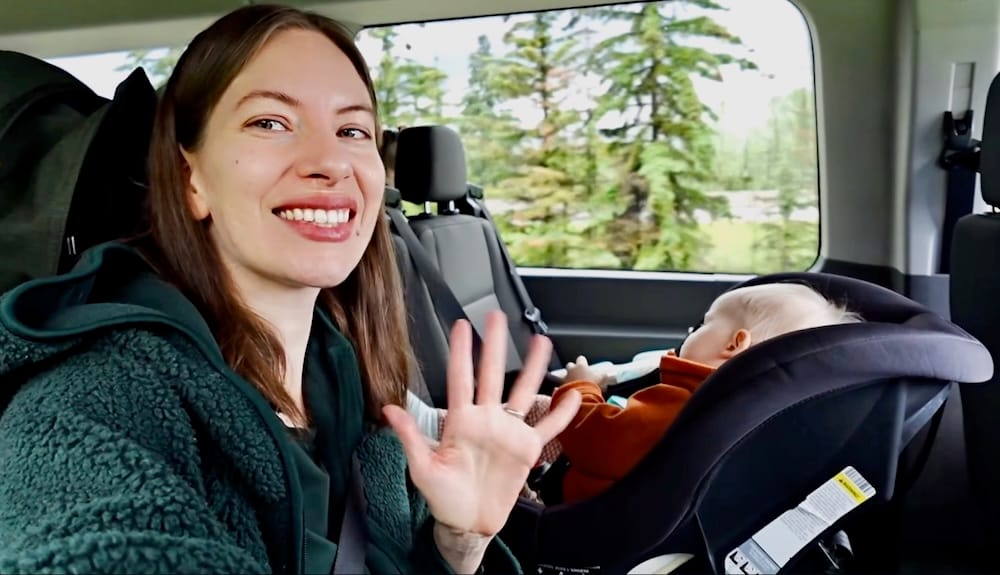
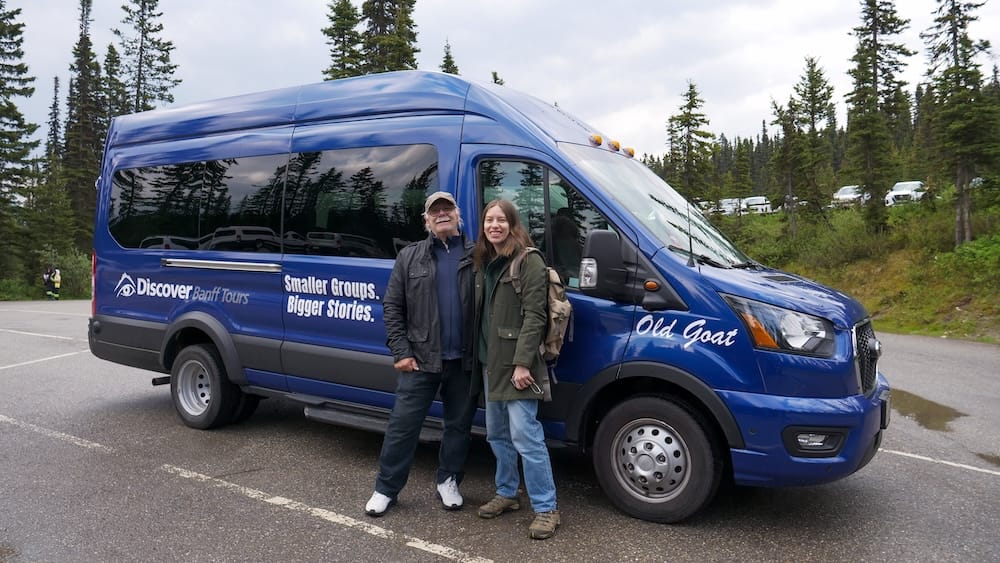
The last option skips the reservation system entirely, and I understand why now in a way I didn’t when I first tried it. On one trip we had Audrey’s dad along with us and our daughter, who was still small enough to need feeding stops and diaper changes on no fixed schedule, and self-driving simply wasn’t going to work the way it once had for the two of us alone. So we booked a private tour instead, and our guide, Ros, kept the whole day moving without ever making it feel rushed — we stopped when we needed to stop, lingered where it made sense, and didn’t spend a single minute of the day thinking about where we’d park. What actually surprised me was that despite having been to this part of the Rockies more than once before, the tour still showed us something new: a lookout point neither of us had known existed on our earlier, self-driven visits, simply because nobody was navigating and worrying about the road at the same time.
If a private tour like ours sounds like the right call for your own trip, GetYourGuide lists several private Lake Louise and Moraine Lake day tours departing directly from Banff, with the same kind of flexible, small-group pacing we had.
What actually makes the case for a tour has nothing to do with convenience in the abstract. Tour operators hold their own access arrangements for the road into Moraine Lake, separate from anything a private vehicle can use, which means booking one of these trips guarantees you both lakes without ever touching the reservation system — no competing for a parking spot, no checking a booking window two days out. You’re paying someone else to have already solved that problem for you.
That guarantee costs money, obviously. Guided half- or full-day tours that include both lakes with a guide typically run somewhere in the $150 to $200 range per adult, and pricing climbs from there depending on group size and whether it’s a sunrise departure. If you just want a lift without the narration, no-guide shuttle transfers run cheaper — you can compare current shuttle-only transfer options running generally somewhere between $35 and $99, with sunrise slots again sitting at the top of that range. Either way, this is the one method here where cost buys certainty rather than just convenience — you know before you leave your hotel that you’re getting into both lakes.
What it isn’t is a democratic choice for every kind of trip. If you’re travelling solo, comfortable with an early alarm, and don’t mind the reservation dance, it’s genuinely more money than you need to spend. But if you’re managing a group with different needs, or you simply don’t want your one big Rockies day built around a countdown timer and a parking gamble, it earns its price the way ours did.
The Four Options at a Glance
| Method | Booking required? | How far ahead | Approx. cost (adult) |
|---|---|---|---|
| Drive & park at the lakeshore | No booking, but a real risk of no spot | Arrive by roughly 6–7 a.m. in high season | $42/day parking, plus your park pass |
| Parks Canada Shuttle | Yes, in practice | 48 hours before departure, or April 15 for early-season dates | Around $16 total with the reservation fee |
| Roam Transit (Route 8X) | Recommended, not strictly required | Staged monthly release; roughly 40% of seats stay unreserved | $12.50 one-way; $30 for the Super Pass that also reaches Moraine |
| Guided tour | Yes | Varies by operator, often days to weeks out | Roughly $150–200 guided; $35–99 for a no-guide shuttle transfer |
Price and speed turn out to be the wrong axis for comparing these four. What actually separates them is how each one relates to the booking window that now sits underneath almost the whole system. Driving puts you in direct competition with it, betting your morning against everyone else’s alarm clock. The Parks Canada shuttle and Roam both put you inside it, which means your success depends entirely on how early and how precisely you book. Only a tour steps outside it completely, at a price that reflects exactly that.
I still think about that lucky spot Audrey and I found at four in the afternoon, mostly because it doesn’t really exist as a strategy anymore — not as a fallback you can count on if your other plans fall through. Showing up and hoping is still technically an option, but only if you’re willing to accept genuinely bad odds. Everything else here is really just a different answer to the same question: how much certainty do you want, and how far ahead are you willing to plan to get it? Settle that first, and the actual choice between shuttle, transit, or tour tends to sort itself out fast.
Frequently Asked Questions
Can you still drive to Lake Louise, or is it shuttle-only like Moraine Lake?
Yes, driving and parking directly at the Lake Louise Lakeshore is still possible — Moraine Lake is the one that’s closed to personal vehicles entirely. Paid parking runs $42 a day in season, and the lot regularly fills before 7 a.m., so getting in isn’t guaranteed even though it’s technically allowed.
Where does the Parks Canada shuttle actually leave from?
The regular daytime shuttle departs from the Lake Louise Park and Ride at the Lake Louise Ski Resort, not from the lakeshore itself. The only shuttle that leaves from the lakeshore is the early Alpine Start Shuttle, which still requires paying the regular parking fee there.
How far in advance do I need to book the Parks Canada shuttle?
Forty percent of the season’s seats release on April 15 at 8 a.m. Mountain Time, and the remaining sixty percent release on a rolling 48-hour window before each departure date. Booking within that two-day window is the realistic strategy for most travelers.
Does one Parks Canada shuttle reservation cover both Lake Louise and Moraine Lake?
A single Parks Canada shuttle reservation includes access to both lakes: the ride in, unlimited use of the connector shuttle between Lake Louise and Moraine Lake, and the return trip to the Park and Ride.
What’s the difference between a Roam Transit ticket and the Reservable Super Pass?
A basic one-way Roam Transit fare only gets you to Lake Louise. Reaching Moraine Lake by public transit requires the separate Reservable Super Pass, which costs more but also connects into the free Parks Canada connector shuttle between the two lakes.
Is it worth paying for a guided or private tour instead of driving or taking transit?
A tour costs more, but it’s the only option that bypasses the parking gamble and the reservation system entirely, since tour operators hold their own access to Moraine Lake Road. It tends to earn its price for groups with mixed needs, like a young child or an older traveler, rather than a solo visitor comfortable with an early alarm.
Can hotel guests staying near Lake Louise skip the Park and Ride?
It depends on the property rather than being a guaranteed park-wide policy — Parks Canada’s own guidance is to confirm directly with your hotel’s front desk or concierge rather than assuming it will work.
This guide is also available in Spanish. [Leé la versión en castellano: Cómo llegar a Lake Louise desde Banff: todas las opciones — traslado, estacionamiento, excursiones y reservas]
This article contains affiliate links. If you book through one of these links, I may earn a commission at no extra cost to you.