
Banff gives you four real places to put a paddle in the water, and every one of them gets photographed constantly, which makes it easy to assume the choice comes down to which lake looks best in your feed. It doesn’t. The bigger difference between these four options isn’t the scenery — it’s what you have to do, and what you have to pay, before you ever get in the boat.
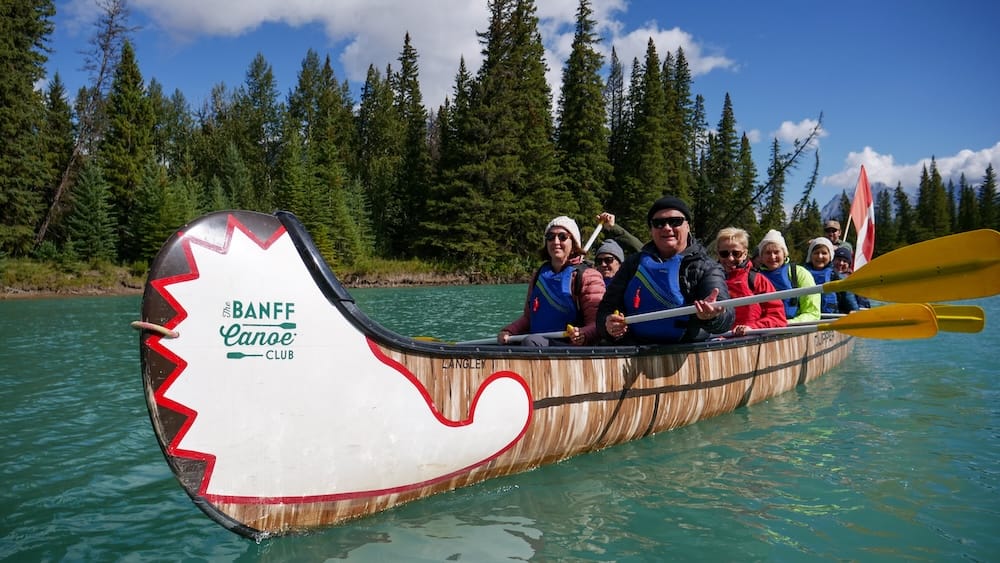
Audrey and I have actually paddled one of these four: the guided Big Canoe Tour on the Bow River, right in Banff town. We’ve been to Lake Louise, Moraine Lake, and Lake Minnewanka too, more than once each, but as sightseers rather than paddlers. That split in our own experience turns out to map almost exactly onto the real split in this decision. Two of these places you can canoe on a whim. Two of them you have to plan your whole day around.
Canoeing in Banff Town: The Low-Friction Option
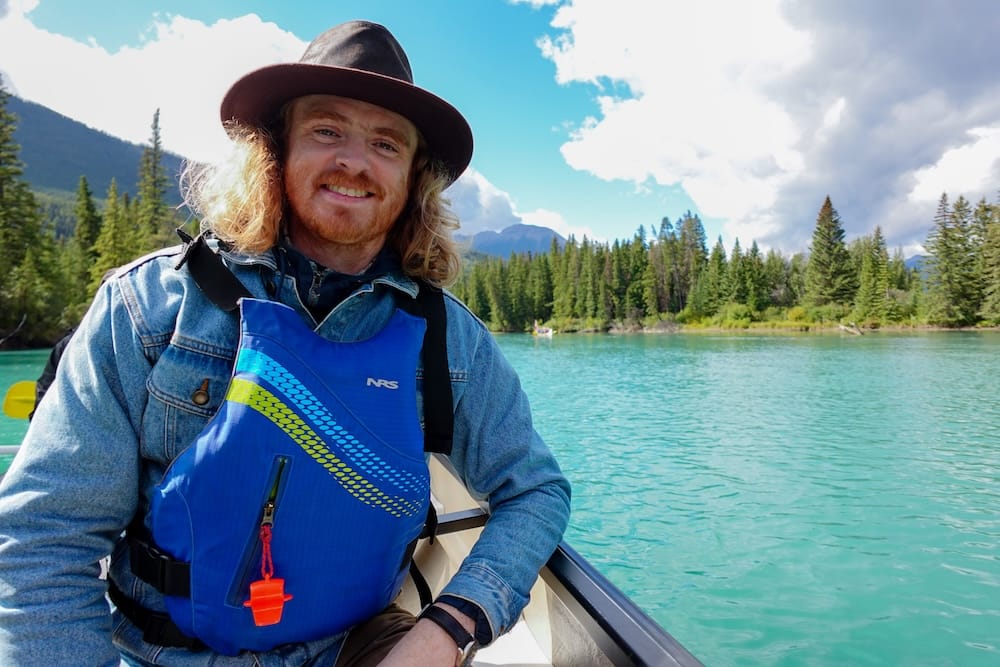
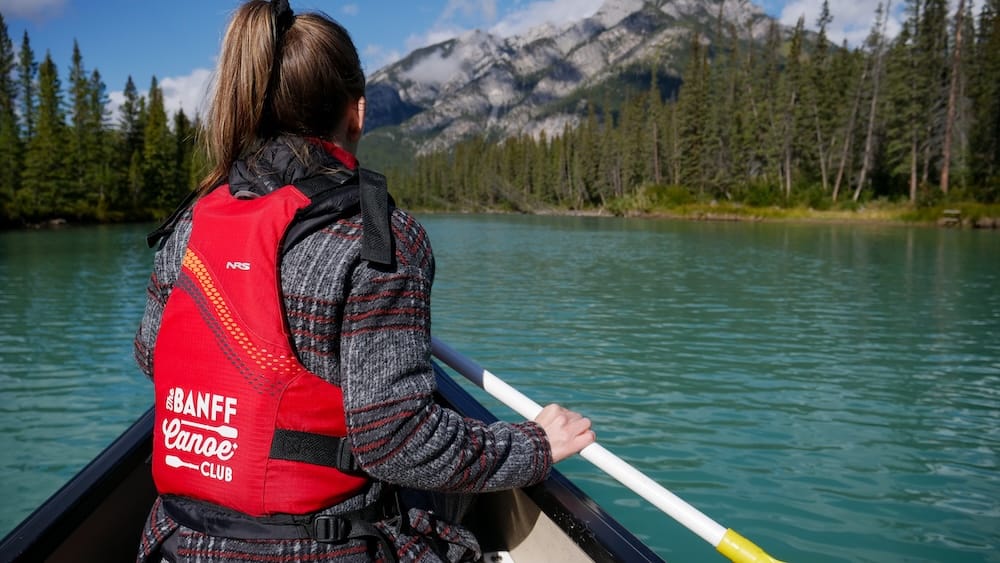
We did the Big Canoe Tour out of the Banff Canoe Club, and the whole appeal of it starts before you even touch a paddle: you walk there. No driving, no parking gamble, no shuttle reservation to solve first. We booked ahead, showed up, got a wildlife briefing and life jackets, and paddled upstream as a group before floating back down through some genuinely nice mountain scenery. It’s guided the entire time, which means the roughly $75 you pay for the ninety-minute tour isn’t just covering a boat rental — it includes the guide, the equipment, and the interpretation along the way. You can check current availability for the Big Canoe Tour if you want to lock in a time before the rest of your day fills up.
That’s worth sitting with for a second, because it changes what “cheapest option” actually means here. This isn’t the bare-bones budget choice with a worse experience attached. It’s the cheapest option that also happens to be the only one where someone else is doing the navigating and pointing out what you’re looking at.
What Canoeing at Lake Louise Actually Costs and Requires
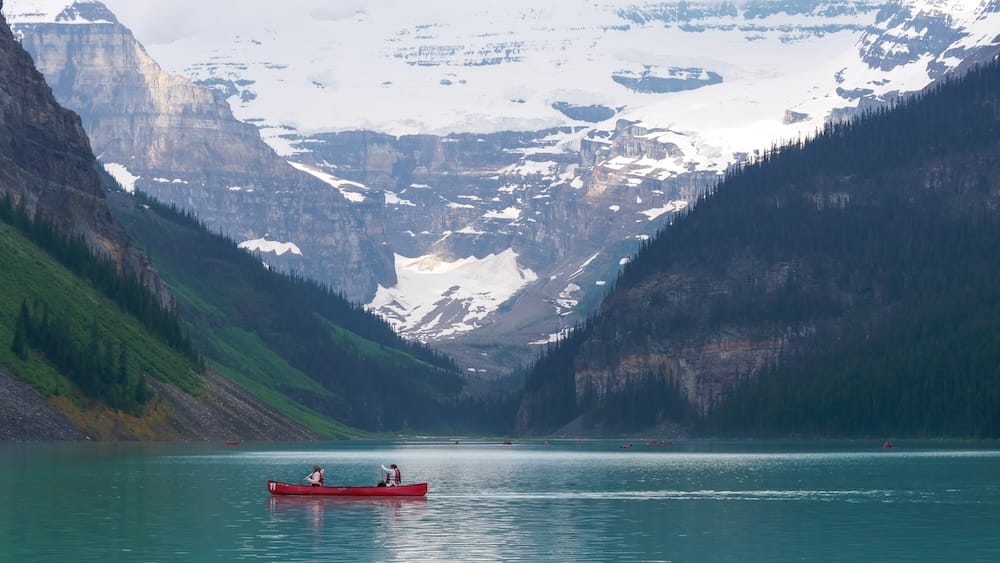
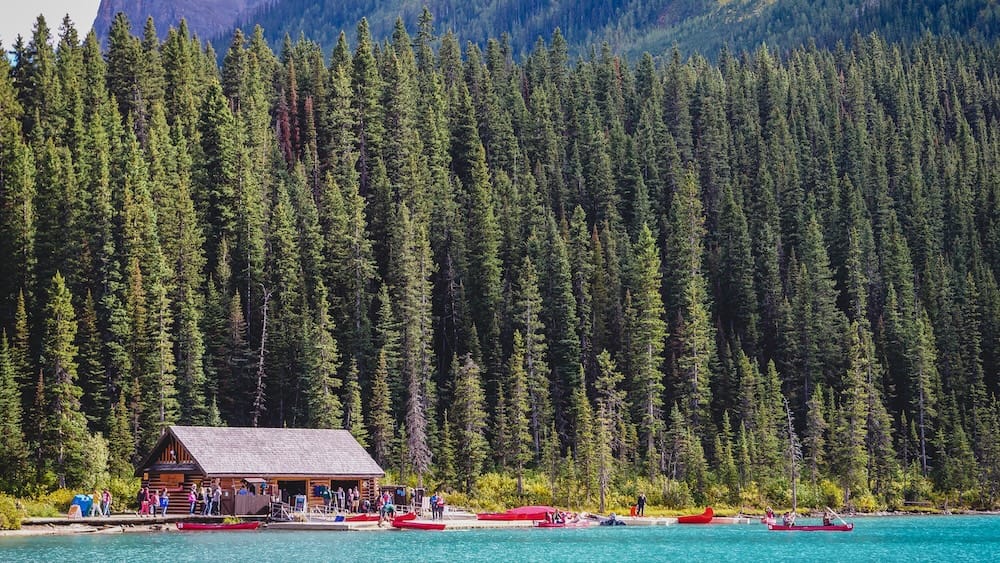
Lake Louise is where most people picture themselves canoeing in Banff before they’ve ever been to Banff, and the picture is accurate — that turquoise water with Victoria Glacier hanging at the far end is exactly as striking from a canoe as it looks online. What the picture doesn’t show you is the two separate problems you have to solve before you’re the one paddling it.
The first is getting there and finding somewhere to park. You can still drive to Lake Louise yourself, but the lakeshore lot fills before sunrise in peak season, and paid parking runs around $42 a day on top of that. Parks Canada runs a reservable shuttle as the more reliable alternative, with bookings opening in mid-April and released in batches through the season, or you can catch the Roam Transit bus that runs daily between Banff and Lake Louise. Either way, this isn’t a spontaneous stop — it’s a piece of your itinerary you plan in advance or gamble on an early alarm.
The second problem is the canoe itself, which is rented exclusively through the Fairmont Chateau Lake Louise’s boathouse — there’s no public launch and no way around booking through them. It’s first-come, first-served with no advance reservation for the canoe, running $110 an hour if you’re staying at the hotel and $180 an hour if you’re not, which is more than double what the entire Bow River tour costs.
What Canoeing at Moraine Lake Actually Costs and Requires
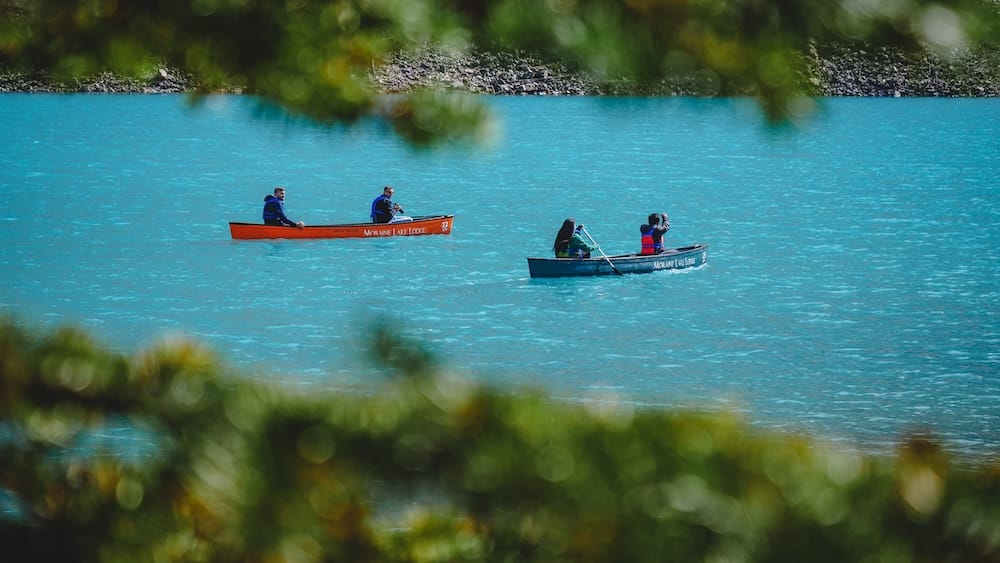
If Lake Louise asks you to solve a parking problem, Moraine Lake asks something bigger: you can’t drive there at all. Private vehicles have been banned from Moraine Lake Road since 2023, full stop, unless you’re staying at the roughly $1,200-a-night Moraine Lake Lodge. Everyone else gets there by Parks Canada shuttle, the Lake Connector service from Lake Louise, or a licensed tour, which means the real decision you’re making isn’t “should I canoe at Moraine Lake” — it’s “am I willing to build a shuttle reservation into my itinerary to make that possible.” Travelers who’d rather not gamble on Parks Canada’s own reservation window can book a guaranteed round-trip shuttle to both Moraine Lake and Lake Louise from Banff instead, which solves this exact access problem in one booking.
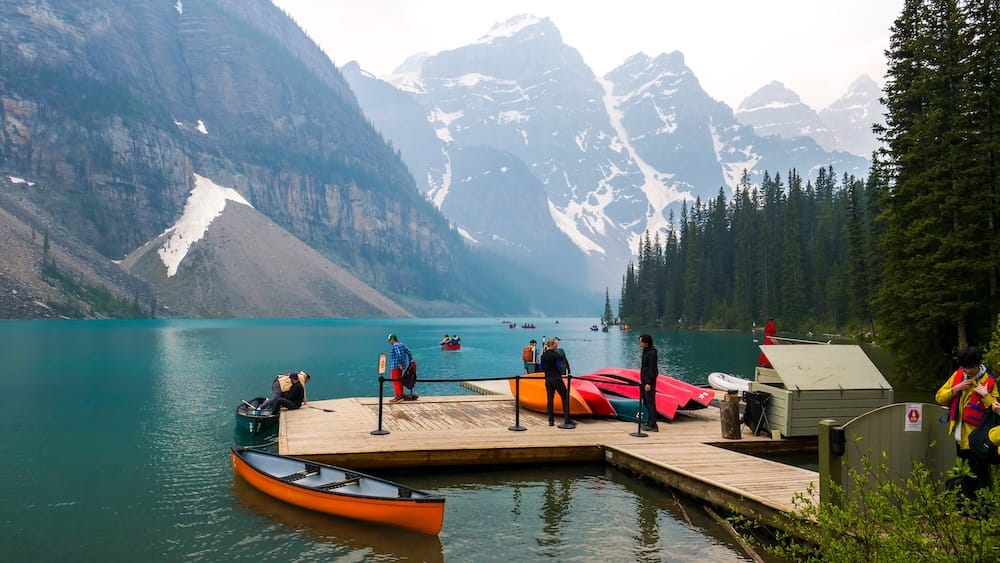
Once you’re actually there, the canoe rental itself is comparatively simple. Moraine Lake Lodge runs the dock, first-come-first-served with no separate reservation needed for the boat, at a rate starting around $160 an hour, which actually lands below what Lake Louise charges non-hotel guests for the same hour. We’ve put together a full head-to-head comparison of Lake Louise against Moraine Lake if you’re weighing the two glacial lakes specifically — the short version is that Moraine currently comes out ahead on both price and setting for a typical one-hour rental. And the view you get for that effort is arguably the most photographed canoe scene in the country: the Valley of the Ten Peaks arranged in a horseshoe around water so blue it looks edited even when it isn’t.
One more thing to know before you plan around either alpine lake: as of 2026, you can’t bring your own canoe or kayak to Moraine Lake anymore. It’s a conservation measure tied to preventing the spread of whirling disease, and it applies to Lake Minnewanka too. The only boats allowed on either lake now are the ones you rent on-site.
What Canoeing at Lake Minnewanka Actually Costs and Requires
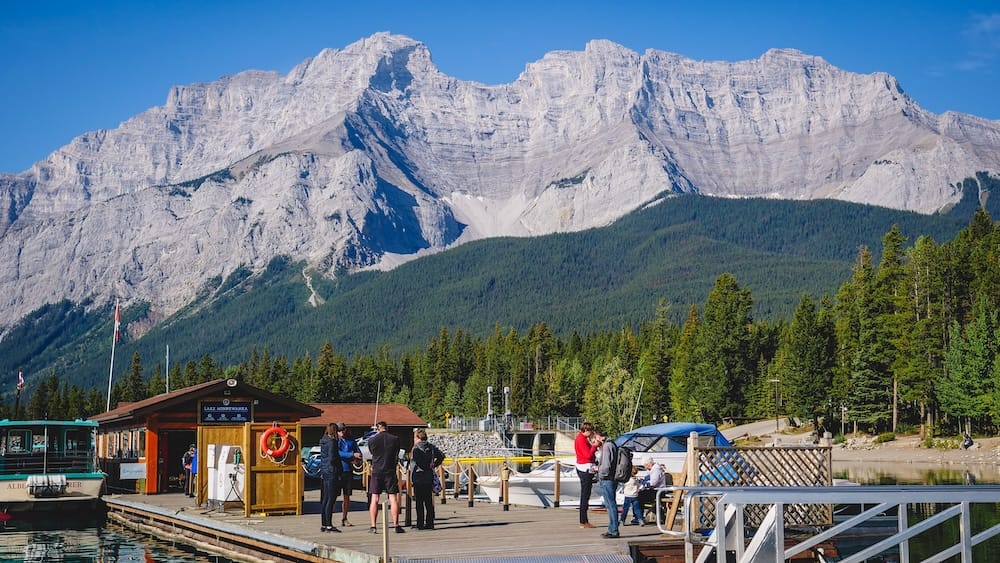
Lake Minnewanka sits in an interesting middle position between the walk-up ease of Bow River and the reservation gauntlet of the two alpine lakes. It’s about a ten to fifteen minute drive from Banff town, no shuttle required, no advance booking needed to secure parking or a spot on the water. You just drive out and rent a boat when you get there.
The rental itself runs through Lake Minnewanka Boat Rentals, and it’s noticeably more expensive per hour than the Bow River tour: $91 for the first hour and $45.50 for each additional hour on a canoe or double kayak, or $49 and $24.50 if you go with a single kayak. That’s a self-directed rental with no guide included, so you’re paying more than the Bow River tour for less support — though you are getting the biggest lake in the park and, unlike Lake Louise or Moraine, the option to add a motorized boat if paddling isn’t the point for you. It’s also the one lake in Banff where wind can genuinely pick up and create real swells out on the open water, so it rewards a bit more paddling confidence than the calmer conditions on the Bow River. The same 2026 personal-watercraft restriction applies here too — rent on-site, or don’t paddle at all.
Cost and Friction Side by Side
Prices and shuttle systems shift from season to season, so treat the numbers below as a current snapshot rather than something to lock into your itinerary without a quick check closer to your trip.
| Bow River (Banff town) | Lake Minnewanka | Lake Louise | Moraine Lake | |
|---|---|---|---|---|
| Access | Walk from downtown Banff | ~10–15 min drive, no reservation | Drive + parking gamble, or shuttle reservation | No private vehicles at all — shuttle or tour required |
| Format | Guided tour | Self-directed rental | Self-directed rental | Self-directed rental |
| Typical cost | ~$75 (1.5-hour tour, all-inclusive) | $91/hr canoe, $49/hr single kayak | $110/hr (hotel guests), $180/hr (non-guests) | ~$160/hr |
| Booking for the boat | Advance tour booking | First-come, first-served | First-come, first-served | First-come, first-served |
| Biggest logistical hurdle | None | None | Parking or shuttle reservation | Shuttle reservation is mandatory |
Which One Should You Actually Choose
If you want the least effort and the lowest cost, Bow River wins outright — walk to the dock, let a guide handle the rest, and you’ll have paddled and been back in time for lunch. If you’re willing to drive but not willing to plan a whole segment of your trip around a reservation, Lake Minnewanka gets you real Rocky Mountain scenery and a bigger lake for a reasonable step up in price and effort.
The two alpine lakes are a different kind of decision entirely. You’re not choosing them for convenience or value — you’re choosing them because that specific postcard view is worth the planning it takes to get there. Between the two, the math currently favors Moraine Lake for a typical hour on the water, both on price and on setting, though Lake Louise has its own draw if the Fairmont backdrop and easier drive-up access, even with the parking hassle, matter more to you than saving money. If an alpine lake is the plan, it’s worth reserving the two-lake shuttle in advance rather than finding out on the day that Parks Canada’s own tickets are sold out.
My honest advice: don’t treat this as a single either/or choice. Bow River is close enough to town that it costs you almost nothing to add, even if an alpine lake is the main event of your day. Do the easy one because it’s easy, and save the planning effort for whichever lake you actually came to Banff to see paddling across.
Frequently Asked Questions
Which is the cheapest place to canoe in Banff?
The Bow River tour in Banff town is the cheapest at roughly $75 for a 1.5-hour guided experience. It’s also the only option where the price includes a guide, so it’s cheaper and more supported than any of the self-directed lake rentals.
Do I need a car to canoe in Banff?
Not for the Bow River tour — you can walk there from downtown Banff. Lake Minnewanka requires a short drive. Lake Louise can be reached by car, though parking is limited, and Moraine Lake can’t be reached by private vehicle at all; you need a shuttle or a licensed tour.
Can I bring my own canoe or kayak to these locations?
Not to Moraine Lake or Lake Minnewanka. As of 2026, personal watercraft are prohibited at both as a conservation measure against whirling disease, so you have to rent on-site at either lake. Lake Louise has no public launch either, so a rental through the Fairmont boathouse is the only option there too.
Is Lake Louise or Moraine Lake better for canoeing?
For a typical one-hour rental, Moraine Lake currently comes out ahead on both price and setting. Lake Louise has its own appeal if easier drive-up access, even with the parking hassle, matters more to you than saving money.
Do I need to book a canoe in advance at any of these locations?
No. The canoe or kayak rentals at Lake Louise, Moraine Lake, and Lake Minnewanka are all first-come, first-served with no advance reservation for the boat itself. The Bow River experience is the only one booked in advance, since it’s a guided tour rather than a rental.
What’s the biggest planning challenge for canoeing at Moraine Lake?
It’s not the canoe — it’s getting there. Private vehicles have been banned from Moraine Lake Road since 2023, so you need a Parks Canada shuttle reservation, the Lake Connector from Lake Louise, or a licensed tour just to reach the dock.
This article is also available in Spanish. [Leé la versión en castellano: ¿Dónde deberías andar en canoa en Banff? Río Bow vs. Lake Louise vs. Moraine Lake vs. Lake Minnewanka]
This article contains affiliate links. If you book through one of these links, I may earn a commission at no extra cost to you.