
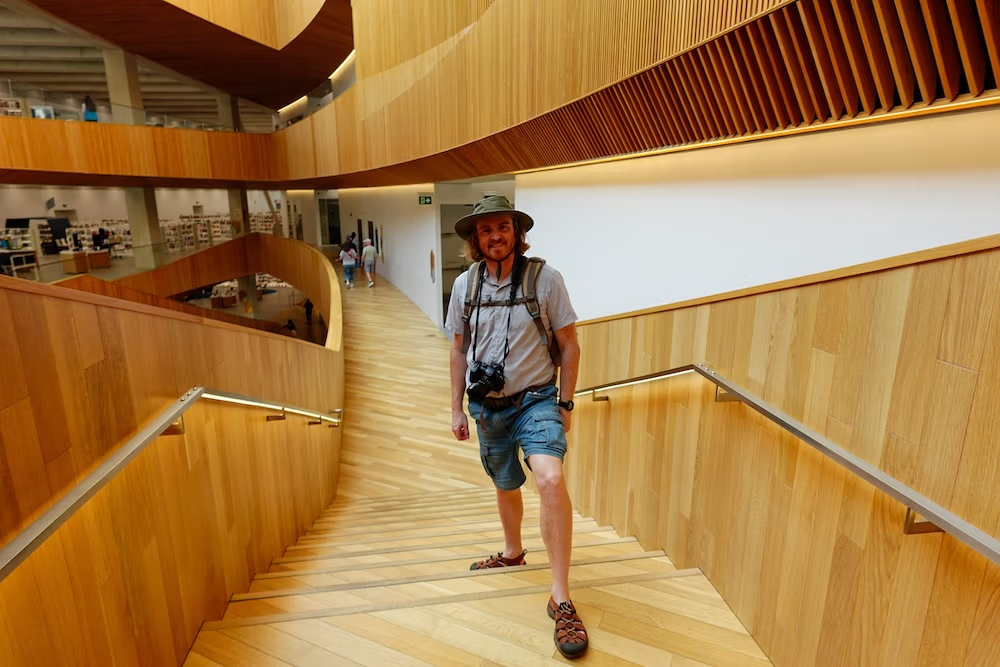
I get why it sounds strange. A library isn’t usually on anyone’s list of tourist attractions, and I wouldn’t have put one on mine either before we wandered downtown and came across the Calgary Central Library almost by accident. But this building is a work of art, and I don’t say that loosely. It’s one of the nicest libraries I’ve ever been to, anywhere in the world, and by the time we left I understood why people specifically plan detours to see it.
The Case for Visiting a Public Library
The skepticism is fair. Most cities don’t build libraries worth crossing town for. Calgary’s is the exception, and it’s not close. The building won a 2020 American Institute of Architects Architecture Award, picked up a Mayor’s Urban Design Award, and landed on Popular Mechanics’ list of the twenty most stunning libraries in the world. It’s the kind of building that shows up on architecture-focused travel lists the way a cathedral or a famous museum would, and once you’re standing inside it, that comparison stops feeling like a stretch.
It sits in the East Village, and the building itself came out of an international design competition back in 2013, won by the Norwegian-American firm Snøhetta working with Calgary and Toronto firm DIALOG. Snøhetta’s other work includes the National September 11th Memorial Museum Pavilion in New York and the Bibliotheca Alexandrina in Egypt, so this wasn’t a local firm’s first swing at something ambitious. It opened to the public on November 1, 2018, at 240,000 square feet, roughly two-thirds larger than the library it replaced, on a $245 million project that reportedly drew input from over 16,000 Calgarians before a single wall went up. That’s not a small civic undertaking, and every part of it shows up in the finished space.
What You See Before You Even Walk In
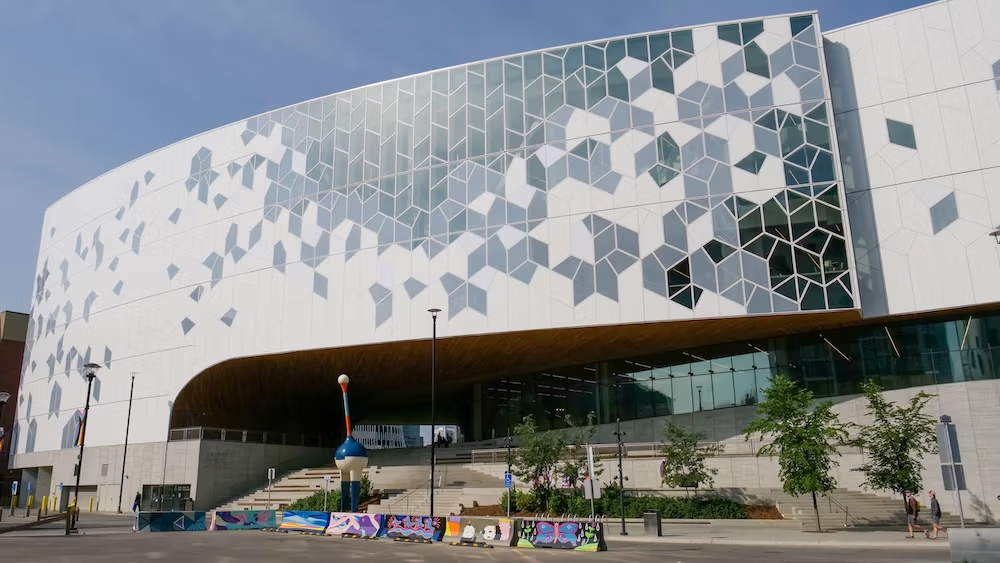
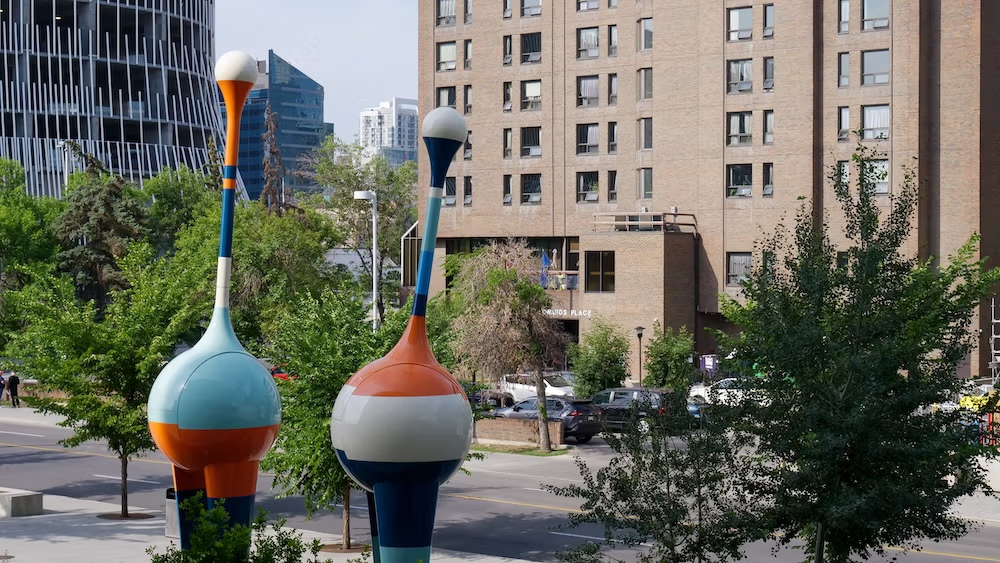
The exterior is where the building starts making its case. It’s wrapped in a triple-glazed façade built from a modular hexagonal pattern, alternating between fritted glass and aluminum panels across the curved surface, so the shapes shift depending on where you’re standing. Out front, there’s a plaza and outdoor amphitheater roughly the size of a city block, and three tall kinetic sculptures by artist Christian Moeller, nine metres each, nicknamed the “drinking birds” for the slow, pendulum-like way they rock back and forth. Two stand on one side of the building, one on the other, and they were still moving when we walked past, which is a strange and genuinely charming thing to see outside a public library.
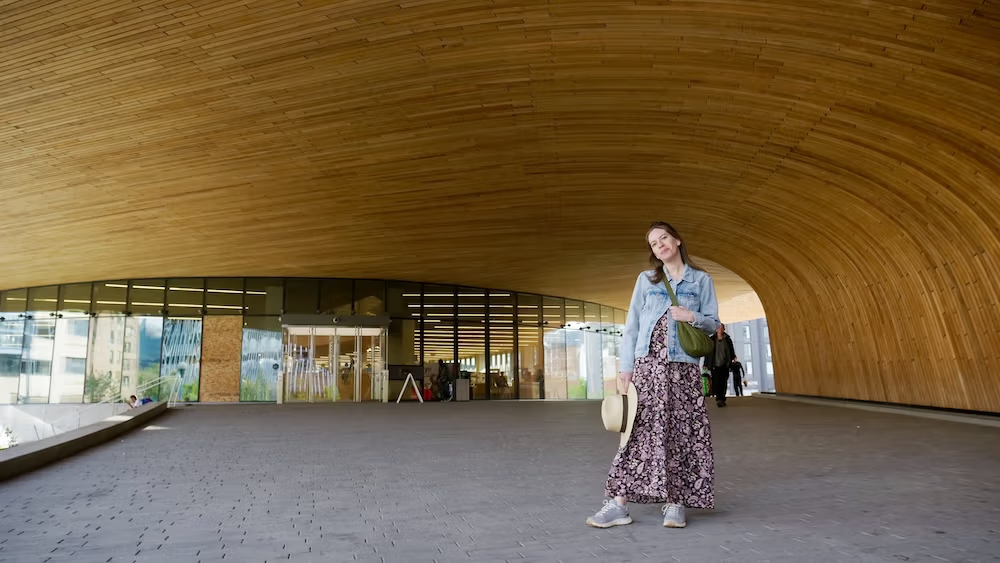
The main entrance sits under a wood archway that cuts straight through the building, and it’s a literal architectural reference to the arched cloud formations that show up locally when chinook winds roll through, a detail the architects built into the design language on purpose rather than leaving as coincidence.
Inside the Building
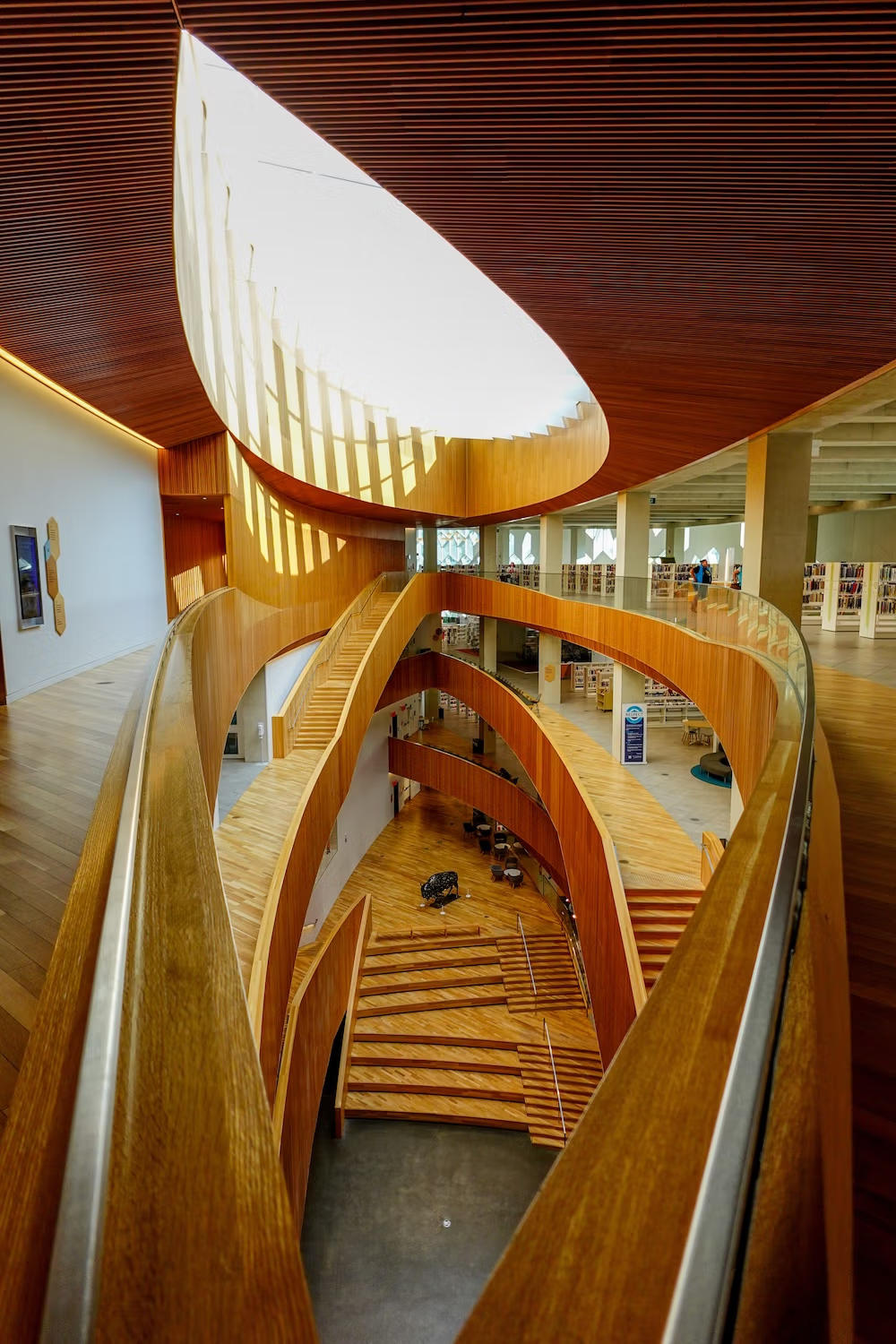
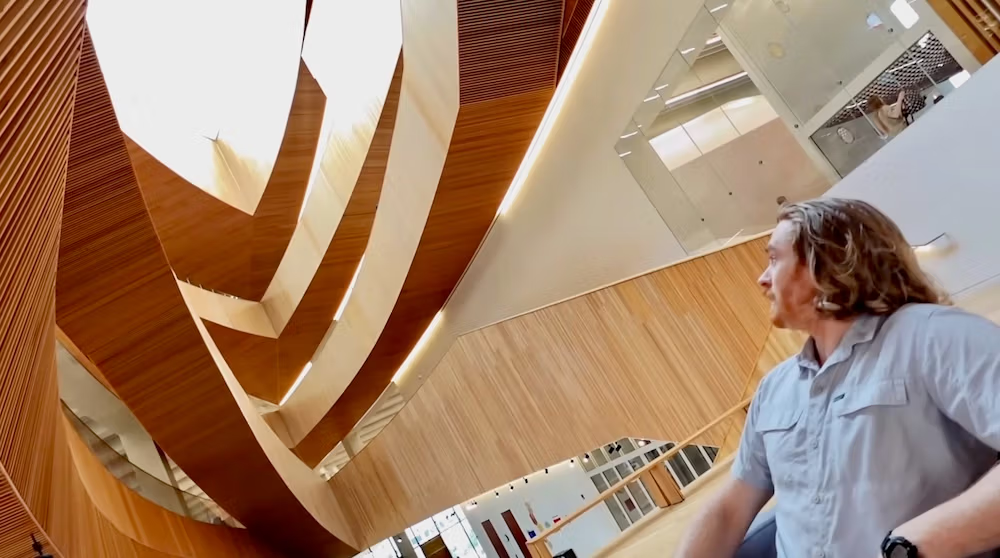
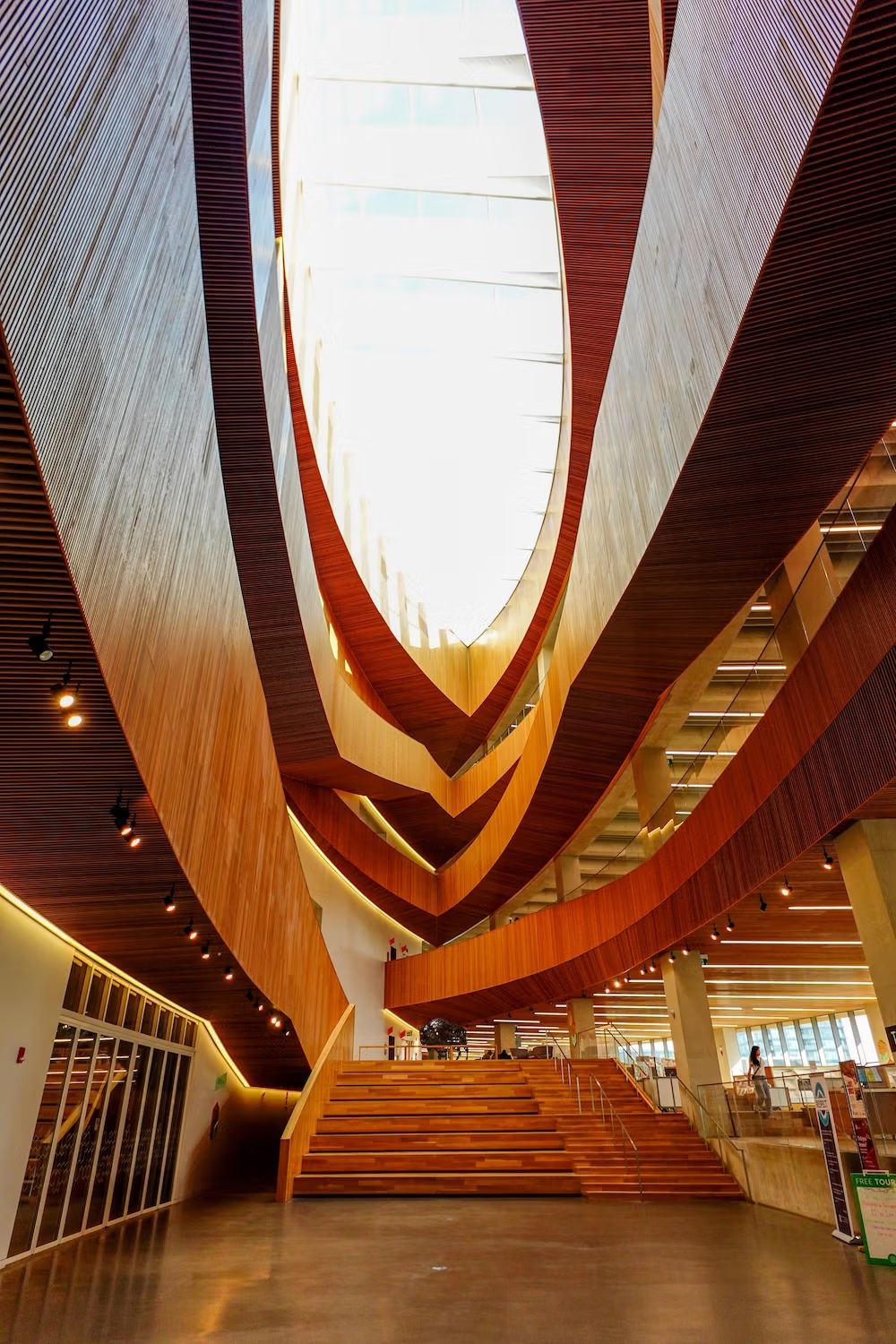
The interior leans heavily on wood, warm and deliberate rather than sterile, and the oval atrium at the centre struck me immediately as canoe-shaped, that same long curved hull silhouette repeated overhead. The building itself does something genuinely unusual structurally, too: it’s built directly over a fully operational light rail line, which cuts through the site on a curved path below and above ground. Rather than hide that constraint, the design lifts the main entrance right over the enclosed train line, turning what could have been an engineering headache into the building’s defining move.
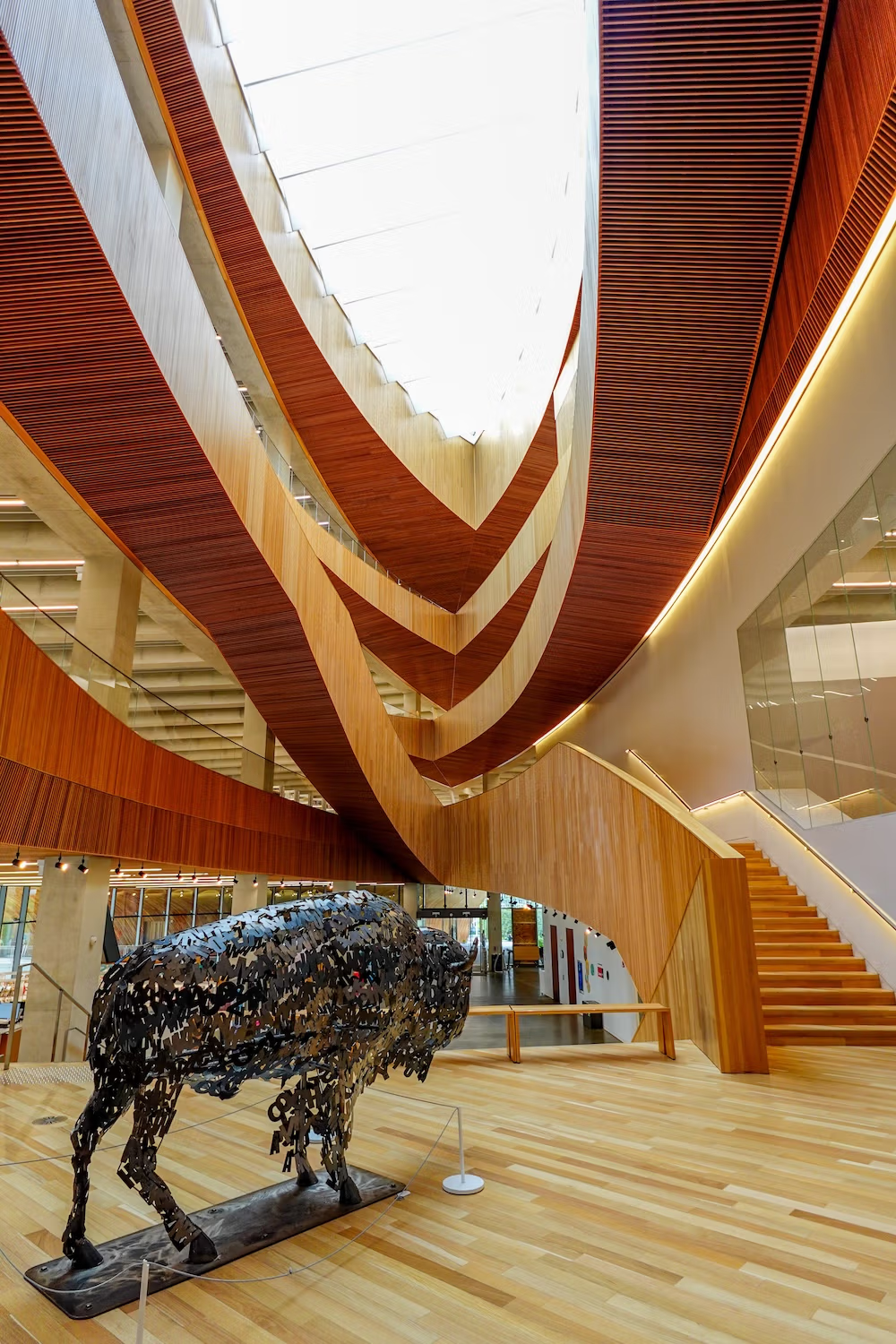
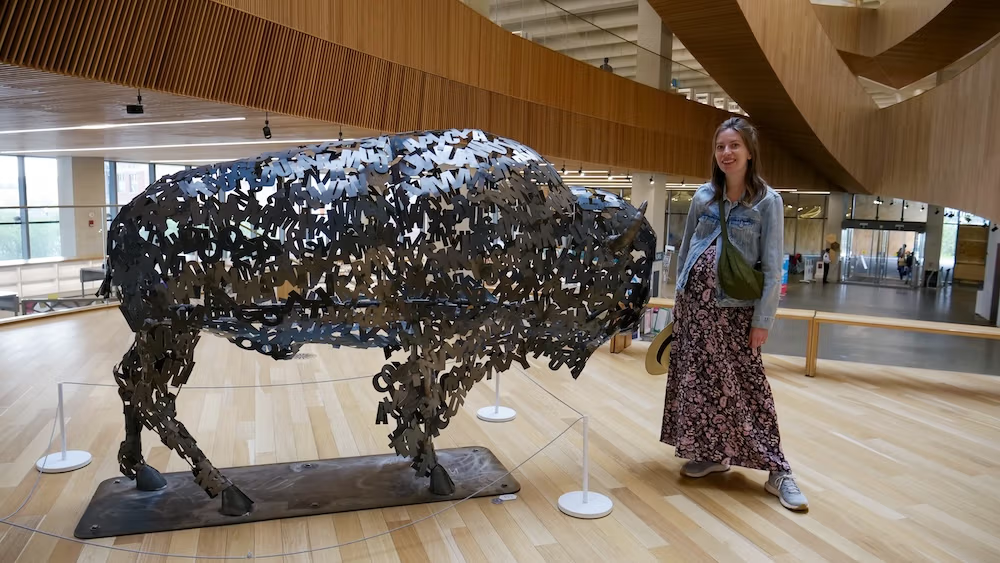
Four levels up, there’s a lot worth slowing down for beyond the architecture itself. Near the entrance, on the feature stairs leading up to the mezzanine, there’s a life-sized bison sculpture that caught our attention mid-walkthrough, easy to miss if you’re moving fast and worth stopping for if you’re not. It was created by Indigenous sculptor Lionel Peyachew, built from words drawn from Indigenous languages, with the bison chosen deliberately as a symbol of resilience: a species pushed to the edge of extinction that’s since grown back in number, echoing the same story for the Indigenous communities the artist represents. It’s part of a broader Indigenous art program throughout the building, and it’s the kind of detail that turns “cool design” into something with real weight behind it.
Elsewhere, near the third-floor atrium, there’s a second piece by the same artist behind the outdoor birds worth watching for: a large portrait of a goldfish built entirely out of roughly ten thousand colour-coded books, arranged so the shelved spines form the image from a distance. It’s the kind of thing that photographs better than it sounds described, and a good reminder that the art program here wasn’t an afterthought tacked onto the architecture.
One Artist, Two Very Different Pieces
The outdoor sculptures aren’t the only thing Christian Moeller made for this building. He’s also behind the piece I’d actually rank as the single best reason to go looking beyond the lobby: FISH, a wall installation on the third floor built entirely from roughly 10,260 individually bound books in twelve colours. From a distance, the whole wall resolves into an enormous goldfish, eye and all, the kind of trick-of-scale image that seems to follow you as you walk past it. Get close enough and the illusion falls apart into exactly what it is: a very orderly, very deliberate arrangement of coloured book spines, which is sort of the point. It’s a library making the case for itself twice over, once as a picture and once as an actual shelf of actual books.
Moeller trained in Germany and Austria before landing in the United States, where he now chairs the Design Media Arts department at UCLA, and this wasn’t his first library-book mural — just his most complicated one, by his own account. Both TRIO outside and FISH on the third floor came out of the same $2 million public art commission, awarded after an international call that drew more than two hundred artist submissions. Worth knowing if the exterior sculptures are the only thing you clock on your way in: the more interesting half of that commission is waiting three floors up.

What Else Is In Here
We didn’t come close to seeing everything, and it’s worth being upfront about the scale of what we skipped. The collection runs close to half a million items, spread across a building that includes a roughly 400-seat performance hall, more than thirty meeting rooms available to book for free, a 12,000-square-foot children’s library, and a teen centre built around gaming and a small performance stage. There are free recording and production studios for anyone working on an audio or video project, a digital learning lab with over 200 computers, and Chromebooks you can borrow with a library card and take anywhere in the building for up to three hours.
None of that is what pulls a tourist in the door, but it’s worth knowing it’s there, because it changes what “worth visiting” actually means here. This isn’t a beautiful building with a library awkwardly stuffed inside it. The programming is genuinely as ambitious as the architecture, and if you’ve got more time than we did, there’s a real case for treating this as a half-day stop rather than a quick photo detour.
Free Admission and How to See More Than the Lobby
Admission is free, no ticket required, which is easy to forget given how much the building has going for it. It’s at 800 3rd Street SE in the East Village, generally open into the evening on most days, though it’s worth checking the current hours for whichever day you’re planning to go rather than assuming a fixed schedule.
If you want more than a self-guided wander, the library runs free volunteer-led tours on a set schedule, capped at ten drop-in visitors at a time. Registration is recommended but not required, and it’s a good way to actually understand what you’re looking at rather than just admiring it from a distance. If your schedule doesn’t line up with the library’s own tour times, or you’d rather fold the library into a wider look at downtown, travellers with limited time can join a guided city highlights walk that stops to admire the library alongside the Tower, Devonian Gardens, and the Plus15 network on the way.
One small practical note: free WiFi requires signing up for a library card, which isn’t something worth doing for a short visit, so don’t count on getting online there if you’re just passing through. There are also several flights of stairs between levels, worth knowing if that’s a consideration for you.
Budget at least an hour if you’re wandering on your own, more if you catch a tour or spend real time with the art. We weren’t in any rush, and it still felt like we could have stayed longer. If you’re staying in the East Village itself rather than just visiting for the afternoon, you’re already close enough to walk here in minutes — the Alt Hotel Calgary East Village sits a short walk from the library and puts you within easy reach of the rest of the neighbourhood too.
Is It Worth Visiting?
Yes, unreservedly. This isn’t a building that’s interesting because it happens to be a library — it would be worth visiting regardless of what was inside it, and the fact that it’s free, open to anyone, and stacked with genuinely meaningful art on top of the architecture just makes the case stronger. If Calgary is on your itinerary at all, this belongs on the list next to the attractions you’d expect to see, not filed away as an odd afterthought for people who happen to like books.
Frequently Asked Questions
Is the Calgary Central Library free to visit?
Yes, admission is free with no ticket required. It’s located at 800 3rd Street SE in the East Village, generally open into the evening on most days, though I’d check the current hours for the day you’re going.
Who designed the Calgary Central Library?
Snøhetta, a Norwegian-American firm also behind the National September 11th Memorial Museum Pavilion in New York, designed it together with Calgary and Toronto firm DIALOG after winning an international design competition in 2013. It opened on November 1, 2018.
What art is inside the Calgary Central Library?
A life-sized bison sculpture by Indigenous sculptor Lionel Peyachew near the entrance, and FISH, a wall installation on the third floor built from roughly 10,260 books arranged to form the image of a goldfish. Outside, three kinetic sculptures called TRIO rock slowly in the plaza. FISH and TRIO were both created by the same artist, Christian Moeller.
Are there tours of the Calgary Central Library?
Yes, free volunteer-led tours run on a set schedule, capped at ten drop-in visitors, with registration recommended but not required. Guided city walking tours that pass through downtown also stop to admire the building from outside.
How long should I budget for a visit?
At least an hour if you’re wandering on your own, more if you join a tour or spend real time with the art. We weren’t in any rush and still felt we could have stayed longer.
Is the Calgary Central Library accessible?
There are several flights of stairs between levels, worth knowing if that’s a consideration for you. Free WiFi requires signing up for a library card, so don’t count on getting online there for a short visit.
Is the Calgary Central Library actually worth visiting as a tourist?
Yes, unreservedly. It would be worth visiting regardless of what was inside it, and the fact that it’s free, open to anyone, and stacked with genuinely meaningful art on top of the architecture only makes the case stronger.
This guide is also available in Spanish. [Leé la versión en castellano: Guía de la Biblioteca Central de Calgary: arquitectura que vale la pena visitar como turista]
This article contains affiliate links. If you book through one of these links, I may earn a commission at no extra cost to you.