
Before this trip, Calgary was mostly an airport to me.
Audrey and I had flown out of the city before, but we had never properly stopped and explored it. We arrived for our first real visit without much of a mental picture beyond the obvious stuff: big Alberta city, downtown skyline, gateway to the Rockies.
A few days later, my impression had changed quite a bit.
What surprised us most was how easy Calgary was to explore. We walked almost everywhere around the centre, ate our way through a far more international food scene than I’d expected, found indoor gardens and elevated walkways tucked between office buildings, spent time along the Bow River and eventually left feeling that Calgary had an unusual amount of breathing room for a major Canadian city.

Audrey summed up one of the biggest surprises perfectly when she said Calgary “kind of feels like a small city that you can cover on foot.”
That was certainly how our trip felt. It is also where a first-time visitor can get Calgary completely wrong.
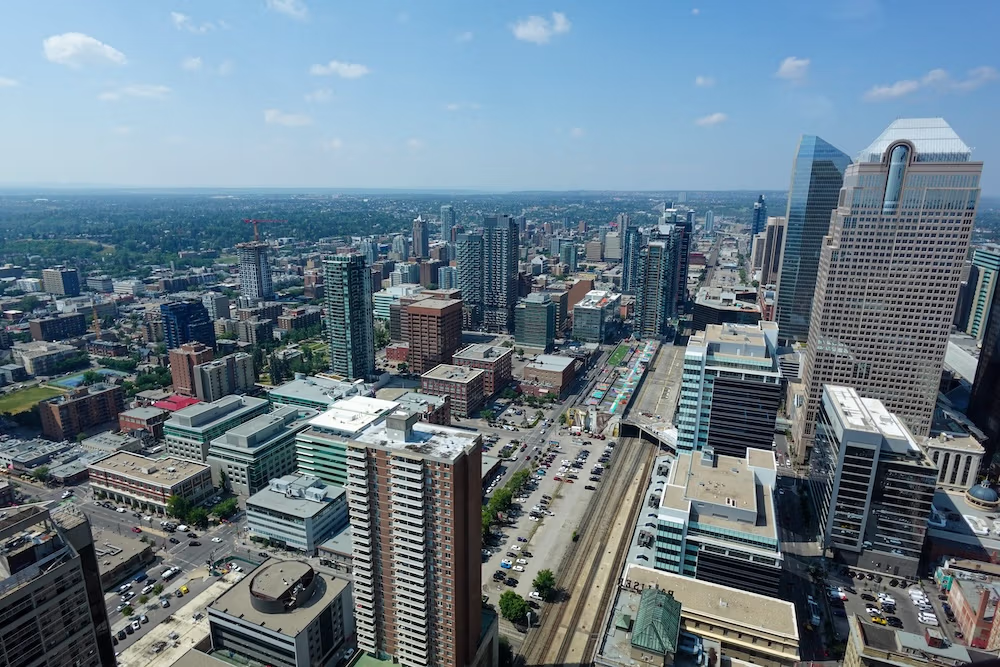
Go up Calgary Tower and the geography becomes obvious. There is a concentrated pocket of high-rises in the centre, but beyond that Calgary spreads out enormously. Parks, residential neighbourhoods and lower-density development seem to keep going and going.
So the Calgary you experience as a tourist can feel compact even though Calgary itself absolutely is not.
That distinction affects almost everything: where you stay, whether you need a car, how much you’ll use transit, what you can comfortably combine in one day and when an attraction that looks “far away” is actually worth making the effort to reach.
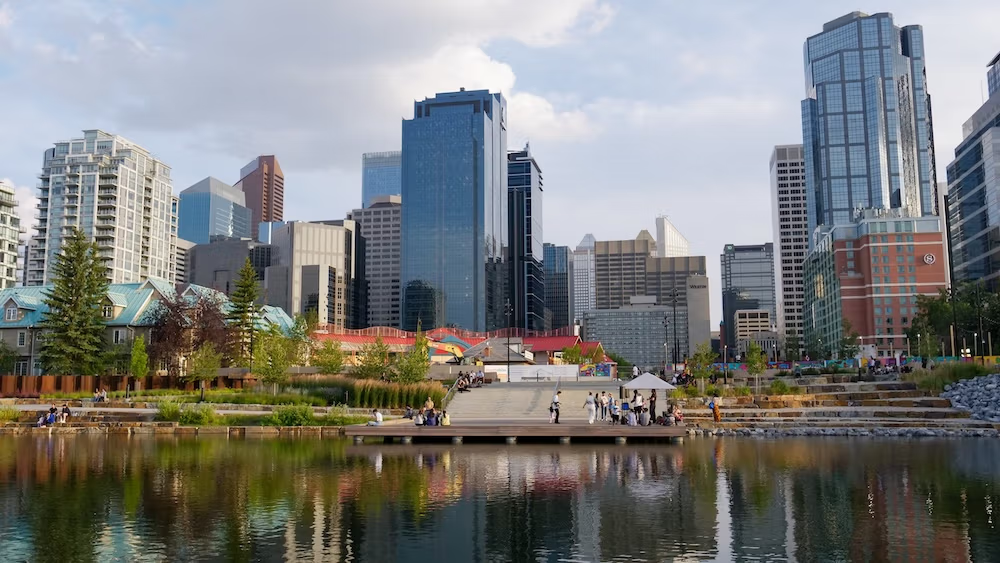
The Calgary most first-time visitors explore is surprisingly compact
Our days in central Calgary rarely felt like logistical exercises.
We could walk from Chinatown into downtown, move around the Beltline, reach East Village, wander toward the Bow River and string together attractions without spending half the day figuring out transportation.
That was not what I expected from looking at Calgary on a map.
I think it helps to imagine a central visitor core rather than trying to make one statement about the walkability of the entire city. This isn’t an official Calgary boundary. It’s just a useful way to plan.
Downtown, Chinatown, East Village, the Beltline and the Bow River area sit close enough together that a first visit focused heavily on these parts of Calgary can be quite pedestrian-friendly.
Then the city opens up.
We really noticed that from Calgary Tower. The high-rise core looked small and concentrated from above, while the rest of Calgary was very spread out. There were homes everywhere, but also a surprising amount of green space and parkland mixed through the urban landscape.
That view explained why our experience on the ground had felt almost contradictory.
Calgary is a big city.
Our sightseeing days often didn’t feel like big-city sightseeing days.
Once you understand that, I think Calgary becomes much easier to plan.
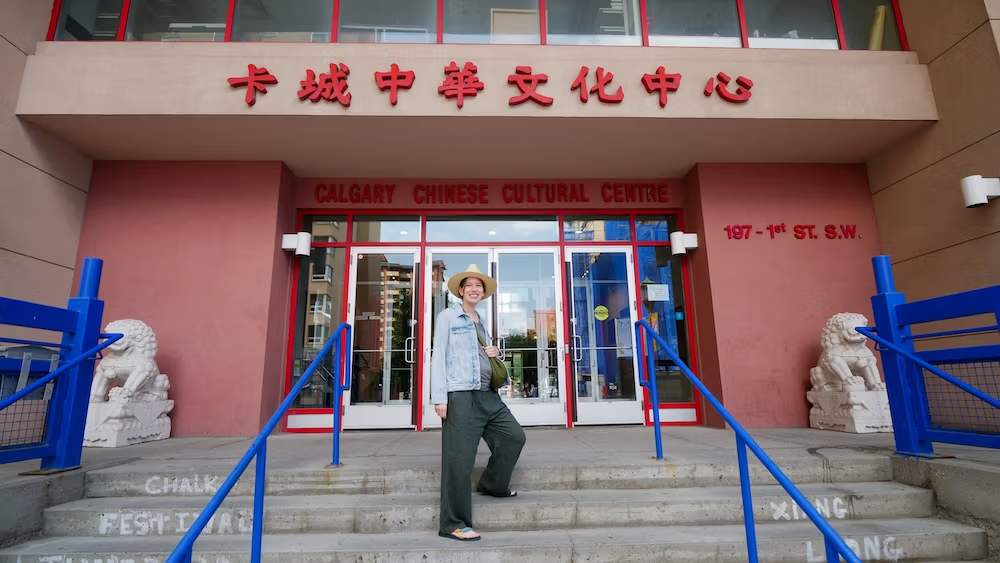
Where you stay matters more than you might think
We stayed close enough to Calgary’s Chinese Cultural Centre that it was only two or three blocks away.
We walked over.
That sounds almost too ordinary to mention, but it ended up having a huge effect on the rhythm of our trip. We weren’t constantly asking ourselves whether something warranted a train ride, a bus journey or a taxi. If we wanted to go somewhere in the centre, most of the time we just started walking.
For a first visit built around sightseeing, I’d put location ahead of obsessing over the perfect hotel.
Downtown puts you in the middle of the obvious visitor zone. East Village works particularly well if attractions around the Central Library, river and eastern side of the centre appeal to you. The Beltline extends the central experience south and gives you more restaurants and nightlife.
You don’t necessarily need to stay in one particular neighbourhood. What matters is understanding what your choice does to the rest of the trip.
If you’re coming for an event, seeing friends elsewhere in the city, doing a lot of driving or using Calgary as part of a larger Alberta road trip, staying farther out may suit you perfectly well.
For a sightseeing-heavy first visit, though, being able to walk out the door and immediately start exploring is worth a lot.
In Calgary, your accommodation location is also a transportation decision. We don’t have a Calgary hotel from this trip that I can personally recommend, so I wouldn’t pretend otherwise. If you want the same basic advantage we had—a base that lets you start sightseeing on foot—you can compare current hotel options in Downtown Calgary and work outward from there.
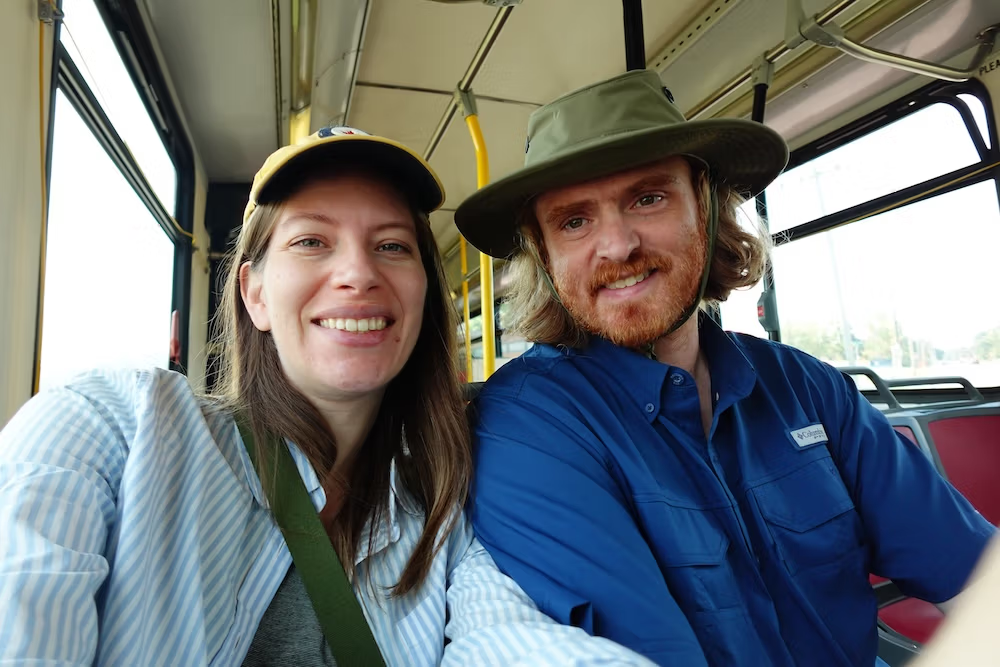
We walked far more than I expected
By the time we finally used Calgary Transit to get to Heritage Park, we had done essentially all of our Calgary exploration on foot.
Audrey’s verdict at the end of the trip was that we’d been able to get around “and not be exhausted.”
That was the sweet spot for us.
I like walking in cities, but there is a difference between walking because the city rewards it and trudging across enormous distances because you stubbornly refuse to take transportation. Calgary mostly fell into the first category around the centre.
I wouldn’t extrapolate our experience into saying you can walk everywhere. You can’t. Calgary is far too spread out for that.
But I also wouldn’t automatically rent a car because somebody told you Calgary is a driving city.
Look at what you actually plan to do first.
If you’d rather spend your first morning getting oriented with somebody else handling the route, there is a current guided option that lines up unusually well with the Calgary we explored. The Calgary 3-Hour City Highlights Walking Tour goes through downtown, the Central Library, Calgary Tower, Devonian Gardens and parts of the +15. The listed route is roughly 7.5 kilometres (4.5 miles), so this is still very much a walking tour rather than a way to avoid using your legs.
Calgary Transit fills in the gaps
For 2026, a regular adult Calgary Transit fare is $4.00 and gives you 90 minutes of travel.
There is also one particularly handy downtown feature: the CTrain has a Free Fare Zone along 7 Avenue between Downtown West/Kerby and City Hall/Bow Valley College. If your trip begins and ends inside that section, you don’t pay a fare.
For a visitor who is already walking around central Calgary, that gives you another easy option when your feet have had enough or you simply want to move a few blocks faster.
My own first-time decision rule would look something like this:
| Where you’re going | How I’d approach it |
|---|---|
| Downtown, Chinatown, East Village and nearby central sights | Walk first |
| A short movement along 7 Avenue | Walk or use the Free Fare Zone |
| A central destination beyond comfortable walking distance | CTrain or bus |
| Heritage Park or another outlying attraction | Check transit versus rideshare/car individually |
| YYC Airport to central Calgary | Bus, taxi or rideshare |
| A trip spread across outer Calgary or beyond the city | Consider whether a car now saves enough time to justify itself |
I wouldn’t decide “car” or “no car” for the whole trip until I’d looked at those individual days.
Calgary doesn’t really demand that kind of ideological commitment.
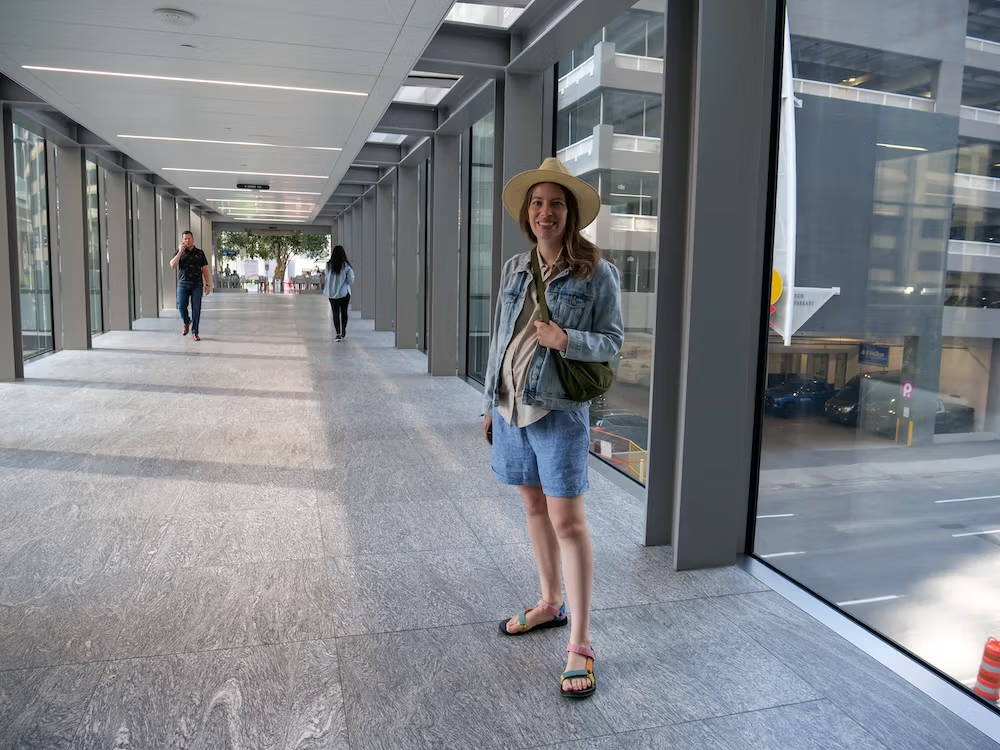
The +15 is one of those Calgary things that makes more sense once you’re inside it
One morning Audrey and I started exploring Calgary’s +15 network.
Then we kept going.
The +15 is a network of enclosed elevated pedestrian bridges connecting buildings around downtown. We wandered through office complexes, shopping areas, food courts, public art and indoor spaces while crossing streets above the traffic.
It felt like another version of Calgary layered on top of the first one.
We were visiting in summer, and the air conditioning alone was appreciated. The network is often associated with getting around during Calgary’s winters, which makes perfect sense, but I can personally vouch for its usefulness when it’s hot outside too.
The scale surprised me. Calgary currently has 86 +15 bridges, more than 16 kilometres of elevated walkways and over 100 connected buildings.
That is enough infrastructure that you can genuinely use it to move around rather than treating it as a novelty you cross once for a photo.
But there is a learning curve.
Even the City acknowledges that the +15 can be confusing to navigate, and Calgary has been rolling out improved wayfinding. Audrey and I certainly found ourselves figuring it out as we went rather than gliding around like seasoned office workers who knew precisely which corridor led where.
The network isn’t open around the clock either. Standard +15 hours are currently 6 a.m. to 9 p.m. on weekdays and 9 a.m. to 7 p.m. on weekends and statutory holidays, and some individual connections operate shorter hours. Construction can also close particular bridges.
If you expect to rely heavily on it, especially during bad weather, check the City of Calgary’s current +15 information and closures.
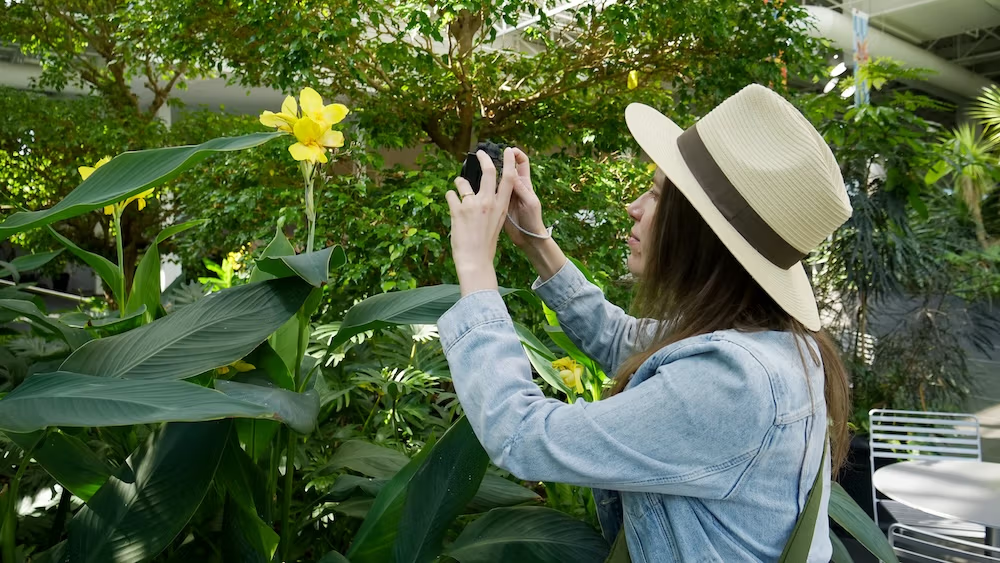
Then Calgary put a tropical garden inside a building
Our +15 wandering eventually fed into one of the stranger little contrasts I enjoyed in Calgary: Devonian Gardens.
I remember looking around at all the vegetation, ponds and indoor greenery and saying that I’m used to green spaces in cities, but I’m not used to green spaces inside buildings.
Audrey looked ready for it.
“You look like you’re ready for a jungle excursion,” I told her.
“I’m dressed for it.”
That is Calgary in miniature for me. You can be walking between downtown office towers and suddenly find yourself in a warm indoor garden.
It also helped break up our summer walking days. Calgary can get properly hot, and having indoor places like the +15 and Devonian Gardens gave us a way to keep exploring without cooking ourselves outside all afternoon.
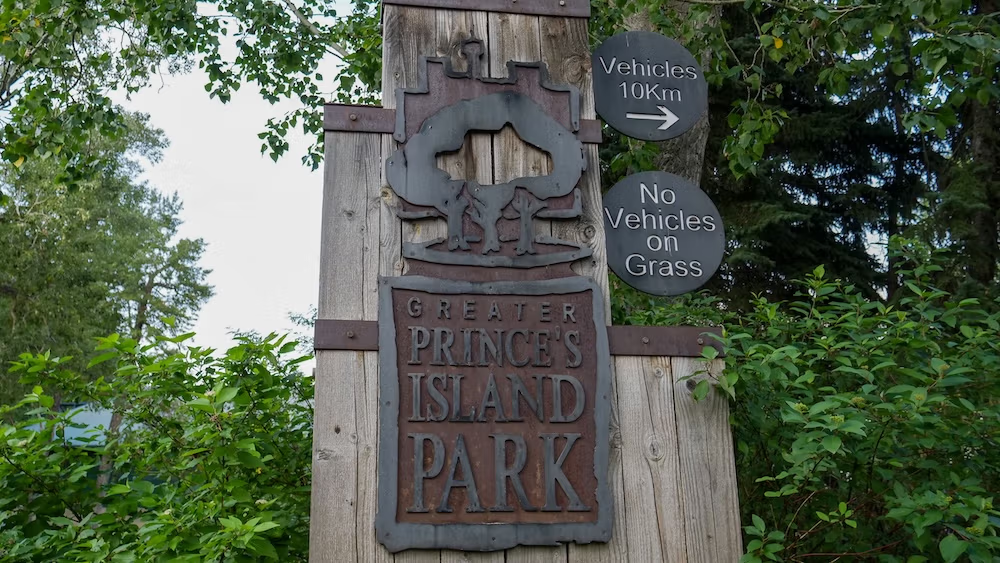
What I didn’t expect was how much breathing room Calgary had
My favourite overall impression of Calgary wasn’t one attraction.
It was space.
Prince’s Island Park brought that home.
We visited on a lively summer weekend. People were walking and cycling, wedding photos were being taken, musicians were playing, and we even came across dancing. There was plenty going on, but somehow the park still felt peaceful.
That combination really stuck with me.
I remember thinking how unusual it was for a large city to feel genuinely relaxing. Calgary seemed to have enough room for everybody without the centre feeling dead.
Audrey picked up on something similar. She liked that the city didn’t feel suffocating despite all the downtown skyscrapers. There was greenery. The city felt open.
The Bow River amplifies that feeling because so much of the central experience spills naturally toward the water.
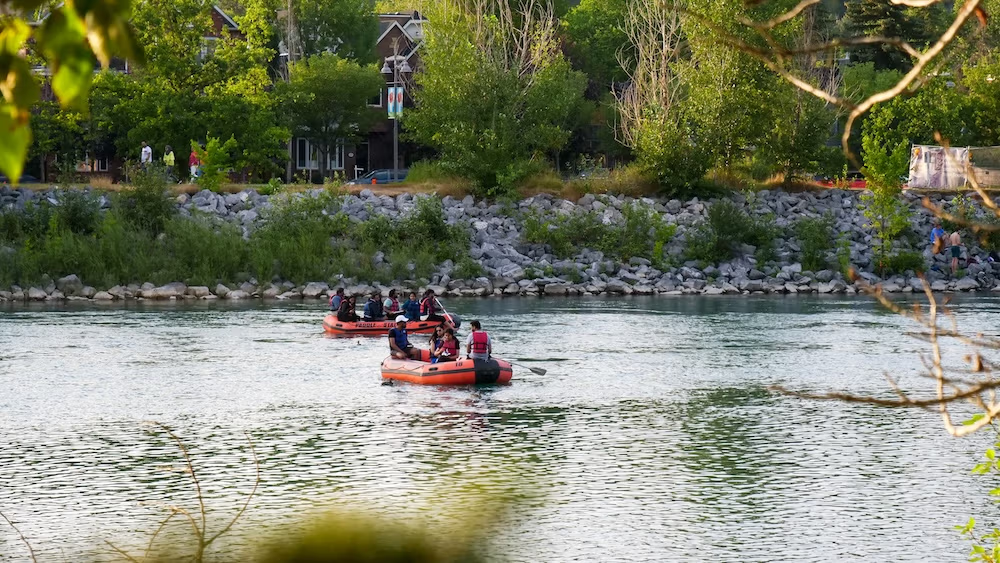
On another hot day, we walked along the Bow toward The Confluence while people floated, paddled and rafted past us.
We were certainly tempted.
We did not do it, so I’m not going to turn that observation into rafting advice, but watching everybody on the water changed the atmosphere of the walk. This wasn’t just a river you looked at from a bridge. In summer, people were actively using it.
There were little surprises elsewhere too.
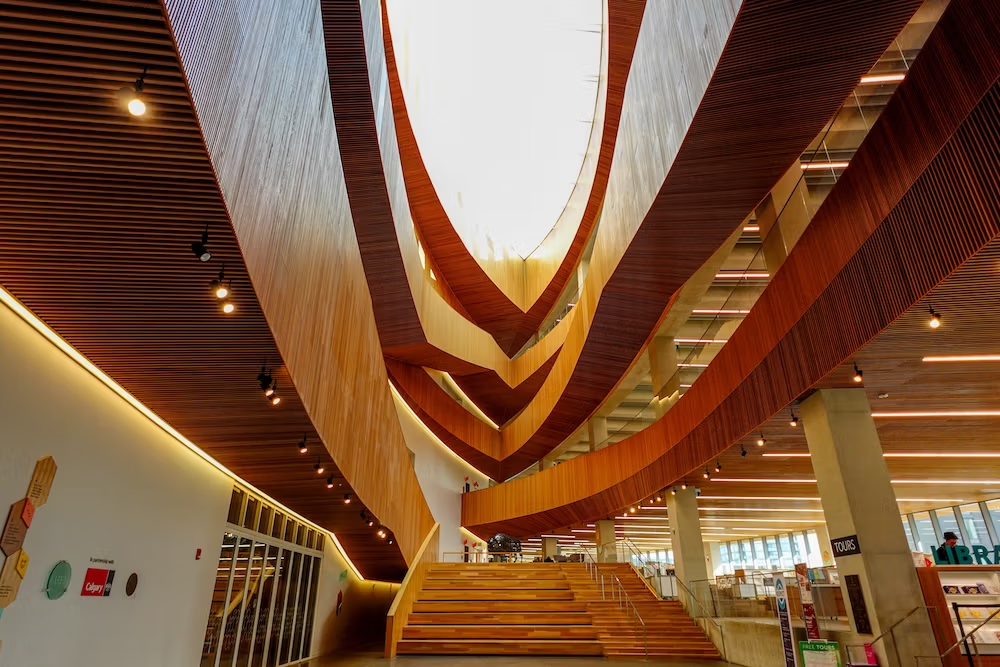
Calgary Central Library is a good example. Visiting a public library doesn’t necessarily sound like a blockbuster tourist activity, but I thought the building was fascinating. I called it one of the nicest libraries I’d been to anywhere in the world, and I still think that captures my reaction better than trying to rationalize why a library should appear on a sightseeing itinerary.
High Park was another oddball stop. It’s up on the sixth floor of a parking garage, full of colourful seating, art and city views.
It was also a little tricky to find.
That felt very Calgary: some of the things we enjoyed most weren’t giant attractions screaming for our attention. We stumbled into them while moving around the city.
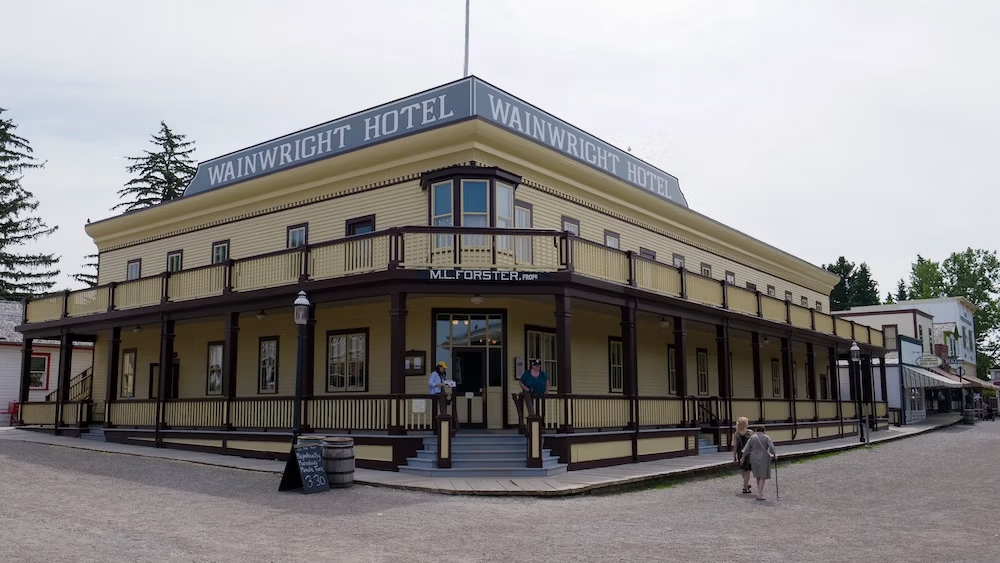
Don’t let central Calgary make you lazy about going farther out
Heritage Park nearly fell victim to this.
By then we had become spoiled.
We’d spent so much of the trip walking that suddenly taking the LRT and then a bus sounded like a major undertaking. We genuinely started looking at whether there was something closer we could do instead.
We went anyway.
Afterward, I remember saying, “I’m glad we came all the way out here.”
The funny thing was that the journey hadn’t been nearly as troublesome as we’d made it out to be in our heads.
That’s the part of the experience I would preserve for a first-time visit today, rather than our old transit timing. Routes and schedules change. The decision problem doesn’t.
Heritage Park currently has several Calgary Transit options serving the area, including seasonal Route 402 from Heritage CTrain Station, Route 20, MAX Teal and MAX Yellow. The stops are roughly a five-minute walk from the entrance. Route 402 operates from May through October.
Use the current Calgary Transit trip planner for the journey that applies to your dates rather than relying on an old route description.
If the annoying part for you is getting out there rather than Heritage Park itself, there is also a current guided option that handles the transportation and includes a stop at Gasoline Alley Museum. You can check current dates and inclusions for the Calgary bus tour with Gasoline Alley Museum. We didn’t take this tour ourselves; our experience was getting to Heritage Park independently by public transit.
Heritage Park also isn’t an attraction I’d casually squeeze into a spare hour. We dedicated a substantial part of the day to it, rode different forms of historic transportation, wandered through buildings and still didn’t exhaust everything available.
Its operations are seasonal. For the 2026 Historical Village season, full operations run daily through August 30, followed by weekends and Thanksgiving Monday through October 12.
The wider lesson is more important than Heritage Park itself.
If you only select attractions that fall conveniently inside your downtown walking radius, you’ll get a very easy Calgary trip, but not necessarily the Calgary trip you actually want.
Summer Calgary and winter Calgary are different planning problems
Everything Audrey and I personally experienced in Calgary happened in summer.
It was hot enough on some days that we actively looked for shade. Air conditioning in the +15 was welcome. The Bow River was busy with people enjoying the water.
By the time we left, I was already talking about coming back in winter because I wanted to see how different Calgary would feel.
And it would be different.
Typical winter planning temperatures are roughly -5°C to -15°C, while summer daytime highs commonly fall around 20°C to 30°C. Those are useful ranges rather than promises. Calgary weather can move around considerably, and Chinook winds can temporarily push winter temperatures much higher.
What matters to me as a traveller is the consequence.
A central area I happily walk across in summer may be a trip where I use the +15 and CTrain much more aggressively in winter. On the other hand, a pleasant Chinook day might suddenly make being outdoors far more appealing than the calendar suggests.
Summer has complications too
Heat isn’t the only warm-weather issue.
Wildfire smoke can travel enormous distances across Western Canada. That doesn’t mean Calgary is blanketed in smoke every summer; plenty of days are completely unaffected.
It does mean I would check the Air Quality Health Index when wildfire activity is significant before committing to a long outdoor walking day.
That is a ten-second check with a potentially large consequence.
And then there’s Stampede
If your trip overlaps with the Calgary Stampede, you’re effectively visiting Calgary under a different operating environment.
We did not attend Stampede on this trip, so I can’t give you a personal verdict on the experience here.
What I can tell you as a planner is that you should know whether your dates overlap with it before booking accommodation and assuming you’re getting an ordinary summer visit.
The next Calgary Stampede is scheduled for July 9–18, 2027.
If you’re going specifically for Stampede, fantastic.
If you aren’t, finding out after you’ve booked everything would be a fairly impressive first-timer mistake.
Calgary’s food scene was much broader than I expected
Food became a significant part of this trip.
What impressed me most wasn’t simply steak or stereotypical Alberta food. It was the variety.
We ate Chinese food, Korean food, sushi, brunch and local Calgary-associated specialties. I came away specifically mentioning how good the city’s international food scene had been.
For a first visit, there are also two Calgary connections I think are fun to know about.
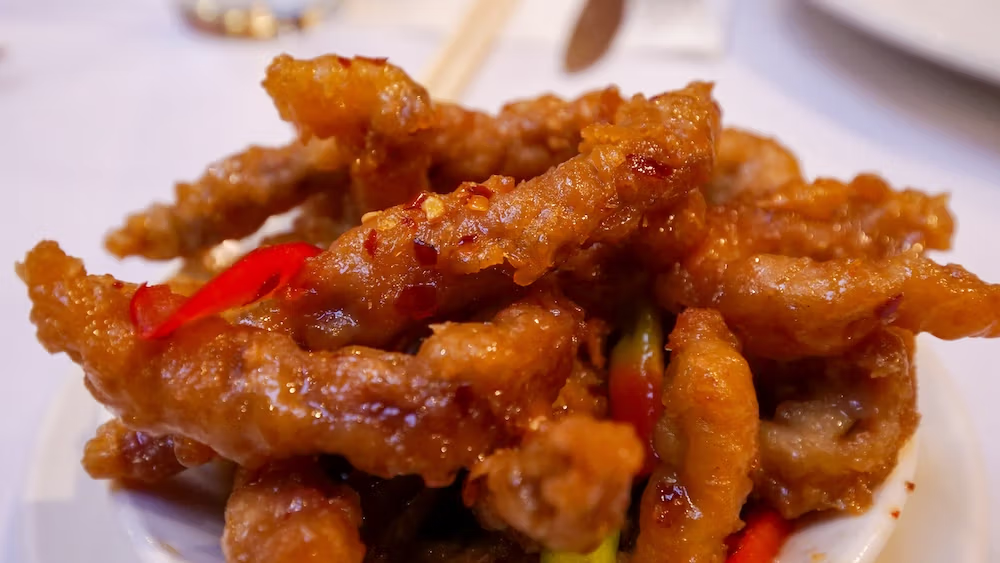
Ginger beef
Ginger beef is deeply associated with Calgary and is generally said to have been developed by chef George Wong at the Silver Inn in the 1970s.
We went looking for it deliberately.
I like this kind of food experience when I travel: something that exists elsewhere now but has a particular connection to the place you’re visiting.
It doesn’t mean you need to eat ginger beef three times or turn your Calgary trip into a culinary history project.
Try it once. Then keep eating.
The Caesar
The Caesar cocktail has an equally famous Calgary association.
It is commonly credited to Walter Chell in Calgary in 1969, although the precise origin story isn’t completely free from dispute.
That was more than enough reason for us to order one.
Between the Caesar, ginger beef and the wider range of international meals we had, Calgary ended up being much more interesting for food than my pre-trip assumptions had allowed.
If you’d rather have someone else turn a chunk of that food curiosity into an organized introduction, there is currently an Iconic Eats of Calgary Food Tour through downtown. The listed experience runs about 2.5 hours with four food-and-drink pairings. We didn’t take this tour; I’m including it as a current option for travellers who want a structured food experience rather than piecing together their own stops.
Know how you’re getting from Calgary Airport before you land
There is one airport detail that catches first-time visitors because it would be easy to assume otherwise:
Calgary International Airport does not currently have a direct LRT connection to downtown.
There is airport bus service, along with taxis and rideshare.
And if you’re travelling in late 2026, there is a route-number change worth knowing.
As of August 2026, Calgary’s Airport/City Centre bus is still Route 300, but Calgary Transit is scheduled to rename it Route 500 – Airport Express beginning August 31, 2026.
So if you’ve found older instructions telling you to catch the 300 after that date, the airport bus hasn’t necessarily vanished into the Alberta prairie. The number has changed.
Because this is exactly the sort of information that ages quickly, I would check Calgary Transit shortly before travelling.
For a simpler door-to-door option, YYC currently estimates a metered taxi between the airport and downtown at roughly $40–45 in normal driving conditions. Rideshare is another alternative.
Whether public transit or a taxi makes more sense will depend on the usual boring-but-important realities: number of travellers, amount of luggage, arrival time and how much you value convenience after a flight.
I also wouldn’t rent a car at the airport automatically.
If you’re spending most of your visit walking around central Calgary, that vehicle could spend a lot of time parked while you pay for the privilege of having it.
If Calgary is the beginning of a wider driving trip, the calculation changes immediately. That’s when it becomes useful to compare rental cars at Calgary International Airport before deciding whether to pick one up as soon as you land.
A few Calgary details I’d sort out before leaving home
I don’t think a first visit requires weeks of logistical preparation.
I’d want these basics settled:
- Where I’m staying in relation to the central places I actually care about.
- How I’m getting from YYC to that accommodation.
- Whether my outlying attractions work better by transit, rideshare or car.
- The latest +15 status if weather makes me likely to use it heavily.
- The weather and air quality shortly before long outdoor days.
- Whether my dates coincide with Stampede or another major event.
If you’re driving in the centre, Calgary uses the ParkPlus system for city-managed on-street parking. Rates and restrictions vary by location, so this is one of those situations where reading the sign in front of you is more useful than memorizing a generic parking rule beforehand.
And then stop planning.
One reason we enjoyed Calgary was that the city left us room to wander. We found murals while walking around. High Park took a little effort to locate. We ended up spending more time inside the +15 than we’d anticipated. Prince’s Island Park was livelier than expected. The Central Library completely exceeded what I normally expect from putting “library” on a tourist itinerary.
You don’t want to plan all of that spontaneity out of the trip.
How I’d approach Calgary on a first visit now
I would plan Calgary in layers.
I’d choose a useful central base first. From there, I’d assume I was going to walk a lot and let downtown, Chinatown, East Village, the Beltline and the riverfront connect naturally rather than treating each attraction as an isolated stop.
I’d use the CTrain and buses when they solved an actual problem.
I’d learn enough about the +15 to take advantage of it when the weather turned unpleasant, without expecting it to function like a perfectly intuitive indoor subway map.
Then I’d look separately at anything outside the central bubble.
Heritage Park was the perfect lesson for us. We almost talked ourselves out of going because it sounded inconvenient. Once we went, the journey barely registered compared with how much we enjoyed the day.
That is probably the biggest planning correction I’d make for someone visiting Calgary for the first time: don’t confuse an easy-to-walk visitor core with the full size of the city, and don’t let the convenience of that core stop you from leaving it when something farther out genuinely interests you.
Audrey loved that we could cover so much on foot without ending every day exhausted. I loved the diversity of attractions, the international food and the fact that Calgary felt much more open and relaxed than I’d expected.
We had arrived barely knowing the city at all.
I left saying I’d come back to Calgary in a heartbeat.
I still would.
Frequently Asked Questions
Is Calgary walkable for first-time visitors?
Central Calgary can be surprisingly walkable if your sightseeing is concentrated around Downtown, Chinatown, East Village, the Beltline and the Bow River. Audrey and I covered most of our central sightseeing on foot, but Calgary becomes much more spread out beyond that visitor core.
Do I need a car for a first trip to Calgary?
Not necessarily. I would decide based on the places you actually plan to visit. Walking and Calgary Transit worked well for our central sightseeing, while a car becomes more useful when your itinerary spreads across outer Calgary or beyond the city.
What should first-time visitors know about Calgary’s +15 Network?
The +15 is a network of enclosed elevated walkways connecting downtown buildings. It can be genuinely useful for getting around and escaping bad weather, but it is not open around the clock, individual connections can have shorter hours, and construction can close some bridges.
Is there a direct LRT from Calgary International Airport to downtown?
No. Calgary International Airport does not currently have a direct LRT connection to downtown. Public-transit bus service, taxis and rideshare are the main options discussed in this guide.
Can you reach Heritage Park without a car?
Yes. We reached Heritage Park by public transit, and the trip felt easier than we had expected. Current transit options include several routes serving the area, with the relevant stops roughly a five-minute walk from the entrance.
How does the season change a first visit to Calgary?
Our trip was in summer, when we walked extensively, used the +15 as a break from the heat and saw people enjoying the Bow River. Winter changes the balance: colder conditions can make the +15 and CTrain more useful, while Chinook winds can occasionally bring much milder weather.
What Calgary foods are worth knowing about on a first visit?
Ginger beef is strongly associated with Calgary, and the Caesar cocktail is commonly credited to Walter Chell in Calgary in 1969, although the exact origin story has some dispute. We deliberately tried both during our visit.
This guide is also available in Spanish. [Leé la versión en castellano: Calgary para una primera visita: qué saber antes de ir]
This article contains affiliate links. If you book through one of these links, I may earn a commission at no extra cost to you.