
My Pick (And Why You Should Discount It a Little).
I’ll give you my answer before I try to talk you out of it: Edmonton. Every time, no contest. But you should know exactly why before you trust a word of it.
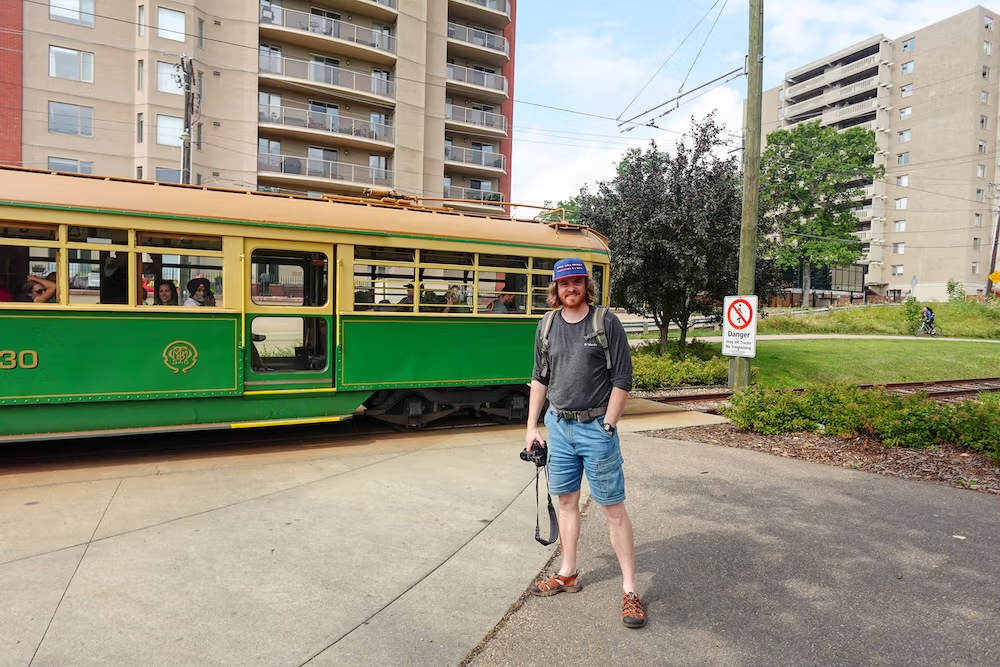
I lived there. I went to school at the University of Alberta, spent a few years a few blocks off Whyte Avenue, and quietly turned into an adult during that stretch, whether I noticed it happening at the time or not. When Audrey and I went back years later, I slipped away for a few nostalgic walks past my old building and around campus, nothing filmed, nothing planned, just something I needed to do on my own before we got back to being tourists together.
That kind of history doesn’t make me a reliable judge. It makes a biased one. So take the rest of this with a grain of salt roughly the size of the one on a Caesar rim, and let me give you the honest version instead of the sentimental one.

Objectively, Calgary Might Win
Strip away my personal history and just ask which city is easier to hand a stranger for a weekend, and Calgary probably takes it.
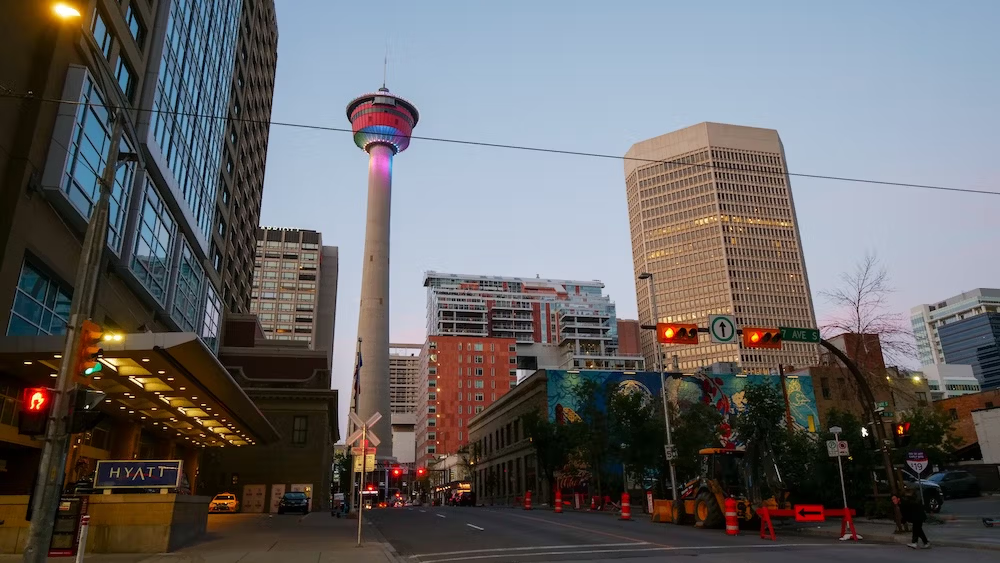
We went in knowing the place mostly as an airport we’d flown out of, and we came away genuinely impressed. Downtown Calgary is compact in a way that flatters short trips. We covered nearly all of it on foot, used transit exactly once, and never felt like we were racing a clock between neighbourhoods. Audrey put it best when we sat down to talk it over afterward. “It kind of feels like a small city that you can cover on foot,” she said. “The attractions were concentrated in one area.” She also pointed out something that’s easy to miss in a city with that many towers: it never felt suffocating the way some skyline-heavy cities do, boxed in with nowhere to look but up. Calgary kept giving us open sky and actual greenery instead.
Edmonton doesn’t offer that same compactness, and it never really has. Its best material isn’t sitting downtown waiting for you. It’s spread across Whyte Avenue, the river valley, and a handful of neighbourhoods that don’t announce themselves the way a skyline does. The biggest thing I’d tell any first-time visitor is: don’t spend the whole trip downtown, because that’s where Edmonton hides its personality worst. Getting Audrey out to Whyte Avenue changed how she saw the whole city, visibly, in real time. But “get out and explore several neighbourhoods” is a bigger ask on a tight weekend than “walk in a loop and see most of it,” and Calgary is simply built for the second kind of trip.
Pick Edmonton If, Pick Calgary If
If you’ve only got sixty seconds, here’s the shortcut.
- Pick Edmonton if you want a rougher, more neighbourhood-driven city, don’t mind working a little to find the good stuff, and care more about character than convenience.
- Pick Calgary if you want maximum payoff for minimum planning, you resent wasted transit time, or the Rockies are part of the same trip.
- Pick either if food is your main deciding factor, because on that front it’s genuinely a toss-up.
- Pick both if you can spare more than a weekend, because they sit close enough together that splitting the difference is the smarter move anyway.
Two Downtown Cores, Two Different Ages
Part of why Calgary reads as the more polished city has less to do with effort than with age.
When I lived in Edmonton, the ICE District didn’t exist. Rogers Place wasn’t there. The office towers around it weren’t there. There was no hotel anchoring that stretch of downtown. That entire district is barely a decade old, built out gradually through the back half of the 2010s. Walking through it years later, for the first time, felt strange in a good way, like watching a photo slowly develop. It’s an impressive piece of downtown revival. It’s also, by any honest measure, still young.

Calgary’s downtown was largely built out decades earlier, during the oil-boom years of the 1970s and 80s, when the city was throwing up office towers almost as fast as it could pour concrete. That’s not a dig. It’s just math. A downtown core with fifty years to settle is going to feel more resolved than one with ten, and that gap is a big part of what Audrey and I were reacting to without quite naming it at the time. Edmonton’s downtown still carries the slightly unfinished energy of a renovation in progress. Calgary’s has had time to relax into itself.
Neither is automatically the better version. One feels more raw and in-progress, the other more settled. Which you prefer probably says more about you than about either city.
The Food Scene: An Honest Tie
If you’re hoping I’ll break the tie with food, I can’t, because there isn’t one to break.
Both cities fed us extremely well, and both leaned hard into diverse, international food rather than resting on one signature dish. Edmonton’s strength is how scattered it is; good meals turn up in unexpected pockets of the city instead of clustering in one obvious district, which tracks with pretty much everything else about how Edmonton works. Calgary’s food evidence leans more toward one standout neighbourhood, and Chinatown did a lot of the heavy lifting for us there. That’s a difference in geography, not in quality, and it shouldn’t be read as a verdict either way.
The single most personal food moment of the whole comparison happened in Calgary, and it had nothing to do with Calgary. I ordered ginger beef expecting a solid plate of Alberta-invented Chinese-Canadian food, and got a small time machine instead. I used to eat that dish constantly during my University of Alberta years, cheap and dependable and exactly what a student budget wanted. Eating it again in the city where it was actually invented, while thinking about a completely different city where I’d eaten hundreds of plates of it before, is the kind of collision you can’t plan for. It’s also as good an argument as any for why “which city has better food” is the wrong question to ask here. Both cities know how to feed you well past the point of ever going hungry on either trip.
Calgary’s Two Real Edges: The Rockies and the Stampede I Haven’t Earned an Opinion On
To be fair to Calgary, it does have two advantages Edmonton simply can’t match, and I’d rather name them plainly than pretend the scales are even.
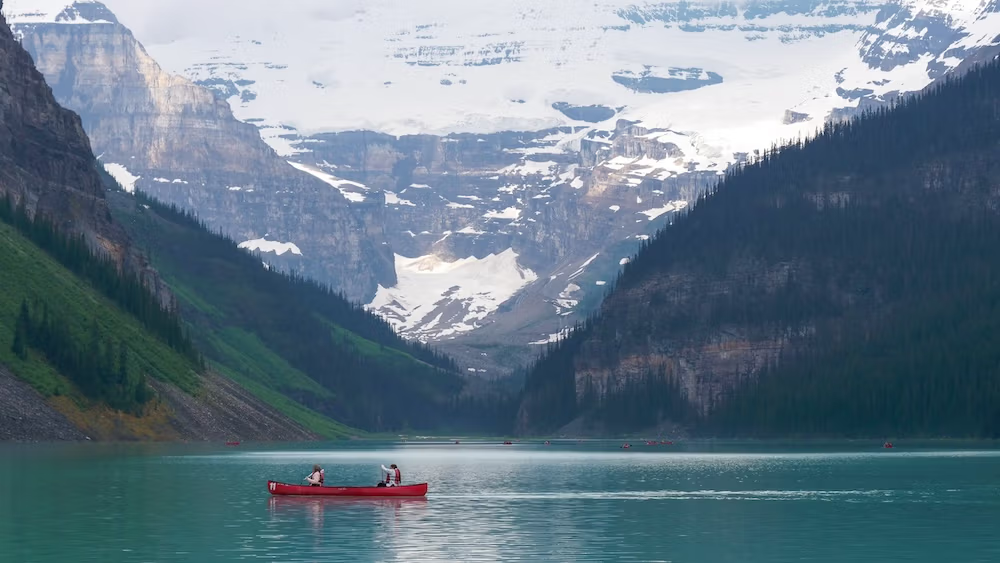
The first is geography. Calgary sits roughly a ninety-minute drive from Banff. Edmonton sits four to four and a half hours away from the same mountains. That gap is close to threefold, and it changes what kind of trip Calgary can quietly become. Stay in Calgary for a weekend and the Rockies are an easy add-on, whether you drive yourself or compare Banff and Lake Louise day trips from Calgary on GetYourGuide and let someone else handle the driving. Stay in Edmonton and they’re a separate trip you’d need to plan for on purpose. We said it to each other almost as soon as we’d wrapped up exploring: we’d come back to Calgary in a heartbeat, and a lot of that had to do with everything sitting within easy reach of it, mountains included.
The second is the Stampede, and here I have to be straight with you: I haven’t been. So take my read on it as an outsider’s, not an insider’s. It runs for ten days every July and pulls in well over a million people, which puts it in a different weight class entirely from anything on Edmonton’s calendar. Edmonton’s answer is the Fringe, and I have actually stood in the middle of it, so I can speak to that one directly. It’s the largest and longest-running Fringe theatre festival in North America, running eleven days each August, with well over two hundred productions and tickets that mostly top out around twenty dollars. It’s scrappy, affordable, and packed with genuine discovery. It just isn’t the Stampede, and I’m not going to pretend otherwise from the outside looking in. One is a spectacle you plan a trip around; the other is something you stumble into and remember for years. Calgary happens to have the bigger one.
What a Few Days Actually Buys You
Both of our trips ran back to back and covered roughly the same short stretch of time, which turned out to be the fairest possible way to compare them.
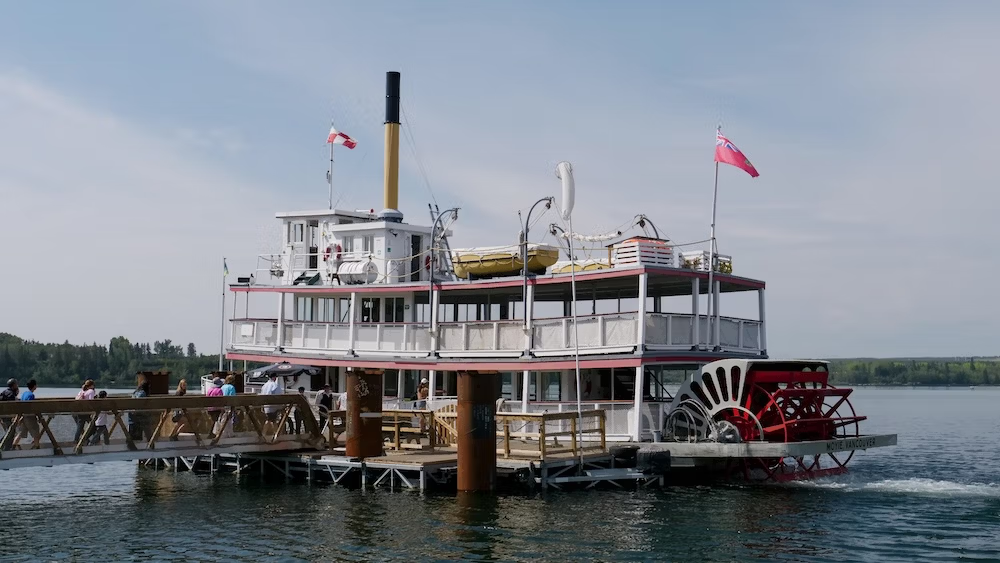
In Calgary, we did almost the entire trip on foot. The one exception was a full day set aside for Heritage Park, which ate the whole day on its own between the train rides, the paddlewheel boat, and just wandering the grounds, and was worth every hour of it. If you want to lock in a start time before you commit a whole day to it, you can check current Heritage Park admission and hours on GetYourGuide. That’s the trade-off worth knowing about going in: Calgary rewards walking, but at least one Calgary attraction wants a whole day to itself, so budget for that rather than assuming you’ll knock it off in an afternoon.
Where you actually sleep matters more than it sounds like it should on a short trip, mostly because it decides how much of your limited time gets eaten by getting somewhere. In Calgary, staying downtown puts you inside the same compact loop we walked for most of the trip, so it’s worth starting your search among downtown Calgary hotels on Booking.com and expecting most of what matters to be within reach on foot. In Edmonton, downtown won’t do the same job for you, since the city’s best material sits outside it. It’s still the natural base for a first visit, so it’s worth comparing downtown Edmonton hotels on Booking.com against something closer to Whyte Avenue if you already know that’s where you’ll spend most of your evenings.
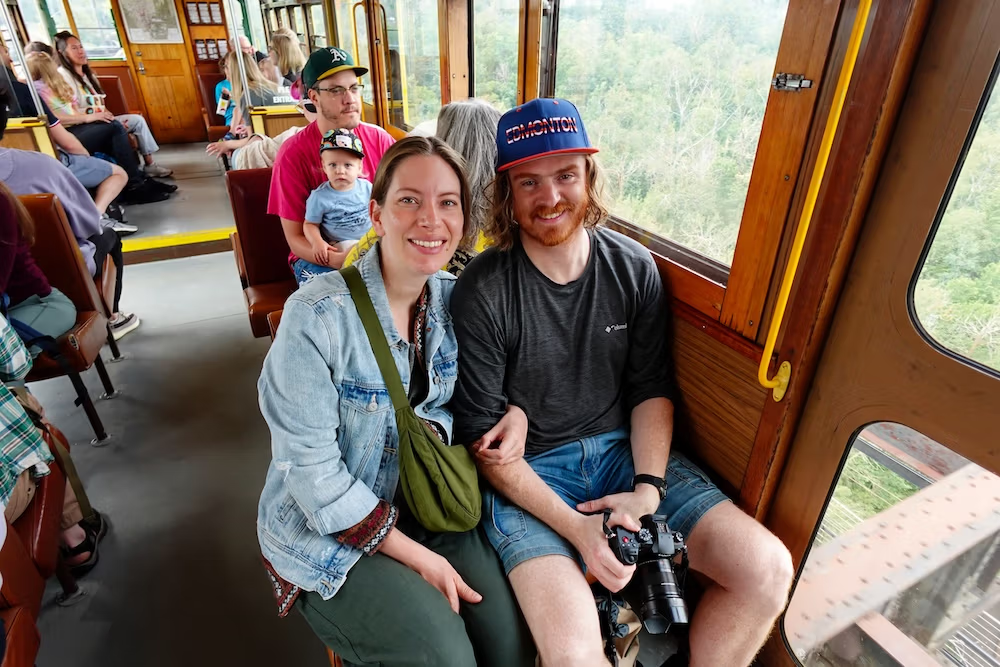
Getting around costs a little more in Calgary than it used to, and the systems themselves have actually diverged since we were there. Edmonton has since moved to a tap-and-go card, a flat rate for any ride regardless of distance, with a daily cap that kicks in automatically so you’re never bled dry over the course of a busy sightseeing day. Calgary still runs on the older ticket model, a set price for ninety minutes of transfers, and it now costs a full dollar more per ride than Edmonton’s tap fare. Worth knowing too: Calgary gives you a free ride on its downtown train line if you’re only moving around the core, which covers more of a short visit than you’d expect. Neither system will break a weekend budget, but if you’re doing the math, Edmonton currently comes out slightly cheaper to move around in.

The Real Answer: See Both If You Can
Before I hand you a verdict, one honest caveat: neither trip was exhaustive. We left plenty on the table in both cities, and no realistic weekend visit to either one checks every box, no matter how well you plan it. I’d rather you know that than assume either city has been fully covered here.
Which brings me to the complication in all of this: you don’t actually have to choose. Edmonton and Calgary sit about three hours apart by road, close enough that either could be your base and the other a day trip, or close enough that a single week could comfortably hold both without feeling rushed. A flight between them takes about an hour if you’re short on time; the drive itself is a straight, easy shot down Highway 2 if you’d rather see the prairie in between, and it’s easy enough to compare rental car options in Calgary on Booking.com if you’re flying into one city and driving out through the other. For a genuine weekend with nothing else on the calendar, I’d send someone with no history in either city to Calgary first, purely on ease and payoff. But if you can stretch a weekend into something longer, the real answer isn’t Edmonton or Calgary. It’s both, in the same trip, without treating one as the consolation prize for skipping the other.

As for me, I already told you where my heart lands, and I’m not walking that back. I just didn’t want you making the same call for the same reasons I did.
Frequently Asked Questions
Is Edmonton or Calgary better for a weekend trip?
For most first-time visitors, Calgary is the easier pick, since it’s compact, walkable, and close to the Rockies. I personally choose Edmonton every time, but I’m a former resident, so factor that bias in.
How far apart are Edmonton and Calgary?
They sit about three hours apart by road along Highway 2, or roughly an hour by air, which makes visiting both cities on one trip genuinely practical.
Is the food better in Edmonton or Calgary?
It’s a genuine tie. Both cities have diverse, international food scenes, Edmonton’s spread across many neighbourhoods and Calgary’s concentrated more around one standout district, but neither wins on quality or variety.
How close is Calgary to Banff and the Canadian Rockies?
Calgary sits roughly a ninety-minute drive from Banff, compared to four to four and a half hours from Edmonton, which makes Calgary the far easier base for a Rockies add-on.
Should I visit the Calgary Stampede or Edmonton’s Fringe Festival?
I can only speak to the Fringe firsthand, since I haven’t attended the Stampede. The Stampede runs ten days each July and draws over a million visitors, a bigger single event than anything on Edmonton’s calendar. The Fringe runs eleven days each August and is the largest, longest-running Fringe festival in North America, with tickets mostly under twenty dollars.
Do I need a car to get around Edmonton or Calgary?
Not really for either, at least downtown. We covered nearly all of Calgary on foot, and Edmonton’s core areas are walkable too, though Edmonton’s best material sits outside downtown, so you’ll want transit or a car to reach neighbourhoods like Whyte Avenue.
Which city has a more established downtown?
Calgary’s downtown was largely built out during the 1970s and 80s oil boom, decades before Edmonton’s ICE District, which only took shape after 2016. That age gap is a big part of why Calgary feels more polished and Edmonton feels grittier.
Can I visit both Edmonton and Calgary on one trip?
Yes, and it’s genuinely the best answer if you have more than a bare weekend. The two cities are close enough together that splitting your time between them beats picking just one.
This article is also available in Spanish. [Leé la versión en castellano: Edmonton vs. Calgary para un fin de semana: ¿qué ciudad de Alberta deberías visitar?]
This article contains affiliate links. If you book through one of these links, I may earn a commission at no extra cost to you.