
Edmonton is one of those cities I understood far less when I lived there than when I finally came back as a traveller.
I went to university here. I watched Oilers games on student tickets, spent time around Whyte Avenue, jogged and inline skated through the River Valley, worked not far from one of my favourite restaurants, and started eating foods that seemed wildly exotic to the younger version of me. Edmonton was where I first tried cuisines like Thai, Japanese and Indian food.
But when you live somewhere, you do not necessarily explore it.
You go to school. You work. You buy groceries. You develop routines. Tourist attractions become things you pass on the way to somewhere else.
Apparently, I was particularly skilled at this.
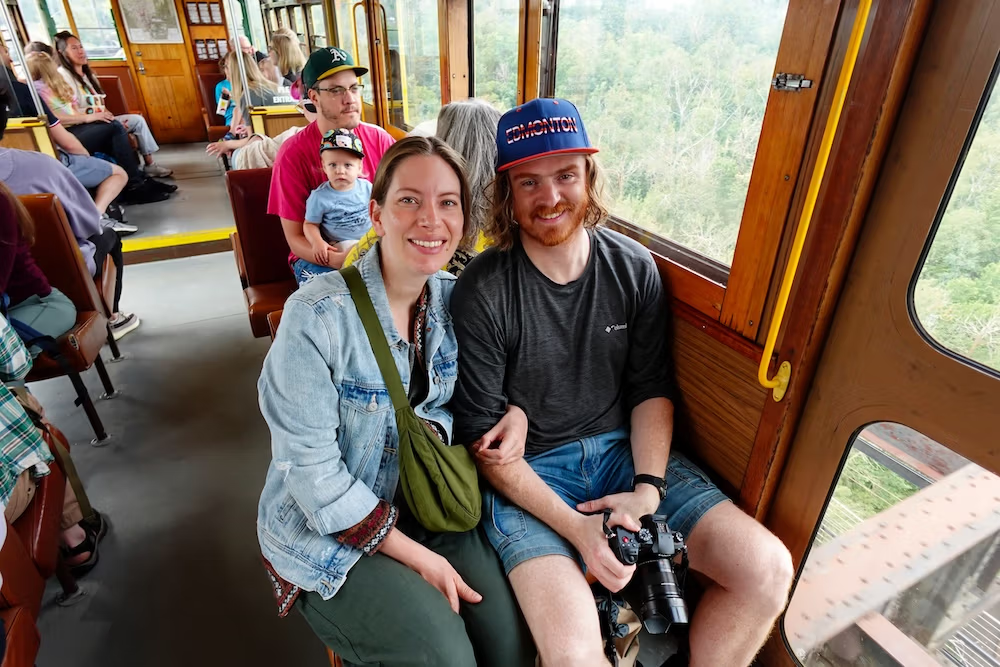
I had seen the High Level Bridge Streetcar while living in Edmonton. Never rode it.
Years later, Audrey and I returned after I had been gone for well over a decade, and suddenly I was doing all these Edmonton things I had somehow avoided when they were practically in my backyard.
The city had changed enormously. Rogers Place and the ICE District had transformed part of downtown. The LRT had expanded. The 100 Street Funicular was now carrying people down toward the River Valley. Meanwhile, other parts of Edmonton immediately transported me back to my student days.
Then there was Audrey.
This was her first visit to Edmonton, so she had none of my nostalgia muddying the waters. That became useful because I could show her places I considered important and see whether they actually landed with somebody who did not already have memories attached to them.
Whyte Avenue did.
After we spent time there, Audrey told me it had changed her perception of Edmonton.
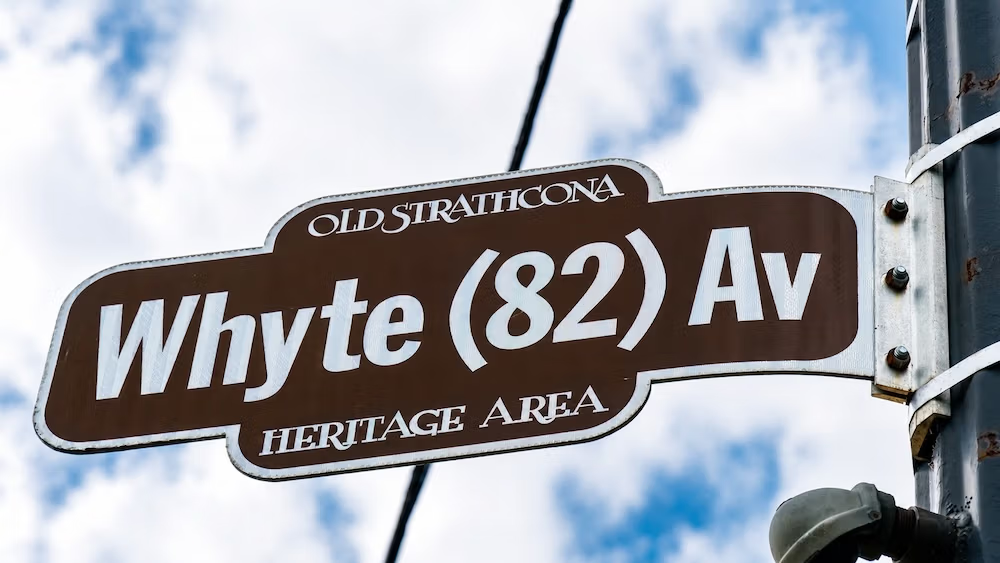
That gets at the biggest lesson I took from returning to the city: you will not really understand Edmonton if you treat downtown as the entire destination.
Downtown matters. So do the River Valley, Old Strathcona and Whyte Avenue, West Edmonton Mall, Edmonton’s museums, festival areas and neighbourhood restaurants.
The problem is that they are spread around.
That means the best Edmonton trip is not created by opening a list of 30 attractions and attacking them from the top down. West Edmonton Mall can eat half a day before you know what happened. Fort Edmonton Park can do the same. Fringe can take over an entire afternoon. The River Valley is better when you stop looking at your watch every eight minutes.
So this Edmonton travel guide is not about cramming everything into one heroic sightseeing binge.
It is about figuring out which parts of Edmonton deserve your time, how to combine them without zigzagging across the city, and which experiences make the most sense for the trip you are actually taking.
Edmonton at a Glance
| Question | My Short Answer |
|---|---|
| How many days do you need? | Two full days if possible. Three is better if West Edmonton Mall is a major priority. |
| What would I prioritize on a first trip? | The River Valley and Old Strathcona/Whyte Avenue first, then add museums, WEM, hockey or history according to your interests. |
| What is the best time to visit? | Summer gives you the widest mix of outdoor, festival and seasonal experiences. Winter can still be a strong trip, but it needs a different, more indoor-heavy plan. |
| Do you need a car? | Not automatically. Transit works well for many central attractions, but a car becomes more useful for WEM-heavy plans, outlying attractions and day trips. |
| Where should first-time visitors stay? | Downtown is the easiest all-round base, but ICE District makes more sense for games and concerts, Whyte Avenue for food and nightlife, and WEM for a mall-centred trip. |
| What’s the biggest one-day planning mistake? | Trying to fit RAM, WEM, Whyte Avenue, the Legislature and the River Valley into one day. Group attractions by area and choose your big commitments. |
First Things First: Edmonton Is Not One Compact Tourist District
Edmonton is not a city where you book a downtown hotel and assume nearly everything worth seeing will be within a pleasant fifteen-minute stroll.
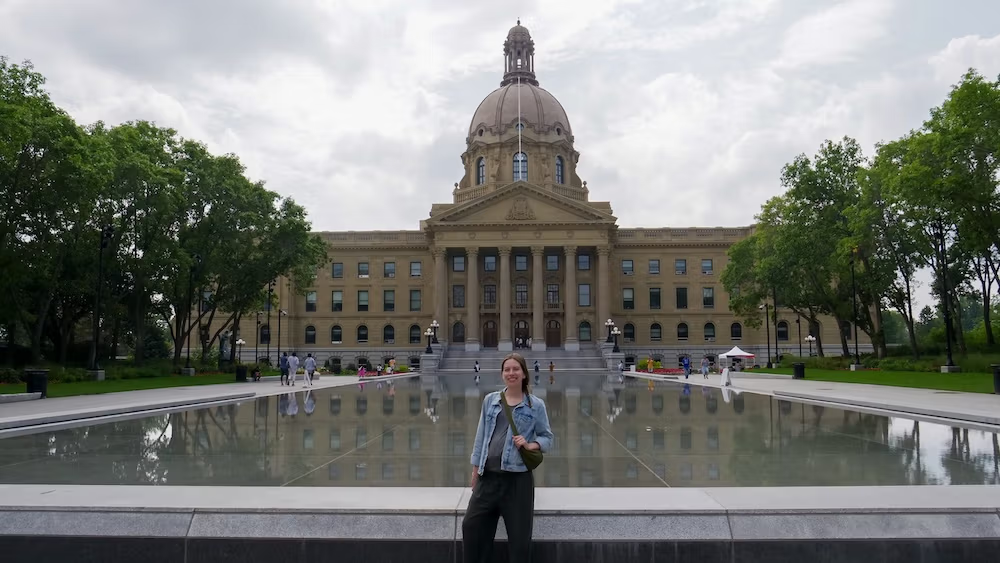
Downtown gives you plenty to work with. The Royal Alberta Museum is here. Rogers Place and the ICE District are here. You have the Neon Sign Museum, Fairmont Hotel Macdonald and access toward the River Valley.
You could fill a decent amount of time without leaving the central core.
I just would not recommend doing that for your entire trip.
Cross the river toward Old Strathcona and Edmonton changes.
Whyte Avenue has food, bars, shops, festivals and street life. It feels different from downtown because it is different from downtown. This was the Edmonton I knew particularly well during my university days, and it ended up being one of Audrey’s favourite discoveries.
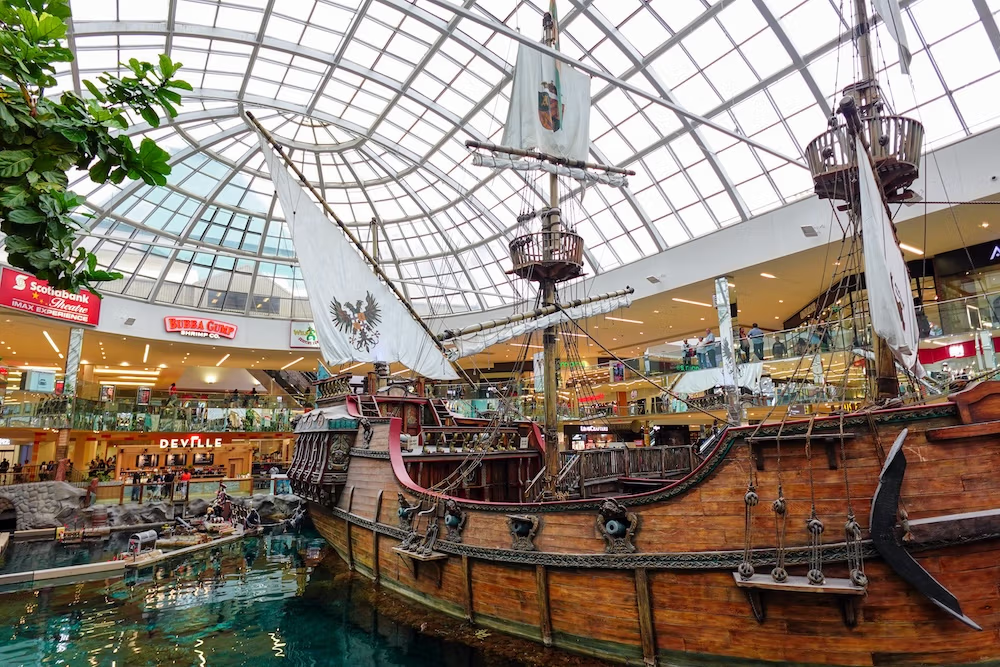
Then you have West Edmonton Mall out to the west, operating almost like its own destination.
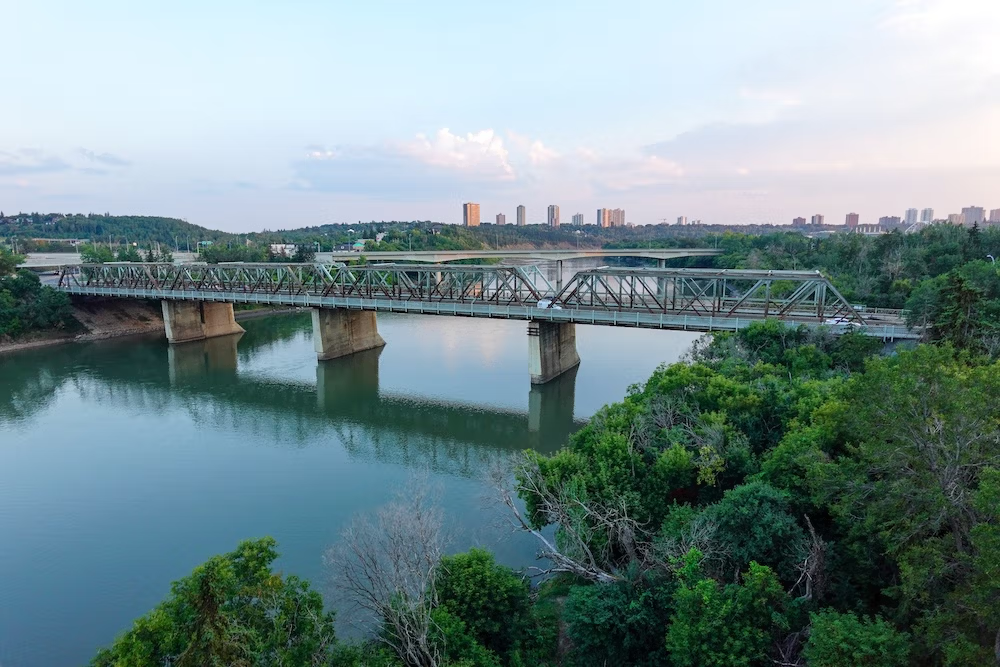
The River Valley runs through the middle of all of this without behaving like a conventional single attraction. It is a giant piece of Edmonton’s geography that you dip into through trails, viewpoints, bridges and parks.
The result is a city where planning by area makes more sense than planning by numbered attraction ranking.
If you are going to Whyte Avenue, stay there awhile.
If you are going to West Edmonton Mall, decide what you want to do before arriving.
If you are downtown, combine downtown things.
And if a list calls 25 different Edmonton attractions “must-see,” feel free to ignore it.
You are allowed to miss good things.
You just want to miss the right ones.
If your dates are already fixed, this is also the point where I would lock in the two booking decisions that influence everything else: where you are sleeping and whether you want somebody else to handle some of the city routing. You can compare current Edmonton hotels on Booking.com and browse current Edmonton tours and activities on GetYourGuide before you start stitching the days together.
The Best Things We Actually Did in Edmonton
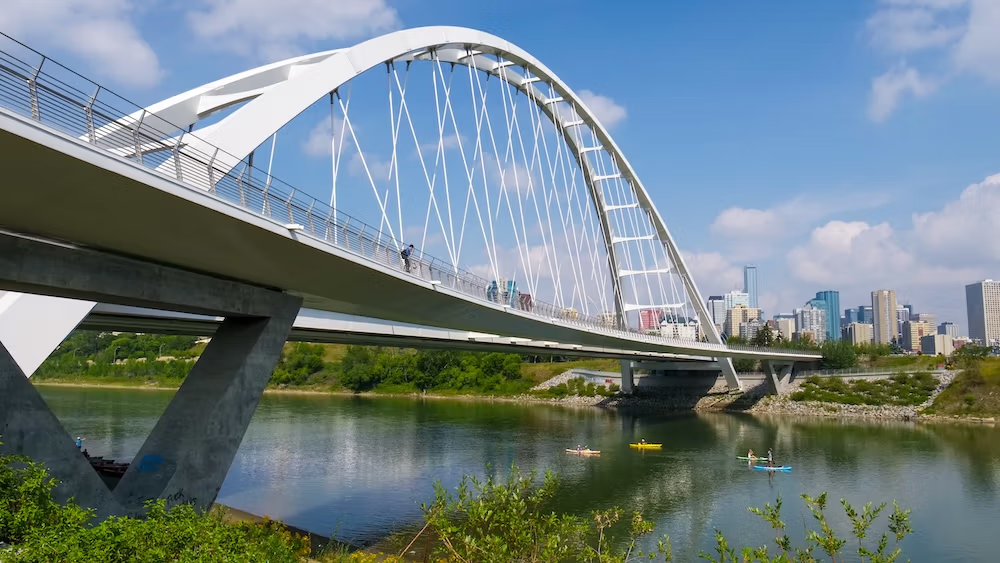
1. Spend Real Time in Edmonton’s River Valley
If I had to choose one part of Edmonton that connects the city I remember with the city I returned to, it would be the River Valley.
When I lived here, this was my tranquil escape.
I jogged along the trails. I went inline skating. I walked. It was part of normal life rather than something I thought of as an Edmonton tourist attraction.
Coming back made me appreciate it differently.
There is something slightly absurd about travelling around the world and then returning to a place you used constantly in your younger years only to realize, “Oh, this is actually pretty special.”
The important thing for a visitor is not to think of the River Valley as one park with one entrance and one thing you need to photograph.
It is woven through Edmonton.
You can experience it from downtown. You can walk near the Legislature. You can use the 100 Street Funicular to get down toward the river. You can cross bridges and build longer walks around the trails.
I would resist the temptation to “cover” it.
You are not going to.
Pick a section that works with the rest of your sightseeing and actually enjoy being outside.
This is particularly valuable because so many other major Edmonton attractions are indoors. A day involving museums, the Muttart Conservatory or West Edmonton Mall can turn into a lot of enclosed space.
The River Valley resets the day.
Walk. Slow down. Look back toward the skyline. Cross a bridge if you have the time.
I considered this an essential part of Edmonton when I lived here, and I feel even more strongly about it now.
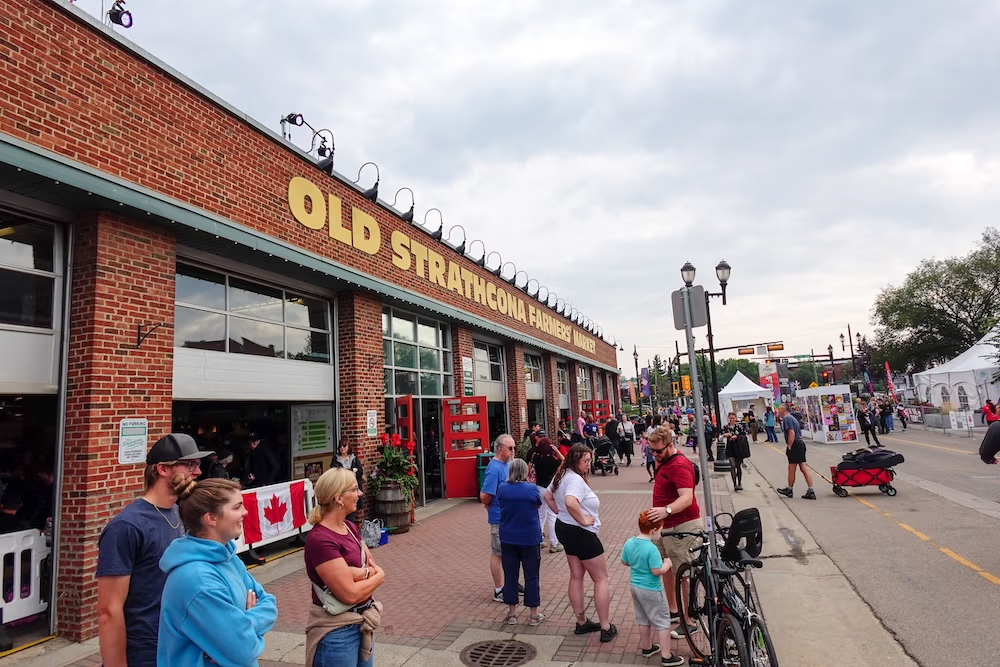
2. Get Over to Whyte Avenue and Old Strathcona
Whyte Avenue was the part of Edmonton I most wanted Audrey to see.
Downtown had not completely convinced her.
Whyte did.
After we spent time in Old Strathcona, Audrey told me it had changed her perception of the city. That stuck with me because it confirmed that my affection for this area was not purely a case of university nostalgia getting out of control.
Whyte Avenue has always represented a different side of Edmonton for me.
This was where I associated great food, nightlife, quirky shopping, festivals, arts and culture. When Audrey asked me about the neighbourhood while we were walking around, I called it Edmonton’s cultural lifeblood.
I still stand by that.
What makes Old Strathcona work is that you do not need one giant headline attraction.
You can browse shops.
Stop for food.
Visit the farmers’ market on the weekend.
Walk Whyte Avenue.
Catch the High Level Bridge Streetcar during its operating season.
If Edmonton Fringe is happening, the neighbourhood becomes something else entirely.
We also returned to DaDeO, one of my favourite restaurants from my university years, which made this part of the trip especially nostalgic for me.
The Old Strathcona Farmers’ Market now operates year-round on both Saturday and Sunday, so weekend visitors have more flexibility than we did when we originally treated it as a Saturday stop.
If your first Edmonton trip never gets south of the river, I think you are making a mistake.
You may see several of the city’s major institutions.
You will miss some of its personality.
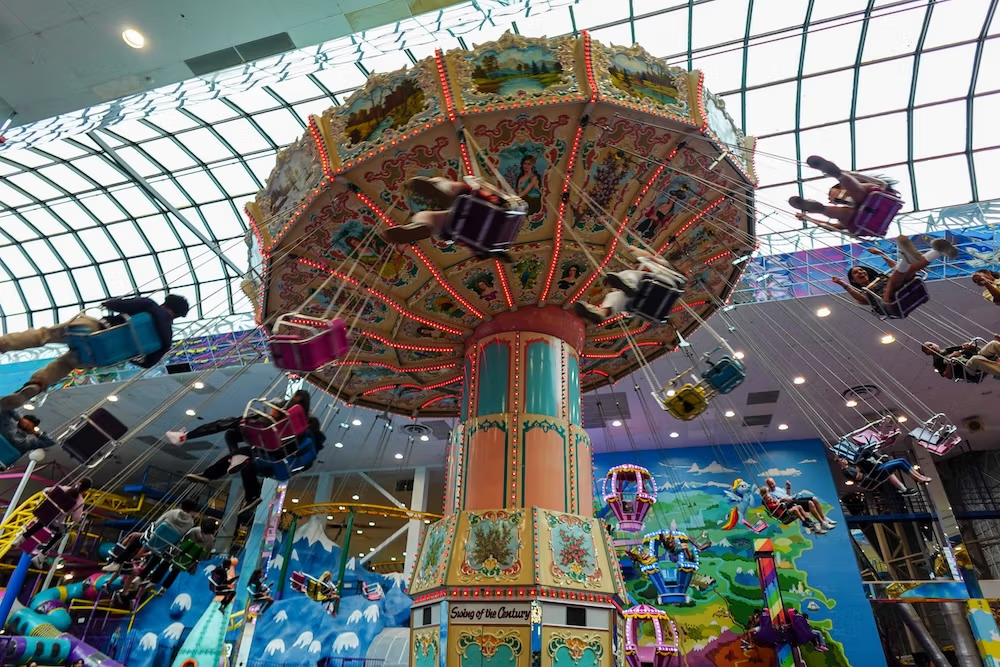
3. Go to West Edmonton Mall—But Have a Plan
West Edmonton Mall in one word?
Overwhelming.
That is not necessarily criticism.
It is just the reality of the place.
There is a ridiculous amount happening under one roof, and the easiest mistake is walking in without any idea what you want from the visit.
We managed that beautifully.
Our first mission was food.
Shocking.
Audrey joked about the incredible revelation that we had arrived at this enormous entertainment complex and immediately started looking for somewhere to eat.
We ate at The Taco Shop, wandered around Bourbon Street and then explored more of the mall.
We saw the indoor lake and pirate ship area.
We passed the Ice Palace.
We checked out Galaxyland.
What we did not do was pretend we had personally experienced every attraction simply because we walked past it.
Galaxyland alone is North America’s largest indoor amusement park, with more than 27 rides — which gives you some sense of why “quick stop” and West Edmonton Mall rarely belong in the same sentence.
West Edmonton Mall has major entertainment options including World Waterpark, Galaxyland, skating, Marine Life, bowling and mini-golf on top of the shopping and restaurants. Those attractions also operate on their own schedules, and maintenance can affect individual rides.
So ask yourself one question before going:
What do I actually want from West Edmonton Mall?
If you have simply heard about WEM for years and want to see what the fuss is about, wandering for a few hours may satisfy you.
If World Waterpark is the reason you are going, that changes everything.
If you have children who want Galaxyland, budget for it.
If you are a committed shopper, give yourself time.
West Edmonton Mall becomes frustrating when you treat it as a quick stop and then discover three hours later that you are still inside.
It becomes much easier when you accept its scale from the beginning.
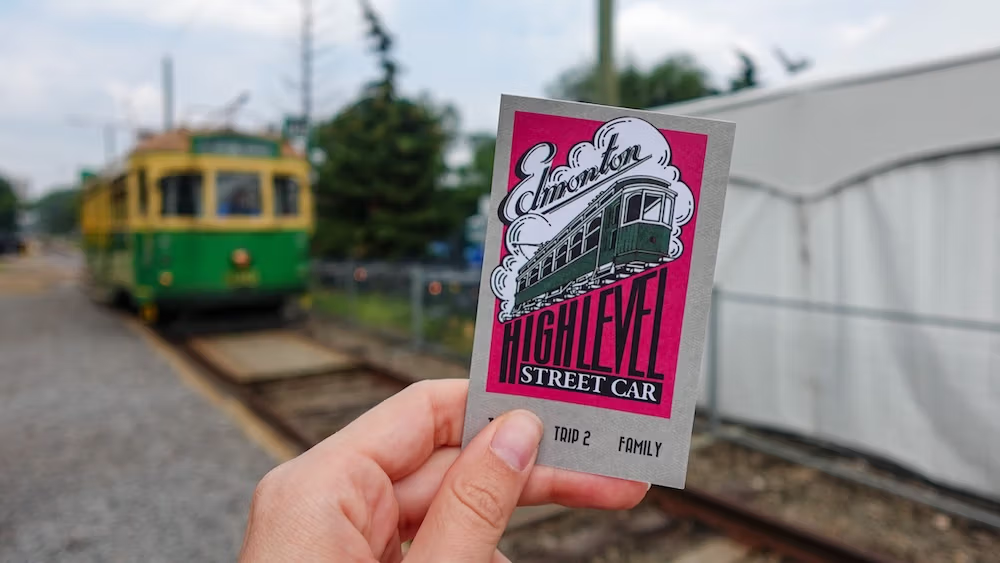
4. Ride the High Level Bridge Streetcar
Of all the Edmonton experiences we did, this one made me feel particularly foolish.
I used to live here.
I had seen the High Level Bridge Streetcar before.
Never rode it.
Then I came back years later as a tourist and finally climbed aboard.
It was super fun.
There is something wonderfully ridiculous about leaving a city before you finally start doing its tourist attractions.
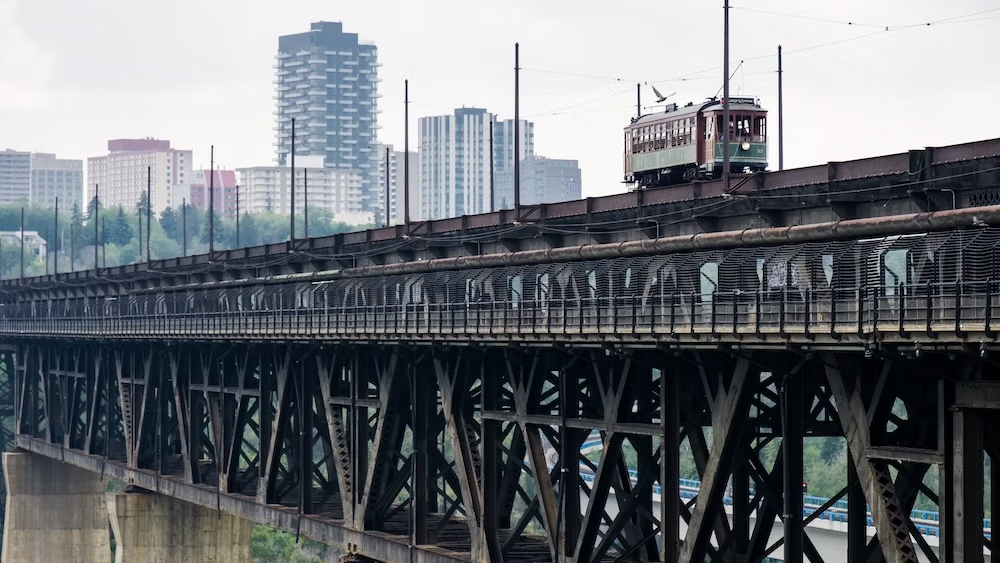
The streetcar crosses the High Level Bridge between central Edmonton and Old Strathcona. What makes it especially useful is that it does not have to be an isolated ride.
It also happens to be the highest streetcar river crossing in the world, rolling along the upper deck of a bridge more than 45 metres above the North Saskatchewan River.
We took it across, got off near Old Strathcona, spent time around the farmers’ market, Fringe and Whyte Avenue, had food, then returned later.
That turned a quirky Edmonton attraction into part of the day’s transportation.
The current service is seasonal, generally running through the warmer months with reduced service extending into fall. Tickets are still first-come, first-served rather than something you reserve months in advance.
Payment is easier than when we rode because cash is no longer your only option.
One important caveat is accessibility.
These are historic streetcars. Most have limited or no wheelchair and stroller accessibility, and the accessible rolling stock is not guaranteed on every departure. If mobility access is important for your visit, check the current High Level Bridge Streetcar schedule and accessibility details before going.
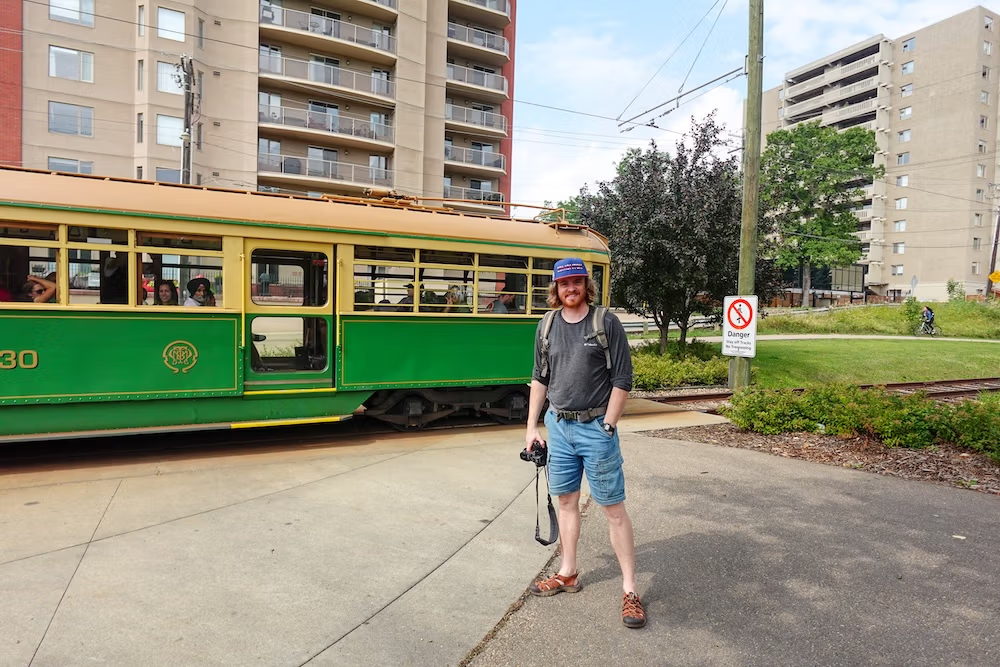
One detail we found particularly funny on our ride was realizing that the tram had come all the way from Melbourne.
The St Kilda signage looked completely random rolling through Alberta.
There is actually a proper story behind it. Melbourne 930 was built in 1947, retired from Melbourne service decades later, shipped to Edmonton in 2004 and eventually entered service here.
Apparently even streetcars can have surprisingly complicated travel histories.
This is not the biggest attraction in Edmonton.
It became one of my favourites anyway.
5. Visit the Royal Alberta Museum
The Royal Alberta Museum is one of the better Edmonton choices if you want your city trip to teach you something about Alberta beyond Edmonton itself.
Audrey and I spent part of an afternoon here and particularly enjoyed the human-history and natural-history sections.
There was a temporary Angkor exhibition during our visit, which immediately triggered memories of travelling in Cambodia.
That exhibition is long gone, so do not go expecting to reproduce our exact visit.
The more lasting appeal is the museum’s Alberta material.
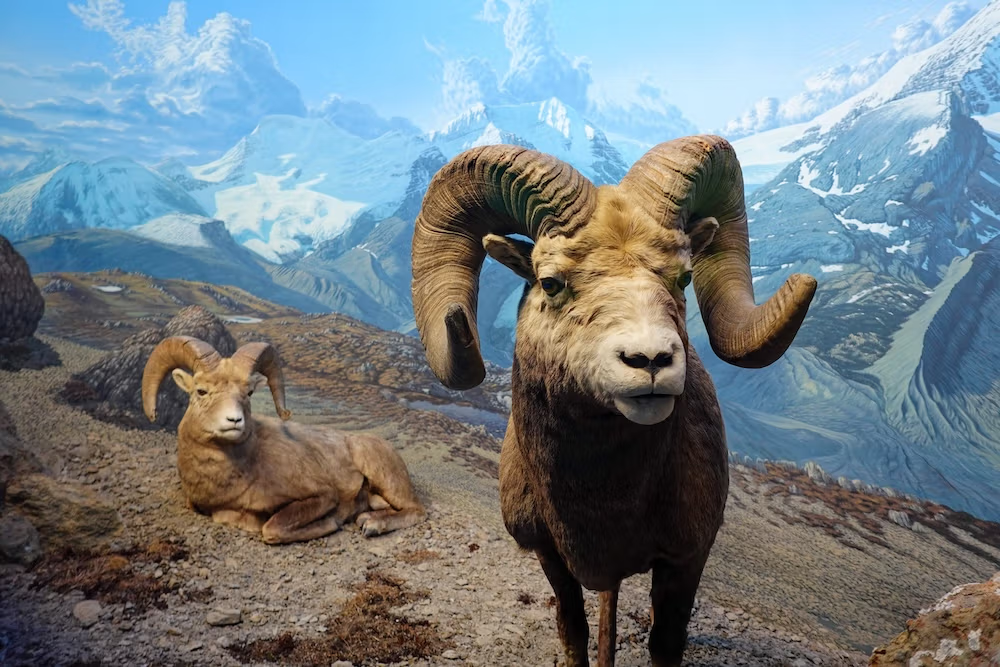
There are galleries dealing with Indigenous histories and communities, natural history, dinosaurs, Ice Age material and provincial wildlife.
Audrey made a good point when we were there: if Edmonton is your main Alberta stop and you are not heading deep into the Rockies or other parts of the province, the museum gives you some broader context for the landscapes and animals associated with Alberta.
We both thought it was worthwhile.
RAM is also a useful Edmonton bad-weather option.
If cold, rain, smoke or some other meteorological nonsense has destroyed the outdoor part of your itinerary, a serious museum becomes considerably more attractive.
Temporary exhibitions and access arrangements change, so I would check current information if there is something specific you are hoping to see.
Otherwise, this is one of the easiest substantial attractions to incorporate into a downtown day.
6. Change Climates at the Muttart Conservatory
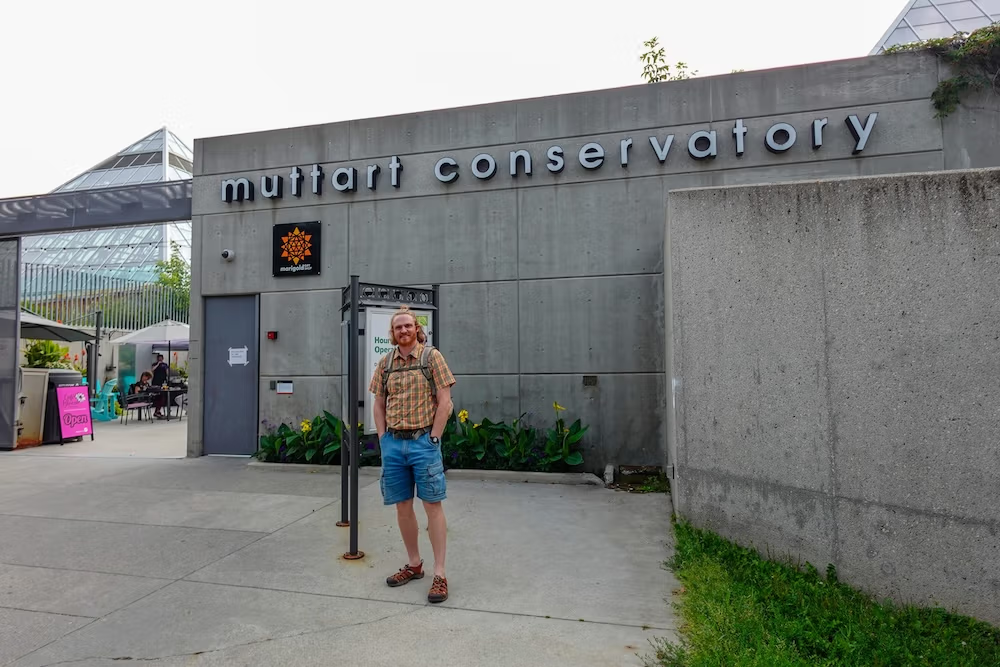
The Muttart Conservatory already looks strange before you walk inside.
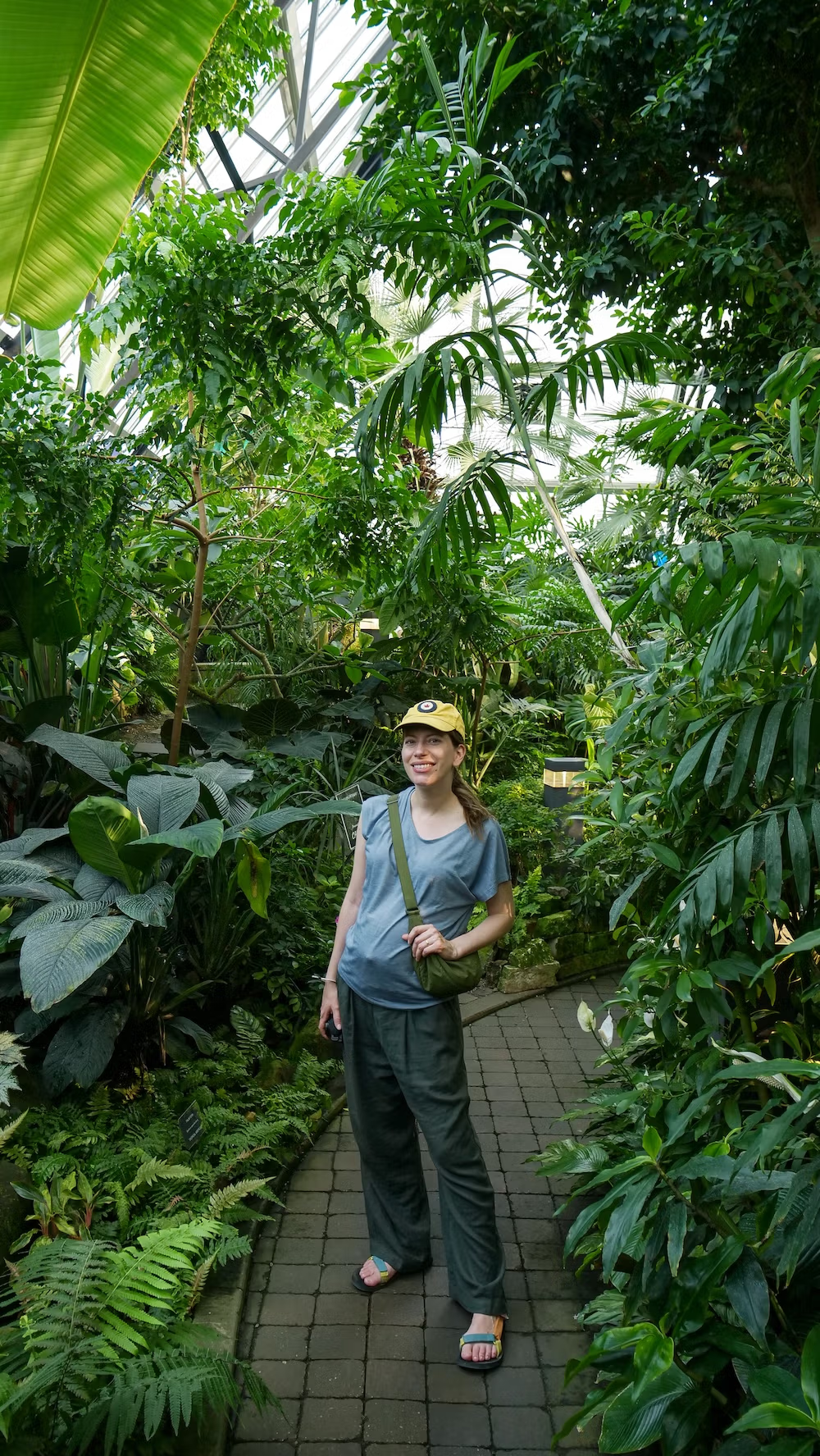
Four glass pyramids rise beside the River Valley, each containing a different botanical environment.
Then you start moving between them and changing climates every few minutes.
The tropical pyramid was lush, hot, humid and sticky.
Audrey said she felt like she could be in Southeast Asia.
We recognized vegetation that reminded us of travels in South America.
It was impressive.
It was also exactly the kind of heat that drains me like somebody has pulled out my internal battery.
The arid pyramid?
Now we were talking.
Dry heat. Cacti. Succulents. Much more civilized.
“Dry heat all the way baby” was my highly nuanced contribution to the field of climatology.
The temperate pyramid felt more familiar, while the fourth pyramid—the Feature Pyramid—had an Ancient Egypt theme during our visit.
That final display changes regularly, so treat whatever theme is running during your trip as a bonus rather than building your expectations around old photographs.
Muttart works particularly well if you enjoy plants, photography or unusual architecture.
It also combines nicely with River Valley time because you can move between a very controlled botanical environment and the actual Edmonton landscape outside.
The Valley Line LRT now has a Muttart stop, which makes the conservatory particularly convenient for transit-based visitors.
And if the weather outside is dreadful, four pyramids suddenly look even better.
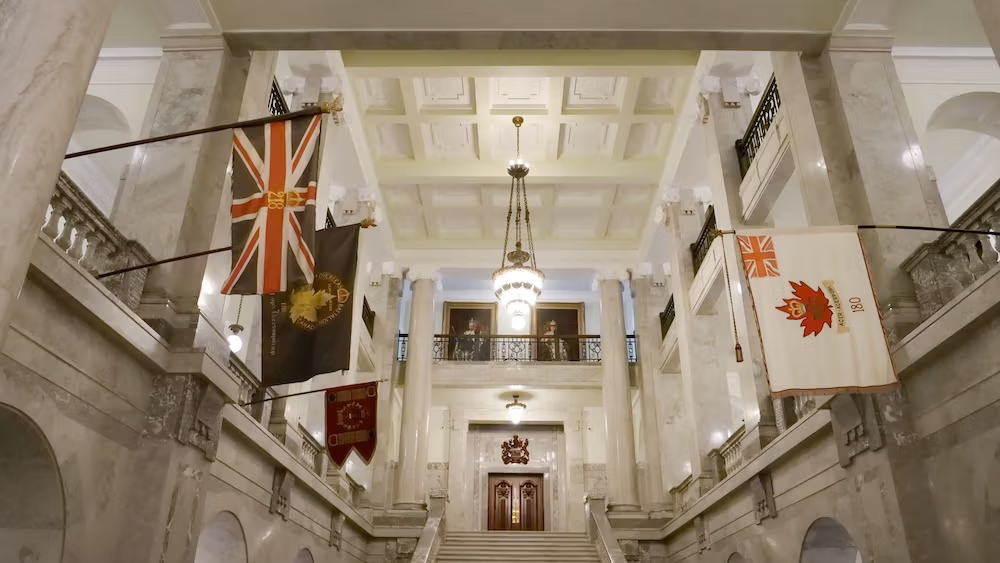
7. Tour the Alberta Legislature
Our Alberta Legislature visit came perilously close to being one of those travel moments where your own lack of planning comes back to slap you.
We wanted to join a guided tour.
Everything was essentially full.
Then somebody cancelled and we managed to snag the final two places.
People arrived after us trying to do the same thing and were not as lucky.
Our conclusion was obvious:
Do not rely on dumb luck.
That advice is even stronger now because registration is required for Legislature Building tours.
The public tours are free and take roughly 45 minutes. Summer usually gives visitors a much broader schedule than later parts of the year.
If the interior matters to you, I would reserve the Legislature tour rather than simply showing up.
The distinction here is between seeing the Legislature and visiting it.
The grounds are easy to combine with a central Edmonton walk and River Valley time.
The guided tour gives you the architecture, political history and context inside the building.
We enjoyed having both.
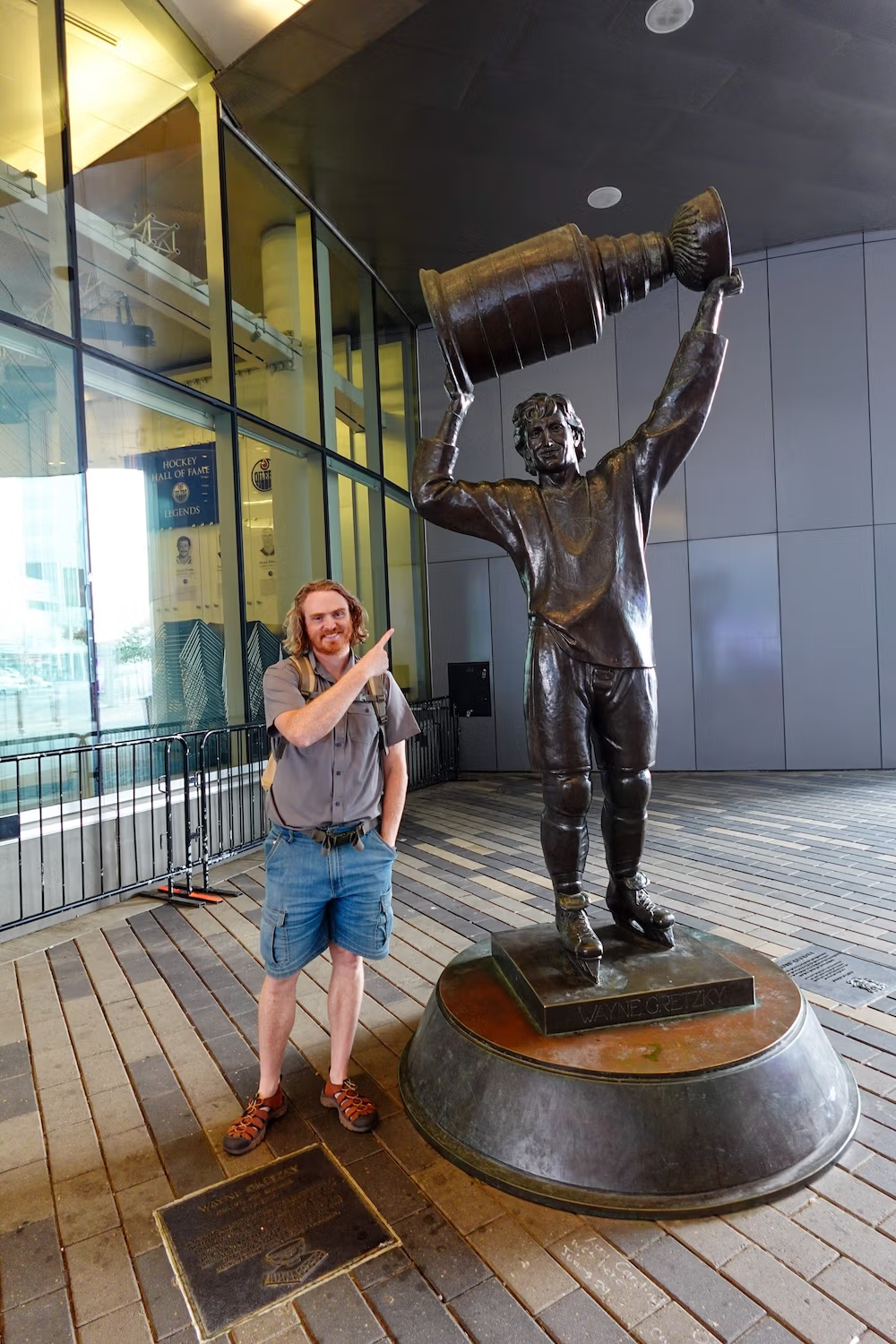
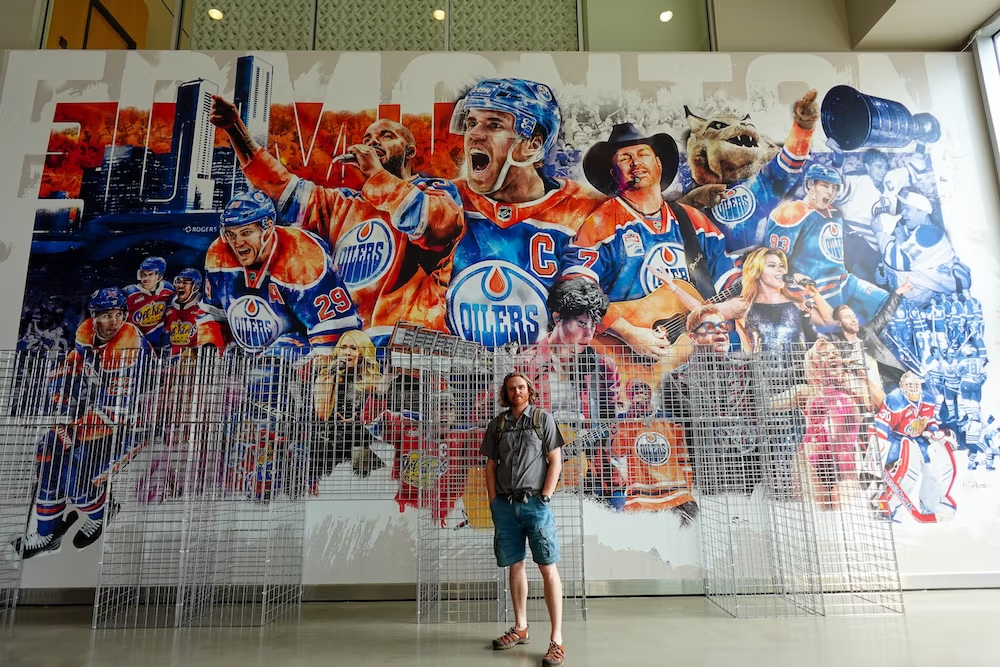
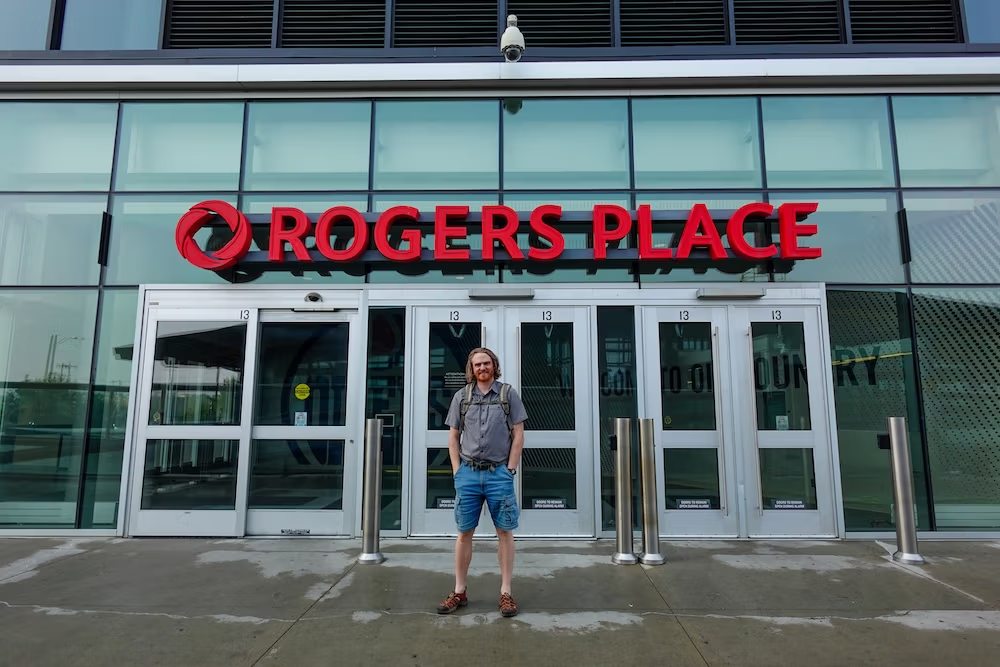
8. See Edmonton’s Hockey Side at Rogers Place and the ICE District
Hockey was part of my Edmonton life long before Rogers Place existed.
When I was a student, I used to buy an Oilers package that gave me roughly eight to ten games over a season.
Those games were at the old arena.
So returning to Edmonton and walking around the ICE District was a strange combination of familiarity and disorientation.
Same hockey city.
Very different setting.
Audrey could tell I was enjoying myself.
“Samuel in his element,” she said while I was surrounded by Oilers imagery.
Accurate.
We saw the Wayne Gretzky statue, walked around the district, visited the official team shop and bought an Oilers hat.
We did not attend a game at Rogers Place on this trip.
If you are coming specifically for an Oilers game or a concert, this part of Edmonton becomes far more important than it was for us.
Your hotel choice changes.
Dinner timing changes.
The event becomes the spine of the day.
If you are not attending anything and have little interest in hockey, I would not dedicate half a day to the ICE District simply because other travel guides tell you it exists.
Walk through if you are downtown.
See the modern side of the city.
Check whether anything interesting is happening.
Hockey fans can then go considerably deeper.
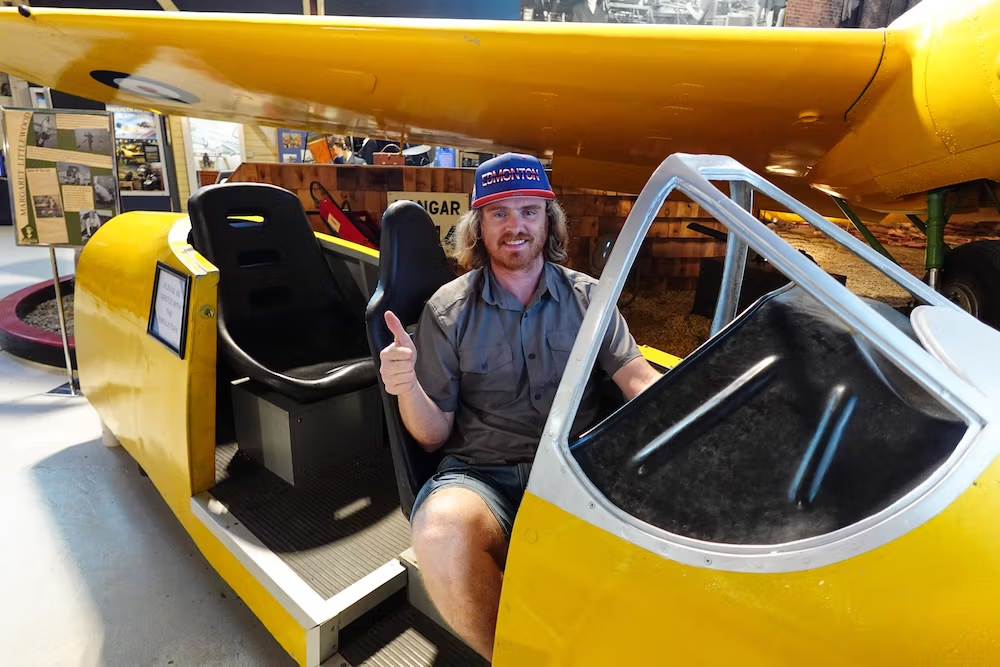
9. Try Not to Crash at the Alberta Aviation Museum
The Alberta Aviation Museum became memorable for me because I tried the flight simulator.
Audrey was already questioning my credentials before takeoff. As I tried to adjust myself in the simulator, she wondered out loud whether I might simply be too tall to be a pilot.
Then I actually started flying and gave her much better reasons to worry.
Audrey watched the entire thing fall apart while wondering whether I might land on the runway, the grass or somewhere that had never previously been considered part of aviation infrastructure.
I came in sideways.
I will not be starting an airline.
Fortunately, the rest of the museum experience required considerably less talent.
The museum occupies the former Edmonton City Centre Airport site and focuses on aviation history through aircraft and related displays.
The collection runs to more than 30 aircraft, including Vickers, de Havilland Canada and Canadair Sabre models.
A typical self-guided visit can take roughly one to two hours.
This is where I think travel guides need to stop pretending every good attraction is equally important to every visitor.
If you love planes, engineering or machinery, the Alberta Aviation Museum deserves to move up your list.
If you have two days in Edmonton and care far more about food, neighbourhoods and the outdoors, I would prioritize those first.
It’s a good museum, just not one every Edmonton visitor needs to treat as mandatory.
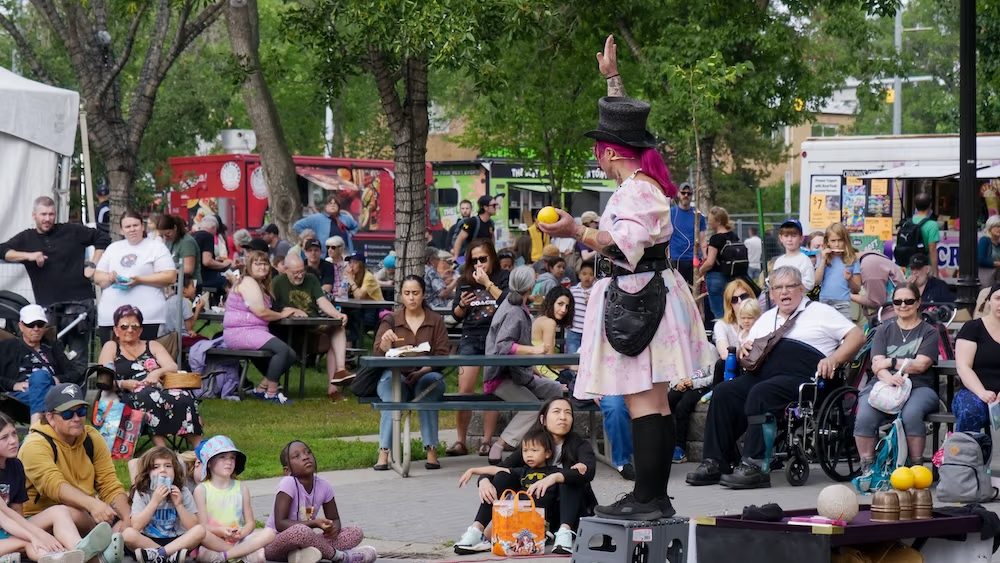
10. Experience Fringe in Old Strathcona
We got lucky with the timing of our Old Strathcona visit.
The farmers’ market was running.
Edmonton Fringe was underway.
Two-for-one special.
Our original plans involved food, but Fringe immediately started derailing those plans because performances were happening all around us.
For awhile, lunch lost.
That tells you something about the festival.
You can experience Fringe very casually.
Show up.
Walk around.
Watch outdoor performers.
Soak up the atmosphere.
That worked for us.
But if you actually want to attend multiple ticketed shows, you need a plan.
The festival is too big to arrive with vague intentions and assume the perfect schedule will spontaneously reveal itself.
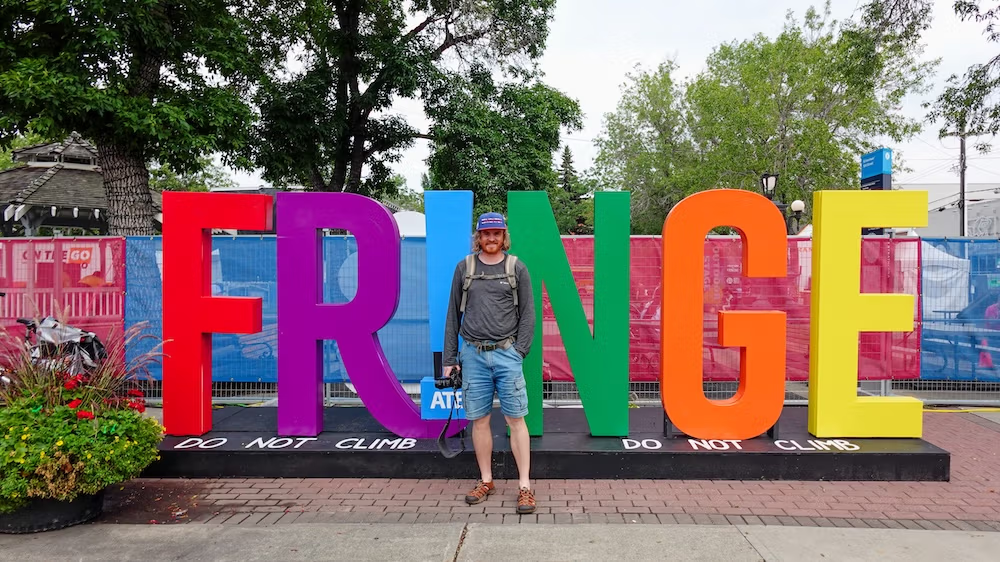
Fringe runs annually in mid-to-late August — 11 days in 2026, from August 13 to 23 — so check the current year’s dates against your trip rather than assuming the timing lines up.
During the 2026 Fringe, there are hundreds of shows and more than a thousand performances alongside free outdoor programming, music and KidsFringe.
In other words, Fringe can become the itinerary rather than something squeezed into it.
If your Edmonton dates coincide with the festival and theatre interests you, give it proper space.
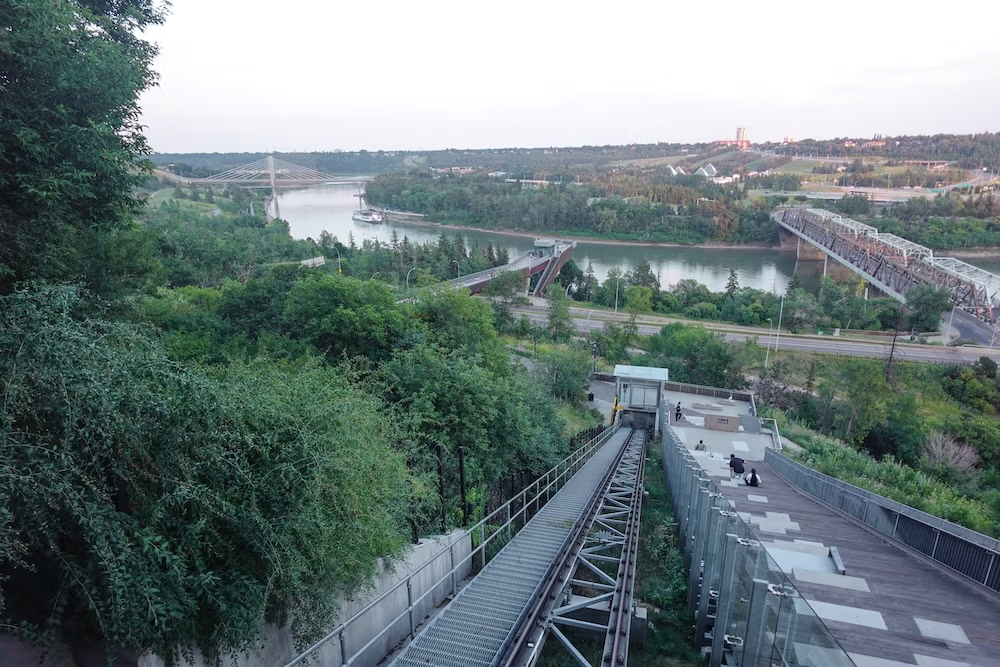
11. Use the 100 Street Funicular as Part of a River Valley Walk
The 100 Street Funicular made me realize how long I had been gone.
They definitely did not have this when I lived in Edmonton.
One of the city’s fancy new upgrades.
I approved immediately because I am perfectly happy to let machinery deal with a steep hill on my behalf.
The funicular links downtown with the River Valley around the Frederick G. Todd Lookout and adjoining promenade.
Its usefulness goes beyond novelty.
Wheelchairs, walkers, bicycles and strollers can use the system, making this one of the easier central access points for people who do not want the elevation change itself to become the activity.
Extreme weather can shut the funicular down, including both severe cold and high heat.
Which feels appropriate.
Edmonton has apparently developed infrastructure capable of saying, “Absolutely not,” at both ends of the thermometer.
I would not make the funicular a major standalone attraction.
Use it as a connector.
Ride down.
Enjoy the viewpoint.
Walk along the river.
Then continue with the day.
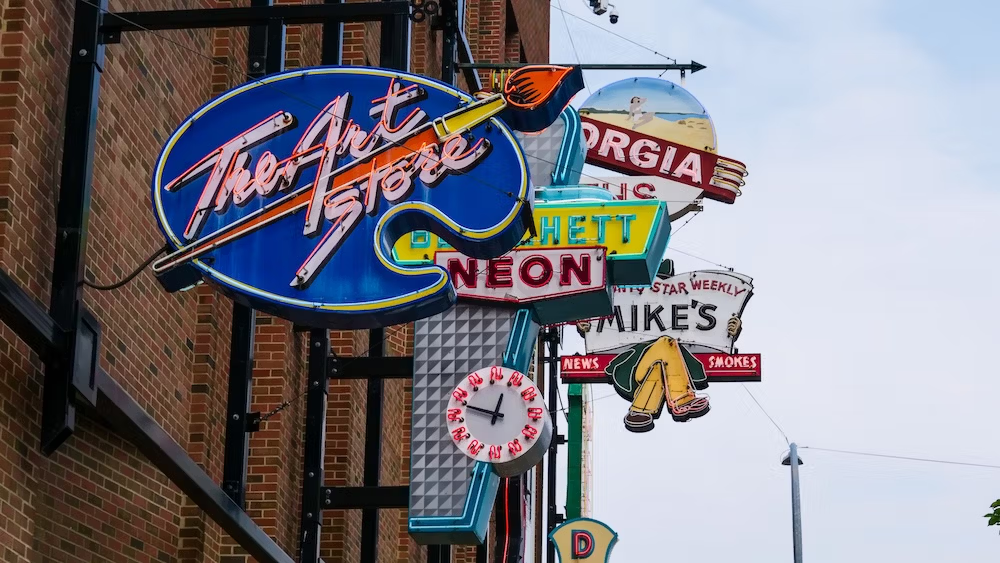
12. Make the Neon Sign Museum a Quick Downtown Stop
The Neon Sign Museum is barely a museum in the traditional sense.
That is part of the charm.
There is no admission desk, no ticket and no two-hour gallery commitment.
The signs are mounted outdoors around 104 Street and 104 Avenue, creating a collection of old Edmonton neon from former businesses and other pieces of the city’s commercial past.
We visited during the afternoon.
My immediate thought was that it probably looks even better illuminated after dark.
We did not come back at night, so I cannot tell you that from firsthand experience.
The display itself remains publicly accessible around the clock, which makes it very easy to fit around other downtown plans.
I wouldn’t cross Edmonton solely for the Neon Sign Museum, but if you’re already around ICE District or central downtown, it’s an easy stop to add.
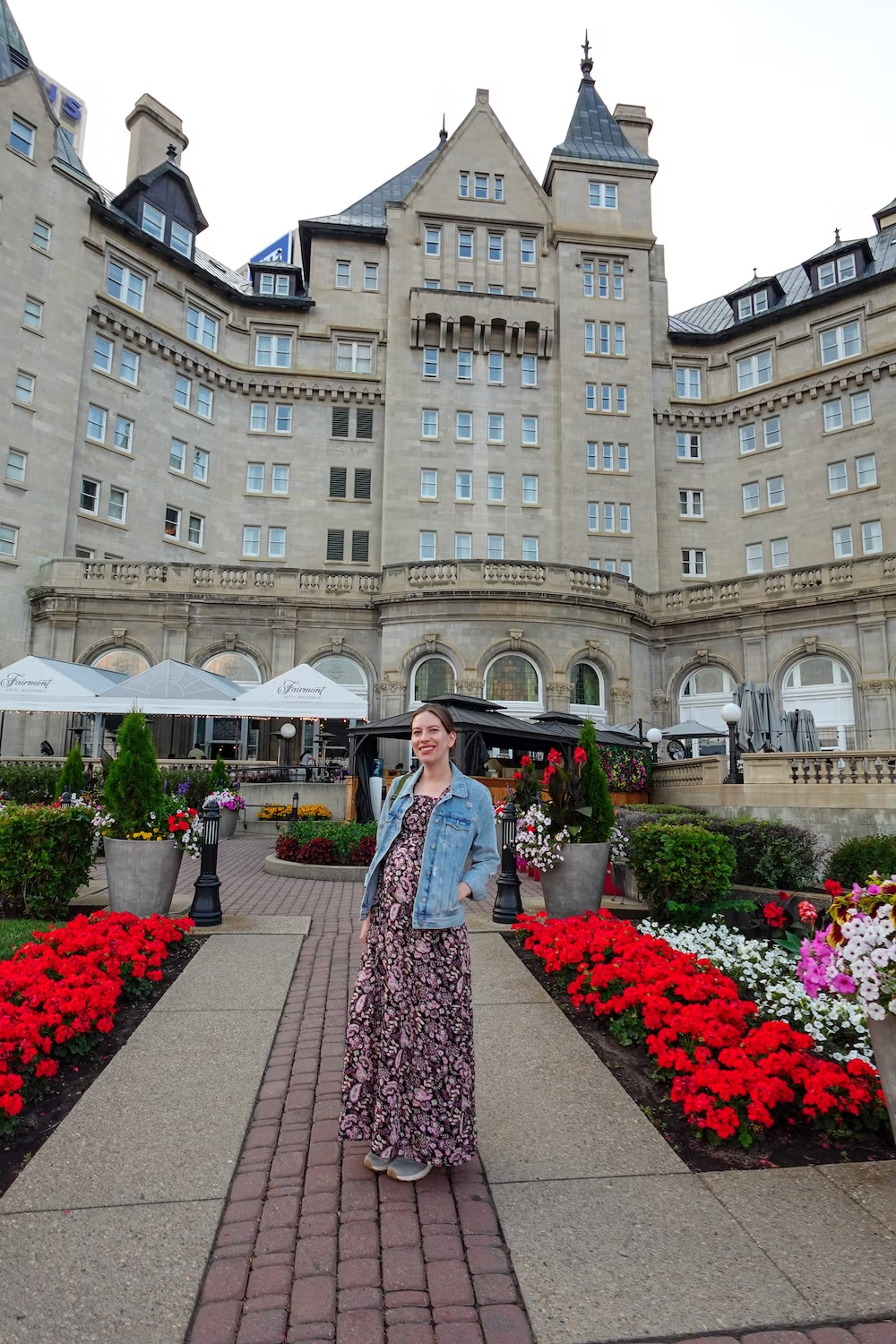
13. Experience Fairmont Hotel Macdonald
Staying at Fairmont Hotel Macdonald was a completely different way for me to return to Edmonton.
When I lived here as a student, spending a night in one of Edmonton’s grand historic hotels was not exactly how I was operating.
Years later, Audrey booked us a night here during our Alberta trip as a babymoon.
It was our first overnight stay at a Fairmont.
We went all in.
Bathrobes.
Pool.
Fairmont Gold.
Canapés.
Breakfast.
River Valley views from around the property.
A level of pampering I do not normally require to remain functional.
Audrey actually joked that I am difficult to pamper because I generally do not need fancy hotels.
She managed.
The hotel itself sits above the North Saskatchewan River and works particularly well if you want downtown access without losing that immediate connection to the River Valley.
We stayed in a city-view room and, if I were choosing again, I would personally opt for a River Valley view. Our room had a narrow window and felt darker than I expected, whereas the river side is the setting that makes this hotel particularly special.
If you are considering the same splurge, you can check current Fairmont Hotel Macdonald availability on Booking.com.
Our overall stay was excellent.
The Gold Lounge food was substantial enough that our evening canapés almost became dinner. We loved the pool. Service was consistently warm and attentive. I slept extremely well.
More than anything, it was an amusing way to become reacquainted with a city where my earlier lifestyle had looked very different.
Fairmont Hotel Macdonald is still a splurge.
I would not tell everybody coming to Edmonton that they need to stay here.
But if historic hotels are part of the pleasure of travel for you, this is one Edmonton accommodation I can recommend from an actual stay rather than from a hotel list.
More Edmonton Attractions Worth Considering
Our trip covered a lot, but it obviously did not cover everything worth doing in Edmonton.
That matters because “the best things we did” and “the only worthwhile things in the city” are two very different claims.
The following are important Edmonton options we did not personally experience on this return trip.
Fort Edmonton Park
Fort Edmonton Park is probably the largest hole in our own sightseeing itinerary.
It is also substantial enough that I would never squeeze it into a leftover ninety-minute gap.
During its main warmer-weather season, the historical park requires a meaningful block of time; allowing at least three hours is realistic.
That means Fort Edmonton competes directly with something like West Edmonton Mall for a half-day slot.
For travellers primarily interested in history, Indigenous history and historical interpretation, that may be an easy trade to make.
For somebody more interested in food, outdoor Edmonton and contemporary neighbourhoods, it may not be.
The main park is also strongly seasonal, so a winter trip does not offer exactly the same experience.
Art Gallery of Alberta
The Art Gallery of Alberta adds something our own Edmonton itinerary lacked: a dedicated visual-art experience.
Its central location makes it easy to combine with downtown sightseeing.
If you only have room for one major cultural institution, I would not frame RAM versus the Art Gallery of Alberta as some dramatic battle for Edmonton supremacy.
Choose according to interest.
RAM is broader Alberta history and natural history.
AGA is art.
Know yourself.
Proceed accordingly.
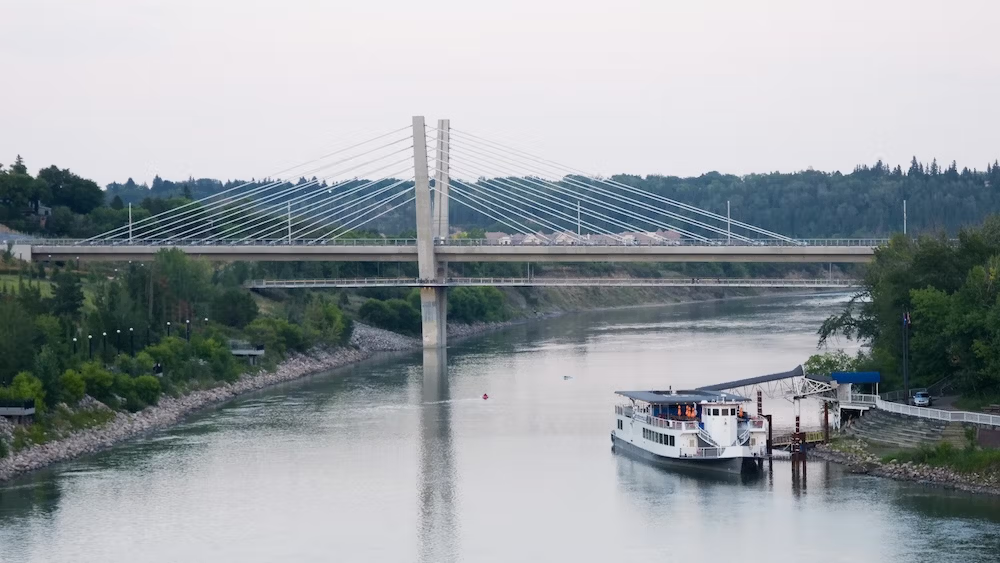
Edmonton Riverboat
We experienced the North Saskatchewan River from the trails, bridges and viewpoints.
We did not get out on the water.
The Edmonton Riverboat offers seasonal cruises during the warmer months, including cruise-only and dining options.
That makes it interesting for travellers who already know boat trips are their thing.
It also reinforces something I like about Edmonton’s riverfront: there is no single correct way to experience it.
Walk beside it.
Ride above it on the streetcar.
Take the funicular down.
Or get on the water.
Edmonton Valley Zoo
Edmonton Valley Zoo is another option we did not personally visit.
It will make more sense for some family trips than several attractions I personally enjoyed more.
And that is exactly the point.
If your children would choose animals over political architecture without hesitating for half a second, perhaps do not drag them through the Legislature simply because somebody else’s top-ten list ranked it higher.
Travel gets easier when you stop pretending everyone’s priorities are identical.
TELUS World of Science: Check Before Planning Around It
TELUS World of Science would normally belong in this conversation, particularly for families and travellers wanting another major indoor attraction.
There is currently an important complication.
Severe flooding in July 2026 forced the facility to close, and the reopening timeline remains subject to recovery work.
If you are planning a trip while that situation is still developing, check the current TELUS World of Science status before building it into your itinerary.
Which Edmonton Attractions Should You Prioritize?
This is where I would stop thinking in terms of a universal top ten.
The River Valley and West Edmonton Mall can both be excellent Edmonton experiences while having almost nothing in common.
RAM and the High Level Bridge Streetcar solve completely different travel desires.
Fringe might dominate your entire Edmonton trip in August while being completely irrelevant to somebody arriving months later.
Fort Edmonton Park could be a first-choice attraction for a history obsessive and an easy skip for somebody coming primarily for food and hockey.
This is a more useful way to think about the major choices:
| Experience | Best for | Time commitment | Main planning catch |
|---|---|---|---|
| River Valley | Outdoors, walks, views, local Edmonton feel | Completely flexible | Too large to “cover”; choose one useful section |
| Whyte Avenue / Old Strathcona | Food, culture, nightlife, markets | Several hours or more | Requires leaving downtown and deserves enough time to wander |
| West Edmonton Mall | Families, shopping, indoor entertainment | Half day to full day | Easy to underestimate |
| High Level Bridge Streetcar | History, views, quirky transport | Relatively compact | Seasonal and accessibility varies by streetcar |
| Royal Alberta Museum | Alberta history, nature, indoor sightseeing | Several hours | Check opening days and temporary exhibits |
| Muttart Conservatory | Plants, photography, architecture | Moderate | Feature Pyramid changes |
| Alberta Legislature | Architecture, political history | About 45 minutes for tour plus grounds | Register for the guided tour |
| Rogers Place / ICE District | Hockey, concerts, modern downtown | Quick stop or entire event | Much more important when you actually have a ticket |
| Alberta Aviation Museum | Aviation and machinery | Roughly 1–2 hours | More interest-specific |
| Edmonton Fringe | Theatre and festival atmosphere | Several hours to full day | Only relevant during festival dates |
| Fort Edmonton Park | History and cultural interpretation | At least several hours | Seasonal and a major time commitment |
If I were advising a first-time visitor without knowing anything else about them, I would put the River Valley and Old Strathcona/Whyte Avenue unusually high because together they reveal parts of Edmonton that are easy to miss if you only visit formal attractions.
Then I would branch.
Want Alberta context? RAM.
Want something quirky and seasonal? Ride the streetcar.
Travelling specifically for WEM? Give it the time it deserves.
Hockey fan? ICE District goes way up.
History lover? Make room for Fort Edmonton Park.
The point is not to eliminate choice.
It is to make the choices deliberate.
How to Group Edmonton Attractions Without Spending Your Trip Crossing the City
Edmonton punishes random itinerary construction.
That sounds dramatic, but geography matters here.
If you build your day based purely on the order attractions appeared on somebody’s list, you can end up crossing Edmonton repeatedly for absolutely no reason.
Group things.
Downtown and ICE District
The Royal Alberta Museum, ICE District, Rogers Place and Neon Sign Museum can all fit naturally within the same broad central sightseeing day.
Fairmont Hotel Macdonald also belongs to this part of the city, whether you stay there or simply use the surrounding area to transition toward the River Valley.
Downtown gives you density.
Use it.
Just do not mistake that density for the whole city.
Legislature, Muttart and the River Valley
The Legislature works naturally with River Valley walking.
The 100 Street Funicular offers another central route toward the river.
Muttart Conservatory sits within the broader central River Valley landscape and has LRT access.
I like this cluster because you can alternate between indoor and outdoor Edmonton instead of spending eight consecutive hours under fluorescent lighting.
Tour something.
Walk.
Get a view.
Go inside the Muttart.
Then go back outside.
Old Strathcona and Whyte Avenue
Whyte Avenue, the Old Strathcona Farmers’ Market, restaurants, shops, Fringe and the High Level Bridge Streetcar all reinforce one another.
This was one of the best-flowing parts of our own trip.
We took the streetcar across.
Walked.
Got distracted by Fringe.
Browsed.
Ate.
Stayed in the neighbourhood.
Then rode back later.
There was no reason to interrupt that experience by suddenly racing across Edmonton to collect another attraction.
West Edmonton Mall
WEM gets its own block.
Maybe you can combine it with something else before or after.
What I would avoid is building a complicated downtown itinerary around the phrase “and then we’ll quickly go to West Edmonton Mall.”
Quickly.
Sure.
Good luck with that.
What to Eat in Edmonton
Edmonton’s food mattered to me long before I started writing travel guides.
When I arrived here as a young man, the city introduced me to cuisines I had never eaten before.
Thai.
Japanese.
Indian.
Suddenly food became one of the ways I was discovering a much bigger world.
That is still wrapped up in how I think about Edmonton.
When Audrey and I returned, we ate extremely well.
We had Mexican food at West Edmonton Mall.
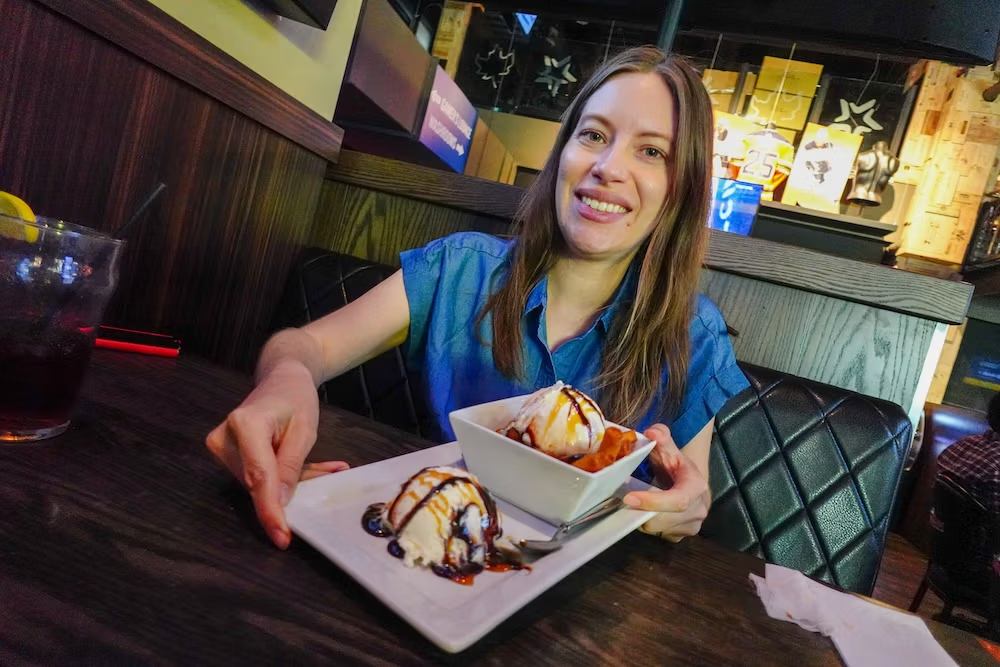
Sports-bar food around ICE District.
Donair.
Burgers.
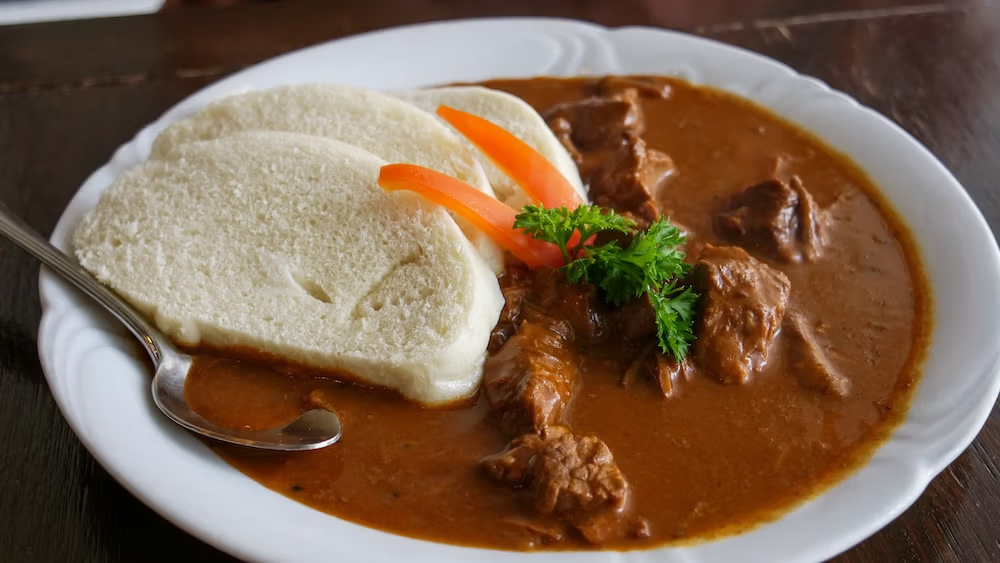
Eastern European comfort food.
Brunch.
But the meal with the most emotional baggage was DaDeO.
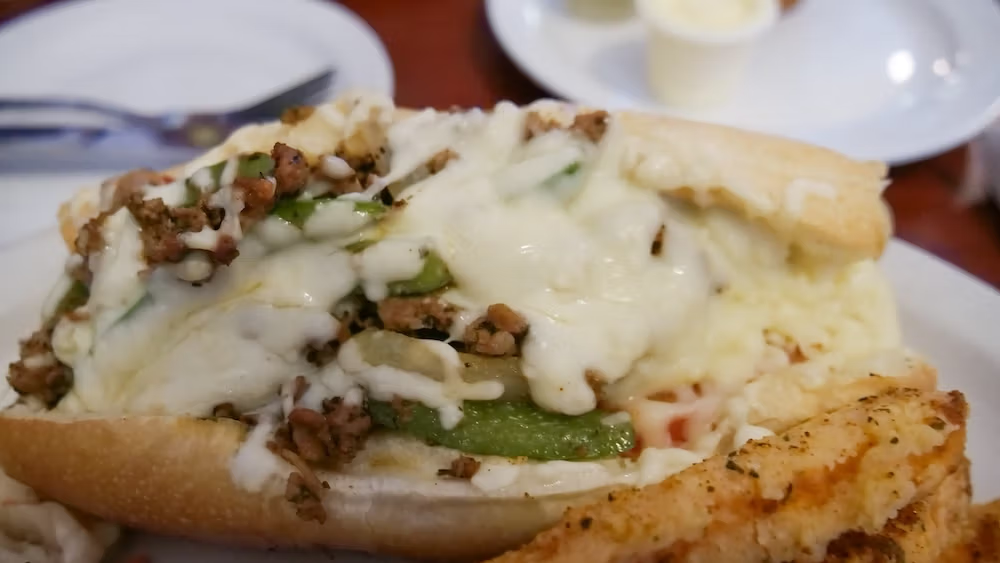
I used to work at a Safeway nearby and would go to DaDeO two or three times a month during university.
Coming back years later for a po’boy and those sweet potato fries was the most nostalgic thing I ate in Edmonton.
The décor still brought me back.
So did the flavoured Coke.
It was less “restaurant review” and more accidental time machine.
The broader Edmonton food lesson is not that you need to eat at the exact restaurants we did.
It is that I would not restrict your meals to whichever places happen to sit beside your downtown hotel.
Food and neighbourhood exploration work beautifully together here.
Old Strathcona is an obvious example.
Game-day eating around Rogers Place is another.
WEM has an entire dining universe of its own.
There are also guided food experiences in Old Strathcona for visitors who would rather let somebody else curate the stops and explain the neighbourhood. We did not take one ourselves, so I cannot give you a personal verdict on that format.
Otherwise, do what I have always done in Edmonton.
Travel for dinner.
Where to Stay in Edmonton
The best place to stay in Edmonton depends on what kind of trip you are taking.
I have only personally stayed at Fairmont Hotel Macdonald among the hotels discussed here, so that is the only property where my recommendation comes from an actual overnight experience.
For everything else, I would start with the area.
| Area | Best for | Main advantage | Main trade-off | Example |
|---|---|---|---|---|
| Downtown / Fairmont | First visits, history, River Valley | Central sightseeing plus river access | You still need to explore beyond downtown | Fairmont Hotel Macdonald |
| ICE District | Oilers games and concerts | Maximum Rogers Place convenience | Less useful for Whyte and west-end trips | JW Marriott Edmonton ICE District |
| Whyte / Old Strathcona | Food, nightlife, festivals | Immediate neighbourhood atmosphere | Less central for some major attractions | Metterra Hotel on Whyte |
| West Edmonton Mall | Mall-centred trips | You are already at WEM | Poor base if the mall is a small part of your trip | Fantasyland Hotel |
| Airport | Early/late flights | Pure logistics | Weak base for sightseeing | Renaissance Edmonton Airport Hotel |
Fairmont Hotel Macdonald for History and River Valley Access
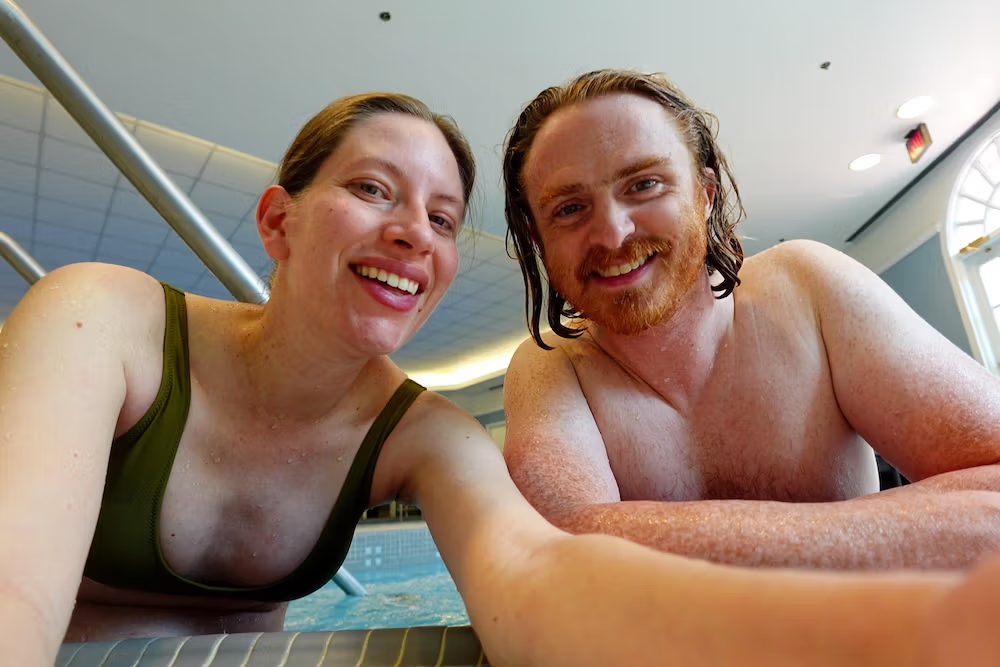
Audrey booked our Fairmont stay as part of our babymoon, and it became a wonderfully ridiculous way for me to return to my old university city.
When I lived in Edmonton as a student, I was not exactly checking into grand railway hotels for a little light pampering.
Different era.
Different budget.
Different belly situation too, considering Audrey was very pregnant.
It was our first overnight Fairmont stay, and we leaned into it.
Pool.
Bathrobes.
Fairmont Gold.
Canapés substantial enough that dinner started becoming unnecessary.
A big breakfast the following morning.
I am apparently difficult to pamper, according to Audrey.
She cracked the code.
Our one mistake was booking a city-view room. The window was narrow and the room darker than I expected. If I stayed again, I would choose the River Valley side.
The broader stay was excellent, and Fairmont Hotel Macdonald remains the Edmonton hotel I can recommend here from genuine experience. If that sounds like your kind of splurge, compare current Fairmont Hotel Macdonald dates and room availability.

ICE District for a Game or Concert
If Rogers Place is the reason you are coming to Edmonton, location becomes brutally simple.
Stay close to Rogers Place.
JW Marriott Edmonton ICE District is one prominent luxury option immediately within the district, though we have not stayed there ourselves. You can check JW Marriott Edmonton ICE District availability on Booking.com if event-night convenience is the priority.
An event trip has different priorities.
Being able to walk back to your hotel after a game or concert can matter more than choosing the city’s most atmospheric neighbourhood.
Whyte Avenue for Food and Nightlife
If I cared most about restaurants, bars, Fringe or being able to wander around Old Strathcona in the evening, Whyte Avenue would be an appealing base.
Metterra Hotel on Whyte is one current example directly on the avenue.
I cannot review the hotel from experience.
I can speak to the location.
This is the part of Edmonton where I would most enjoy walking out the door without a formal plan and seeing where dinner, drinks or a stroll took me. Travellers who want that kind of base can see current Metterra Hotel on Whyte availability.
West Edmonton Mall for a WEM-Centred Trip
Fantasyland Hotel is physically inside West Edmonton Mall.
That makes enormous sense if the mall is your trip.
World Waterpark today.
Galaxyland tomorrow.
Shopping in between.
Minimal transport friction.
It makes much less sense if WEM is something you intend to see for three hours before spending the rest of the trip downtown and in Old Strathcona.
Proximity is only valuable when you actually need it. If the mall really is the centre of the trip, you can check Fantasyland Hotel availability inside West Edmonton Mall.
Airport Hotels for Logistics
The Renaissance Edmonton Airport Hotel is attached to Edmonton International Airport.
That can be extremely convenient around a late arrival or unpleasantly early departure.
It is not where I would base a multi-day Edmonton sightseeing trip simply because the plane landed there.
Airport convenience and destination convenience are different jobs. If logistics are the job, check current Renaissance Edmonton Airport Hotel availability.
When an Edmonton Tour Actually Makes Sense
We explored most of Edmonton independently.
You can too.
You do not need somebody leading you around simply because this is your first visit.
A tour becomes worthwhile when it solves a real problem.
When You Do Not Want to Figure Out Edmonton’s Geography
Edmonton Explorer now offers hop-on/hop-off sightseeing routes connecting several major visitor areas.
We did not use the service ourselves.
I can see the appeal for a first-time visitor without a car who would rather outsource the transport puzzle than spend the morning staring at route maps.
That is a genuine benefit in Edmonton because geography is one of the city’s main planning headaches. If that is your problem, you can check current Edmonton Explorer hop-on/hop-off trolley availability on GetYourGuide.
If you want local interpretation more than transport, there is also a separate three-hour Edmonton city highlights walking tour on GetYourGuide. We did not take that one either, but it serves a different job from the trolley: less moving between distant attractions, more time actually walking through central Edmonton with a guide.
When You Want More Than a River Valley Walk
Guided Segway and cycling experiences operate in the River Valley.
A Segway trip is obviously very different from the way I used these trails when I lived here, but it can make sense for somebody who wants an activity rather than a self-guided walk.
Beginner outings include instruction before the actual ride.
Again, we did not personally test these tours.
I would choose one because the activity appeals to you, not because a guided River Valley experience is somehow mandatory. GetYourGuide currently lists a one-hour River Valley Segway adventure, while travellers who would rather pedal can compare the Edmonton city bike tour through the River Valley.
When Food Is the Point
Guided food tours in Old Strathcona make sense for visitors who want multiple tastings plus local context without researching every restaurant themselves.
If that sounds appealing, great.
If you are like Audrey and me and are perfectly happy spending an unreasonable amount of mental energy choosing your next meal, Edmonton is also easy to explore independently.
For the guided version, you can see current Whyte Avenue food-walk dates on Expedia.
My rule would be:
Pay for a tour when it adds interpretation or removes friction.
Otherwise, keep your money for dinner.
Best Day Trips From Edmonton
If you only have one or two days in Edmonton, I would generally stay in Edmonton.
There are enough worthwhile things inside the city that immediately sacrificing half your trip to a regional excursion seems backwards.
With three or more days, day trips become easier to justify.
The options below are not places Audrey and I visited as part of this Edmonton return, so treat them as planning ideas rather than personal recommendations.
Elk Island National Park
Elk Island is an obvious nature-focused extension from Edmonton, but current conditions need special attention.
A severe storm struck the park on July 25, 2026, and although areas have reopened, trail closures remain part of the recovery situation at the time of writing.
If Elk Island is part of an upcoming trip, check the current Parks Canada conditions before committing your day.
This is precisely the kind of situation where a five-year-old “best day trips” list becomes dangerous.
The destination can still be excellent.
The conditions control what you can actually do.
If you would rather solve the transport side with a guide once park access suits your dates, GetYourGuide currently lists a private Elk Island day tour from Edmonton. I would still check the Parks Canada status first because a bookable tour does not override live park closures or restrictions.
Ukrainian Cultural Heritage Village
The Ukrainian Cultural Heritage Village sits east of Edmonton and works well for travellers interested in Ukrainian-Canadian culture, immigration history and historical interpretation.
The main visitor season is concentrated in the warmer months, and the site itself deserves a few hours rather than a quick drive-by.
Compared with longer Alberta excursions, the travel overhead is relatively modest.
Métis Crossing
Métis Crossing is farther away and should be treated as a genuine regional outing.
It sits roughly an hour and a half northeast of Edmonton and offers year-round experiences centred on Métis culture and history.
At that distance, I would not combine it with an ambitious Edmonton sightseeing day.
Let the excursion have its own space.
Reynolds Museum
Reynolds Museum in Wetaskiwin is another option for people already interested in transportation, machinery and engineering history.
If the Alberta Aviation Museum sounds like your idea of a great afternoon, Reynolds may also appeal.
If not, you have your answer.
That is the nice thing about interest-specific attractions.
You do not need to manufacture enthusiasm.
How Many Days Do You Need in Edmonton?
I would give Edmonton two full days if possible.
Three is better if West Edmonton Mall is important to you.
One day can work, but you need discipline.
One Day
With one day, accept that you are sampling Edmonton.
Do not try to conquer it.
I would build around one strong sequence: central Edmonton and the River Valley, then Old Strathcona if timing works.
Or make WEM the major attraction and accept that the rest of the city will get less attention.
Trying to do RAM, WEM, Whyte Avenue, the Legislature, the River Valley and dinner on the opposite side of town in one day is not ambition.
It is poor time management.
Two Days
Two days gives you a much better first visit.
You can explore central Edmonton and the River Valley.
You can give Old Strathcona proper time.
Then you can choose a major commitment such as WEM, RAM, Fort Edmonton Park or something matched to your interests.
That is enough variety for the city to start making sense.
Three Days
Three days removes a lot of the friction.
WEM can have its half day without stealing Whyte Avenue.
A longer River Valley walk does not feel irresponsible.
You can eat somewhere because you want to eat there rather than because it is beside the next attraction.
For a first trip, this would be my preferred amount of time.
Four Days or More
Once you have four days, Edmonton starts opening up.
Aviation museum.
More food.
A hockey event.
Longer neighbourhood wandering.
Fort Edmonton.
Then perhaps a regional excursion.
The city does not run out of things particularly quickly.
It spreads them out and makes you work for them.
Best Time to Visit Edmonton
Our return trip was heavily summer-focused, and summer showed Edmonton at its most flexible.
We walked the River Valley.
Rode the streetcar.
Encountered Fringe.
Spent time outside around Whyte Avenue and the Legislature.
That combination makes summer especially easy for a first-time visitor.
Summer
Summer gives you the broadest overlap of Edmonton’s outdoor, festival and seasonal attractions.
The streetcar operates.
Fort Edmonton’s main historic season is underway.
Fringe takes over Old Strathcona in August.
The River Valley invites longer walks.
Neighbourhood exploration requires less strategic warming-up.
For the widest version of Edmonton, summer has a strong case.
Fall
Early fall can be excellent if festivals are not essential.
Some seasonal experiences continue into the shoulder period, while museums, restaurants and indoor attractions remain fully useful.
It can be a nice middle ground between Edmonton’s outdoor summer personality and its much more indoor-heavy winter planning.
Winter
Winter creates a different trip.
Our return visit does not give me a firsthand basis for pretending otherwise.
Fortunately, Edmonton has serious indoor infrastructure.
RAM.
Muttart.
West Edmonton Mall.
Museums.
Restaurants.
Hockey.
Concerts.
You can build a very full visit around indoor experiences.
What you cannot do is recreate summer by wearing a better jacket.
Some experiences, especially the High Level Bridge Streetcar, are seasonal.
Winter Edmonton should have its own priorities.
Spring
Spring is transitional.
Indoor attractions remain dependable, while seasonal outdoor options return according to their own calendars.
Do not assume something is running simply because the snow has disappeared.
Check the specific attraction if it matters to your trip.
How to Get Around Edmonton
Edmonton is possible without a car.
It is not equally convenient without one for every itinerary.
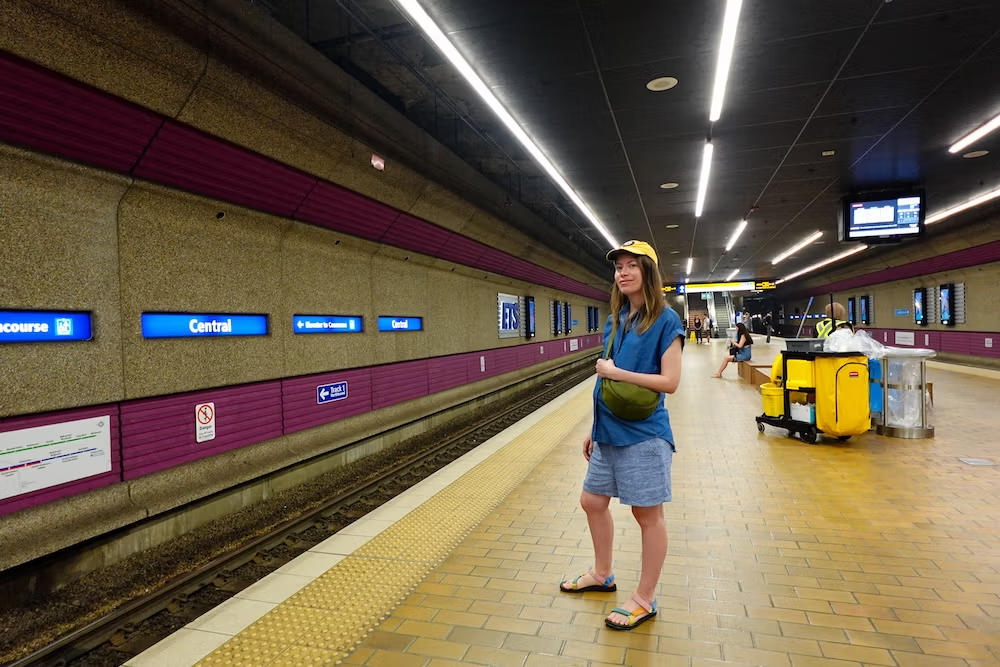
Audrey and I used the LRT and buses during our sightseeing, and the expansion of the rail network was one of the obvious changes from the Edmonton I remembered.
Transit worked particularly well when we had a heavy sightseeing day and wanted to save our legs for the attractions themselves.
Current fares and payment systems are different from what we used on our trip, so I would check ETS before travelling rather than relying on old screenshots or blog posts.
The more useful point is this:
Transit works best when you have already grouped the city sensibly.
Getting From Edmonton Airport Into the City
ETS Route 747 connects Edmonton International Airport with Century Park, where you can connect onward into Edmonton’s transit system.
Whether that is the right choice depends on your luggage, group size, hotel and tolerance for transferring after a flight.
Travelling light to a transit-friendly hotel?
Very reasonable.
Two people dragging half their possessions across Alberta?
I might reconsider.
If you have not booked the flight yet, you can compare current flights to Edmonton on Booking.com. If you already know you want a car from touchdown, it may be more useful to compare rental cars at Edmonton International Airport before arrival.
LRT
The LRT can be genuinely useful for visitors.
Muttart is now served by the Valley Line.
Central Edmonton has multiple useful stations.
The system can reduce the amount of pointless movement between attractions.
What it cannot do is shrink Edmonton.
You still need a plan.
Walking
Walking works brilliantly within the right areas.
Walk downtown.
Walk Whyte Avenue.
Walk Old Strathcona.
Definitely walk part of the River Valley.
What I would not do is decide you are going to experience Edmonton primarily on foot from one end of the city to the other simply to prove a point.
That sounds exhausting.
When a Car Makes Sense
A car becomes more appealing when your plans include several outlying attractions, a serious WEM component or day trips outside Edmonton.
It becomes even more useful once you start heading toward places like Elk Island, Métis Crossing or Wetaskiwin.
But I would not automatically rent one because somebody told you Edmonton is spread out.
Build your itinerary first.
Then decide whether the geography earns the rental car. If it does, you can compare current Edmonton car-rental options on Booking.com rather than renting one by default for a trip that may not need it.
Is Edmonton Worth Visiting?
Coming back to Edmonton meant more to me than I expected.
A lot of that had nothing to do with conventional sightseeing.
I walked around areas where I used to live.
I retraced pieces of university life.
I ate at a restaurant that used to be part of my routine.
I stood in a hockey district that would have been unrecognizable to the younger version of me buying Oilers student tickets.
And I finally rode a streetcar I had somehow managed to ignore while living here.
That history obviously affects how I see Edmonton.
Audrey had none of it.
Which is precisely why her reaction was useful.
Downtown alone had not completely sold her on the city.
Whyte Avenue changed her perception.
I think a lot of first-time visitors can fall into the same trap.
They see one side of Edmonton and assume they have seen Edmonton.
So see downtown.
Then leave downtown.
Walk beside the North Saskatchewan River instead of only looking at it from above.
Give Whyte Avenue and Old Strathcona enough time to work on you.
Go to West Edmonton Mall if it genuinely interests you, but do not let the mall substitute for the city around it.
Choose museums based on what you actually enjoy.
Build around hockey if hockey is why you came.
Let Fringe take over the day if you are here for Fringe.
And make room for food.
The Edmonton I would want somebody to experience is not a checklist.
It is several different pieces of city finally connecting.
That took me years—and leaving Edmonton entirely—to figure out.
Frequently Asked Questions
How many days do you need in Edmonton?
I would give Edmonton two full days if possible. Three is better if West Edmonton Mall is a major priority, while one day works only if you accept that you are sampling the city rather than trying to cover everything.
Do you need a car to visit Edmonton?
Not automatically. Audrey and I used the LRT and buses during our sightseeing, and transit works well for many central attractions. A car becomes more useful for WEM-heavy plans, outlying attractions, and day trips.
What should first-time visitors prioritize in Edmonton?
I would put the River Valley and Old Strathcona/Whyte Avenue unusually high because together they show sides of Edmonton that are easy to miss if you only visit formal downtown attractions. After that, choose museums, WEM, hockey, or history according to your interests.
Is West Edmonton Mall a quick stop?
Not if it is one of your main priorities. WEM can easily take half a day or more, especially if Galaxyland, World Waterpark, shopping, or other attractions matter to you, so decide what you actually want from the mall before arriving.
What is the best time to visit Edmonton?
Summer gives you the broadest mix of outdoor, festival, and seasonal experiences, including River Valley walks, Fringe, and the High Level Bridge Streetcar. Winter can still be a full trip, but it needs a more indoor-heavy plan.
How should you group Edmonton attractions?
Keep downtown and the ICE District together, pair the Legislature and Muttart with River Valley time, give Old Strathcona and Whyte Avenue their own block, and treat West Edmonton Mall as a major commitment rather than a quick detour.
Is Edmonton worth visiting?
Yes, but I think Edmonton makes much more sense when you see beyond downtown. The River Valley, Whyte Avenue, Old Strathcona, museums, food, hockey, and WEM reveal very different sides of the city, and the best trip comes from choosing the ones that match your interests.
This guide is also available in Spanish. [Leé la versión en castellano: Guía de viaje de Edmonton: las mejores cosas que hacer en Edmonton, Alberta]
This article contains affiliate links. If you book through one of these links, I may earn a commission at no extra cost to you.