
Edmonton is easy to underestimate on a map. Downtown looks compact, the river valley appears to be right there, and several major attractions seem close enough that you might imagine casually walking between them.
Then the hills, roads and sheer spread of the city get involved.
I used to live in Edmonton, but returning years later with Audrey was a different experience. I knew the broad geography, yet I was seeing the city as a visitor with full sightseeing days, timed stops and two increasingly tired pairs of legs. The biggest transportation change was obvious: Edmonton had more LRT lines, more connections and more opportunities to plan a day around public transit than I remembered.
We used the LRT to reach attractions, bought a pass for our busiest sightseeing day and rode the 100 Street Funicular down toward the river valley. Buses were also part of our planning once we moved beyond the strongest rail corridors.
My honest verdict is that Edmonton public transportation can work very well for visitors, but only when the itinerary matches the network. The LRT is the easiest backbone. Buses take over where the tracks stop. The High Level Bridge Streetcar turns one central journey into an attraction, while the funicular solves one steep and very Edmonton-specific problem.
Treat all four as interchangeable and the system becomes confusing. Give each one the right job and the city is far easier to navigate.
The Honest Version of Edmonton Public Transportation
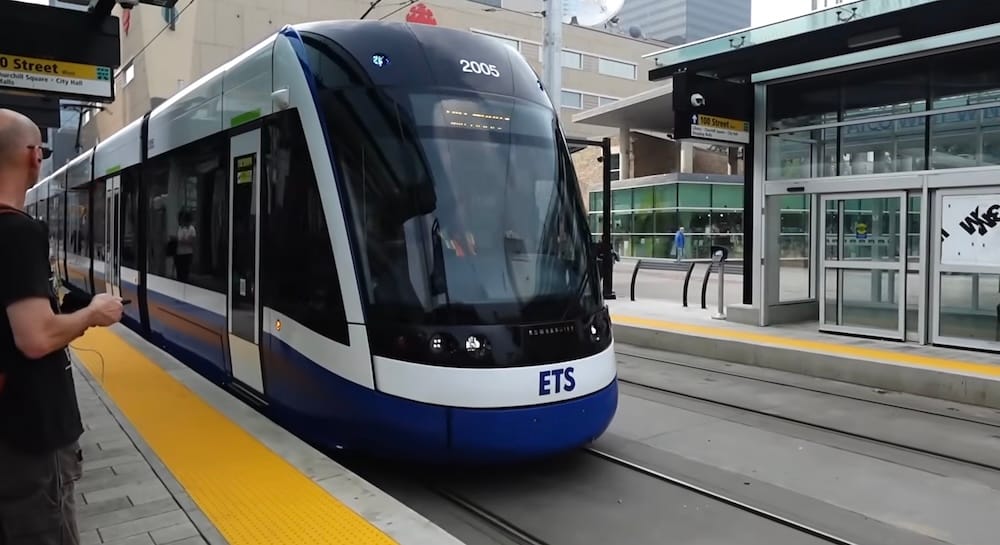
Edmonton Transit Service operates the city’s regular buses and three LRT lines: the Capital Line, Metro Line and Valley Line Southeast. Buses and trains use the same fare system, so you can transfer between them while your fare remains valid.
The 100 Street Funicular sits outside that normal network. It does not connect neighbourhoods or replace a train. It carries passengers through one section of the elevation change between downtown and the river-valley trail level.
| Mode | Best use | Main drawback |
|---|---|---|
| LRT | Moving along Edmonton’s central rail corridors | Does not reach every major attraction |
| High Level Bridge Streetcar | Combining downtown and Old Strathcona with a scenic heritage ride | Seasonal service with a short route and separate ticketing |
| Bus | Reaching destinations beyond the completed LRT network | More sensitive to schedules, transfers and traffic |
| 100 Street Funicular | Connecting downtown with the river-valley level | Serves one short vertical route |
The distinction matters because Edmonton has several rail-based experiences that look related but are not.
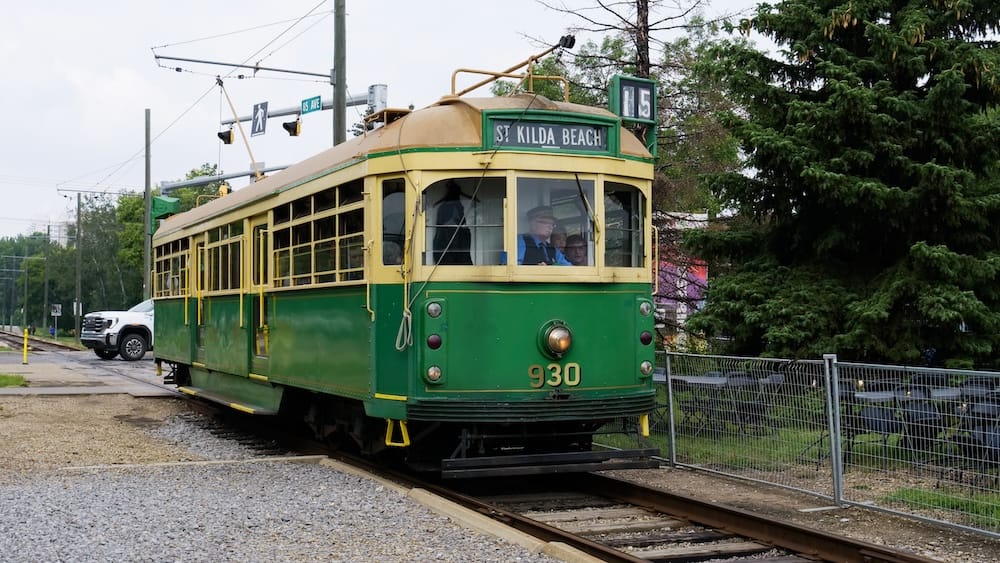
The High Level Bridge Streetcar, for example, is a seasonal heritage attraction. I loved riding it, but it is something you do for the experience and bridge views. It is not the everyday train you rely on to cross the city.
For normal sightseeing, I would start with the LRT. Add a bus when the destination requires it. Use the funicular when downtown and the river valley appear in the same part of your day.
Where you stay also changes how useful the system feels. A downtown base puts several attractions, LRT stations and the ICE District within the easiest part of the network, so transit-dependent visitors may want to compare downtown Edmonton hotels on Booking.com rather than choosing a room solely because it looks inexpensive on a citywide map.
Where Edmonton’s LRT Earns Its Keep
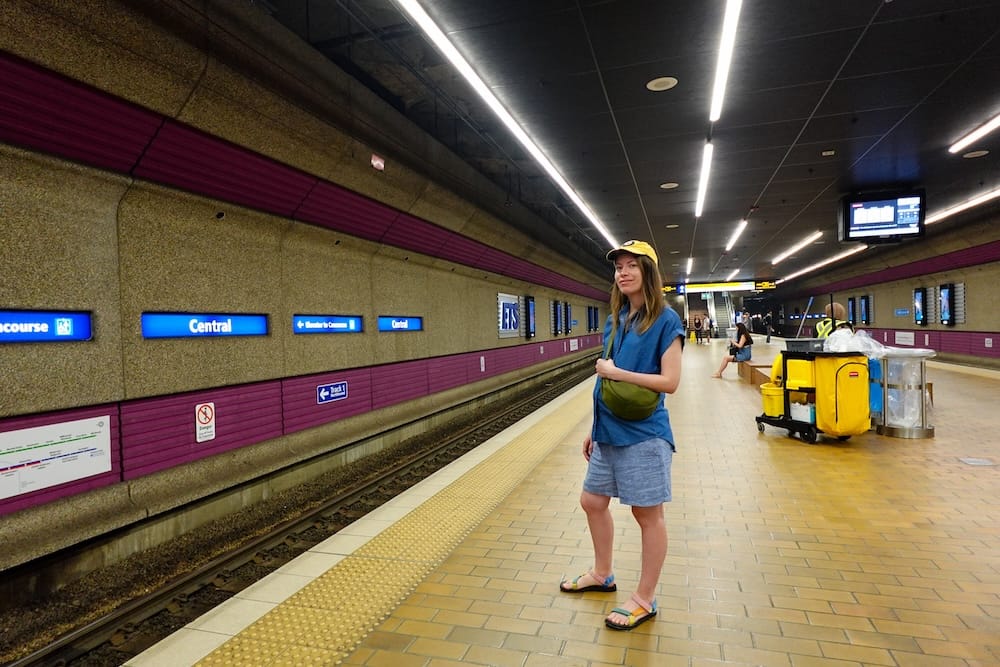
I called the LRT one of the best ways to get around Edmonton during our trip, and I still stand behind that—with a fairly large asterisk.
It is one of the best ways to get around the Edmonton that it serves.
Rail maps can create the impression that the network covers more of the city than it really does. Several important visitor areas are connected beautifully. Others still require a bus, a long walk or their own dedicated chunk of time.
The Three LRT Lines
The Capital Line runs between Clareview in northeast Edmonton and Century Park in the south. It passes through downtown and the University of Alberta area, making it useful for visitors staying centrally or crossing the river toward the university corridor.
The Metro Line shares part of the central network before continuing northwest toward NAIT and Blatchford.
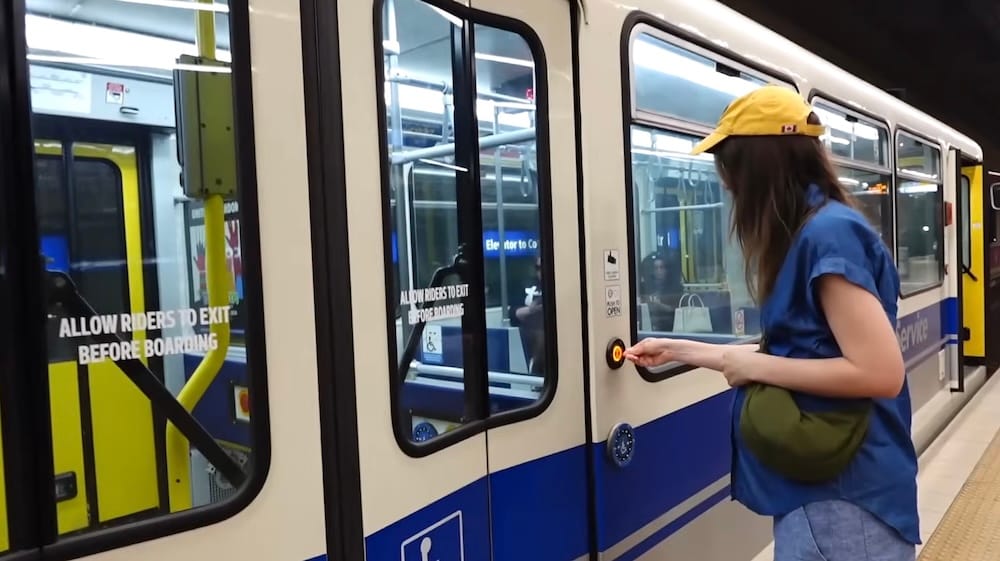
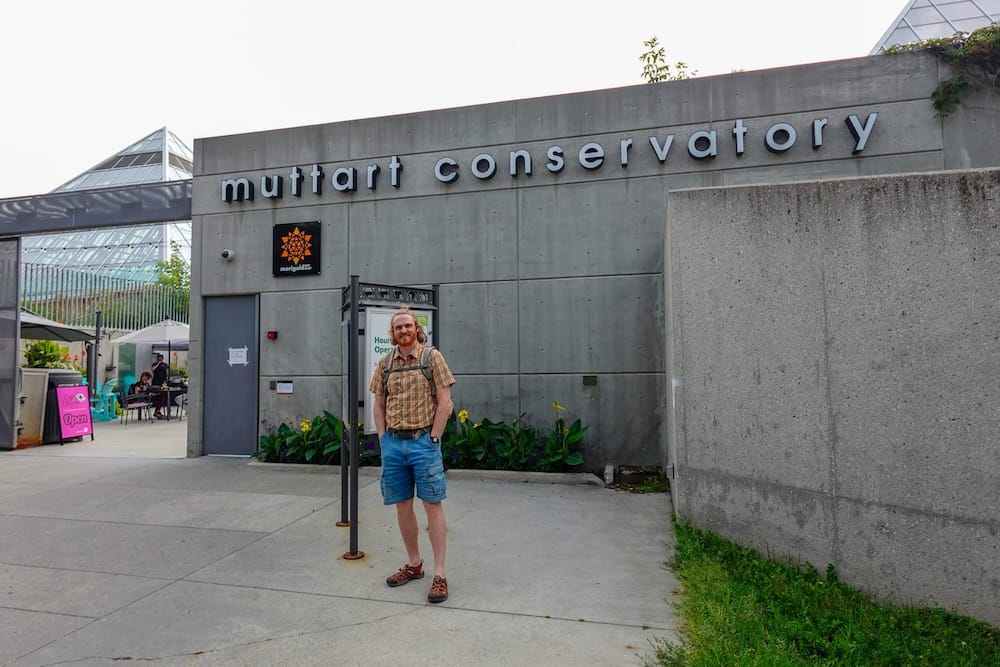
Valley Line Southeast runs between Mill Woods and 102 Street downtown. It operates at street level through much of its route and includes Muttart Stop near the Muttart Conservatory.
Audrey and I used the LRT to reach the Muttart during our visit. That journey showed me exactly where public transit can improve an Edmonton itinerary.
The conservatory does not look especially far from downtown. The river, roads and surrounding geography make the journey less obvious on foot than the map suggests. Rail turns it into a clean sightseeing connection instead of a debate about whether you have misunderstood the scale again.
Visitor Areas That Work Well by LRT
Churchill Station is useful for the Royal Alberta Museum and Edmonton’s civic centre.
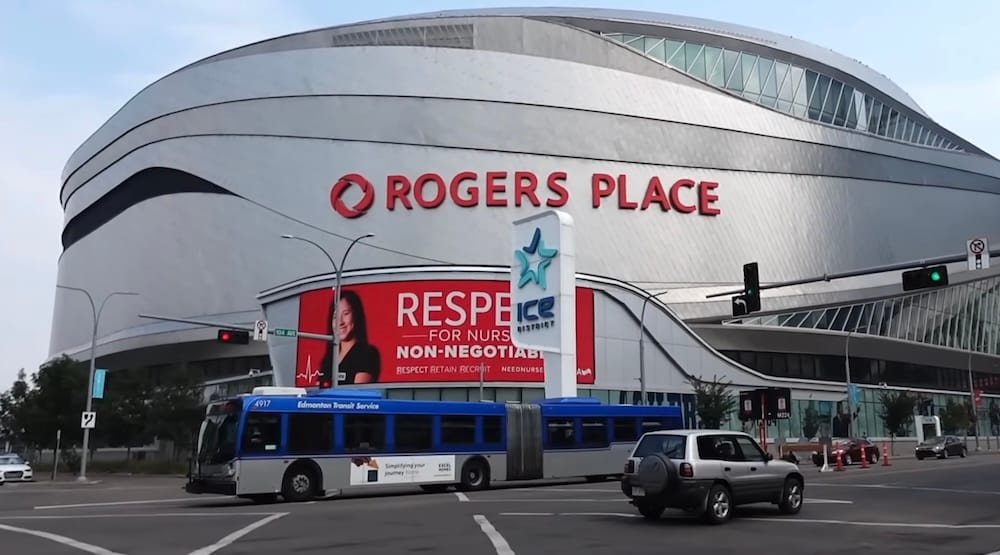
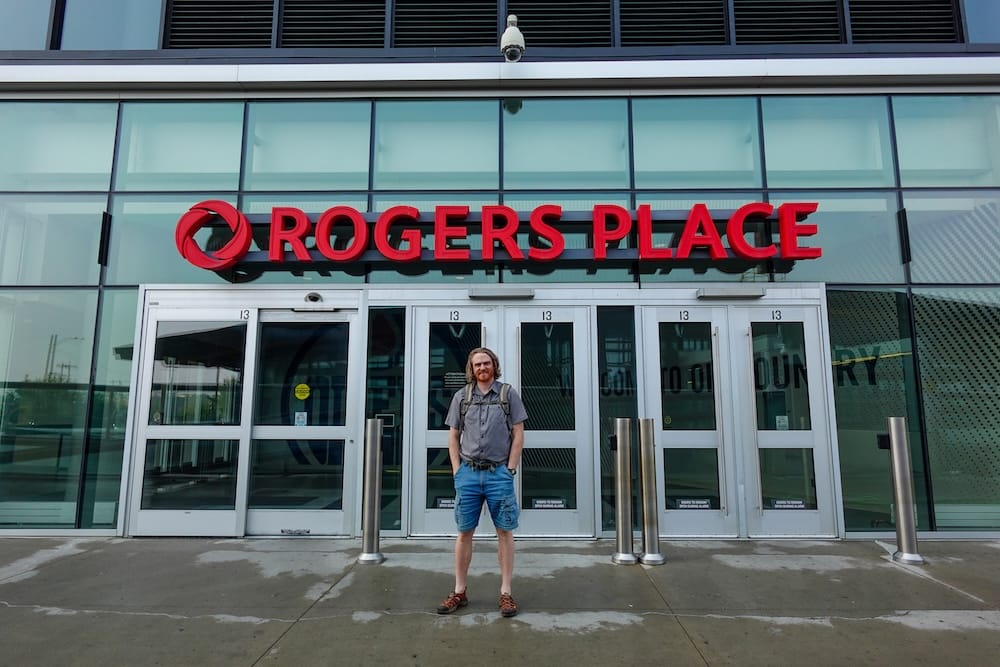
MacEwan Station is the closest LRT stop to Rogers Place, though Bay/Enterprise Square can also work for parts of downtown and may be helpful when arena crowds concentrate around the nearest station.
The central LRT corridor serves downtown hotels, the ICE District and several major city attractions. The Capital Line also makes the University of Alberta area much easier to reach from downtown.
You do not need to memorize the entire system. Most visitors need to understand the corridor connecting their accommodation with two or three planned stops.
That is where the LRT feels simple.
Where the Tracks Stop Helping
West Edmonton Mall is the big exception.
Valley Line West is under construction, but the mall is not currently connected to the operating LRT network. Until that extension is completed, tested and opened to passengers, visitors relying on public transportation need a bus.
The LRT also does not eliminate walking. You still need to reach the station, navigate the platform and walk from the arrival stop to the attraction. That may be pleasant in August and far less charming when Edmonton is doing its deep-winter Edmonton thing.
Service frequency changes by line, day and time. Parts of the weekday schedule can be frequent, while evenings and weekends may involve longer waits. I would not build a tightly timed day around the assumption that every train arrives every ten minutes.
The LRT is a strong central spine. It is not a magic carpet stretched across the entire city.
What About the High Level Bridge Streetcar?
The High Level Bridge Streetcar deserves a place in any serious Edmonton transportation guide, but it needs to be understood correctly.
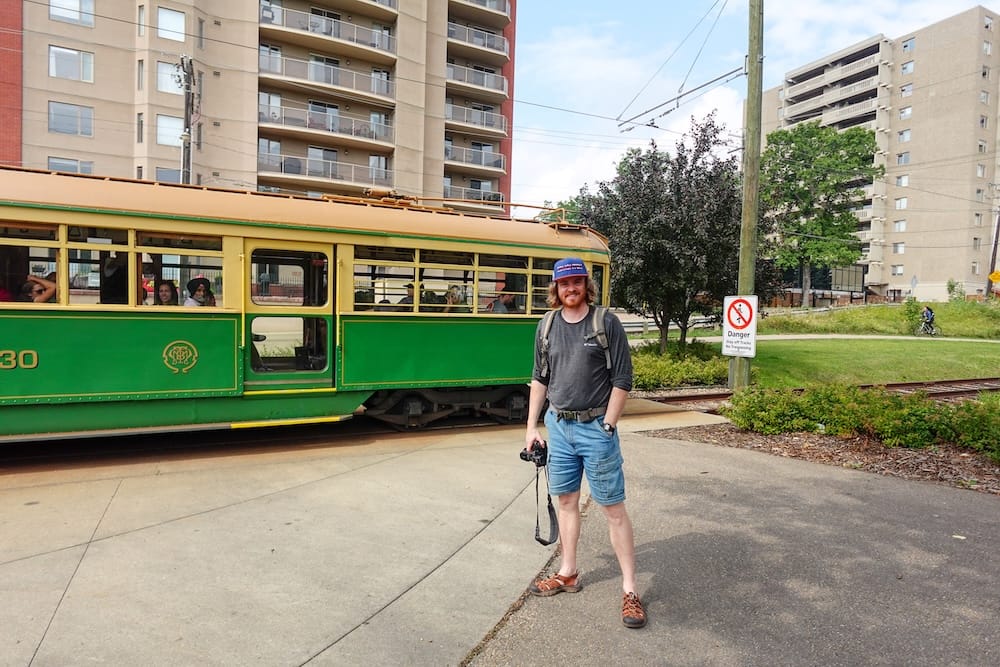
This is not another LRT line and it is not part of the everyday ETS network. It is a seasonal heritage ride built around the experience of crossing the High Level Bridge in a vintage streetcar. You board it because the journey itself is worth doing, not because it is the fastest way to reach an appointment.
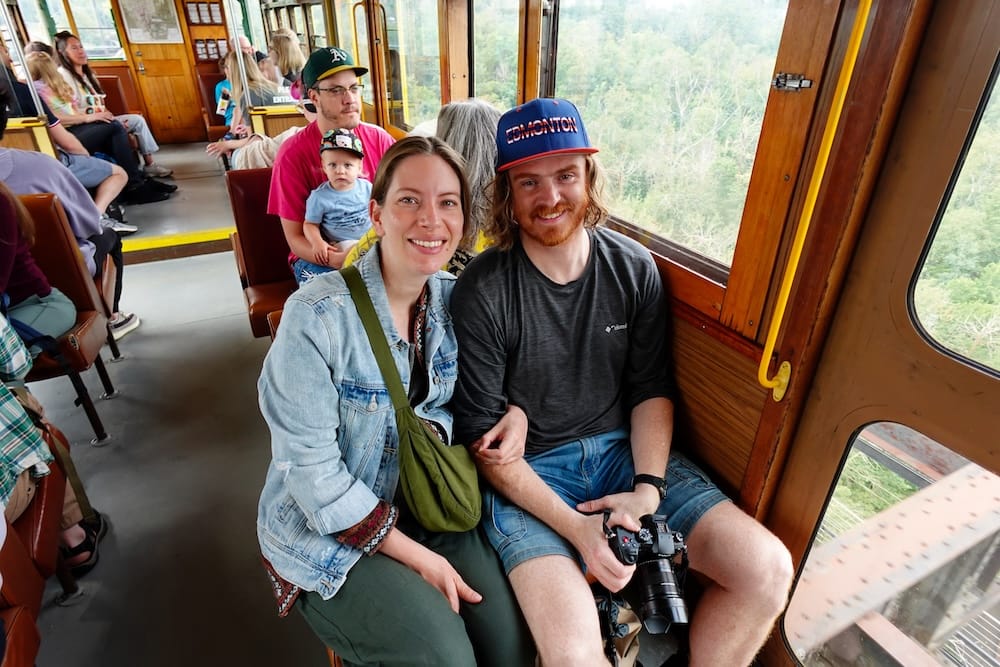
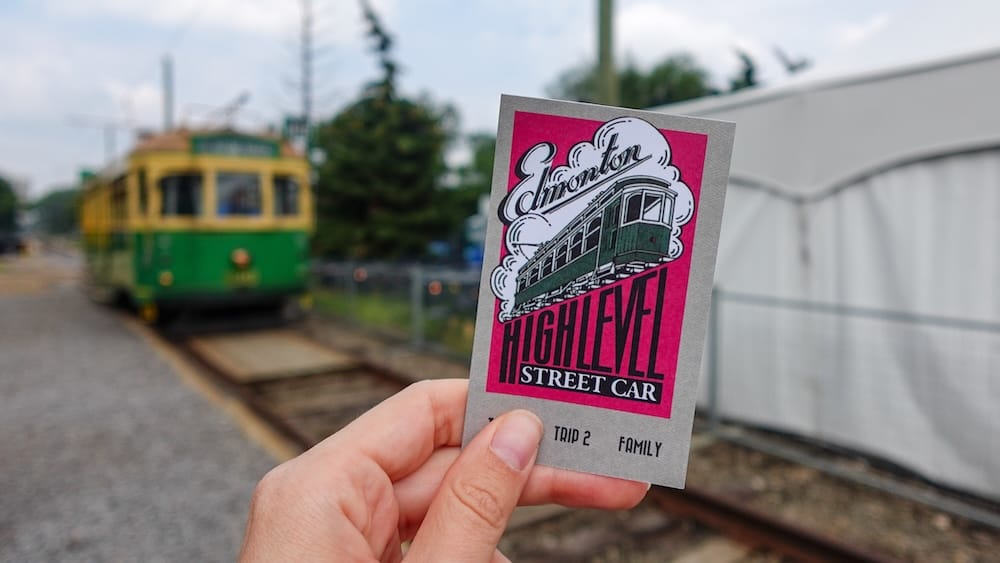
Audrey and I bought our streetcar tickets, climbed aboard the wood-panelled car and found seats beside the large windows. The interior immediately feels different from a modern train. There are wooden frames, old fittings, narrower seats and the general sense that you have stepped into a moving piece of Edmonton history.
Then the streetcar rolls onto the bridge.
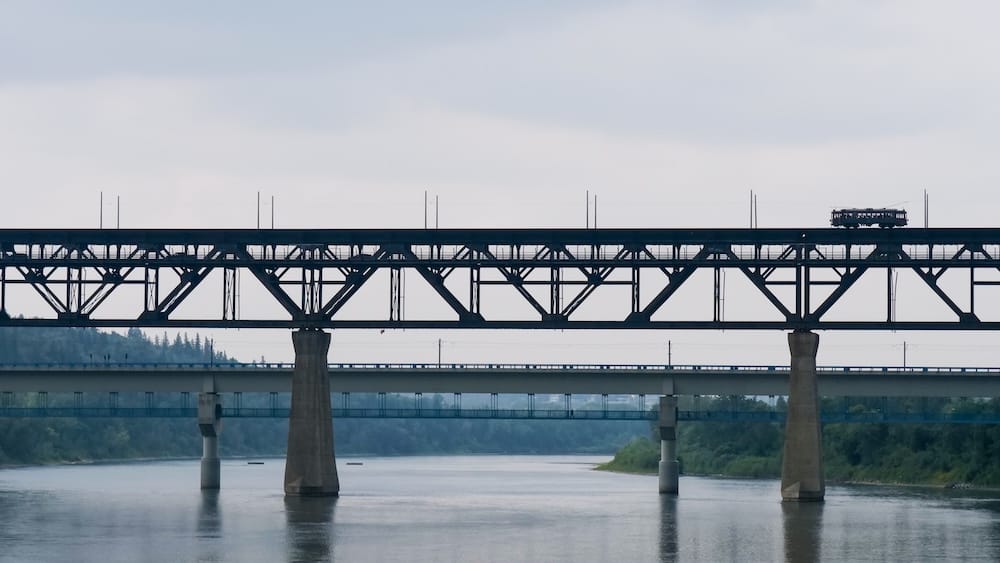
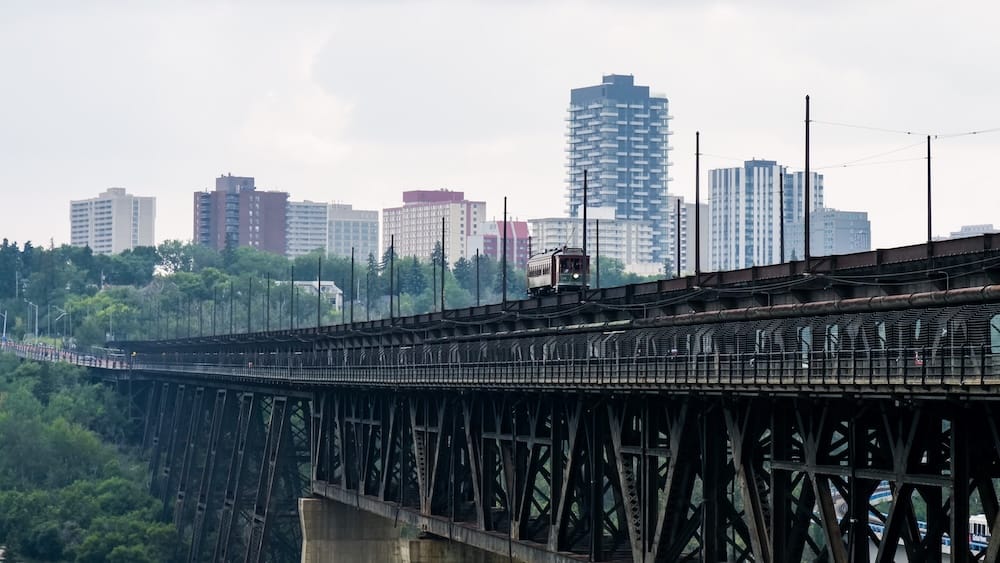
That is the moment the ride earns its place in the itinerary. The North Saskatchewan River valley opens below, the city skyline rises beyond the bridge and the streetcar moves across one of Edmonton’s most distinctive urban viewpoints. You are not merely being transported from one stop to another. The crossing is the attraction.
It can still have some practical value. The streetcar fits naturally into a sightseeing day involving downtown and Old Strathcona, especially when the journey across the bridge replaces another transfer and becomes part of what you wanted to experience anyway. That is a much better use of it than trying to treat the service as a flexible replacement for the LRT or buses.
The limitations are equally important. The streetcar operates seasonally, follows a short heritage route and needs to be planned around its own current schedule. It will not help with the Muttart Conservatory, West Edmonton Mall or most journeys across the wider city. Visitors should also check its current ticketing and operating information separately rather than assuming that ordinary ETS fare rules apply.
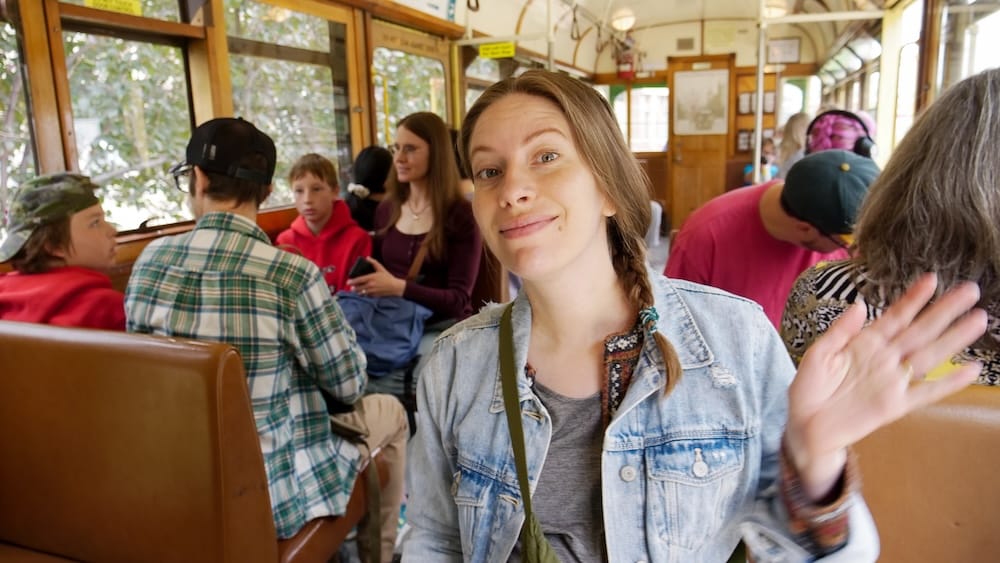
In other words, the High Level Bridge Streetcar sits somewhere between transportation and attraction. It genuinely moves you between parts of central Edmonton, but the slow pace, historic cars and bridge views are the reasons to choose it.
I would not build an Edmonton public-transit plan around the streetcar. I would build one good sightseeing sequence that includes it.
A sensible approach is to combine the ride with Old Strathcona, Whyte Avenue or another nearby stop, then return to the regular LRT and bus network for the rest of the city. That keeps the heritage experience special without asking it to perform a job it was never designed to do.
For the complete ride experience, practical planning and our full verdict, see my High Level Bridge Streetcar review.
Edmonton Buses: Useful, but Check the Route First
Buses make far more of Edmonton reachable. They also require more homework.
A rail line is fixed and visually easy to follow. Bus routes can change by direction, time of day, weekday, weekend or service update. The best bus to the same attraction may also depend entirely on where you start.
During our trip, Audrey and I planned to combine LRT journeys with a bus to the Alberta Aviation Museum. That was the point when our sightseeing day stopped being a simple train itinerary and became an actual transit plan.
Edmonton’s network has changed since then, so I would not recycle an old route number and pretend it is timeless advice. The museum now directs visitors to plan the current journey from their actual starting point, which is exactly what you should do.
Use the ETS Trip Planner on the day of travel. It is much more useful than an old screenshot or a beautifully written route description that expired three service changes ago.

West Edmonton Mall Is the Clearest Bus-Based Day
West Edmonton Mall remains the most obvious major attraction that requires a bus for visitors without a car.
Current downtown options include services such as the 900X and Route 7, but the precise route and departure should always be checked live.
More important than the route number is the role the mall plays in your day.
West Edmonton Mall is not a quick attraction. It is a small indoor civilization with shopping, restaurants, an amusement park, a waterpark, skating and enough corridors to make you question whether you have passed the same store three times.
Give it a proper block of time.
Trying to visit the Muttart in the morning, squeeze in West Edmonton Mall during the afternoon, return downtown and then attend an evening event is possible in the same sense that many poor decisions are technically possible.
The bus trip is more sensible when the mall anchors the day rather than interrupts it. If West Edmonton Mall is the main reason for the trip, staying nearby can remove the repeated cross-city journey altogether; travellers can compare hotels near West Edmonton Mall on Booking.com.
02:32 – Riding the LRT
15:18 – High Level Bridge Streetcar
21:38 – 100 Street Funicular
The Bus Fare May Be Cheap; the Time May Not Be
A bus and LRT ride can cost the same, but the practical cost is often different.
A bus journey may involve a longer wait, a transfer, a walk from the stop or reduced evening service. Miss a frequent central train and another may arrive reasonably soon. Miss the wrong peripheral bus and part of the afternoon can quietly disappear.
That does not make buses a bad option. It means bus-dependent attractions need breathing room.
Check live departures, service alerts and the return journey before leaving. A direct bus to one major destination can work beautifully. A day stitched together from several uncertain transfers is where Edmonton begins winning the argument.
Late-night Owl routes and On Demand Transit also operate in specific circumstances. On Demand Transit uses designated service areas and a separate booking process, so it should not be treated as a universal backup plan.
There is also a separate sightseeing option for visitors whose real goal is reaching a curated set of attractions rather than navigating ordinary ETS routes. The Edmonton Explorer hop-on hop-off sightseeing trolley is a bookable guided tour, not public transportation, but it can remove some route-planning friction for a first overview of the city. Check its current operating dates and stops before treating it as part of the itinerary.
The 100 Street Funicular Is More Useful Than It Looks
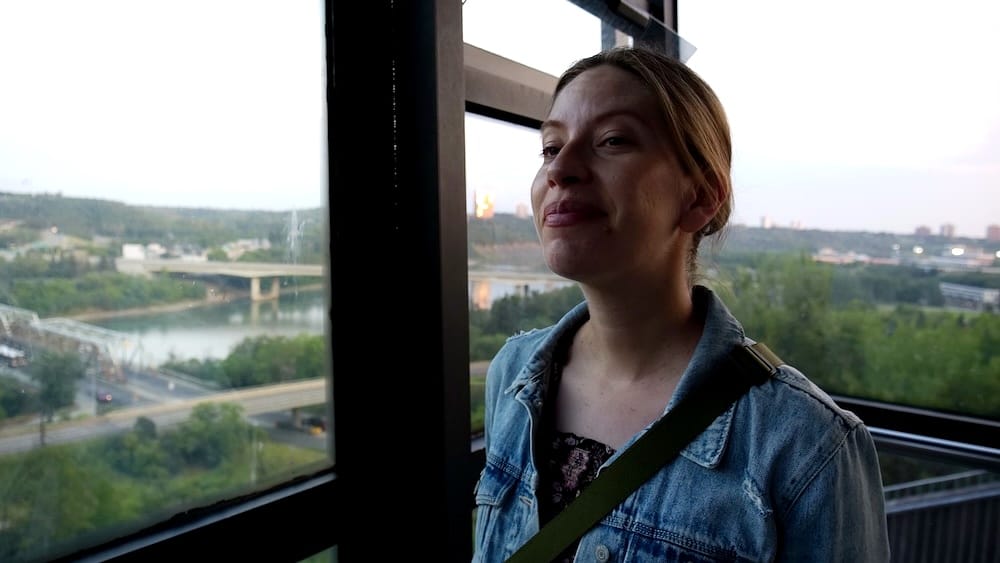
The 100 Street Funicular did not exist when I lived in Edmonton. When Audrey and I found it near the Fairmont Hotel Macdonald, I immediately approved of this particular municipal upgrade.
We stayed at the Fairmont Hotel Macdonald, which places the upper funicular entrance close at hand. The hotel is not necessary for using the funicular, but that location made it very easy for us to combine our stay with an evening river-valley walk.
Downtown sits high above the North Saskatchewan River valley. The trails and green space look close because they are close horizontally. Vertically, the relationship is less friendly.
The funicular removes much of that steep descent.
We had already been walking all over Edmonton, so the appeal was simple: save our legs on the hill and use them along the river instead.
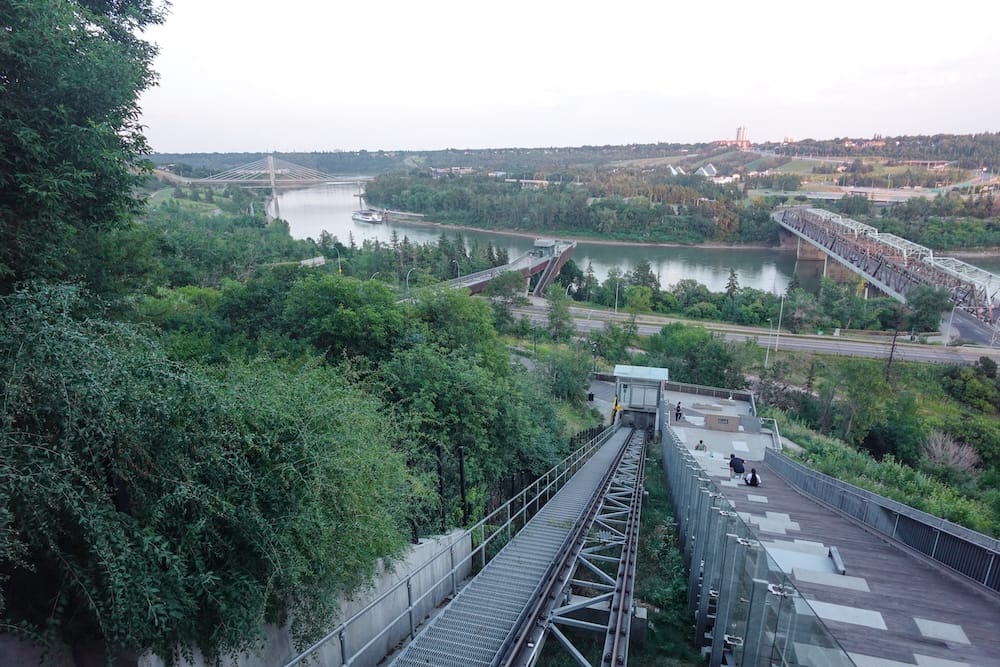
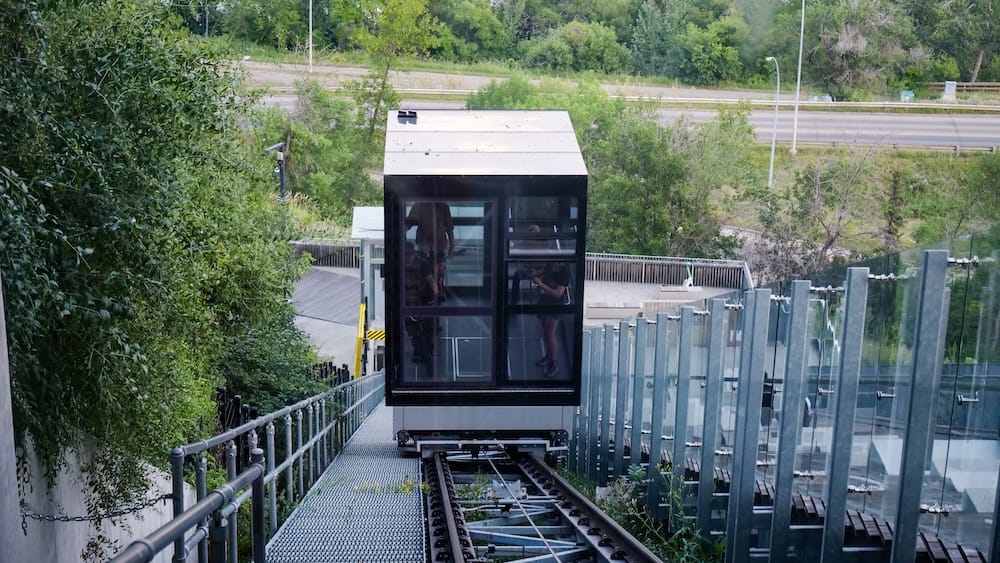
That is the funicular’s real value. It is not an amusement ride and does not need to become one. It is a glass elevator on an incline that happens to make a downtown-and-river-valley outing considerably easier.
Where It Takes You
The upper entrance is near 100 Street and the Fairmont Hotel Macdonald.
The cabin descends to a promenade and pedestrian bridge leading toward the Frederick G. Todd Lookout. From there, another elevator or a set of stairs continues to the lower trail connection.
The full route from the upper urban stairs to the lower trail landing is roughly 260 metres. You do not step out of the cabin directly beside the river. There is still a short walk, bridge crossing and second vertical connection.
It nevertheless removes the ugliest part of the climb.
Hours, Weather and Closures
The cabin and lower elevator currently operate from 7:00 a.m. to 9:00 p.m. The surrounding stairs, promenade, bridge and lookout remain accessible for longer hours.
Edmonton closes the mechanical system for the rest of the day when temperatures reach 30°C or above, or −30°C or below. Planned maintenance normally takes place on the second Wednesday of each month.
I appreciate a city facility with operating limits covering both “too frozen” and “too cooked.”
The cabin can accommodate wheelchairs, walkers, strollers and bicycles. Anyone depending on step-free access should still check the live funicular status before heading down. An accessible route is only an accessible route when its elevator is working.
The funicular belongs in this public-transportation guide because it changes the physical logic of a central sightseeing day. It does one job, but it does that job extremely well.
Best Public Transportation Option for Major Edmonton Attractions
The best way to use Edmonton public transportation is to match the attraction with the part of the network that serves it most naturally. A route existing on a map does not always mean it belongs in the same sightseeing day.
| Destination or area | Best starting option | Why it works | Main thing to watch |
|---|---|---|---|
| Downtown Edmonton and ICE District | LRT plus walking | Several central stations connect hotels, museums, restaurants and major venues | The closest station is not always the best one during event crowds |
| Rogers Place | LRT | MacEwan Station serves the arena area, with other downtown stations providing alternatives | Allow extra time before and after major games or concerts |
| Royal Alberta Museum | LRT to Churchill Station | The museum fits naturally into a central Edmonton sightseeing day | Check the final walk and live service before a timed visit |
| Muttart Conservatory | Valley Line Southeast | Muttart Stop makes the conservatory one of Edmonton’s clearest attraction-to-LRT connections | Do not assume other river-valley attractions are equally close to the same stop |
| University of Alberta area | Capital Line | The line connects downtown with the university corridor across the river | The final walking distance depends on the exact campus destination |
| Old Strathcona and Whyte Avenue | High Level Bridge Streetcar for the experience; ETS for ordinary transport | The streetcar turns the bridge crossing into part of the sightseeing day | It is seasonal, follows a short route and uses separate ticketing |
| West Edmonton Mall | ETS bus | Current bus services connect the mall with downtown and other parts of Edmonton | The mall is not yet served by an operating LRT line, so check the live route and return schedule |
| Alberta Aviation Museum | Plan the current ETS journey from your starting point | The best combination may involve LRT, bus or both depending on where you begin | Do not rely on an old route number because the surrounding network has changed |
| 100 Street Funicular and river valley | Walking or central LRT connection followed by the funicular | The funicular removes much of the steep elevation change below downtown | Check cabin and elevator status when step-free access is essential |
Edmonton Transit Fares Without the Headache
Edmonton’s fare system has changed since our visit. We paid a different price and had a slightly longer transfer window, so use the current figures rather than treating our old tickets as museum pieces.
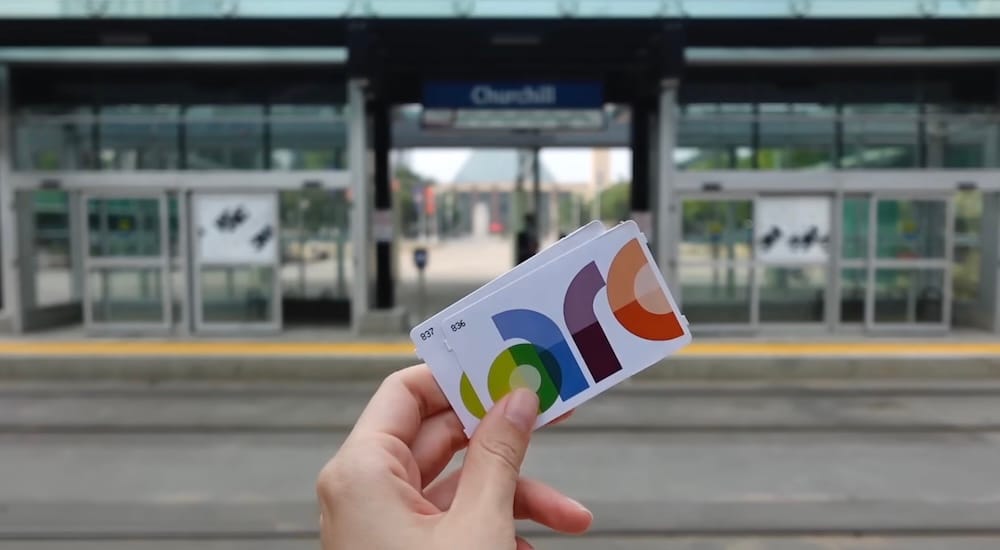
As of August 2026, an adult pay-as-you-go fare using Arc or a supported contactless bank card costs $3. The fare provides 90 minutes of travel on regular ETS buses and LRT.
Cash or an Arc ticket costs $3.75.
During those 90 minutes, you can transfer between buses and trains and travel back in the opposite direction. The important number is not how many vehicles you board. It is how many separate paid fare windows your itinerary creates.
That difference matters more than it first appears.
Paying With a Bank Card
Visitors can tap a supported physical or digital credit or debit card without opening an Arc account.
Use the same payment method throughout the day. Your physical card and the same card loaded into a phone wallet may be recognized as different credentials, which can interfere with fare capping.
Each traveller older than 12 needs a separate payment method. Audrey and I could not simply pass one card back and forth and hope the machine appreciated our financial efficiency.
Cash is accepted on buses, but you need exact change and should request a paper transfer. LRT stations use vending machines for cash and ticket purchases.
Prices and products can change, so check the current ETS fare information before travelling.
The Daily Fare Cap
Arc pay-as-you-go and contactless bank-card users currently have a daily cap of $10.50.
Once the same payment credential reaches that amount, additional eligible ETS rides during the rest of that calendar day are not charged.
At the current $3 fare, the rough progression is:
- one separate fare window: $3;
- two: $6;
- three: $9;
- four: the daily cap becomes relevant.
Three vehicle boardings do not necessarily mean three fare windows. You might take a bus, transfer to the LRT and board another bus while still inside the same 90 minutes.
Count time windows, not doors entered.
Daily Cap Versus 24-Hour Ticket
This is the fare distinction most visitors are likely to miss.
The daily cap follows the calendar day. It resets at midnight.
A separate 24-hour Arc ticket also costs $10.50, but it remains valid for 24 hours from first activation.
That second product matches the strategy Audrey and I used during our busiest sightseeing day. We started late in the morning, used transit repeatedly and hoped to continue using the pass the following morning.
With a 24-hour ticket activated at 11:00 a.m., the useful period continues until 11:00 a.m. the next day. A bank-card daily cap ends at midnight, even if your first journey began much later.
For one heavy calendar day, tapping and letting the daily cap protect you may be easiest. For a late start followed by more travel the next morning, the 24-hour ticket can make more sense.
Three- and Five-Day Passes
Edmonton currently offers a three-day pass for $24 and a five-day pass for $30. These run for consecutive days after activation.
They work best when transit will be used repeatedly across several days. A visitor staying downtown and walking most of the time may spend less with individual fares.
Unlimited travel feels satisfying, but it is only a bargain when you actually travel.
A Quick Mode and Ticket Decision Table
| Your plan | Best starting choice | Check before leaving |
|---|---|---|
| One central return trip | Pay-as-you-go LRT or bus fare | Whether the journeys fit inside one or two 90-minute windows |
| Several central stops in one day | LRT with Arc or bank-card tapping | Whether the $10.50 daily cap becomes relevant |
| Late start plus more travel next morning | 24-hour ticket | Exact activation time |
| West Edmonton Mall from downtown | Direct bus where available | Live route, return time and total journey |
| Downtown plus river-valley walking | Walking or LRT plus funicular | Funicular and elevator status |
| Transit-heavy multi-day visit | Three- or five-day pass | Purchase location and expected daily use |
Two Ways to Build a Transit Day That Makes Sense
Public transportation works best in Edmonton when the attractions cooperate geographically.
Downtown, the Muttart and the River Valley
A sensible central day can combine a Valley Line journey to Muttart Stop with downtown attractions and a later descent into the river valley using the funicular.
The LRT handles the cross-river movement. Walking connects the central stops. The funicular removes the steepest part of the drop into the valley.
This is the kind of itinerary where Edmonton transit feels genuinely useful rather than merely available.
Your final fare count depends on how long you stay at each attraction. A museum visit or long lunch may push the return journey outside the original 90-minute window. That is why I would never choose a pass simply by counting planned train rides.
The funicular’s status matters too. If it is closed and stairs are not a problem, the route still works with more effort. If someone requires step-free access, the closure changes the entire plan.
West Edmonton Mall Needs Its Own Block of Time
A West Edmonton Mall day follows different logic.
Check the current bus from your accommodation, note the return options and allow the mall to become the main event. Do not treat it like a minor stop attached to a central sightseeing circuit.
The mall is far enough from downtown and large enough inside that aggressive scheduling works against you. A straightforward bus journey can still be entirely reasonable. The mistake is pretending the geography disappeared because a route exists.
Accessibility, Strollers and Winter Reality
ETS buses include low-floor access, ramps, kneeling capability and priority areas. LRT vehicles and stations provide accessible entrances, elevators, escalators, tactile features and visual or audible information.
Those features matter, but live conditions matter just as much.
Elevators and escalators occasionally go out of service. Travellers relying on a step-free connection should check the current ETS elevator and escalator status before leaving.
Strollers are allowed, with designated shared spaces on buses and accessible areas on LRT vehicles. Crowded periods can reduce available room.
Our Edmonton trip was a babymoon before Aurelia was born, so I cannot pretend we tested the system with a baby or toddler. Parents should leave extra time, reduce unnecessary transfers and avoid the busiest periods where possible.
Winter adds its own rules. In extreme cold around −20°C including wind chill, bus kneeling may be suspended to reduce the risk of the equipment freezing. The funicular also has its −30°C closure threshold.
A five-minute outdoor wait in Edmonton is not a fixed physical experience. January and August have very different opinions about it.
Is Edmonton Public Transportation Good for Visitors?
Yes—when your accommodation and attractions line up with the network.
It works particularly well for central Edmonton, the ICE District, the Royal Alberta Museum, the Muttart Conservatory, the University of Alberta area and visitors comfortable combining trains with walking.
Buses make places such as West Edmonton Mall reachable, but those journeys need more time and more attention to the live schedule. The funicular is excellent when downtown and the river valley share the same day, provided it is operating.
I would use Edmonton public transportation again without hesitation. I would also plan more ruthlessly than someone staring at a map and assuming every attraction belongs in one heroic loop.
Group the central stops around the LRT. Give a major bus-based destination its own time. Check live departures. Use the funicular to avoid wasting energy on the hill.
Edmonton transit will not make the city small. It can, however, make a well-built itinerary feel remarkably manageable.
Frequently Asked Questions
Is Edmonton public transportation good for visitors?
Yes—when your accommodation and attractions line up with the network. The LRT works especially well for central Edmonton, while buses extend the system to places such as West Edmonton Mall and the funicular helps connect downtown with the river valley.
What services are part of Edmonton Transit Service?
ETS operates Edmonton’s regular buses and three LRT lines: the Capital Line, Metro Line and Valley Line Southeast. The High Level Bridge Streetcar and 100 Street Funicular are separate visitor transport experiences rather than ordinary ETS services.
Can you reach West Edmonton Mall by LRT?
Not yet. Valley Line West is under construction, so visitors currently need a bus to reach West Edmonton Mall by public transportation. Check the live ETS Trip Planner because the best route depends on where you start.
Is the High Level Bridge Streetcar part of ETS?
No. It is a seasonal heritage ride with its own schedule and ticketing, not an everyday ETS route. It works best as a sightseeing connection between central Edmonton and Old Strathcona rather than as the backbone of a transit itinerary.
What does the 100 Street Funicular connect?
The funicular links downtown near 100 Street and the Fairmont Hotel Macdonald with the lower river-valley trail level. The full connection also includes a promenade, pedestrian bridge and a second elevator or set of stairs.
How long is an Edmonton bus or LRT fare valid?
As of August 2026, an adult pay-as-you-go fare provides 90 minutes of travel on regular ETS buses and LRT. Transfers between buses and trains are included while that fare window remains valid.
What is the difference between Edmonton’s daily fare cap and 24-hour ticket?
The daily fare cap follows the calendar day and resets at midnight. The separate 24-hour Arc ticket runs for 24 hours from first activation, which can be more useful when travel begins late in the morning and continues the next day.
Is Edmonton transit suitable for strollers and mobility devices?
ETS buses and LRT include accessibility features, and strollers are allowed in designated shared spaces. Live elevator, escalator and funicular status still matters, especially when a trip depends on a step-free connection.
This guide is also available in Spanish. [Leé la versión en castellano: Cómo moverse por Edmonton (guía de transporte público): LRT y colectivos de ETS, tranvía y funicular]
This article contains affiliate links. If you book through one of these links, I may earn a commission at no extra cost to you.