
The day Audrey and I visited Old Strathcona, our plan lasted about five minutes.
We had crossed the North Saskatchewan River aboard the High Level Bridge Streetcar, stepped off near the farmers’ market and intended to find something to eat. Then Edmonton Fringe got in the way. Performers were working the outdoor stages, show posters seemed to cover every available surface and the whole area had that slightly chaotic festival energy where following a sensible itinerary begins to feel almost antisocial.
For a while, we forgot about food entirely. This does not happen often.
Our timing was unusually lucky. We had landed in Old Strathcona on a summer Saturday when the market and Fringe were both active. It was the district at full volume, not an average afternoon.
Still, the visit confirmed something I had felt when I lived and studied in Edmonton years earlier: Whyte Avenue and Old Strathcona reveal a side of the city that downtown alone does not.
Audrey put it more clearly at the end of our trip. Visiting Whyte Avenue changed her perception of Edmonton.
That is why I would not treat Old Strathcona as a street to walk once or an attraction to tick off. It works best as a neighbourhood outing built around one strong anchor—a meal, the farmers’ market, a performance, a historical walk or the streetcar—with enough empty space for shops, old buildings and street life to pull you off course.
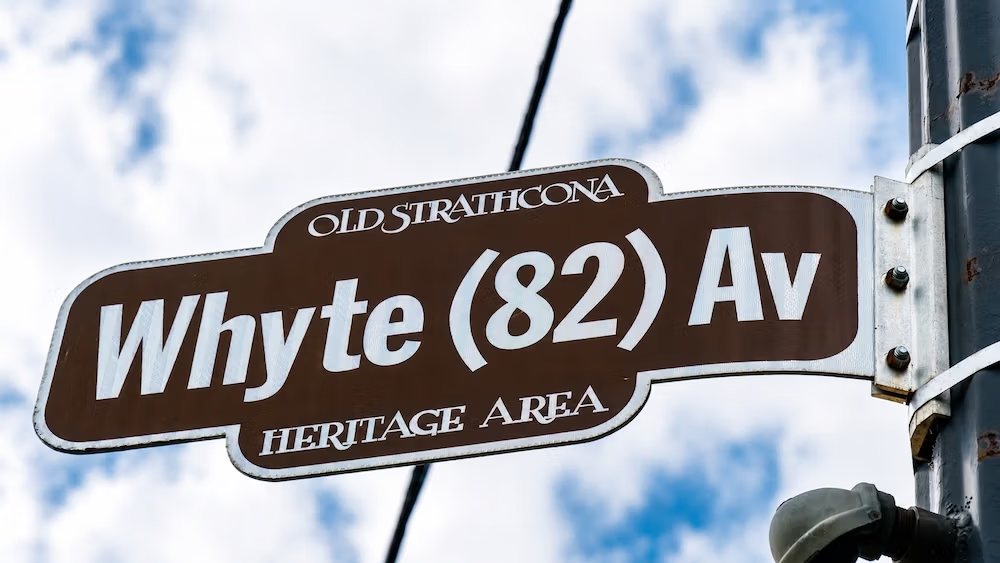
Old Strathcona and Whyte Avenue are not quite the same thing
Whyte Avenue and Old Strathcona are often used as interchangeable names. That is understandable, but it can make the area sound smaller and more straightforward than it really is.
Whyte Avenue is the main commercial corridor. It is where many of the restaurants, cafés, shops, bars and evening venues are concentrated. Old Strathcona is the wider historical and cultural district surrounding it, including the farmers’ market, theatres, railway buildings and side streets that give the neighbourhood more depth than one long avenue.
The formally protected Old Strathcona Provincial Historic Area is narrower again, covering roughly five blocks.
You do not need to memorize the boundaries. Think of Whyte Avenue as the spine of the outing and Old Strathcona as everything that makes the spine worth following.
If you stay directly on Whyte, you can eat well, browse shops and absorb the commercial energy. Move a few blocks away and you begin encountering the market, performance venues and pieces of the former City of Strathcona.
Audrey and I naturally combined both. We arrived near the market, wandered through the Fringe activity, walked Whyte Avenue, browsed independent shops and eventually ate at DaDeO, one of my old university favourites.
That sequence worked because Old Strathcona is strongest when its food, history and culture overlap. Breaking it into isolated attractions rather misses the point.
Travellers who already know this neighbourhood will be the centre of their Edmonton stay can compare current hotels around Whyte Avenue on Booking.com. Staying nearby makes it far easier to combine daytime shopping or the market with dinner and a performance without repeatedly crossing the city.
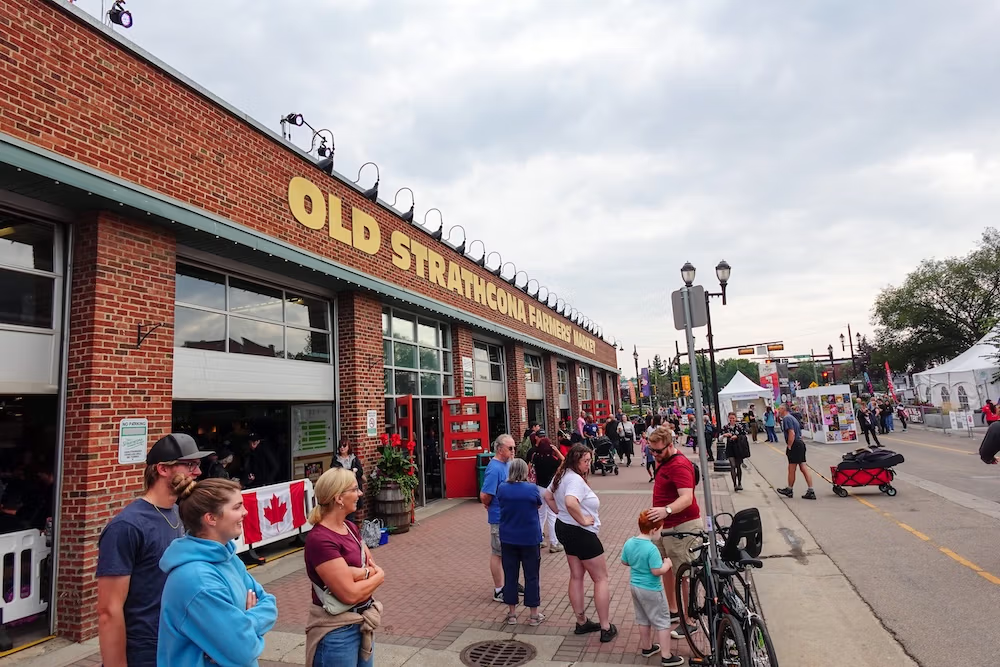
Why this neighbourhood matters on an Edmonton trip
When Audrey asked what Whyte Avenue meant to me as a former local, I called it Edmonton’s cultural lifeblood.
That was not a polished line I had been saving for the camera. It came out because Whyte Avenue reminded me so strongly of my university years. This was where I associated Edmonton with restaurants, nightlife, record shops, odd little stores, festivals and people actually spending time on the street.
I also told her that visitors who remain downtown for their whole stay miss a crucial part of the city.
Downtown Edmonton has major attractions and deserves time. The Royal Alberta Museum is there. Rogers Place and the ICE District are there. The Legislature and river valley are easily reached from the centre.
But downtown can feel like a series of destinations separated by large roads, office buildings and stretches that become quiet outside working hours.
Old Strathcona operates on a smaller scale. Restaurants sit beside old commercial blocks. Posters spill out from theatre venues. Independent shops interrupt the predictable retail mix. Patios, cafés and performance spaces make stopping feel as important as moving.
No single place was responsible for changing Audrey’s opinion of Edmonton. The neighbourhood did it cumulatively.
That is worth remembering if you arrive on a quieter day. Old Strathcona does not have one monumental attraction carrying the entire experience. You need to enjoy walking between places, noticing the buildings and letting a shop, meal or event become the reason you stay longer.
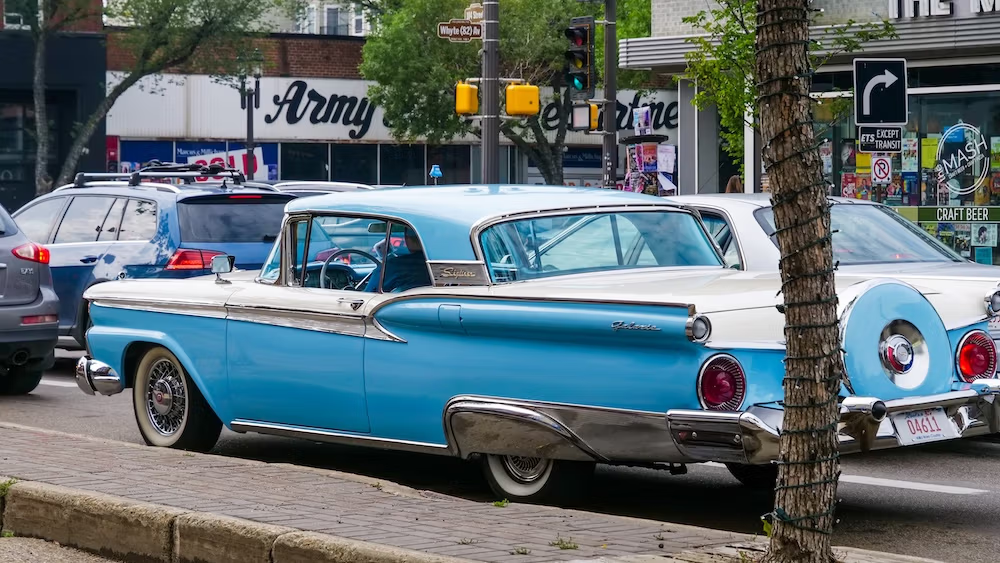
The former railway city beneath the restaurants and posters
Old Strathcona is more than an entertainment district decorated with a few attractive old buildings. It preserves part of a city that once developed separately from Edmonton.
The Calgary and Edmonton Railway reached the south side of the North Saskatchewan River in 1891. A settlement grew around the railway terminus, and South Edmonton became the Town of Strathcona in 1899.
Strathcona was incorporated as a city in 1907 and amalgamated with Edmonton in 1912.
That history explains why Old Strathcona still feels like a distinct urban centre instead of a random commercial strip. Whyte Avenue and the surrounding streets developed around transportation, hotels, banks, shops and public buildings serving an independent municipality.
It also explains the brick.
15:18 – High Level Bridge Streetcar
16:58 – Old Strathcona Farmers’ Market
17:17 – Fringe Festival
17:53 – Whyte Avenue
A 1902 bylaw required new commercial buildings to use fire-resistant materials rather than wood. Many of the surviving structures date from the period between the railway’s arrival and amalgamation with Edmonton.
You do not need to identify every cornice and date plaque to appreciate the result. The useful historical landmarks include the old Canadian Pacific Railway station, the South Side Post Office, former hotels and commercial blocks, and old fire halls that later found new lives as cultural venues.
This is the part I find most interesting. The history has not been sealed behind glass. Restaurants, shops and theatres continue operating among the buildings, so the district feels lived in rather than preserved as an outdoor museum.
Visitors who want the complete historical treatment can follow Edmonton’s self-guided Strathcona historical walking tour. The full route takes around two and a half hours, which is a serious portion of a day.
For a general first visit, I would borrow selectively from it. Learn enough to recognize three or four important buildings, then leave time for the neighbourhood as it functions now.
Travellers who would rather cover several Edmonton districts with a guide can also check the current Edmonton city bike tour on GetYourGuide. Its listed route includes Old Strathcona, the University of Alberta and the river valley, making it a broader city overview rather than a substitute for exploring Whyte Avenue slowly on foot.
Food should anchor the visit, not consume it
Food is one of the main reasons I think visitors should cross over from downtown to Whyte Avenue.
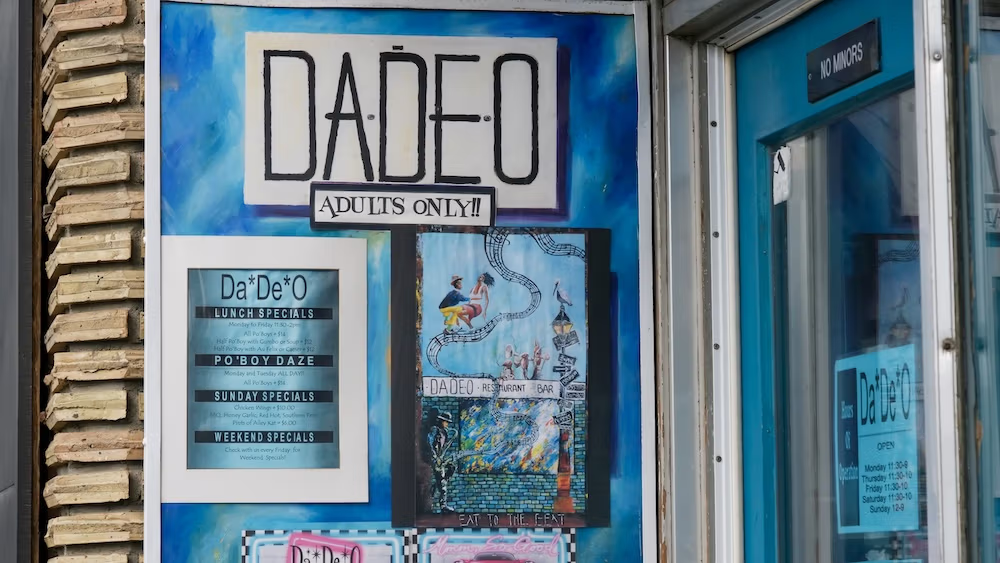
When I lived in Edmonton, I worked at a Safeway near DaDeO, a Cajun and Creole restaurant that became part of my student routine. I ate there regularly, sometimes a few times a month.
Returning years later was therefore a dangerous experiment. Old restaurant memories have a habit of improving while the actual food remains frozen in time.
DaDeO survived.

Returning to DaDeO after my student years
I ordered a steak-and-cheese po’boy with sweet potato fries and a flavoured Coke, which was essentially me trying to reconstruct my younger Edmonton self through carbohydrates.
The fries were still the thing I attacked most enthusiastically. Sweet, salty and crisp, they are exactly the kind of side dish that makes ordering one plate “for the table” a naive arrangement.
The po’boy was heavy on melted cheese and firmly in comfort-food territory.
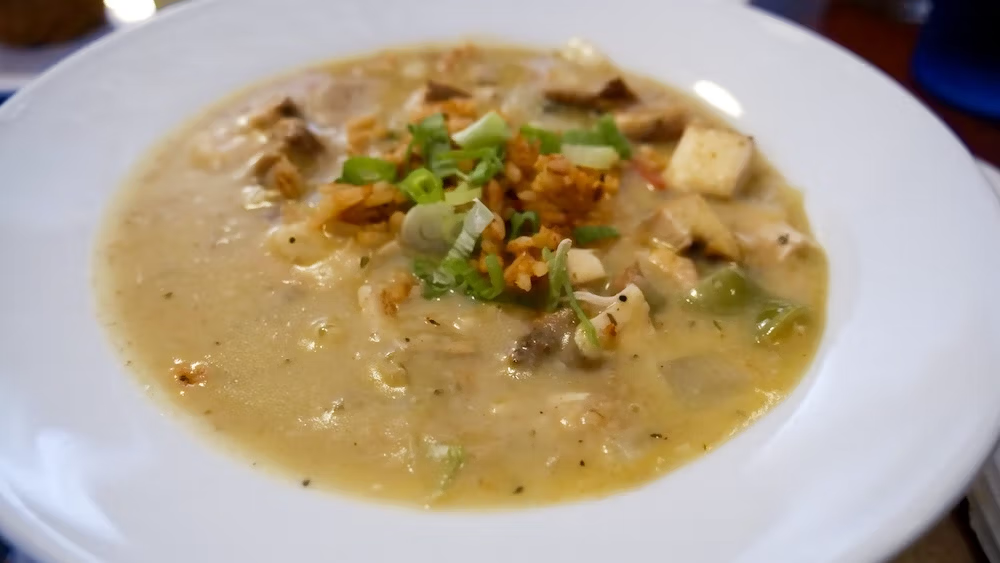
Audrey ordered gumbo with sausage, shrimp, chicken and rice. It came with hot cornbread, butter and jalapeño jam. She liked the richness of the gumbo and the slight sweetness of the bread.
It was a good meal, but the real force of the experience came from familiarity. The room, the food and the ritual of ordering a flavoured Coke pulled me straight back to my university years.
Of everything I did on that Edmonton return, DaDeO was probably the most concentrated hit of nostalgia.
The restaurant is still operating on Whyte Avenue, though menus and hours can change. Check the current DaDeO menu and opening schedule before building your visit around a particular dish.
Match the meal to the day you are planning
DaDeO is the restaurant I can speak about personally, but the larger lesson is not that every visitor must eat there.
Choose the kind of meal that fits your main reason for visiting Old Strathcona.
A market weekend can support casual eating and food shopping during the day. An afternoon focused on shops and historical buildings may call for a café or dessert stop rather than a long lunch. An evening built around theatre or live music works better with a proper dinner scheduled around the performance.
Block 1912 is one current option for coffee and dessert on Whyte Avenue. MEAT offers a more substantial barbecue meal. We did not eat at either during this visit, so I would treat them as examples of different meal formats rather than personal endorsements.
The mistake is trying to turn Old Strathcona into a restaurant crawl while also visiting the market, shopping, studying the architecture and attending a performance.
Pick one serious meal. Allow the rest to happen if hunger and timing permit.
Independent shops give Whyte Avenue some friction
Whyte Avenue would lose much of its character if every storefront behaved like a shopping mall.
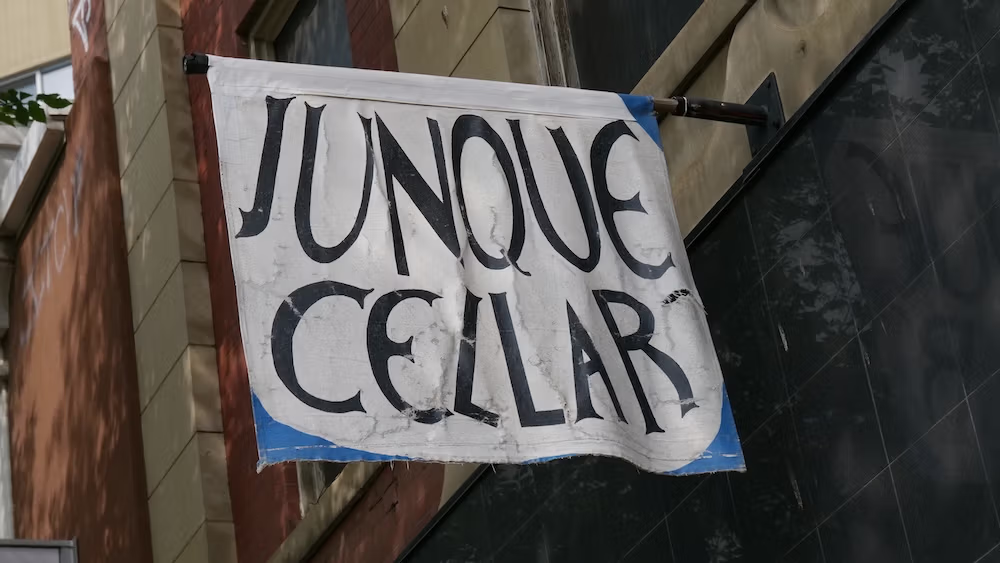
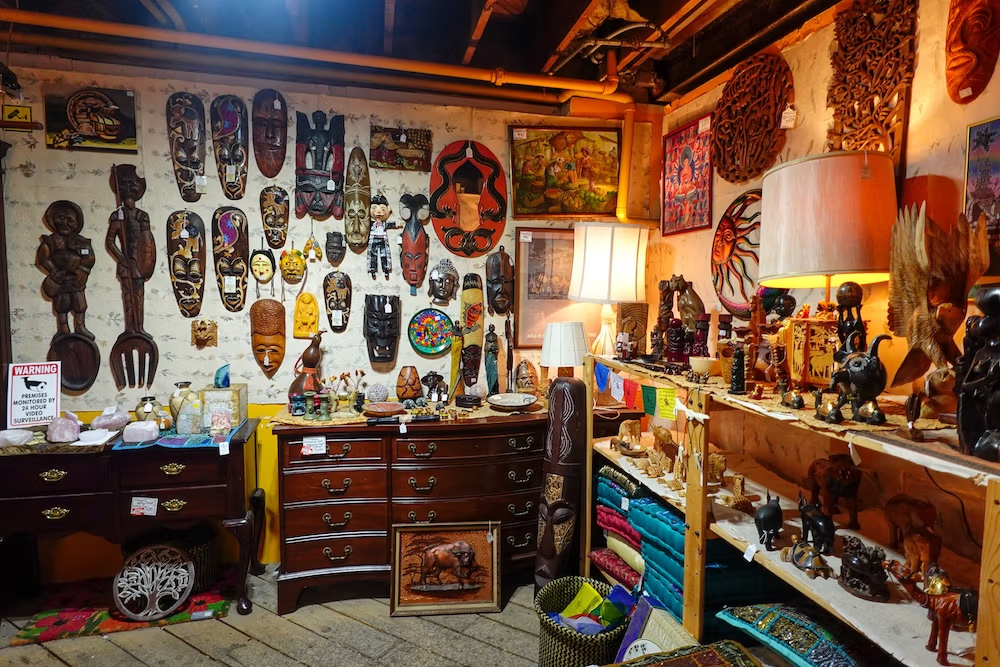
Audrey and I browsed Junque Cellar and Blackbyrd Myoozik during our walk.
Junque Cellar is a basement filled with antiques, jewellery, vintage décor, collectibles and imported objects. It is the sort of shop where the entertainment comes from not knowing what will be around the next corner—or why you suddenly feel emotionally attached to an item that would be difficult to explain at airport security.
Blackbyrd Myoozik has been part of Edmonton’s music community since the early 1990s. It sells vinyl and CDs, but long-running record shops tend to offer something less measurable as well. They hold pieces of a city’s musical memory and give local scenes a physical gathering point.
We browsed rather than staging a major retail expedition. These two shops are useful because they show what I mean when I call Whyte Avenue quirky. The character comes from businesses that do not feel as though they were selected by the same leasing algorithm.
Independent shops also create a timing issue.
If browsing matters to you, come during the afternoon. An evening visit may deliver restaurants, bars, cinema and live performance after many shops have closed.
This is one of the recurring Old Strathcona trade-offs: the neighbourhood offers a lot, but not every element peaks at the same time.
Culture here does not begin and end with Fringe
Edmonton Fringe is the biggest and most visible expression of Old Strathcona’s cultural identity, but the neighbourhood does not spend the other eleven months waiting for August.
The Fringe Theatre Arts Barns host performances throughout the year. Varscona Theatre and Walterdale Theatre connect present-day performance with the district’s older buildings. Yardbird Suite brings live jazz into the mix, while Metro Cinema presents independent and community-driven film at the Garneau Theatre.
Audrey and I did not attend a ticketed theatre production or jazz performance during this visit. Our experience was with the outdoor festival side of the neighbourhood.
The practical value of the year-round venues is that they give an evening structure.
Choose a performance or screening first. Then add dinner before it, a drink afterward or an afternoon of browsing if the timing allows. That produces a more satisfying evening than arriving at Whyte Avenue with the vague expectation that something cultural will spontaneously happen to you.
It might. It might also be Tuesday.
Old Strathcona’s cultural life is real, but much of it runs on calendars and start times.
The farmers’ market is now a full weekend option
When Audrey and I visited, the Old Strathcona Farmers’ Market was associated with Saturday. It now operates year-round on both Saturdays and Sundays.
Saturday remains the longer market day and supports an earlier start. Sunday offers a shorter late-morning and afternoon window. Check the current market hours before planning the rest of the outing.
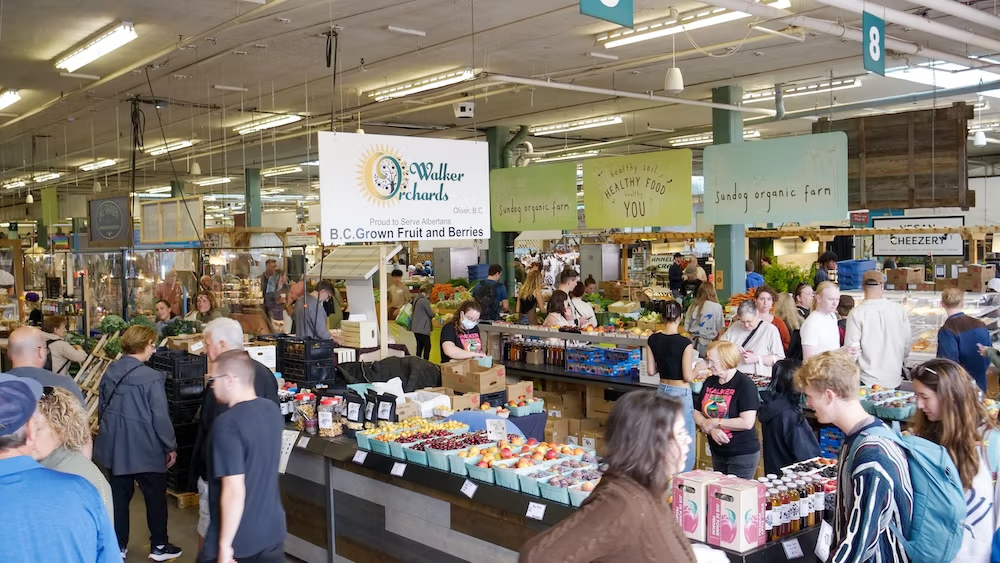
The market began in 1983 as a seasonal outdoor operation and later moved into the former bus barn. Today it brings together more than 140 vendors under rules favouring products that are made, baked, grown, raised or otherwise produced by the vendors themselves.
That makes it more interesting than a hall of generic resellers.
Saturday is the easiest market day to combine with a longer Old Strathcona itinerary. You can arrive early, browse the stalls, eat and continue along Whyte Avenue without feeling as though the market closing time is chasing you.
Sunday suits a slower start and a more compact outing.
The market building is accessible to wheelchairs and strollers. Washrooms are available near the information area, and pets are not permitted apart from trained service animals.
Our own visit was anything but methodical. We entered during Fringe and became distracted by the performances happening outside. The food mission temporarily collapsed.
For us, that was the charm. For someone actually trying to shop, eat and make a scheduled theatre performance, it would have been a logistical warning.
Fringe is brilliant when you know which version you want
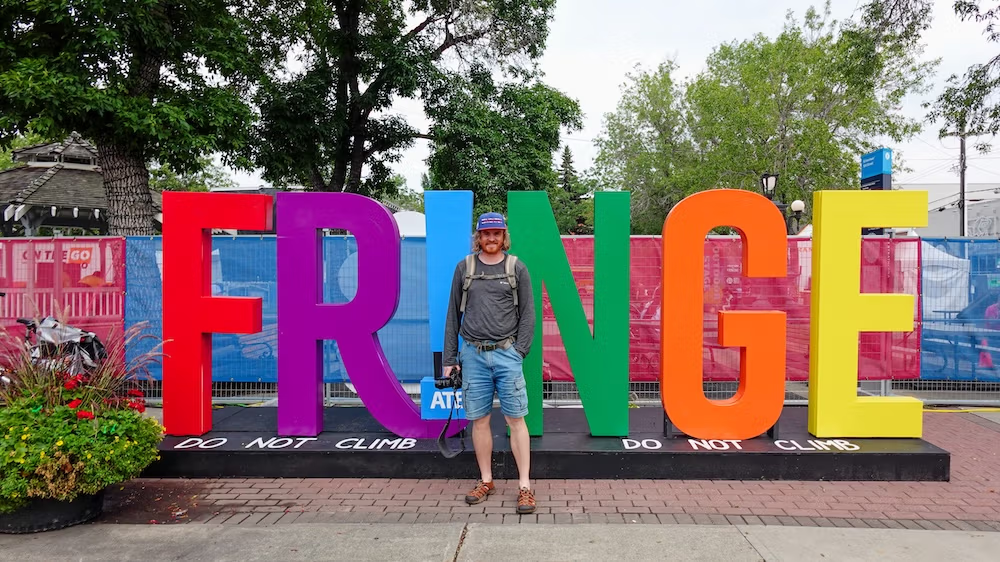
The Edmonton International Fringe Theatre Festival takes over Old Strathcona each August.
Exact dates change annually, so check the current Fringe schedule and program before making plans.
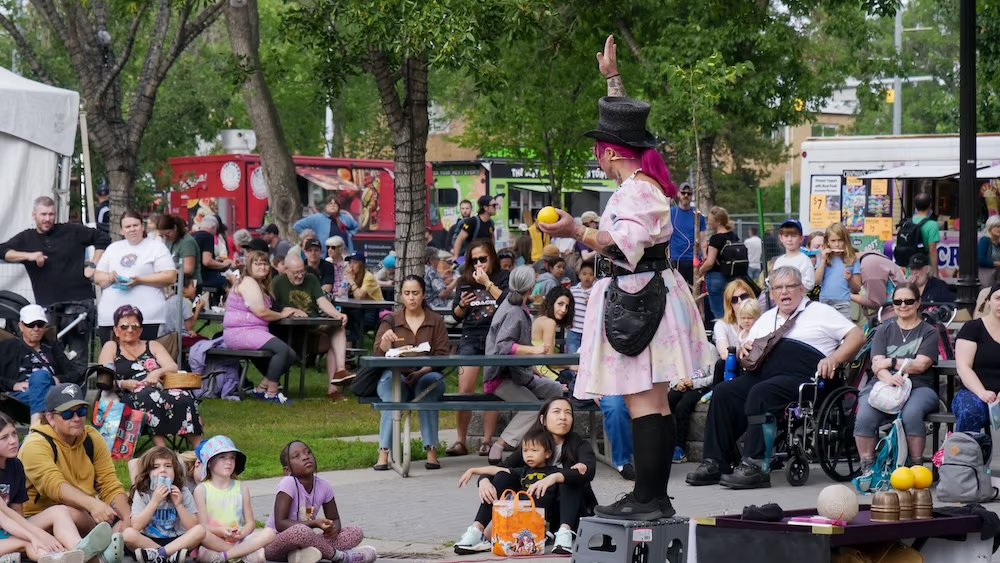
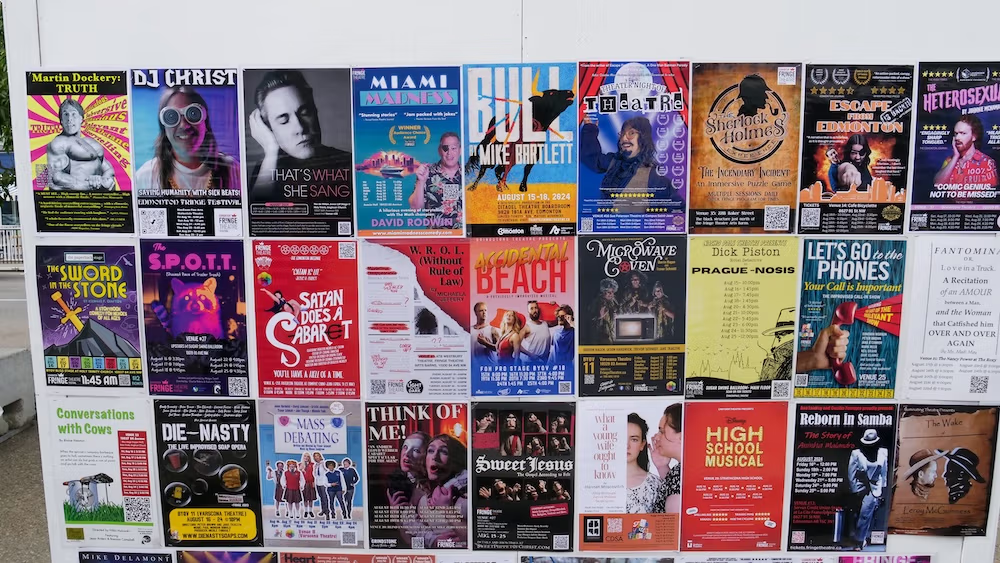
Audrey and I experienced the spontaneous side. We wandered through the festival grounds, watched outdoor performers and stared at the intimidating quantity of show posters without attending a ticketed indoor production.
It was our first Fringe, and we loved the atmosphere.
Audrey also realized immediately that anyone serious about seeing theatre needs an action plan.
The outdoor stages and street performances can be enjoyed casually. You can arrive, wander and see what catches your attention. Indoor productions run at fixed times and require tickets. The main grounds cover several blocks, with additional venues beyond the central festival area.
Those are two valid but very different ways to experience Fringe.
If you want the street energy, free performances and general chaos, spontaneity works.
If you want theatre, choose your shows first. Once the performance times are locked, you can decide when to eat, whether the market fits and how much walking is realistic.
Fringe also makes the district busier and more complicated. You will likely cover more ground than expected. Parking becomes less appealing. Restaurants have more event traffic. Venue accessibility varies and needs to be checked individually.
Our unplanned wandering was fun precisely because we had no show we could be late for.
Which Old Strathcona visit suits you?
Old Strathcona does not have one universally best time. Your priority should control the timing.
| Visit style | Best for | What works well | Main trade-off | Allow |
|---|---|---|---|---|
| Weekday or ordinary afternoon | History, cafés, shopping and a relaxed walk | Easier pacing and less event complexity | Less visible street activity and fewer scheduled performances | 2–4 hours |
| Saturday market visit | Food, market shopping and a broad introduction | Longest market window and enough time to continue into the evening | More parking pressure and an easy tendency to overplan | Half-day |
| Sunday market visit | A later start, lunch and a compact neighbourhood outing | Slower rhythm and shorter commitment | Reduced market hours | 3–4 hours |
| Dinner and performance | Theatre, jazz, film and date-night structure | A fixed cultural anchor with food around it | Many independent shops may be closed | 3–5 hours |
| Fringe period | Maximum street life, outdoor performance and theatre | Old Strathcona at its most animated | Highest planning burden, more walking and heavier event traffic | Half-day to full day |
These are planning ranges, not promises.
A weekday may become busy because of a special event. A summer evening can still feel quiet if you arrive without a meal or performance in mind. Winter can shift the balance strongly toward restaurants, theatres, shops and other indoor anchors.
The important thing is choosing the version you actually want instead of arriving at random and complaining that it does not resemble a festival photograph.
Where to stay when Old Strathcona is the point of the trip
Audrey and I did not stay in Old Strathcona, so I cannot personally compare its hotels, rooms or service. The location decision is still straightforward.
Staying on or close to Whyte Avenue makes the most sense when your trip revolves around the market, Fringe, restaurants, theatre or nightlife. You can explore during the afternoon, return to your room and head back out for dinner without turning every change of plan into another cross-city journey.
Check current rooms and rates at Metterra Hotel on Whyte if you want a property directly on the avenue near its restaurants and cultural venues.
Compare availability at Varscona Hotel on Whyte for another current option in the same general neighbourhood.
Neither property was part of our Edmonton stay, so compare the current room types, parking arrangements, inclusions and cancellation conditions rather than assuming that one is automatically the better choice.
Downtown remains the more convenient base when most of your itinerary centres on Rogers Place, the Royal Alberta Museum, the ICE District or downtown business. For a food-and-culture trip weighted toward Old Strathcona, sleeping near Whyte Avenue removes more friction than it creates.
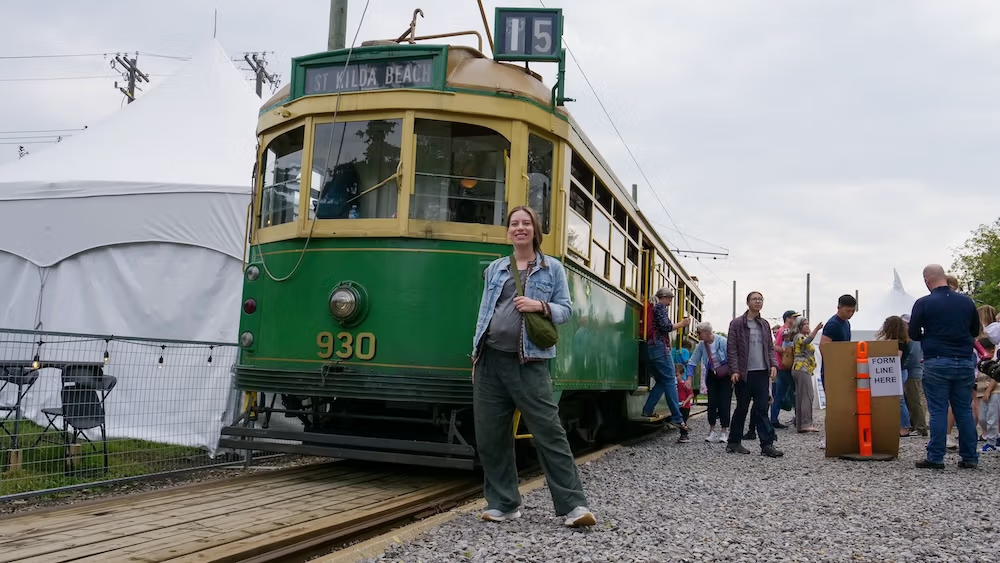
The streetcar is the memorable way to arrive—not always the practical one
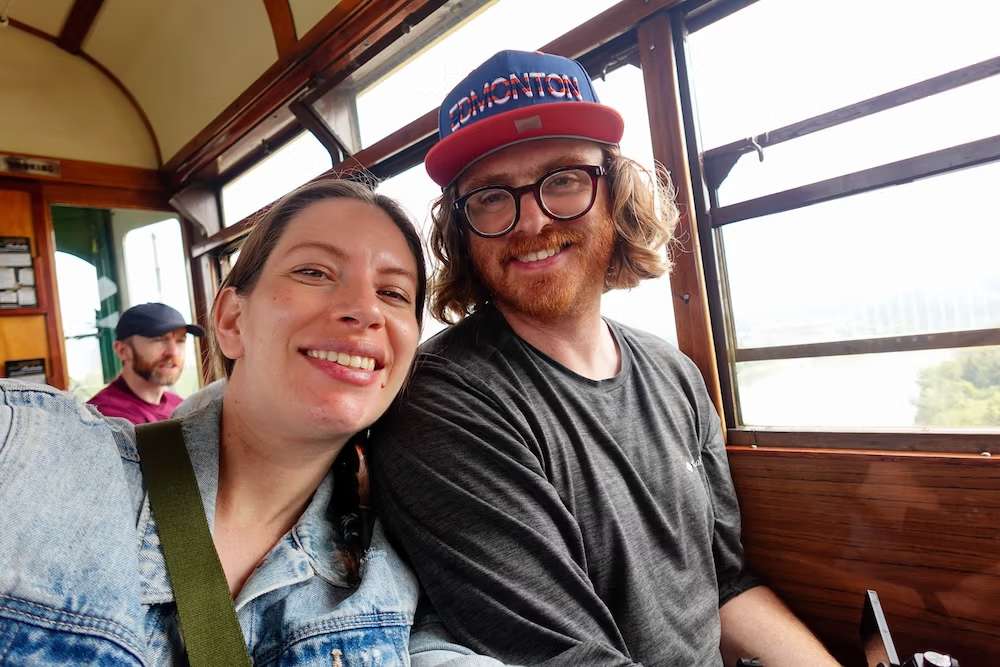
The High Level Bridge Streetcar was my favourite way to approach Old Strathcona.
I had seen it when I lived in Edmonton but never bothered to ride it. Years later, I finally crossed the bridge as a tourist, which was both enjoyable and mildly embarrassing. Apparently I needed to leave the city for more than a decade before trying one of its quirkiest experiences.
The streetcar crosses high above the North Saskatchewan River and connects central Edmonton with the Old Strathcona area. Audrey and I bought round-trip tickets, got off near the market and returned later after exploring.
The ride gave the neighbourhood day a proper beginning and ending.
It is also seasonal, first come and partly accessibility-constrained. Fares, operating dates and payment methods can change, so check the official High Level Bridge Streetcar schedule before counting on it.
Accessibility depends on the vehicle, boarding location and operating conditions. Ramp access is limited, stroller space is restricted and Fringe changes what is available. Anyone relying on accessible boarding should check directly with the operator.
Regular Edmonton transit will be the more dependable year-round choice for many visitors. Use the ETS trip planner for current routes rather than memorizing a bus number from an old guide.
Cycling is also practical, but shared e-scooters and e-bikes cannot be ridden or parked along the central stretch of Whyte Avenue. Nearby protected routes provide the better approach.
Driving works, although market parking, City EPark spaces and private lots follow different rules. During Fringe or another major event, the fact that Old Strathcona contains a large amount of parking does not mean the space beside your chosen restaurant will remain untouched until your arrival.
Take the streetcar when you want transportation to become part of the experience. Use transit or drive when the schedule matters more than nostalgia and bridge views.
The difficult part is coordination, not distance
Old Strathcona is not physically demanding for most visitors. The friction comes from trying to combine businesses and events that operate on different schedules.
The market closes at a fixed time. Independent shops may close before dinner. Performances begin whether you have finished eating or not. The streetcar runs seasonally. Winter weather can make a pleasant ten-minute walk feel like a negotiation.
Accessibility also needs to be checked place by place.
The farmers’ market is accessible to wheelchairs and strollers. The streetcar has specific limitations. Fringe venues publish their own accessibility information because one district-wide statement would be meaningless. Historical buildings can differ considerably in entrance and interior design.
Do not assume public washrooms are available everywhere. The market has facilities during operating hours, but that does not solve every route or evening visit.
My simplest planning rule is to fix the least flexible element first.
Want the market? Begin with its opening hours.
Want a show? Choose the performance.
Want DaDeO? Check when the restaurant is operating.
Want the streetcar? Confirm the seasonal timetable.
Once that part is secure, keep the rest loose. Old Strathcona is better when there is room for a record shop, outdoor performer or plate of sweet potato fries to interfere.
How long should you spend in Old Strathcona?
Two hours gives you a useful introduction.
You can walk a section of Whyte Avenue, notice a few historical buildings, browse a shop and stop for coffee or a quick meal. That works when the neighbourhood is one part of a crowded Edmonton day.
A half-day is my recommendation for most first-time visitors.
That gives you time for one substantial anchor—the market, a meal, a performance or some historical walking—plus the unplanned browsing that gives Old Strathcona its personality.
A full day makes sense during Fringe, when combining the market with ticketed performances or when food and culture are the main purpose of your Edmonton visit. On an ordinary day, stretching the neighbourhood into a full itinerary can lead to more shops and restaurant stops than you genuinely need.
I would prioritize Old Strathcona for travellers who care about food, neighbourhood atmosphere, architecture, independent businesses, theatre, music and the pieces of a city that are difficult to reduce to a top-ten list.
For a first Edmonton trip, give it a half-day or an evening.
Choose the farmers’ market for a daytime anchor. Build an evening around dinner and a performance. Visit during Fringe when you want the district at maximum volume. Ride the streetcar when the journey itself sounds more appealing than the efficient option.
Most importantly, do not spend your entire trip downtown and assume you have met Edmonton.
Old Strathcona was the place that changed Audrey’s perception of the city. For me, returning to Whyte Avenue turned old student routines into something worth noticing again. I had to come back as a tourist to see how much character I had once accepted as normal.
Frequently Asked Questions
Is Old Strathcona the same as Whyte Avenue?
Not exactly. Whyte Avenue is the main commercial corridor, while Old Strathcona is the wider historical and cultural district surrounding it, including the farmers’ market, theatres, railway buildings and side streets.
How long should I spend in Old Strathcona?
I recommend a half-day for most first-time visitors. Two hours gives you a useful introduction, while a full day makes more sense during Fringe or when combining the market with ticketed performances.
What is the best time to visit Old Strathcona?
The best time depends on your priority. Saturday suits the longest market visit, Sunday offers a slower and shorter market outing, evenings work well for dinner and performances, and Fringe brings the most street activity.
Can I visit Old Strathcona without attending a Fringe show?
Yes. The outdoor stages and street performances can be enjoyed casually, while indoor productions require tickets and advance planning. We explored the festival atmosphere without attending a ticketed production.
Is the High Level Bridge Streetcar the best way to reach Old Strathcona?
It is the most memorable arrival, but not always the most practical. The streetcar is seasonal, first come and has accessibility limitations, while regular Edmonton transit offers a more dependable year-round option.
Where should I stay for exploring Whyte Avenue?
Staying on or near Whyte Avenue makes sense when your trip centres on the market, Fringe, restaurants, theatre or nightlife. Downtown is more convenient when most of your itinerary is focused on central Edmonton attractions.
This guide is also available in Spanish. [Leé la versión en castellano: Guía de Old Strathcona y Whyte Avenue: comida, historia, cultura y vida callejera]
This article contains affiliate links. If you book through one of these links, I may earn a commission at no extra cost to you.