
Edmonton looks manageable on a map until you start trying to fit it into one day.
Downtown has museums, Rogers Place and the river-valley escarpment. Whyte Avenue sits across the river with a completely different personality. West Edmonton Mall occupies its own universe to the west. Then there are botanical pyramids, heritage streetcars, markets and enough restaurants to turn lunch into a competitive sport.
You can spend 24 hours racing between all of them. You will see plenty of Edmonton through a vehicle window.
I lived here during my university years, then returned much later with Audrey and explored the city partly as a visitor myself. I showed her places I remembered, discovered attractions that had not existed when I lived here and finally did some conspicuously touristy things I had ignored as a resident.
That return taught me how I would plan a first day now. Pick one substantial attraction. See downtown without getting trapped there. Make time for the river valley. Finish around Whyte Avenue, because that was the part of Edmonton that changed Audrey’s perception of the city.
West Edmonton Mall does not fit into this plan. Neither does every museum, the Legislature interior, the aviation museum and a hockey game. Those are decisions for another day—or a completely different version of this one.
This is a realistic itinerary. Some feelings will be hurt.
What “24 Hours in Edmonton” Actually Means
This itinerary assumes you have one full usable day inside a 24-hour stay. Ideally, you wake up in Edmonton, eat breakfast and begin sightseeing before 10:00 a.m. You can then stay out through dinner before returning to your hotel or continuing your journey.
It does not assume you land at Edmonton International Airport at noon, collect a suitcase, reach downtown and somehow recover the missing morning through raw enthusiasm.
A proper first day should give you:
- one major Edmonton attraction;
- a taste of downtown and Oilers culture;
- a meaningful look at the river valley;
- time in a neighbourhood beyond downtown;
- enough room to eat without inhaling every meal over a garbage bin.
Edmonton’s size is only part of the challenge. Attractions have entrances. Restaurants take time. Buses occasionally arrive after you do. Even a short geographic move can turn into half an hour once you walk to the stop, wait, board and orient yourself at the other end.
If you cannot begin until midday, skip the morning attraction. Keep downtown brief, protect the river valley and finish on Whyte Avenue. A shortened route is better than spending the afternoon frantically trying to win back hours that have already left the building.
One Day in Edmonton at a Glance
| Approximate time | Area | Plan |
|---|---|---|
| 8:30–10:00 | Central Edmonton | Breakfast, checkout preparation and travel |
| 10:00–12:00 | Downtown or Cloverdale | Royal Alberta Museum or Muttart Conservatory |
| 12:00–2:00 | Downtown and ICE District | Lunch, Rogers Place area and Neon Sign Museum |
| 2:00–4:00 | Downtown escarpment and river valley | Funicular, lookout and a short river-valley walk |
| 4:00–5:00 | River crossing | ETS or the seasonal High Level Bridge Streetcar |
| 5:00–9:00 | Old Strathcona and Whyte Avenue | Neighbourhood walk and dinner |
| After 9:00 | Hotel or departure point | Stop sightseeing like a sensible person |
The times are intentionally roomy. They allow for finding entrances, lingering over something unexpectedly interesting and occasionally discovering that your current location is not where you thought it was.
Use the live ETS trip planner for the exact day of your visit. Edmonton changes schedules during the year, so I would not build a permanent itinerary around one specific bus number.
Adult Arc or contactless travel currently costs $3 for a 90-minute period, with a daily fare cap of $10.50. A 24-hour Arc Ticket also costs $10.50. Cash and single Arc Tickets cost more, and each rider over 12 needs a separate payment method.
The pass is useful when you expect several journeys. It is not automatically the cheapest choice just because you enjoy the emotional security of unlimited transit.
Where to Stay for This 24-Hour Route
For this exact itinerary, downtown is the cleanest base. It keeps the Royal Alberta Museum, ICE District and funicular within relatively easy reach and prevents your first hour from disappearing into a cross-city transfer. You can compare downtown Edmonton hotels on Booking.com by location and current availability.
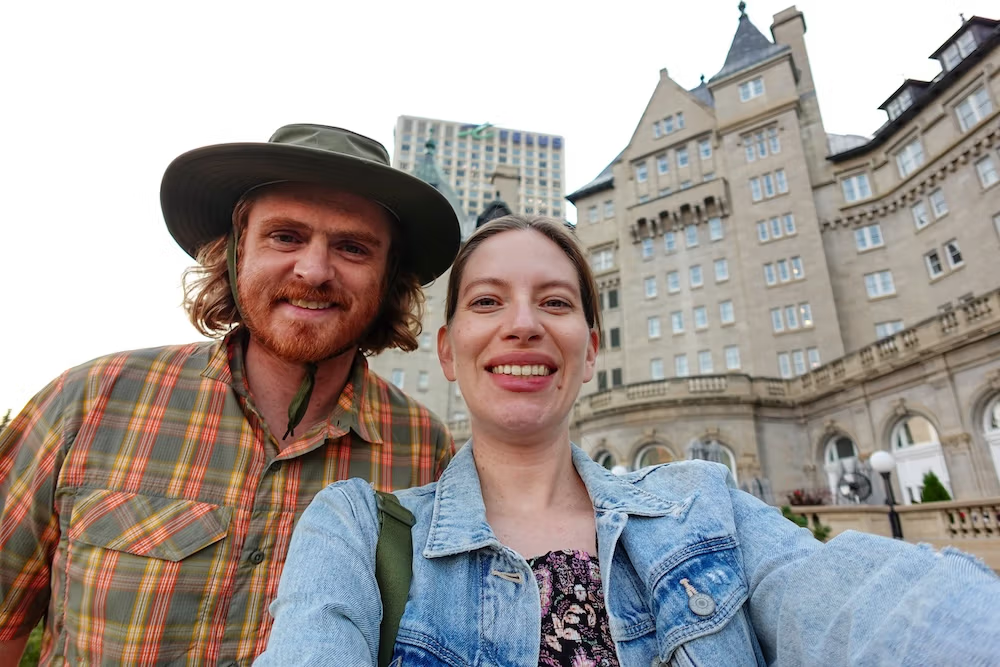
Audrey and I stayed at Fairmont Hotel Macdonald during our return trip. It worked especially well for river-valley access because the funicular and escarpment viewpoints are immediately behind the hotel area. It is a splurge rather than the default choice for every budget, but the location suits this itinerary unusually well. You can check current rooms at Fairmont Hotel Macdonald.
Staying around Whyte Avenue makes dinner and nightlife easier, but it adds more movement to the morning. For a one-night first visit built around this route, I would favour downtown and travel south for the evening.
Guided Shortcuts When You Do Not Want to Self-Navigate
This itinerary is designed for independent travel, but a guided option can remove some of the route-planning friction. The important thing is to use a tour as a replacement for part of the day rather than adding it to the full schedule and hoping the clock becomes more generous.
A current three-hour downtown walking tour starts near Fairmont Hotel Macdonald and includes the ICE District, Neon Sign Museum, Jasper Avenue, the Legislature area and river-valley views. It does not include the Royal Alberta Museum or Muttart Conservatory, so it works best in place of the morning attraction and downtown block. The current listing also warns that it requires prolonged walking and is not suitable for wheelchair users. You can check dates for the Edmonton city highlights walking tour.
Another current option is Edmonton’s hop-on, hop-off sightseeing trolley. Its two loops connect stops including the Fairmont, ICE District, Legislature, Whyte Avenue, Muttart Conservatory, Alberta Aviation Museum and West Edmonton Mall. That does not mean you should attempt every stop in one day. It means the trolley can provide the transport framework while you choose two or three priorities. You can see current trolley tickets and operating dates.
Start With One Major Attraction
The first important decision is Royal Alberta Museum or Muttart Conservatory.
Choose one.
Both are worthwhile. Both open at 10:00 a.m. Neither deserves to be reduced to a high-speed lap so you can claim you also saw the other.
Royal Alberta Museum: My Default First-Time Pick
For most first-time visitors, I would start at the Royal Alberta Museum.
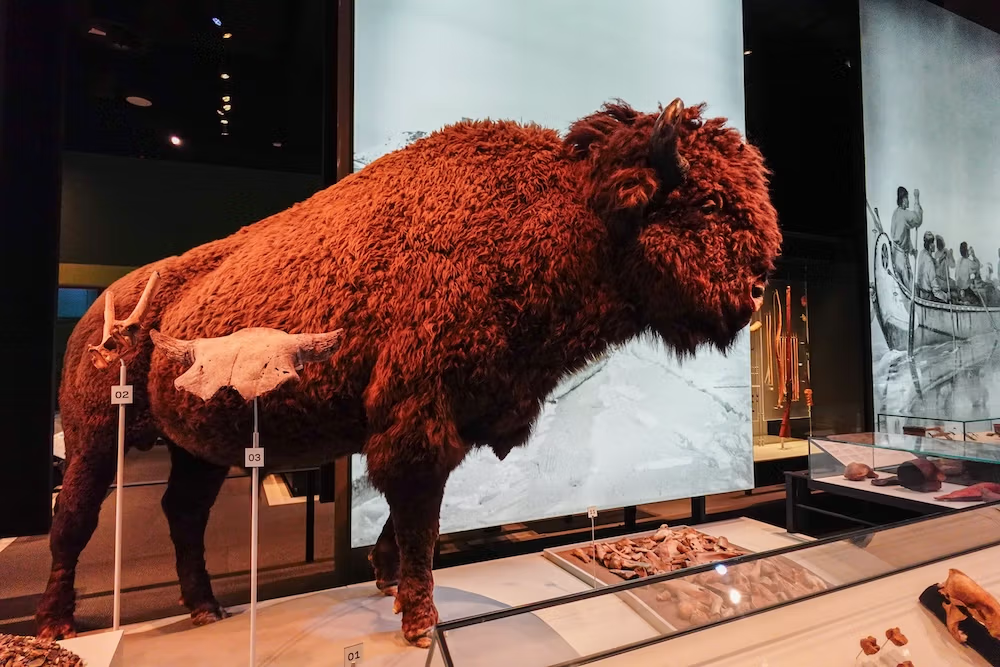
Audrey and I spent most of our time between its human-history and natural-history galleries. The museum gave her a useful introduction to Alberta through Indigenous history, archaeology, dinosaurs, Ice Age material and the animals associated with the province.
The wildlife displays are especially useful when Edmonton is your main Alberta stop and you are not continuing to Jasper or Banff. A taxidermied grizzly bear is not the same as seeing one in the Rockies—and is considerably less likely to ruin your day—but the galleries help explain the landscapes and species tied to the province.
The dinosaurs also feel properly local. Alberta has no shortage of prehistoric bragging rights, and seeing an Edmontosaurus in Edmonton is almost suspiciously on brand.
Allow roughly two hours. You will not see every object, read every panel and maintain this itinerary. Pick the galleries that matter most to you and leave while your brain is still accepting new information.
The museum currently opens at 10:00 a.m. and closes at 4:00 p.m. on most operating days, with later hours on Thursday. Adult admission is currently $25. It is normally closed on Mondays except for selected holidays, which immediately changes the decision.
Muttart Conservatory: Better for Mondays, Plants and a Lighter Morning
The Muttart Conservatory is the stronger choice when you visit on Monday, prefer plants to museums or want a shorter and less expensive morning attraction.
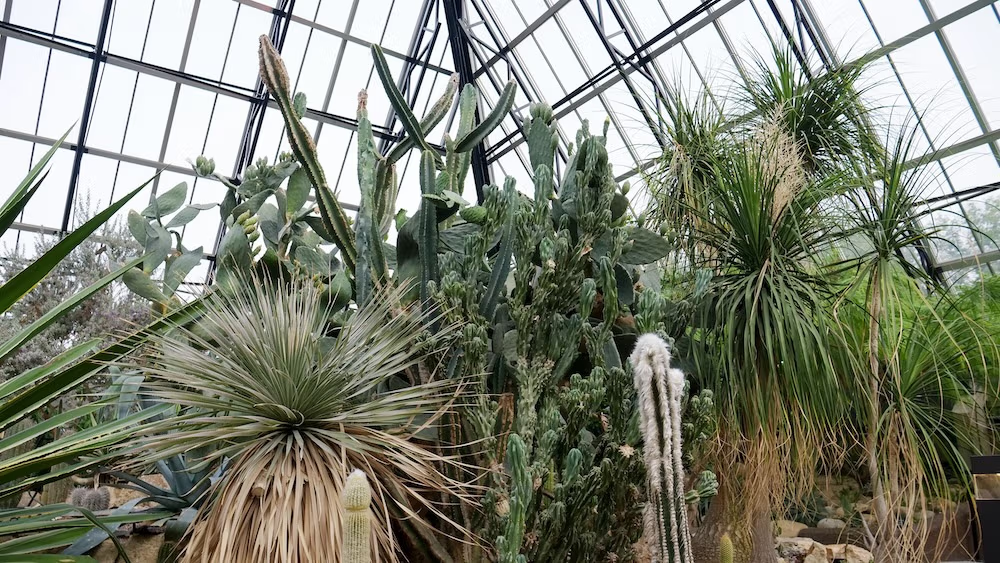
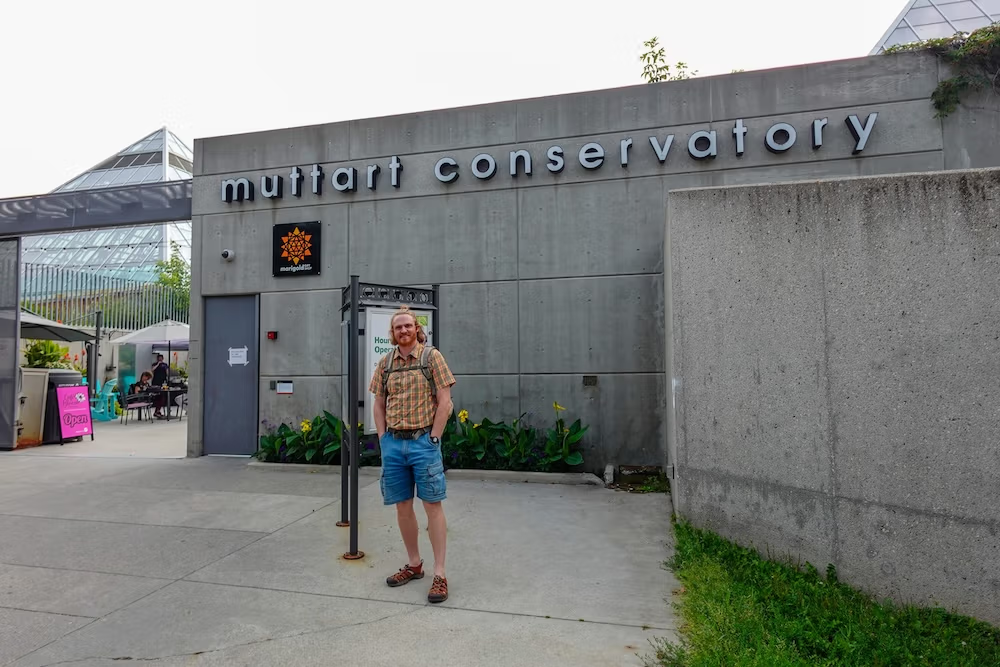
Its four glass pyramids contain tropical, arid, temperate and rotating feature environments. Audrey and I moved from the hot, sticky tropical pyramid into the dry air of the cactus-filled arid pyramid and both felt instantly more alive.
“Dry heat all the way, baby” was our conclusion. Years of travel have apparently reduced us to choosing climates like rival sports teams.
The tropical pyramid felt lush enough to transport Audrey back toward South America, but the humidity drained her energy. The arid pyramid suited both of us far better. That physical contrast is part of what makes Muttart fun: the environments do not merely look different.
The feature pyramid changes, so whatever is there during your visit may bear no resemblance to what we saw. Treat that as part of the appeal rather than arriving attached to one particular display.
Give yourself 75 to 90 minutes. Muttart currently opens at 10:00 a.m. daily, stays open later on Wednesday and Thursday and costs $14.95 for an adult. The Valley Line stops nearby, making the move into downtown relatively straightforward afterward.
The choice is not complicated:
- Pick the Royal Alberta Museum for the broadest introduction to Alberta.
- Pick Muttart for plants, glass-pyramid architecture, Monday availability, lower cost or a lighter visit.
Attempting both means your afternoon will begin with you already negotiating what to sacrifice.

Eat Lunch and Keep Downtown Compact
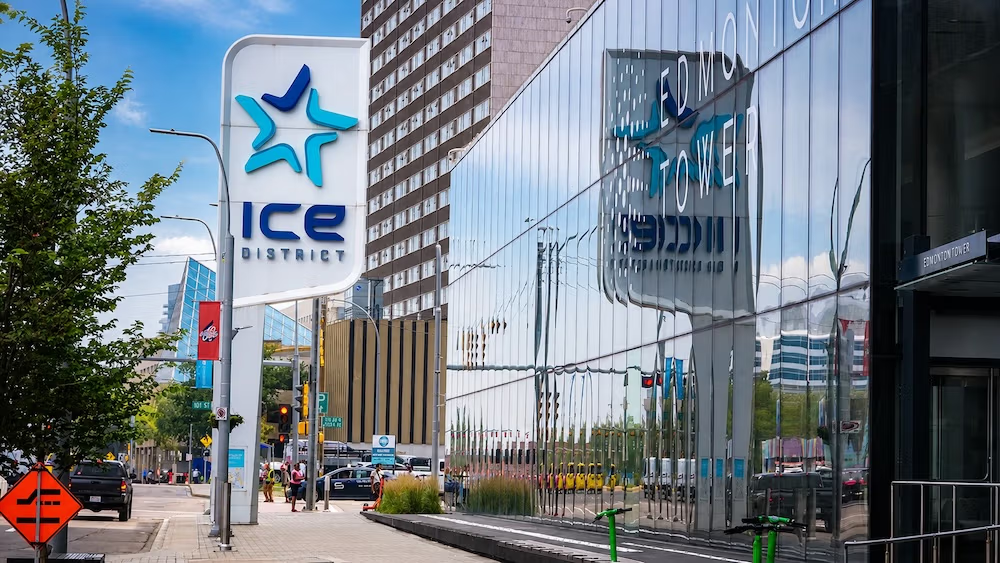
After the museum or conservatory, head into central Edmonton for lunch and a look around the ICE District.
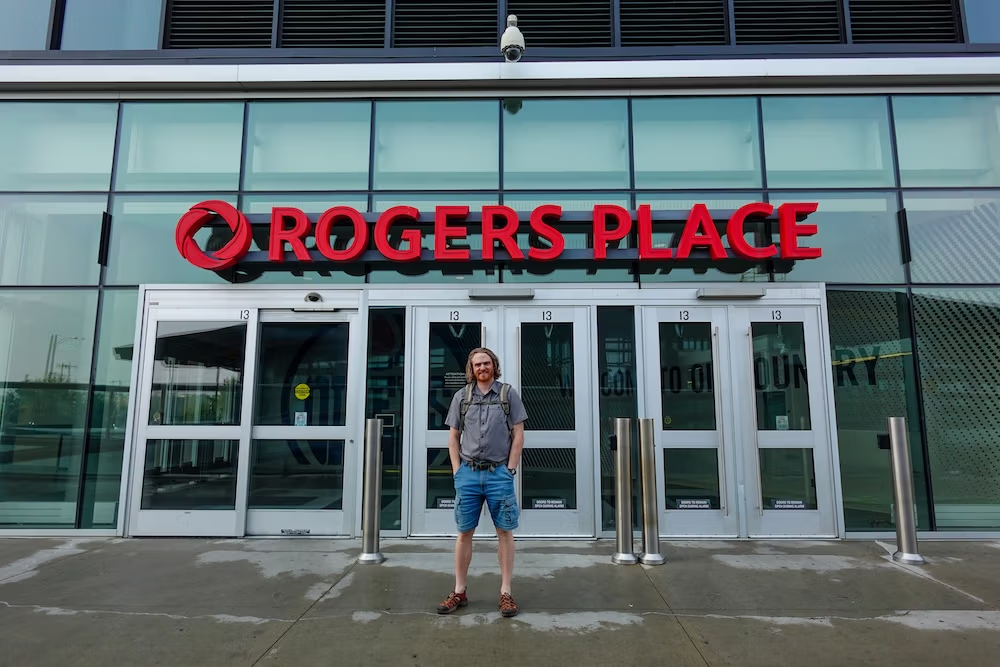
Rogers Place changed the feel of downtown after my student years. I used to attend Oilers games at the former arena with student ticket packages. Returning to find a modern hockey-and-entertainment district in the city centre was familiar enough to trigger nostalgia and different enough to make me feel as though Edmonton had continued without consulting me.
Outside the arena, you can see the Wayne Gretzky statue and walk through the surrounding plaza. I wandered into the Oilers Team Store and bought a hat in the classic blue, orange and white. Audrey announced that I was in my element.
She was correct. I was also absurdly pleased that the hat was on sale.
Unless you are attending a game or concert, think of Rogers Place as an exterior stop. Do not expect a casual arena tour or assume public interior access will be available. Event days can also change pedestrian movement and make nearby restaurants much busier.
Give lunch 45 to 60 minutes. Edmonton has enough good food that swallowing something forgettable in six minutes feels particularly wasteful.
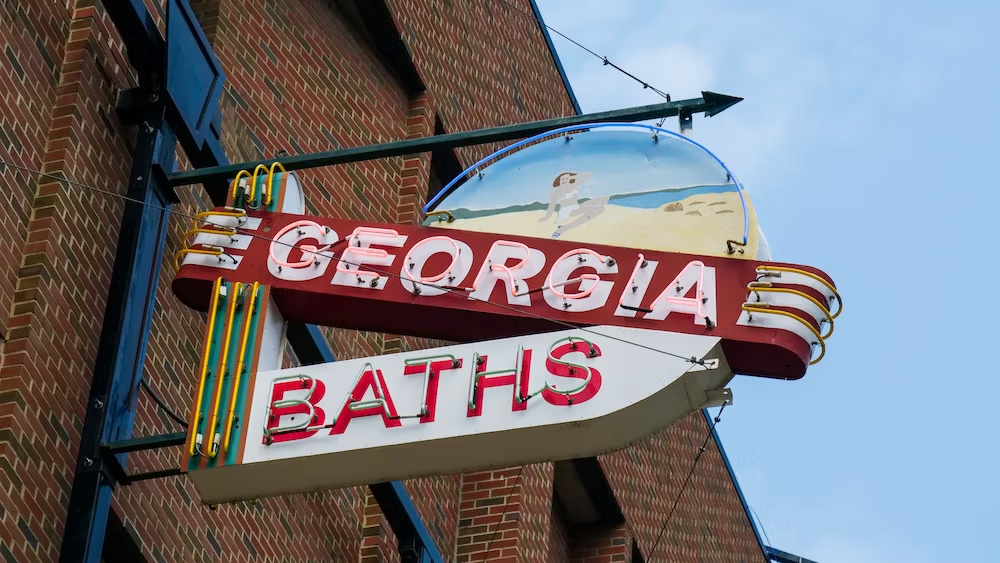
From the ICE District, continue toward the Neon Sign Museum around 104 Street and 104 Avenue. This is an outdoor collection of old Edmonton signs installed on the sides of downtown buildings. There is no ticket desk, no formal route and no need to budget half a day.
We saw the signs in the afternoon. Audrey imagined they would look better illuminated after dark, which is probably true, but there is no dependable public schedule guaranteeing every sign will be glowing when you arrive.
Enjoy the collection as a short urban-history detour. When lunch runs long or an event has made downtown cumbersome, skip it. The signs will survive the rejection.
The entire downtown block—including lunch—should take around two hours. That is enough time to understand the modern arena district without letting a few central blocks become your entire impression of Edmonton.
Take the Funicular Into the River Valley
The river valley is where I would become stubborn.
When I lived in Edmonton, I used its trails for walking, jogging and inline skating. It was my escape from classes, traffic and whatever low-level chaos I had created for myself that week. Returning years later, the landscape felt more emotionally familiar than almost anything downtown.
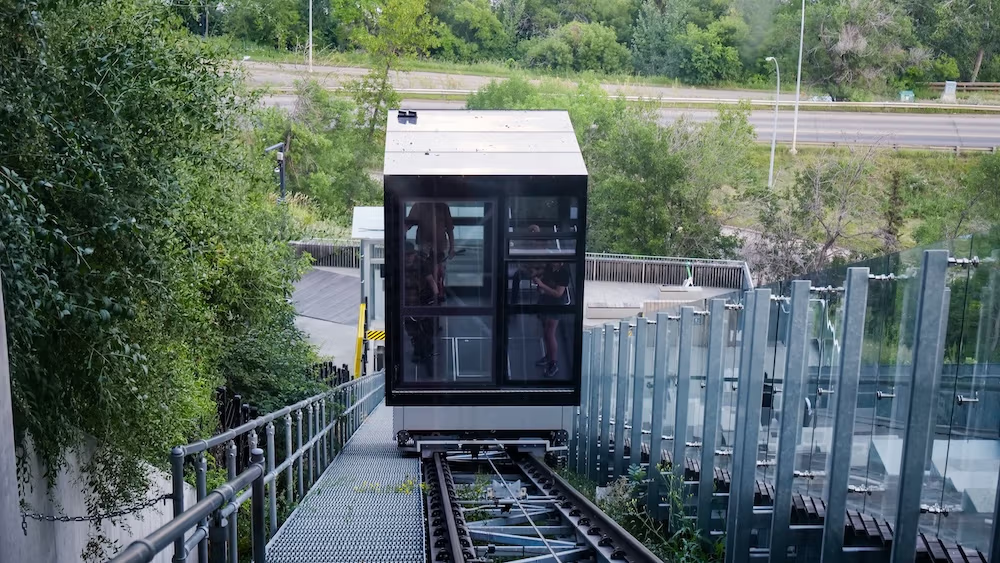
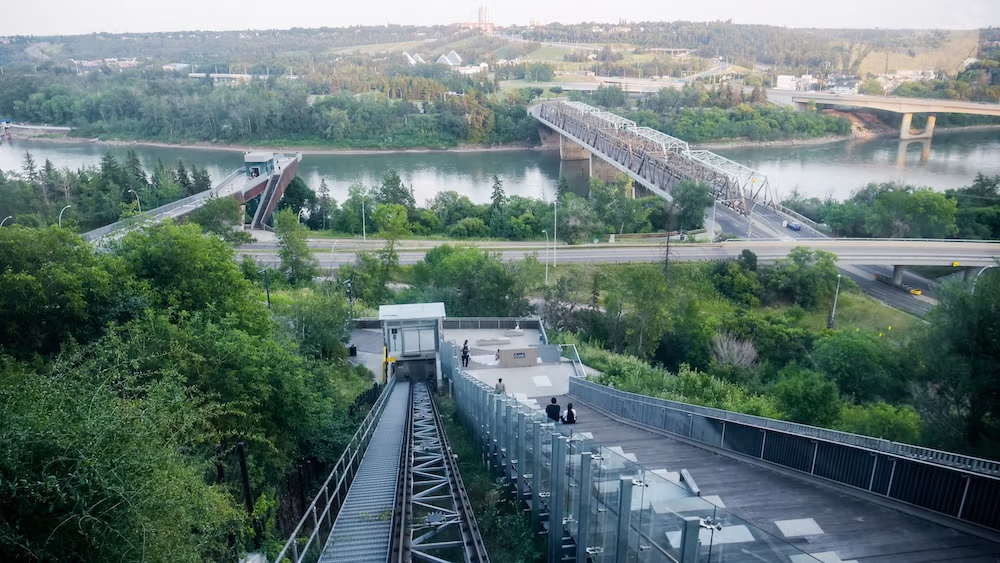
The 100 Street Funicular now makes the descent easier. It did not exist when I lived here, and I was immediately impressed by this fancy civic invention that saved our legs before we voluntarily used them for more walking below.
The funicular descends from the downtown escarpment toward the Frederick G. Todd Lookout and the lower river-valley paths. It normally operates from 7:00 a.m. to 9:00 p.m., but maintenance, weather and extreme temperatures can close it. It shuts down when the temperature reaches 30°C or drops to −30°C, and planned maintenance normally takes place on the second Wednesday of each month.
Check the live funicular status before depending on it.
Wheelchairs, walkers, strollers and bicycles can use the funicular. That does not mean every trail connected to it is equally accessible. The surfaces and gradients change once you leave the main infrastructure.
Give the River Valley a Time Limit
“Explore Edmonton’s river valley” sounds lovely until you realize the trail network is large enough to consume your afternoon.
For this route, spend 45 to 75 minutes around the lookout, promenade and a short section of the lower paths. You are trying to feel the shift from downtown into Edmonton’s green space, not complete an endurance event.
Set a turnaround time before you begin. When it arrives, turn around—even when the next bend looks promising.
That advice comes from experience with many walks that became substantially longer because I was convinced the next viewpoint, café or mysteriously important tree was only five minutes farther.
Conditions can change because of ice, rain, construction, erosion, flooding and silt. In poor weather, stay around the upper lookout or shorten the lower walk. The river valley matters, but no itinerary is improved by sliding down an icy slope to prove commitment.
Travellers who would rather cover more ground with a guide can use a current three-hour bike tour as an alternative to the museum-and-short-walk combination. It includes city highlights and the river valley, but Audrey and I did not take this tour ourselves. Use it to replace part of the itinerary rather than adding three more hours to an already full day. You can check current availability for the Edmonton city and river valley bike tour.
Add the Legislature Only With a Confirmed Tour Time
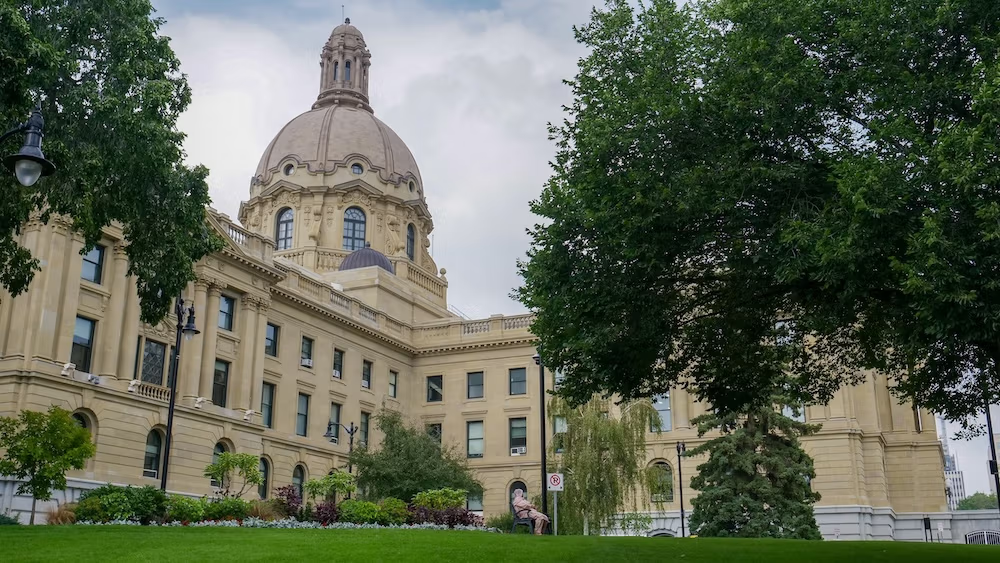
The Alberta Legislature fits geographically, especially when you are moving between downtown, the river valley and the south side. Its interior tour is less flexible.
Audrey and I arrived hoping to join one and obtained the final two places only because somebody cancelled. Other visitors showed up afterward and could not get in.
That was luck, not a planning system.
Tour schedules change between summer and the rest of the year. When you care about seeing the interior, check the current Alberta Legislature tour times and confirm a slot before the day begins.
A booked Legislature tour should replace part of the downtown or river-valley block. Do not treat it as a free-floating bonus that somehow occupies no time.
The exterior and grounds are much easier to include spontaneously. They still provide a useful look at one of Edmonton’s most important civic buildings without forcing the entire afternoon to orbit a tour departure.
Cross the River Toward Old Strathcona
The dependable year-round option is ETS.
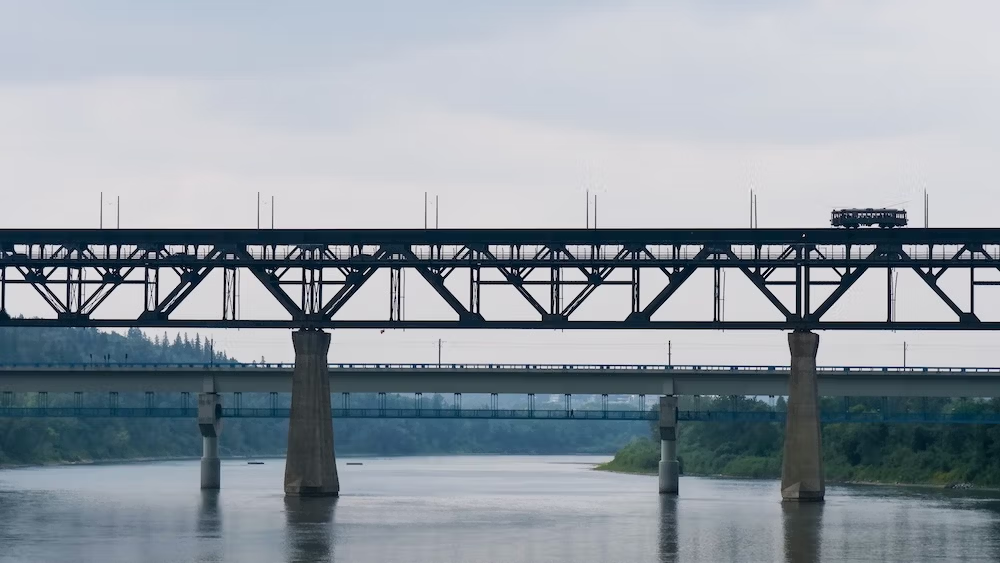
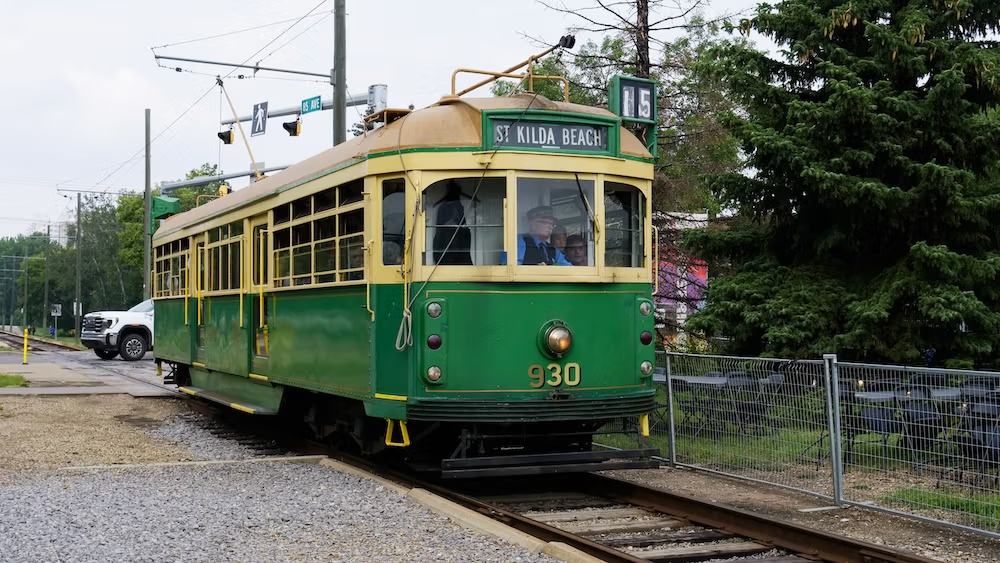
The memorable seasonal option is the High Level Bridge Streetcar.
Audrey and I rode the heritage streetcar across the High Level Bridge and continued toward Old Strathcona. I had seen it during my years in Edmonton but never bothered to board. Returning as a tourist finally gave me permission to do something that had apparently been too obvious when I lived there.
The ride is quirky, scenic and completely different from ordinary transit. It also cannot be treated as a guaranteed year-round connection.
For the 2026 season, service runs Thursday through Monday from May 15 to September 7, then Friday through Sunday until October 12. Tickets are sold by the conductor on a first-come basis and cannot be reserved. The current fare is $5 one way or $10 return, with cash, card and mobile payment accepted.
For this itinerary, buy a one-way ticket. You are continuing to Whyte Avenue for dinner and may return after streetcar operations have ended.
Check the live High Level Bridge Streetcar schedule before walking to the stop. When the next departure involves a long wait, take ETS. The streetcar should become a highlight, not an obstacle you defend because an itinerary told you to.
Wheelchair and stroller accommodation is limited and depends on the operating car and boarding point. Travellers with specific mobility needs should confirm directly with the operator and use ETS as the safer fallback.
Whyte Avenue Is the Part I Would Protect
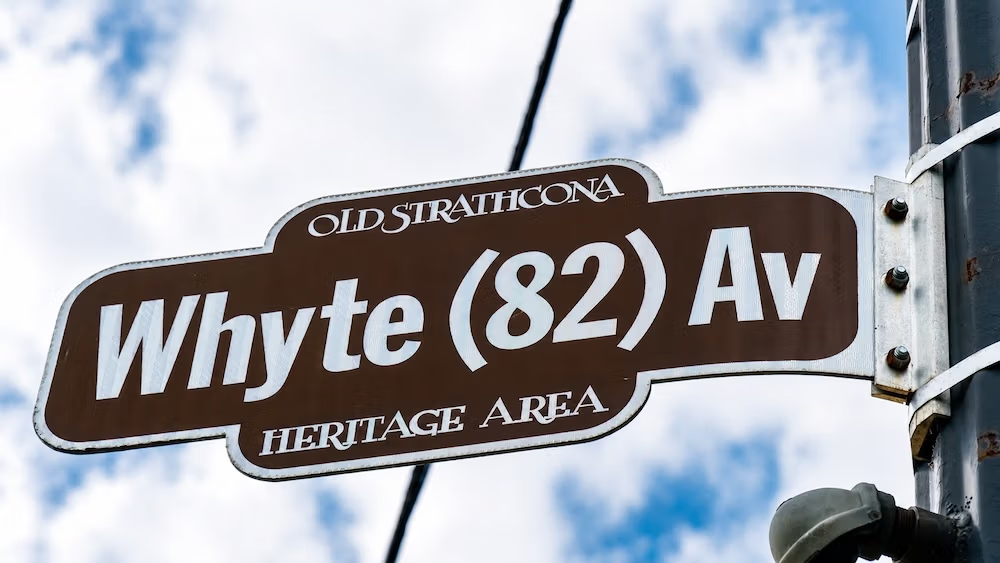
Downtown introduces Edmonton. Whyte Avenue makes the day feel complete.
During my university years, this was where I came for restaurants, nightlife, record shops, strange little stores and the more energetic side of the city. I worked nearby and regularly ate in the area.
When Audrey and I returned, I described Whyte Avenue as Edmonton’s cultural lifeblood. I might choose a less dramatic phrase now, but her reaction supported the point.
It changed her perception of Edmonton.
Downtown had given her museums, hockey infrastructure, offices and newer development. Old Strathcona felt more intimate and lived-in. The older buildings, independent businesses, restaurants and street activity made the city easier to connect with.
Arrive around 5:00 p.m. and walk a manageable portion of Whyte Avenue. Shops may begin closing before restaurants, so browse whatever is still open without building the evening around retail.
We happened to visit during the Edmonton Fringe Festival and on a day when the Old Strathcona Farmers’ Market was operating. Outdoor performances distracted us so thoroughly that food briefly stopped being our main objective, which does not happen often.
That combination depended entirely on timing.
The farmers’ market currently operates on Saturday and Sunday but closes in the afternoon, so it does not naturally fit this evening route. When the market is a priority, move Old Strathcona earlier and cut part of downtown.
Fringe also transforms the area during its August run. Expect more crowds, performances and disruption. The atmosphere can be fantastic, but it does not represent an ordinary evening on Whyte Avenue.
Make Dinner Part of the Itinerary
Edmonton was where I became adventurous with food.
I arrived for university from a small town on Vancouver Island and suddenly had access to Thai, Indian, Japanese, Korean and plenty of other cuisines I had barely encountered before. My education was supposedly happening in lecture halls, but my taste buds may have received the better deal.
That is why dinner cannot be treated as the administrative task between Whyte Avenue and bedtime.
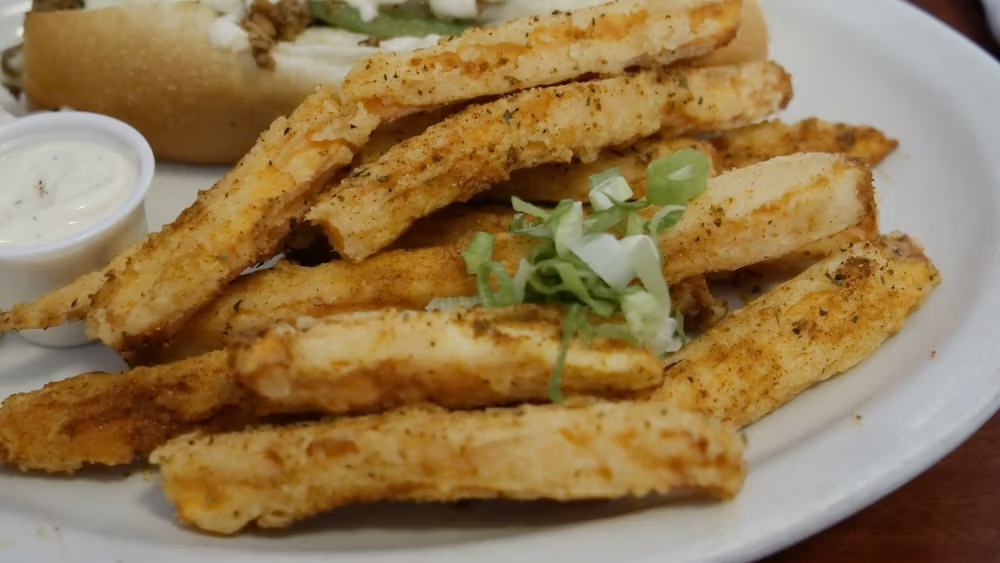
DaDeO is my most personal choice in the area. I used to eat there regularly when I worked nearby, and returning for a po’boy, sweet potato fries and Cajun-Creole comfort food was the most nostalgic meal of our trip.
The décor still felt familiar. The sweet potato fries remained dangerously easy to remember. I was delighted that the place had survived my absence, although I recognize that my departure was probably not the main threat to its continued operation.
DaDeO is currently closed Tuesday and Wednesday, so check before committing to it.
On those nights, choose another restaurant along Whyte Avenue. Edmonton’s strength is the variety, and there is little sense in leaving the district to cross the city for one particular dish.
Allow at least 75 to 90 minutes for dinner. You have spent the day moving through several parts of Edmonton. Sit down. Eat properly. Accept that another attraction is not waiting to reward you for arriving exhausted.
The Attractions That Do Not Fit
Every additional Edmonton stop sounds reasonable when considered alone. The problem appears when seven reasonable ideas begin fighting over the same four hours.
West Edmonton Mall Is Its Own Itinerary
West Edmonton Mall is Edmonton’s best-known attraction and the quickest way to blow up this route.
Audrey described it as overwhelming. She did not mean it was bad. She meant the place contains so much shopping, food and entertainment that entering without a plan can feel like being absorbed by a self-contained municipality.
We saw the indoor lake and pirate ship, the skating rink and Galaxyland, then ate around Bourbon Street. Those experiences barely scratched the surface.
The current LRT system does not reach the mall. You need a bus, car or ride-hailing transfer from central Edmonton, adding another chunk of travel time before you have even decided what to do inside.
When West Edmonton Mall is your main reason for visiting, make it the centre of the day. Remove the morning museum, shrink downtown and accept that you are following a different itinerary.
The choice is straightforward:
For a city introduction: choose a museum or Muttart, downtown, the river valley and Whyte Avenue.
For West Edmonton Mall: spend most of the day at the mall and add one evening area elsewhere only when you still have the energy.
You cannot do justice to both versions in one day without becoming very familiar with Edmonton’s roads.
For an overnight trip centred primarily on the mall, staying nearby can remove a large cross-city transfer from the beginning and end of the day. You can compare hotels near West Edmonton Mall on Booking.com.
Alberta Aviation Museum Is for a Longer Visit
Audrey and I had fun at the Alberta Aviation Museum, especially when I attempted its flight simulator.
My landing was not a hidden talent finally revealed. I approached too high, drifted toward the grass and landed sideways. Aviation is safer when I remain a passenger.
The museum has a specialist focus and requires another separate transfer. Aviation enthusiasts can use it as their morning anchor instead of RAM or Muttart. For a general first-time itinerary, save it for a second or third day.
A Second Major Indoor Attraction Costs Too Much Time
Royal Alberta Museum and Muttart appear close enough to tempt people into attempting both.
The problem is not simply the journey between them. Admission, entry, orientation, exhibits, washrooms and the inevitable five minutes spent wondering where you left your gloves all consume time.
Choose one. Let it be a real visit rather than a collection of photographic proof.
Adjusting the Route for Weather, Winter and Mobility
This itinerary works most naturally when conditions allow at least a short river-valley walk. Edmonton does not always feel obliged to provide those conditions.
During heavy rain or smoke, extend your indoor attraction, keep downtown brief and travel directly to Whyte Avenue by ETS. Remove the lower river-valley walk rather than forcing an outdoor block that has become unpleasant or unhealthy.
Check Edmonton’s live Air Quality Health Index during smoke events and follow current guidance.
In winter, the High Level Bridge Streetcar is not operating. Use ETS, place the river-valley stop during the brighter and milder portion of the day and shorten the walk according to ice, wind and temperature.
When the funicular is closed, enjoy the upper viewpoint or replace the descent with more indoor time. Do not assume everyone in your group can use the stairs.
Travellers with a wheelchair, walker or stroller should evaluate the route section by section. The major attractions and funicular have useful accessibility provisions, but the connecting streets, trails and heritage streetcar do not all offer the same conditions.
An accessible attraction does not magically make the entire day accessible. Build around the person travelling with you rather than treating accessibility as a box you checked at breakfast.
The activities can change without losing the structure of the day. Keep one Edmonton-specific attraction, some sense of the river-valley setting when conditions permit and time in a neighbourhood beyond downtown.
Is One Day in Edmonton Enough?
One day is enough to understand why Edmonton deserves more than one day.
The city does not reveal itself through a single landmark. It comes together through contrasts: Alberta history and modern hockey culture, downtown towers and the river valley below them, a polished arena district and the older streets around Whyte Avenue.
Choose Royal Alberta Museum or Muttart Conservatory. Spend enough time downtown to understand it, then leave. Give the river valley a genuine hour. Finish on Whyte Avenue, where Audrey stopped seeing Edmonton as merely a collection of attractions and began connecting with the city itself.
Add the streetcar, farmers’ market, Fringe or Legislature tour when the schedule genuinely works. Do not force them into the day because they looked good in somebody else’s itinerary.
When West Edmonton Mall is your priority, admit it early and build around the mall.
After living in Edmonton, leaving it for years and returning as a visitor, my rule for a first day is simple: one major attraction, one meaningful look at the river valley and one neighbourhood beyond downtown.
Anything more is a bonus.
Much more than that belongs in tomorrow’s article.
Frequently Asked Questions
Can I see Edmonton properly in one day?
Yes, provided you treat it as one full usable sightseeing day and make firm choices. The route combines one major attraction, compact downtown time, a short river-valley visit and an evening around Whyte Avenue.
Should I choose the Royal Alberta Museum or Muttart Conservatory?
I would choose the Royal Alberta Museum for the broadest first introduction to Alberta. Muttart Conservatory is the better option on Monday, for plant lovers, or when you want a shorter and less expensive morning visit.
Does West Edmonton Mall fit into this one-day itinerary?
No. West Edmonton Mall requires a bus, car or ride-hailing transfer from central Edmonton and can absorb most of a day through shopping, dining and entertainment. Make WEM the centre of a separate one-day plan when it is your priority.
Do I need a car for one day in Edmonton?
No. The itinerary works with ETS, walking and the seasonal High Level Bridge Streetcar. Use the live ETS trip planner, and treat the streetcar as an optional one-way crossing when its operating schedule fits naturally.
How much time should I spend in Edmonton’s river valley?
Allow roughly 45 to 75 minutes around the 100 Street Funicular, Frederick G. Todd Lookout and nearby lower paths. Set a turnaround time so the large trail network does not consume the afternoon.
What should I change in winter, heavy rain or wildfire smoke?
Use ETS instead of the seasonal streetcar in winter, shorten or remove the lower river-valley walk in poor conditions, and keep the major indoor attraction, downtown and Whyte Avenue structure. Check live air-quality guidance during smoke events.
This guide is also available in Spanish. [Leé la versión en castellano: Un día en Edmonton: itinerario realista de 24 horas para una primera visita]
This article contains affiliate links. If you book through one of these links, I may earn a commission at no extra cost to you.