
If you’re going to spend serious money on a hotel in Edmonton, I think the first question should be pretty simple:
What do you want the extra money to actually do?
Because Edmonton’s two most compelling luxury stays are expensive for very different reasons.
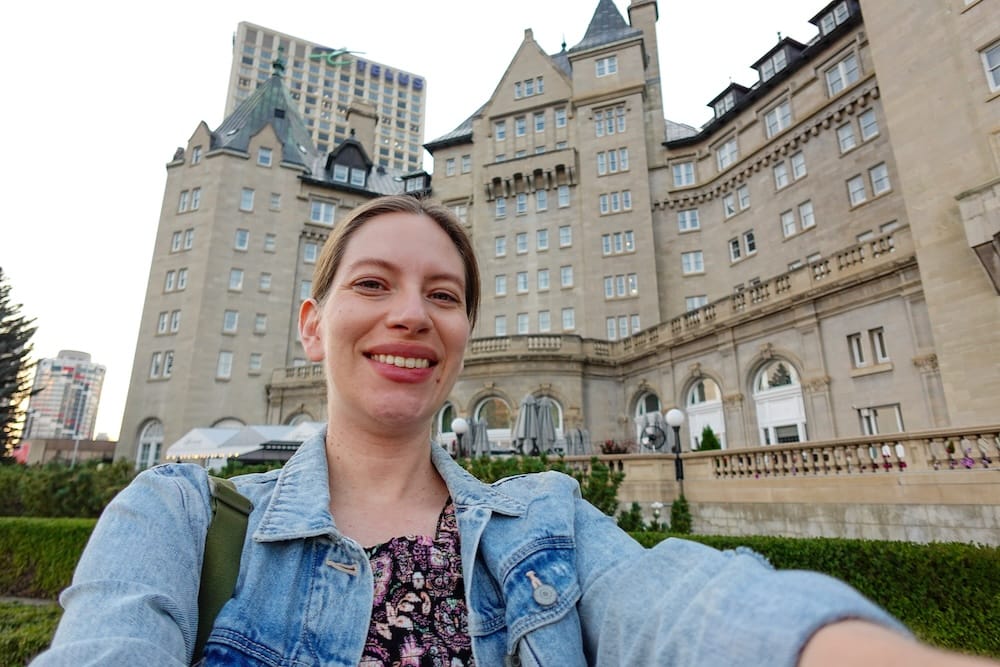
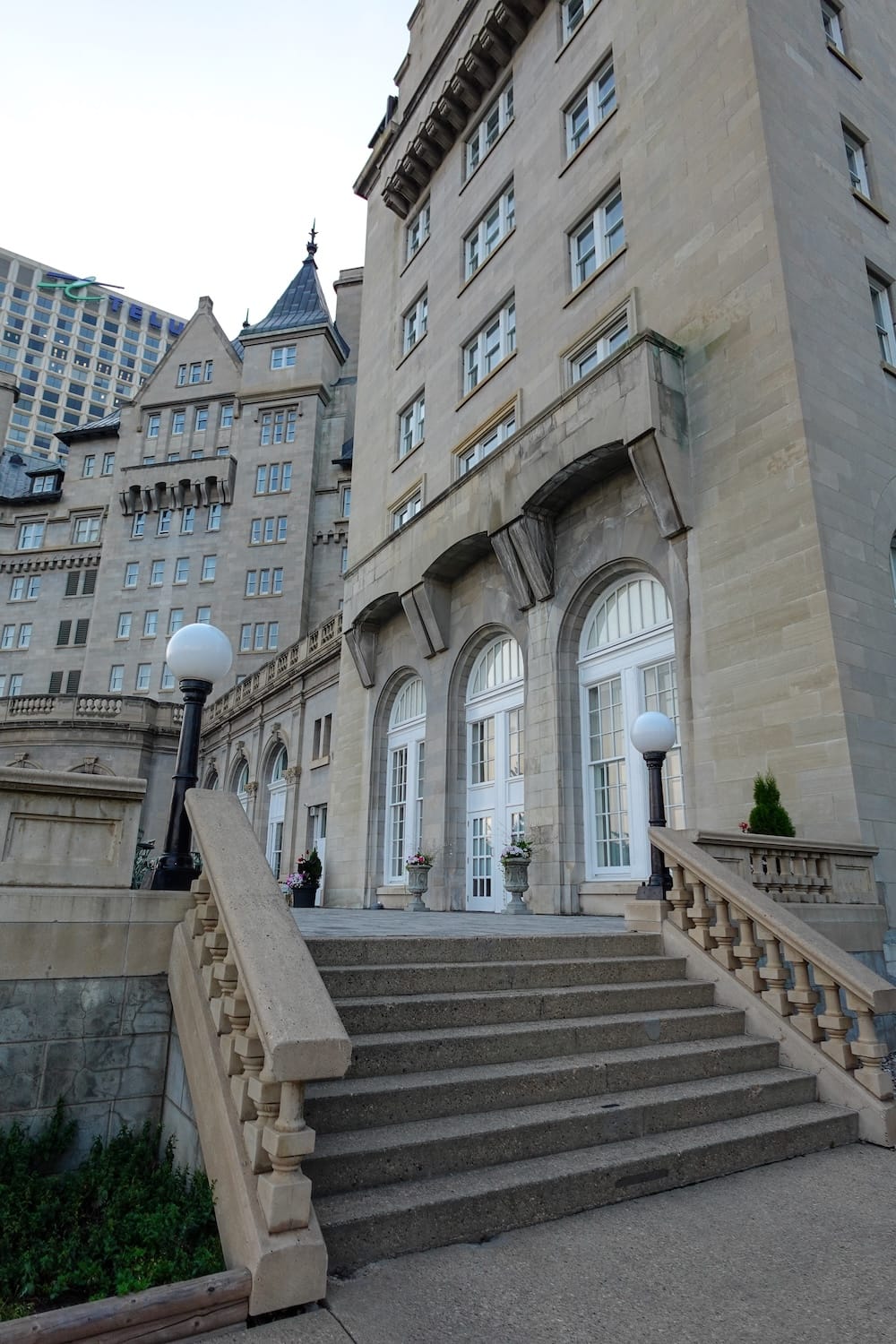
Fairmont Hotel Macdonald is the old grand dame overlooking the river valley. Audrey and I stayed there on our babymoon, and it became one of those rare hotel nights where the property itself was part of the trip.
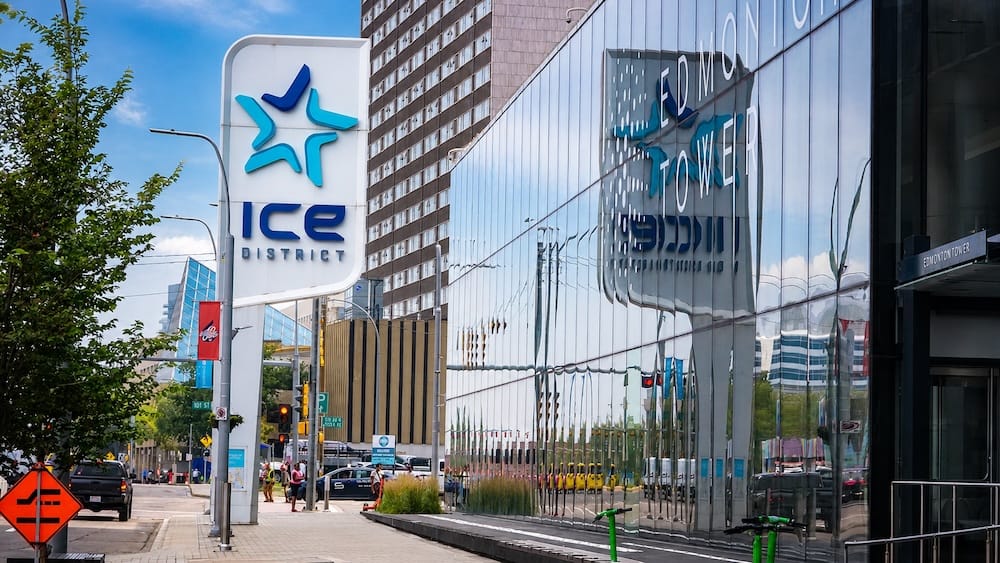
JW Marriott Edmonton ICE District is the newer counterpoint: contemporary rooms, a full spa and extensive fitness facilities, an Executive Lounge for qualifying guests, and a location woven directly into the ICE District beside Rogers Place.
I’ve stayed at the Fairmont.
I have not stayed at the JW Marriott.
That’s important, because I don’t want to create one of those suspicious hotel rankings where the writer somehow has intimate opinions about the beds, breakfasts and service at every expensive property in town.
What I can tell you is what our Fairmont stay was actually like, what I would change if we booked it again, how its current facilities compare with JW, and which hotel makes more sense for different kinds of Edmonton trips.
For me, the divide looks like this:
Fairmont Hotel Macdonald is the stronger splurge when history, atmosphere, the river valley and spending time at the hotel are part of the reason you’re booking.
JW Marriott Edmonton ICE District makes the stronger case when contemporary wellness, Rogers Place and modern Downtown convenience are what you’re paying extra for.
That’s a much more useful comparison than trying to declare one Edmonton hotel the universal king of luxury.
| Comparison | Fairmont Hotel Macdonald | JW Marriott Edmonton ICE District |
|---|---|---|
| Luxury style | Historic château and river-valley landmark | Contemporary ICE District luxury |
| Best for | Couples, babymoons, anniversaries, historic-hotel fans, slower stays | Oilers games, concerts, spa weekends, contemporary city breaks |
| Have I stayed there? | Yes | No |
| Setting | Downtown overlooking the river valley | ICE District beside Rogers Place |
| Rooms | Renovated rooms in a historic building; river-valley categories available | Modern décor, marble bathrooms and contemporary technology |
| Wellness | Saltwater pool, whirlpool, sauna, steam room, fitness and massage facilities | Spa by JW, pool, hot tub, steam room and extensive Archetype fitness facilities |
| Premium lounge | Fairmont Gold | Executive Lounge for qualifying guests |
| Rogers Place | Downtown, but not directly integrated | Connected by above-ground pedway |
| Biggest strength | Character, setting and a hotel experience I can personally recommend | Modern wellness and event convenience |
| Main compromise | Harder to justify if you’re barely using the hotel | Harder to justify if ICE District, the spa and Rogers Place don’t matter to you |
| Check availability | See current Fairmont Hotel Macdonald rates | See current JW Marriott Edmonton rates |
Edmonton luxury really comes down to what kind of splurge you want
Edmonton has plenty of good upscale hotels.
I don’t think that means we need to manufacture a “Top 10 Luxury Hotels in Edmonton” list and start pretending all ten properties are playing the same game.
They’re not.
Fairmont Hotel Macdonald and JW Marriott Edmonton ICE District stand out because they represent two very different ideas of what an Edmonton luxury stay can be.
The Fairmont starts with the building.
You see the château above the North Saskatchewan River. You walk through public rooms that feel connected to another period in Edmonton’s history. You can look at old photographs of the hotel rising above a much smaller Downtown.
The place has presence.
08:16 – ICE District
08:22 – Rogers Place
08:28 – Wayne Gretzky Statue
10:15 – Official Oilers Team Store
10:55 – Neon Sign Museum
JW feels tied to a completely different Edmonton.
It’s part of the ICE District that transformed Downtown around Rogers Place: contemporary, event-driven, polished and built around the way the centre of the city functions now.
What I don’t want to do is turn this into a cartoon where Fairmont is old and charming while JW is new and soulless.
That would be lazy.
Fairmont’s rooms have been renovated, and its health club is much more substantial than you might expect from looking at the century-old exterior.
JW isn’t merely an expensive bed beside the hockey arena either. Its current luxury proposition includes a full spa, serious fitness facilities, premium lounge access for qualifying guests and Alberta-inspired design details.
So this is really about emphasis.
Fairmont asks whether you want your Edmonton splurge to have history and sense of place.
JW asks whether you want it to have modern facilities and maximum convenience.
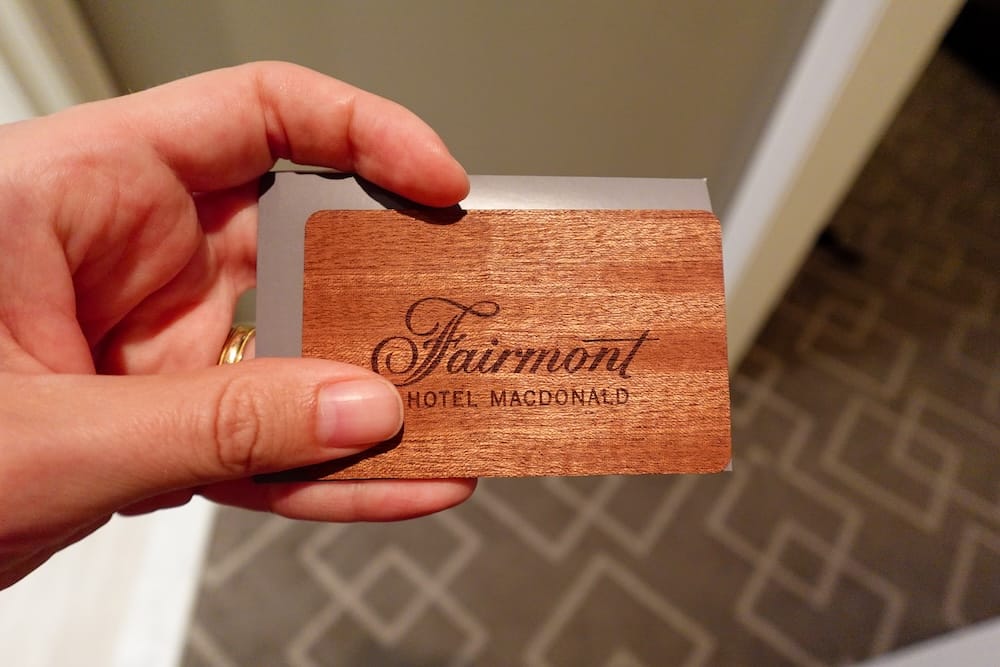
Fairmont Hotel Macdonald: the luxury stay I actually know
Audrey booked the Fairmont Hotel Macdonald during our Alberta trip because she wanted a break.
She was well into her third trimester, we’d been travelling and sightseeing quite hard, and spending part of the day floating in a swimming pool sounded much more attractive than adding another twelve stops to the itinerary.
It was also our first proper overnight at a Fairmont.
We’d visited other grand Fairmont properties across Canada for tours and afternoon tea, but we’d never actually checked in.
That immediately made the stay feel like a bit of an occasion.
And I think Fairmont works best when you treat it that way.
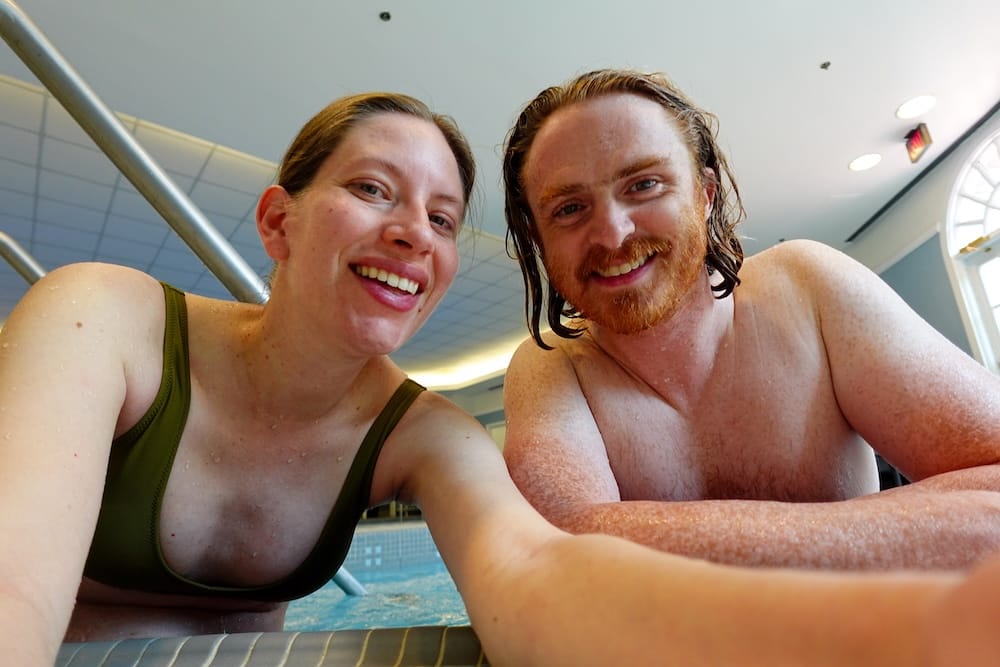
Our pool afternoon ended up explaining the hotel better than any brochure could
One of Audrey’s reasons for booking the hotel was the pool.
That turned out to be a very good call.
The Fairmont still has its 40-foot saltwater swimming pool, along with a whirlpool, sauna, steam room, fitness facilities and massage treatment rooms.
For us, though, the pool wasn’t just something appearing halfway down an amenities list.
We actually built part of the day around it.
The robes went on.
We went downstairs.
Audrey floated around happily.
Then she attempted the whirlpool.
That lasted considerably less time.
It was much too hot for her and the baby, and at one point she compared the experience to getting into a pot of soup.
I had fewer concerns.
I sat there turning increasingly red until Audrey started calling me “the lobster.”
It wasn’t our most sophisticated luxury-hotel moment.
It was one of the most enjoyable.
More importantly, it showed me why the Fairmont was worth the splurge on that particular trip.
We weren’t paying for a pool we never saw.
Audrey had chosen the hotel partly because she needed exactly that kind of afternoon.
Fairmont Gold changed the economics of the stay too
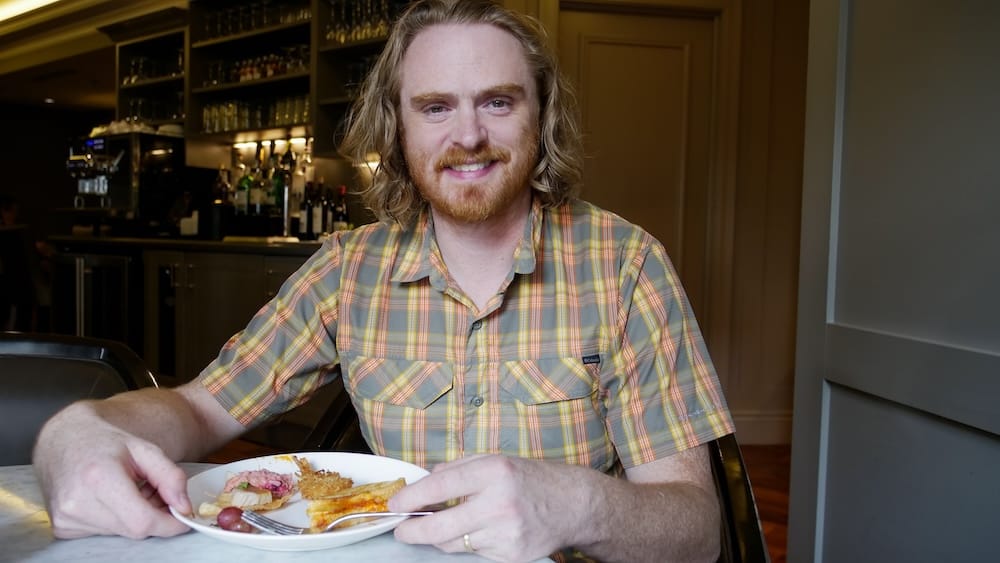
We stayed on the Gold floor, and this was another part of the hotel we actually used.
The current Fairmont Gold offering still includes its own lounge, breakfast, all-day coffee and tea, evening canapés and dedicated service.
During our stay, the evening spread was substantial enough that dinner quietly disappeared from the itinerary.
We’d travelled.
We’d been swimming.
We were hungry.
Then sandwiches, meats, cheeses, vegetables, shrimp and all sorts of other food started appearing.
At some point it became obvious that we weren’t going out for another meal.
Breakfast the next morning was similarly enormous.
It felt closer to brunch by the time I’d gone back for seconds.
This doesn’t automatically mean Fairmont Gold is worth upgrading to for everybody. If you’re spending the whole day outside the hotel and coming back late, you might barely use what you’re paying for.
We did.
And that is really the pattern with Fairmont Hotel Macdonald.
The more you treat the hotel itself as part of the trip, the easier the price is to understand.
I expected the comfort. I didn’t expect to care so much about the building.
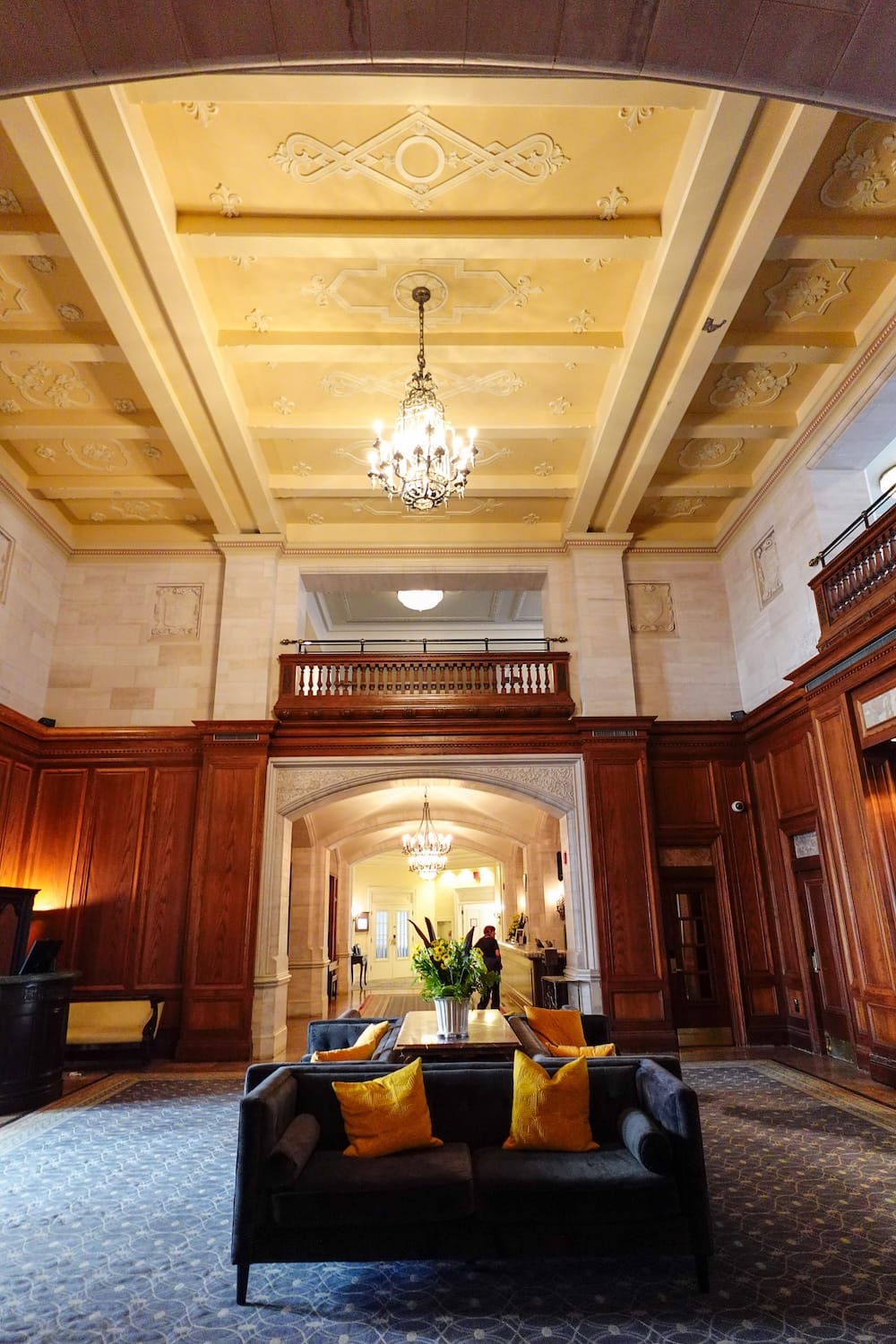
The historical side of the Fairmont sneaked up on me.
Edmonton was the first big city I lived in. I came here for university after growing up in a small village on Vancouver Island, and I hadn’t been back for a very long time.
So checking into one of Edmonton’s most recognizable old buildings was already a strange way of reacquainting myself with the city.
Then I found the mezzanine.
There were old photographs showing the construction of the hotel and the early Downtown skyline. I ended up sitting there for quite a while, “lounging like a lizard,” looking at images where the Fairmont seemed to dominate everything around it.
I called it the “OG building” of Downtown Edmonton.
Architectural historians may have more refined terminology.
Mine gets the point across.
That was when the Fairmont stopped feeling like an expensive hotel that happened to be old.
The history became part of why I enjoyed staying there.
Our room wasn’t perfect
This is also where I’d resist getting too sentimental.
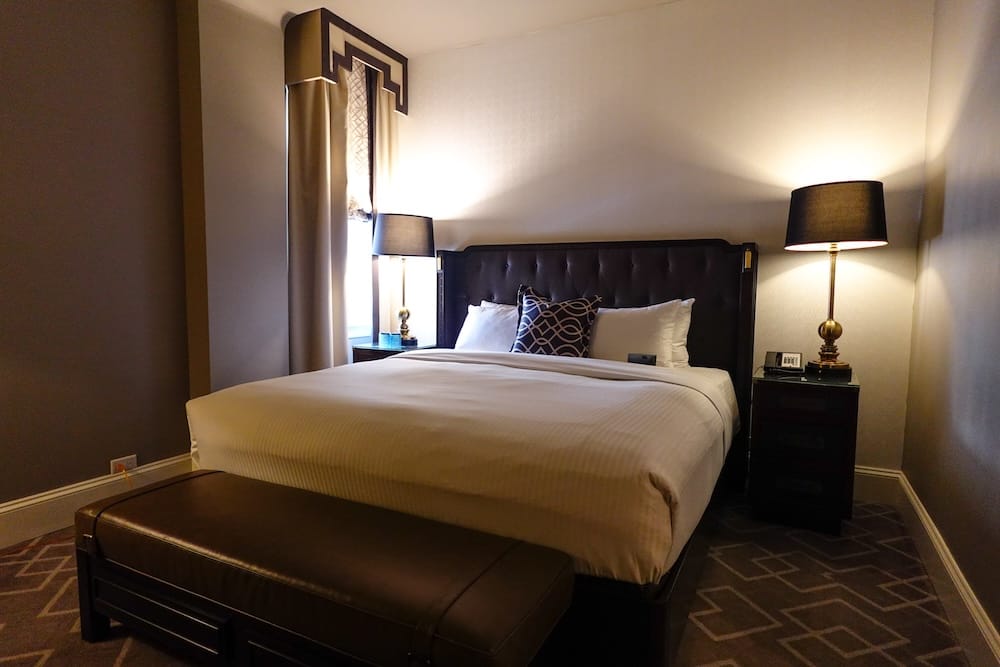
Audrey booked a city-facing room, and she wasn’t particularly impressed.
The window was narrow, the outlook wasn’t memorable and the room felt darker than we’d hoped.
Her conclusion afterwards was straightforward: she’d book the river-valley side next time.
I agree.
Current Fairmont inventory still includes river-valley-view categories, and if I’m already paying for a landmark hotel overlooking one of Edmonton’s defining landscapes, that’s the side I’d want.
Our bathroom, on the other hand, felt bright and renovated, which is another reason I don’t think “historic” should automatically be read as “dated.”
Still, the room reminded me that staying in an old château involves more variables than booking a purpose-built modern tower.
Room choice matters.
Who I think should pay for the Fairmont
Fairmont Hotel Macdonald makes the strongest sense to me for:
- a babymoon;
- an anniversary;
- a couples weekend;
- a historic-hotel trip;
- somebody who specifically wants the river-valley setting;
- or a traveller planning enough downtime to enjoy the property.
We left noticeably more relaxed than when we arrived.
That was the point.
I’m normally not somebody who needs fancy hotels. Audrey actually commented during our stay that I’m difficult to pamper.
Apparently she finally cracked the code.
Put me in a robe, boil me in a whirlpool, feed me canapés and give me old photographs to stare at.
Pure luxury.
If that sounds like the kind of Edmonton stay you’re after, I’d check current Fairmont Hotel Macdonald rates and room availability and pay particular attention to the view category before booking.
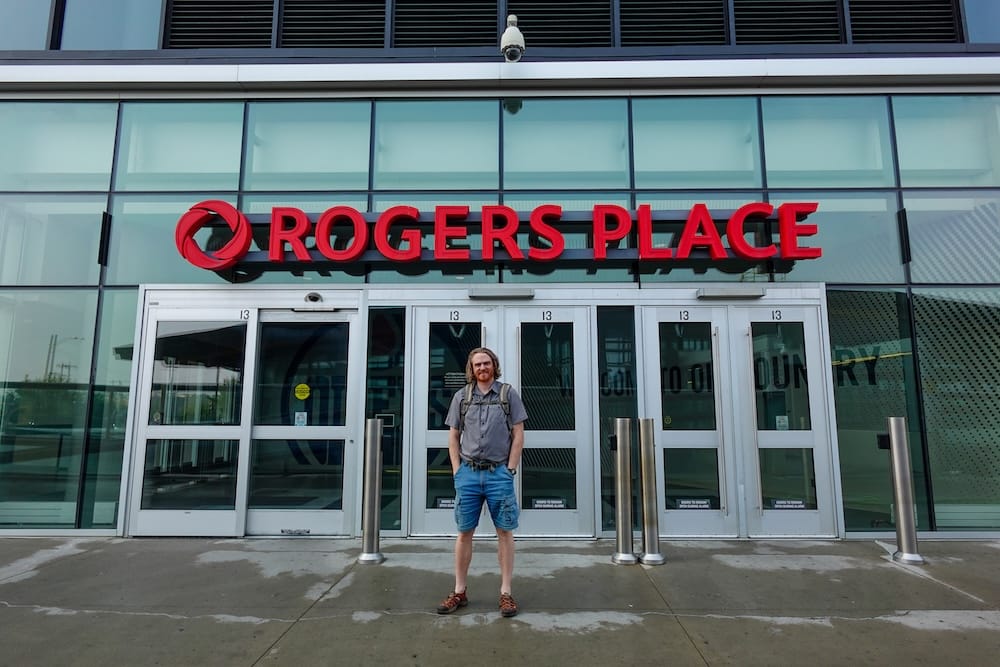
JW Marriott Edmonton ICE District: Edmonton luxury looking forward instead of backward
The JW is a different animal.
Audrey and I spent time around ICE District and Rogers Place when we returned to Edmonton, so I’m familiar with the setting.
I remember when Downtown Edmonton did not revolve around this version of the arena district.
What I haven’t done is sleep upstairs at the JW, use its spa or eat breakfast in the Executive Lounge.
So this isn’t a personal hotel review.
It’s a different kind of recommendation.
And once you look beyond the location, there is plenty to recommend.
The room proposition is much more contemporary
JW Marriott has 346 guestrooms, including 24 suites, with modern décor, marble bathrooms, contemporary technology and custom design elements that reference Alberta.
If room design is one of the main reasons you’re moving into the luxury category, this is where the JW has a natural advantage.
Fairmont’s rooms have been updated, but they’re still working within a much older structure.
Our narrow city-facing window was proof of that.
JW begins with a contemporary tower and designs outward from there.
That doesn’t automatically make the rooms more comfortable.
I haven’t slept in them.
But if what you want is modern luxury rather than modernized heritage, the distinction is real.
JW’s wellness setup is probably its strongest hotel-level advantage
This was the part that most changed how I thought about the comparison.
The JW has a full Spa by JW, an indoor pool, hot tub and steam room.
Then there’s Archetype, with dedicated spaces for yoga, HIIT, spin and boxing, plus broader functional training facilities.
This goes well beyond the usual hotel gym with four treadmills facing a television.
If I were designing a luxury weekend around spa treatments and workouts, JW Marriott Edmonton ICE District is the property I’d compare first.
Fairmont still competes surprisingly well.
Its saltwater pool was central to our babymoon. It also has the sauna, steam room, whirlpool, fitness facilities, squash and massage treatment rooms.
But JW pushes the wellness idea further.
That is a meaningful distinction.
JW also has a real premium-lounge product
The JW’s Executive Lounge sits on the 22nd floor, with access attached to qualifying room categories and certain Marriott Bonvoy elite levels.
Eligible guests can receive breakfast and evening canapés there.
So there is a genuine point of comparison with Fairmont Gold.
What I can’t do is tell you which lounge is better.
I know Fairmont Gold worked brilliantly for us because we used it.
I haven’t walked into the JW lounge.
If lounge access matters to your booking, I’d compare the exact package you’re purchasing rather than assuming every JW room—or every Fairmont room—comes with the same benefits.
That’s the kind of detail that can change whether paying more actually feels worthwhile.
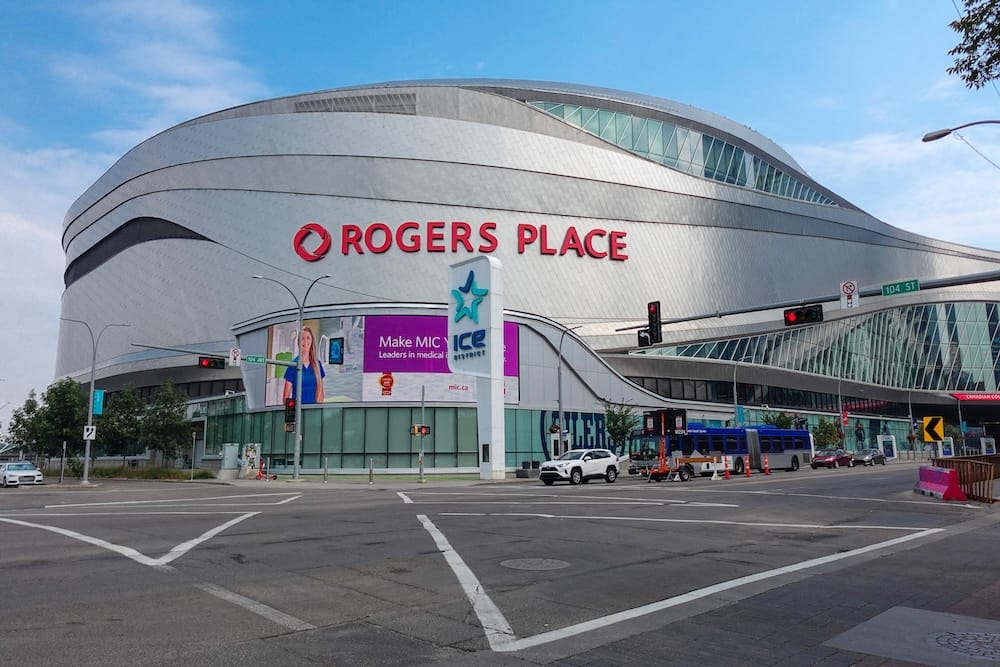
Rogers Place is where JW’s version of luxury becomes difficult to argue with
This is the cleanest win anywhere in the comparison.
JW Marriott is connected to Rogers Place by an above-ground pedway.
If I’m travelling to Edmonton specifically for an Oilers game or concert and I’m already committed to staying somewhere luxurious, I would have a hard time talking myself out of that.
I used to attend Oilers games regularly when I was a university student here.
Those were at the old arena.
When Audrey and I returned, we walked around the ICE District, visited Rogers Place and went into the Oilers store.
We were too early in the season to catch a game.
An injustice I still haven’t fully processed.
But the new setup is completely different from the Edmonton I knew as a student.
For an event weekend, the hotel location becomes part of the experience.
You go to the game.
Thousands of people pour out afterwards.
You walk through the connected district and back to the hotel.
No complicated exit plan.
No wondering how much surge pricing is currently ruining your evening.
No crossing the city after everyone leaves at once.
That is modern convenience in its purest form.
And it’s one of those situations where spending more can solve a very obvious problem. If Rogers Place is controlling the trip, I’d check JW Marriott availability for the event dates before looking farther away.
So where does Fairmont actually beat JW — and where doesn’t it?
This is where I’d stop talking about the hotels separately.
The differences become much clearer once you force them onto the same questions.
For historic character: Fairmont
No hesitation here.
The Fairmont building itself is part of the reason to stay.
The river-valley setting, château architecture and public spaces create a connection to Edmonton’s older identity that a contemporary tower cannot reproduce.
JW has Alberta-inspired design elements and belongs very much to modern Edmonton.
But history isn’t what you’re buying there.
Fairmont wins this one comfortably.
For modern rooms: JW
I would lean JW if contemporary design is the priority.
Its rooms were conceived as part of a modern luxury hotel.
Fairmont has renovated accommodation, but the underlying structure is still historical and our own room demonstrated that those bones can affect things like window size and light.
That doesn’t make Fairmont inferior.
It makes the decision easier if you know what you care about.
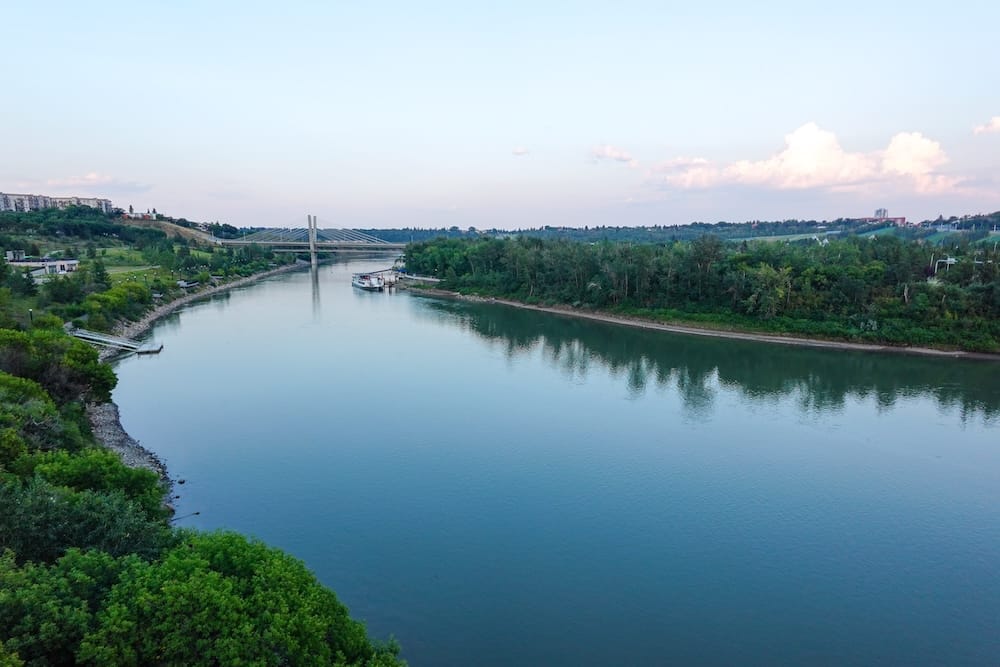
For river-valley atmosphere: Fairmont
Again, Fairmont.
One of my favourite things about Edmonton has always been the river valley.
When I lived here I used it for jogging, inline skating and walking.
During our hotel stay, being able to step outside, look over the valley and work our way down toward the river gave the property a sense of place that mattered to me.
JW gives you the ICE District.
Fairmont gives you the river valley.
That may be the most Edmonton-specific contrast in the entire article.

For an Oilers game or concert: JW
The pedway wins.
Fairmont is still Downtown, so it’s hardly inconvenient in the grand scheme of things.
JW is simply much more integrated with the event.
If Rogers Place is why I’m travelling, I’d rather lean into that advantage.
For wellness: JW
This one is closer than I expected before comparing the facilities.
Fairmont’s health club is good.
We loved the pool.
JW’s full spa and much more extensive fitness operation push it further.
If the wellness facilities are a central part of the luxury weekend rather than an occasional swim, JW has the stronger current proposition.
For a premium lounge: I won’t pretend to know
Fairmont Gold worked beautifully for us.
JW has an Executive Lounge with meaningful benefits for qualifying guests.
That’s the honest extent of my comparison.
Anything beyond that would involve me reviewing a lounge I haven’t used.
No thanks.
For a romantic or special-occasion stay: it depends on what you’re celebrating
Our babymoon gives Fairmont a very strong personal case.
It was slow, relaxing and atmospheric.
I could absolutely imagine repeating that format for an anniversary or couples weekend.
But suppose your “special occasion” is built around spa treatments, contemporary dining and an Oilers game.
Then JW starts looking considerably better.
I don’t think romantic automatically means old château.
Sometimes romance apparently involves hockey.
I support this.
For price: look at your dates and stop trying to crown a permanent bargain
Luxury-hotel rates move.
A lot.
Events move them.
Weekends move them.
Different room categories move them.
Lounge access moves them.
Promotions move them.
Parking doesn’t help at either property.
I’m not going to tell you Fairmont is always cheaper or JW is always more expensive because that isn’t a stable conclusion.
Instead, I’d ask whether the premium attached to your dates is buying something you’re actually going to use.
If Fairmont costs more and you’re planning a slow hotel day, that might make complete sense.
If JW spikes during an Oilers weekend but puts you directly beside the reason you’ve flown to Edmonton, perhaps that premium is still doing useful work.
Luxury value is annoyingly personal like that.
The cleanest way to settle that part of the comparison is to open both properties for the same dates: check Fairmont Hotel Macdonald beside JW Marriott Edmonton ICE District, then compare the room category and inclusions you would actually book rather than two random headline prices.
What about Edmonton’s other upscale hotels?
There are plenty.
The Westin Edmonton is a legitimate upscale Downtown hotel with an indoor pool, fitness facilities and a large room inventory.
Sandman Signature Edmonton Downtown also offers a central location with a pool, gym and other upscale amenities.
Fantasyland Hotel can deliver a very premium experience inside West Edmonton Mall, particularly if you’re looking at one of the themed rooms.
Renaissance Edmonton Airport Hotel offers a premium stay directly tied to YEG.
I wouldn’t make any of them equal protagonists in this article.
Not because they’re bad hotels.
Because they solve different problems.
Fantasyland makes sense because you’re doing West Edmonton Mall.
Renaissance makes sense because your flight schedule is behaving terribly.
Westin and Sandman belong naturally in a broader Edmonton hotel comparison.
For the specific question in this article — historic character versus modern central luxury — Fairmont and JW are the two properties that actually create the decision.
I’m happy keeping the shortlist small.
Sometimes a shortlist should actually be short.
If neither flagship property quite fits what you want to spend, you can compare Edmonton’s wider selection of upscale hotels on Booking.com without forcing yourself into the luxury premium.
Fairmont or JW Marriott: which would I choose?
I’d choose Fairmont Hotel Macdonald if I wanted the hotel to feel unmistakably tied to Edmonton.
I’d choose it for the château, the river valley, the historical atmosphere and the slower rhythm we personally enjoyed during our babymoon.
I’d choose it for an anniversary.
I’d choose it if I were deliberately setting aside an afternoon to swim, relax and enjoy being in the hotel.
And if I booked again, I’d listen to Audrey and go for the river-valley view.
I’d choose JW Marriott Edmonton ICE District if the trip revolved around Rogers Place.
I’d also look there first for a spa-heavy luxury weekend, a contemporary room experience or a stay where I wanted modern ICE District outside the door rather than the river valley below me.
The biggest difference is probably this:
Fairmont Hotel Macdonald made me appreciate stopping. JW Marriott makes the strongest case when luxury is about removing friction.
One gives you an Edmonton landmark where the hotel itself can become the occasion.
The other gives you modern facilities planted in the middle of the city’s contemporary entertainment district.
I’d happily pay more for either one when that distinction matters to the trip.
When it doesn’t?
I’d save the money.
Luxury only feels luxurious to me when I’m actually using what I paid for.
Frequently Asked Questions
Which Edmonton luxury hotel would I choose for historic character?
I would choose Fairmont Hotel Macdonald. The château architecture, historic public spaces and river-valley setting are central to the experience, and they were a meaningful part of why I enjoyed our stay.
Which luxury hotel makes more sense for Rogers Place?
JW Marriott Edmonton ICE District has the stronger location for an Oilers game or concert because it is connected to Rogers Place by an above-ground pedway. If the event is controlling the trip, that convenience is difficult to ignore.
Have I stayed at both Fairmont Hotel Macdonald and JW Marriott Edmonton ICE District?
No. Audrey and I stayed at Fairmont Hotel Macdonald during our babymoon, but I have not stayed at JW Marriott. My Fairmont comments therefore include firsthand experience, while my JW comparison is based on its facilities, location and current hotel offering.
Which hotel would I choose for a wellness-focused luxury weekend?
I would lean toward JW Marriott because its Spa by JW and extensive Archetype fitness facilities push the wellness proposition further. Fairmont still has a substantial health club, and its saltwater pool was an important part of our own stay.
Which hotel is better for the Edmonton river valley?
Fairmont Hotel Macdonald is the clear choice for the river-valley setting. Being able to step outside toward the North Saskatchewan River Valley was part of what gave our stay a stronger sense of place.
Which premium lounge is better: Fairmont Gold or the JW Executive Lounge?
I cannot fairly declare a winner. Fairmont Gold worked extremely well for us because we personally used the lounge, breakfast and evening canapés. I have not used the JW Executive Lounge, so I would compare the exact access and benefits attached to the room you are booking.
Is Fairmont or JW Marriott cheaper?
I would not crown either one the permanent bargain because luxury-hotel rates move with dates, events, room categories, lounge access and promotions. I would compare both properties for the same dates and judge whether the extra cost is buying something you will actually use.
This article is also available in Spanish. [Leé la versión en castellano: Mejores hoteles de lujo en Edmonton: carácter histórico vs comodidad moderna]
This article contains affiliate links. If you book through one of these links, I may earn a commission at no extra cost to you.