
Edmonton has no shortage of attractions that can swallow half a day, but the Royal Alberta Museum and Muttart Conservatory do very different things with your time.
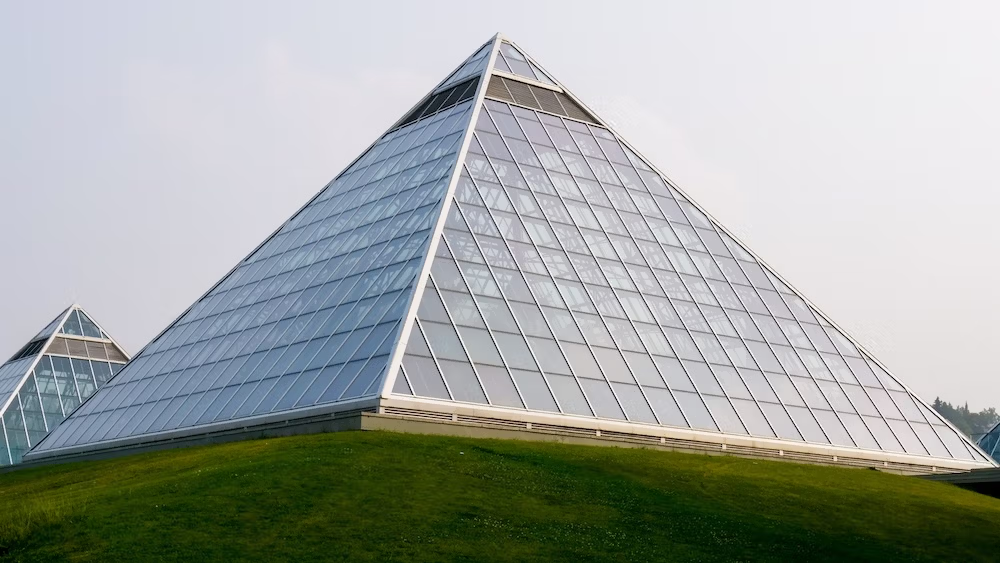
At RAM, you move through Alberta’s human history, dinosaurs, Ice Age animals, wildlife displays, live invertebrates and temporary exhibitions. At Muttart, you step from tropical humidity into dry desert heat, then into a temperate garden and a fourth pyramid that changes with the season.
Audrey and I visited both during the same Edmonton trip. We enjoyed both too, which would make it very easy to write one of those useless comparison articles that ends with: “You cannot go wrong.”
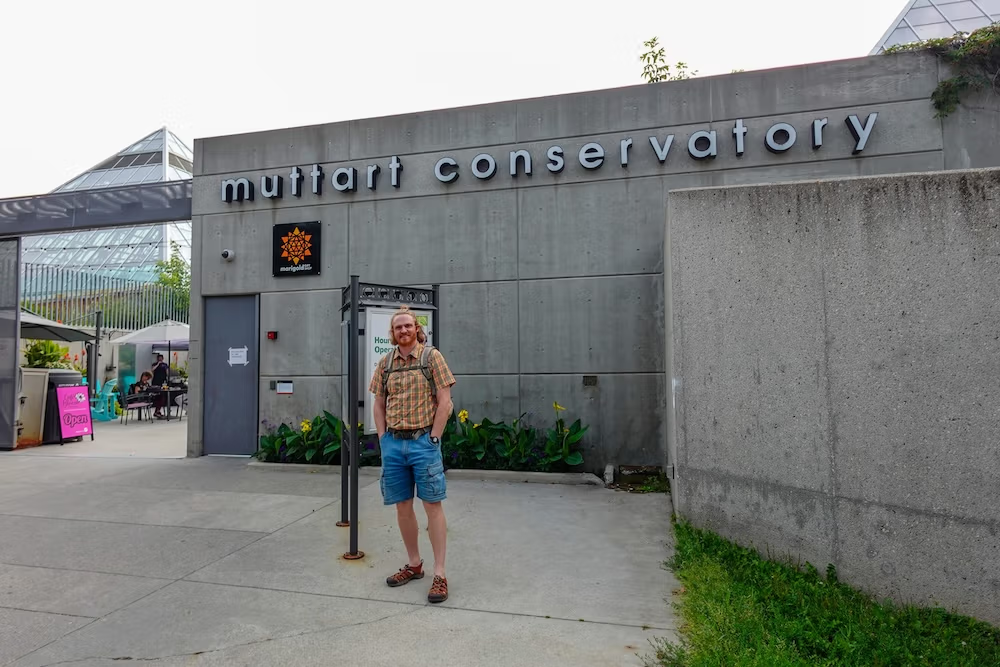
You can go wrong. Mostly by choosing the attraction that does not match your interests, available time or tolerance for hot, sticky air.
For most first-time visitors, I would choose the Royal Alberta Museum. It gives you a broader understanding of Alberta, has more variety and feels like one of Edmonton’s major cultural attractions rather than a pleasant side trip.
I would choose Muttart instead when plants are the main interest, the schedule is tight, I want something more visual than academic, or practical details such as cheaper admission, free parking and longer hours make it the easier fit.
The quick answer
The Royal Alberta Museum is the stronger default choice.
Muttart Conservatory is the better specialist choice.
| Comparison | Royal Alberta Museum | Muttart Conservatory |
|---|---|---|
| Best for | Alberta history, dinosaurs, wildlife, broad museum interest and families with young children | Plants, visual immersion, photography and shorter schedules |
| Main experience | Several large galleries covering different subjects | Four climate-controlled botanical pyramids |
| Comfortable visit | Roughly two to three hours | Roughly one to two hours |
| Adult admission | $25 as checked July 31, 2026 | $14.95 as checked July 31, 2026 |
| Parking | Nearby paid parking; no dedicated visitor lot | Free parking immediately outside |
| Transit | Near Churchill LRT station downtown | Beside Muttart Valley Line stop |
| Family advantage | Children’s Gallery and Bug Gallery | Smaller Imagination Station and a more compact outing |
| Accessibility | More complete documented step-free access and visitor services | Most areas accessible, but steep ramps and one partially accessible pyramid |
| Physical conditions | Conventional museum environment | Deliberate shifts in heat and humidity |
| Better for a short window | Only if you choose galleries carefully | Usually the easier fit |
| My overall verdict | Best first choice for most Edmonton visitors | Better when plants, time or convenience lead the decision |
Prices, exhibitions and hours change, so treat the figures above as a snapshot rather than something carved into one of RAM’s fossil displays.
RAM gives you the fuller Alberta experience
The Royal Alberta Museum is large enough that you need a loose plan, even if that plan is simply deciding which subjects matter most to you.
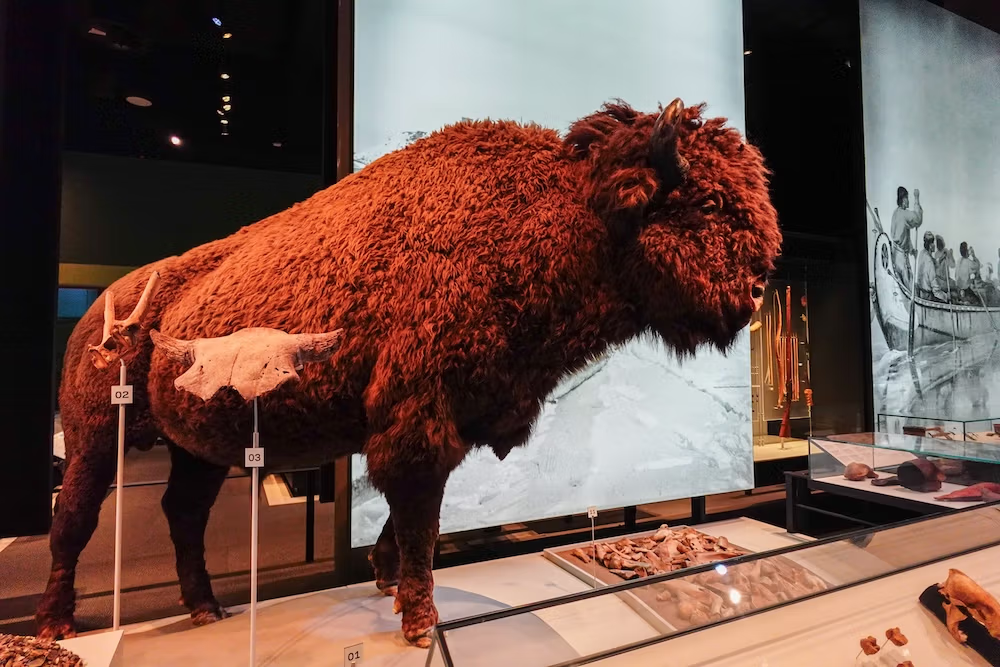
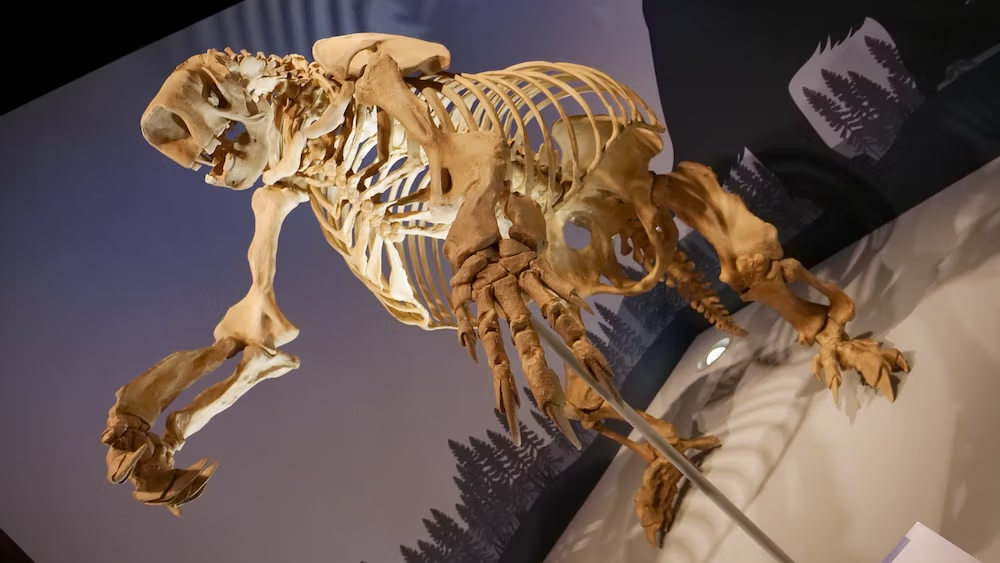
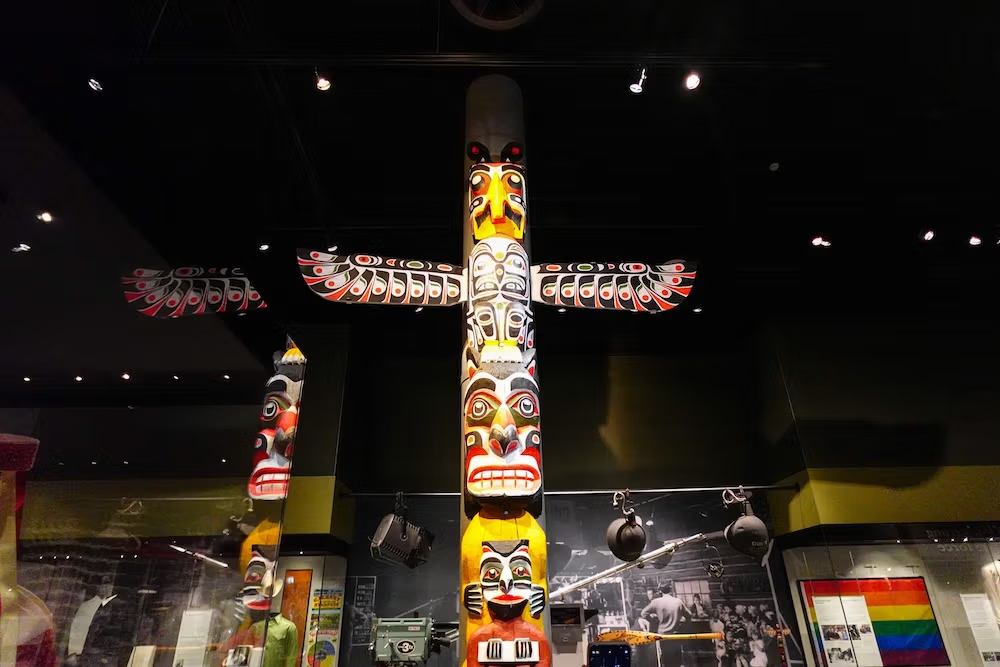
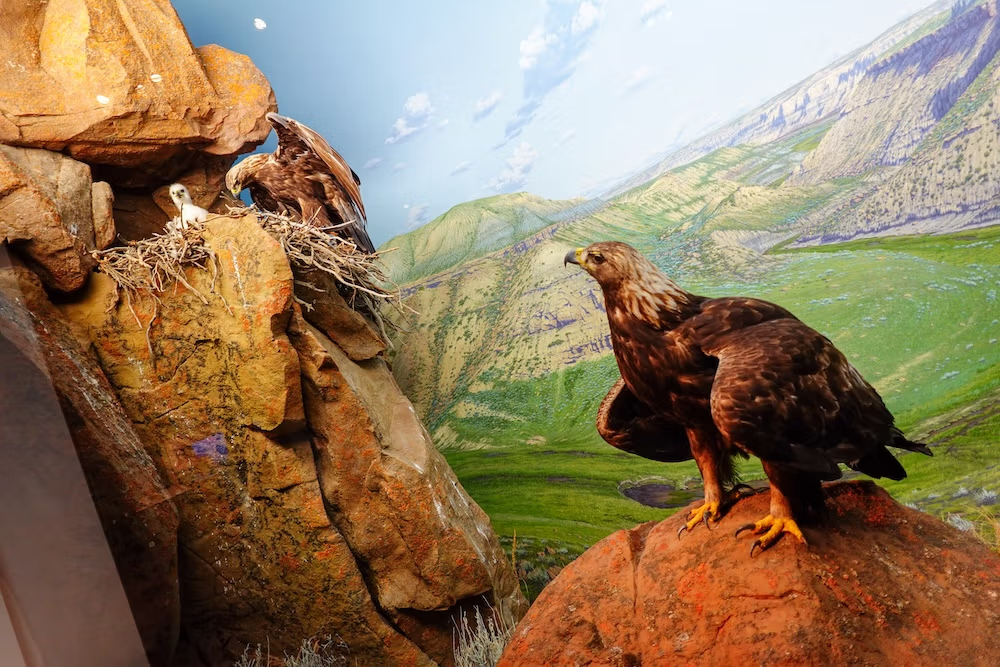
Audrey and I spent time in both the Human History Hall and the Natural History Hall. We saw displays connected to Alberta’s Indigenous communities, prehistoric life, the Ice Age and the animals found across the province today.
The wildlife section was particularly useful because it brought together moose, elk, deer, grizzly bears, mountain goats and other animals that visitors associate with Western Canada. It does not replace seeing wildlife outdoors—preferably from a sensible distance—but it gives you a clear look at species you may never encounter on the rest of your trip.
Then there were the dinosaurs.
We saw Edmontosaurus, which is about as geographically appropriate as a dinosaur can get without wearing an Oilers jersey. Alberta’s fossil history gives RAM a local identity that a generic natural-history museum cannot fake.
The Human History Hall widens the picture again. It covers Indigenous histories and experiences alongside settlement, agriculture, industry, conflict and social life. You are not just looking at old objects. You are moving through different versions of how Alberta became what it is now.
During our visit, a temporary exhibition focused on Angkor. Audrey and I had travelled in Cambodia, so seeing temples and ruins we recognized gave that part of the museum an unexpected personal connection.
That exhibition is gone, of course. Temporary exhibitions are temporary. Revolutionary concept.
The larger point is that RAM’s rotating gallery can add a completely different subject to a museum that already has enough permanent material for a solid visit.
RAM also has a Bug Gallery with live invertebrates and a Children’s Gallery designed for children six and under. We visited before Aurelia was born, so I cannot pretend we tested the toddler experience. Still, the museum clearly offers more than static cases and information panels.
This breadth is why I would recommend RAM first. You leave with a stronger sense of Alberta: its landscapes, animals, history and people.

Muttart is more physical than intellectual
Muttart Conservatory does not ask you to absorb a province’s entire history before lunch.
It asks you to walk through four different environments and pay attention to how each one feels.
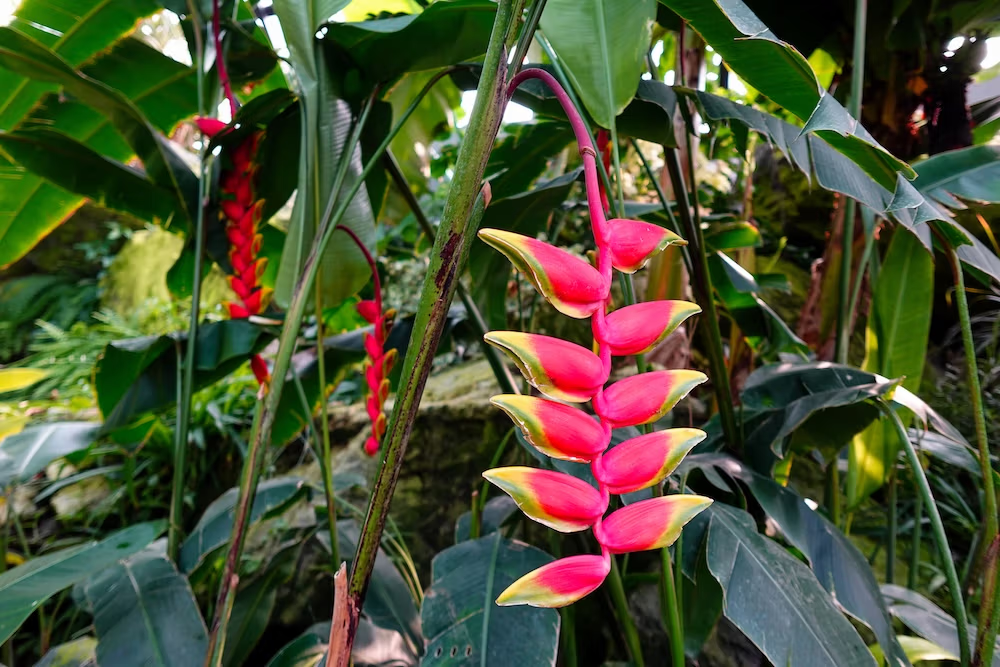
The Tropical Pyramid hit us immediately. It was lush, humid, hot and sticky. Audrey said it felt as though we could have been in Southeast Asia, and some of the plants reminded us of places we had visited in Brazil and Peru.
The plants were impressive. So was the humidity.
Audrey finds tropical heat draining. I do too, although I probably complain about it less gracefully. Put me in dry heat and I can keep functioning. Add humidity and I start moving like an old laptop with too many browser tabs open.
The Arid Pyramid was much more our speed.
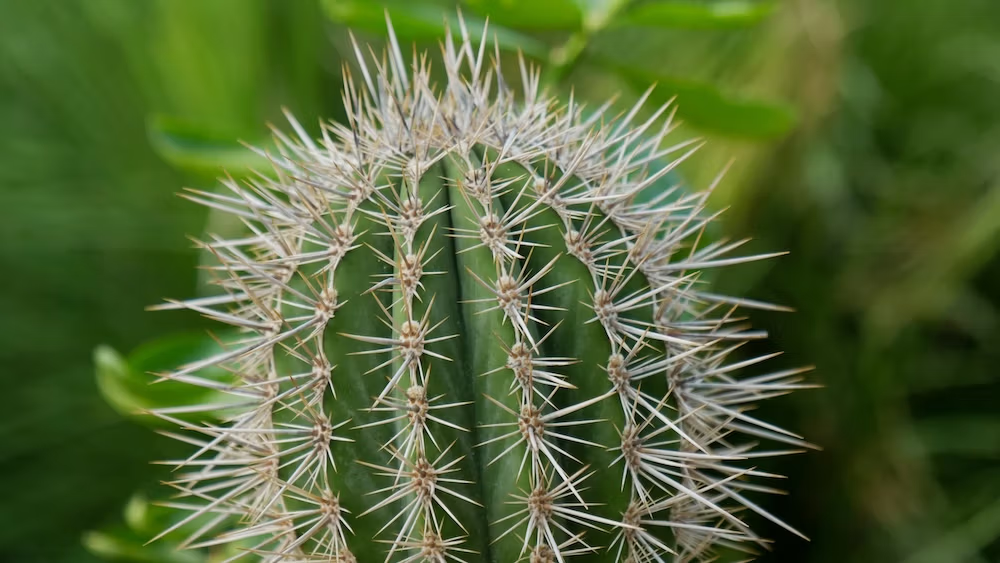
It was still hot, but the dry air made it feel easier. We moved among cacti, thorny plants and vegetation adapted to conditions that could not have been more different from the tropical environment next door.
“Dry heat all the way, baby” was basically our joint conclusion.
The Temperate Pyramid felt easier again. Green, comfortable and familiar. Audrey was happy that she no longer felt as though she was turning into a prune or raisin, which was perhaps unfair to both prunes and raisins but accurately captured the relief.
Muttart’s fourth pyramid is the feature space, and its theme changes regularly. We saw an Ancient Egypt display with themed plants, interpretive signs and decorative elements. You may see something completely different.
That rotating pyramid helps keep Muttart fresh, but the permanent appeal comes from the contrast between the environments. The conservatory currently holds more than 700 plant species across its tropical, arid, temperate and feature spaces.
There is also a central court with seating, artwork, a fireplace and a small children’s area. You are not forced to march through the pyramids without stopping.
Even so, Muttart’s physical conditions are part of the attraction. The Arid Pyramid can become hotter than 30°C during summer, and the Tropical Pyramid is supposed to feel like a rainforest.
This is indoors, but it is not neutral territory.
The real choice is breadth versus immersion
RAM asks more from your attention.
Muttart asks more from your senses.
At RAM, you decide how deeply you want to engage with each subject. You can read extensively, study fossils, focus on Alberta wildlife, spend time in human history or disappear into a temporary exhibition.
Two people could visit together, follow different interests and still feel they had experienced the museum properly.
Muttart has a clearer rhythm. You move through four pyramids, notice the changing vegetation and climate, then decide where to linger. The attraction has educational material, but you do not need to read every panel to understand what makes the place interesting.
That gives Muttart an advantage for travellers who normally suffer from museum fatigue.
Some people love museums until the fourth gallery, when every display case starts blending into one enormous educational casserole. Muttart rarely creates that problem because the environment changes so sharply.
Still, reducing RAM to reading and Muttart to looking would be unfair.
RAM has large dioramas, fossils, live insects, play spaces and visually ambitious exhibitions. Muttart has serious botanical interpretation and hundreds of plant species rather than four rooms built only for photographs.
The difference is emphasis. RAM is broader and denser. Muttart is smaller and more immediate.
How much time do you actually need?
RAM recommends allowing at least two hours. I would give it closer to three if you want to visit both main halls without feeling rushed.
You can spend only an hour there, but that means choosing. Perhaps you focus on natural history and the dinosaurs. Perhaps you prioritize human history. What you cannot do is cover everything properly while speed-walking through the museum like somebody has started charging you by the minute.
Muttart is easier to fit into a shorter opening.
Roughly one to two hours should work for most visitors. One hour is enough to move through all four pyramids at a moderate pace. Plant enthusiasts and photographers may stay longer, particularly if the feature pyramid is interesting.
Its smaller size does not automatically make it less tiring.
Audrey found the Tropical Pyramid physically draining. Someone sensitive to humidity may feel more exhausted after a compact Muttart visit than after walking through a climate-controlled museum.
RAM tires your brain and feet.
Muttart may surprise your lungs, skin and sweat glands.
With less than two hours available, I would normally choose Muttart. With three hours and no particular obsession with plants, RAM offers more.
Price, hours and the annoying business of arriving
As checked on July 31, 2026, standard adult admission was $25 at the Royal Alberta Museum and $14.95 at Muttart Conservatory.
Muttart is therefore the cheaper adult visit, but families should check current RAM pricing rather than assuming the same comparison applies. Temporary youth discounts and family admission can change the maths.
Check the current RAM admission and opening hours and the current Muttart prices and schedule before committing your day.
Hours can flip the decision.
RAM normally closes at 4 pm on most operating days, stays open later on Thursday and is generally closed Monday except on holiday Mondays.
Muttart is normally open Monday and stays open later on Wednesday and Thursday. Part of Wednesday evening is reserved for adults, though the exact current start time should be checked when booking.
Drivers will find Muttart simpler. Its large parking lot sits immediately outside and parking is free.
RAM has no dedicated visitor lot. You will need to use paid downtown parking or arrive by transit. Construction around the museum may also affect roads, pedestrian routes and accessible parking, so review the museum’s current arrival information if visiting while those works continue.
Both attractions are realistic without a car.
RAM is near Churchill LRT station. Muttart has its own Valley Line stop. Audrey and I used the LRT to reach Muttart, and it was straightforward.
The practical split is almost comical: the downtown museum is more awkward for drivers, while the glass pyramids beside the river valley come with a big free parking lot.

Where to stay for an easy two-attraction day
Downtown is the most practical base if RAM and Muttart are both priorities. You can reach the museum without crossing the city, then use the Valley Line to continue toward the pyramids rather than rebuilding the day around a rental car and two parking searches.
Audrey and I stayed at the Fairmont Hotel Macdonald during this Edmonton trip. It is the splurge option rather than the automatic answer for every budget, but its downtown position works well for a museum-and-river-valley itinerary. You can check current rooms at Fairmont Hotel Macdonald.
If a château hotel would consume too much of the travel budget before you even buy museum tickets, compare downtown Edmonton hotels on Booking.com. For this particular attraction pair, access to Churchill and the Valley Line matters more than being close to every Edmonton sight at once.
Which is better for families?
RAM has the stronger case for families with young children.
Its Children’s Gallery was designed for kids six and under and includes a toddler area, dig pit, reading space and hands-on play. The Bug Gallery adds live insects and other invertebrates, which may be more compelling to a young child than another hour of historical interpretation.
Muttart has an Imagination Station in the centre court, and its compact size may suit families who do not want a long museum day. Walking between hot, dry and humid environments can also hold a child’s attention in a way that conventional galleries sometimes do not.
But the two family offerings are not equivalent. RAM has a dedicated children’s gallery. Muttart has a smaller play area attached to the botanical visit.
We did not experience either attraction with Aurelia, so this is not a parental verdict from the trenches. It is a practical comparison of the current facilities.
For most families with a baby, toddler or young child, I would start with RAM.
Accessibility may decide the answer for you
RAM has the clearer and more complete accessibility setup.
Its public areas are connected through elevators and ramps. The museum offers accessible washrooms, wheelchair and stroller loans, sensory kits and mobility drop-off points. Construction around the building can complicate arrival, but the interior visit is more predictable.
Muttart provides accessible parking, power doors, accessible washrooms, sensory bags and several other useful facilities. Most of the conservatory is accessible.
Most is not all.
Some ramps are steep enough that assistance may be required, and one pyramid is only partially accessible because of steps. The current information does not clearly identify which pyramid, so visitors who need complete step-free access should contact Muttart before arriving.
This is not a small footnote. Paying admission and then discovering part of the attraction is inaccessible is the kind of travel surprise nobody needs.
For the more dependable step-free experience, I would choose RAM.
Can you visit both on the same day?
Yes. The transport connection is surprisingly easy.
The Valley Line runs between Muttart and Churchill, with only the Quarters stop between them. You do not need to cross the entire city or sacrifice half the day to Edmonton traffic.
The attraction time is more substantial.
Allow roughly two to three hours for RAM and one to two for Muttart. Add transit, walking, waiting and food, and you have a four-to-five-hour attraction block before accounting for how slowly you personally move through museums.
I would visit RAM first. It asks for more concentration and normally closes earlier. Muttart works better afterward, especially on a late-opening day.
Trying both makes sense for travellers who genuinely enjoy museums and botanical attractions. It is less sensible for families spending a long time in RAM’s Children’s Gallery, visitors who read every panel or anyone already dragging themselves through the day on fumes.
Travellers who would rather build part of the Edmonton visit around a guided experience can compare current Edmonton tours and activities on GetYourGuide. Listings change, so check the actual route and inclusions rather than assuming a city tour visits both attractions.
Possible and pleasant are not the same thing.
My final verdict
Choose the Royal Alberta Museum if this is your first trip to Edmonton and you only have time for one.
It gives you more variety, explains Alberta more fully and can satisfy several interests at once. Dinosaurs, wildlife, Indigenous histories, geology, insects and temporary exhibitions all sit beneath the same roof.
Choose Muttart Conservatory when plants are the real priority, your schedule is closer to one or two hours, you want something more visual than academic, or cheaper admission, free parking and later opening hours make it the obvious logistical winner.
I would also choose Muttart for somebody who likes the idea of a museum but tends to lose enthusiasm after several galleries. Moving between climates keeps the experience changing.
Just remember that the tropical humidity and desert heat are not decorative concepts. Audrey preferred the drier pyramids, and travellers sensitive to heat may have the same reaction.
My decision rule is simple.
Choose RAM when you want Alberta explained.
Choose Muttart when you want to escape Edmonton’s climate by entering four other climates inside a set of giant glass pyramids.
Frequently Asked Questions
Should I visit the Royal Alberta Museum or Muttart Conservatory?
For most first-time visitors, I would choose the Royal Alberta Museum because it offers a broader Alberta experience through history, dinosaurs, wildlife and changing exhibitions. Muttart is the better fit when plants, visual immersion, a shorter visit or easier parking matter more.
How long should I allow for each attraction?
Plan roughly two to three hours for the Royal Alberta Museum and about one to two hours for Muttart Conservatory. A shorter RAM visit means choosing only part of the museum, while Muttart is easier to cover within a limited window.
Which attraction is better for families with young children?
RAM has the stronger family offering because it includes a dedicated Children’s Gallery for children six and under plus the Bug Gallery. Muttart has an Imagination Station and a more compact layout, but Audrey and I did not visit either attraction with Aurelia.
Can I visit Muttart Conservatory and the Royal Alberta Museum on the same day?
Yes. The Valley Line connects Muttart with Churchill, near RAM, and only the Quarters stop sits between them. Allow roughly four to five hours inside the attractions in total, then add time for transit, walking and food.
Which attraction is cheaper and easier for parking?
Muttart was the cheaper standard adult visit when prices were checked on July 31, 2026, and it has free parking immediately outside. RAM has no dedicated visitor lot, so drivers need to use nearby paid downtown parking.
Which attraction has the better accessibility setup?
The Royal Alberta Museum has the clearer documented step-free setup, including elevators, ramps, accessible washrooms and loan wheelchairs and strollers. Most of Muttart is accessible, but some ramps are steep and one pyramid is only partially accessible.
This article is also available in Spanish. [Leé la versión en castellano: Muttart Conservatory vs. Royal Alberta Museum: ¿cuál conviene visitar?]
This article contains affiliate links. If you book through one of these links, I may earn a commission at no extra cost to you.