
Edmonton’s LRT is useful enough that I would absolutely use it again as a visitor. I just would not build an entire Edmonton trip around the assumption that the train reaches everywhere worth going.
That distinction matters in a city this spread out.
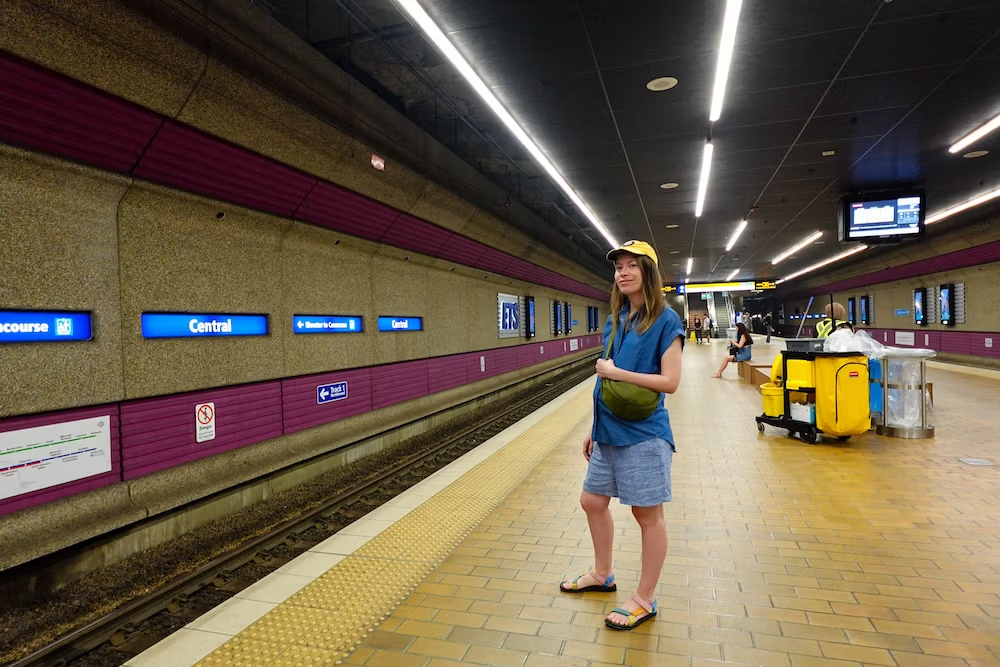
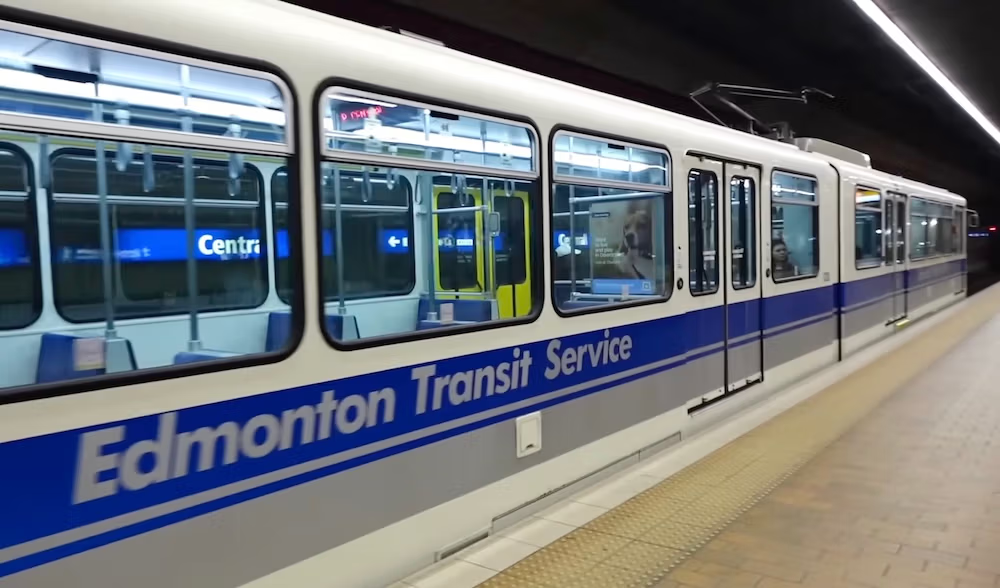
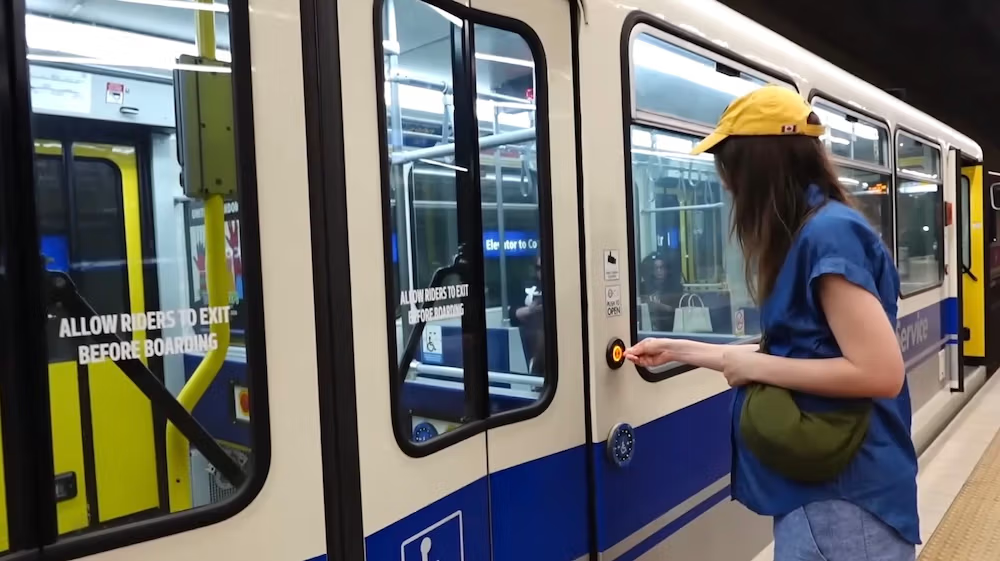
When Audrey and I returned to Edmonton, the LRT felt far more useful than the system I remembered from living here. There were more lines, more places we could reach and more opportunities to give our legs a break during long sightseeing days. We used it to visit Muttart Conservatory, travelled north toward the ICE District and combined rail with buses when the train could not complete the journey.
The mistake is looking at Edmonton’s transit map and assuming every place served by ETS is an LRT destination. West Edmonton Mall has plenty of bus service, but no operating LRT station. Whyte Avenue is another area where forcing a train into the route may make the journey more complicated rather than less.
Here is the practical verdict: Edmonton’s LRT works very well along several central corridors. Once your itinerary spreads west, deeper into Old Strathcona or out toward the airport, buses and other transport become much more important.
The quick answer: where Edmonton’s LRT is most useful
Edmonton currently has three LRT services:
- the Capital Line;
- the Metro Line;
- the Valley Line.
For visitors, the strongest LRT journeys tend to involve downtown, Rogers Place, Muttart Conservatory, the Alberta Legislature and major event venues such as Commonwealth Stadium.
The weakest assumption is that the rail network will also carry you directly to Edmonton’s most famous attraction. It will not. West Edmonton Mall remains a bus destination.
If you already know that public transit will shape your trip, staying centrally removes a lot of unnecessary backtracking. You can compare hotels in downtown Edmonton on Booking.com before deciding which LRT stations will matter most.
| Destination or area | How much the LRT helps | Remaining friction | My practical verdict |
|---|---|---|---|
| Downtown Edmonton | Multiple useful stations | Choosing the right one | Excellent LRT territory |
| Rogers Place and ICE District | Several nearby stations | Event crowds after games and concerts | One of the best reasons to use it |
| Muttart Conservatory | Valley Line stops beside it | Check live service before leaving | Very easy by LRT |
| Alberta Legislature | Government Centre Station | Short final walk | Good central journey |
| Commonwealth Stadium | Stadium Station | Event crowding and service changes | Strong event-day option |
| West Edmonton Mall | May help with an early leg | Bus still required | Bus-led journey |
| Whyte Avenue and Old Strathcona | Possible rail-and-bus combination | A direct bus may be simpler | Usually bus-led |
| Alberta Aviation Museum | Can help reach the broader area | Last-mile connection varies | Multimodal |
| Edmonton International Airport | Capital Line connects at Century Park | Route 747 and separate airport fare | LRT handles only part of it |
The LRT was more useful than I remembered
I lived in Edmonton many years ago, and the rail network was noticeably more limited then.
Coming back after well over a decade, I was surprised by how many more possibilities we had. At one point I described the LRT as one of the best ways to get around Edmonton, and I still think that judgment holds—with conditions.
Our first experience was simple. Audrey and I bought two regular tickets and used the LRT to reach Muttart Conservatory.
At the time, I joked that the tickets were twenty cents cheaper than what we had paid in Calgary. An Edmontonian discount! That comparison is already dated, which is why I would never use an old trip price to plan a current visit.
Later, we bought a longer-duration transit pass for our biggest sightseeing day. We planned to use multiple rail lines and add a bus for the Alberta Aviation Museum. The goal was not to achieve some kind of public-transport purity. We wanted to save our legs and spend more of the day inside attractions instead of walking between distant parts of Edmonton.
That is still the best way to use the system. Let the LRT handle the long, direct sections. Then switch modes when the train stops being useful.
Downtown, Rogers Place and the ICE District
Downtown Edmonton is where the LRT makes the most immediate sense for visitors.
Several stations serve the central area, including MacEwan, Churchill, Bay/Enterprise Square, Central and Corona. You do not need to memorize all of them before arriving, but it helps to check which station best matches the specific place you are visiting.
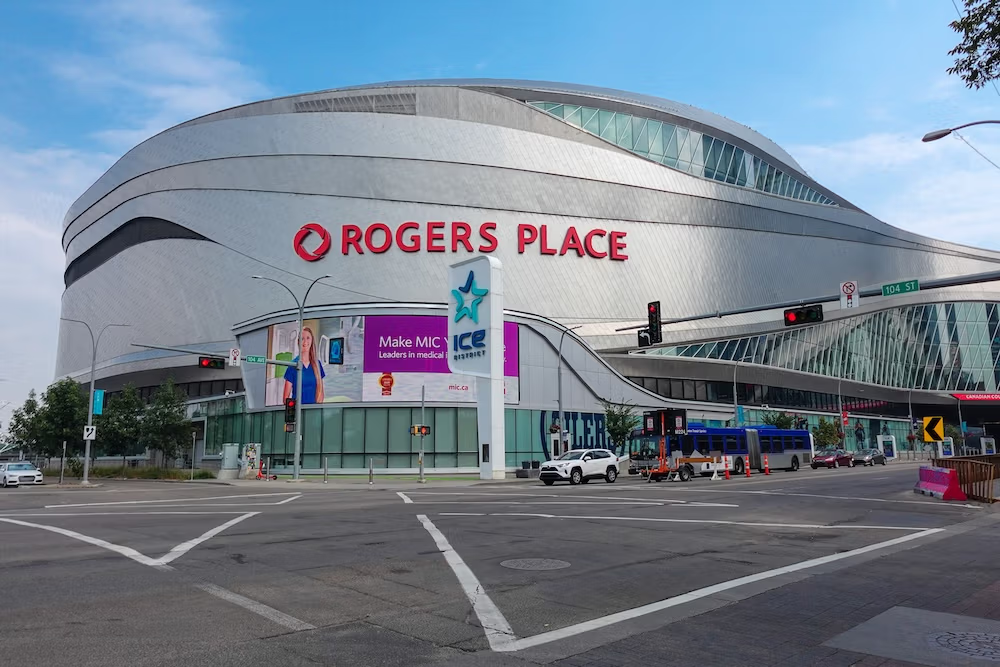
Rogers Place is a good example of why the closest station is not automatically the best station.
MacEwan is the nearest LRT stop to the arena. However, Rogers Place also suggests using Bay/Enterprise Square during some events and walking a couple of blocks, particularly if you want to avoid the biggest post-game or post-concert crush.
Audrey and I used the LRT before exploring the ICE District and Rogers Place area. For an Oilers game or major concert, I would much rather use the train than deal with downtown parking and event traffic.
The arrival is only half of the plan. Before attending an evening event, check when the trains are running afterward and decide which station you will use for the return. Walking a few extra blocks can sometimes be more comfortable than squeezing into the closest station with everyone else.
For a game or concert trip, staying within walking distance of the arena can remove the return journey entirely. You can compare hotels near Rogers Place on Booking.com and use the LRT for the rest of your Edmonton sightseeing.
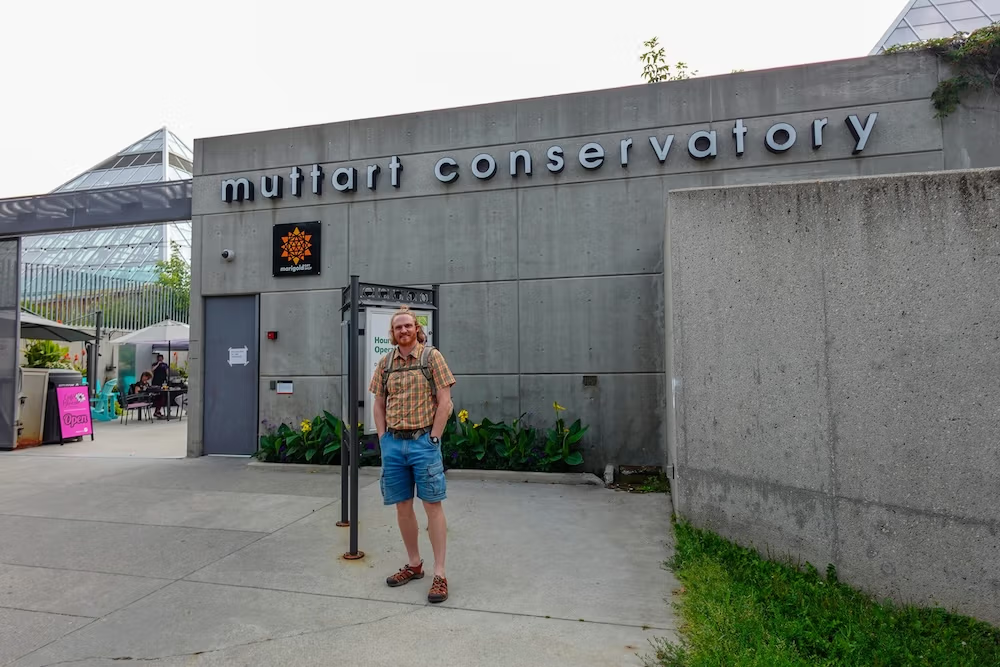
Muttart Conservatory is one of the easiest LRT attractions
Muttart Conservatory is now among the clearest visitor journeys on Edmonton’s rail network.
The Valley Line stops at Muttart Stop, right beside the conservatory. This is real convenience rather than the loose travel-writing version of “accessible by transit,” which can sometimes mean a train, a bus, a twenty-minute walk and a road crossing you were not expecting.
Audrey and I rode the LRT to Muttart during our trip. The conservatory already felt like one of Edmonton’s most unusual attractions, and the current Valley Line connection makes it even easier to pair with a downtown sightseeing day.
Older Edmonton guides may not mention the Valley Line or may describe a more complicated route. That is one reason to check the current network instead of relying on advice written before the line opened.
Service frequency changes by time and day, so I would still check the live schedule before setting out, especially on a Sunday or later in the evening.
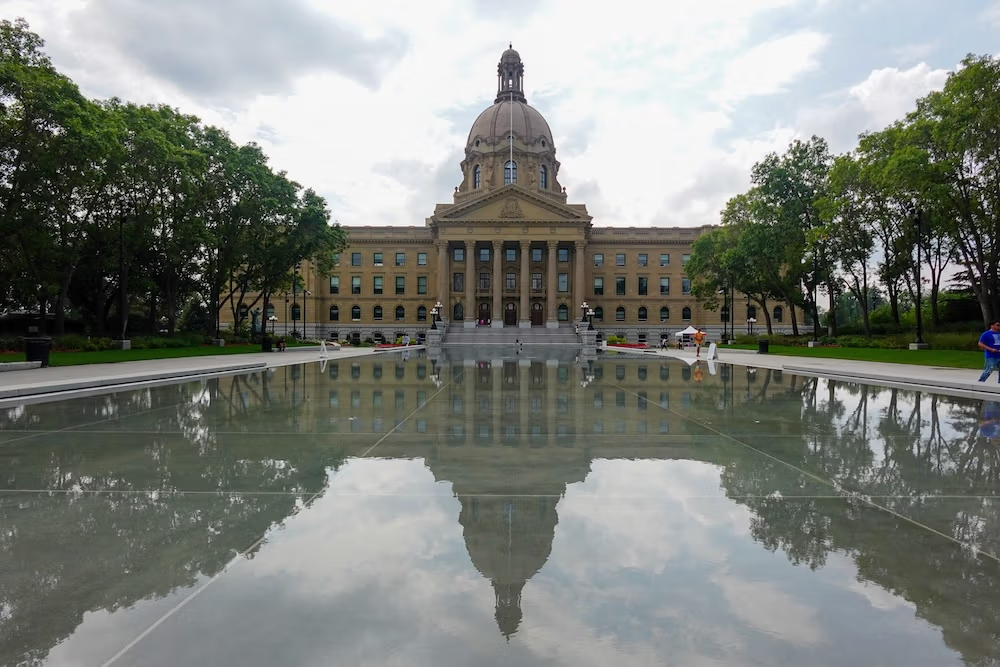
Alberta Legislature and Commonwealth Stadium
The Capital and Metro lines serve Government Centre Station, which is the useful stop for the Alberta Legislature area.
We toured the Legislature during our Edmonton trip, although we did not document that exact journey as an LRT ride. For a visitor planning today, Government Centre gives you a sensible rail connection followed by a manageable walk through the government district.
It also works well as part of a broader central day. You can visit the Legislature, walk the grounds and continue toward the river-valley edge without moving the car or arranging another ride.
Commonwealth Stadium has an even more obvious relationship with the train. Stadium Station sits on the Capital Line, making the LRT particularly useful for football games, concerts and other major events.
This is where urban rail earns its keep: moving large numbers of people along the same corridor while everyone who drove is still thinking about parking.
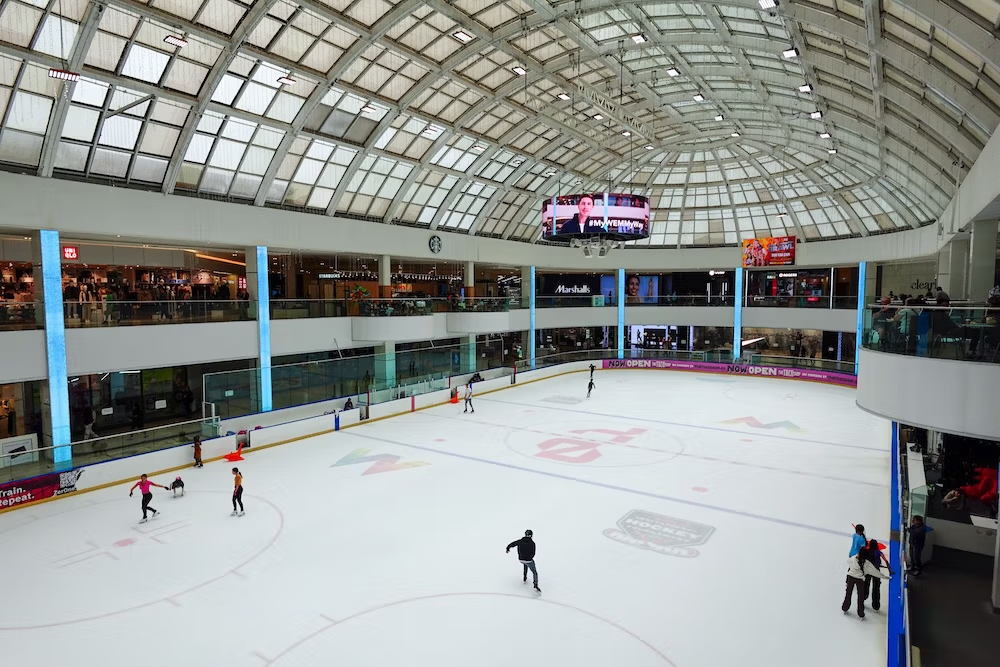
West Edmonton Mall is not an LRT destination
West Edmonton Mall is where many visitor assumptions fall apart.
The mall is served by numerous ETS buses and has a major transit centre. It is not currently served by an operating LRT station.
That does not mean West Edmonton Mall is unreachable without a car. It means the useful part of the journey is usually the bus, even if the LRT helps with an earlier leg.
Audrey and I discussed using the remaining time on our transit pass for West Edmonton Mall. What I would not do is turn that conversation into a claim that the mall is quick or direct by LRT. It is neither.
Your starting point makes a large difference. From some neighbourhoods or hotels, a direct bus may be straightforward. From elsewhere, you may need a rail-and-bus combination. When several people are travelling together, renting a car or using ride-hailing may also become more attractive once time and transfers are considered.
This has implications for where you stay. If West Edmonton Mall is the main purpose of the trip, proximity to the mall or a good direct bus can matter more than having an LRT station near the hotel. You can compare hotels near West Edmonton Mall on Booking.com rather than commuting across Edmonton every day.
If your itinerary combines the mall with widely scattered attractions, you can also compare Edmonton car rentals on Booking.com. A rental is not necessary for every trip, but it can solve a real geographic problem when most of your priorities sit beyond the strongest LRT corridors.
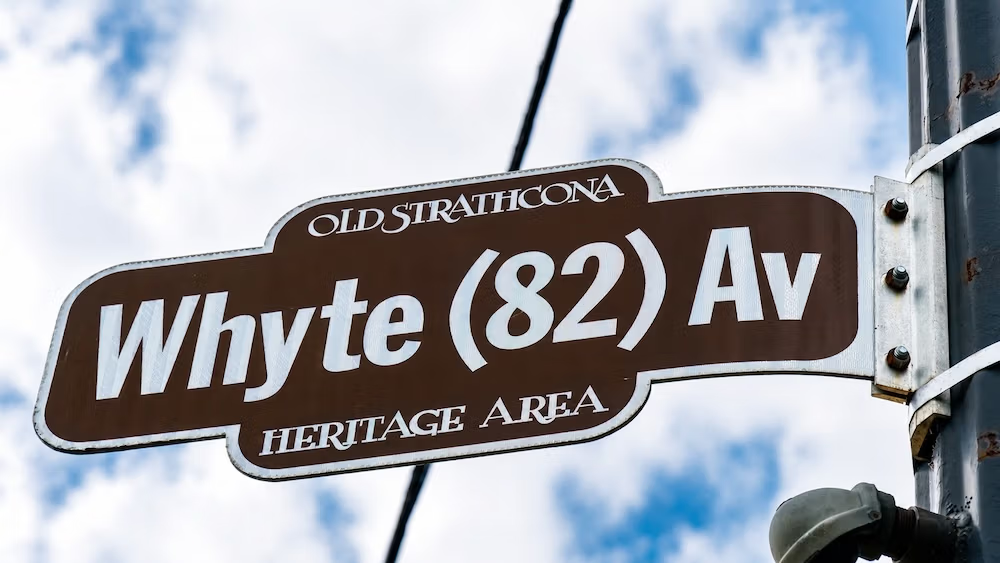
Whyte Avenue and Old Strathcona are usually better by bus or streetcar (seasonal)
Whyte Avenue creates another case where the map can be misleading without technically lying.
The LRT serves the south side of Edmonton, but the part of Whyte Avenue most visitors want—the shops, restaurants, Old Strathcona Farmers’ Market and Fringe venues—is not a direct LRT destination.
You can combine rail and bus service, but a direct bus from downtown may be simpler. Adding a train because it feels more legible to a visitor can create an unnecessary transfer.
We spent plenty of time around Whyte Avenue and Old Strathcona. We visited the market, wandered the neighbourhood and rode the High Level Bridge Streetcar. The streetcar is a fantastic Edmonton experience, but it is a seasonal heritage attraction rather than part of the regular LRT network.
For an ordinary visit to Whyte Avenue, I would check the direct bus options first.

Alberta Aviation Museum requires a final connection
We visited the Alberta Aviation Museum during our most transit-heavy sightseeing day, and our plan involved taking a bus.
That alone reveals the limitation. The LRT could help us move through the city, but it could not deliver us to every attraction entrance.
The airport requires a bus transfer
Edmonton International Airport does not have direct LRT service.
Route 747 connects the airport with Century Park Transit Centre. From there, travellers can transfer to the Capital Line and continue toward central Edmonton.
That makes the LRT useful for part of the airport journey, but the transfer matters. So does the fare: Route 747 has separate airport pricing, and an ordinary city fare does not automatically cover the entire trip.
The buses have luggage racks, which helps, but you still need to move your bags during the Century Park transfer. I would consider this a workable budget option for someone travelling reasonably light. It becomes less attractive with several suitcases, a tired family or a late arrival when simplicity matters more than squeezing value from a transit ticket.
Check the current Route 747 information before travelling because departure times and fare products can change.
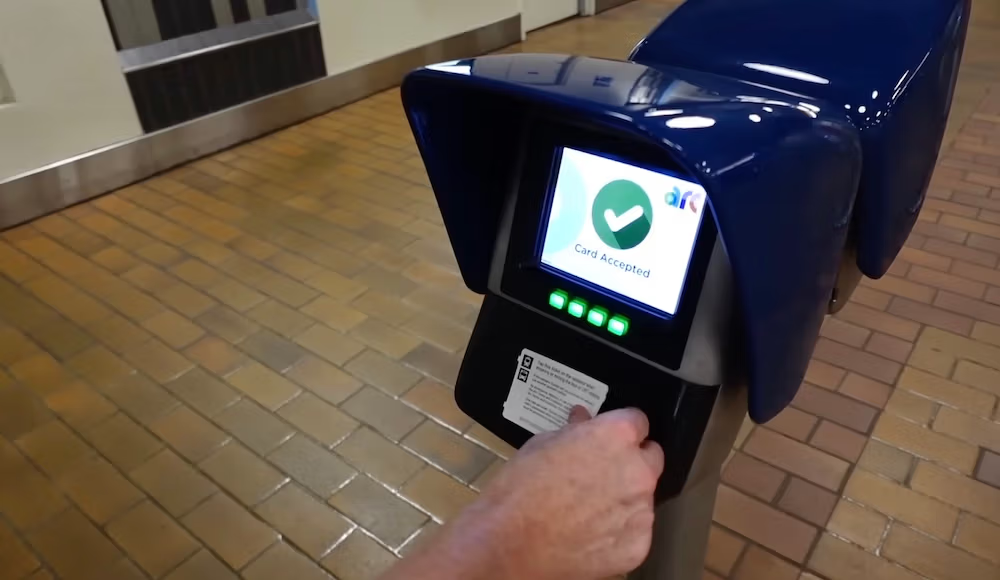
The five-question test for any Edmonton LRT journey
A nearby station does not prove that the LRT will make your trip easier.
Before committing to a route, ask:
- Does the train handle the main part of the journey directly?
- How many transfers are required?
- What remains after leaving the station?
- How frequently does the next connection run?
- Will the return journey work just as well?
The final question is easy to forget. A route can look excellent at 10:00 in the morning and become far less appealing after an evening event or on a Sunday schedule.
Weather also changes how a “short walk” feels. Ten exposed minutes are not the same in pleasant summer weather, heavy smoke, rain or a proper Edmonton cold snap.
This is why Muttart Conservatory is an excellent LRT attraction and West Edmonton Mall is not. Both are accessible using public transit. Rail plays a completely different role in the two journeys.
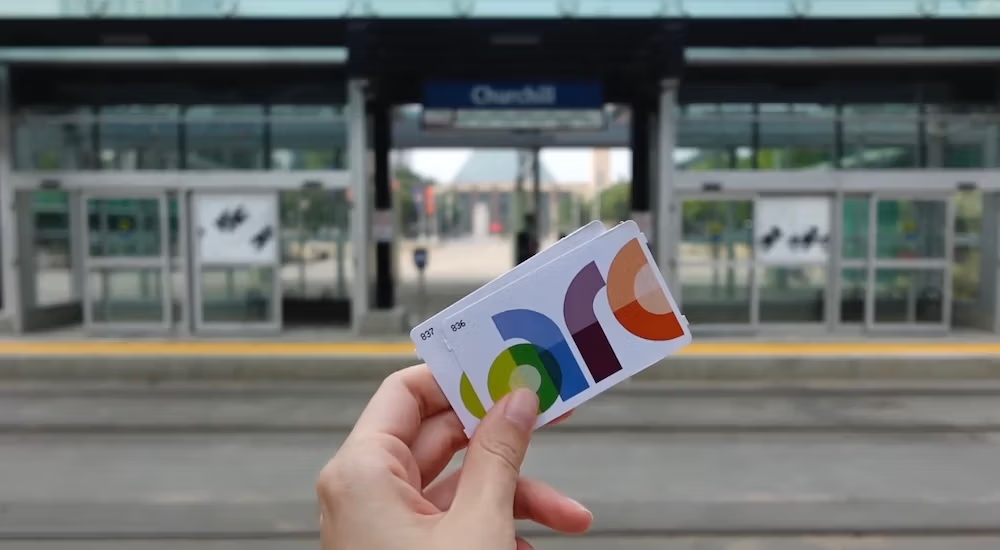
Current Edmonton transit fares for visitors
The simplest current option for many short-term visitors is contactless payment.
An adult fare costs $3 when using an Arc card or tapping a contactless credit or debit card. That fare covers 90 minutes of travel, including transfers between ordinary ETS buses and the LRT.
Cash or a temporary 90-minute Arc ticket costs $3.75.
Contactless payment also has a current adult daily cap of $10.50, provided you use the same payment credential throughout the day. Be careful with digital wallets: a physical bank card and the version stored on your phone may be treated as separate credentials.
A temporary 24-hour Arc ticket also costs $10.50 and starts when first activated. Longer three-day and five-day products are available, although airport travel has separate conditions.
The easiest way to think about it is:
- use pay-as-you-go for one or two separate travel periods;
- let the daily cap handle a busy day if you are tapping consistently;
- consider a temporary pass when you know you will use transit repeatedly;
- check airport-inclusive products separately if Route 747 is involved.
Count 90-minute fare windows rather than individual vehicles. Taking a train and then transferring to a bus within the same valid period does not mean paying twice.
Current prices can change, so check the official ETS fare page before relying on the numbers above.
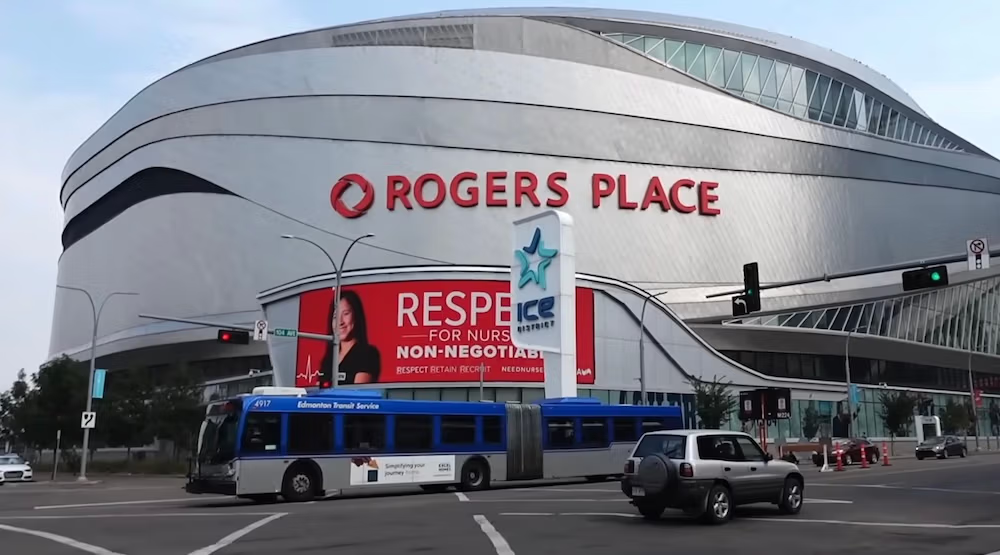
Combining the LRT with buses, walking and guided sightseeing
Edmonton’s LRT works best when treated as the backbone of a journey rather than a rule that every journey must obey.
Use it for a strong central leg. Add a bus when it completes the route efficiently. Walk when the final distance is reasonable. Consider ride-hailing when several travellers are moving between rail-poor areas and a complicated transfer would consume a large part of the day.
If you would rather avoid piecing together every connection yourself, you can compare Edmonton sightseeing tours and activities on GetYourGuide. Current options include walking, cycling and trolley-style sightseeing, although you should check each activity’s route and meeting point rather than assuming it replaces public transit for the entire day.
Edmonton is too dispersed for one mode to solve every visitor journey. Our own sightseeing day worked because we used rail where it helped and planned a bus where it did not.
Accessibility, strollers and luggage
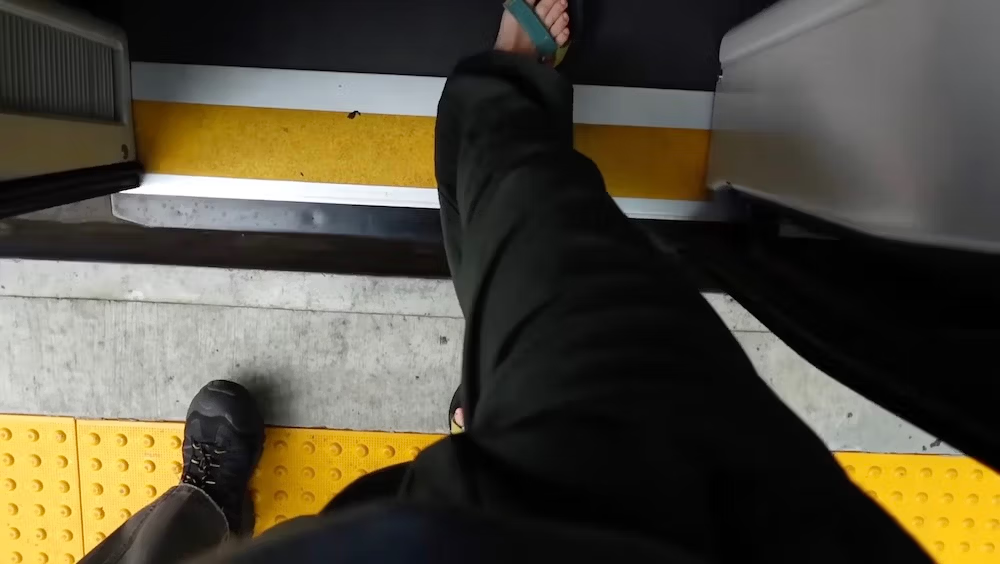
Capital and Metro Line stations use ramps or elevators to reach the platforms. The Valley Line has low-floor trains with sidewalk-level boarding. Trains also have priority seating and designated areas for riders using mobility devices.
That does not mean every journey is automatically barrier-free. A route may depend on a particular elevator, and elevators occasionally go out of service.
Travellers using wheelchairs, strollers or significant luggage should check the current elevator and escalator information before leaving. ETS also recommends using elevators rather than escalators with strollers and baggage.
The same principle applies to service disruptions. Edmonton adjusts service throughout the year, and temporary closures or replacement buses can change an otherwise easy route. The live ETS service-alert page is far more useful than an article trying to preserve every temporary change.

Where to stay if the LRT matters
Downtown is the easiest base for a visitor who wants to use the LRT for several days. The central stations give you options rather than locking you into one line, and you can still walk to many downtown attractions when taking the train would be unnecessary.
Audrey and I stayed at Fairmont Hotel Macdonald during our Edmonton babymoon. We booked it for the historic hotel experience rather than specifically for transit, but the downtown location worked well for combining central sightseeing, walking and public transportation. You can check current rates and availability at Fairmont Hotel Macdonald on Booking.com.
For an Oilers game or concert, staying near Rogers Place gives you the easiest event night and still places you close to downtown transit. For a trip built primarily around West Edmonton Mall, I would do the opposite and stay near the mall rather than forcing a daily cross-city commute.
The best base is therefore not simply the hotel nearest any LRT station. It is the hotel that reduces the most difficult journeys in your own itinerary.
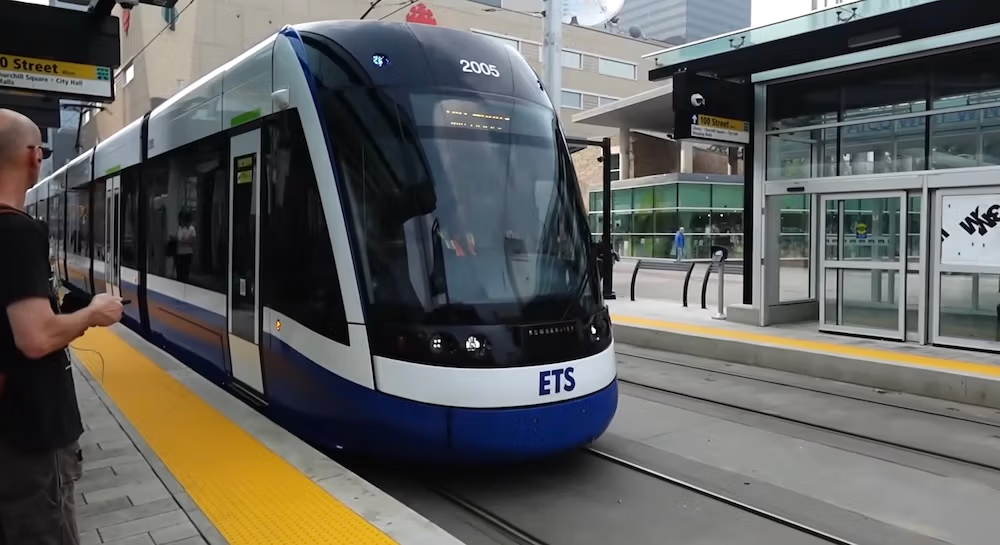
Who should rely most on the Edmonton LRT?
Visitors staying downtown are in the best position to use the system. Several lines converge in central Edmonton, and the network works naturally for Rogers Place, the ICE District, Muttart Conservatory, Government Centre and other central stops.
Event travellers also have strong reasons to use it, particularly for Rogers Place and Commonwealth Stadium.
Visitors focused on West Edmonton Mall should make hotel location and bus access the priority. Those concentrating on Whyte Avenue and Old Strathcona should investigate direct bus routes before building the journey around rail.
Airport travellers need to account for Route 747, its separate fare and the Century Park transfer. Anyone travelling with a stroller, mobility device or several bags should also examine the station entrance and elevator situation rather than stopping at the words “LRT accessible.”
Is Edmonton’s LRT good for visitors?
Yes, when the itinerary matches it.
The LRT made our Edmonton sightseeing easier, and the expanded system gave us more options than I remembered from my years living in the city. It helped us reach Muttart Conservatory, travel into the ICE District and conserve energy during a packed day.
It also did not eliminate buses, walking or route planning.
That is not a failure. Edmonton is geographically dispersed, and the smartest visitor itinerary is usually multimodal.
Use the LRT confidently for direct central journeys. Once the bus transfer, final walk or airport connection becomes the complicated part, stop calling it an LRT trip and choose the option that actually gets you where you are going.
Frequently Asked Questions
Is Edmonton’s LRT useful for visitors?
Yes, particularly for downtown, Rogers Place, the ICE District, Muttart Conservatory, the Alberta Legislature and Commonwealth Stadium. It becomes less useful when buses or lengthy final connections dominate the journey.
Does the Edmonton LRT go to West Edmonton Mall?
No operating LRT line goes directly to West Edmonton Mall. The mall has a major ETS transit centre, but the final mall-bound portion of the journey is normally completed by bus.
Can I take the LRT to Whyte Avenue and Old Strathcona?
The main visitor area around Whyte Avenue is not a direct LRT destination. A direct bus from downtown may be simpler than combining the train with another connection.
How much does an Edmonton LRT fare cost?
An adult fare is currently $3 with an Arc card or contactless bank payment and covers 90 minutes of travel. Cash or a temporary 90-minute Arc ticket currently costs $3.75.
Does Edmonton’s LRT go to the airport?
The airport has no direct LRT station. Route 747 connects Edmonton International Airport with Century Park Transit Centre, where travellers can transfer to the Capital Line.
Which Edmonton attraction is easiest to reach by LRT?
Muttart Conservatory is one of the clearest visitor journeys because the Valley Line stops at Muttart Stop beside the attraction. Downtown destinations and major event venues also work well by LRT.
Should I stay downtown if I plan to use Edmonton’s LRT?
Downtown is the easiest base for using multiple LRT lines while remaining within walking distance of central attractions. A mall-focused trip may be better served by accommodation near West Edmonton Mall instead.
This guide is also available in Spanish. [Leé la versión en castellano: Guía del LRT de Edmonton para visitantes: dónde ayuda y dónde no]
This article contains affiliate links. If you book through one of these links, I may earn a commission at no extra cost to you.