
I went to university in Edmonton. I worked there, socialized there, learned how to survive a February there. Then I left, the way a lot of people who come to a city for school eventually do, and I didn’t go back for a long time. Long enough that when Audrey and I finally worked a stop in Edmonton into our Alberta trip, it wasn’t really a stop on the map. It was an errand of the heart wearing a travel-segment costume.
So if you’re asking me whether Edmonton is worth visiting, you should know upfront that I’m not a neutral witness. I have a stake in the answer. Nobody goes back to the city where they became an adult and hopes to find it disappointing.
That bias is exactly why I think this is worth writing honestly instead of glowingly. I’m not here to convince you Edmonton is secretly magical. I’m here to tell you, as someone who actually has something to measure it against, what held up and what didn’t when I finally went and checked.
Edmonton’s Reputation Problem
Here’s the thing nobody in Alberta tourism marketing wants to say out loud: Edmonton has a bit of a chip on its shoulder, and it’s earned one. There’s a real, long-running rivalry between Edmonton and Calgary, and it shows up exactly the way you’d expect — as a backhanded compliment. Nice place to live, sure. Not really worth the drive to visit. The prevailing logic for most Alberta-bound travelers skips the question entirely: fly into Calgary, drive to Banff and Jasper, marvel at the Rockies, fly home. Edmonton is the city you pass through, not the one you plan around.
I get where that comes from. Edmonton doesn’t have mountains. It was never going to out-scenery Banff, and it shouldn’t try.
But something’s shifted recently, and it’s not something I’m inventing to flatter my old city. Lonely Planet put Edmonton on its Best in Travel 2025 list — one of thirty must-visit destinations worldwide, and the only Canadian city on it. A global outlet with zero hometown loyalty to protect, telling the rest of the world to take a second look.
So which is it? The city Alberta shrugs at, or the city Lonely Planet just put on a global shortlist? I went back to find out, with over a decade of comparison points in my pocket and no professional obligation whatsoever to be nice about it.
What’s Actually Changed
The clearest answer showed up at the bottom of a set of stairs I used to walk right past without a second thought.
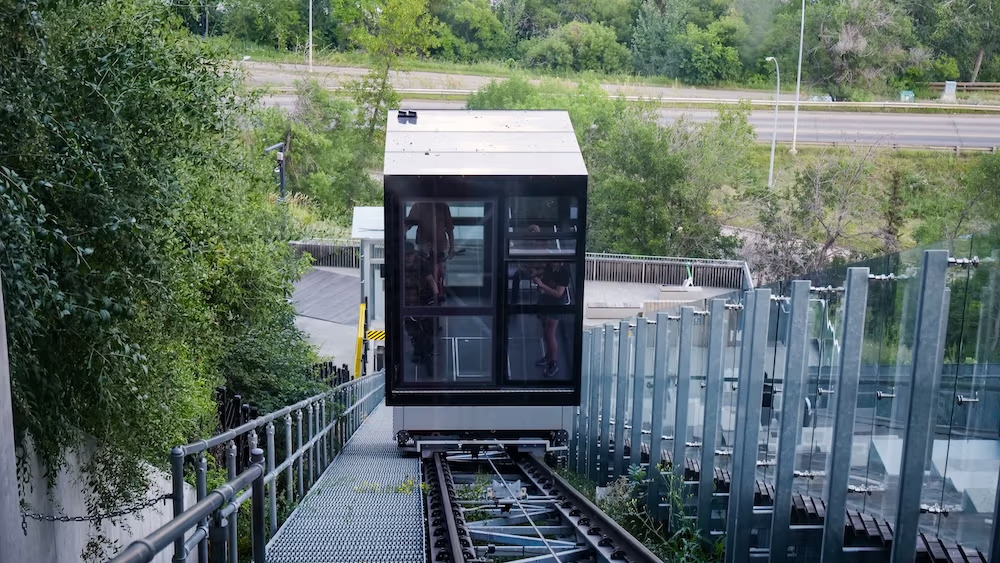
Downtown, tucked behind the Fairmont Hotel Macdonald, there’s a funicular running down into the river valley now — a proper cable-mechanized incline elevator, not a gimmick. I stood at the top of it with Audrey and said, pretty much verbatim, “they didn’t have this when I lived here.” Because they didn’t. It opened in December 2017, well after my student years, built specifically to make the river valley — genuinely one of the best things about this city — easier to actually get down into. It’s a small piece of infrastructure. It’s also the single most concrete proof I’ve got that Edmonton kept building while I wasn’t watching.
The river valley itself is the bigger story, and the one I want to be more careful about overselling. I used to run those trails, inline skate them, walk them constantly as a student — it was my actual escape from the pressure of school, not a tourist activity. Walking them again, they felt bigger and better maintained than I remembered, reaching further into the city than I ever gave them credit for. I’m not going to pretend I measured that against what existed fifteen-plus years ago. What I can tell you is that the network today is enormous, part of what’s often called the largest stretch of connected urban parkland in North America, and if my memory of it as smaller and scrappier is accurate, this is a city that’s been quietly expanding in a direction most visitors never think to look. If you don’t have years of muscle memory to navigate it on your own, a guided river valley bike tour that swings out through Old Strathcona and the university district is a reasonable shortcut to the version of Edmonton I’m describing — the one that has nothing to do with downtown.
There’s a sillier version of the same pattern with hockey. As a student, I bought a discounted ticket package and went to eight or ten Oilers games a season at the old arena on the other side of town, which remains one of the best perks of being young and broke in a hockey city. The team plays out of Rogers Place now, a downtown arena that didn’t exist when I lived here, anchoring an entertainment district built where I remember there being not much of anything at all. I bought a hat in the team store almost on reflex, the way you end up repping a place you used to belong to. I miss going to games as often as I used to. I don’t miss the old arena’s parking lot even a little.
None of that proves Edmonton turned into a different city. It just proves I hadn’t been paying attention.
What Hasn’t Changed (And Why That’s the Bigger Surprise)
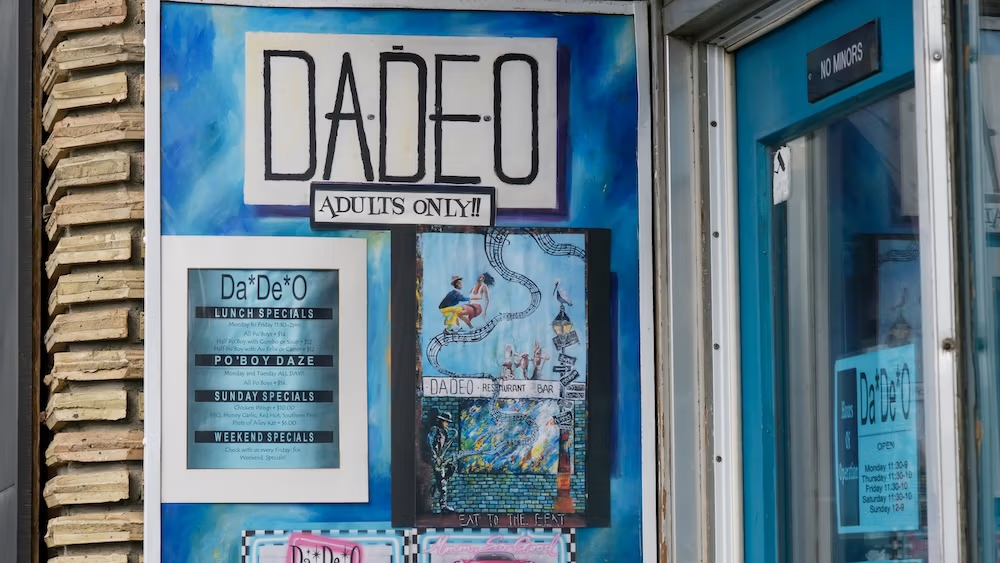
Somewhere on Whyte Avenue, three blocks from a Safeway I used to work at, there’s a Cajun diner called DaDeO. I ate there constantly during university — “constantly” is underselling it. Steak-and-cheese po’boy, the sweet potato fries, a Cherry Coke if I was feeling fancy.
It’s still there. Same location, same name, same slightly worn diner charm that never once tried to modernize itself into something else. Walking back in and ordering the same fries was, without much competition, the most nostalgic thing I did on the entire trip. More than any museum. More than any skyline photo.
I went into this trip assuming change would be the interesting story. It isn’t, not entirely. The funicular is new. The trails feel bigger. But DaDeO refusing to change is its own kind of information. It tells you something about a city when the things worth keeping actually get kept, instead of getting replaced by whatever’s trendier this year. A place that only knows how to change isn’t necessarily worth visiting. A place that knows exactly what to leave alone might be.
The One Thing I’d Never Actually Done
The most honest surprise of the trip had nothing to do with Edmonton changing. It was about me.
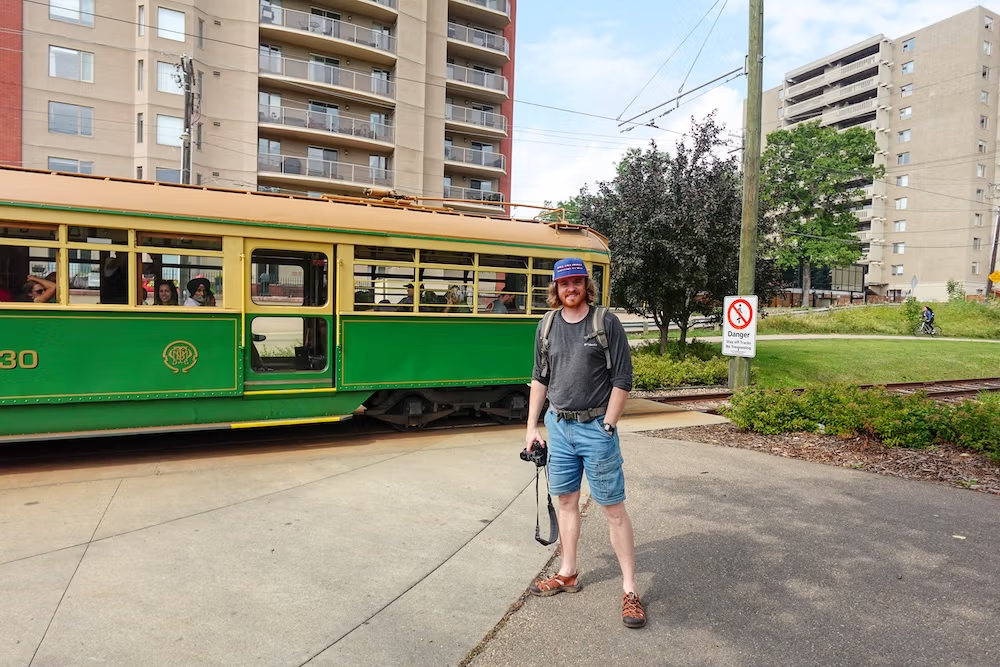
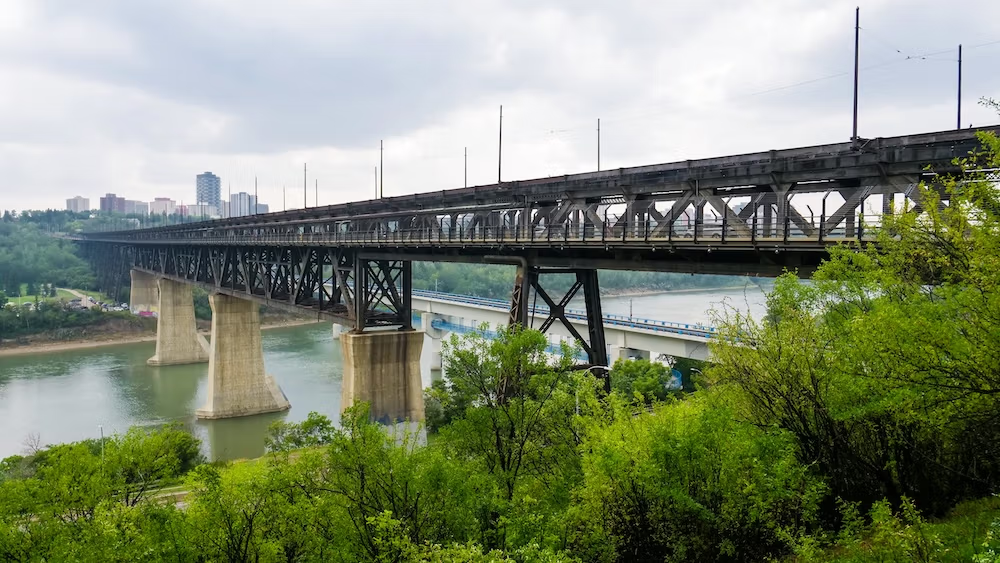
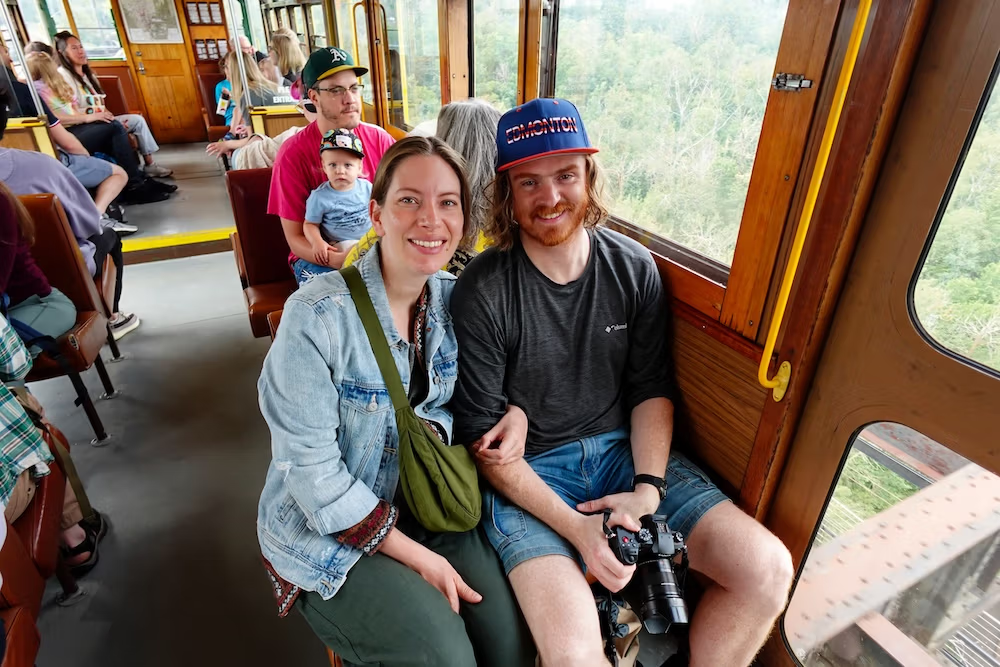
The High Level Bridge Streetcar runs across the old rail bridge connecting Old Strathcona to downtown, and I’d seen it a hundred times as a student — heard it clanking past, watched tourists climb aboard — and never once got on. So on this trip, more than a decade after I could have ridden it for free with a transit pass, I finally paid my cash and climbed on like a tourist in my own former city.
The car itself had a stranger backstory than I expected. It turns out one of the trams that runs that line started its working life in Melbourne, Australia, back in the 1940s. It got pulled from service there in the late nineties, shipped across the Pacific as a kind of civic gift, and eventually went back into passenger duty here in Edmonton in the mid-2000s. I remember sitting on that streetcar wondering out loud how on earth a tram from Melbourne ended up on a bridge in the Alberta prairies. The answer turned out to be exactly as random as it sounded, and exactly as good a story as I’d hoped.
It’s a first-come, first-served ride — no advance booking, you just show up and buy a ticket from the conductor while it’s running, seasonally, from mid-May through Thanksgiving weekend in October. Small, unglamorous detail. Also exactly the kind of thing that would’ve wrecked my afternoon if I’d assumed otherwise and shown up expecting to reserve a seat.
Seeing It Through Someone Else’s Eyes
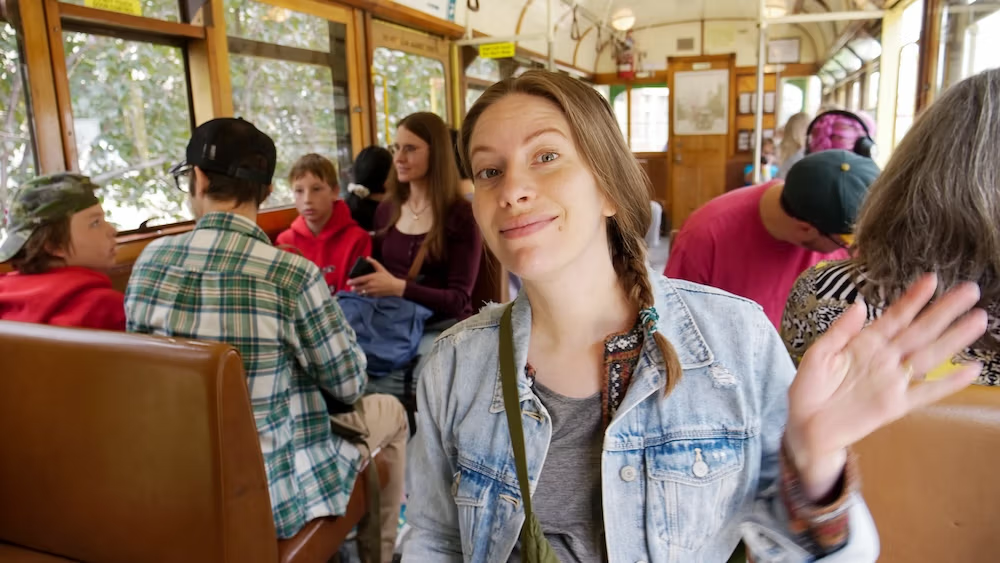
I have years of memory clouding my judgment on this place, which is exactly why Audrey’s reaction matters more than mine in a few spots.
She’d never been to Edmonton before this trip. No nostalgia, no old stomping grounds, nothing to defend. When I took her to Whyte Avenue — genuinely one of my favorite corners of the city, and somewhere I’d been talking up in my head for years — she told me afterward it changed her whole read on the place. Not “it was nice.” It actually shifted what she thought this city was.
That matters more than my opinion does, if I’m honest. I was always going to fall for coming back. She had no reason to.
So, Is Edmonton Actually Worth Visiting?
Coming back meant more to me than I expected it to, and I’m not going to pretend otherwise for the sake of sounding objective. Reconnecting with this city was one of the best parts of our whole Alberta trip. Some of my favorite moments didn’t even happen on camera — a walk past the house I used to live in, another past the building where I actually took classes. Those aren’t stops on anyone else’s itinerary. I also managed to do more in four days as a returning tourist than I ever got around to doing in years as an actual resident, which says something about Edmonton, and probably something a little less flattering about how I spent my twenties.
But you didn’t come here for my nostalgia. You came here to find out if it’s worth your time, and the honest answer is yes — because the specific things I checked against my own memory actually held up under checking. A city that’s added real infrastructure since I left, kept the diner that mattered instead of letting it rot into a museum piece, and still managed to surprise its own former resident with a hundred-year-old rail bridge I’d somehow never once ridden — that’s not a city coasting on nostalgia. That’s a city that’s been doing the work, whether or not the rest of the country was paying attention.
If I’m giving you one practical piece of advice, it’s this: don’t spend your whole visit downtown. The version of Edmonton that convinced me — Whyte Avenue, the river valley, the funicular, a diner three blocks from where I used to work — mostly isn’t there. Get out of the core, walk the river, eat where the locals who never left still eat. It’s worth comparing hotels near Old Strathcona and Whyte Avenue before you default to something downtown, because that neighborhood is doing more of the actual convincing than the skyline is. Do that, and you’ll find the same city Lonely Planet just noticed. I just had a considerable head start on them.
Frequently Asked Questions
Is Edmonton actually worth visiting?
Yes. I went back skeptical, with over a decade of comparison points and no reason to be generous about it, and the specific things I checked against my own memory held up.
What surprised you most when you returned to Edmonton?
Two things, honestly. The 100 Street Funicular didn’t exist when I lived there, so finding it downtown was a genuine “they added this?” moment. The bigger surprise was realizing I’d never once ridden the High Level Bridge Streetcar despite living blocks from it for years.
Has Edmonton changed since you lived there?
In some real ways, yes. The funicular is new since 2017, Rogers Place and the ICE District replaced what used to be a fairly empty stretch of downtown, and the river valley trail network felt bigger and better maintained than I remembered.
What hasn’t changed in Edmonton?
DaDeO, the Cajun diner on Whyte Avenue I used to eat at constantly during university, is still there — same location, same name, same menu. It was the most nostalgic stop of the whole trip.
Should I spend my whole visit in downtown Edmonton?
No, and that’s my one piece of practical advice. The version of the city that actually convinced me — Whyte Avenue, the river valley, the funicular — is mostly outside the downtown core.
How do you ride the High Level Bridge Streetcar?
It’s first-come, first-served — you buy a ticket directly from the conductor when it’s running, with no advance booking available. It operates seasonally, from mid-May through the Thanksgiving weekend in October.
This article is also available in Spanish. [Leé la versión en castellano: ¿Vale la pena visitar Edmonton? Lo que me sorprendió cuando volví]
This article contains affiliate links. If you book through one of these links, I may earn a commission at no extra cost to you.