
Edmonton can punish an overambitious museum plan.
Eight interesting names on a screen can quickly become two long transit rides, an unexpected closure, a museum that only opens seasonally and a late lunch eaten while everyone quietly blames the person who designed the itinerary. Edmonton is spread out, and its museums and museum-adjacent attractions range from a huge provincial institution to glass botanical pyramids and an outdoor wall of neon signs. They are not interchangeable.
Audrey and I visited the Royal Alberta Museum, Muttart Conservatory, Alberta Aviation Museum and Neon Sign Museum. We did not visit the Art Gallery of Alberta, TELUS World of Science, Fort Edmonton Park or Alberta Railway Museum, so I am not going to pretend otherwise. Those places are included because they solve important visitor decisions, not because I have a personal story to attach to each one.
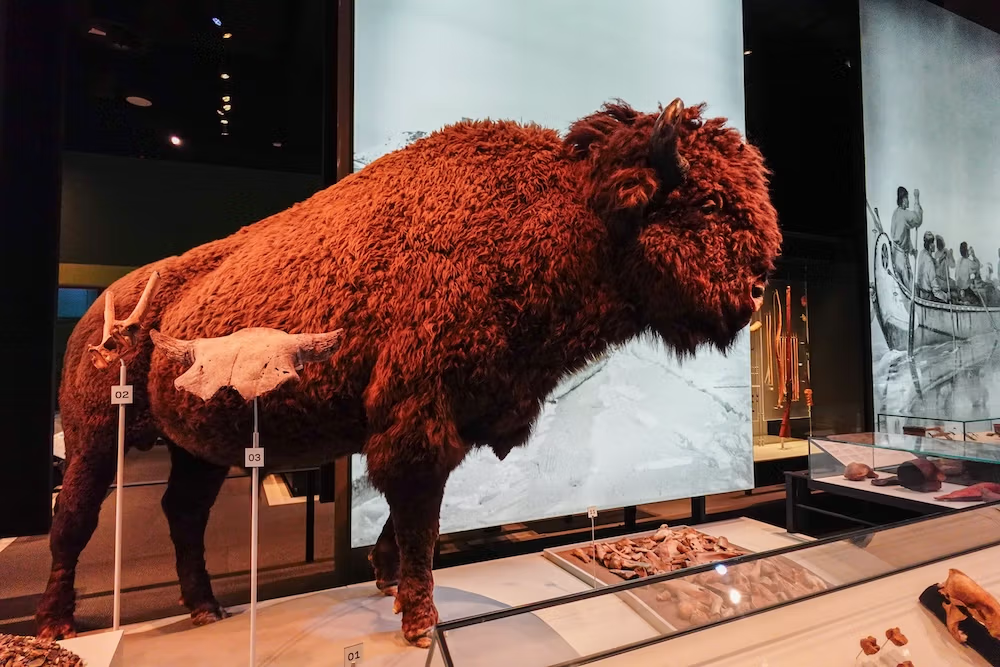
My overall verdict is simple: the Royal Alberta Museum is the best all-round museum in Edmonton for a first-time visitor. It has the broadest appeal, the strongest combination of Alberta history and natural history, and enough variety to work for a couple, family or mixed-interest group.
That does not make it the automatic winner for everyone. Art lovers should look closely at the Art Gallery of Alberta. Plant lovers may enjoy the Muttart Conservatory more than any traditional museum. Aviation enthusiasts have a much more focused option. Fort Edmonton Park can be the better history experience when you have half a day and the right season. The tiny Neon Sign Museum is worthwhile precisely because it asks for almost none of your time.
There is also one major current complication. As of July 31, 2026, TELUS World of Science is closed until further notice after flooding. Reopening has been anticipated around November 2026, but that is not a confirmed date. Check its official operating status before building it into a trip.
The prices and operating details below were checked on July 31, 2026. Museums are particularly good at changing temporary exhibitions, access routes, discounts and seasonal schedules, so confirm anything that could affect your day.
The Quick Answer: Which Edmonton Museum Should You Visit?
For most first-time visitors, start with the Royal Alberta Museum. It gives you the widest introduction to Alberta through human history, Indigenous history and culture, dinosaurs, wildlife, insects and family spaces.
The Muttart Conservatory sits just outside the traditional museum category, but it deserves a place in this comparison. Its four glass pyramids offer tropical, arid, temperate and changing botanical environments, making it the strongest choice for plant lovers, photographers and anyone who wants a warm indoor escape.
The Art Gallery of Alberta makes more sense when visual art is the priority and the current exhibitions appeal to you.
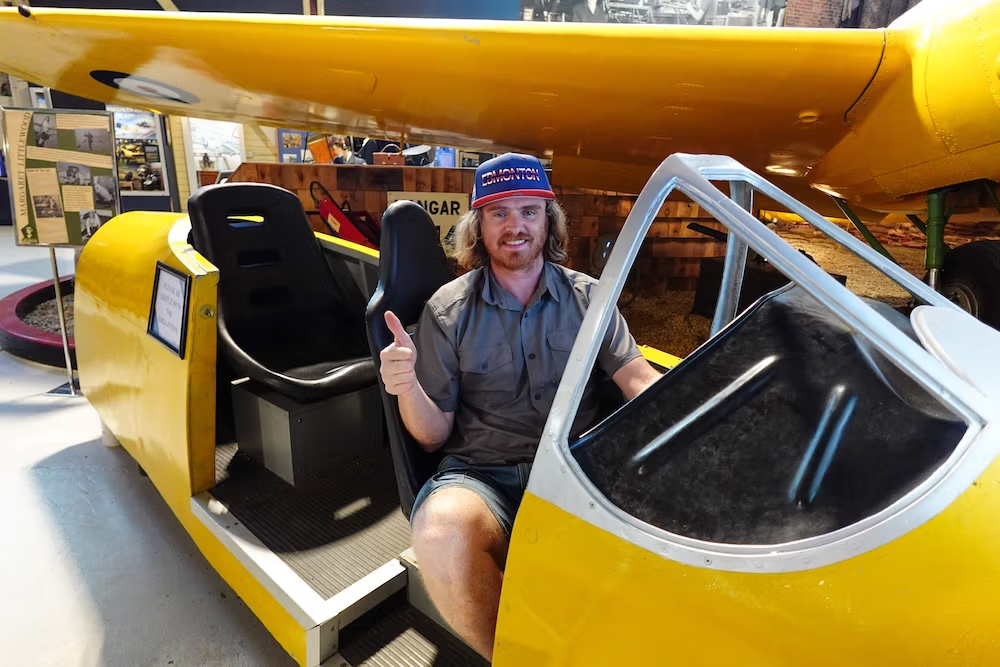
The Alberta Aviation Museum is the specialist choice for aircraft, transport and engineering enthusiasts. It also gave me the most humbling museum activity of our trip.
Fort Edmonton Park is for travellers who want to step into Edmonton’s history rather than view it through conventional galleries. Give it at least half a day.
The Neon Sign Museum is a quick, free downtown addition, especially after dark.
The Alberta Railway Museum is worth the extra effort for someone who genuinely loves trains. Casual interest probably will not justify its seasonal schedule and peripheral location.
When operating normally, TELUS World of Science is the obvious hands-on science contender, particularly for families. While it remains closed, it is not a usable recommendation.
If the Royal Alberta Museum, Art Gallery of Alberta and Neon Sign Museum are your main priorities, a central base saves more time than choosing a hotel near one specialist attraction. You can compare downtown Edmonton hotels on Booking.com before deciding how much walking, transit and parking you want in the day.
Edmonton Museums Compared
| Museum or attraction | Best for | Realistic planning time | Adult admission checked July 31, 2026 | Operating reality | Main trade-off |
|---|---|---|---|---|---|
| Royal Alberta Museum | First visits, Alberta history and nature | At least 2 hours | $25 | Tuesday to Sunday, with later Thursday hours | Too broad for a rushed visit |
| Muttart Conservatory | Plants, photography and indoor nature | Roughly 1–2 hours | $14.95 | Open daily, with later Wednesday and Thursday hours | A botanical conservatory rather than a conventional museum |
| Art Gallery of Alberta | Art and architecture | Roughly 1–2 hours | $17 plus GST | Wednesday to Sunday | Value depends on the current exhibitions |
| Alberta Aviation Museum | Aircraft and transport enthusiasts | 1–2 hours | $15 | Year-round; open daily in summer | Narrower appeal and separate travel time |
| TELUS World of Science | Families and hands-on science | Several hours when operating | $26.95 plus GST | Closed until further notice as of July 31, 2026 | Currently unavailable |
| Fort Edmonton Park | Immersive Edmonton history | At least 3 hours | $27.90 plus GST during the discounted 2026 season | Seasonal general admission | Large time and physical commitment |
| Neon Sign Museum | A quick, free downtown stop | About 10–20 minutes | Free | Outdoors and open around the clock | Too small to anchor a museum day |
| Alberta Railway Museum | Dedicated railway interest | Roughly 2–3 hours | $17 before taxes and processing fees | Seasonal, mainly Friday to Sunday | Peripheral, outdoor and weather-dependent |
I hope this table is useful because “museum” covers several completely different days here.
The Royal Alberta Museum and Art Gallery of Alberta can share a downtown cultural itinerary. Muttart is easily reached from central Edmonton on the Valley Line, but it sits across the river rather than inside the tight RAM–AGA cluster. Fort Edmonton Park can consume most of a day by itself. The aviation museum requires a separate journey north of downtown. The railway museum sits far enough out that it should be a deliberate destination. The Neon Sign Museum barely needs an itinerary slot at all.
That time cost matters. A museum is not worth visiting merely because it is good. It also needs to be good enough for the time, transport and energy it takes away from the rest of your Edmonton trip.
Royal Alberta Museum: The Best All-Round Choice
The Royal Alberta Museum is where I would send someone who wants one substantial museum and does not have a narrow specialist interest.
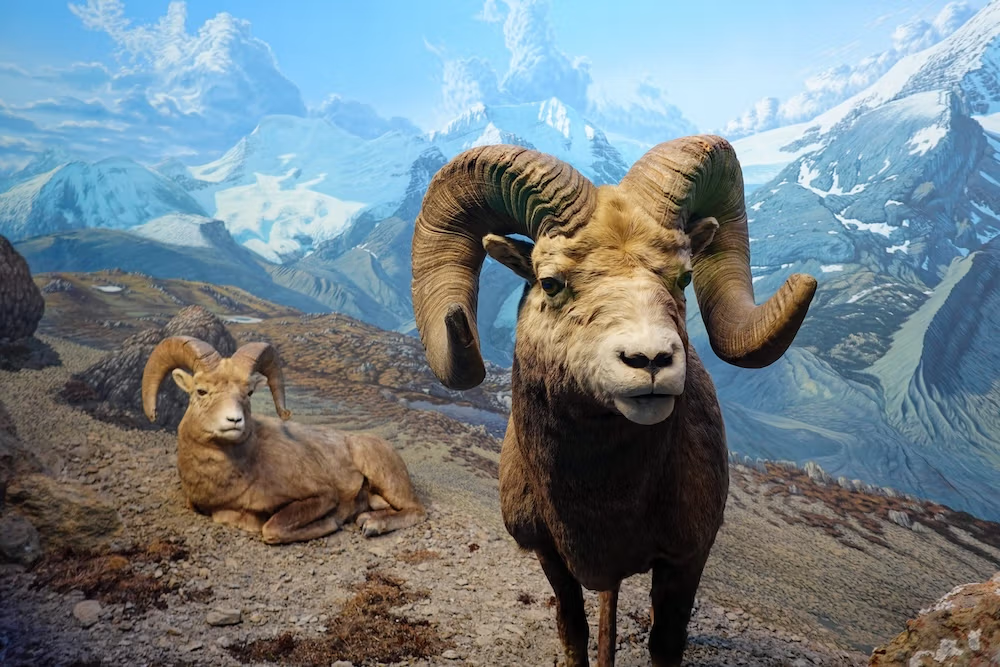
Audrey and I spent our visit moving between Alberta’s human and natural history. We saw interpretation connected to the province’s Indigenous communities, dinosaur material, Ice Age exhibits and displays featuring animals associated with Alberta, including moose, elk, deer, grizzly bears and mountain goats.
That combination gives RAM a useful role beyond simply filling a wet or cold afternoon.
Audrey made the strongest practical observation after we visited. If your trip ends in Edmonton and you are not continuing to Jasper, Banff or Alberta’s mountain parks, the museum still introduces you to the province’s wildlife and natural environments. Stuffed animals and museum interpretation obviously do not replace the Rockies, but they help connect Edmonton with the much larger province around it.
The dinosaur section also feels properly Albertan. Audrey encountered Edmontosaurus and paused to check whether she was even saying it correctly. Dinosaur names have a way of making confident adults suddenly sound as though they are reading an eye chart.
Our visit also included a temporary Angkor Wat exhibition. Audrey and I had travelled in Cambodia, so seeing familiar temple imagery and ruins brought back another trip entirely. That exhibition is gone, but the experience showed why the temporary galleries matter. RAM has a permanent Alberta foundation, while the changing exhibitions can add a completely different layer.
The current permanent offer includes Human History, Natural History, Bug and Children’s galleries. The Children’s Gallery is designed especially for children six and under, so the museum still has a meaningful family component without becoming a giant indoor playground.
Give RAM at least two hours. That is the minimum I would plan, not a challenge to complete the building before lunch. Anyone who reads most of the interpretation, visits temporary exhibitions or arrives with children could easily stay for half a day.
Standard adult admission was $25 when checked. The museum normally opens Tuesday through Sunday and stays open later on Thursday, which is helpful if you want to combine it with another downtown institution.
Downtown construction has temporarily complicated some streets, parking and pedway connections around the museum. Public parking is separately priced, and the most obvious indoor route from Churchill Station may not be operating normally. Check current arrival information rather than discovering the detour after your bladder has already voted against it.
RAM publishes a detailed list of accessibility features, including elevators, ramps, automatic doors, accessible washrooms, wheelchairs, strollers and sensory kits. Individual needs still deserve direct confirmation, but the museum provides more useful advance information than many attractions do.
RAM wins my best-overall category because it offers the widest margin for error. Even if one gallery does not interest you, another probably will.
Muttart Conservatory: Not Really a Museum, Still Worth Your Time
The Muttart Conservatory is the botanical oddball in this comparison.
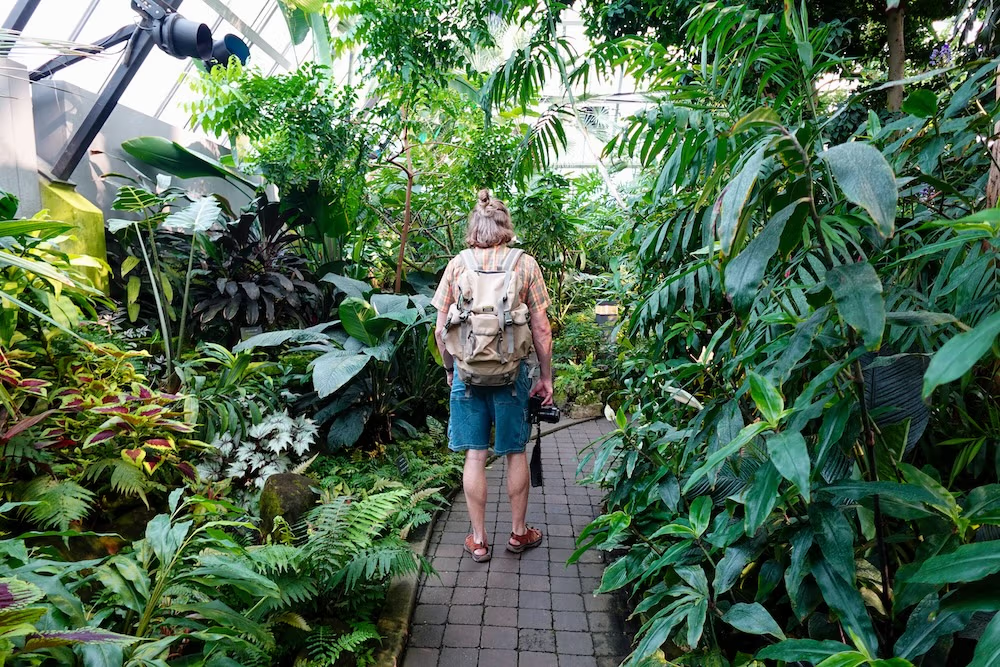
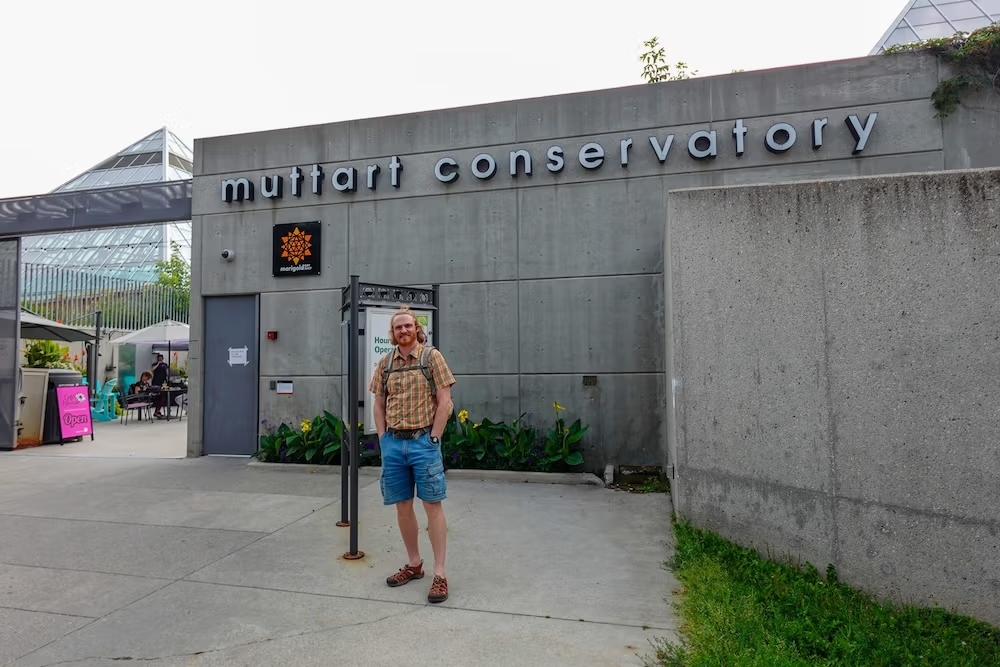
Strictly speaking, it is a conservatory rather than a museum. There are no halls of fossils, aircraft or historical objects. Instead, four glass pyramids rise from the river valley, each creating a different plant environment.
Audrey and I rode the LRT there and started in the Tropical Pyramid. Within a few steps, Edmonton disappeared behind lush greenery, humidity and the kind of sticky heat that makes clothing feel like an administrative error.
The tropical plants reminded us of travelling in Southeast Asia and South America. Audrey recognized plants that felt familiar from Brazil and Peru, while I mostly noticed that the pyramid had succeeded in recreating a climate capable of draining my energy before I had even left Alberta.
The Arid Pyramid was more my speed. It was dry, full of cacti and much less interested in turning me into a human sponge. Audrey agreed immediately when I asked whether she preferred dry or humid heat. Dry heat won without requiring a recount.
The Temperate Pyramid felt more familiar, with a climate and plant cycle shaped by changing seasons. It did not deliver the same instant geographical jump as the tropical or arid spaces, but that contrast is the point. You can move between environments in minutes without changing shoes, boarding a flight or being interrogated by customs.
The fourth space is the Feature Pyramid, which changes themes throughout the year. During our visit, it had been transformed around ancient Egypt, complete with plants associated with Egyptian gardens and themed interpretation. As of July 31, 2026, the display was Hundred Acre Wood, scheduled through September 13. Check the current Feature Pyramid rather than assuming our Egyptian version is still waiting inside.
The conservatory holds around 700 kinds of plants across the four pyramids. Adult admission was $14.95, and tickets could be purchased online or at the entrance. It opens daily except Christmas, with later hours on Wednesday and Thursday. Wednesday evenings include an adults-only period, which may suit visitors who want a quieter experience without children moving through the narrow paths.
Most visitors should allow roughly one to two hours. The pyramids are not enormous, but plant lovers and photographers can slow the visit considerably. Free parking is available directly outside, and the Muttart LRT stop on the Valley Line makes it one of the easier non-downtown attractions to reach without a car.
The City rates the majority of the facility as accessible, and sensory bags, noise-cancelling headphones and weighted lap pads are available through Guest Services. Pyramid paths can become slippery, so this is not a place to charge around as though the tropical plants have announced a closing sale.
I would not rank Muttart above RAM as Edmonton’s best conventional museum because it is not one. But for plant lovers, photographers or travellers desperate for colour and warmth during an Edmonton winter, it may be the more enjoyable attraction.
Art Gallery of Alberta: Better When Art Is the Point
The Art Gallery of Alberta is not a smaller version of RAM. It is the better choice for a completely different visitor.
The gallery holds more than 6,000 works, with much of the collection produced after 1950. However, you are not walking into a permanent warehouse containing all 6,000 pieces. The public experience depends on a rotating exhibition program, which makes the AGA more date-sensitive than the Royal Alberta Museum.
Before deciding whether it deserves part of your day, look at the current Art Gallery of Alberta exhibitions.
That check matters. A temporary program that directly matches your interests can make the AGA the cultural highlight of the trip. A lineup that does not connect with you may leave RAM looking like the safer use of limited time.
Most visitors should probably allow around one to two hours, although the gallery does not publish one universal visit time. Art museums make timing especially personal. Some people stop, read and circle back. Others move through at a pace suggesting that an alarm is sounding somewhere in the building.
Adult admission was $17 plus GST, and visitors aged 17 and under entered free. The gallery also offered free admission from 4:00 to 7:00 p.m. on the final Thursday of each month.
It opens Wednesday through Sunday, which immediately removes it from some Monday and Tuesday itineraries. Its downtown location near RAM is its biggest practical advantage. These are the two easiest major cultural institutions to combine without sacrificing a ridiculous amount of time to Edmonton’s geography.
The AGA is wheelchair- and stroller-friendly and lists complimentary wheelchairs, folding stools and ear plugs. Companion aides enter free. Construction has also affected its direct LRT pedway access, so current arrival instructions are worth checking.
The AGA is the right choice when art is the reason you are going. I would not select it solely because it appears near the top of a museum list. With rotating exhibitions, the calendar matters more than the ranking.
Alberta Aviation Museum: A Specialist Museum With a Memorable Simulator
The Alberta Aviation Museum produced the funniest museum sequence of our Edmonton trip.
I tried the flight simulator.
This went poorly.
Audrey watched my approach unravel while I came in too high, too close and increasingly sideways. Before the simulated disaster even began, I had to adjust myself awkwardly into the setup, prompting Audrey to suggest I might be too tall to become a pilot.
By the end, the aviation industry had received strong confirmation that I should remain in economy class.
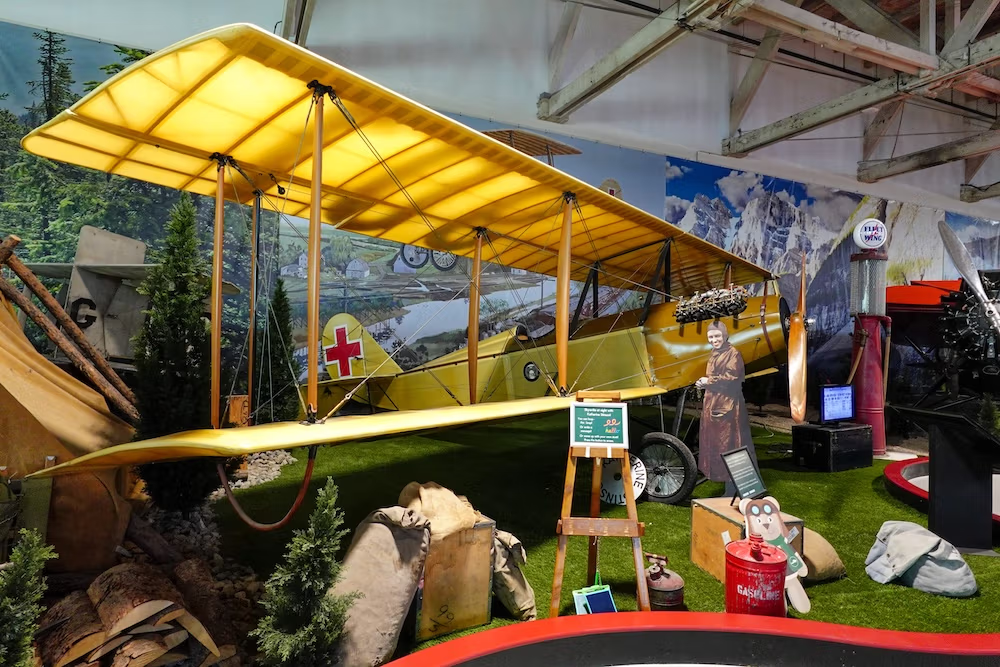
The simulator mattered because it transformed the museum from a hangar filled with interesting aircraft into something interactive and personal. Looking at a cockpit is one experience. Attempting to land with Audrey providing live commentary is another.
The museum occupies a historic hangar at Edmonton’s former municipal airport and focuses on aviation history connected to Edmonton and Alberta. Adult admission was $15, and most self-guided visitors should allow one to two hours.
It operates year-round, with daily summer opening and a reduced schedule through the rest of the year. The museum states that the building is accessible to visitors using wheelchairs and other mobility devices, although its public accessibility information is less detailed than RAM’s or the AGA’s.
The simulator is the detail I would verify before visiting. The museum still maintains simulators and uses them in educational programming, but I would not promise that every general-admission visitor can walk in and recreate my crash on any given day.
Location is another consideration. The museum sits north of the central downtown cluster and needs its own transport allowance. Audrey and I travelled there using Edmonton transit, but routes change and the journey should be counted as part of the museum visit.
For aviation, transport or engineering enthusiasts, this is an easy recommendation. For someone with no existing interest in aircraft, the Royal Alberta Museum gives you more subject variety.
Specialist museums are fantastic when you are the specialist. They can feel very long when you are merely travelling with one.
TELUS World of Science: The Family Favourite You Cannot Currently Visit
TELUS World of Science would normally be the strongest hands-on museum choice in Edmonton, especially for families. At the moment, that recommendation comes with a large locked door attached.
The science centre closed after flooding caused by severe thunderstorms on July 10, 2026. As of July 31, it remained closed until further notice. Reopening has been anticipated around November 2026, but an approximate month is not a confirmed opening date.
Check the current TELUS World of Science status before doing anything else.
When operating normally, the centre includes interactive science galleries, CuriousCITY, Science Garage, space and health exhibits, a nature exchange, dome programming and live demonstrations. IMAX and some special programming can involve additional charges.
That mix is what separates it from a conventional museum. Children can touch, test, build and move rather than spending several hours being told not to touch, test, build or move.
General adult admission was listed at $26.95 plus GST before the closure. Family admission, IMAX tickets and special components can push the total higher. All prices, inclusions and open galleries should be checked again once the building reopens because flood recovery may change what is available.
Under normal operations, the science centre provides free onsite parking, nearby bus access, wheelchairs, strollers, sensory resources, accessible parking and family or all-gender washrooms. It also gives advance warnings about loud demonstrations, dark theatres, flashing effects and busy interactive spaces.
Audrey and I did not visit TELUS World of Science, and we certainly did not visit with Aurelia; our Edmonton trip took place before she was born. I am not going to manufacture a family verdict from an experience we never had.
Even so, the facilities and programming make its intended audience clear. Once reopened and rechecked, it will probably regain the title of Edmonton’s strongest hands-on science option.
While it remains closed, RAM is the more dependable large indoor museum for families, particularly those with children six and under who can use its dedicated Children’s Gallery.
Fort Edmonton Park: More Than a Museum and More Than a Quick Stop
Fort Edmonton Park is the hardest place in this article to compare fairly because it is doing far more than a normal museum.
The 158-acre site includes the Indigenous Peoples Experience, a reconstructed 1846 fort, streets representing later eras of Edmonton’s development, historic buildings, transportation, theatre and midway attractions.
You do not wander in, inspect three galleries and leave before lunch.
The park recommends at least three hours. In practice, a traveller interested in the historic streets, interpretation and transportation could easily hand over most of the day. During the 2026 general-admission season, the park operated mainly Wednesday through Sunday and on holiday Mondays between May and September.
Adult admission was $27.90 plus GST during the discounted 2026 season. The ticket included the train, streetcars and midway rides and games under the current structure.
The park’s advantage is immersion. RAM explains Alberta through collections, objects and indoor galleries. Fort Edmonton Park spreads the history across physical streets and buildings, making Edmonton itself the central subject.
The price for that immersion is effort.
The experience is partly outdoors and vulnerable to heat, rain, smoke, wind and the occasional Alberta weather tantrum. There is far more walking than at RAM or the AGA. Some historic buildings are difficult or impossible to enter with a wheelchair. The steam train accommodates wheelchairs, while the streetcar does not accommodate wheelchairs, walkers or strollers.
Fort Edmonton Park is the better history choice when you want to spend a large part of the day inside Edmonton’s historical story and are visiting during the operating season.
RAM is better when you want a shorter, indoor, year-round and more consistently accessible museum visit.
I would not attempt to combine both simply because they involve history. That is how an enjoyable day becomes a forced march through educational content.
Neon Sign Museum: Worth Ten Minutes, Not Half a Day
The Neon Sign Museum is wonderfully easy to misunderstand.
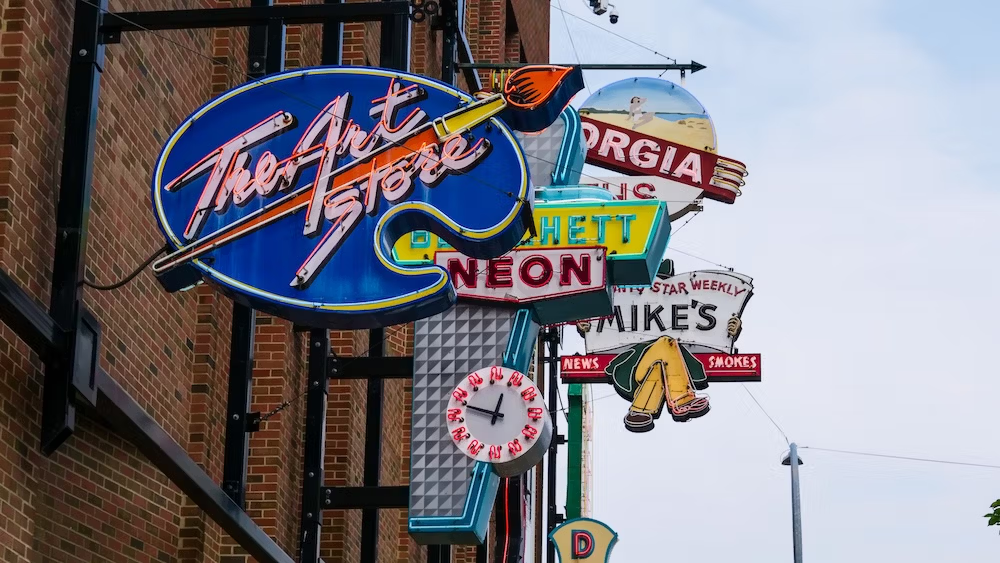
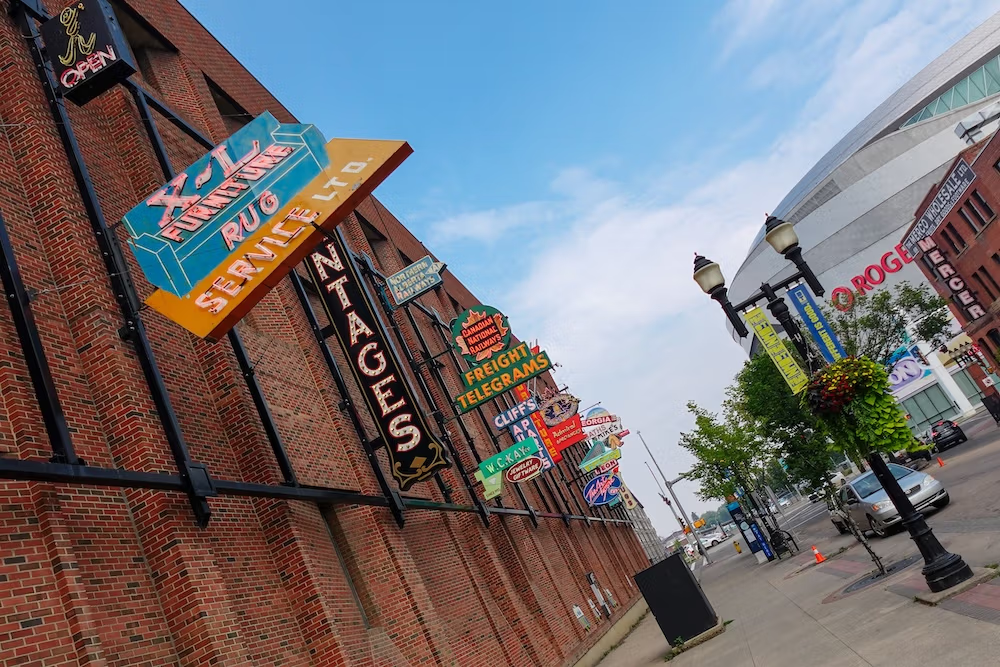
It is not a conventional museum building. There is no ticket desk, coat check or quiet gallery. Historic Edmonton commercial signs are mounted outdoors along a downtown streetscape. You arrive, look up and continue with your evening.
Audrey and I visited in the afternoon, which is not exactly prime time for neon. The signs were interesting, but Audrey immediately said what the daylight made obvious: they would probably look better at night.
We did not return after dark, so I cannot give you a dramatic firsthand verdict about the fully illuminated experience. Still, neon signs have not historically been famous for peaking at two in the afternoon.
The installation is free and officially open around the clock. Most visitors should need roughly ten to twenty minutes, although a photographer or someone interested in Edmonton’s commercial history could linger.
Its downtown location is the whole point. Add it after RAM, the AGA, an ICE District visit or dinner. Do not cross the city solely for it unless historic signage is your particular obsession.
Weather can spoil the simplicity. This is an outdoor collection with little shelter and none of the facilities associated with a large museum. Rain, winter cold, smoke or construction can make a ten-minute stop feel less charming.
The Neon Sign Museum earns its place because the commitment is so low. It is not deep enough to become your main cultural experience, but it may offer the best return on ten spare minutes anywhere in downtown Edmonton.
Alberta Railway Museum: Only Make the Journey if Trains Matter
The Alberta Railway Museum serves a narrower audience than anything else in this comparison.
Its outdoor collection includes locomotives, railcars, station buildings, a water tower and workshop spaces arranged to recreate elements of a railway terminal. The museum focuses particularly on Canadian National, Northern Alberta and industrial railway history.
That is a serious collection for someone who cares about trains. It is also a substantial detour for someone who does not.
The museum operates seasonally, mainly Friday through Sunday between the Victoria Day and Labour Day weekends, with additional specified holidays. Adult admission was $17 before tax and processing fees. Optional speeder and train rides cost extra when operating.
The words “when operating” matter. Do not organize the entire visit around a train ride without confirming that it will run.
The museum sits on Edmonton’s northeast edge rather than near the main downtown attractions. Between the distance, seasonal hours and outdoor collection, it becomes a dedicated outing rather than something added casually to another museum day.
Allow roughly two to three hours, although that is a planning estimate rather than an official visit duration. Detailed accessibility information for the outdoor grounds, railcars and optional rides was not clear enough to make broad promises, so contact the museum directly when mobility access will affect the decision.
Railway enthusiasts should take it seriously. Families with a train-obsessed child may also decide the journey is worthwhile.
Everyone else has permission to skip it.
Where to Stay for an Edmonton Museum Trip
Downtown is the most practical hotel base when RAM, the Art Gallery of Alberta and the Neon Sign Museum are the centre of your plan. Those attractions can share one cultural day, and you are also better positioned for restaurants, ICE District and other central sightseeing.
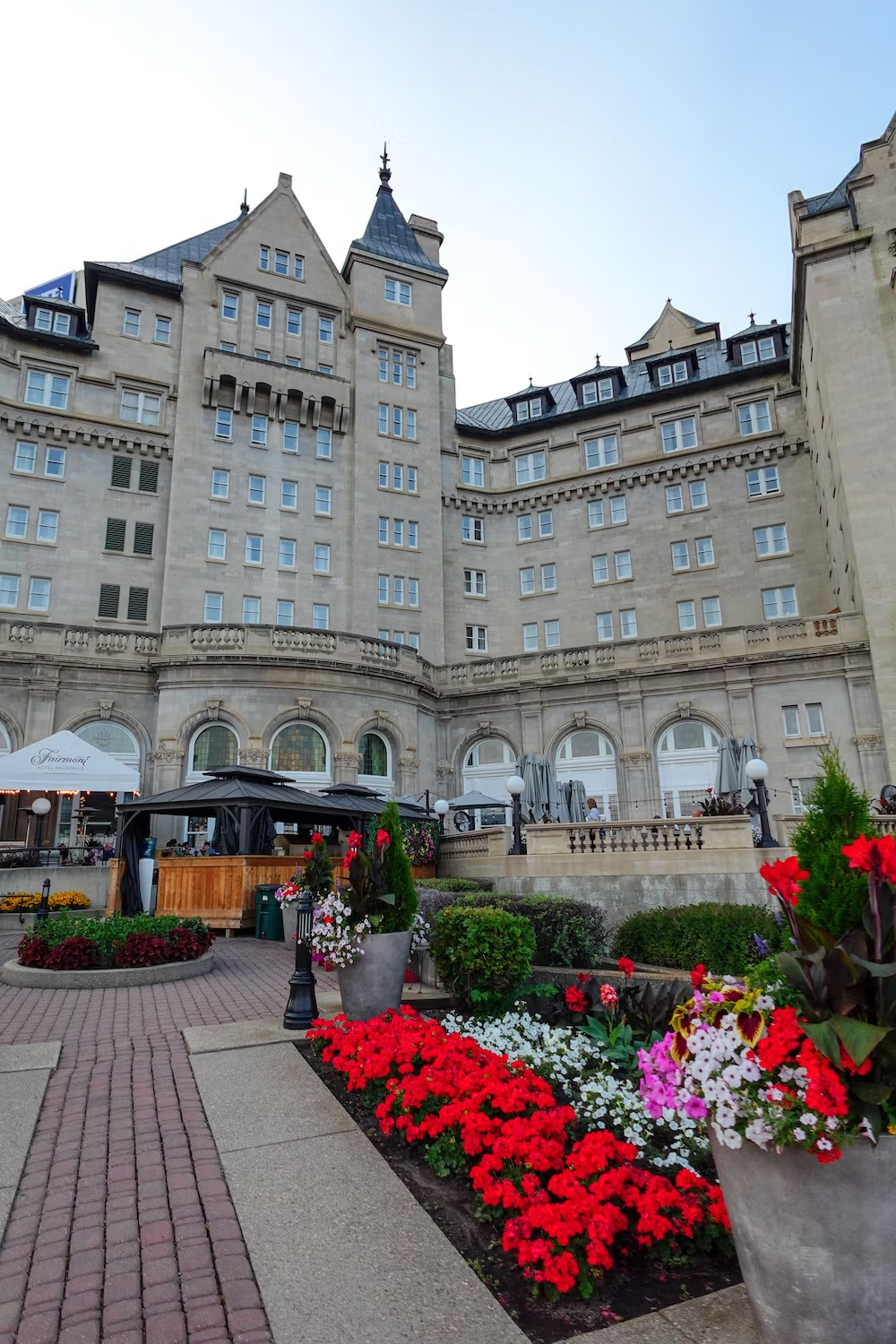
Audrey and I stayed at Fairmont Hotel Macdonald during our return to Edmonton. It gave us a memorable downtown base and was an experience in its own right, although I would choose it for the historic hotel, river-valley setting and slower splurge-style stay rather than pretending it sits beside every museum mentioned here. You can check current availability at Fairmont Hotel Macdonald.
No Edmonton hotel makes the aviation museum, Fort Edmonton Park, the downtown museums, Muttart Conservatory and the railway museum simultaneously walkable. When those specialist sites dominate your itinerary, the better decision is usually to choose the hotel for the rest of your trip and solve the museum distances separately.
How to Build an Edmonton Museum Day Without Losing Half of It in Transit
Edmonton’s museums become much easier to plan once you stop treating the city as compact.
A museum list can make RAM, Muttart Conservatory, Fort Edmonton Park, the aviation museum and the railway museum appear like neighbouring checkboxes. They are not. Attempting to collect several in one day creates more transport than culture.
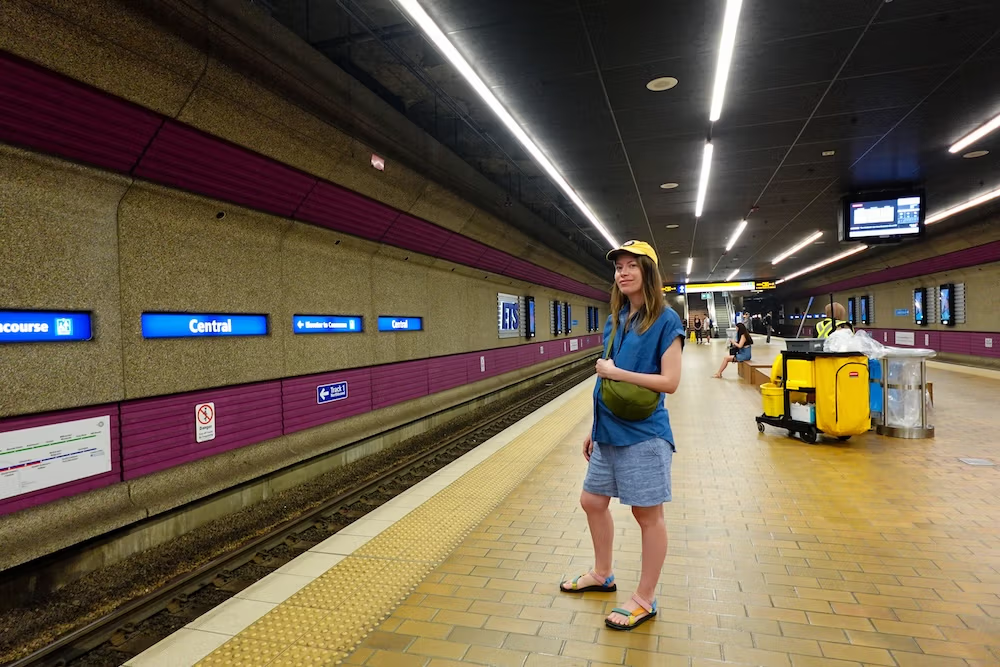
Transit can handle a downtown museum day, reaches Muttart on the Valley Line and worked for Audrey and me when we travelled to the aviation museum. A car becomes more useful when Fort Edmonton Park, the railway museum or several widely separated attractions are central to the trip. Travellers who prefer that flexibility can compare Edmonton car rentals on Booking.com. A rental is not necessary for every museum itinerary, but it can prevent an enthusiast-heavy day from turning into a tour of bus shelters.
The Safest First-Time Plan
Visit the Royal Alberta Museum and allow at least two hours.
Afterward, stay downtown for lunch, a walk or another nearby attraction. This leaves enough breathing room to enjoy the museum rather than speed-reading Alberta.
The Strongest Two-Museum Combination
Pair RAM with the Art Gallery of Alberta.
Their downtown locations make this the cleanest substantial museum pairing. Thursday is currently the most flexible day because both institutions offer later hours.
The Neon Sign Museum can be added after dinner or as you move toward the ICE District.
Construction and pedway closures can alter the most obvious walking routes, so check current access before relying on an entirely indoor connection.
The Plant-Lover or Warm Indoor Plan
Give Muttart Conservatory roughly one to two hours and let the four pyramids provide the variety.
It is easy to reach on the Valley Line and has free parking for drivers. Later Wednesday and Thursday hours can also make it easier to add after another attraction, although Wednesday evenings include an adults-only period.
Muttart pairs naturally with a river-valley or central Edmonton day, but it is not as geographically tight as combining RAM and the AGA.
The Specialist Half-Day
Give either the Alberta Aviation Museum or Alberta Railway Museum its own outing.
The aviation museum is easier to combine with another activity because a typical visit lasts one to two hours and the museum operates year-round. The railway museum requires more seasonal planning, more travel and greater weather tolerance.
Trying to visit both in one day makes sense only for a truly committed transport enthusiast.
The Family Plan While TELUS Remains Closed
RAM is the most dependable large indoor option.
Muttart also works for families wanting a calmer indoor outing built around plants and changing environments, although it is not a hands-on science replacement. Children under eight must remain closely supervised inside the pyramids.
Fort Edmonton Park offers more movement and immersion during its operating season, but it demands substantially more time, walking and weather exposure.
When TELUS World of Science reopens, check what has actually returned before comparing it with RAM. The post-flood experience may not immediately match the previous gallery lineup.
The Serious Edmonton-History Day
Let Fort Edmonton Park own the day.
Do not squeeze it between other major museums. The site is too large, and the value comes from moving through its different eras rather than racing from one headline attraction to the next.
RAM and Fort Edmonton Park can complement one another across a longer trip. On a single day, pick the format you prefer: concentrated indoor collections or expansive living history.
So, Which Edmonton Museums Are Actually Worth It?
The Royal Alberta Museum is the best answer for the greatest number of visitors. It is where I would start when the group has mixed interests or nobody has arrived with a strong preference.
The Muttart Conservatory earns its place despite not being a traditional museum. Plant lovers, photographers and travellers wanting a colourful indoor escape may prefer its four pyramids to any gallery of objects.
The Art Gallery of Alberta becomes the better decision when its exhibitions match your interests and visual art matters more than broad provincial history.
The Alberta Aviation Museum is worth the journey for aircraft enthusiasts and anyone tempted by Edmonton’s aviation story. Confirm simulator availability if that is part of the attraction.
TELUS World of Science belongs in future family plans only after reopening has been officially confirmed.
Fort Edmonton Park deserves serious consideration when you want immersive Edmonton history and have the season, time and physical energy for it.
The Neon Sign Museum is almost always worth adding when you are already downtown because it is free and brief.
The Alberta Railway Museum is worth the separate journey when trains are one of the reasons you travel. Otherwise, you are not failing Edmonton by leaving it out.
That is the decision rule I would use: start with RAM when you are unsure, choose Muttart when plants and indoor nature sound more appealing than conventional galleries, follow your strongest specialist interest when you have one, and never cross half the city for an attraction merely because somebody included it in a top-ten list.
Frequently Asked Questions
What is the best museum in Edmonton for a first-time visitor?
The Royal Alberta Museum is the strongest all-round choice. It covers Alberta’s human and natural history, offers enough variety for mixed-interest groups and deserves at least two hours.
Is the Muttart Conservatory actually a museum?
Not in the conventional sense. It is a botanical conservatory with four glass pyramids, but it belongs in this comparison because it offers a substantial indoor cultural attraction for plant lovers, photographers and families.
How much time should I allow for the Royal Alberta Museum?
Plan at least two hours. Visitors who read the interpretation closely, explore temporary exhibitions or arrive with children could easily spend half a day.
Which Edmonton museums are easiest to combine in one day?
The Royal Alberta Museum and Art Gallery of Alberta form the cleanest substantial pairing because both are downtown. The Neon Sign Museum can be added later as a brief, free stop.
Is TELUS World of Science currently open?
As of July 31, 2026, it was closed until further notice after flooding. Reopening had been anticipated around November 2026, but no confirmed date was available, so check its live operating status before planning a visit.
Do I need a car for an Edmonton museum itinerary?
No. Transit works well for the downtown museums and reaches Muttart Conservatory on the Valley Line. A car becomes more useful for Fort Edmonton Park, the Alberta Railway Museum or a day combining widely separated attractions.
This article is also available in Spanish. [Leé la versión en castellano: Mejores museos de Edmonton: ¿cuáles valen la pena?]
This article contains affiliate links. If you book through one of these links, I may earn a commission at no extra cost to you.