
Most museums ask you to look. This one keeps handing you things to actually do — a simulator you can fly, a cockpit you can sit in during the right week of the year, more than thirty aircraft you’re free to walk right up to inside a genuine WWII-era hangar on Kingsway. Working out which of that is available on any given day is most of the planning this visit needs.
We bought a 24-hour transit pass mainly because that day’s plan called for it — a packed morning at the Royal Alberta Museum, a run of stops across the city, then a bus out to the aviation museum with West Edmonton Mall still waiting after that. It wasn’t the headline of the day. It’s the stop I still think about.
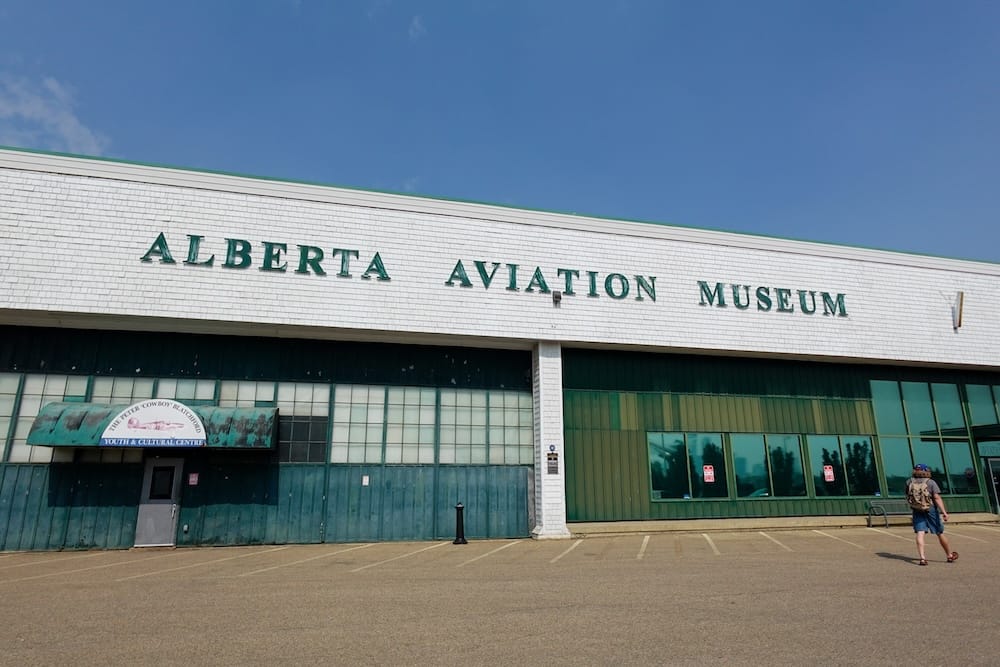
A Hangar That Used to Be an Airport
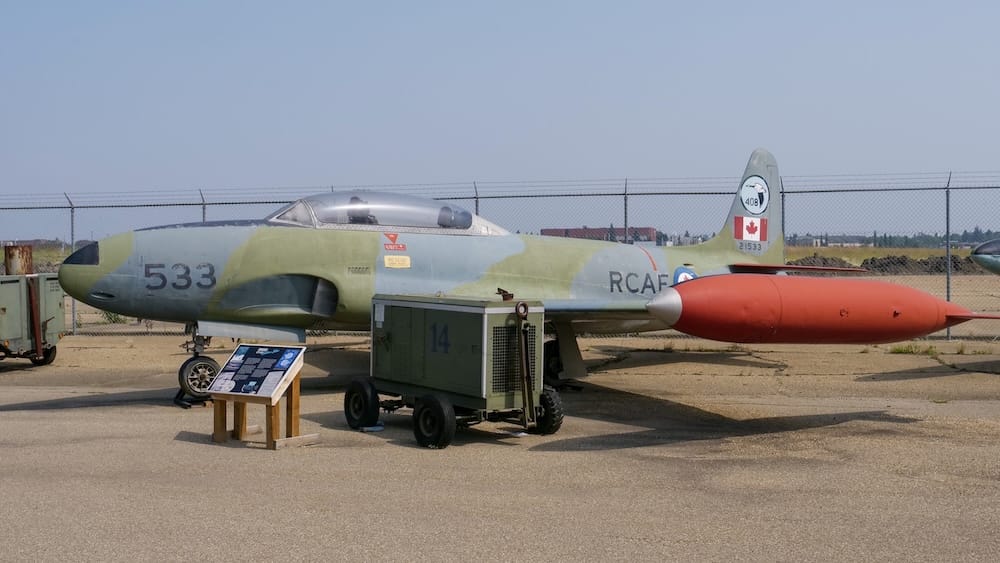
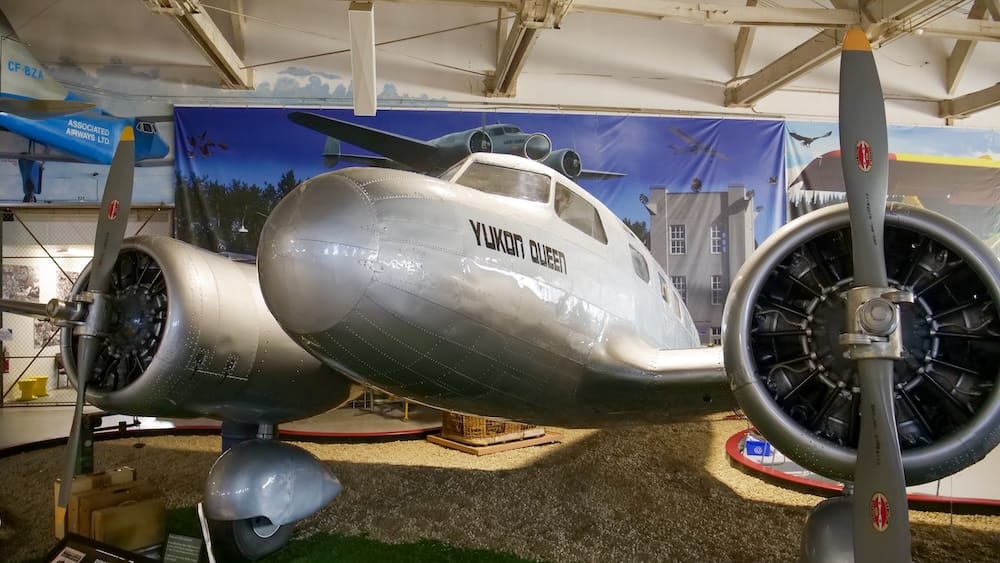
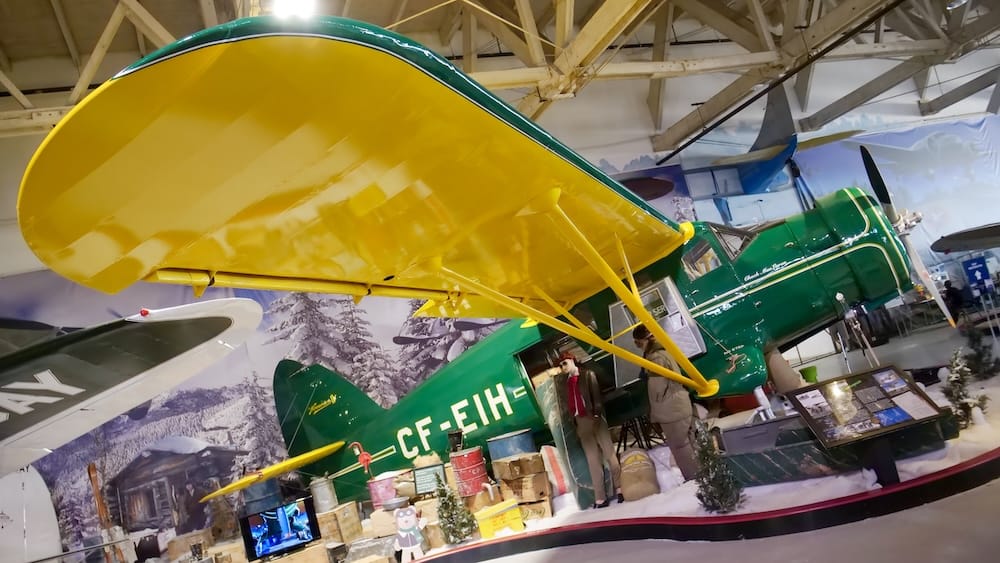
The building is doing a lot of the work here. It’s the last surviving double-long, double-wide hangar from the World War II era, standing on what used to be Edmonton‘s City Centre Airport — Blatchford Field, going back further, the site that helped earn Edmonton its old nickname as Canada’s Gateway to the North. It’s a protected historic resource now, and it shows: this isn’t a modern space dressed up with old airplanes. It’s a hangar that still happens to have airplanes in it, with exhibits built around them.
More Than Thirty Aircraft, Two Worth Seeking Out
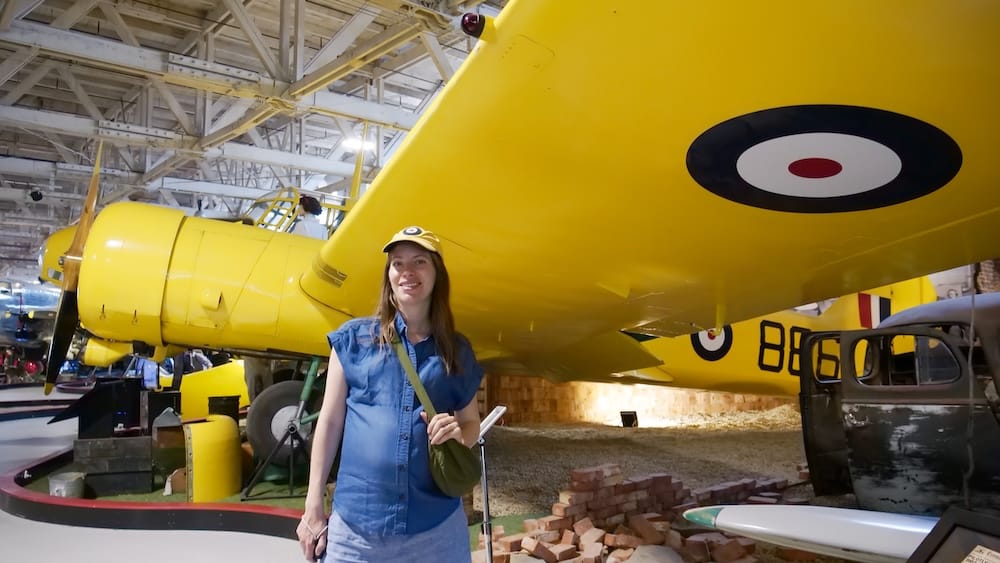
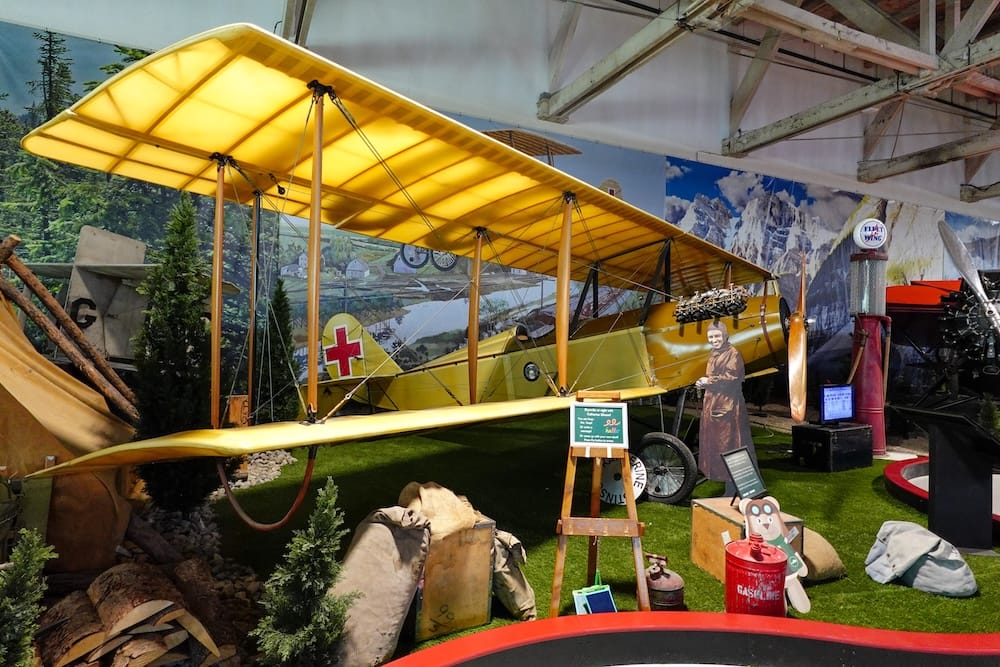
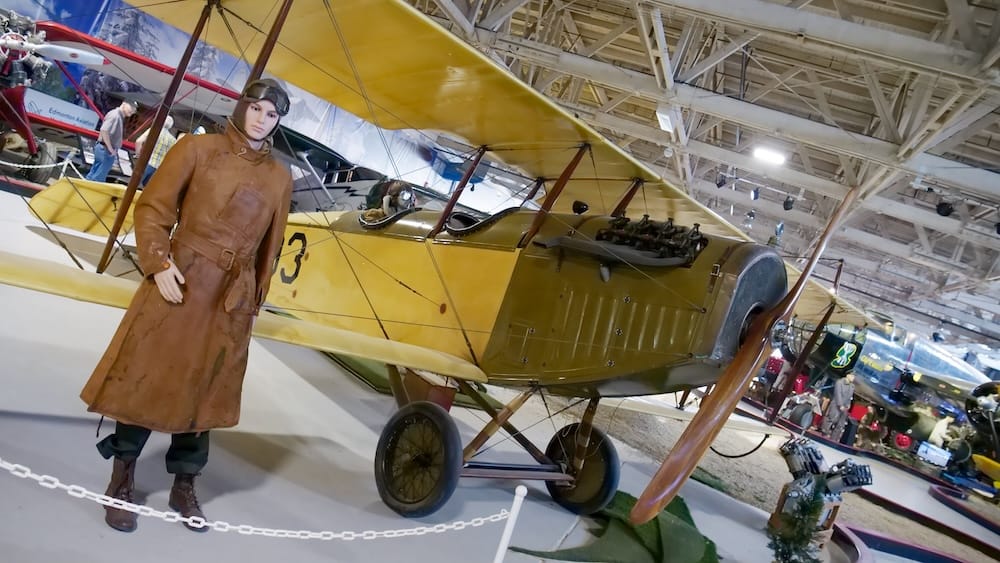
The collection runs past thirty aircraft — early biplanes, rugged bush planes that helped open up the north, a jet or two from later decades. Two are worth making a point of finding, not just walking past. The Cirrus Moth is one of the oldest aircraft tied to Edmonton’s early flying days, a light biplane that became a standard trainer once de Havilland started assembling them in Canada. The de Havilland Mosquito is the other, a genuine WWII combat aircraft sitting close enough to walk right around.
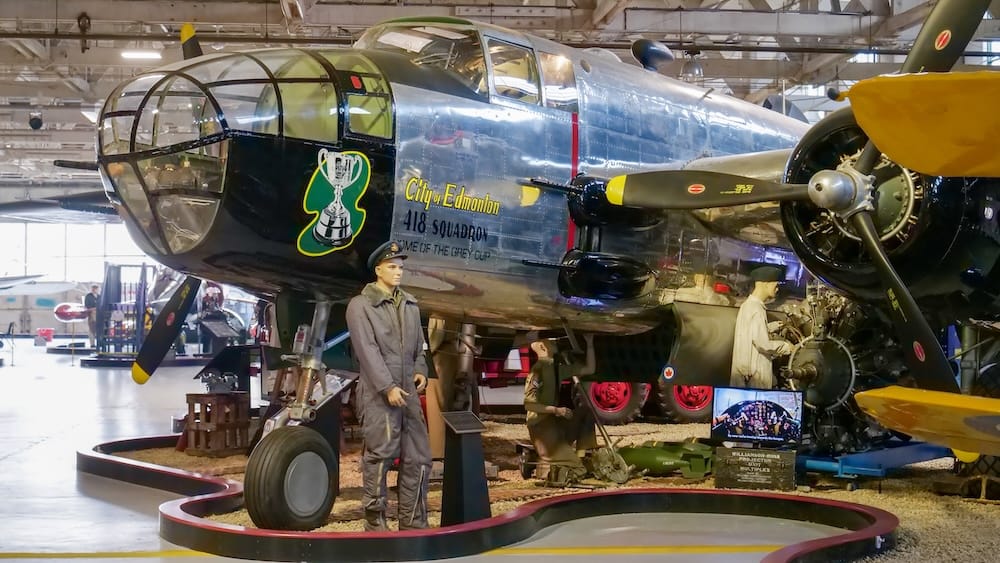
Give it more than a quick pass-through if you want to actually take it in. There’s more reading and looking here than the outside of the building suggests.
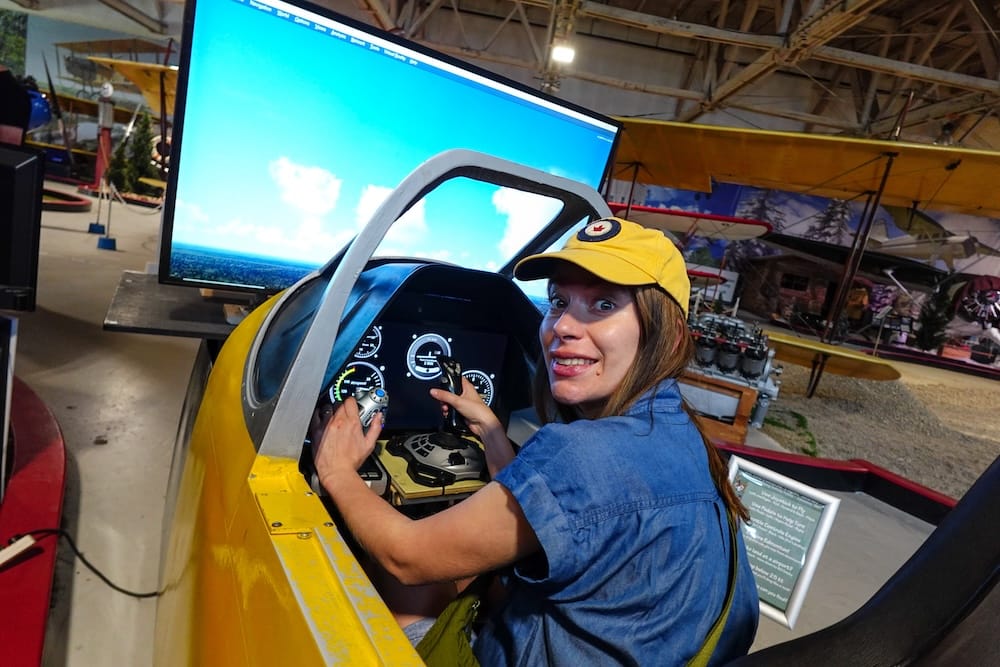
Trying the Flight Simulator (And Failing to Land)
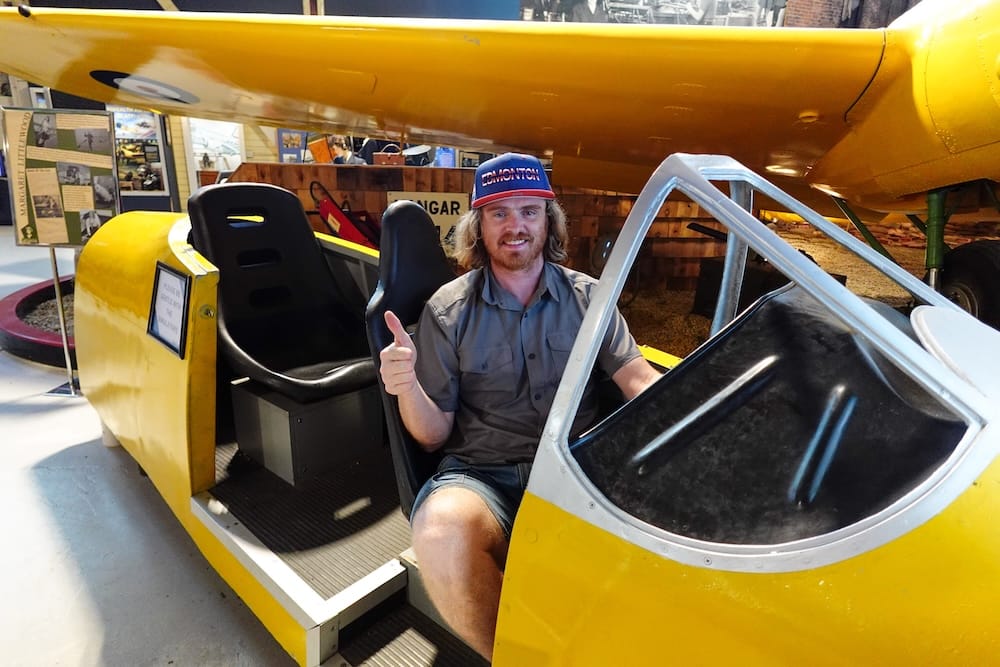
I climbed in, folded myself into a seat that wasn’t built for someone my height, and tried to land a plane. Audrey called the whole thing from outside — a play-by-play that got funnier as it became obvious I was too high, then too far off the runway, then somehow lining up for the grass instead of the strip. I did not land cleanly. I landed sideways, which is its own kind of achievement.
It’s a genuinely fun few minutes, the kind of thing that turns a museum stop into something you actually remember instead of a slow walk past glass cases. These days the museum runs it as a set Saturday program — five dollars for twenty minutes, booked at the front desk, with times that can shift depending on who’s volunteering that day. If the simulator is the reason you’re coming, build the trip around a Saturday and call ahead. Don’t assume it’s just sitting there waiting.
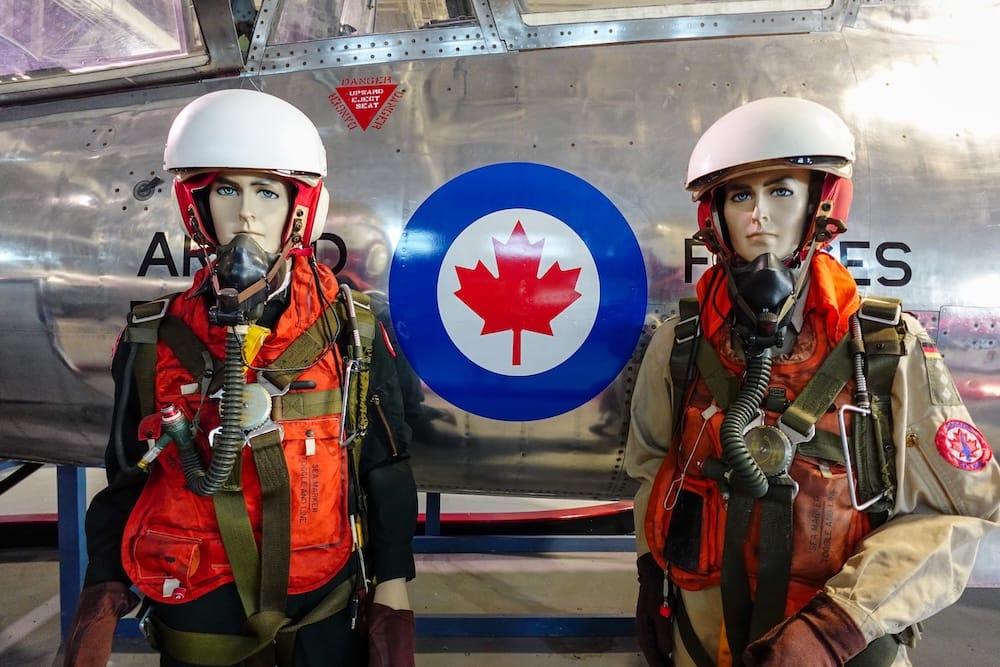
Getting Into a Cockpit Isn’t a Daily Thing
Actually sitting inside a cockpit is the other hands-on promise in the title, and it isn’t something you can count on any random afternoon. The museum runs an annual event each fall called Open Cockpit Day, built specifically around this: more than twenty aircraft on hand, over a dozen of them opened up so you can climb in and sit where the pilot sat, from sleek jets to rougher bush planes. It’s ticketed separately from regular admission, and it’s worth checking the current date and locking in tickets before it fills up, since it’s clearly turned into the kind of day people plan a whole trip around.
If getting inside a cockpit is the point of your trip, build it around that fall date. A regular visit alone won’t get you there — it gets you close to the aircraft, close enough to take in the scale and the detail. It just doesn’t get you inside one.
Getting There, and What It Actually Costs
The museum sits on Kingsway, close enough to downtown that a car isn’t necessary. The NAIT LRT station is a short walk away, and Kingsway Transit Centre — a few minutes further, served by multiple bus routes — gets you close as well; there’s also a stop right outside the museum itself. Parking is free if you’d rather drive, and there’s no food service inside the hangar, though a handful of restaurants sit a few minutes away on Kingsway. If piecing together your own route across LRT lines and bus transfers isn’t how you want to spend a vacation day, it’s worth taking a look at guided Edmonton tours that cover a wider sweep of downtown sights in one booked block instead of assembling the day yourself.
Hours split by season:
- Summer (June–August): open daily, 10am–5pm
- Winter (September–May): Tuesday–Friday 10am–4pm, weekends and holidays 10am–5pm, closed Mondays and over the Christmas/New Year’s stretch
Adult admission runs $15, with reduced rates for students, seniors, youth, and children, a family pass covering two adults and up to four kids, and discounted military pricing. None of that is fixed — museums adjust pricing without much notice, so it’s worth confirming current hours and admission before you go.
Two Different Clocks
The honest way to think about this museum: it runs on two schedules layered under one roof. Show up any day and you get the full aircraft collection and a hangar worth real time. Add a Saturday and you get a shot at the simulator. Add the right weekend each fall and you get an actual cockpit under you instead of glass between you and the plane.
None of that makes an ordinary visit any less worth it — the collection alone earns the stop. But if “Cockpits” is the word in the title that got you here, don’t leave it to chance. Check the calendar first, then buy the ticket. And if Open Cockpit Day specifically is what you’re building the trip around, it’s worth locking in where you’re staying early — downtown Edmonton hotels fill up faster around a date like that than you’d expect for a museum event, so it doesn’t hurt to compare downtown Edmonton hotel availability ahead of time.
Frequently Asked Questions
Is the flight simulator at the Alberta Aviation Museum included in regular admission?
No — the simulator runs as a set Saturday program, five dollars for twenty minutes, booked at the front desk, with times that can shift depending on who’s volunteering that day.
Can you actually sit inside a cockpit at the Alberta Aviation Museum?
Only on Open Cockpit Day, an annual fall event ticketed separately from regular admission. On a standard visit, you get close enough to the aircraft to take in the scale and detail, but not inside one.
How many aircraft are on display at the Alberta Aviation Museum?
The collection runs past thirty aircraft, spanning early biplanes, rugged bush planes, and a jet or two from later decades, all inside a genuine WWII-era hangar.
Do I need a car to visit the Alberta Aviation Museum in Edmonton?
Not really. The museum sits on Kingsway close enough to downtown that transit works well — the NAIT LRT station is a short walk away, Kingsway Transit Centre is a few minutes further with multiple bus routes, and there’s a bus stop right outside the museum. Free parking is also available if you’d rather drive.
What are the Alberta Aviation Museum’s hours?
Summer (June–August) hours run daily from 10am to 5pm. Winter (September–May) hours run Tuesday to Friday 10am–4pm and weekends/holidays 10am–5pm, with the museum closed Mondays and over the Christmas/New Year’s stretch.
Is there food available at the Alberta Aviation Museum?
There’s no food service inside the hangar itself, though a handful of restaurants sit a few minutes away on Kingsway.
What does admission to the Alberta Aviation Museum cost?
Adult admission runs $15, with reduced rates for students, seniors, youth, and children, a family pass covering two adults and up to four kids, and discounted military pricing. Pricing can change without notice, so it’s worth confirming current rates before visiting.
This guide is also available in Spanish. [Leé la versión en castellano: Guía del Alberta Aviation Museum: aviones, cabinas y diversión en el simulador de vuelo]
This article contains affiliate links. If you book through one of these links, I may earn a commission at no extra cost to you.