
“Best time to visit Edmonton” is usually a question that gets answered with a spreadsheet — average highs, average lows, a shrug toward “shoulder season” if the site wants to sound clever. I can give you the numbers too, further down. But there isn’t one best time to visit Edmonton. There are three different trips wearing the same city’s name, and picking the right one matters more than picking the right month.
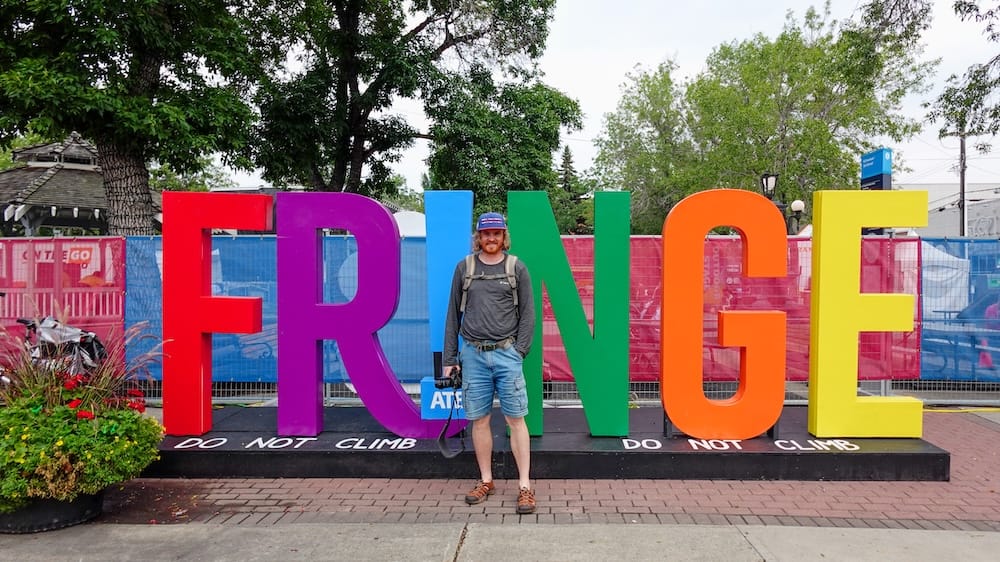
I did my degree at the University of Alberta, so Edmonton was home before it was somewhere I flew back into as a visitor. Audrey had never been. She booked our return as a babymoon to break up a longer Alberta trip and picked Edmonton specifically because it’s where I went to school; I turned it into an excuse to see how much of the city I still remembered. We landed, by accident, during the one week of the year Edmonton turns itself inside out for a theatre festival — and that accident of timing runs through most of what follows. Winter is the one exception. What I know about an Edmonton winter comes from having lived through a few of them as a student, not from this trip, and I’d rather say that plainly than pretend otherwise.
Here’s the shape of it. Summer means warmth, bloom, and the longest festival stretch of the year, plus one cost worth knowing about upfront. August specifically turns the city loud and crowded, in a good way, if you’re willing to plan around it. Winter is cold, hockey season, and two free festivals built for exactly that weather. None of the three is objectively correct — what follows is what each one costs you and gives back.
Summer in Edmonton — Long Days, Bloom, and One Real Catch
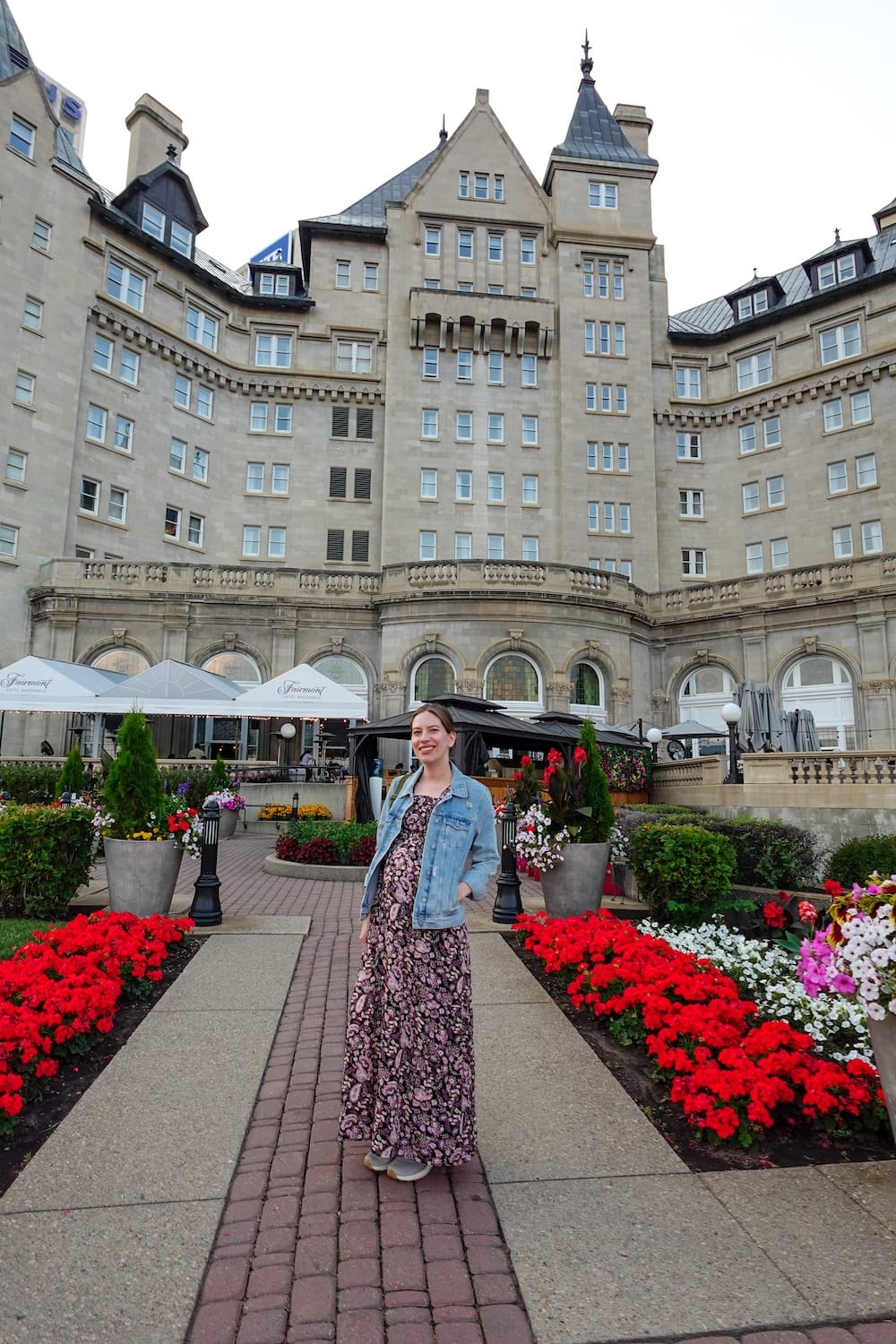
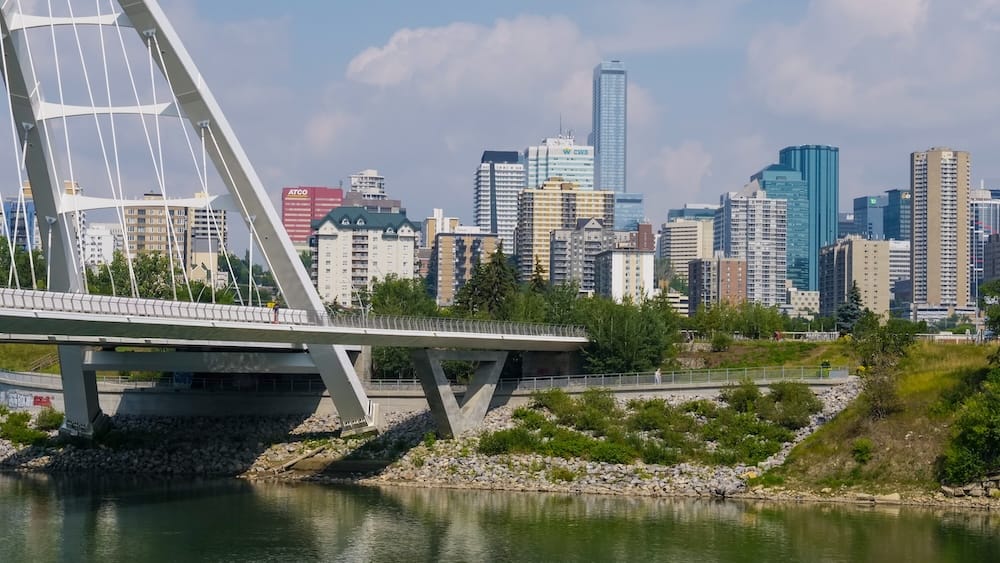
The only Edmonton I can speak to first-hand is a summer one. We stayed at the Fairmont Hotel Macdonald in the middle of summer, and the hotel courtyard was in full bloom — tables of guests eating outside in the last of the daylight, flowers everywhere. We took an evening walk along the terrace as the sun dropped toward the North Saskatchewan River. It wasn’t the Edmonton I remembered from my student winters, and for one evening, that was the whole point.
It’s not just the one nice evening, either. Edmonton runs some of the longest summer days of any major Canadian city — close to 17 hours of daylight around the solstice — and July averages around 23 to 24°C, with plenty of room to run hotter on a good week. Nights can still turn cool even in the middle of summer, so if you’re only packing for heat, bring one layer you can put on after dark.
There’s one thing about an Edmonton summer that doesn’t make it into the postcards: the air isn’t always clean. Wildfire smoke drifting down from northern Alberta, B.C., or the Northwest Territories has become a real feature of recent summers here, and the smokiest stretches tend to land later in the season — August most of all, which happens to be exactly when the city’s biggest festival hits. It isn’t every summer, and it isn’t constant when it happens. But it’s common enough that I’d rather tell you upfront than have you find out from a hazy skyline photo instead of a blue one. If you’re chasing the postcard version of Edmonton, keep an eye on conditions before you lock in outdoor plans.
None of that cancels the season out. Summer is a trade you’re making: warmth, bloom, and long light against a smoke risk that comes and goes.
Festival Season — Building a Trip Around Fringe
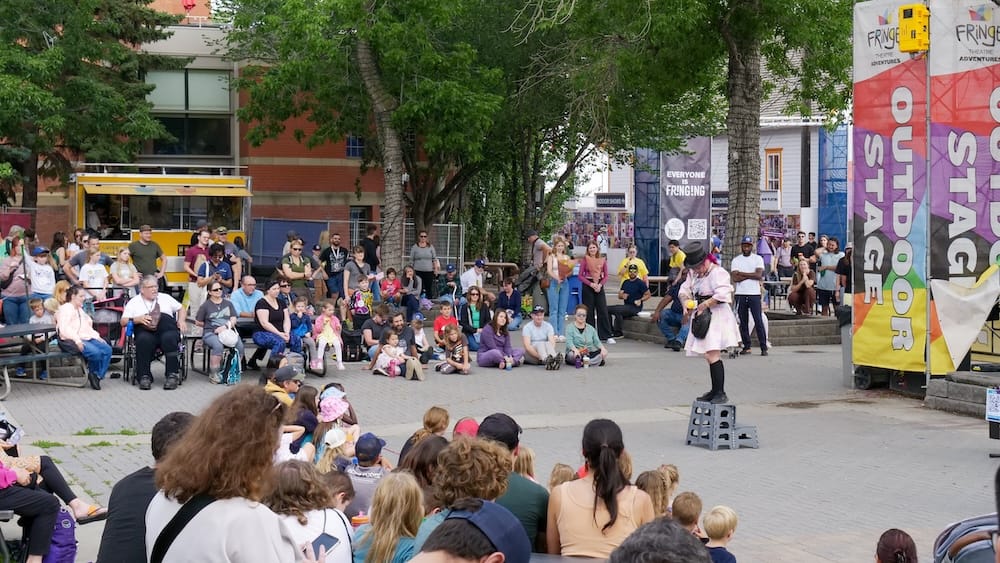
If you want Edmonton at its loudest, you build the trip around the Edmonton International Fringe Theatre Festival, and you do it in August. We didn’t fully plan for this — we landed the same week Fringe was happening, and it rearranged our entire visit without asking permission. We’d set aside an afternoon for the Old Strathcona Farmers’ Market and ended up wandering from one outdoor performance to the next instead, completely forgetting we were supposed to be shopping for food. That’s Fringe: it doesn’t wait for you to finish your other plans.
It’s not a small claim, either: Fringe is the largest, longest-running Fringe theatre festival in North America, and by the time we stumbled into it, it had already been running for decades. In a typical year, it fills dozens of venues around Old Strathcona with more than 200 theatre productions and well over a thousand individual performances, plus free outdoor programming in the streets around Whyte Avenue the entire time. Most tickets run $20 or under, which is a big part of why people don’t just see one show. They see five.
My real advice, learned the inconvenient way, is to go in with a plan. With that much happening at once, across that many venues, over about eleven days in August, “we’ll figure it out when we get there” turns into wandering past posters and missing the one show you actually wanted to see. Fringe publishes its full show schedule shortly before the festival opens, and tickets go on sale not long after — close enough to the festival itself that it’s worth checking the current dates directly rather than trusting any guide, including this one, to have them memorized a year out. It also helps to sleep close enough to walk it — most of Fringe unfolds right around Old Strathcona and Whyte Avenue, so it’s worth comparing hotels near Old Strathcona before you book, rather than staying downtown and Ubering back after every late show.
Fringe isn’t the only reason to time a trip around something happening in Edmonton. If theatre isn’t your thing, K-Days — the city’s summer fair, running in July, a few weeks ahead of Fringe — is the same instinct in a louder key: rides, concerts, fair food, and a midway instead of street theatre. It’s a different kind of chaos, but it puts the same choice in front of you. Show up for a specific week, not just a specific season.
Edmonton in Winter — What You’re Actually Signing Up For
I don’t have a real Edmonton winter to show you from this trip — everything above happened on one visit, in August. What I know about winter here comes from having actually lived through a few of them as a student, filled in with what’s true about the city right now rather than what I remember from over a decade ago. If that matters to you, fair enough. I’d rather be straight about it than fake you a scene I don’t have.
What I can tell you with confidence: “cold” undersells it. January is Edmonton’s coldest month, averaging somewhere around -6 to -7°C for a daytime high and dropping to roughly -14 to -17°C overnight, with the occasional night sliding into the -30s. Snow is a fair bet from October through April, not just a midwinter thing. The bigger adjustment for visitors is usually the light: summer gives you close to 17 hours of daylight, and winter can shrink that down to something closer to 8, so your sightseeing window closes a lot earlier than you’d plan for back home.
The one piece of winter I can vouch for personally is a little sideways: wandering through Rogers Place and the ICE District back in August, we joked that we were “a bit early for hockey season.” We were — the Edmonton Oilers‘ season now runs from late September through early April, so if catching a game at Rogers Place matters to your trip, that’s the window to plan around.
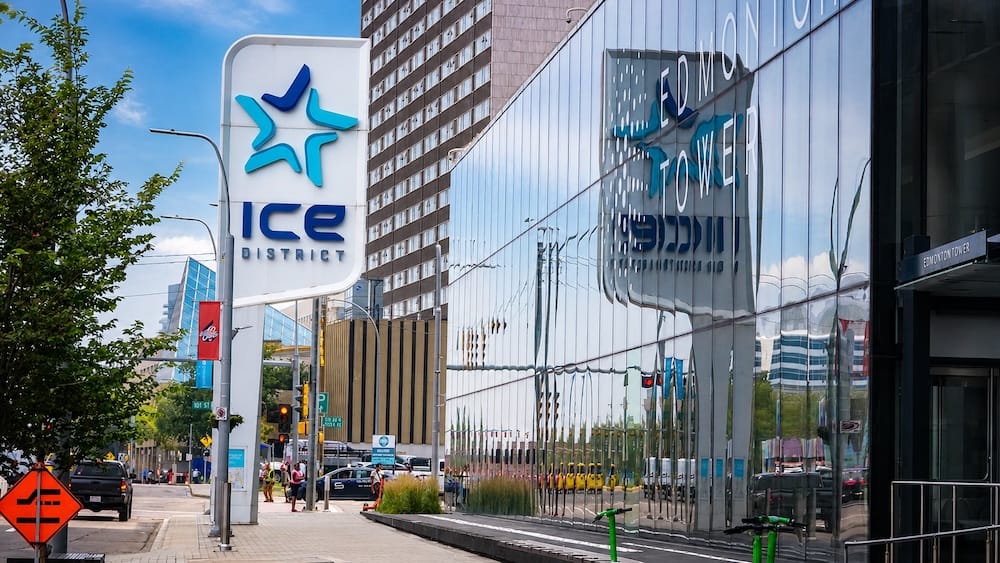
Beyond hockey, winter’s case is that Edmonton doesn’t just tolerate the season — it builds festivals around it. Deep Freeze, a free festival on Alberta Avenue, kicks off most Januarys as the city’s first event of the year, with ice sculptures, snowshoeing, and the kind of sincere, small-scale warmth a neighbourhood throws when it decides winter deserves its own party. A few weeks later, Silver Skate Festival — Edmonton’s longest-running winter festival, also free — takes over for about ten days in February with outdoor skating and snow and fire sculptures. It’s usually held in Hawrelak Park, though it’s running out of Sir Wilfrid Laurier Park at the moment while Hawrelak is under construction, so it’s worth checking where it’s landing the year you go.
That’s the honest case for a winter trip: cold you can’t argue your way around, hockey season, and two free festivals that exist because Edmonton decided the season was worth celebrating instead of just enduring it. It’s not for everyone, and I haven’t personally tested a January here the way I have an August. But if short days and serious cold don’t put you off, it’s the one season where you’ll have the city mostly to yourselves.
So, Which Season Is Right for Your Trip?
| Summer | Festival Season (August) | Winter | |
|---|---|---|---|
| Roughly | 23–24°C highs, long light | Same as summer, plus crowds | -6 to -7°C highs, short light |
| Signature experience | Bloom, patios, river valley evenings | 200+ shows, dozens of venues, nonstop energy | Cold, hockey season, free winter festivals |
| Biggest trade-off | Occasional wildfire smoke, especially in August | Needs an actual plan or you’ll miss things | Short days and serious cold, full stop |
| Best for | Travellers who want warmth without the festival crush | Travellers who want maximum energy and don’t mind planning around it | Travellers who want winter, not just tolerate it |
If you want warmth, bloom, and river-valley evenings without building the whole trip around a festival schedule, go in summer — just keep an eye on air quality if you’re chasing blue-sky photos. If you want Edmonton at full volume, go in August specifically, have your Fringe plan sorted before you land, and treat K-Days as your backup if theatre isn’t your thing. And if you want a proper Canadian winter — hockey season, real cold, two festivals nobody’s making you attend — go in January or February, and go in expecting it, not hoping for a mild one.
I’d go back for Fringe again without a second thought. Winter’s the one I still owe myself — and Audrey, who’s only ever seen the warm, blooming version of a city I spent my twenties freezing in. Whether that trip actually happens is a different question entirely.
Frequently Asked Questions
What is the best time to visit Edmonton overall?
There isn’t a single best time — Edmonton offers three genuinely different trips depending on when you go: warm, blooming summers; a high-energy stretch in August built around the Fringe Festival; and a real, cold Canadian winter with its own festivals and hockey season.
Does Edmonton get wildfire smoke in the summer?
Yes, at least some summers. Wildfire smoke drifting in from northern Alberta, British Columbia, or the Northwest Territories has become a real feature of recent Edmonton summers, with the smokiest stretches typically landing later in the season, especially in August. It isn’t constant, but it’s worth checking conditions before locking in outdoor plans.
When does the Edmonton Fringe Festival take place?
The Edmonton International Fringe Theatre Festival runs for about eleven days in August, filling dozens of venues around Old Strathcona with more than 200 productions. Exact dates shift slightly each year, so it’s worth checking current dates directly before booking.
Is Edmonton’s Fringe Festival really the largest in North America?
Yes — it’s the largest and longest-running Fringe theatre festival in North America, running for decades and drawing well over a thousand individual performances across a single festival.
How cold does it get in Edmonton in winter?
January, Edmonton’s coldest month, averages around -6 to -7°C for a daytime high and roughly -14 to -17°C overnight, with occasional nights dropping into the -30s. Daylight also shrinks significantly compared to summer.
When does hockey season run in Edmonton?
The Edmonton Oilers’ season now runs from late September through early April, so travelers hoping to catch a game at Rogers Place should plan a visit within that window rather than during summer.
Are there festivals in Edmonton during winter?
Yes. Deep Freeze, a free festival on Alberta Avenue, usually kicks off in January as the city’s first event of the year, and Silver Skate Festival follows in February with about ten days of free outdoor skating and winter programming.
Is West Edmonton Mall’s ice rink only open in winter?
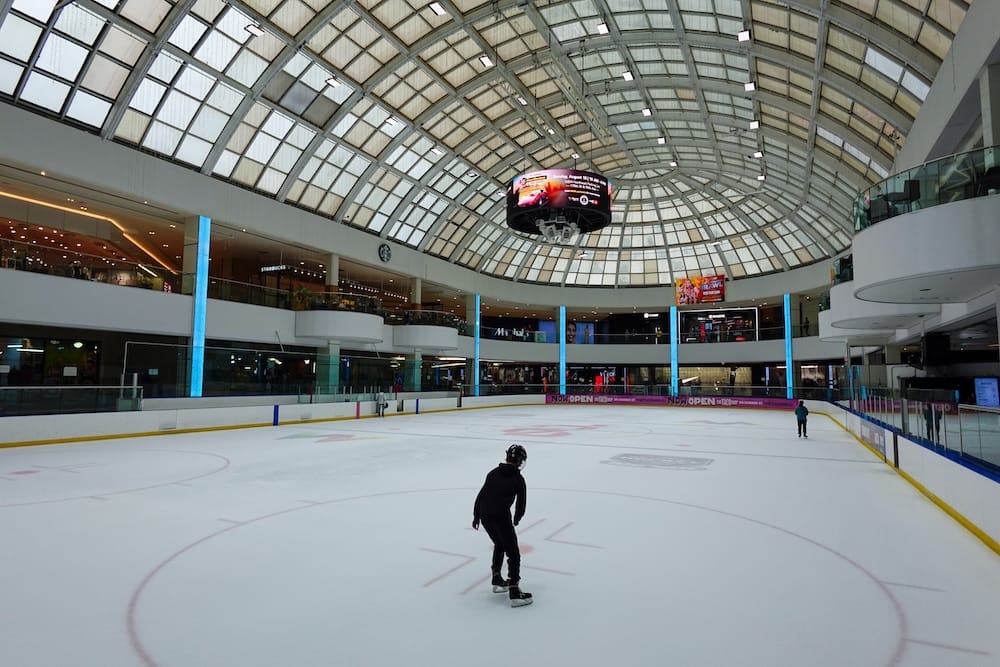
No — the Ice Palace rink at West Edmonton Mall is indoor and climate-controlled, so it runs year-round. It’s a way to get a taste of Edmonton’s winter identity even on a summer visit.
This guide is also available in Spanish. [Leé la versión en castellano: Mejor época para visitar Edmonton: verano, invierno y temporada de festivales]
This article contains affiliate links. If you book through one of these links, I may earn a commission at no extra cost to you.