
Nobody tells you that showing up to the Fringe doesn’t actually require a plan. I found that out the good way, on a Saturday when Audrey and I set out for the Old Strathcona Farmers’ Market and never really made it there for the reason we intended. If you’re getting ready for your first Fringe, that’s the thing worth knowing before ticket prices or venue maps: this festival is built to be stumbled into. Here’s what I wish I’d understood going in.
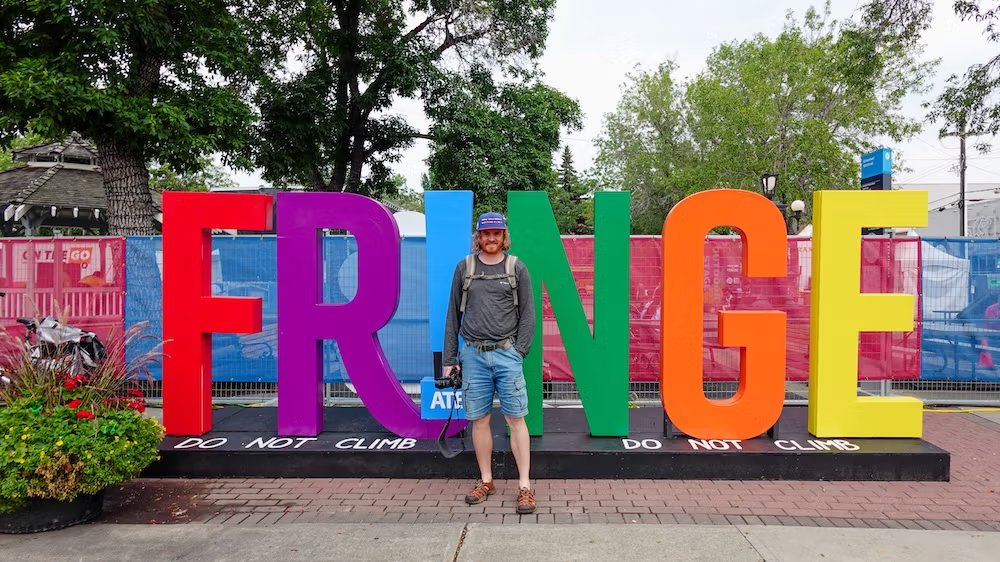
What Fringe Actually Is
Edmonton’s Fringe isn’t some niche local arts fair — it’s the largest, longest-running Fringe theatre festival in North America, and by the organization’s own count, one of the five biggest in the world, in company with Edinburgh and Adelaide. It’s been running since 1982, and the 2026 edition marks 45 years of it. I didn’t know any of that walking in, and it changed how I understood everything that happened afterward.
The scale backs it up. Eleven days, roughly 209 indoor productions, more than 1,300 live performances, spread across something close to 40 venues — proper theatres, sure, but also churches, community halls, a ballroom, even a rooftop patio that becomes a stage for less than two weeks a year. Numbers like that are supposed to feel abstract. Nobody sees more than a sliver of it, and that’s the point. Fringe isn’t something you finish. It’s something you wander into.
How Easy It Is to Stumble Into (Even If You Didn’t Plan For It)
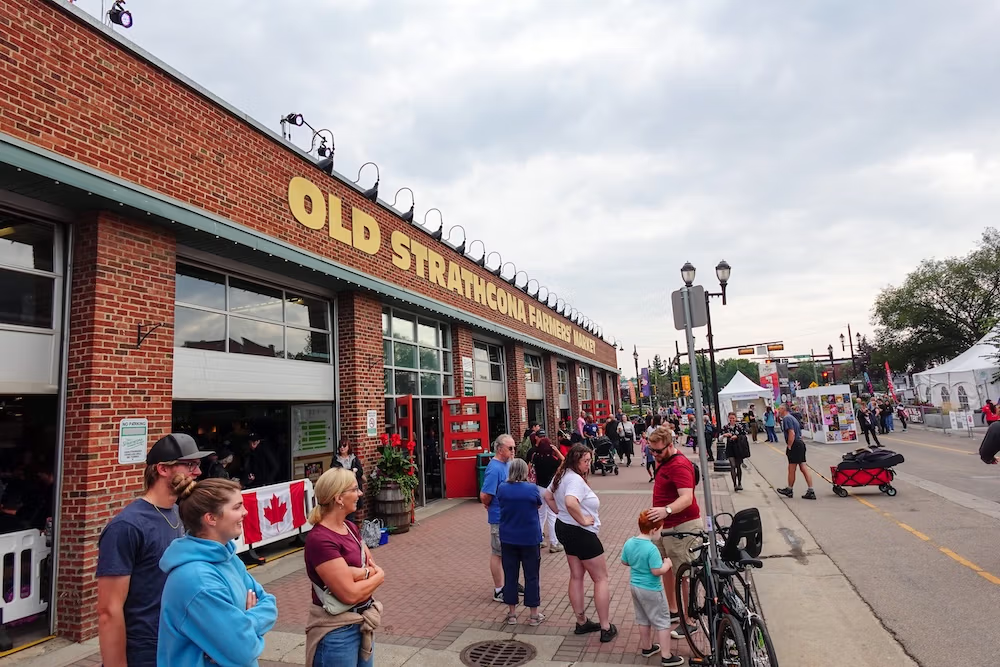
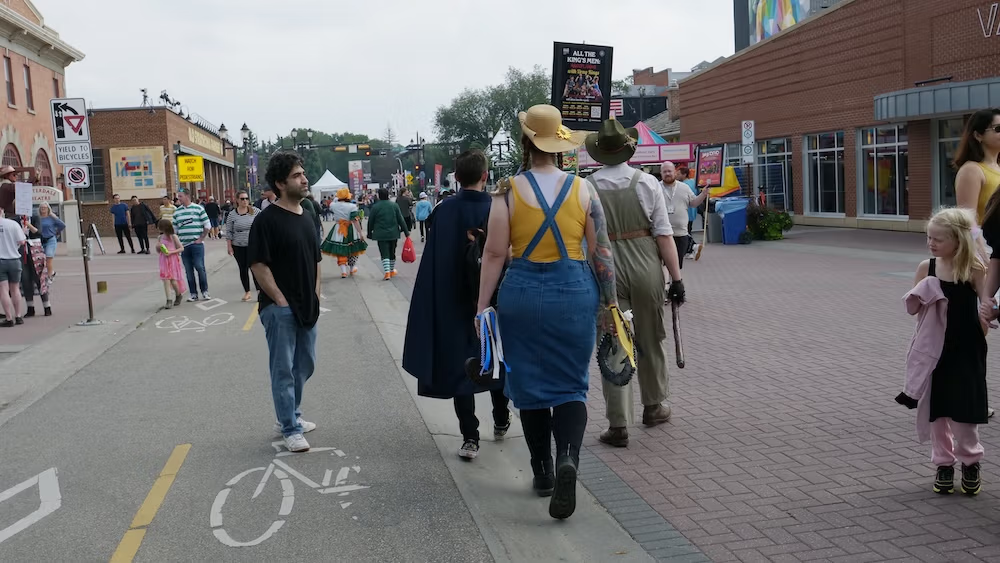
Audrey and I found that out by accident. We’d set out on a Saturday for the Old Strathcona Farmers’ Market — I’d talked it up as one of the city’s better weekend traditions, over a hundred vendors under one roof, the kind of place you go hungry on purpose. We never really got there. Performers were set up everywhere, even outside the market doors, and somewhere between one act and the next, food stopped being the plan.
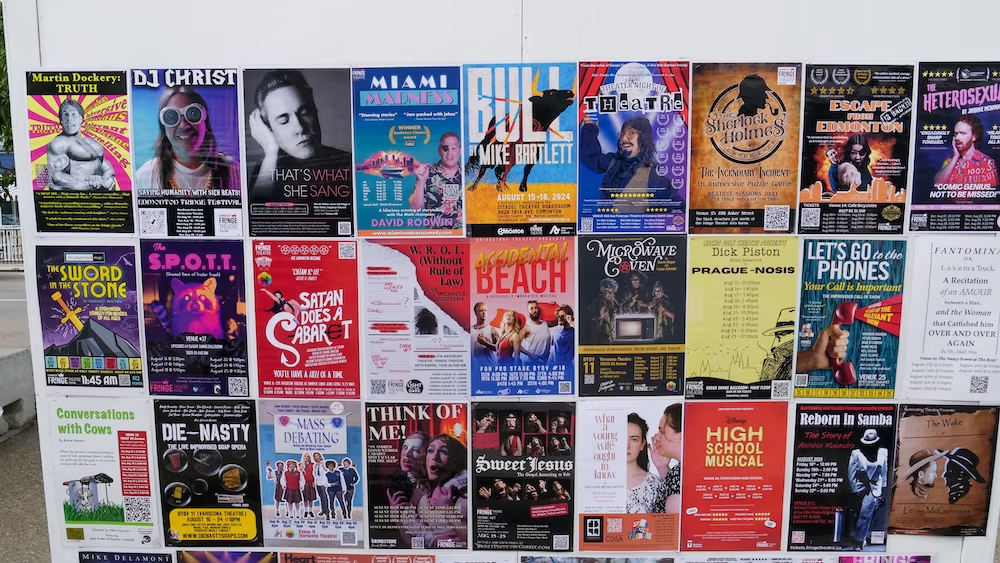
Neither of us had ever done a Fringe before. I remember standing in the middle of it looking at the sheer number of posters plastered along the block — every one a different show, a different hour, a different building — and thinking there was no possible way to take it all in. So we didn’t try. We just followed whatever looked interesting from one outdoor act to the next, no order to it, no list, nothing.
It worked, in that we had a genuinely great afternoon. It also meant we missed things we’d have actively chosen, if we’d known they existed. At some point, walking down Whyte Avenue with performers still audible behind us, Audrey asked what I actually knew about the street, since I’d lived nearby during university. I told her it’s the closest thing Edmonton has to a cultural artery — the place you come for food, nightlife, odd little shops, and festivals exactly like this one — and that if you get stuck downtown for your whole visit, you miss the city’s best side entirely. I’d stand by that regardless of Fringe. But reacting our way through the day instead of choosing taught me the one thing I’d actually change: even a rough shortlist beats none at all.
Free Outdoor Performances vs. Ticketed Indoor Shows
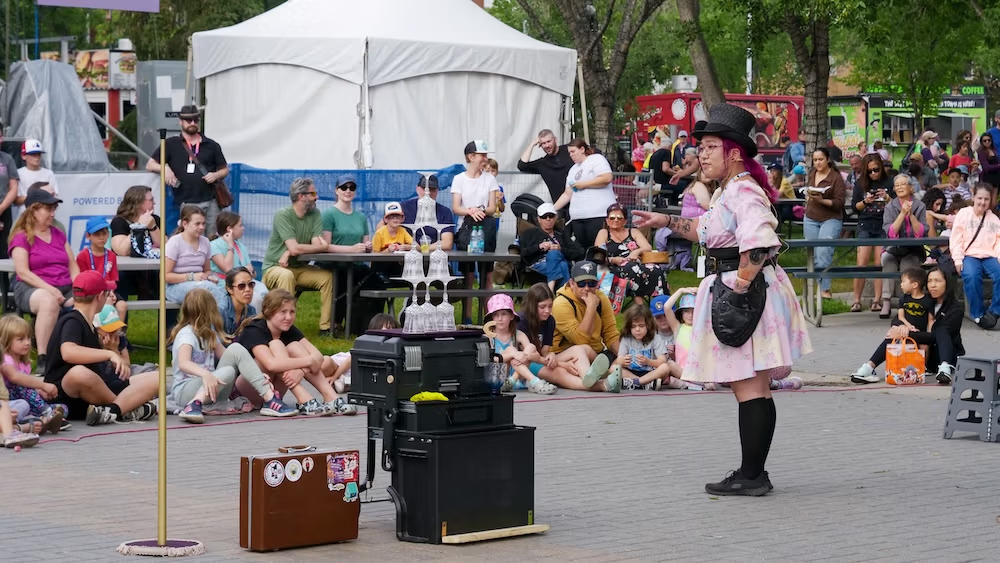
Here’s what would have helped that shortlist: understanding upfront that most of Fringe costs nothing. The outdoor stages, the street performers who pulled us off course in the first place, the free Music Series concerts in ATB Park, the Indigenous-led pêhonân space, and KidsFringe — an entire free festival built for kids 12 and under — none of it needs a ticket. You could spend a full day there and pay for nothing but lunch, assuming you remember to eat it.
The indoor theatre program is the part that costs money, and it’s where most first-timers get tangled up. Shows run $9 to $20, fees already folded into that number, and by festival policy, the full ticket price goes straight to the artist. You’ll occasionally see a venue labelled “BYOV” — Bring Your Own Venue — which just means it’s an approved space Fringe Theatre doesn’t run directly. As a visitor, it changes nothing about how you buy in or where you sit.
| Free | Ticketed | |
|---|---|---|
| What | Street performers, outdoor stages, Music Series, pêhonân, KidsFringe | 200+ indoor theatre shows |
| Cost | Nothing (bring cash for the hat) | $9–$20, fee included |
| How to get in | Just show up | Buy ahead, or at the door if seats remain |
For 2026, printed Festival Guides go on sale in late July, and tickets typically open about a week before the festival itself — this year, that’s August 5. If there’s a show you actually want, buy it before you’re standing in Old Strathcona deciding on the fly, which is exactly the mistake we made.
One outdoor courtesy worth knowing: street performers work for tips. There’s no official suggested amount, so just bring some cash and toss something in the hat if you enjoyed the show — it’s how most of them make their living for those eleven days.
Where It Happens: Old Strathcona and Beyond
Old Strathcona is still the heart of it, and if you’ve only got a few hours, it’s genuinely the only part you need. The main grounds run roughly six city blocks around Whyte Avenue, small enough to cross on foot, dense enough that you’ll want real shoes regardless. But the festival has outgrown the neighbourhood — 2026 performances stretch into the French Quarter, 124 Street, and pockets of downtown, so if a show isn’t listed at the Fringe Grounds, that’s not a mistake, just a satellite venue.
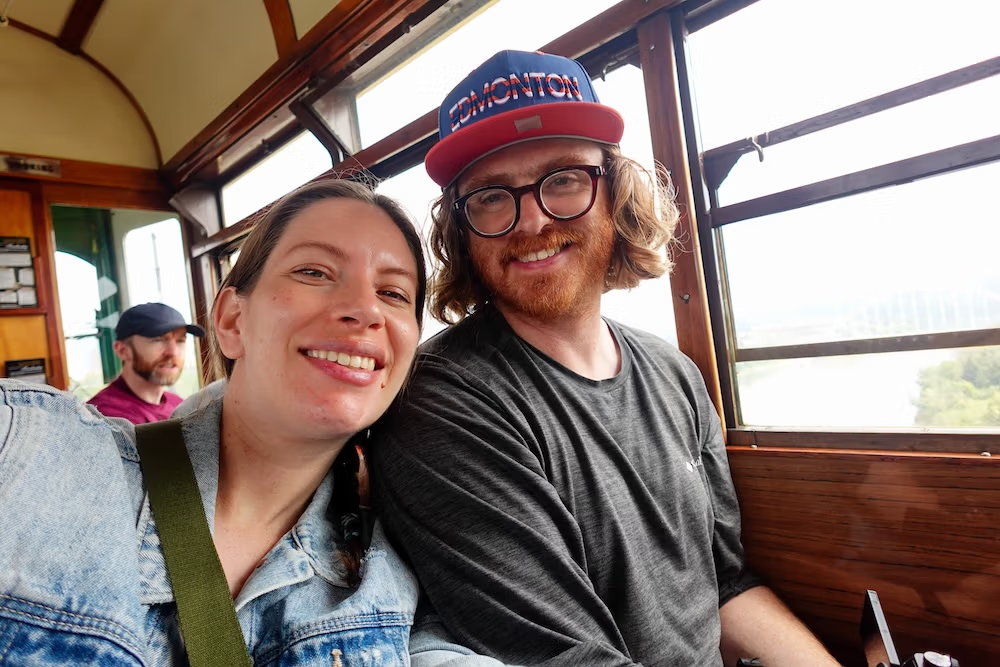
One thing worth knowing before you plan your route: Old Strathcona has no direct LRT stop. The closest station, Bonnie Doon, still leaves you a bus ride or a proper walk from Whyte Avenue. We got there a different way — the High Level Bridge Streetcar, a heritage line whose terminus now sits right on Whyte Avenue, practically next door to the Farmers’ Market, after crossing the river from the Legislature and Government Centre side. It only runs Thursday through Monday, mid-May through early September, but during Fringe itself it stays open later and runs more often to handle the crowds, which made it an easy, genuinely enjoyable way in if you’re already near downtown or the Legislature grounds. We paid $8 each for the round trip; current fares run higher now, and I’ve written up the full ride separately with current times and pricing if you want the details. Coming from anywhere else in the city, a bus or a rideshare will get you there with far less confusion than trying to force the regular LRT to cooperate. Once you’re actually on site, a free shuttle connects Old Strathcona to the French Quarter roughly every half hour across all eleven days — no ticket needed, just find a marked stop — or walk it in about twenty minutes if the weather’s on your side.
Parking is the one thing I’d plan around instead of hoping for. A few venues have small free lots, but most of the neighbourhood runs on street parking, and during Fringe that supply disappears fast. If skipping that math entirely sounds better, the simplest fix is staying close enough to walk. Fringe Theatre itself points first-timers toward two hotels sitting right in the middle of the action: you can check current rates at the Metterra Hotel on Whyte or see room availability at the Varscona Hotel on Whyte, both close enough to the festival grounds that parking mostly stops being a question. Bus in, bike in, book close, or walk in from farther out — any of those beats circling the block.
Building Your Own Action Plan
If we did our first Fringe over again, I wouldn’t build a rigid schedule — that’s not really what the festival rewards. But I’d walk in with three or four shows already chosen instead of zero. Fringe makes that easy to do and just as easy to skip, which is probably why we skipped it.
The printed Festival Guide is the low-tech version — a genuinely thick program you can grab from the box office or a few spots around the city, worth flipping through with a coffee the night before. The online show listings do the same job digitally, with plain-language descriptions that tell you honestly what a show involves rather than relying on a clever title alone. Fringe Theatre also publishes its own curated itineraries for different kinds of visitors, including one built specifically for first-timers, if you’d rather have someone else do the shortlisting for you.
None of that means abandoning the wandering that made our own afternoon work. Pick a small handful of anchors — one you’re genuinely excited about, one pure gamble — and leave the rest of the day open to whatever’s happening on the street when you get there. That’s the balance we didn’t strike the first time, and it’s the only real adjustment I’d make.
Weather, Access, and the Rules That Actually Matter
Edmonton in August is generally on your side — daytime highs in the low-to-mid 20s Celsius, evenings cool enough to want a light layer, and a decent chance of a short shower somewhere across the eleven days. None of that’s a promise for any specific afternoon, but it’s a fair baseline for packing: good shoes, something for the evening chill, a water bottle you can refill.
Every indoor show requires a ticket, no exceptions, including infants in arms — Fringe issues those free of charge, but you still need one. Shows start exactly on schedule, latecomers don’t get seated, and once a performance begins, you generally can’t step out and back in. Theatre for Young Audiences shows are the one exception, built to expect bathroom breaks and wiggling. Give yourself thirty minutes before anything you actually care about.
Fringe doesn’t jury or censor what artists bring, which is part of its whole identity — but it also means content swings from family-friendly to genuinely not, with no formal rating system attached. KidsFringe is the dedicated free zone for ages 12 and under if you’re travelling with kids; for anything outside it, read the show description first. The festival has also put real effort into accessibility — sensory kits, relaxed performances, audio description and ASL interpretation on select shows, and wheelchair access that’s solid at most venues but varies enough by building that it’s worth a quick check if it matters to your visit.
And if food gets forgotten somewhere in the wandering, the way ours did, you don’t need to go looking for it off-site. Vendors run the length of the outdoor grounds, and a handful of patios are scattered around if you just want five minutes off your feet with a cold drink in hand.
Is It Worth Building a Trip Around?
We came for a farmers’ market and left having barely thought about it again. That’s either a strange endorsement or the most honest one I can give: Fringe absorbed a completely different plan without asking permission, and we didn’t mind at all. I’d build an actual trip around it in a heartbeat — just not a tightly scheduled one. Pick a few shows you actually want to see, leave real room for the street to interrupt you, and trust that even a bad plan for Fringe beats no plan at all, which is the only thing I’d tell my first-Fringe self to do differently.
Frequently Asked Questions
Do I need a ticket to attend Edmonton’s Fringe Festival?
Not for most of it. The outdoor stages, street performers, the free Music Series, pêhonân, and KidsFringe are all free to walk into with no ticket required. Only the indoor theatre shows require a ticket.
How much do Fringe show tickets cost?
Indoor theatre tickets run $9 to $20, with the service fee already included in that price. By festival policy, the full ticket price goes directly to the artist.
Is Old Strathcona served by Edmonton’s LRT?
No, there’s no direct LRT stop in Old Strathcona. The closest station, Bonnie Doon, still leaves you a bus ride or a real walk from Whyte Avenue, so a bus, rideshare, or the seasonal High Level Bridge Streetcar are more practical options.
How did you actually get to the festival grounds?
Audrey and I rode the High Level Bridge Streetcar in, which now terminates right on Whyte Avenue next to the Farmers’ Market. It only runs Thursday through Monday from mid-May to early September, but it stays open later and runs more often during Fringe itself.
Is Fringe suitable for kids?
KidsFringe is a dedicated free zone for ages 12 and under. Outside of that, Fringe doesn’t jury or censor what artists bring, so content varies widely with no formal rating system, and it’s worth reading a show’s description before bringing children to it.
What’s the weather like at Fringe in August?
Typically mild, with daytime highs in the low-to-mid 20s Celsius and cooler evenings. There’s a decent chance of a short shower somewhere across the eleven days, so a light layer is worth packing.
Is there food available on site if I don’t plan ahead?
Yes. Food and artisan vendors run the length of the outdoor grounds, and there are a handful of patios scattered around if you just want to sit down with a drink.
How big is the festival, and does it all happen in one place?
The main grounds cover roughly six city blocks around Old Strathcona, but 2026 performances also extend into the French Quarter, 124 Street, and pockets of downtown. A free shuttle connects Old Strathcona and the French Quarter about every half hour throughout the festival.
This guide is also available in Spanish. [Leé la versión en castellano: Guía del Fringe Festival de Edmonton: qué esperar en tu primera visita]
This article contains affiliate links. If you book through one of these links, I may earn a commission at no extra cost to you.