
There’s a version of visiting the Chinese Cultural Centre in Calgary where you admire the dome for a few minutes, notice a staircase, and never bother going down it. That would be a mistake. The basement holds a museum that’s easy to treat as an afterthought to the building above it, and it’s the part of that whole stop we still think about first.
A Small Museum With an Outsized Reputation Among Visitors
The Chinese Artifacts Museum opened in 1993, a year after the Cultural Centre itself, which is worth knowing before you write it off as just a room tucked under a more famous dome. It has its own opening date and its own identity, and going by our own reaction to it, a better claim on your time than its basement billing suggests. Of everything we saw at the Cultural Centre that day, this is the part we still bring up — not the ceiling, not the columns, the room downstairs most visitors give five minutes on the way back to the gift shop.
What’s Actually on Display
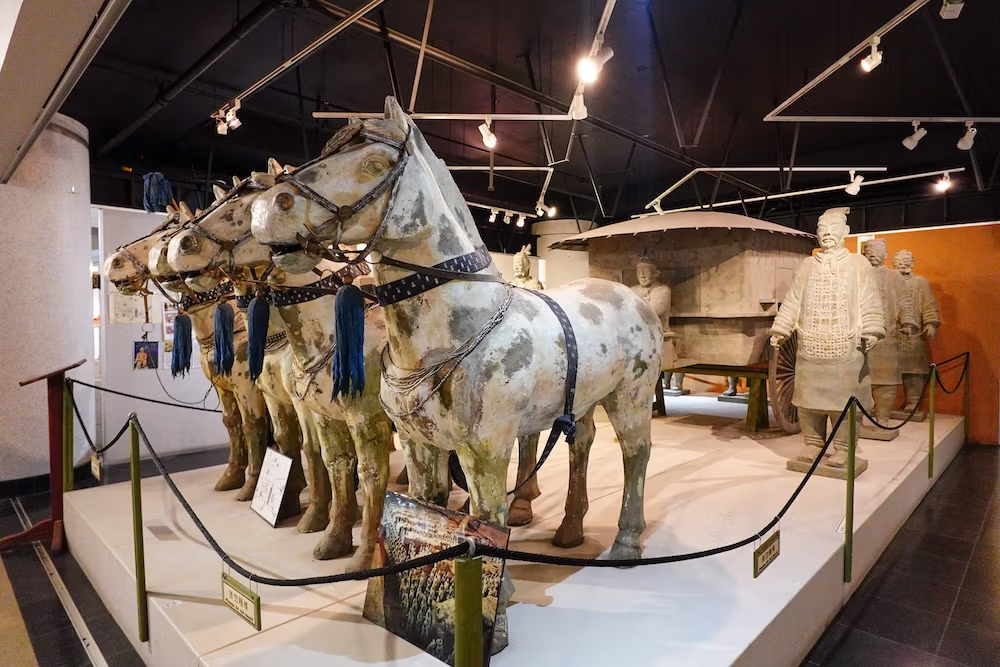
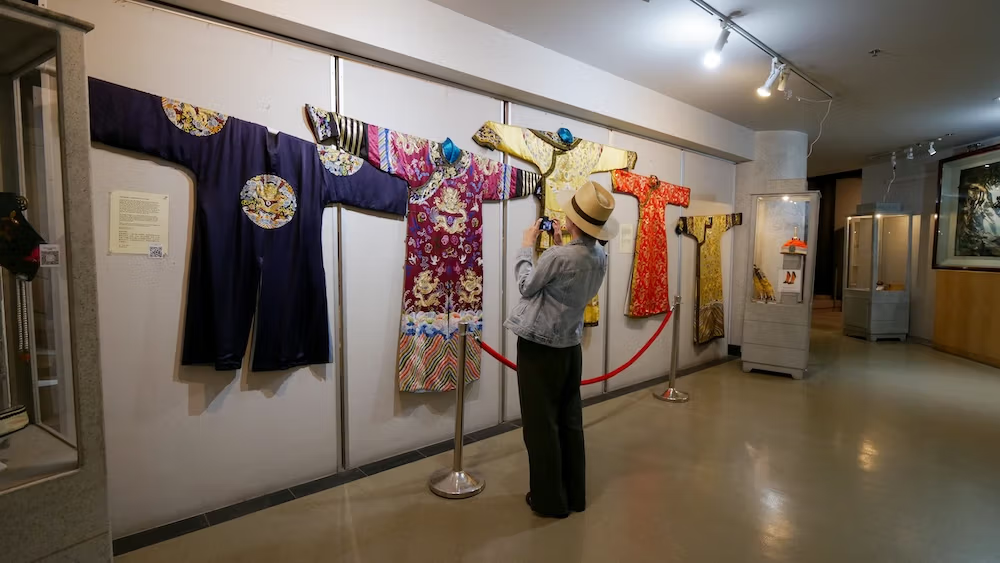
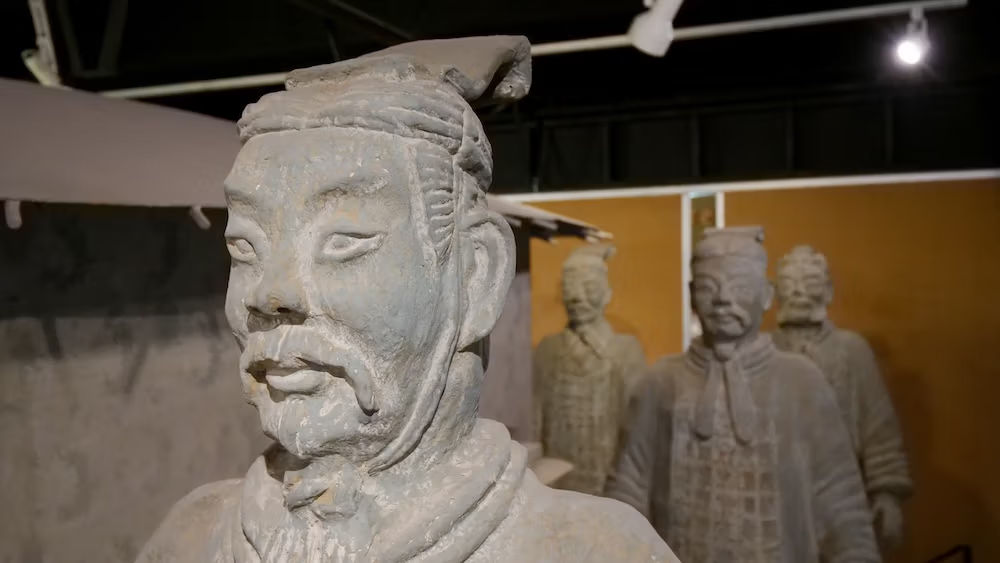
The core of the collection is the kind of thing you don’t expect to find in a Chinatown basement: life-sized terracotta warrior replicas, considerably more striking up close than any photo prepares you for, standing alongside terracotta horses and a full chariot replica. We spent longer in front of them than planned. Nearby, cases of silk clothing hold their own just as well — bright, detailed, clearly not an afterthought.
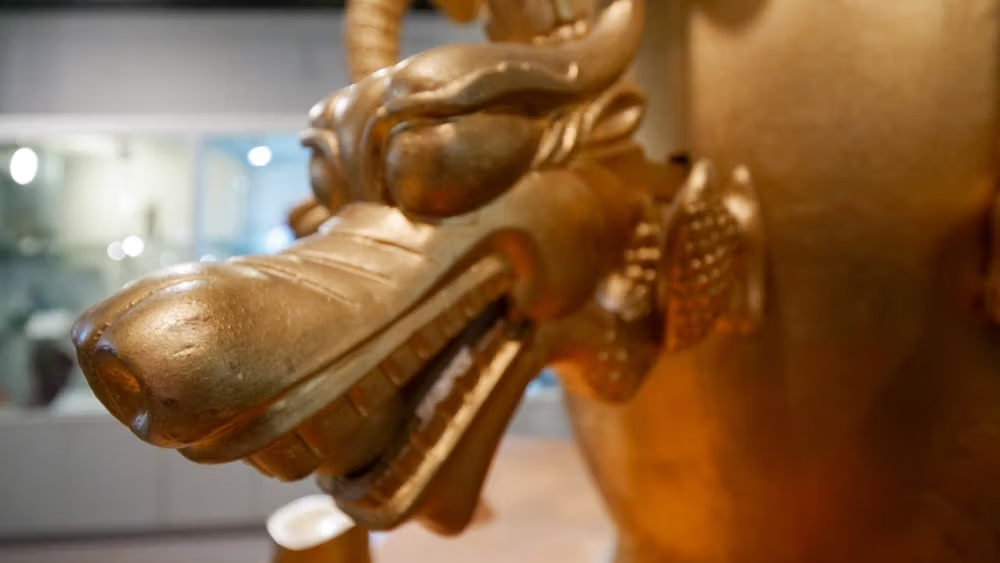
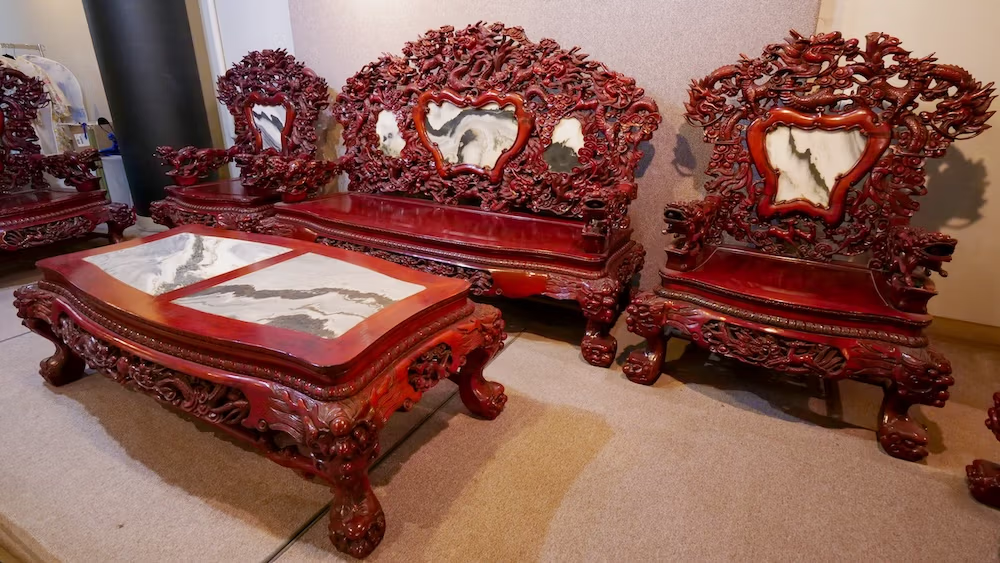
Beyond what we saw ourselves, the collection runs deeper still. There’s an eight-piece mahogany dining set modeled on Qing Dynasty imperial furniture, a full run of ceramics and porcelain, and a genuinely strange highlight for a basement museum: a replica of the world’s first seismograph, invented by the Chinese scholar Zhang Heng in 132 AD. A tapestry depicting China’s four great inventions hangs nearby, alongside Shiwan sculptures and a spouting bronze piece called the Singing Fish Basin. There’s also a rotating local-artist exhibit space, refreshed a couple of times a year, giving emerging Chinatown-community artists a professional space to show work. Someone put real thought into how this collection fits together, and it shows.
The Our Chosen Land Exhibit
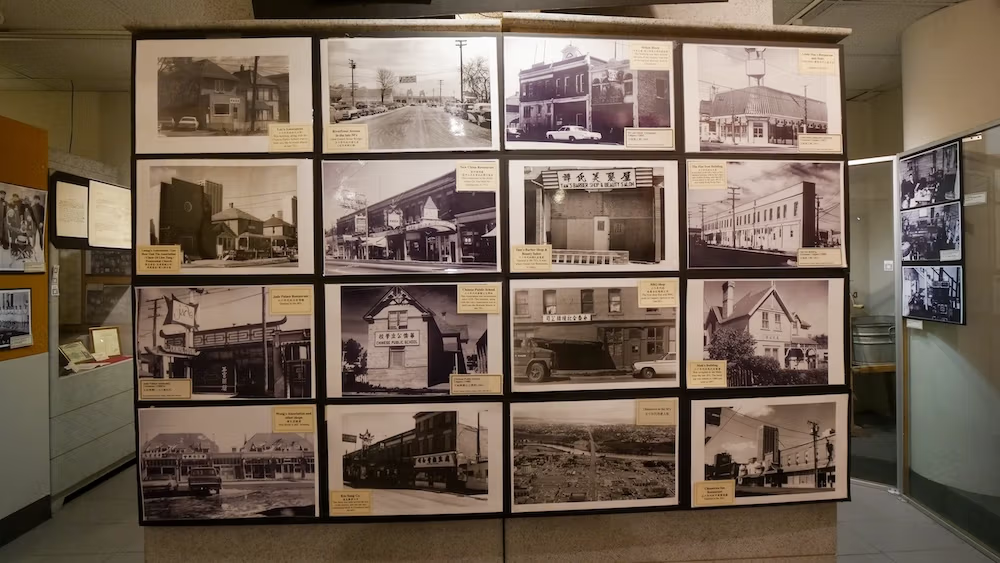
The section that gives the museum its real weight, though, isn’t the artifacts — it’s the exhibit built around them. Our Chosen Land: 100 Years of Development of the Chinese Community in Calgary traces exactly what its name promises, split into two halves: one covering the broader history of Chinese immigration to Canada, the other narrowing in specifically on how Calgary’s own Chinese community took shape.
01:04 – Chinese Artifacts Museum
It first went up in 1994, as part of Calgary’s Centennial Celebration, and has stayed on permanent display ever since. It’s picked up a City of Calgary Heritage Award along the way. The permanence matters practically: this isn’t a temporary installation you might miss depending on timing, it’s the anchor of the whole space, and the reason a visit here leaves you with more than a vague sense of “old objects in glass cases.”
What It Costs and How to Get In
Here’s where I have to be honest instead of tidy: current sources genuinely disagree on what you’ll pay. Some describe general admission as free, with a guided tour running an extra $5 per person if you’d rather have the history narrated than read the panels yourself. Others list a flat $5 general admission fee, with guided tours costing more on top. Both versions show up on official-looking pages right now, which isn’t something I can responsibly flatten into one confident number. My honest advice: expect this to be an inexpensive stop either way, and confirm the actual figure when you arrive rather than budgeting around whichever version you happened to read first.
Hours run roughly 10am to somewhere between 4:30 and 5pm, generally daily, though weekend visits may need to be booked ahead rather than assumed as a walk-in — worth checking for the specific day you’re going. The museum sits on the lower level of the Cultural Centre at 197 1st Street SW, reached by heading down from the main hall. If you’re staying within walking distance the way we were, the Sheraton Suites Calgary Eau Claire is close enough to make the museum an easy morning stop before the rest of your day.
Is This Small Museum Worth Your Time?
Yes — and the case for it doesn’t need the rest of the building to back it up. It’s small enough to see properly in well under an hour, cheap enough not to sweat over which admission figure turns out to be current, and packed with more genuine content than a basement room has any right to hold. The terracotta warriors are worth the stairs down on their own. Our Chosen Land is worth actually reading rather than skimming past on the way to the gift shop.
If you’re already at the Cultural Centre for the dome and the main hall, don’t let the basement be the thing you skip because you assumed it was overflow storage. It’s the opposite of an afterthought. It might end up being the part of the visit you remember best.
Frequently Asked Questions
Is the Chinese Artifacts Museum in Calgary actually free?
This is genuinely unclear right now. Some current sources describe general admission as free, with only guided tours costing extra, while others list a flat admission fee. I’d expect it to be inexpensive either way, but confirm the actual price when you arrive rather than assuming either figure.
What’s inside the Chinese Artifacts Museum?
Life-sized terracotta warrior replicas, terracotta horses and a chariot, silk clothing, an eight-piece mahogany dining set modeled on Qing Dynasty furniture, ceramics, a seismograph replica, a tapestry, Shiwan sculptures, a bronze piece, and a rotating local-artist exhibit space.
What is the Our Chosen Land exhibit?
It’s the museum’s permanent exhibit on Chinese immigration to Canada and the development of Calgary’s Chinese community, first presented in 1994 and recognized with a City of Calgary Heritage Award.
How long does it take to visit the museum?
Well under an hour. It’s a small space, easy to see properly without a long time commitment.
What are the museum’s hours?
Roughly 10am to somewhere between 4:30 and 5pm, generally daily, though weekend visits may need to be booked ahead rather than assumed as a walk-in. Worth checking for the specific day you’re going.
Where exactly is the museum located?
On the lower level of the Chinese Cultural Centre at 197 1st Street SW in Calgary, reached by heading down from the main hall.
Is the museum worth visiting if I’ve already seen the main hall upstairs?
Yes. It doesn’t need the rest of the building to justify the stop on its own — the terracotta warriors and the Our Chosen Land exhibit are worth the stairs down regardless of what else you’ve already seen.
This guide is also available in Spanish. [Leé la versión en castellano: Museo de Artefactos Chinos en Calgary: una parada cultural gratuita en el Barrio Chino]
This article contains affiliate links. If you book through one of these links, I may earn a commission at no extra cost to you.