
Calgary’s Chinatown is the kind of neighbourhood that can disappear between bigger plans if you let it. It sits right beside downtown, it is compact enough to cross on foot, and at first glance there is no obvious reason to carve half a day out of your itinerary for it.
That would be the wrong way to think about it.
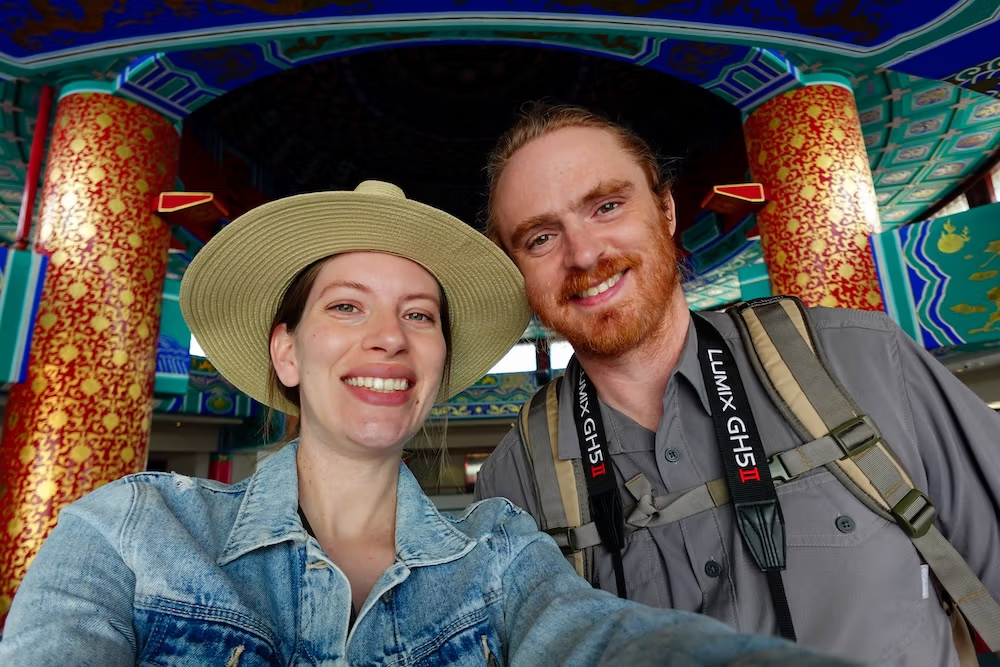
Audrey and I were staying close enough to Chinatown that we could walk to the Calgary Chinese Cultural Centre in a few blocks. Over the course of our visit, we went inside the Cultural Centre, spent time in the museum downstairs, escaped the summer heat in Sien Lok Park, ate two different dim sum meals, tried ginger beef in the city where the dish was created, and stopped for bubble tea when another heavy meal would have been a spectacularly poor decision.
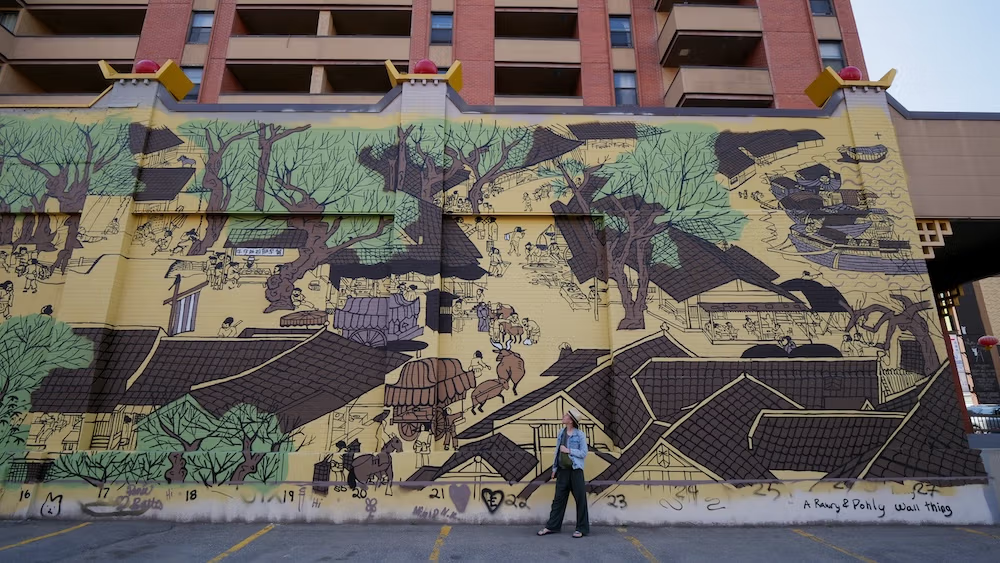
What made Chinatown work for us was not an endless list of attractions. It was the way a relatively small area connected Chinese-Canadian history, Calgary-specific food, community spaces and everyday neighbourhood life without demanding a complicated plan.
If this is your first visit, I would keep the formula simple: go inside the Cultural Centre, do not skip the museum downstairs, walk enough of the neighbourhood to understand where you are, and leave room for food.
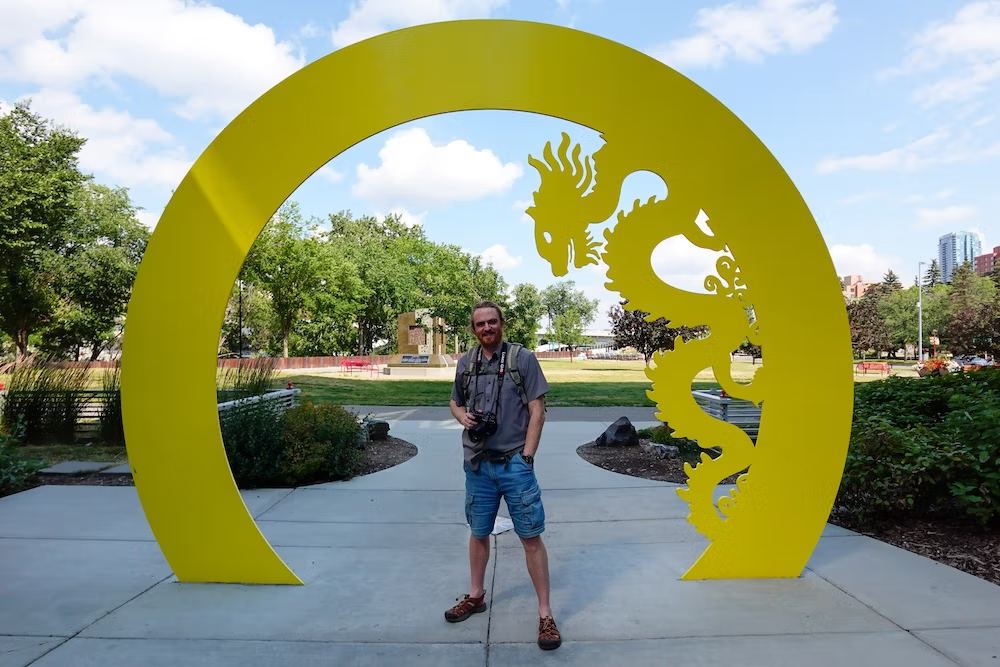
Calgary Chinatown is small enough to walk, but worth slowing down for
One of Calgary Chinatown’s biggest strengths is that it fits naturally into a downtown sightseeing day. The Bow River runs along the northern edge, the commercial core is immediately south, and you can move between the main cultural stops and restaurants without turning the visit into a transportation exercise.
We mostly explored on foot. From where we were staying, the Chinese Cultural Centre was only a few blocks away, and once we were in Chinatown the neighbourhood felt compact rather than sprawling.
That compactness creates a small trap for visitors. Because you can walk through quickly, it is easy to assume there is not much there.
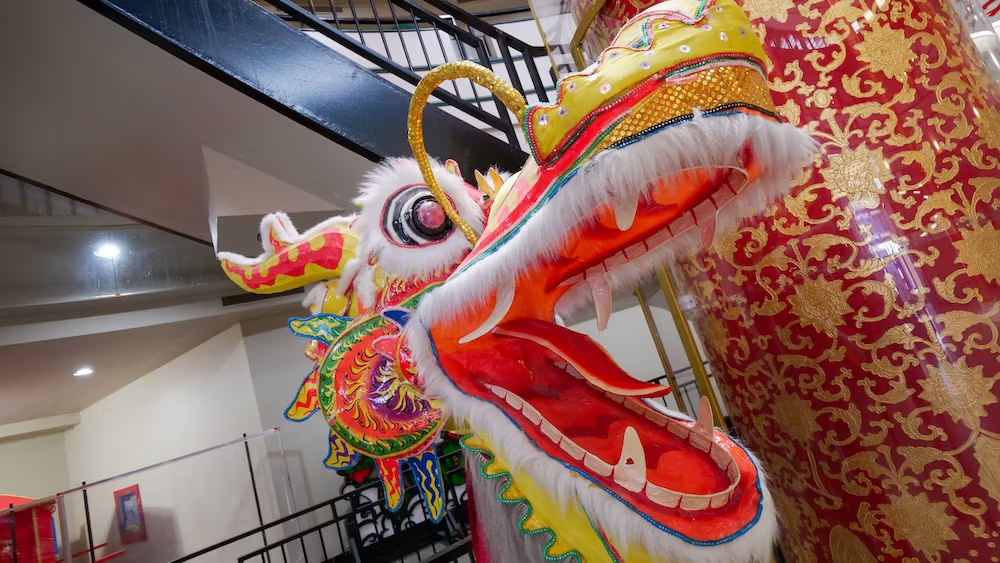
If you stick to the street, glance at a few restaurants and keep moving, that impression probably survives. The neighbourhood becomes much more interesting once you actually enter the Cultural Centre, go downstairs into the museum and connect what you see there with the streets outside.
Food also matters here more than it does in many neighbourhood guides. I would not treat Chinatown as a sightseeing district with restaurants attached as an afterthought. Eating is part of the experience.
That does not mean you need to spend all day here. I would simply avoid treating Chinatown as filler between two “bigger” Calgary attractions.
Being able to walk over from our accommodation made the neighbourhood especially easy to fold into the trip. I do not have a firsthand hotel recommendation to attach to that experience, but if you want the same general setup you can compare current places to stay in Calgary Chinatown rather than choosing a property elsewhere in the city and adding another journey every time you want to explore downtown.
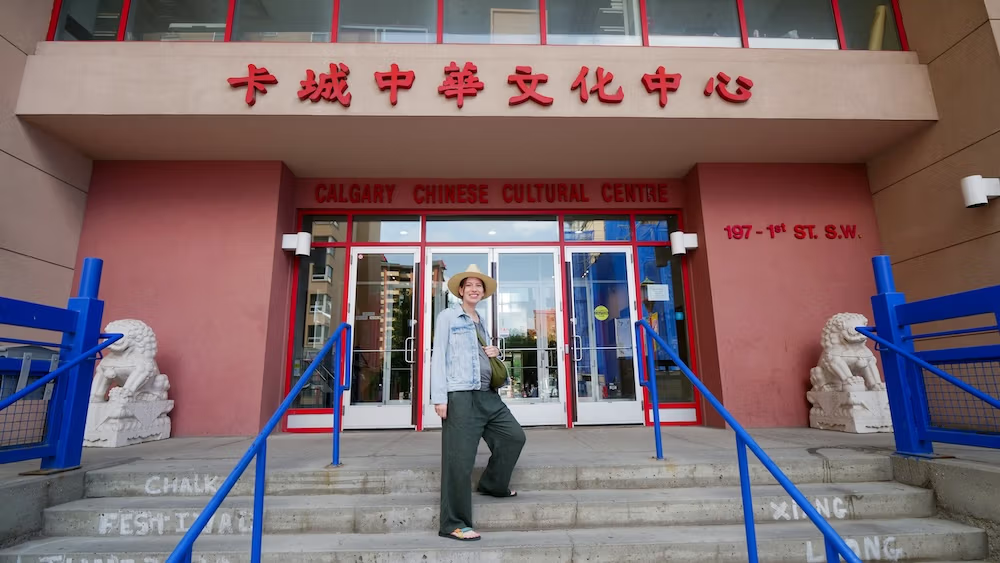
Start at the Calgary Chinese Cultural Centre
If I were choosing one obvious starting point, it would be the Calgary Chinese Cultural Centre.
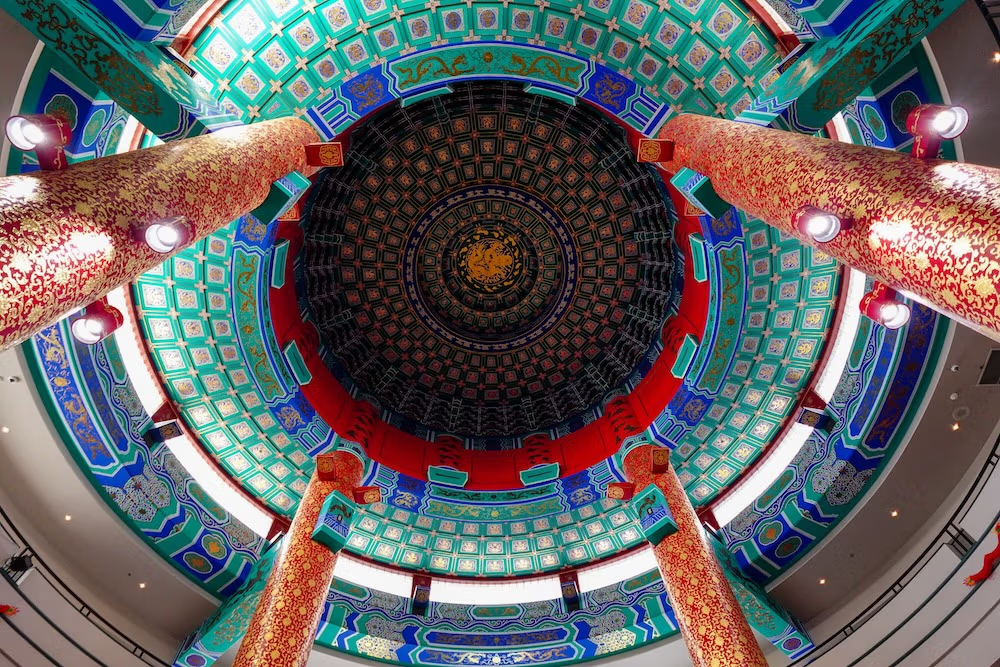
We walked there from our accommodation, stepped into the main Cultural Hall and immediately started looking up. That is difficult not to do.
00:44 – Calgary Chinese Cultural Centre
01:04 – Chinese Artifacts Museum
02:54 – Sien Lok Park
The Cultural Hall is genuinely impressive
The Dr. Henry Fok Cultural Hall has a ceiling roughly 70 feet high, modelled after the Temple of Heaven in Beijing. The ceiling decoration includes 561 dragons and 40 phoenixes, which sounds like a mildly absurd amount of visual information until you stand underneath it and realize how much is actually going on up there.
The colours are rich, the design is dense and the scale gives the room a sense of ceremony that you do not really get from seeing a photograph beforehand.
Our reaction was pretty immediate. We both found it impressive, and I remember being struck by how ornate the whole space felt rather than simply by one individual architectural detail.
There was also cultural activity happening elsewhere in the building during our visit. We could see what looked like a music workshop or performance on an upper level. We did not participate, and we certainly did not explore every corner of the Centre, but that was enough to remind us that this is a functioning community institution rather than a tourist monument pretending to be one.
That distinction matters.
The Cultural Centre was dedicated in 1992 after years of work by Calgary’s Chinese community during a period when redevelopment pressure threatened Chinatown’s future. Its history is tied to efforts to preserve the neighbourhood, not simply to create an attractive landmark.
You do not need to memorize that before visiting, but it changes how the building reads. The Centre makes much more sense once you understand that it was part of a larger fight to ensure Chinatown remained a meaningful part of Calgary.
The museum downstairs was the part that stayed with us
The main hall is the photogenic bit.
For us, the museum downstairs was more interesting.
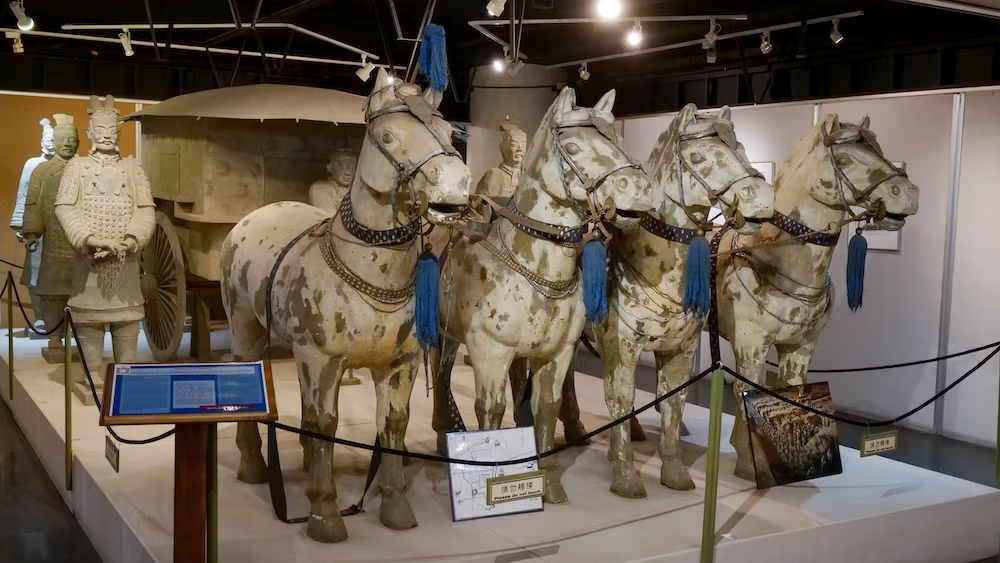
The Calgary Chinese Cultural Centre Museum occupies the lower level of the building. We saw replica terracotta warriors, silk clothing and other Chinese cultural objects, but the material on immigration and the history of Calgary’s Chinese community gave the visit considerably more weight.
Its permanent exhibition, Our Chosen Land: 100 Years of Development of the Chinese Community in Calgary, looks at Chinese-Canadian history nationally and at the development of Calgary’s Chinese community in particular.
That was the point where the neighbourhood stopped being simply “Calgary’s Chinatown” and became a place with a specific local story.
When we visited, the museum was free and donations were encouraged. That has changed. As of August 2026, admission is $5 per person, with children six and under admitted free. The museum is open from 10:00 am to 5:00 pm daily, with last admission at 4:30 pm, and it closes on statutory holidays.
There are also guided tours for an additional fee with a minimum group size.
Because those are exactly the kinds of details that change, I would check the Calgary Chinese Cultural Centre Museum before going.
I would still pay the five dollars.
If anything, I think a visitor who steps into the Cultural Hall, photographs the ceiling and immediately walks out has done the least interesting version of the visit.
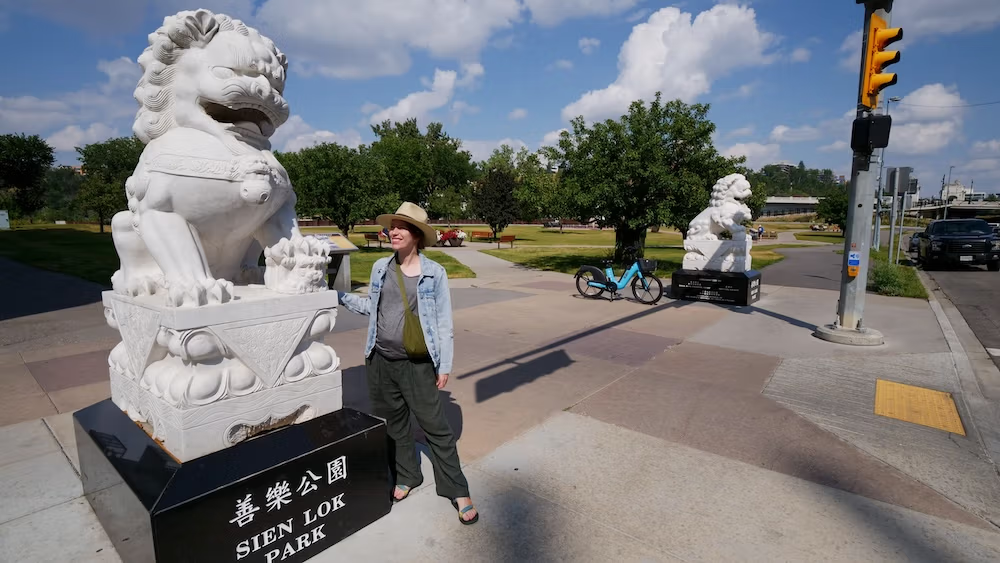
Sien Lok Park is a small stop that makes more sense once you know the story
Our visit to Sien Lok Park was considerably less intellectual.
It was hot.
We wanted shade.
The park delivered.
Sien Lok sits beside the Bow River Pathway and covers about 5.8 acres. It has benches, a playground, Chinese lions, a pagoda, a tai chi area and, seasonally, a drinking-water and misting station.
On the day we visited, the appeal was immediate and physical. Calgary was baking, we had been walking, and a bit of greenery in the middle of downtown felt excellent.
The history behind the park is more substantial than our sweaty first impression suggested.
The Sien Lok Society was founded in 1968, and the community eventually worked to preserve and develop what the City describes historically as Chinatown’s lone green space. The park opened in 1982.
One of its most important features is In Search of Gold Mountain, a large granite sculpture commemorating Chinese history in Canada.
We did not stand there decoding every monument during our visit, so I would be lying if I tried to turn Sien Lok Park into some profound personal revelation after the fact. For us, it was a pleasant pause in the middle of a summer walk.
That is still a perfectly good reason to go.
The history simply gives the stop more substance once you know it is there.
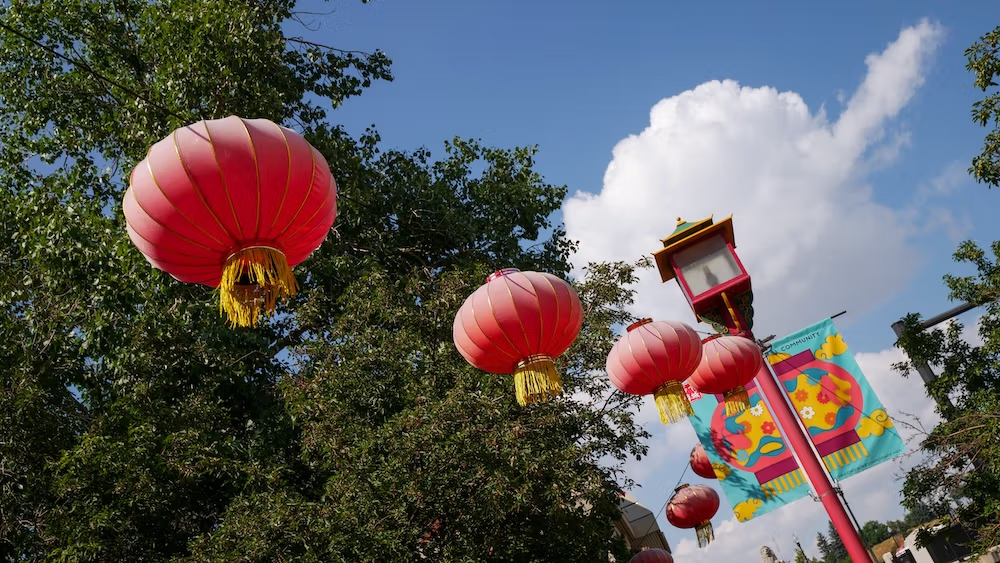
Canton Block is worth noticing, even if you do not make a ceremony out of it
I have become less interested over the years in travel guides that turn every old building into a compulsory attraction.
Canton Block is not a place where you need to stop for an hour.
It is worth knowing why it matters.
Built in 1910–11, Canton Block was the first building constructed and owned by members of Calgary’s Chinese community in what became the present Chinatown. Chinese businesspeople had begun buying land around Centre Street and 2 Avenue after earlier displacement, and the block became one of the foundations of the neighbourhood that developed around it.
We walked Chinatown’s streets during our stay, but I do not remember pausing in front of Canton Block and giving it the attention I would now.
That is one thing I would change.
After visiting the Cultural Centre museum, a building like Canton Block becomes easier to understand. The history you read about indoors has a physical footprint outside.
You do not need to collect every historical plaque in the neighbourhood. A couple of meaningful stops are enough.
If you would rather have somebody connect those historical pieces for you, a current two-hour guided walking tour of downtown Calgary works its way through East Village and into Chinatown before continuing toward Stephen Avenue. We did not take this tour ourselves, but it is a practical alternative for visitors who want local historical context without piecing the route together independently.
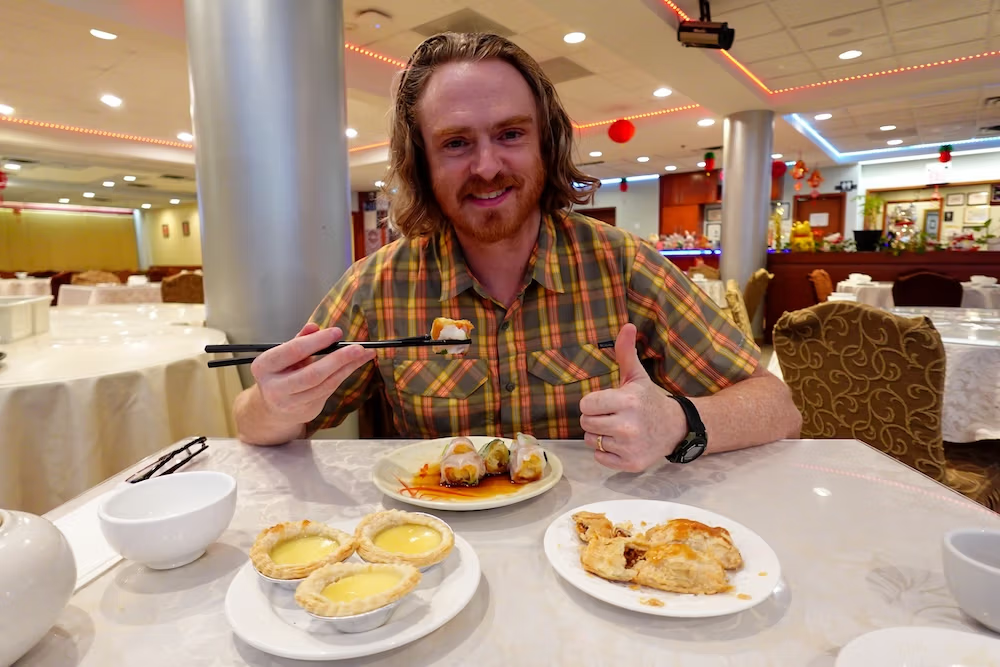
The food was every bit as memorable as the cultural stops
This is where our restraint disappeared.
We ate dim sum twice.
Not twice at the same restaurant because we had forgotten we had already eaten it. Two separate dim sum meals, at two different restaurants, with different dishes.
Apparently Calgary Chinatown brought out our inner competitive eater.
The first meal was at Silver Dragon. The second was at Chinese Cultural Centre Cuisine, beside the Cultural Centre.
The status of those two restaurants is different today, so I would not present them as two equivalent current recommendations. But as part of our trip, they gave us a much deeper food experience than a single token Chinatown meal would have.
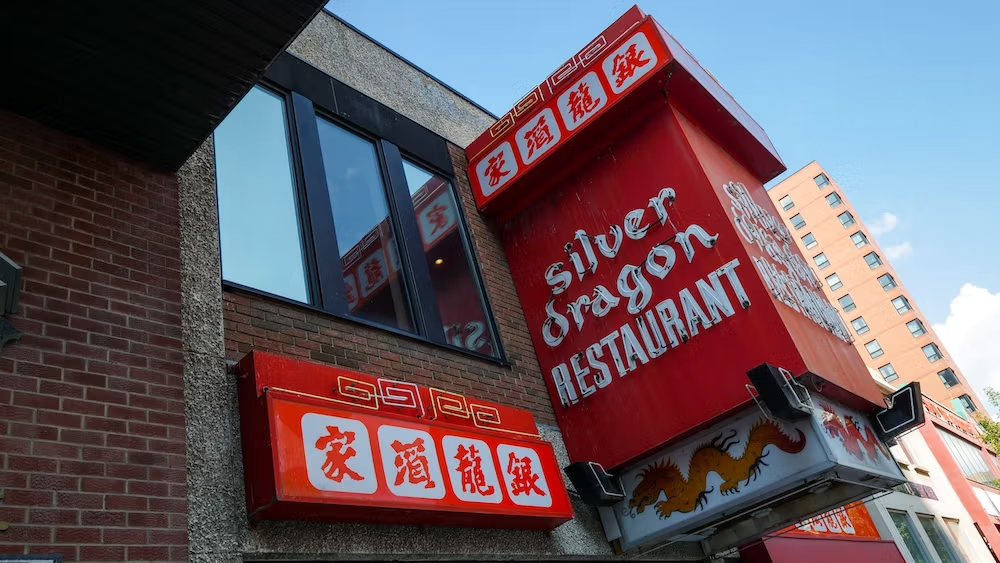
Silver Dragon is still the strongest place from our trip to build a meal around
Silver Dragon has been operating in Calgary since 1966, and it remains open in Chinatown on 3 Avenue SE.
We ordered five dishes plus tea.
That seemed sensible for approximately the first ten minutes.
We had ginger beef, bacon-wrapped shrimp, har gow, sticky rice wrapped in lotus leaf and sesame balls. The table filled up quickly, and so did we.
The meal was one of those occasions where almost every new plate generated some variation of “this might be my favourite.” After a while, our standards for the word favourite had clearly collapsed.
The bacon-wrapped shrimp also had the distinction of being annoyingly difficult to grab with chopsticks. At some point I abandoned elegance and pierced it.
This is the sort of dining technique nobody puts in the glossy brochure.
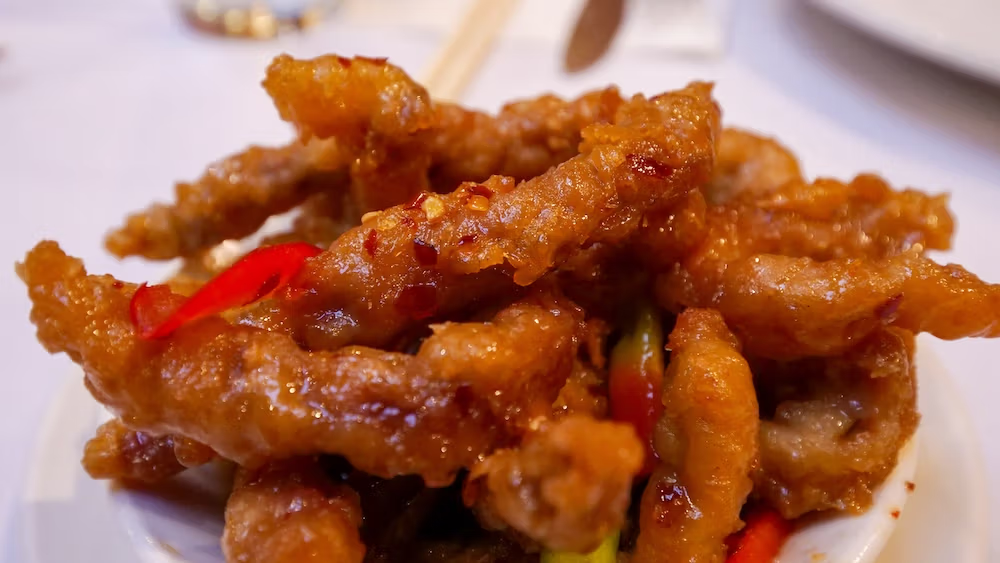
The ginger beef was especially interesting because Calgary is where the dish was created. Chef George Wong developed it at the Silver Inn Restaurant in the 1970s, so Silver Dragon is not the restaurant that invented it, even though it is an obvious place to try it today.
The version we had was exactly what I wanted: crispy on the outside, tender inside and covered in that sticky sweet-and-sour sauce that makes stopping at a sensible quantity annoyingly difficult.
Silver Dragon still lists ginger beef and continues to serve dim sum. Its current setup is particularly convenient for visitors because daytime dim sum runs from opening until 2:30 pm, followed by an evening dim sum menu until closing.
That means you have more flexibility than the old idea that dim sum has to happen early in the morning.
If Silver Dragon is important to your plans, check its current hours and menus before going.
00:41 – Silver Dragon
04:18 – Chinese Cultural Centre Cuisine
08:18 – CoCo Fresh Tea & Juice
Our second dim sum breakfast was excellent, but I would not plan around that restaurant today
The next morning, we somehow convinced ourselves another dim sum meal was exactly what the situation required.
The logic was uncomplicated: we were staying in Chinatown, so why not?
This time we went to Chinese Cultural Centre Cuisine.
We deliberately ordered different dishes from the previous meal: shrimp rice-crepe rolls, a rice-roll dish with fried dough, barbecue pork pastries and egg tarts.
Again, we liked the food a lot.
The barbecue pork pastries were particularly memorable, and the egg tarts had that wonderful flaky-pastry problem where eating one neatly is mostly theoretical. Keeping a napkin nearby was not optional.
The restaurant’s current status is unclear, though. It has been described as temporarily closed for renovations, while other listings indicate something more permanent.
Because of that, I would not build your Chinatown plans around eating there right now.
That does not erase our meal. It just means I separate what we experienced from what I can recommend you go and do today.
If you want another current dim sum option beyond Silver Dragon, Chinatown still has restaurants such as Regency Palace, but we did not eat there, so I am not going to pretend I can compare them.
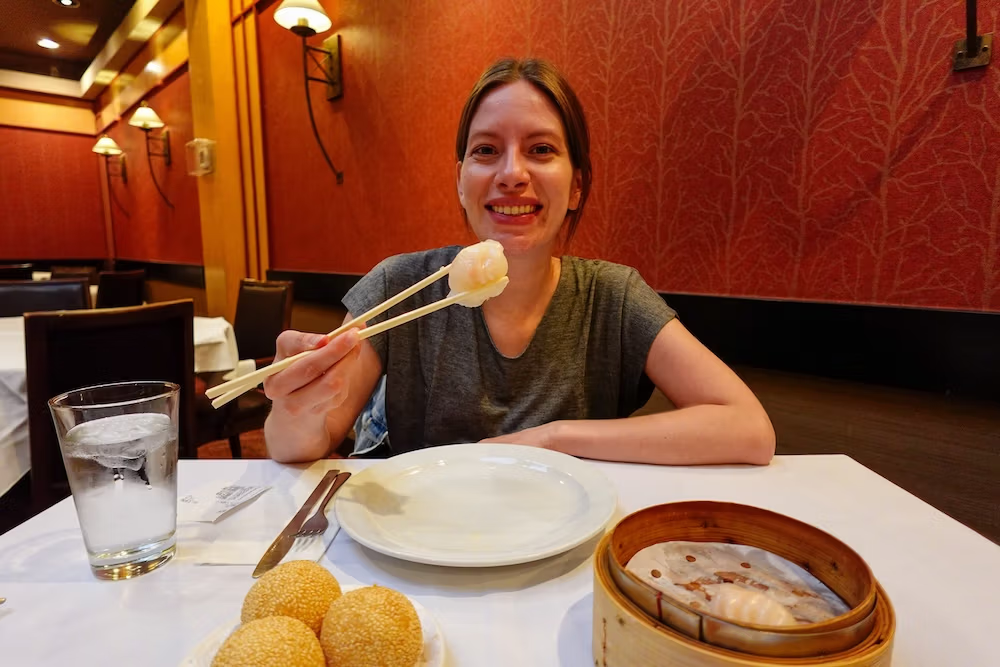
We learned something useful by ordering too much dim sum
The most useful lesson from our two meals was not which dumpling won.
It was portion control.
Five dishes for two people at Silver Dragon turned out to be more food than we needed. At some point the obvious verdict arrived: this was a lot.
By the next morning, we had adjusted the plan.
Four dishes.
Not because four is the universally correct number of dim sum plates for two people. It is not. Appetites vary, dishes vary and some couples can probably put away six baskets while discussing what to order next.
Our concern was more practical.
We still had Calgary to explore.
Eating until you need to lie down for three hours is a perfectly valid life choice on the right day. It is less useful when you have a sightseeing itinerary waiting.
We specifically joked about not wanting a food coma instead of exploring the city, but there was a real planning lesson underneath it. Dim sum makes over-ordering ridiculously easy because the dishes are small enough to keep encouraging the sentence, “Let’s get one more.”
If Chinatown is the main event and you have nowhere else to be, go for it.
If you are fitting the meal into a larger Calgary day, start modestly. You can always add another dish.
I have yet to discover the reverse process.
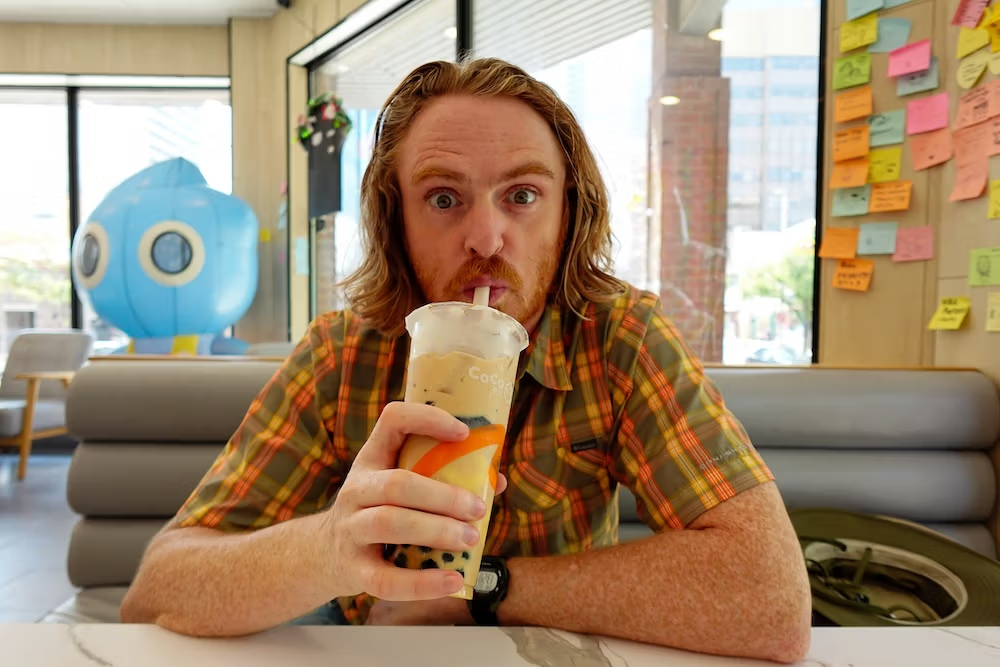
Bubble tea was the correct move once another meal clearly was not
At some point, even we accepted that the answer could not always be more dim sum.
We stopped at CoCo Fresh Tea for bubble tea while exploring Chinatown in the summer heat.
This was a considerably lower-stakes food stop.
We ordered drinks with different sugar, ice and topping combinations, sat down, cooled off and managed to spill some on the table because even drinking through a straw can apparently become an event.
CoCo still has a Chinatown location on 3 Avenue SE.
I would not turn that into a grand recommendation that this is unquestionably where everybody should get bubble tea in Calgary. We did not conduct a bubble-tea tournament.
For us, it worked because it was refreshing, easy and fit naturally between the heavier parts of the day.
Sometimes that is enough.
How I would plan a Chinatown visit now
I would not create a military-grade itinerary for Calgary Chinatown. The whole point of the neighbourhood is that the main stops sit close enough together that you can move around without much fuss.
There are really only two things worth scheduling around: museum hours and food.
The Cultural Centre Museum currently opens at 10:00 am and closes at 5:00 pm. Silver Dragon serves dim sum throughout the day, with its daytime menu switching to an evening dim sum menu around 2:30 pm. Sien Lok Park is open from early morning until late evening.
That gives you quite a bit of flexibility.
If culture is your priority
I would start at the Cultural Centre once the museum opens.
Give yourself enough time to see both the main hall and the museum downstairs. From there, walk through Chinatown, stop in Sien Lok Park and pay attention to a few historic elements such as Canton Block.
Then eat.
This sequence makes the food feel connected to the neighbourhood rather than like a random restaurant choice.
If food is the reason you are going
Start with dim sum.
Then go to the Cultural Centre and museum afterward and walk off some of what just happened to you.
This plan does require some restraint at the table if you are hoping to remain conscious for the museum.
I speak from experience.
If you only have a short window
Pick one main experience and do it properly.
I would rather spend limited time inside the Cultural Centre and museum than sprint through it just so I can say I also ate in Chinatown.
Likewise, if the meal is what you really care about, sit down and enjoy it instead of inhaling dim sum while watching the clock.
If you have limited time but would prefer a guide to handle the route and historical context, the same Calgary introductory walking tour that includes Chinatown is a more structured option than trying to research every building as you go. It is broader than a dedicated Chinatown tour, so I would choose it if you also want an introduction to central Calgary rather than if food is your main reason for coming.
I would not assign an exact number of hours to Chinatown because the answer changes dramatically depending on whether you are eating a full meal, visiting the museum or simply walking through.
The more useful distinction is whether you want to see Chinatown or actually spend time in Chinatown.
Those are different trips.
Is Calgary Chinatown worth visiting?
For the right traveller, absolutely.
If you are interested in Chinese-Canadian culture, the Cultural Centre and museum give the neighbourhood a depth that is easy to miss from the street.
If food is part of how you understand a city, Chinatown becomes even more worthwhile. Dim sum, ginger beef and bubble tea gave us some of our most enjoyable Calgary food experiences, and the fact that ginger beef itself originated in Calgary gives that meal a local connection beyond simply eating Chinese food in a Chinese neighbourhood.
If you like history, Canton Block and Sien Lok Park add another layer without requiring you to turn the visit into an exhaustive heritage walk.
What Chinatown is not is a district packed with a dozen blockbuster attractions demanding an entire day.
I prefer it that way.
The strongest version of a visit is more human-sized: look up inside the Cultural Hall, spend some time downstairs learning about the community, wander outside with a better idea of what you are looking at, cool off by the Bow River, then sit down for a proper meal.
If I went back, I would do essentially that again.
I would pay more attention to the historic buildings between the main stops.
I would still eat dim sum.
And I would order slightly less of it the first time.
Frequently Asked Questions
Is Calgary Chinatown worth visiting?
For the right traveller, yes. I found the Cultural Centre and museum gave the neighbourhood more depth than a quick street walk, while dim sum, ginger beef and smaller historic stops made it easy to combine culture and food in one visit.
What should I see in Calgary Chinatown?
Start with the Calgary Chinese Cultural Centre and its museum downstairs, then walk through the neighbourhood to Sien Lok Park and historic elements such as Canton Block. The article also treats food as part of the experience rather than an afterthought.
How much does the Calgary Chinese Cultural Centre Museum cost?
As of August 2026, admission is $5 per person, with children six and under admitted free. The museum is open from 10:00 am to 5:00 pm daily, with last admission at 4:30 pm, and it closes on statutory holidays.
How long do you need in Calgary Chinatown?
I would not assign a rigid number of hours. A quick walk is very different from visiting the museum and sitting down for dim sum, so the useful question is whether you want to see Chinatown briefly or actually spend time there.
Where can you eat dim sum in Calgary Chinatown?
Silver Dragon was our strongest firsthand dim sum stop and remains open in Chinatown. We also ate at Chinese Cultural Centre Cuisine, but its current status is unclear, so I would not build a visit around that restaurant right now.
Is Calgary Chinatown easy to explore on foot?
Yes, it worked well for us on foot. The neighbourhood is compact, sits beside downtown, and the main cultural stops, restaurants and Sien Lok Park can be combined without turning the visit into a transportation exercise.
Why is ginger beef significant in Calgary?
Ginger beef was created in Calgary in the 1970s by chef George Wong at the Silver Inn Restaurant. We tried it at Silver Dragon, which did not invent the dish but remains a practical Chinatown place to order it.
This guide is also available in Spanish. [Leé la versión en castellano: Guía del Chinatown de Calgary: cultura, comida y qué ver]
This article contains affiliate links. If you book through one of these links, I may earn a commission at no extra cost to you.