
Everybody repeats the same line about ginger beef: invented in Calgary. It’s true. It’s also usually delivered with zero follow-up, as if the sentence itself is the whole story. It isn’t. The real one starts in 1975, at a restaurant most people repeating that line couldn’t name, in a part of the city most Calgary itineraries never touch.
Ginger Beef Didn’t Start Where You’d Guess
The restaurant was the Silver Inn, and it wasn’t in Chinatown. Two sisters from Hong Kong, Louise Tang and Lily Wong, opened it up in Tuxedo Park, a neighbourhood well north of the downtown core, serving Peking-style Chinese food to a city that hadn’t seen much of it. Lily’s husband, George Wong, ran the kitchen. He’d trained in Peking-style restaurants back in Hong Kong, and the two of them were staring down a problem a lot of small restaurants know well: they needed people ordering drinks, and drinks sell better with something salty and shareable sitting next to them.
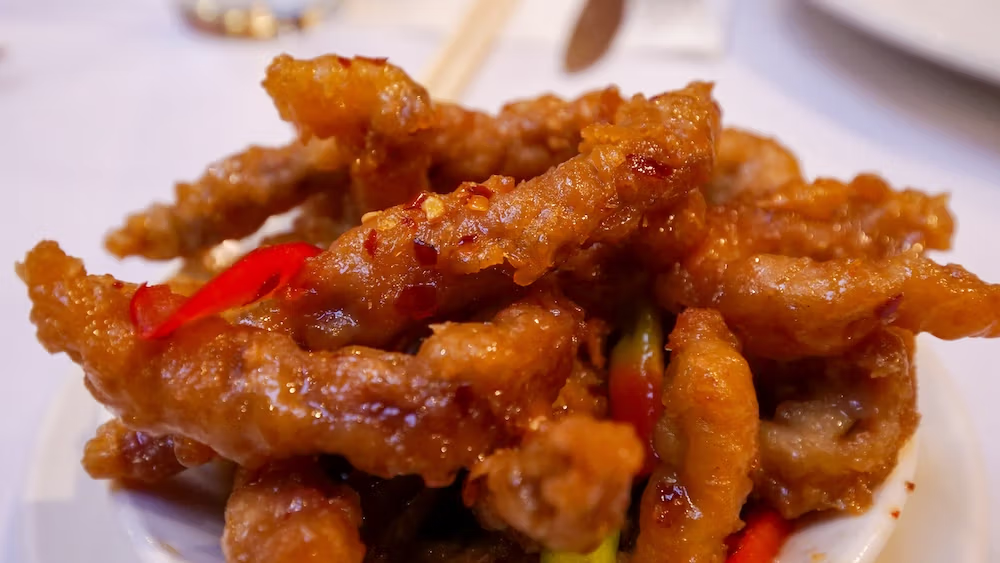
Wong went looking through what he already knew. He remembered a stir-fried, chewy beef dish that was popular back home, something closer to jerky than to anything Calgary diners would recognize. The first version he put on the menu flopped. So he reworked it into something that made more sense for where he actually was: Alberta liked its beef, and Alberta liked its fries, so he deep-fried the beef the way you’d fry a potato and built the sauce around something closer to ketchup than to the dish he’d started with. By most accounts, that original version didn’t even have ginger in it — customers assumed it did, and the name outlived the truth of the recipe.
It travelled everywhere from there. Ginger beef shows up on Chinese-Canadian menus from one side of the country to the other now, which makes it easy to forget the dish has one specific address. Had, really. The Silver Inn served its last plate on October 9, 2022, closing for good after 47 years, and the building it operated out of isn’t the kind of thing that survives redevelopment. If you wanted to sit where ginger beef was actually invented, that option closed with it.
The Caesar’s Story Checks Out, Down to the Month
The Caesar has an easier origin story to trust, mostly because so much of it is on the record. It happened in 1969, inside a hotel bar, on a deadline.
The hotel was the Calgary Inn, which is the Westin Calgary today, and the deadline belonged to a bartender named Walter Chell. The hotel was opening a new Italian restaurant called Marco’s and wanted a signature drink to go with it. Chell was Italian himself, and instead of reaching for anything already on a cocktail menu, he thought about food: specifically, spaghetti alle vongole, spaghetti with clams. He spent about three months turning a pasta dish into a drink, which is a stranger sentence than it sounds, mashing clams down into a nectar and mixing it with tomato juice, Worcestershire sauce, and a rim of celery salt. Vodka went in too. What came out the other side is the drink Calgary still can’t stop ordering.
He called it the Caesar, after the Roman general, which was as far as the name was supposed to go. The story goes that a British customer at the bar took a sip and told him it was a bloody good Caesar, and the nickname outlived the original one for a while before locals eventually shortened it back down. The Calgary Inn didn’t survive as the Calgary Inn — it’s the Westin now — but the building never went anywhere, and neither, really, did the recipe. Vodka, Clamato, hot sauce, that celery-salt rim: it’s still just Caesar on most Calgary menus, doing exactly what Chell built it to do the year he built it.
Silver Dragon Isn’t the Same Place — and That’s Fine
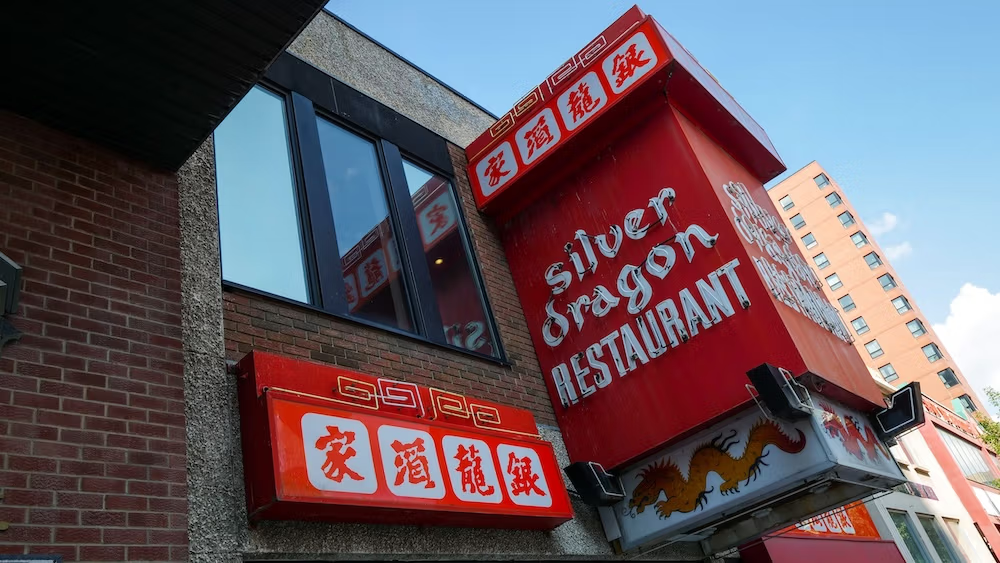
We ordered ginger beef on our first night in Calgary, at a restaurant called Silver Dragon in the middle of Chinatown, and it’s worth saying clearly: Silver Dragon didn’t invent it. Different restaurant, different family, different Wong. Jack Wong opened Silver Dragon in 1966 at the Canton Block, nine years before George Wong ever put ginger beef on a menu across town, and the two businesses have nothing to do with each other beyond a very common Cantonese surname and roughly the same era. It’s an easy mix-up to make, since Silver Dragon sits right in the neighbourhood most people already associate with this kind of food, and the Silver Inn never did.
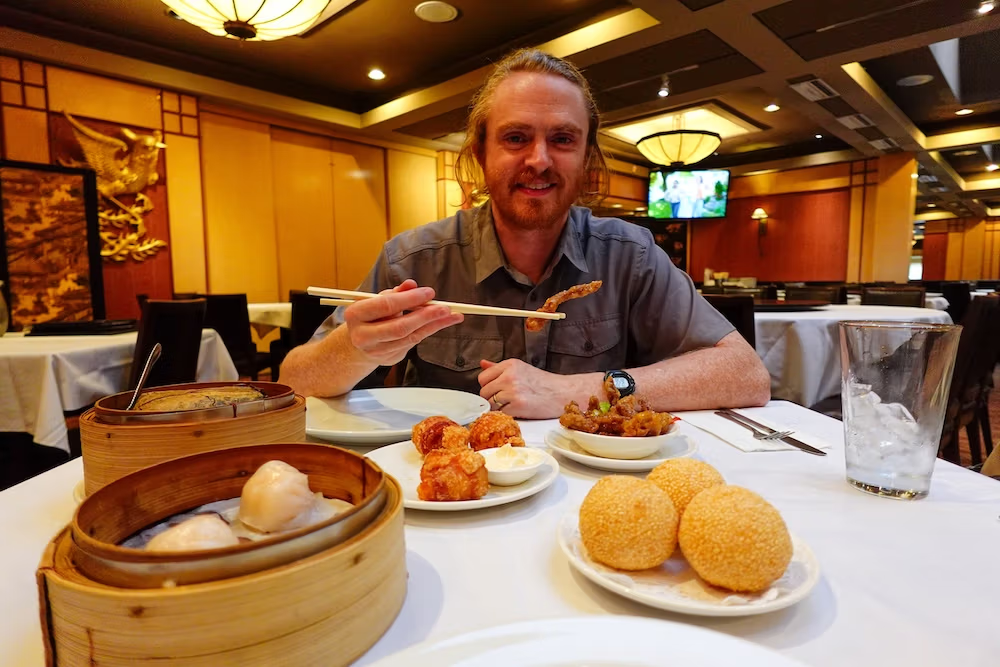
We’d placed five dim sum orders that first night, more than two people strictly needed, and ginger beef was the one I’d been waiting for. It came out tender under a crackling coating, doused in a sauce that split the difference between sweet and sour, and it tasted exactly the way I remembered it — which matters, because I’d had a lot of practice with this dish long before I ever set foot in Calgary. I lived in Edmonton for years before this trip, going to university at the U of A, and ginger beef was a regular fixture back then, probably twice a month during some semesters. It wasn’t a novelty or a bucket-list dish for me; it was just what you ordered on a night you didn’t feel like cooking. So tasting it again in the city where it began felt less like a discovery and more like a callback, one that happened to come with a better story attached than I’d ever bothered to look up.
That personal history is also why the over-ordering makes sense in hindsight. Five dishes is a lot for two people no matter where you’re eating, but I wasn’t rationing myself around a dish I already knew I loved. We caught up on it the next morning at Chinese Cultural Centre Cuisine, right next door, where we deliberately kept it to four plates instead of five: shrimp rice-crepe rolls soaking in sauce, a rice-wrapped fried dough with two dipping sauces, barbecued pork buns that reminded me of Tim Ho Wan in Hong Kong, and egg tarts closer to Hong Kong style than the flakier version I’d had elsewhere. Lighter, more deliberate, and still enough food that neither of us needed lunch. If you’re chasing the dish itself rather than the history behind it, Chinatown is still the right neighbourhood to be in — Silver Dragon among a handful of places that keep it on the menu — even though the birthplace itself is gone.
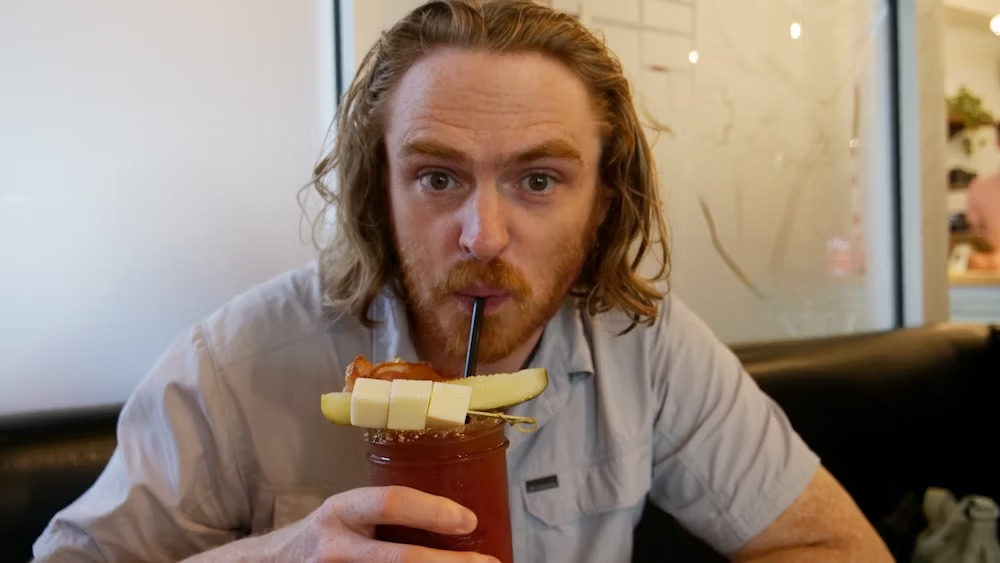
Ordering One at The Beltliner
The Caesar got the same treatment a few mornings later, at a diner called The Beltliner, named — depending on who you ask — after the old streetcar that used to run down 12th Avenue SW back when the Beltline neighbourhood looked nothing like it does now. We’d gone in for brunch, and once Caesars turned up on the menu, ordering one wasn’t really a decision so much as a formality.
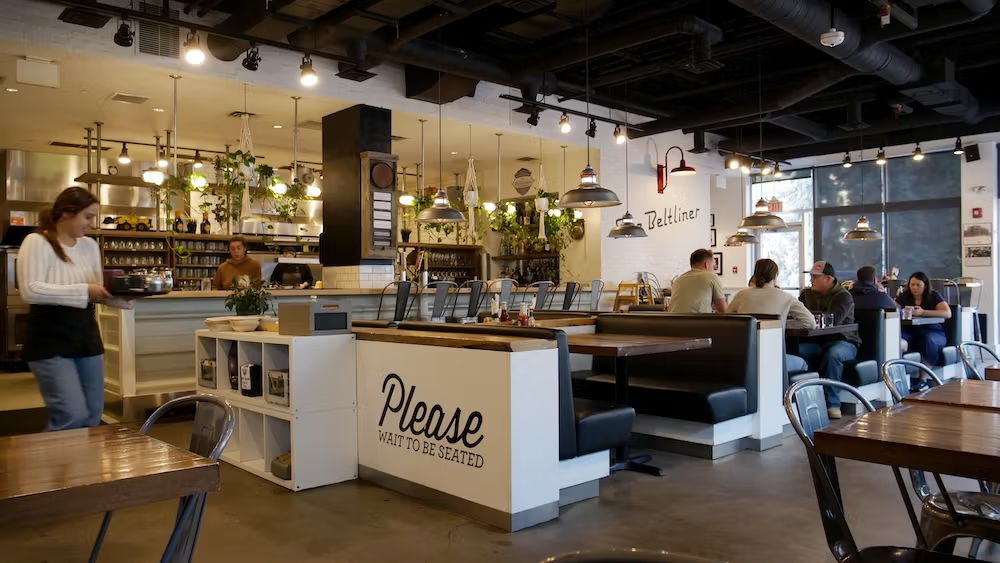
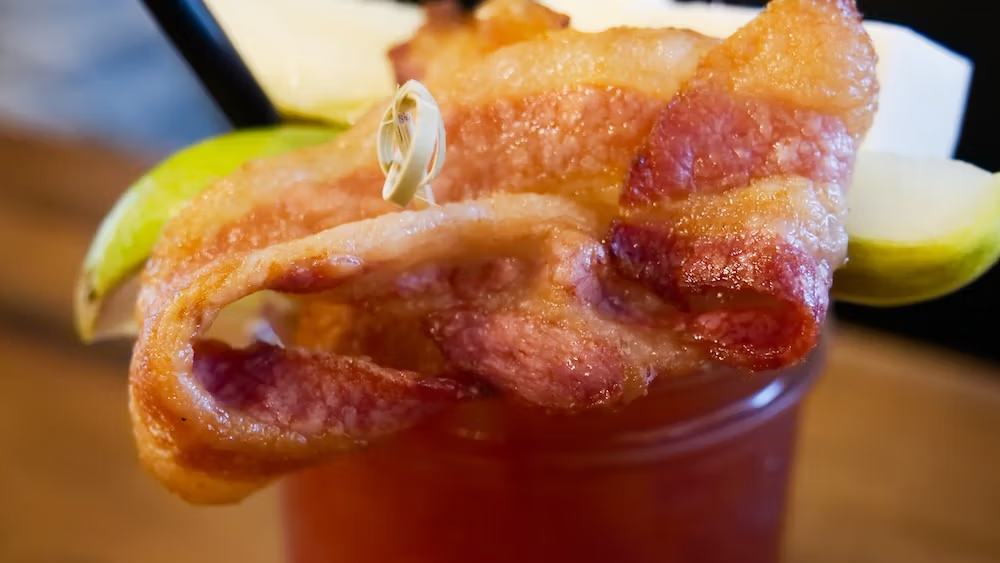
The classic version arrived first, celery salt rim, a stalk of celery, dressed up a little more elaborately than Chell’s original description ever called for, and next to it, a spicier riff built on gin instead of vodka, its rim dusted with something hotter than plain salt, garnished with a cheese skewer and a strip of bacon for a couple extra dollars. Between the two of us we covered both ends of what the Caesar has become since 1969: same clam-and-tomato backbone, same underlying logic, dressed however a given kitchen feels like dressing it that morning. First sip, and it’s obvious why people reach for the Bloody Mary comparison. The clam broth is the whole difference. It’s the ingredient that shouldn’t work and does, turning what could be a fairly ordinary tomato drink into something with actual weight behind it — a hangover cure wearing a brunch cocktail’s clothes.
One Birthplace Is Gone. The Other Isn’t.
What stays with me about both of these stories, now that I actually know them, is that they’re both true — no asterisks, no rival city quietly making the same claim, no chef’s-table myth invented for a menu blurb. George Wong built ginger beef out of necessity, in a restaurant fighting to keep its lights on. Walter Chell built the Caesar out of a three-month deadline and an Italian pasta dish. Neither man was trying to invent a piece of Calgary trivia. They were just doing their jobs, and the jobs turned out to matter more than either of them probably expected.
What’s different is what’s left to visit. The Silver Inn is gone, the building likely headed for whatever comes next in Tuxedo Park, the ginger beef itself scattered out into Chinatown kitchens like Silver Dragon’s, none of them technically the original. The Caesar’s birthplace never went anywhere. The Westin still stands where the Calgary Inn used to, and it still runs a bar called Walter’s, after him, where you can order something close to the drink he built there in 1969 — worth knowing if you’d like to check current rates at the Westin Calgary and raise one at the source. One dish you can only chase through its descendants now. One drink you can still go drink exactly where it started.
I left Calgary mildly annoyed I’d waited this long to actually explore it properly, and a little surprised at how much of what I already loved eating and drinking there turned out to have real names and real addresses behind it. Ginger beef and the Caesar get thrown around together so often, as a matched set of Calgary trivia, that it’s easy to stop believing either claim is worth checking. Check them anyway. They hold up, and eating and drinking your way through both is still the best way to understand how a city this unassuming ended up inventing two things that outgrew it completely.
If you’d rather have someone else map out the stops, Calgary also runs a multi-stop downtown tasting circuit that covers several of the city’s other culinary landmarks in one sitting, worth considering if ginger beef and a Caesar turn out to be just the beginning of what you want to try. You can check availability for Calgary’s downtown food-tasting tour and let someone else handle the reservations.
Frequently Asked Questions
Where was ginger beef actually invented?
Ginger beef was invented at the Silver Inn, a restaurant in Calgary’s Tuxedo Park neighbourhood, not in Chinatown. Chef George Wong developed the dish there in the mid-1970s, and the restaurant served it for 47 years before closing for good in October 2022.
Did Silver Dragon in Chinatown invent ginger beef?
No. Silver Dragon is a different restaurant entirely, opened by Jack Wong in 1966, nine years before George Wong created ginger beef at the Silver Inn across the city. The two restaurants share a common surname and era but no other connection.
Where was the Caesar cocktail invented?
Bartender Walter Chell created the Caesar in 1969 at the Calgary Inn, which is now the Westin Calgary, to mark the opening of the hotel’s Italian restaurant, Marco’s. He built the drink around clam nectar, tomato juice, vodka, Worcestershire sauce, and a celery salt rim.
Can you still visit the place where the Caesar was invented?
Yes. The Westin Calgary still stands where the Calgary Inn used to operate, and it runs a bar named Walter’s after the drink’s creator, serving a version close to his original recipe.
Can you still visit the place where ginger beef was invented?
No. The Silver Inn closed permanently in October 2022 after 47 years in business, and the building is not expected to remain standing.
What’s actually in a Caesar cocktail?
The classic Caesar combines vodka, Clamato (a blend of tomato and clam juice), Worcestershire sauce, hot sauce, and a celery salt rim, usually garnished with a celery stalk. Modern versions in Calgary sometimes swap in spiced gin or add garnishes like a cheese skewer and bacon.
Why is The Beltliner in Calgary called that?
The diner is named for an old Calgary streetcar that once ran down 12th Avenue SW in the early 1900s, long before the Beltline neighbourhood looked anything like it does today.
Where can you still eat ginger beef in Calgary today?
Chinatown restaurants like Silver Dragon still serve ginger beef, even though the dish’s actual birthplace, the Silver Inn, is gone. I ordered mine at Silver Dragon and found it just as good as the version I used to eat regularly while living in Edmonton.
This article is also available in Spanish. [Leé la versión en castellano: Comidas inventadas en Calgary: Ginger beef, el Caesar y la historia gastronómica local]
This article contains affiliate links. If you book through one of these links, I may earn a commission at no extra cost to you.