
Lake Louise can be a 30-minute stop or the better part of an entire day, and both can be perfectly sensible ways to visit. The problem with giving everyone one magic number is that somebody who wants the famous turquoise-lake photograph and somebody heading into the mountains for five hours are technically visiting the same place while having almost nothing resembling the same experience.
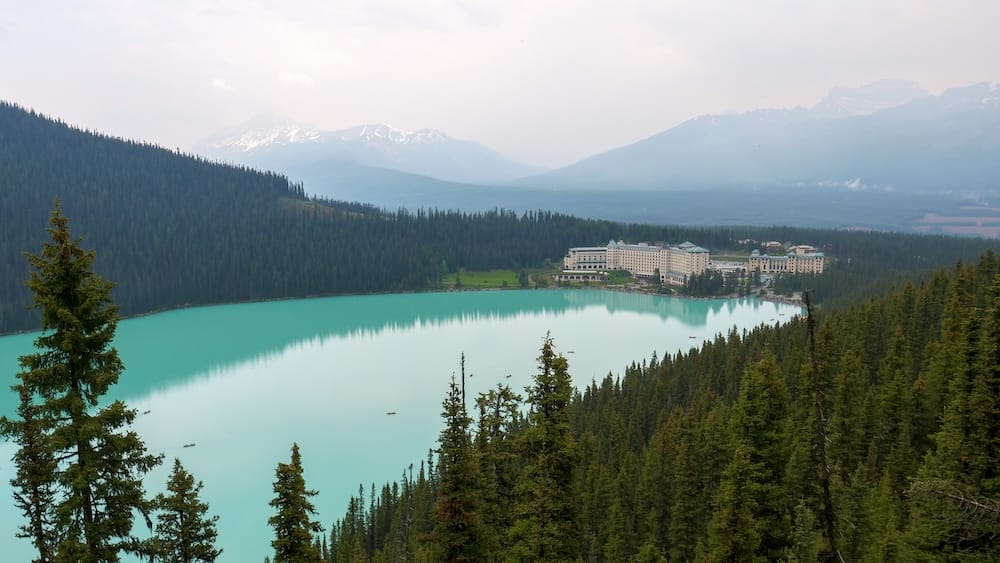
Audrey and I have approached Lake Louise both ways. On an earlier Canadian Rockies road trip, we visited independently and had what I would now call the classic version: admire the lake, take plenty of photos, soak up that ridiculous mountain backdrop and continue with the trip. We enjoyed ourselves. Years later we returned, spent more time there and hiked up to Fairview Lookout. I came away with a considerably better impression of Lake Louise.
That second visit changed how I think about the question of time. The extra hours aren’t necessarily about squeezing more attractions into your itinerary. Once we moved beyond what I jokingly called the “selfie capital of Canada” around the main shoreline, the crowds thinned dramatically and Lake Louise started feeling less like a famous photograph and more like a mountain destination.
Here’s the rough framework I’d use:
| What you want to do | Time I’d allow at Lake Louise |
|---|---|
| See the famous shoreline and take photos | 30–60 minutes |
| Relax around the lakefront or walk the Lakeshore Trail | 1–2 hours |
| Shoreline + Fairview Lookout | 1.5–2 hours |
| Shoreline + canoeing | 2–3+ hours |
| Lake Agnes as your main activity | 3.5–4.5 hours |
| A substantial hiking day | 5–7+ hours |
Those are time-at-Lake-Louise estimates, not the total amount of your day the visit will consume. Getting there can add another meaningful chunk of time, especially if you’re using the shuttle system.
The variation itself is worth keeping in mind. Observed visits to Upper Lake Louise range from roughly 30 minutes to more than 16 hours, with an average stay of about 2.5 hours. That enormous spread makes complete sense once you stop thinking of Lake Louise as one single activity.
A quick visit can be completely worthwhile
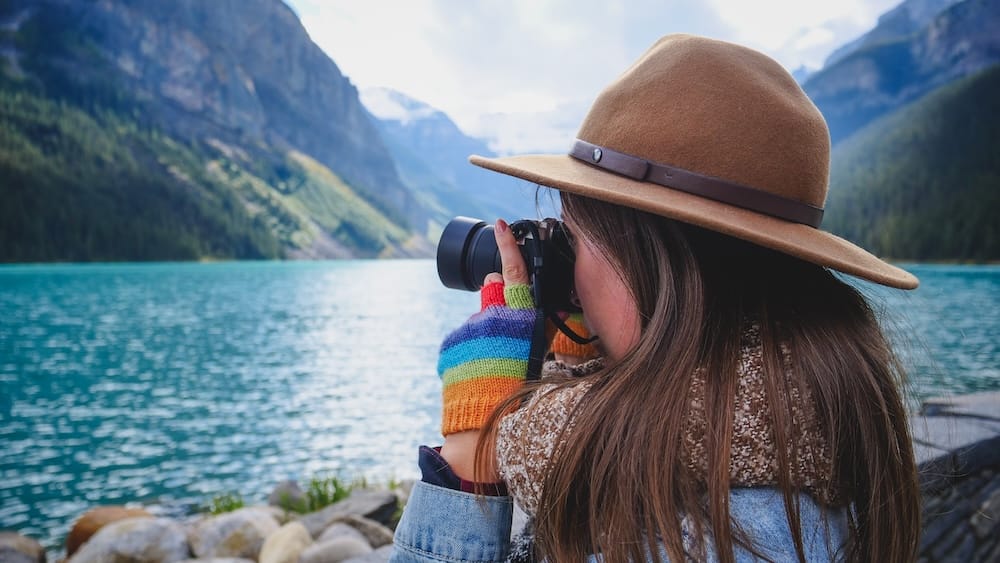
If you’ve only got 30 to 60 minutes and your goal is simply to see Lake Louise, I’d still go. You don’t have to hike for hours before the scenery becomes legitimate. Once you’re at the lake, the turquoise water, mountains and glacial backdrop are right there, so if this is one stop in a packed Banff itinerary and you’ve always wanted to see that famous view with your own eyes, there is nothing wrong with enjoying it, taking your photos and moving on.
That’s much closer to how Audrey and I experienced Lake Louise on our earlier independent visit. We explored around the lake, photographed it and continued with a larger Canadian Rockies road trip. I don’t look back on that day and think we somehow failed Lake Louise because we weren’t halfway up a mountain.
What a short visit does mean, however, is that the busiest part of Lake Louise may also become your entire impression of the place. That’s the trade-off I’d think about more than whether 45 minutes is technically “enough.” If that sightseeing-focused version fits your plans and you’d rather have the transportation organized for you, you can check current Lake Louise and Moraine Lake guided-tour availability.
With an hour or two, you can already slow the experience down. The Lakeshore Trail extends 2.3 kilometres one way along the water and has an estimated return time of about an hour. You don’t need to walk every metre of it, but it shows how quickly Lake Louise expands beyond standing around the primary viewpoint.
Why I liked Lake Louise much more the second time
Our more recent visit began with exactly the sort of Lake Louise scene people complain about. It was early in the morning and already busy—very busy. I remember standing there and saying, “It’s very busy. It’s early in the morning, but it’s very busy.” Then I christened it the “selfie capital of Canada.”
That sounds harsher than my actual opinion of the place. I also thought it was spectacular, and I understood perfectly well why everybody wanted to be there. When somewhere looks like Lake Louise, expecting to have the shoreline to yourself is probably asking a bit much.
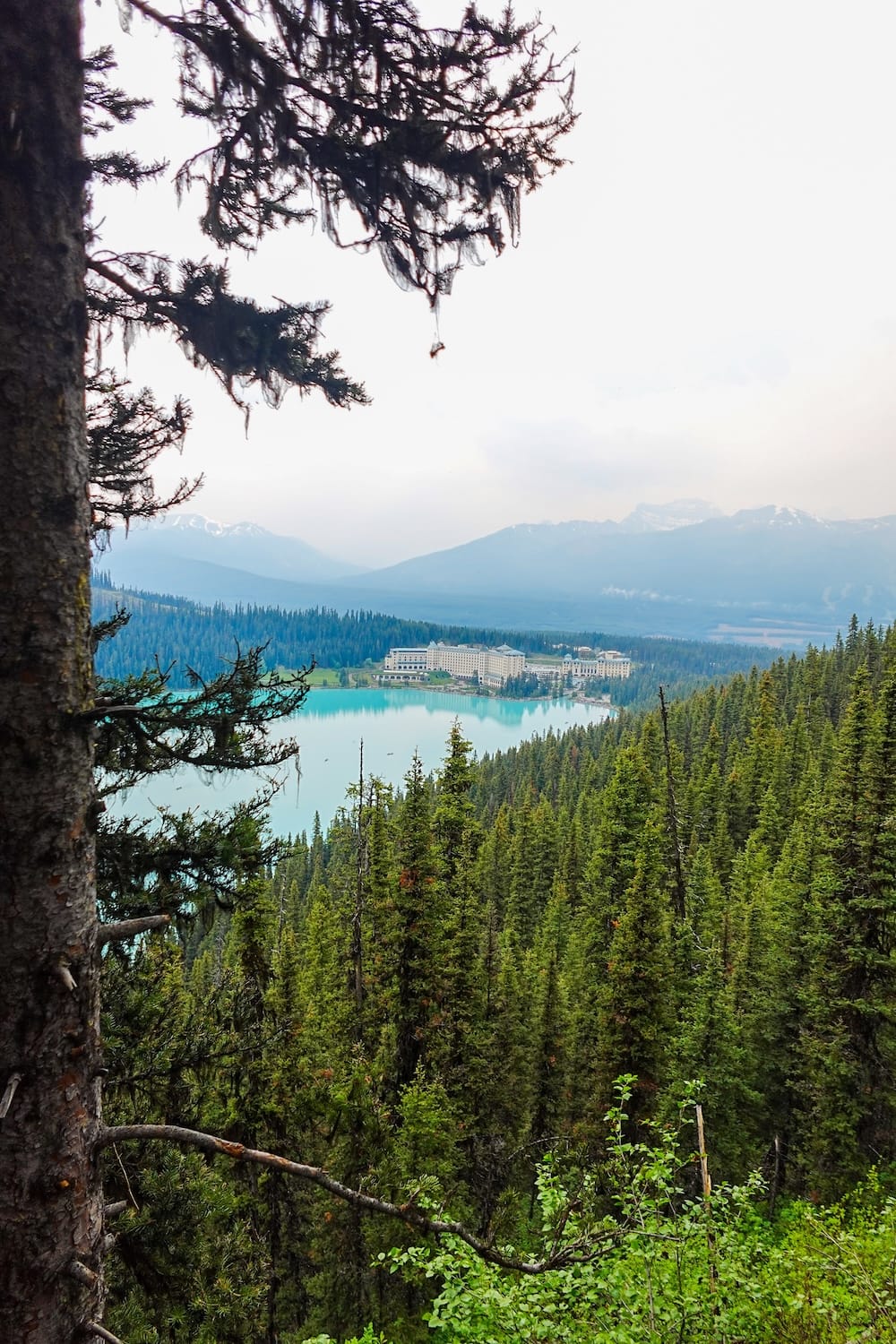
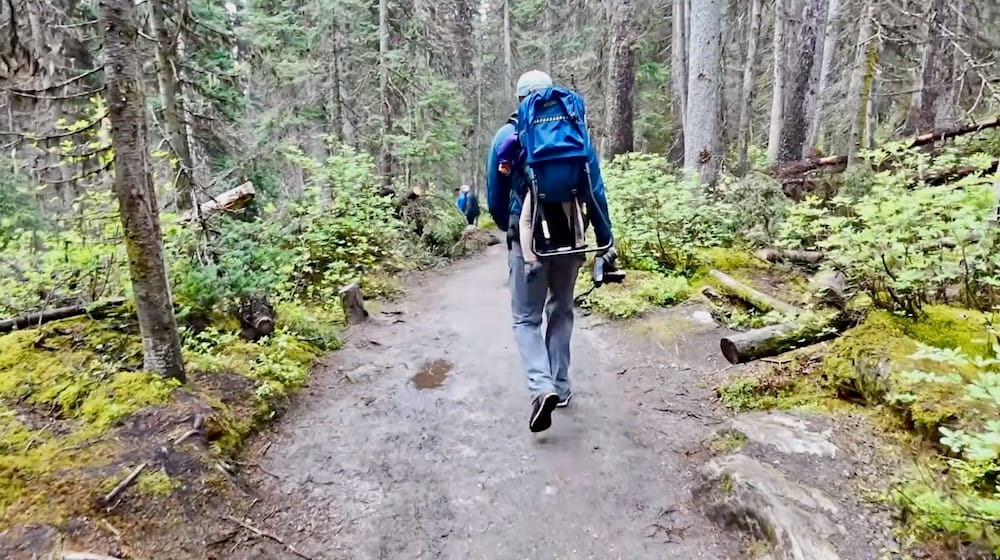
What surprised me was how quickly the character of the visit changed once we started hiking away from that central zone. We headed uphill through the forest toward Fairview Lookout and eventually reached the platform above the lake. During our visit, there were maybe four or five other people there.
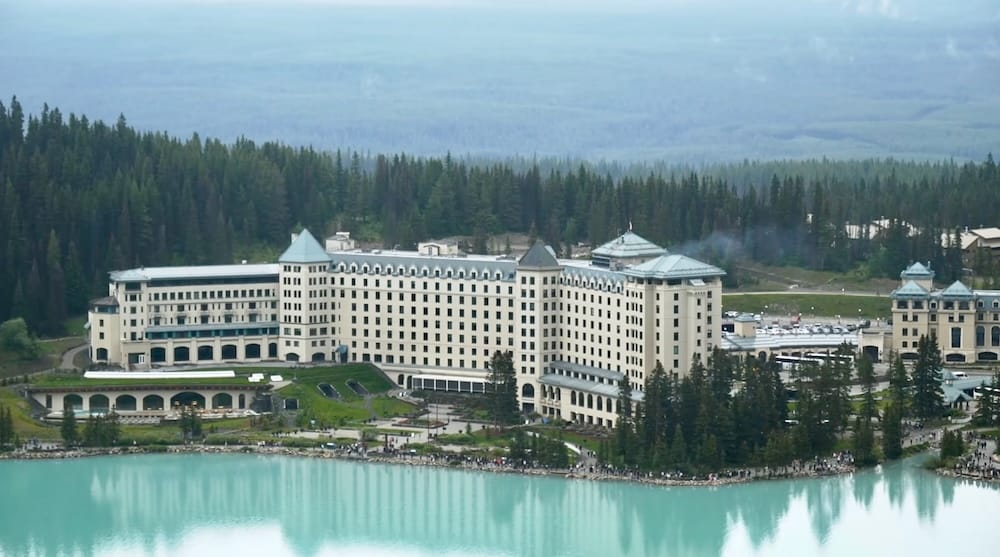
Suddenly we had this completely different perspective over Lake Louise toward Fairmont Chateau Lake Louise, we’d worked a bit to get there, and there was room to actually absorb the setting without feeling like we were standing in the middle of a famous photo queue. That experience gave me a much better impression of Lake Louise than I’d had before. It wasn’t because the shoreline had suddenly become less touristy; we’d simply discovered that the shoreline wasn’t the whole destination.
Fairview Lookout is where the time equation starts changing
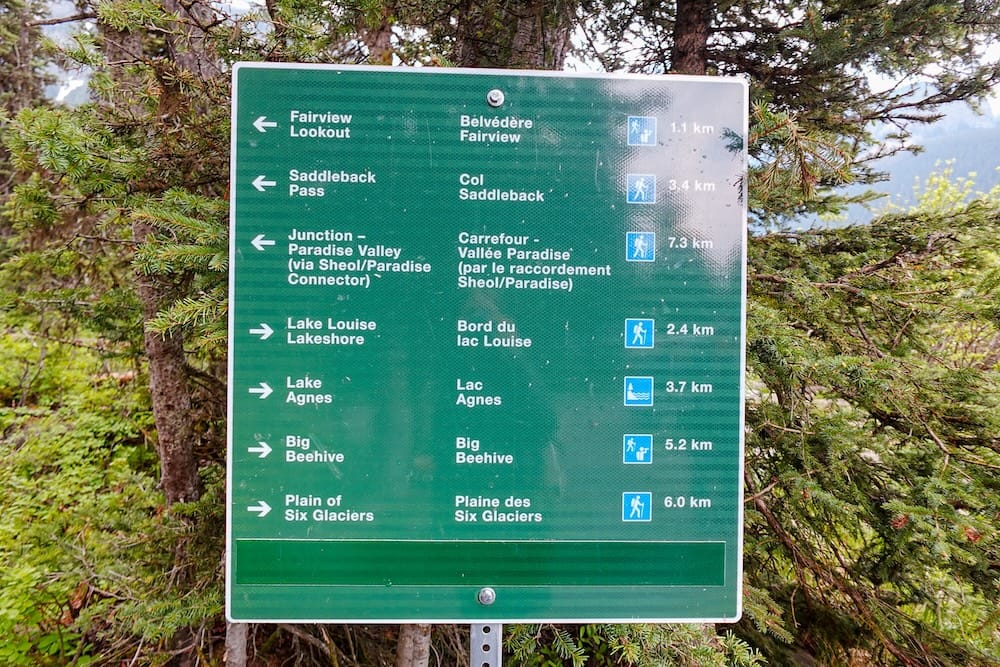
Fairview is a useful example because it doesn’t require turning Lake Louise into a full hiking day. The trail is about 1.2 kilometres each way, gains roughly 100 metres and has an estimated return time of around 45 minutes.
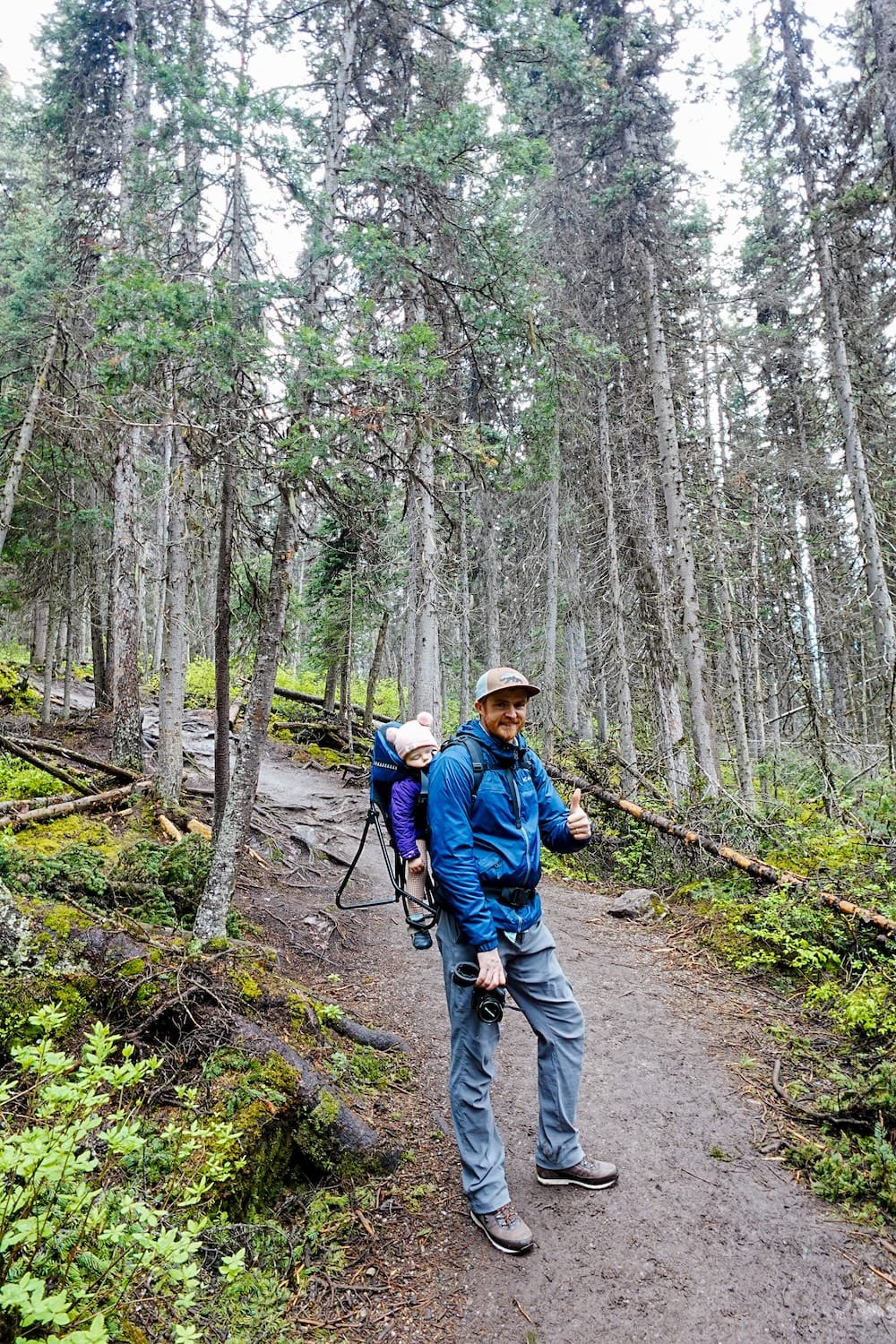
It is short, but there are properly steep stretches. On our visit I had Aurelia strapped to my back, weighing roughly 25 pounds, which felt a bit like volunteering to hike uphill with a decent-sized dumbbell attached to me. She hadn’t been in the child carrier for more than a year, looked initially suspicious of this wonderful arrangement her parents had devised, then fell asleep and left me doing all the work while she enjoyed what we jokingly called her sedan-chair ride.
Daniel, Audrey’s dad, came up with us as well. He handled the hike well but needed a few breaks on the steeper parts, which is another reason I wouldn’t treat an official trail estimate like a deadline.
For Lake Louise plus Fairview, I’d allow about 1.5 to 2 hours. That gives you time around the shoreline, the hike itself and enough breathing room that you’re not climbing while checking your watch every three minutes. My reaction when we reached the viewpoint remains about as complicated as it needs to be: Totally worth it. Steep. Take your time.
For me, that’s also the point where Lake Louise changed from somewhere I had come to see into somewhere I was actually exploring.
Several hours opens up a very different Lake Louise
Once you have three, four or five hours, hiking can become the main event instead of something squeezed onto the edge of a sightseeing stop.
Lake Agnes is a good example. The trail runs 3.9 kilometres one way, climbs 495 metres and has an estimated return time of 2.5 to 3 hours. Add some time beside Lake Louise, normal stops during the hike and the possibility that you might occasionally want to enjoy yourself instead of behaving like you’re qualifying for an Olympic walking event, and I’d budget roughly 3.5 to 4.5 hours overall.
We haven’t personally hiked Lake Agnes, so I can’t tell you what that climb feels like from experience. Its timing is what matters here: choosing it fundamentally changes the role Lake Louise plays in your itinerary.
The Plain of Six Glaciers makes that even clearer. The route is 5.9 kilometres one way, gains 595 metres and has an estimated four-hour return time. Combine Lake Agnes and Plain of Six Glaciers via the Highline Trail and you’re looking at roughly 14.3 kilometres and around five hours of hiking.
At that point, Lake Louise isn’t a stop between other things. It’s the day.
That now appeals to me far more than it would have after our earlier visit. Fairview gave us only a small taste of what happens when you leave the main lakefront behind, but it was enough to make me think spending serious time hiking around Lake Louise could be pretty awesome.
Canoeing needs more time than the rental itself
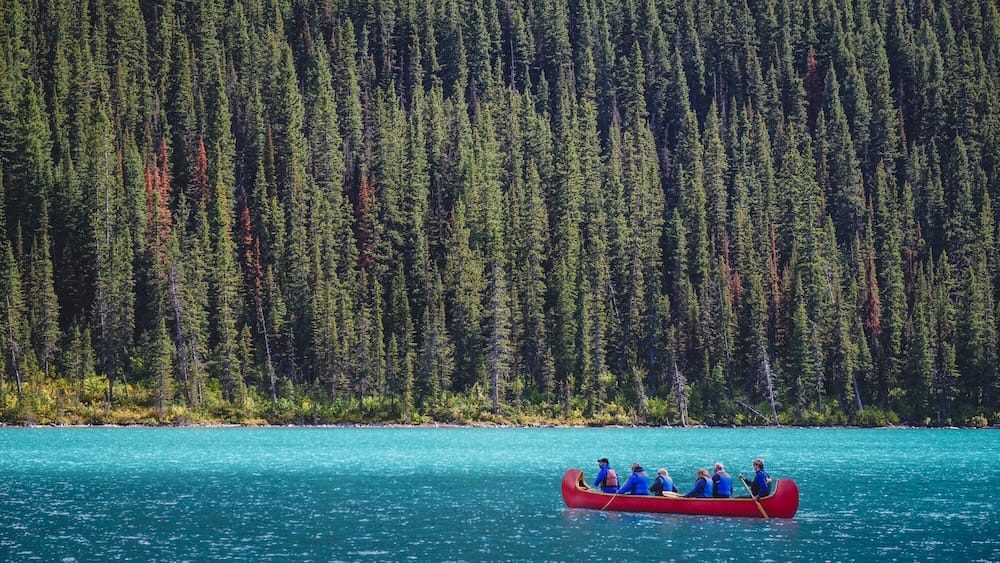
Hiking isn’t the only reason to extend your visit. Canoes are almost part of the visual identity of Lake Louise, although Audrey and I haven’t rented one here ourselves.
Current rentals are offered in 30-minute and one-hour blocks and operate first come, first served rather than through advance reservations. That means a one-hour rental shouldn’t be treated as exactly one additional hour on your itinerary. You still need time beside the lake, the rental process and whatever waiting is involved before you get onto the water.
If canoeing is important to you, I’d think in terms of 2 to 3 hours or more for Lake Louise rather than trying to wedge it into a tightly managed sightseeing stop. It’s a small example of a broader planning mistake: advertised activity duration and actual time consumed are rarely the same thing.
When I’d give Lake Louise half a day—or most of one
This is probably where my own opinion has shifted the most. Before hiking Fairview, I mainly thought of Lake Louise as one of those places you obviously go because you’re visiting Banff. It was beautiful, famous and absolutely worth seeing, but still mentally filed under major scenic stop. Now I can much more easily imagine building a day around it.
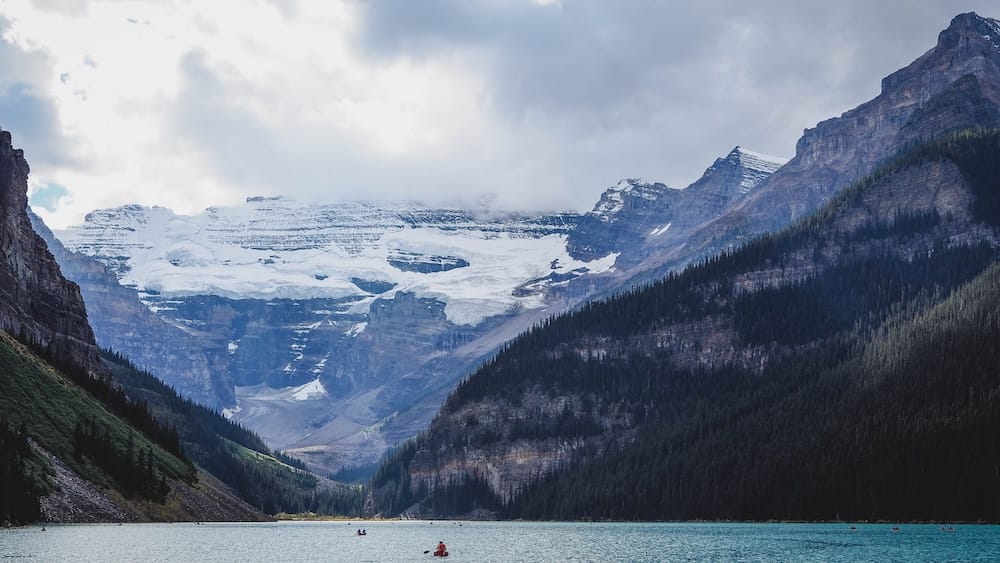
If Plain of Six Glaciers or one of the longer combinations is your reason for coming, 5 to 7+ hours at Lake Louise isn’t excessive. Four or five hours can disappear into the trail itself before you’ve eaten anything, stopped for photographs, wandered beside the lake or spent some time doing absolutely nothing productive while staring at the mountains.
Those longer hiking estimates also assume suitable trail conditions. Higher routes can remain affected by snow well into the season, so this isn’t a universal year-round formula where you simply plug five hours into your calendar and start marching.
I can also see the attraction of staying overnight if Lake Louise is one of the main reasons for your trip, particularly for hikers who want to dedicate serious time to the area. We haven’t stayed overnight at Lake Louise ourselves, so I can’t speak to that experience personally, and location matters more than the words “Lake Louise” on an accommodation listing. The lakeshore sits around 4 kilometres from the Lake Louise community, and walking uphill to it via the Tramline route is itself roughly 4.3 kilometres and about 1 hour 15 minutes.
If you do want to turn Lake Louise into more of a hiking base rather than a day-trip stop, you can compare current places to stay in Lake Louise and pay particular attention to where each property actually sits in relation to the lakeshore. Staying somewhere nearby doesn’t automatically teleport you to the water in the morning.
Time at Lake Louise and total trip time are two different things
This distinction can quietly wreck an otherwise sensible itinerary. If you’re planning two hours at Lake Louise, don’t create a two-hour gap in your day and assume you’ve solved the problem, because current access has its own clock.
For the Parks Canada shuttle, reservations are required, and you should allow for waiting as part of the process. Around 30 minutes is a reasonable minimum to have in mind, with waits potentially stretching toward an hour during heavy ridership. If you’re using the shuttle, I’d keep the current Lake Louise access information from Parks Canada handy rather than building the day around old assumptions.
If you’d rather use a bookable transport option while keeping more control over what you do once you arrive, you can also compare this Lake Louise and Moraine Lake shuttle option. I would still read the current itinerary carefully and make sure the amount of free time matches what you actually want to do at Lake Louise rather than choosing purely on convenience.
Driving doesn’t make the timing automatically predictable either. Lakeshore parking is extremely competitive, the lot can fill before sunrise, and roughly three-quarters of vehicles attempting to reach Upper Lake Louise the previous summer were turned away once it was full. Our own older road-trip experience of simply driving up belongs to a different access era, so I wouldn’t use it to plan a current visit.
I therefore think of Lake Louise with two clocks: how long I actually want to spend there, and how much of the day the complete visit is going to consume.
So, how much time would I give Lake Louise?
For a strong first visit, two to three hours is probably the sweet spot I’d choose. That gives you time to properly enjoy the lakefront rather than arriving and immediately worrying about leaving, while also giving you room for something like Fairview.
If I only had 30 to 60 minutes, I’d still visit. Lake Louise does not suddenly become a waste of time because you can’t dedicate half a day to it. But if hiking were one of the main reasons I was going, I’d approach the place completely differently: half a day would feel perfectly reasonable, and with one of the longer routes I’d be happy to let Lake Louise consume most of the day.
That’s what changed after our second visit. The first time, I mostly saw one of Canada’s iconic mountain views. The second time, we walked beyond the “selfie capital,” the crowds fell away and I started seeing the destination hiding behind the photograph.
How much time do you need at Lake Louise? Enough for the version of it you actually want to experience.
Frequently Asked Questions
How much time should you spend at Lake Louise?
For a strong first visit, I’d allow about two to three hours. That gives you time to enjoy the lakefront without immediately rushing away and still leaves room for a meaningful addition such as Fairview Lookout.
Is 30 to 60 minutes enough at Lake Louise?
Yes, if your main goal is to see the famous shoreline and take photos. A short visit can still be worthwhile, but the busiest lakefront may also become your entire impression of Lake Louise.
How much time do you need for Lake Louise and Fairview Lookout?
I’d allow about 1.5 to 2 hours in total. Fairview is about 1.2 kilometres each way, gains roughly 100 metres and has an estimated return time of around 45 minutes, but real walking pace varies.
How much time should you allow for Lake Agnes from Lake Louise?
The Lake Agnes trail has an estimated return time of 2.5 to 3 hours. Once you add time beside Lake Louise and normal hiking stops, I’d budget roughly 3.5 to 4.5 hours overall.
How much time do you need at Lake Louise if you want to canoe?
I’d allow about 2 to 3 hours or more. Canoe rentals are offered in 30-minute and one-hour blocks, but they operate first come, first served, so the rental process and possible waiting add uncertainty.
Does travel time to Lake Louise count in these estimates?
No. The timing ranges in this article are for time at Lake Louise itself. Access has its own clock, and shuttle waiting, driving, parking or other transport can make the complete outing considerably longer.
This article is also available in Spanish. [Leé la versión en castellano: ¿Cuánto tiempo necesitás en Lake Louise?]
This article contains affiliate links. If you book through one of these links, I may earn a commission at no extra cost to you.