
We’d barely settled back into the drive after Bow Lake when we pulled off again. Maybe five, maybe ten minutes had passed — neither of us was tracking it closely, we were still talking about the color of the water we’d just left behind. Then we stepped out at Peyto Lake, and the conversation changed shape entirely: if you thought the color of the water was magical and spectacular back there, wait until you see this.
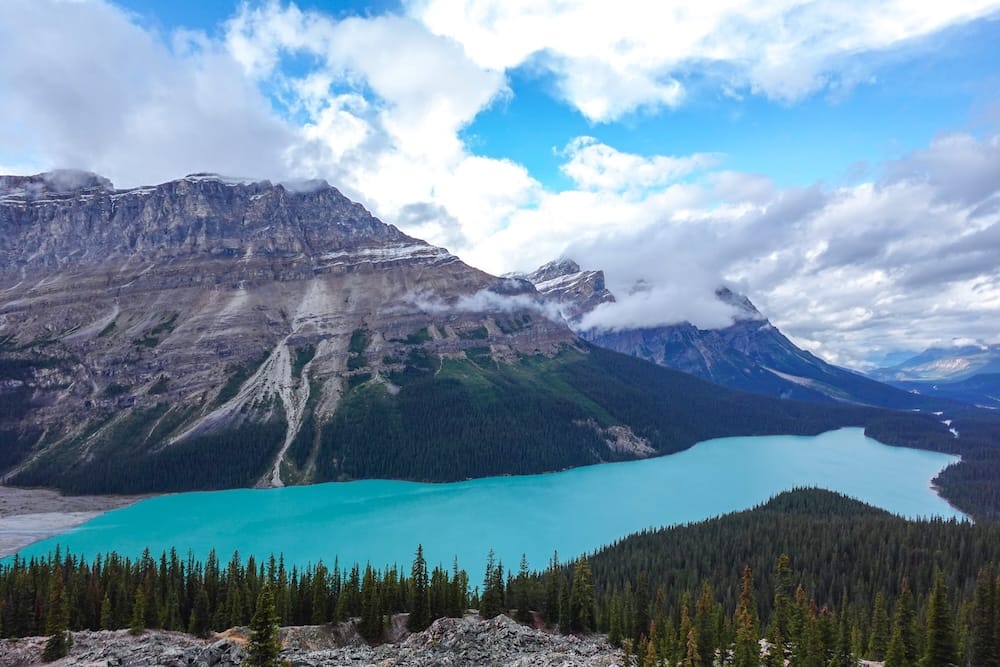
That’s not an exaggeration I’ve sharpened in hindsight — it came out exactly like that, in the moment, right before the reaction kept escalating into insane, next level, and it almost doesn’t look real. If you’re driving the Icefields Parkway and wondering whether Peyto Lake lives up to its reputation, or whether it’s just another turquoise lake once you’ve already seen a few, the answer is that it earns every bit of it, and you don’t need much effort to see why.

Why Peyto Lake Is the Stop That Raises the Bar
Bow Lake had already impressed us. That’s worth saying plainly, because Peyto Lake’s reputation sometimes gets built at the expense of everything that comes before it, as though nothing else on the drive matters once you’ve seen it. That’s not quite fair. But it is true that Peyto Lake hit differently, and the fact that it came right after Bow Lake made the difference impossible to miss. We’d just spent several minutes admiring one turquoise lake, feeling like we’d found something special, and then arrived at a second one that made the first look like a warm-up act.
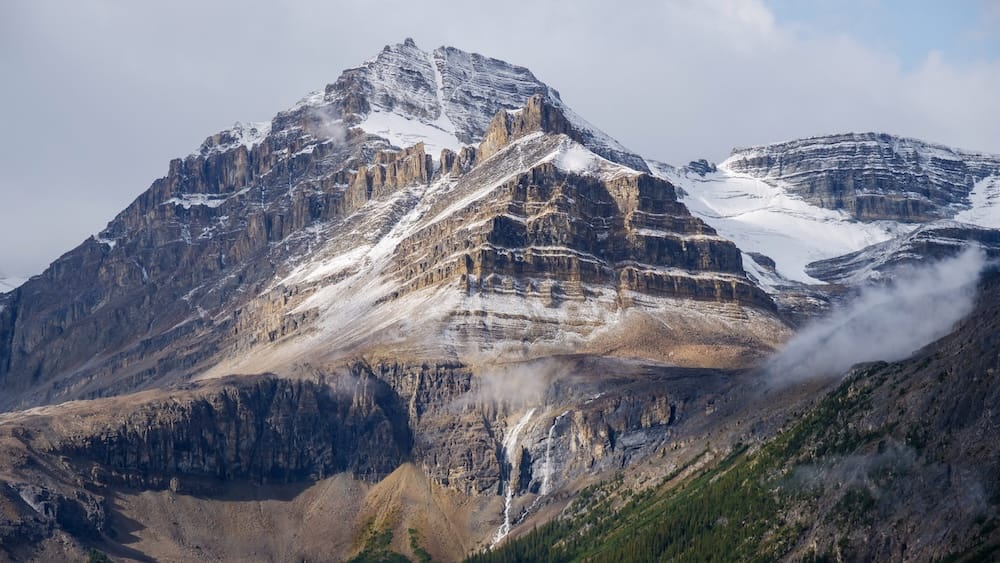
Part of that is simply distance. Peyto Lake’s viewpoint sits at Bow Summit, only a few kilometres past Bow Lake along the parkway, which lines up with how quickly we found ourselves there. Bow Summit also happens to be the highest point on the entire Icefields Parkway, at roughly 2,085 metres above sea level — a fact that adds a little context to why the view feels as expansive as it does. You’re not just looking at a lake at this point. You’re looking at it from the top of the drive.
What Makes the Color and Shape So Distinctive
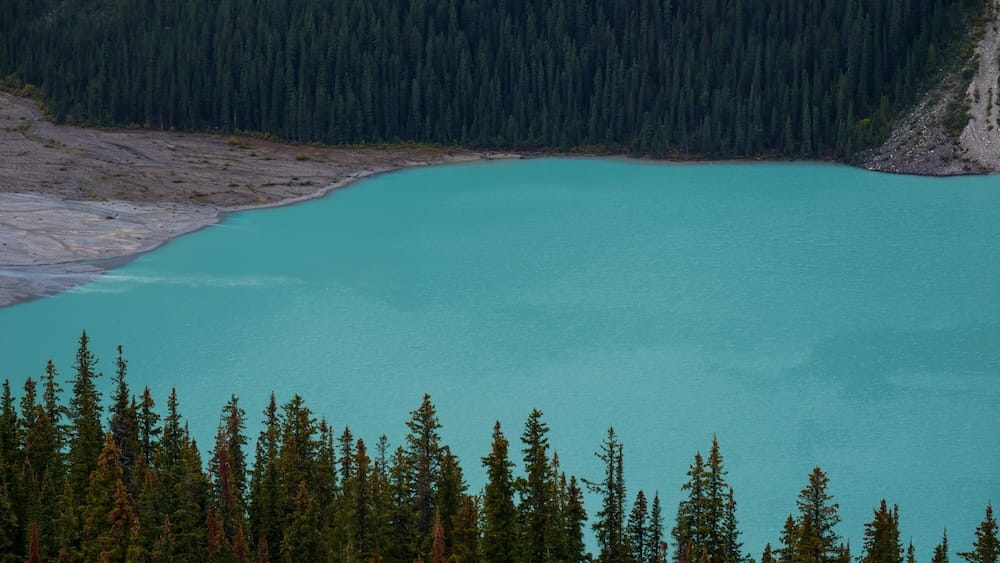
The turquoise runs deeper here, or at least it felt that way standing at the railing. Peyto Lake is fed by Peyto Creek, which carries meltwater down from the Peyto Glacier and the same Wapta Icefield that feeds Bow Glacier and, in turn, Bow Lake. Same basic mechanism as the stop before it — fine glacial rock particles suspended in the water, scattering light into that vivid blue-green — but somehow the effect felt more concentrated here, more saturated, less like something explained by chemistry and more like something the mountain was doing on purpose.
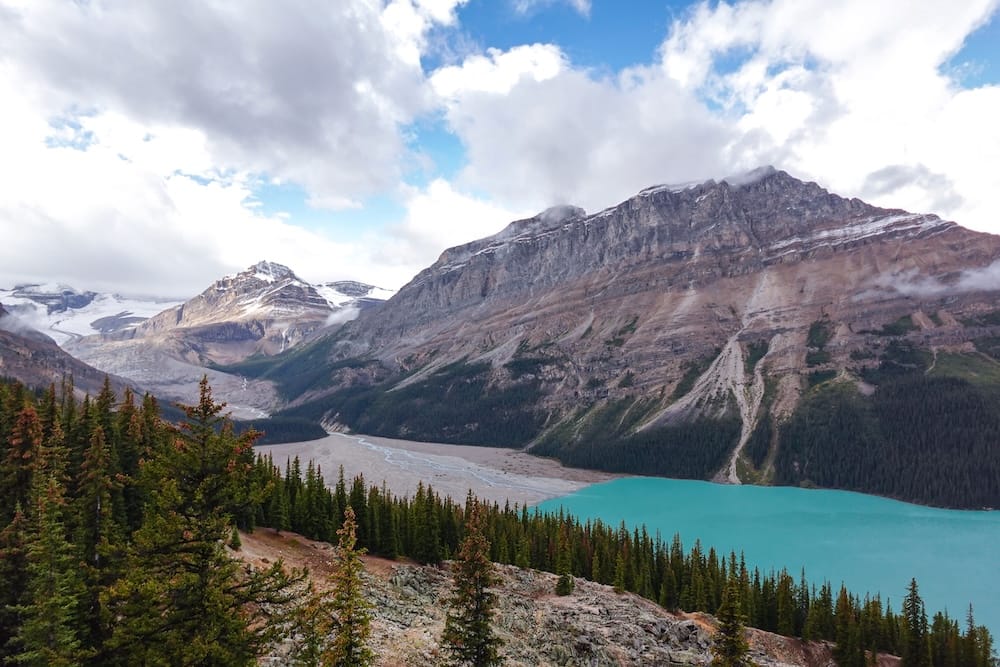
There’s also the shape of the thing. Seen from the elevated viewpoint, Peyto Lake is commonly described as resembling a fox running across the valley floor, its body and tail traced out by the shoreline. I wasn’t consciously looking for a fox shape in the moment — we were too busy reacting to the color — but once you know to look for it, it’s genuinely there, and it adds a strange, almost designed quality to a lake that’s already doing plenty of work on color alone.
Finding the Viewpoint: Access, Parking and the Walk
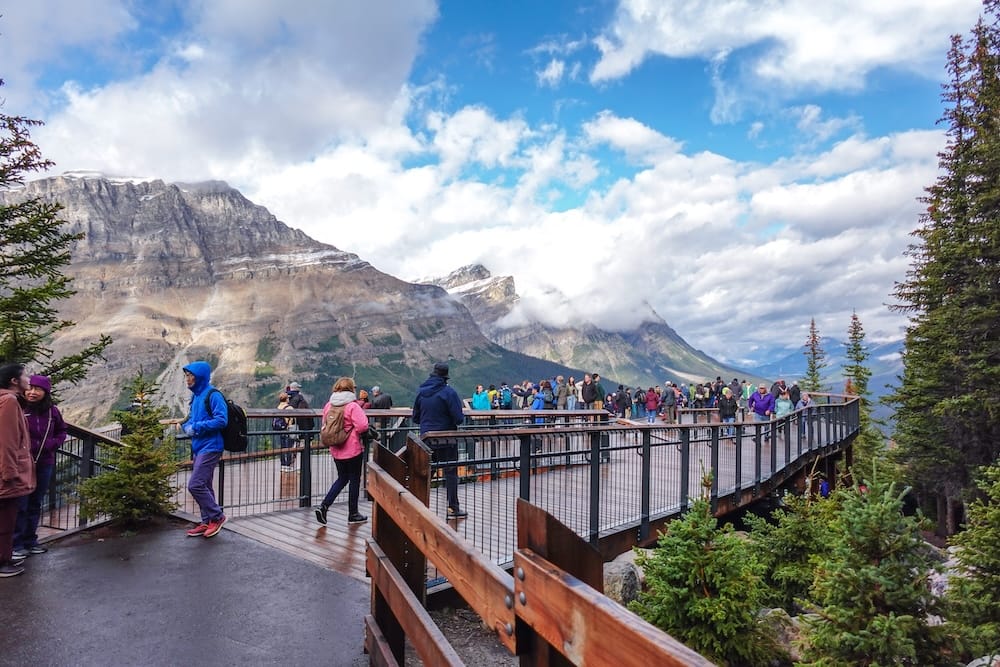
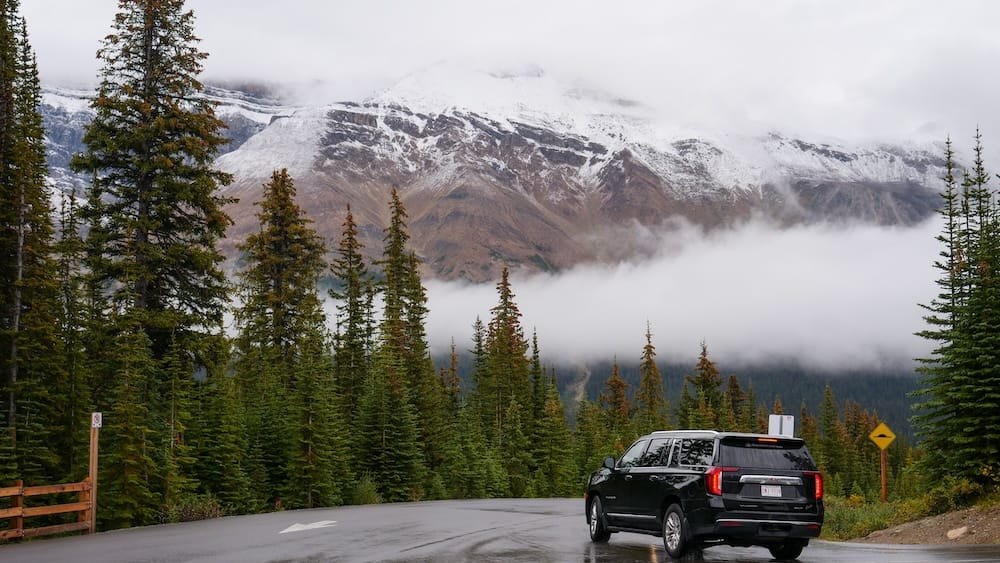
Here’s what we didn’t sort out for ourselves that day, and what you’ll actually want to know before you go: getting to the view isn’t complicated. From the parking area right off the Icefields Parkway at Bow Summit, a paved, easy path leads to the main viewing platforms, and it’s short — about 700 metres round trip, roughly 10 to 15 minutes at an unhurried pace. Washrooms are available at the parking lot. If mobility is a concern, there’s also an upper parking area, used by tour buses, that offers a shorter, wheelchair-accessible route to a viewpoint of its own.
If you want more than the short walk, there’s a real option worth knowing about: a longer trail continues from the main viewpoint up to a higher lookout near Bow Summit, about 6.6 kilometres round trip with roughly 245 metres of elevation gain. It trades the crowds at the main platform for views of the Peyto Glacier itself and noticeably more solitude. It’s not something to attempt on a whim if your day is already packed with other Icefields Parkway stops, but it’s there if Peyto Lake is the highlight of your day rather than one stop among several.
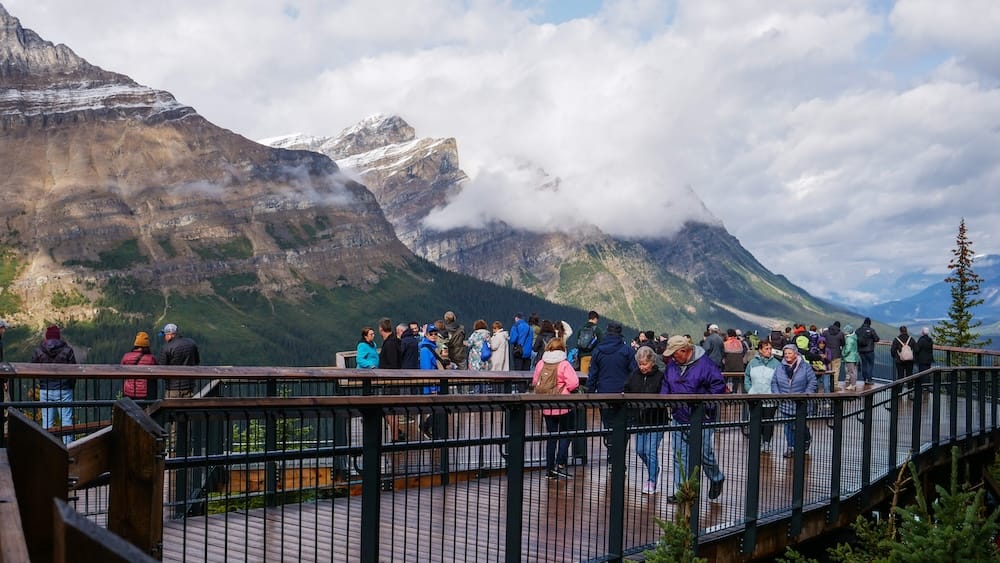
Worth planning around: the main viewpoint gets genuinely busy, especially at midday in July and August, when the short walk can feel more like a shuffle than a stroll. Arriving earlier or later in the day makes a real difference here.
Planning Your Stop: How Long to Stay and What to Bring
For most people, twenty to thirty minutes covers it comfortably — enough time to walk up, take in the view from multiple angles, and walk back without feeling rushed. If the longer trail to the upper lookout is calling to you, budget an extra hour and a half to two hours on top of that.
The same Parks Canada pass that gets you into Banff covers this stop too, and there’s no separate parking fee at the viewpoint itself, though you’ll still need a valid park pass to be here at all. Beyond that, there’s nothing unusual to prepare for: it’s a paved walk in a well-visited spot, not a backcountry outing, unless you’re heading up toward the higher lookout, in which case normal hiking sense applies.
If you’d rather skip the driving altogether, Peyto Lake is one of the standard stops on small-group day tours running the Icefields Parkway from Banff, usually alongside Bow Lake and the Columbia Icefield. You can compare current small-group tour options covering this stretch of the parkway if that fits your trip better than renting a car for the day.

Is Peyto Lake Worth the Stop?
Yes, without qualification. Of everything we saw that day along the Icefields Parkway, this is the stop that actually changed the tone of the conversation in the car, and it did that in the space of a short, paved walk that asks almost nothing of you physically. That combination — a payoff this dramatic requiring this little effort — is rare enough that it’s worth building real time into your day for, rather than treating it as one more turnoff to glance at on the way to somewhere else.
If Bow Lake made the case that a quick stop can be worth it, Peyto Lake makes the case that some quick stops are worth planning around entirely.
Frequently Asked Questions
Is Peyto Lake worth stopping for on the Icefields Parkway?
Yes, without qualification. It’s the stop that raised the bar the most on our entire drive, and the payoff comes from a short, easy, paved walk rather than any real effort.
How far is the walk to the Peyto Lake viewpoint?
The main viewpoint is about 700 metres round trip from the parking area, roughly 10 to 15 minutes at an unhurried pace on a paved path. A wheelchair-accessible route is also available from an upper parking area used by tour buses.
Is there a longer hike at Peyto Lake?
Yes. A longer trail continues from the main viewpoint up to a higher lookout near Bow Summit, about 6.6 kilometres round trip with roughly 245 metres of elevation gain, offering views of the Peyto Glacier with far fewer crowds than the main platform.
How does Peyto Lake compare to Bow Lake?
Peyto Lake sits only a few kilometres past Bow Lake along the parkway, and in our experience it delivered an even more dramatic reaction. Both lakes get their turquoise color from the same glacial system, fed by meltwater from the Wapta Icefield, but Peyto Lake’s color and scale felt more concentrated.
How long should I plan to spend at Peyto Lake?
Twenty to thirty minutes covers the main viewpoint comfortably. Add an extra hour and a half to two hours if you want to continue on to the higher lookout near Bow Summit.
Do I need a separate pass to visit Peyto Lake?
No. The same Parks Canada pass that covers Banff also covers this stop, and there’s no separate parking fee at the viewpoint itself.
Can I visit Peyto Lake without driving myself?
Yes. Peyto Lake is a standard stop on small-group day tours running the Icefields Parkway from Banff, usually alongside Bow Lake and the Columbia Icefield.
This guide is also available in Spanish. [Leé la versión en castellano: Guía de Peyto Lake: el mirador, la parada en la Icefields Parkway y qué esperar]
This article contains affiliate links. If you book through one of these links, I may earn a commission at no extra cost to you.