
We didn’t have to choose. Our trip to Columbia Icefield was a guided day tour from Banff, and I’ve spent enough time since then reading into the self-drive alternative to know it would have shaped the day differently — the real question underneath this whole decision isn’t which option wins in the abstract, but which one fits the trip you’re actually taking.
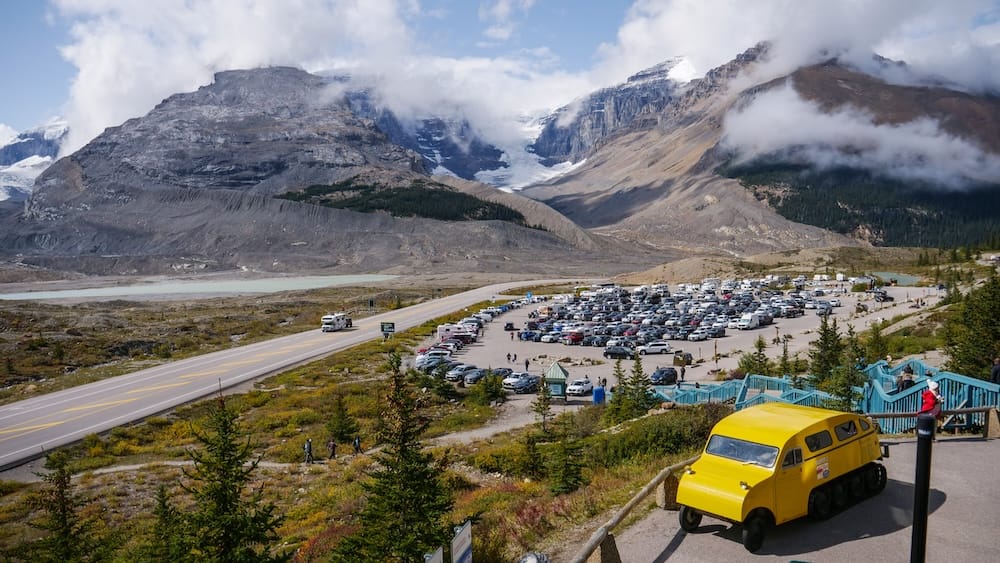
I can tell you exactly what riding along felt like, because we lived it. What I can’t give you is a firsthand account of self-driving this exact stretch, since that’s not what we did on this trip — though an older, self-driven road trip we took through this same general part of Alberta and British Columbia taught me some real things about driving yourself in this region, even on a different road. Between that and some proper current research into cost, parking, and logistics, there’s a genuinely useful answer here. It just isn’t a single verdict.
What This Comparison Actually Covers
This is specifically about the tour-vs-self-drive decision for getting from Banff to Columbia Icefield and back in a day. If you want the actual stops worth making along the way, I’ve written a separate guide to that. If you’re trying to decide whether the day itself is worth it, or whether the Ice Explorer glacier experience is worth booking once you’re there, those are their own questions too, and I’ve covered them elsewhere. This piece stays narrowly on one thing: car or tour.
What Each Option Actually Costs
I’ll be upfront about something: our own tour was arranged through a sponsored partnership, so I can’t tell you what we personally paid out of pocket. What I can give you is a real, current picture of what each option costs someone pricing this out themselves, and the honest shape of that answer is more useful than the usual “tours cost more” or “renting a car is expensive” — claims I keep running into that never come with an actual number attached.
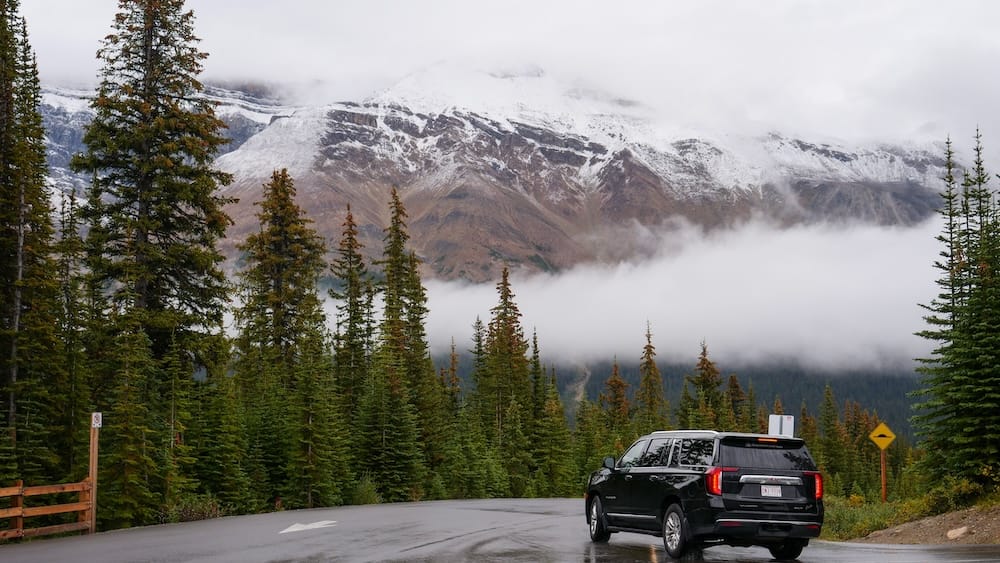
A small-group day tour from Banff that includes transport and the Ice Explorer glacier experience typically runs somewhere between $90 and $160 CAD per person, with a few heavily discounted shared-bus options dipping into the $60s and premium or private tours climbing well past $250 — you can compare current small-group tour prices from Banff to see where today’s rates actually land. A one-day rental car out of Calgary runs roughly $40 to $45 for a mid-size vehicle, or as little as $31 a day if you’re willing to book the cheapest available class — worth checking if you want to compare current rental car rates from Calgary before you commit either way. Gas for the roughly 370-kilometre round trip adds another $45 to $55 at current Alberta prices. Then there’s the Parks Canada day pass, which is $12.25 per adult or $24.50 for a family or group of up to seven people sharing one vehicle — and that’s your total transport cost for the day.
The part that actually reshapes the comparison is this: that transport cost covers the car, not the glacier. Self-drivers still need to buy their own Ice Explorer or Skywalk admission once they arrive, and that runs roughly $96 to $130 CAD per person on its own. Add it up for a couple, and self-driving lands around $60 per person in transport plus another $100 or so for glacier access, which puts the total in almost exactly the same range as booking a mid-tier small-group tour that already includes both. For two people, cost stops being much of an argument either way.
For a family of four, the math tips clearly toward self-driving, because the car, the gas, and the park pass don’t multiply per person the way tour pricing does. Split that same roughly $120 transport total four ways instead of two, and the transport cost alone drops to $30 per person before the glacier ticket — a real saving a tour can’t match, since tour operators charge per seat no matter how many people you brought along.
What You Hand Off With a Guided Tour
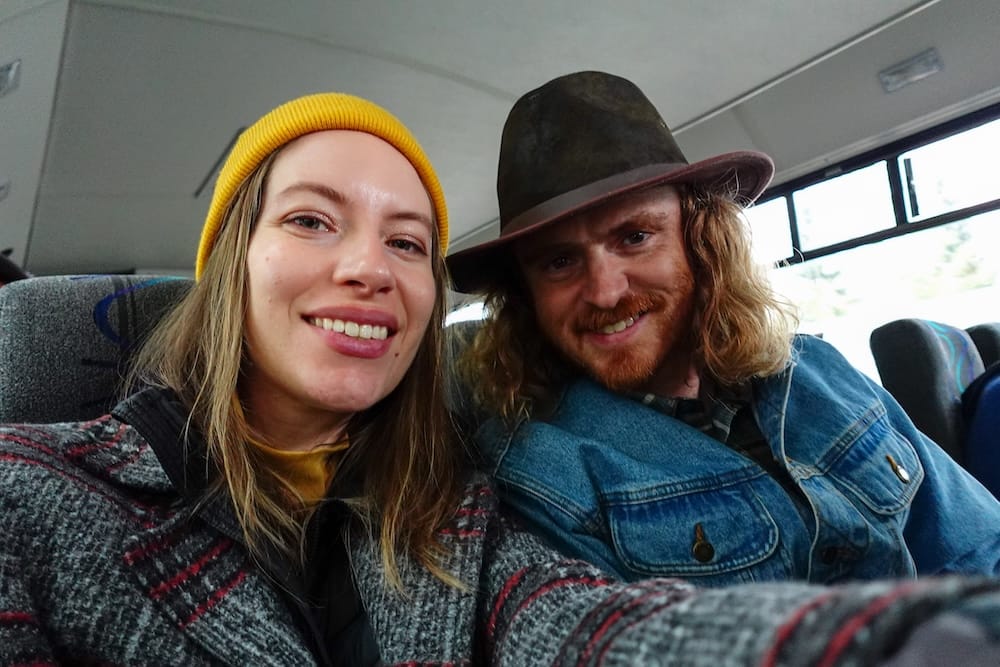
The clearest thing I can tell you about the tour side, because I actually lived through it, is what it means to hand the driving to someone else when the day goes sideways. Ours did. By the time we reached the Ice Explorer, a cool, cloudy morning had turned into a full snowstorm — low visibility, wind, snow coming in sideways. Someone else was responsible for getting that vehicle down the steep approach to the glacier in those conditions, and it wasn’t me. I’ve thought about that moment more than once since, because it’s the clearest illustration I have of what a guided tour actually buys you: somebody else absorbing the risk once the mountains stop cooperating.
The rest of the day had the ordinary texture of letting someone else handle it — our guide narrated the drive, gave us real-time context about the weather, and freed us up to just look at the scenery instead of watching the road. A tour along the same lines as the one we took is still bookable, and you can check current availability for a similar small-group tour from Banff if that appeals to you. Current small-group tours from Banff typically offer free cancellation, usually within 24 to 72 hours of departure, with fixed morning start times and group sizes commonly in the twenty-to-twenty-four passenger range for standard tours, smaller for private options. That flexibility matters if your plans are still loose when you book.
What Self-Driving This Route Actually Involves
I want to be careful here, because the parking stories I actually have on file aren’t from this road. On an older, self-funded family road trip through Alberta and British Columbia, we bought our own park pass, drove ourselves in and out of towns, and twice ran into real parking pressure — once at Moraine Lake, where every car ahead of us had been turned away before a few spots opened up and we nearly gave up and came back the next day, and once at Lake Louise, where we waited for someone to pull out before we could park. Both moments were real, and both are worth knowing about if you’re the kind of self-driver who assumes a parking lot will simply have space.
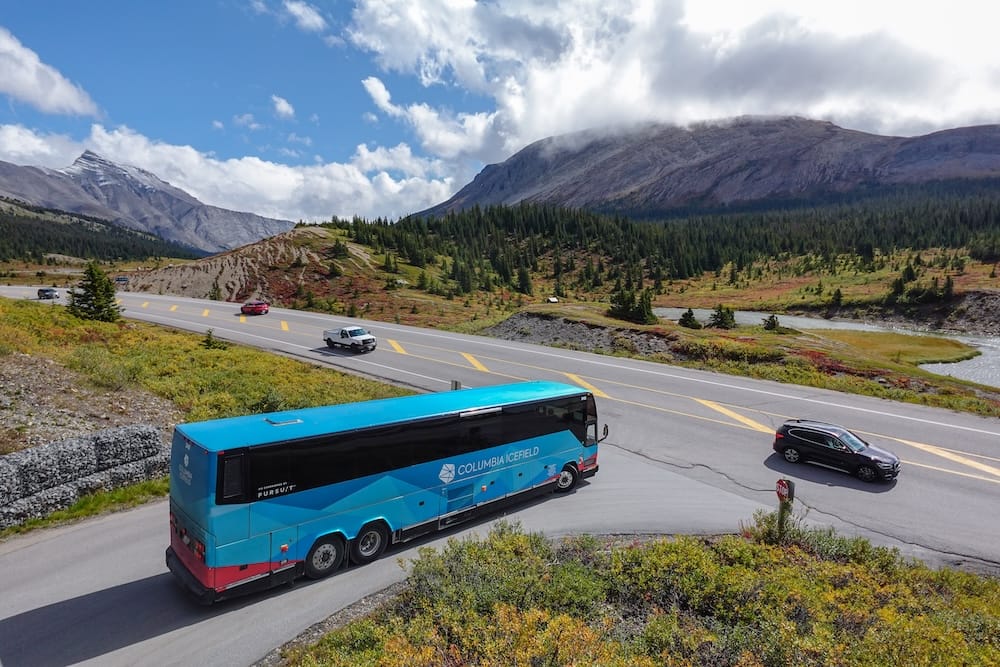
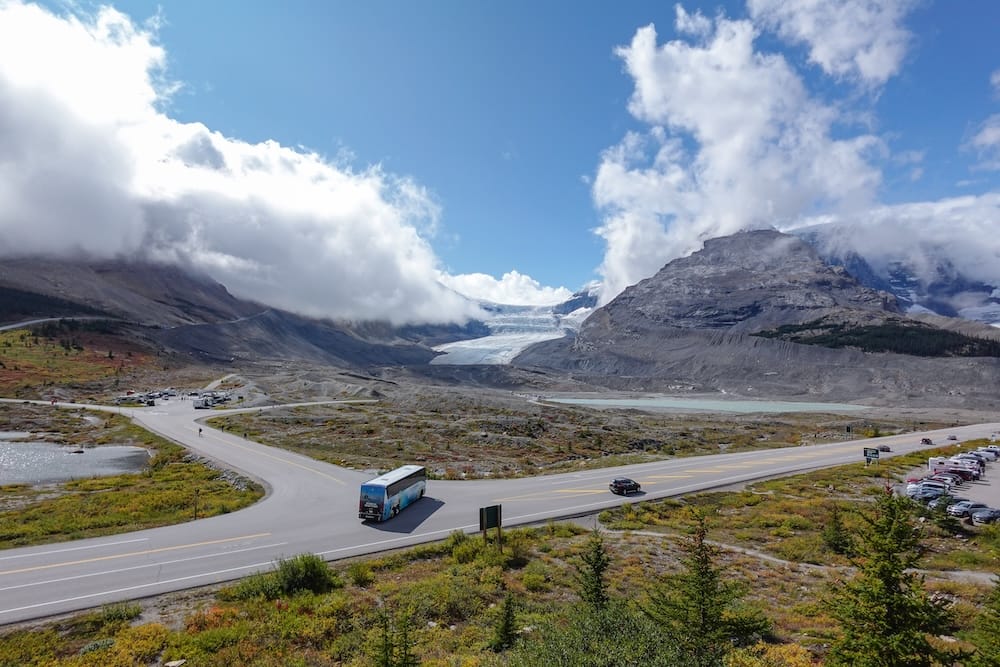
Neither one describes what you’d actually face on the Icefields Parkway itself, though, and the Moraine Lake story in particular is now out of date in a way that matters: personal vehicles have been permanently banned from Moraine Lake Road since 2023, so that specific scramble for a spot can’t happen there anymore, for anyone, no matter how early they arrive. Lake Louise still allows personal cars, with a lot that fills early in peak season, so that half of the old story still roughly holds. The road to Columbia Icefield is neither of those situations — it currently has ordinary roadside pull-off parking at its main stops, with no reservation or shuttle-only system in place. Self-drive specifically to the Icefield, and you won’t be walking into the parking gauntlet those older photos suggest, even though you might run into exactly that a little further down the Trans-Canada at Moraine Lake or Lake Louise on the same trip.
What self-driving this particular route does ask of you is a bit more planning around fuel and connectivity than a tour requires. Cell service on the Icefields Parkway is minimal to nonexistent outside a short stretch near the Icefield itself and around Saskatchewan River Crossing, and there’s exactly one gas station on the entire route. A guide deals with all of that on your behalf without you ever noticing it’s an issue. Driving yourself means filling up before you leave Lake Louise and downloading offline maps rather than counting on a signal to bail you out.
Which Format Actually Fits Your Trip
I keep coming back to something from a different trip entirely, because the reasoning behind it applies here even though the route doesn’t match. We once took a private, guided tour through Yoho National Park instead of self-driving it, specifically because we had a toddler and a grandparent along, and what we actually needed that day was someone else handling pace, meals, and stops so we didn’t have to. It isn’t a Columbia Icefield story. It’s the clearest version I have of the underlying logic: a guided format earns its cost when your group has real constraints on flexibility, patience, or who’s comfortable behind the wheel on an unfamiliar mountain highway.
| Guided Tour | Self-Drive | |
|---|---|---|
| Cost, solo or couple | ~$90–160/person, glacier included | ~$60/person transport + ~$100 glacier ≈ similar range |
| Cost, family of four | Same per-person rate regardless of group size | ~$30/person transport + glacier ticket — noticeably cheaper |
| Who drives | Guide handles it entirely | You do, including in bad weather |
| Timing | Fixed departure, set pace | Fully your call |
| Weather risk | Absorbed by the guide/operator | Yours to manage |
| Booking flexibility | Typically free cancellation, 24–72 hrs out | No cancellation to worry about — it’s your car |
| Parking on this route | Not your problem | Ordinary roadside pull-offs, no reservation system |
Put together with the numbers above, here’s how I’d actually think about it. If you’re traveling solo or as a couple, the price gap between the two options is small enough that it shouldn’t be what decides this for you — so decide instead on whether you’d rather spend the day managing a drive through remote, weather-exposed terrain or hand that over entirely, especially given how fast the weather turned on us. If you’re traveling as a family or a larger group, the math tilts more clearly toward self-driving, and the only real trade-off you’re giving up is the guide’s weather judgment and the fact that nobody in your car has done this specific drive before. And if anyone in your group would feel genuinely uneasy behind the wheel on a remote highway with no cell service and one gas station between two national park gates, weigh that more heavily than either the dollars or the distance.
We didn’t test both sides of this ourselves, and I won’t pretend otherwise. But between what actually happened to us in that snowstorm and what the numbers say about a family splitting a rental four ways, this decision has less to do with which option wins outright and more to do with a clear-eyed read of your own group, your own budget, and how much of the day you actually want to spend managing a mountain road you’ve never seen before.
Frequently Asked Questions
Is it cheaper to drive yourself or take a tour to Columbia Icefield?
It depends on your group size. For a solo traveler or a couple, once you add in the separate Ice Explorer ticket that self-drivers have to buy on arrival, the total cost lands close to what a mid-tier small-group tour already charges. For a family of four, self-driving works out noticeably cheaper per person, since the rental car, gas, and park pass are essentially per-vehicle costs rather than per-person ones.
Do I need to buy a separate ticket if I drive myself to Columbia Icefield?
Yes. A guided tour’s price typically includes the Ice Explorer or Skywalk admission, but if you drive yourself, that admission is a separate purchase once you arrive, generally running roughly $96 to $130 CAD per person.
Can I park my own car at Columbia Icefield, Bow Lake, or Peyto Lake?
Yes. Unlike Moraine Lake, where personal vehicles have been permanently banned since 2023, the Icefields Parkway stops relevant to this route currently use ordinary roadside pull-off parking with no reservation or shuttle-only system.
Is there cell service along the Icefields Parkway?
Cell service is minimal to nonexistent for most of the route, with a short stretch of coverage near the Icefield itself and around Saskatchewan River Crossing. If you’re self-driving, it’s worth downloading offline maps before you set out.
How many gas stations are there between Banff and Columbia Icefield?
Just one, at Saskatchewan River Crossing, roughly midway along the route. I’d fill up in Banff or Lake Louise before heading out rather than counting on it.
What does a guided tour actually take care of that self-driving doesn’t?
The biggest thing, in my experience, is weather risk. Our own tour hit a full snowstorm on the way to the glacier, and the driving through that was entirely the guide’s responsibility, not ours. A tour also handles navigation, the park pass, and gives you a guide narrating the drive.
Is a guided tour or self-driving better for families?
Self-driving tends to make more financial sense for larger groups, since the vehicle costs split more ways. That said, a guided or private tour can still be worth it if your group includes young kids, older relatives, or anyone who’d rather not manage a full day of driving and stops themselves.
This article is also available in Spanish. [Leé la versión en castellano: De Banff al Columbia Icefield: excursión de un día vs. en auto por la Icefields Parkway]
This article contains affiliate links. If you book through one of these links, I may earn a commission at no extra cost to you.