
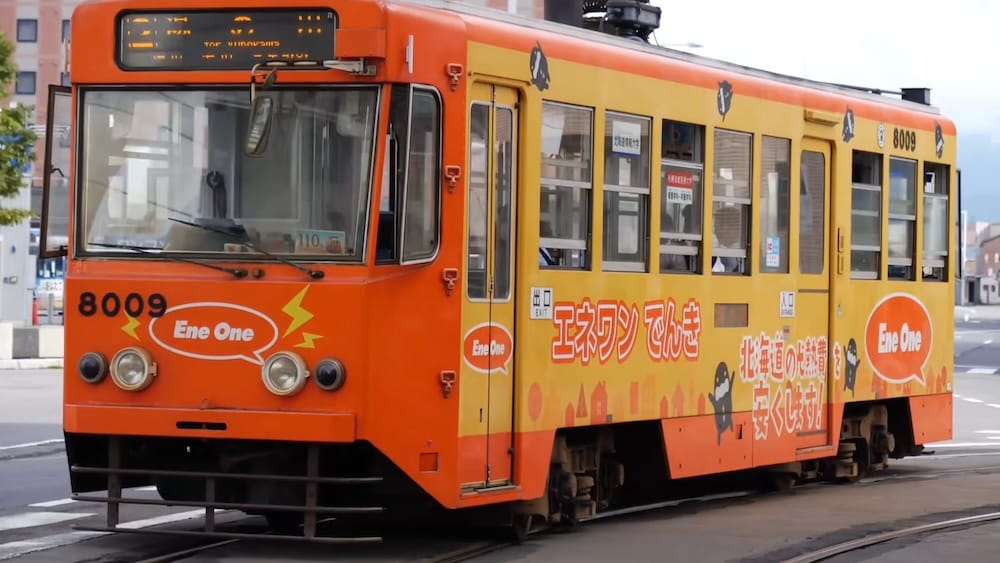
Hakodate’s tram will happily charge you ¥250 to ¥300 to deliver you at the moment you would have arrived on foot. The classic case is the station to the red brick warehouses. Once you’ve counted the wait for the tram and the walk from the stop at the other end, the ride and the walk come out about level, and the money is better spent on breakfast at the market. Other legs go the opposite way. Walking to Goryokaku would eat most of an hour, and the tram does it in about half that.
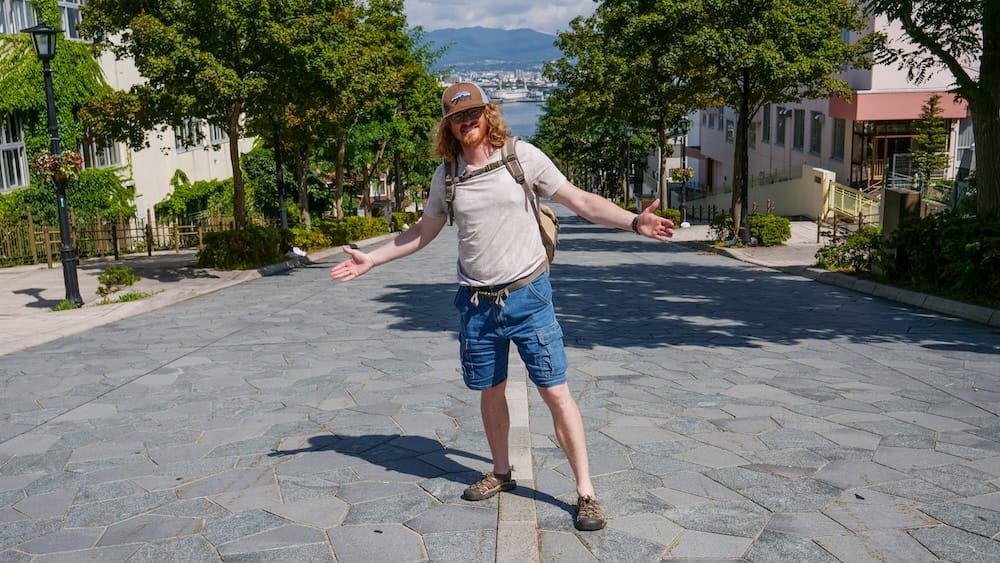
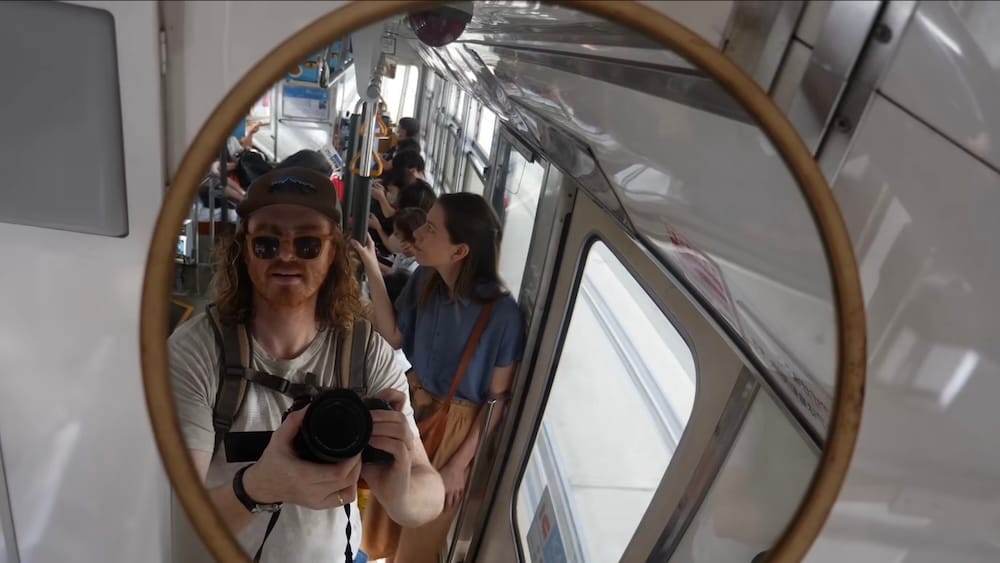
Audrey and I spent three days in Hakodate in a hotel away from the centre, with tram lines 2 and 5 running right past it. Most days we rode the tram to reach an attraction and then explored on foot, and it saved our legs for the hills. We never had a moment where we wished we’d done it the other way around. We didn’t time any of it, though, so the numbers below come from the current timetable and maps. They let me price each leg so you can decide which ones are worth a ride. Whether the city works on foot in general is a bigger question, and I’ve answered it in Is Hakodate Walkable?
The Hills the Tram Doesn’t Touch
The ropeway is the clearest example. From Hakodate Station it’s about five minutes on the tram to Jujigai and then an uphill walk of eight to ten minutes to the base station. Walking the whole way is roughly 2 km and 25 minutes, with the climb saved for the end. The tram covers the easy kilometre and a bit and leaves the slope exactly where it was. The Jujigai stop was moved about 70 metres toward the station in late 2024, so walking times quoted from the old stop can run a minute or so light.
That matches how it felt on the ground. The tram was cheap and it kept coming, and it let us keep our legs fresh for the hills, which is where the effort was. Hachimanzaka sits a few minutes from the Suehirocho stop, or about six from Jujigai, and it’s a proper climb, with stairs running beside the road. Audrey and I did it on a hot, humid day, and the heat had us grumbling that Rocky Mountain people need another week to adjust. The short distance told us very little about how tiring it would be.
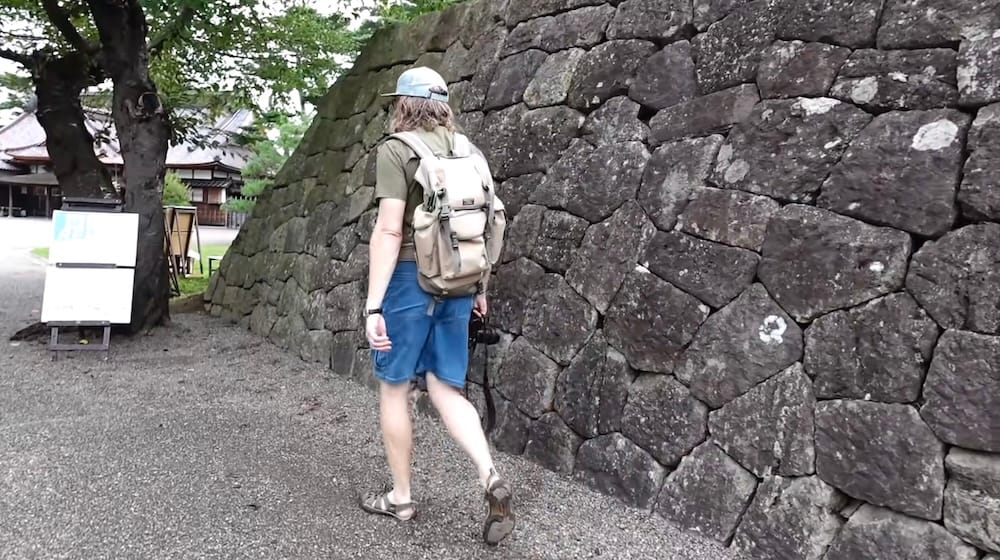
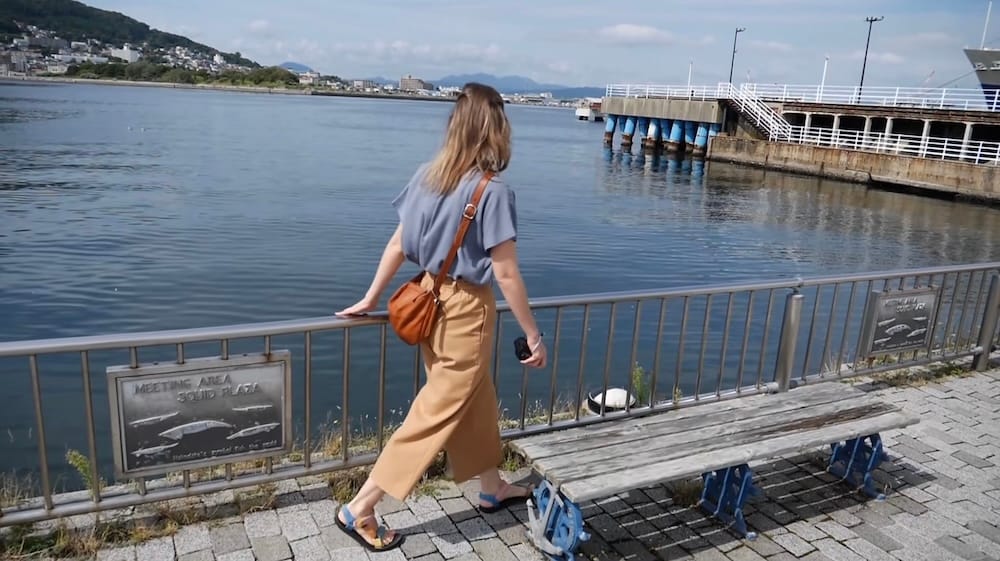
Coming back down was easier, and we did it on foot. After the Old Public Hall we walked down through Motomachi Park, which has harbour views, and it was a good way back to the waterfront before we picked up the tram again. If you can choose, I’d ride to the foot of a slope, climb it while you still have legs, and walk the descent.
The ropeway itself is a separate decision. We rode both ways, and the breeze at the top after the heat below felt like a reward. If you’d rather walk one direction, a one-way ticket is currently ¥1,200 against ¥1,800 return, and the trail between the base and the summit takes about an hour. We didn’t try it, so ask at the tourist information office by the base and dress for a hike. It’s also worth confirming the ropeway is running, because it shuts for maintenance for about three weeks every autumn, and in 2026 that window is October 20 to November 8. If you’d rather hand the leg-by-leg decisions to someone else, there’s a guided daytime walk that strings together the waterfront, Hachimanzaka, the Motomachi district and a ropeway ride at the end. It runs two to three and a half hours in private or small groups, and you can check current departures for the Historic Port Walk and Ropeway tour. I haven’t taken it, so I can’t tell you how it paces the hills.
Waiting for the Tram
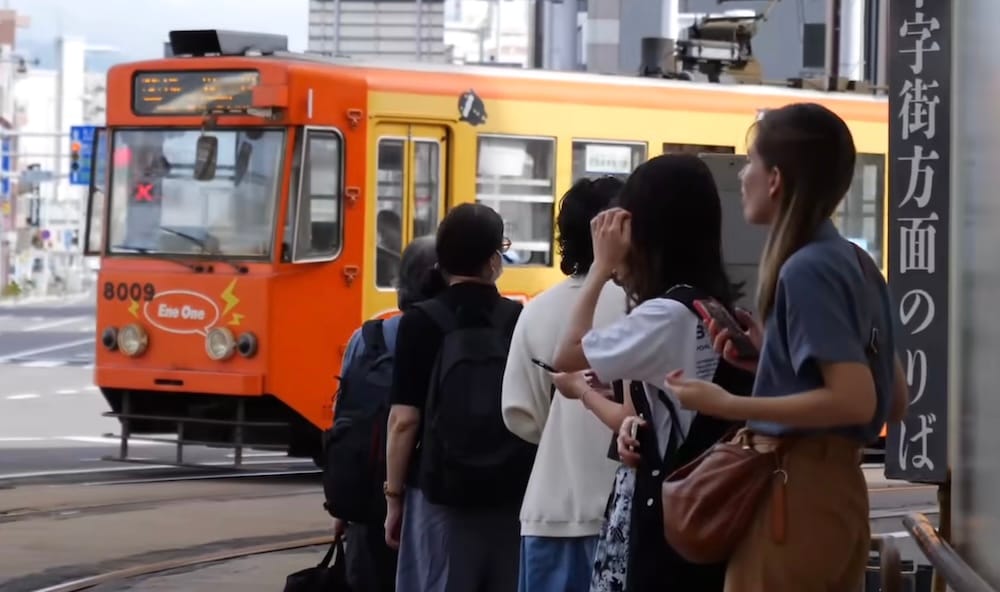
Waiting is the other half of the sum, and here I’d trust the current timetable over anyone’s memory of a trip, mine included. On the weekday timetable that took effect in May 2026, trams run about every eight minutes through the middle of the day on the shared stretch between Yunokawa and Jujigai. On each route beyond Jujigai it’s about every sixteen minutes. By late evening the gaps stretch to a quarter of an hour or more, which is when a short ride stops making sense. Weekends run on their own timetable, so if you’re there on a Saturday or Sunday, check the official timetable. It’s in Japanese but mostly numbers, and the same data feeds Google Maps, so a route search there will show you the next departures. Jujigai also has display boards with running information in English.
Beyond Jujigai the two routes part ways. Route 2 continues to Horai-cho, Aoyagi-cho and Yachigashira, while Route 5 goes to Suehirocho, Omachi and Dokku-mae. Everything before that point, including the station and Goryokaku-koen-mae, is served by both. Each route runs only every sixteen minutes on its own branch, which makes the average wait there about eight minutes. For a one-stop hop like Jujigai to Suehirocho, which is about three minutes of riding, that puts the total level with or behind walking. For Hachimanzaka I’d take whichever tram turns up first to Jujigai and walk the six minutes, rather than hold out for a Route 5.
Ride or Walk, Leg by Leg
Here are the legs a first-timer is most likely to weigh, priced for a weekday daytime. I’ve assumed you’ll wait half the gap between trams and walk at an ordinary pace, and the walking times shift by a few minutes depending on where you start and stop, so read every figure as an estimate. An adult ride costs ¥250 to ¥300 depending on distance, and fares went up in December 2025, so older guides quote less.
| Leg | On foot | Tram, door to door | Time saved | My call |
|---|---|---|---|---|
| Station to Kanemori warehouses | 15–20 min | 14–16 min (4 wait, 5 ride, 5–7 walk from Jujigai) | Little or none | Walk |
| Station to ropeway base | About 25 min | 17–19 min (4 wait, 5 ride, 8–10 uphill) | 6–8 min | Toss-up: ride if it’s hot or your legs are gone |
| Station to Goryokaku Park | 45–55 min | About 30 min (4 wait, 16–17 ride, 10 walk from the stop) | 15–25 min | Ride |
| Station to Yunokawa | Not a walk | About 30 min | n/a | Ride |
Kanemori is the leg I’d steer you away from paying for. The ropeway leg is a real coin toss, and I’d let the weather and how the day has gone decide it. Goryokaku is the easy call. The stop is on the shared stretch, so either route gets you there, and from it the park is about ten minutes on foot and the tower ten to fifteen. Audrey and I didn’t go to Yunokawa, so that last row is a ride time and not a recommendation.
If you’ve bought a day pass, currently ¥800 for adults, the fare drops out of the sum and you’re weighing only time and legs. Without one, the ¥250 or more is part of what you pay for a ten-minute saving.
When Heat, Rain or Tired Legs Change the Answer
Everything above assumes a decent day, and that’s not always the day you get. Heat and humidity raise the cost of walking without touching the timetable, which is why the ropeway leg tips toward the tram in summer. Tiredness does the same thing later on: a leg you’d gladly walk at ten in the morning can deserve a ride at four. Rain cuts both ways. The tram shortens your time out in it, but most stops are islands in the middle of the road and you wait in whatever the sky is doing. The rebuilt Jujigai and Suehirocho stops have shelter, but a sixteen-minute gap on the Route 5 branch in a downpour is still a long time to stand at one.
Winter I can’t speak to. The first snow arrives around November and can linger into April, and we only walked Hakodate in warm weather, so how the slopes and tram stops handle snow and ice is beyond what I can tell you.
If You’re Not a Fast Walker
We didn’t test any of this with a wheelchair, a stroller or a bad knee, so I can only describe how the system is set up. The operator recommends its low-floor cars for wheelchair users, and its timetable marks which trips use them, so it’s worth checking before you board whatever arrives. Jujigai and Suehirocho were rebuilt in late 2024 with ramps and shelter, though I’d confirm the stops on your own route with the operator. Hachimanzaka has stairs beside the road, as we found on the way up, and anyone who struggles with steps should plan around that slope. For a traveller like that, the tram’s value is in the effort it saves, and the ropeway’s one-way ticket looks better than the trail. If neither the stairs nor the timetable appeals, private guided tours are another way to see the same ground, and several are listed with pickup. I haven’t used one, so ask the operator about mobility before booking, and you can browse private guided tours in Hakodate to see what’s on offer.
Where I’d Draw the Line
My line is ten minutes. If the tram doesn’t save you at least that much door to door, walk, and if it does, ride. That’s a rule of thumb of my own and not a measurement, and you can move it. Heat, rain and tired legs pull it lower, and a downhill stretch with a view pushes it higher. Applied to Hakodate, it puts you on foot around the station, the market and the warehouses, on the tram for Goryokaku and Yunokawa, and making a call on the day for the ropeway climb. For Audrey and I, the tram did its best work getting us to the bottom of a slope with something left, and a rule that lets it do that and stays out of the way on the flat is the one I’d carry into your day.
Frequently Asked Questions
Is it worth taking the tram in Hakodate, or should you walk?
My rule is ten minutes: if the tram doesn’t save you at least that much door to door, walk, and if it does, ride. Heat, rain and tired legs pull that line lower, and a downhill stretch with a view pushes it higher.
Which legs in Hakodate are better on foot?
Around the station, the market and the warehouses. From the station to the Kanemori warehouses the walk takes 15 to 20 minutes, while the tram works out at about 14 to 16 minutes door to door once you count the wait, so it saves little or nothing.
Which legs in Hakodate are worth riding the tram for?
Goryokaku and Yunokawa. Walking from the station to Goryokaku Park would take roughly 45 to 55 minutes, while the tram is about 30 minutes door to door, which saves 15 to 25 minutes. Yunokawa is about 30 minutes by tram and not a walk, though Audrey and I didn’t go there, so that is a ride time and not a recommendation.
How often does the Hakodate tram run?
On the weekday timetable that took effect in May 2026, trams run about every eight minutes through the middle of the day on the shared stretch between Yunokawa and Jujigai, and about every sixteen minutes on each route beyond Jujigai. Evening gaps stretch to a quarter of an hour or more, and weekends follow a separate timetable, so check the official one before you plan around it.
Does the tram save you the climb to the Mt. Hakodate Ropeway?
No. From Hakodate Station it’s about five minutes on the tram to Jujigai, then an uphill walk of eight to ten minutes to the base station. The tram covers the flat part and leaves the slope where it was, and walking the whole way is roughly 2 km and 25 minutes.
How much does the Hakodate tram cost?
An adult ride costs ¥250 to ¥300 depending on distance, and fares went up in December 2025, so older guides quote less. A day pass is currently ¥800 for adults, and with one the fare drops out and you’re weighing only time and legs.
Is the Hakodate tram suitable if you’re not a fast walker?
I didn’t test it with a wheelchair, a stroller or a bad knee, so I can only describe how it’s set up. The operator recommends its low-floor cars for wheelchair users and marks those trips on its timetable, and Jujigai and Suehirocho were rebuilt in late 2024 with ramps and shelter, though I’d confirm the stops on your own route. Hachimanzaka has stairs beside the road, so anyone who struggles with steps should plan around that slope.
Which tram should you take to reach Hachimanzaka?
Take whichever tram turns up first to Jujigai and walk about six minutes, rather than hold out for a Route 5 tram. Only Route 5 stops at Suehirocho, and it runs about every sixteen minutes on its own branch.
This article is also available in Spanish. [Leé la versión en castellano: Caminar vs tranvía en Hakodate: ¿Cuándo conviene viajar?]
This article contains affiliate links. If you book through one of these links, I may earn a commission at no extra cost to you.