
Goryokaku gives you two ways to look at the same star-shaped fort: a free park you can walk from 5:00 a.m., and a tower that charges ¥1,200 to show it to you from 90 metres up. The usual advice is to do both, which is right if you’ve got the hours and no help at all when your plans have room for only one. So here’s my answer, and it may surprise you coming from someone who paid to go up the tower: if I could only do one, I’d pick the park.
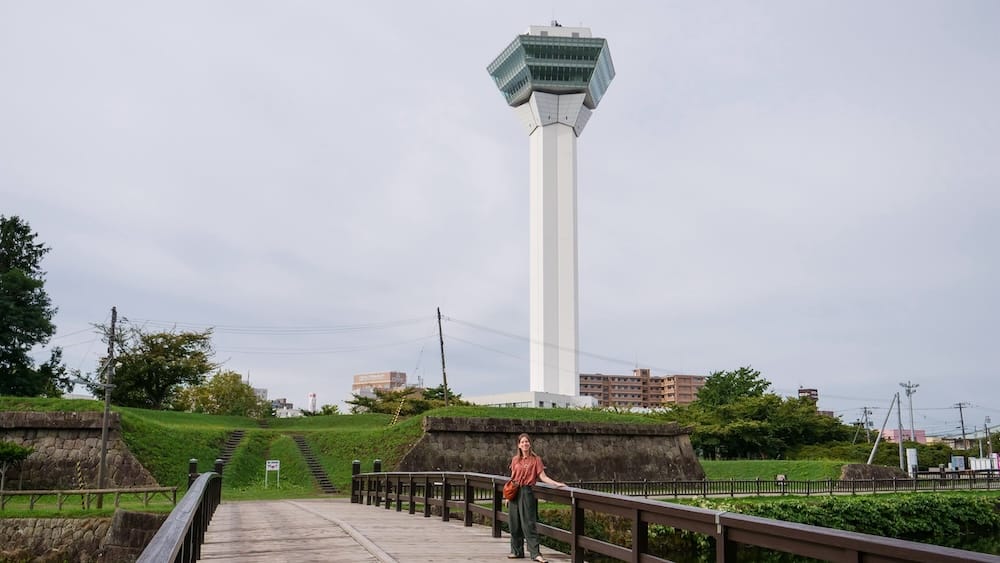
Audrey and I did both on the same morning. We walked the park first because we’d arrived before the tower opened, and then we were through the tower’s door at 9:01 on September 15, 2023, paying ¥1,000 each. That gives me a fair comparison, so below I’ll cover why I’d put the walk first, what the ticket actually buys, how the two stack up on the same terms and who can honestly skip the tower. If it’s the time budget you’re after, I worked that out in Is Goryokaku Worth It? How Much Time Do You Need?
Why I’d Pick the Free Walk
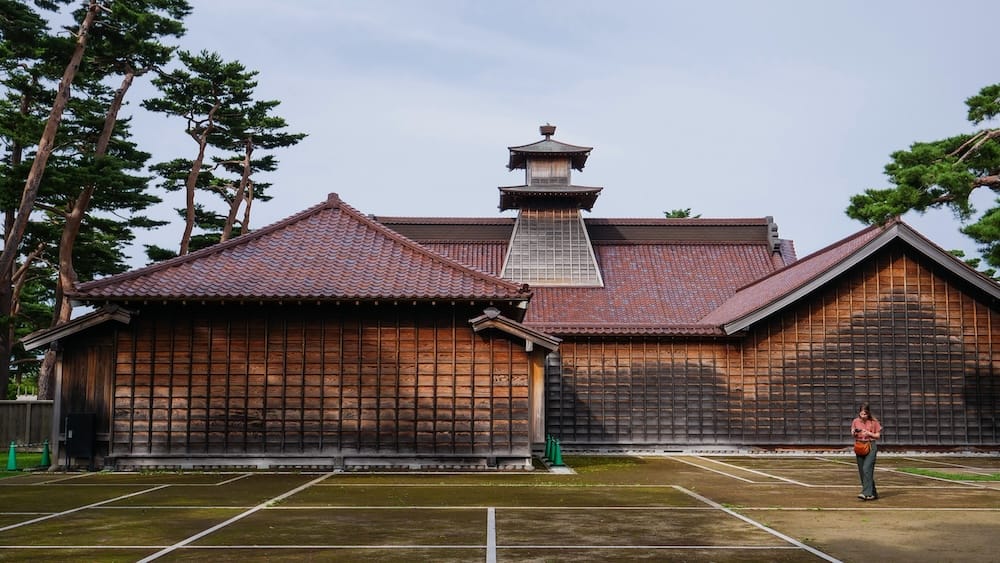
The park gave me a better sense of the place, both of what it was and of how it’s used today. It’s a five-pointed fort with moats and bridges, and on foot you feel the scale of it in a way a viewpoint can’t give you. In the middle we stood in front of the Magistrate’s Office, which was closed, so the outside is all I can describe, but the rooms that no longer stand are outlined on the ground around it, and that was enough to make the old footprint real. The architecture is incredible, the paths are great, and locals and visitors were enjoying it side by side. If push came to shove, that’s what decided it for me.
20:36 – Goryokaku Tower
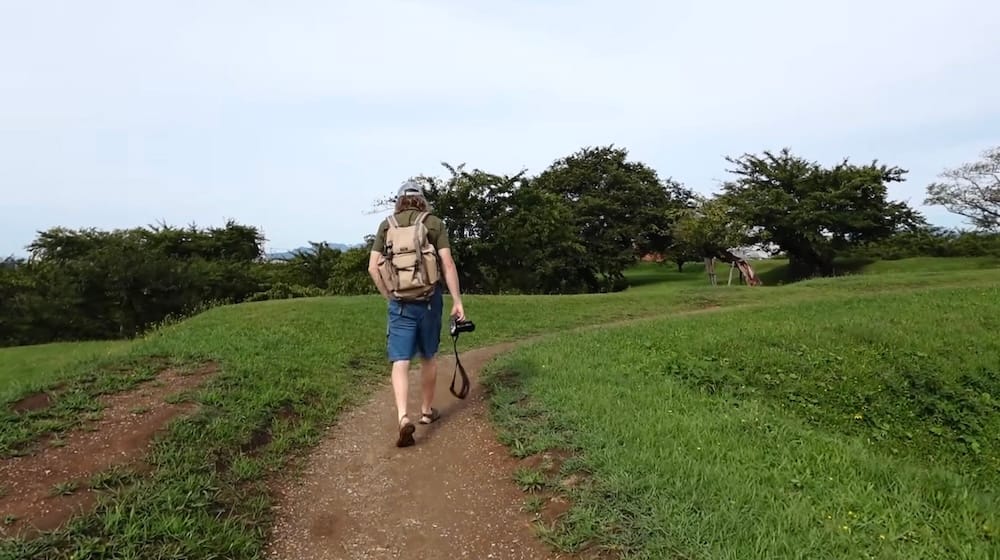
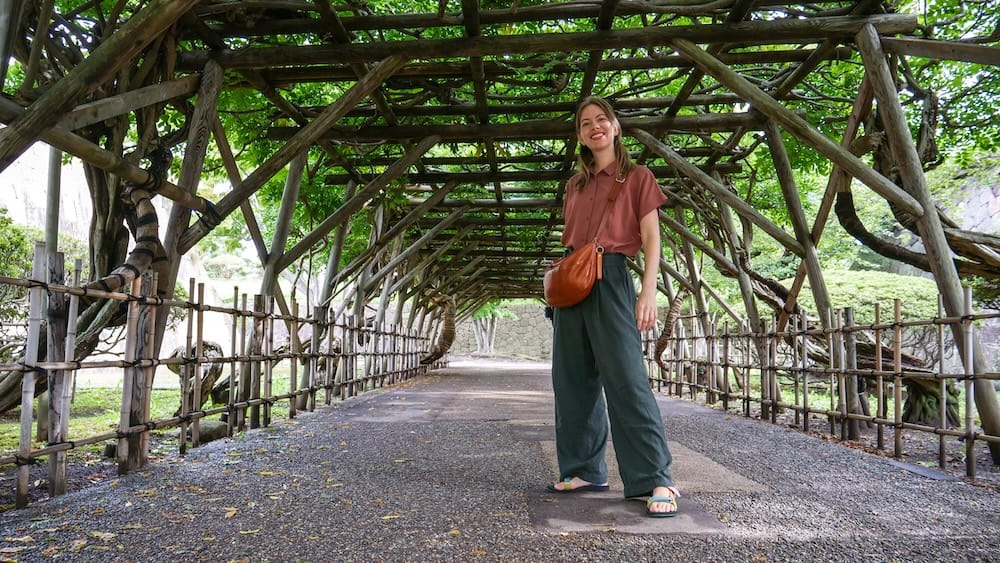
Up some steps we found what felt like a secret walking trail along the ramparts, with mountain views and a high look down over the moat. There are no guard rails, so mind your footing near the edge. The park was quiet when we arrived, started to get busy as we waited for the tower, and was certainly busier by the time we came back down, so if you want the local version, go early. That’s when you see people out exercising and heading off to work, and schoolchildren cycling to class.
It costs nothing. The grounds inside the moat are open from 5:00 a.m. until 7:00 p.m. between April and October, closing at 6:00 p.m. from November to March, and the outer loop around the moat is about 1.8 km, roughly half an hour at an easy pace.
What the Tower Shows That the Walk Can’t
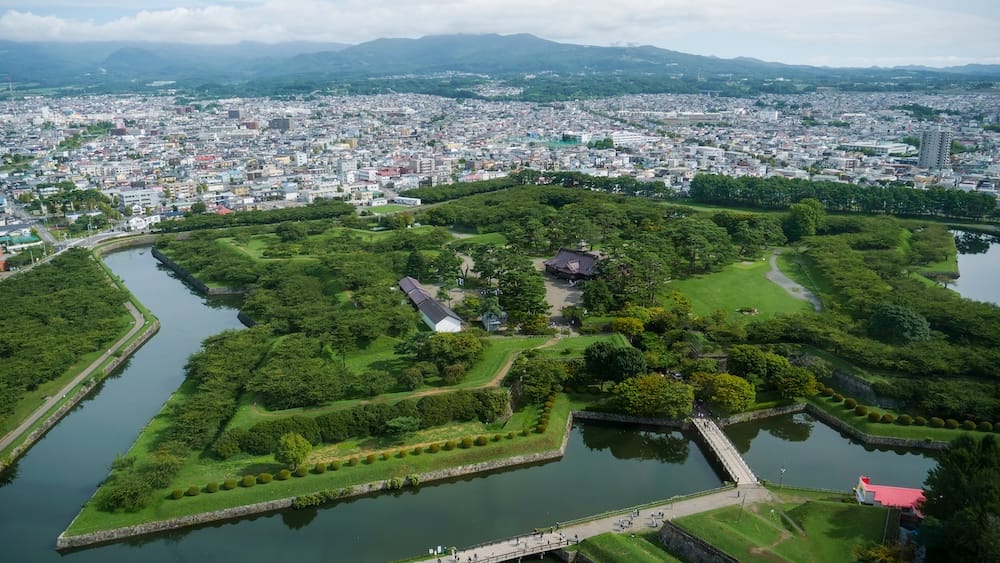
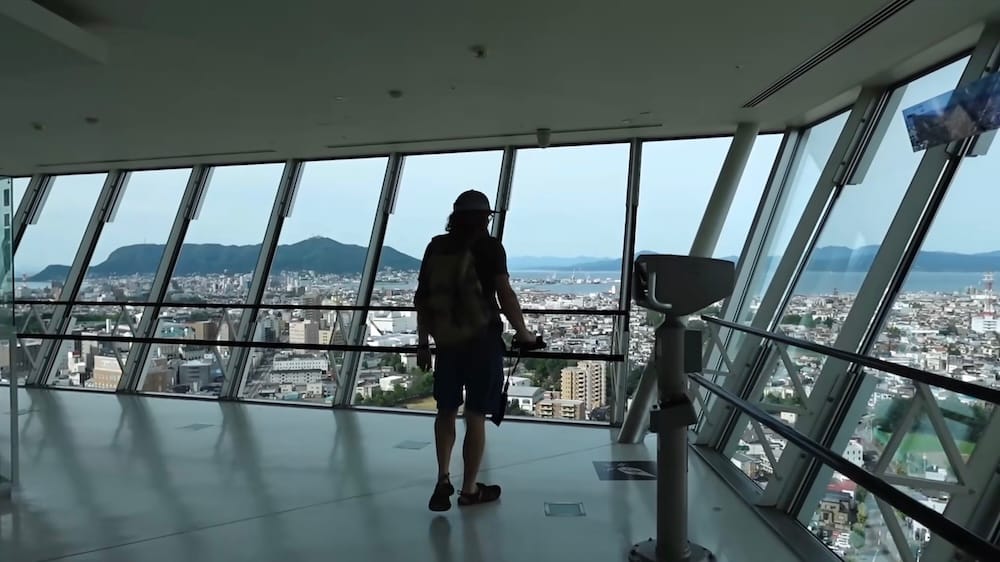
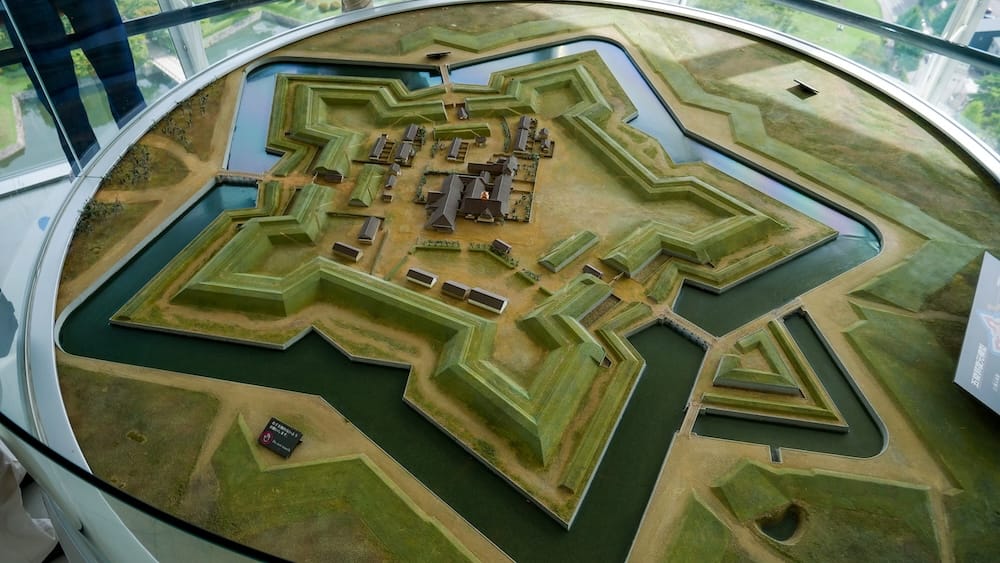
The star shape is the thing the ground can’t give you. We walked the park and never felt it, and then from the deck it was suddenly very obvious. That’s the main thing the ticket buys. I’d also gone up expecting the park and the fortress and got the harbour as well, the whole port, and a sense of how spread out Hakodate is, from a different angle than the Ropeway view I compared in Mt. Hakodate vs Goryokaku Tower. We were lucky with the weather: the sun came out and the sky was blue. On a very clear day the view reaches across the strait to the Shimokita and Tsugaru peninsulas in Aomori, which I can’t vouch for from our visit.
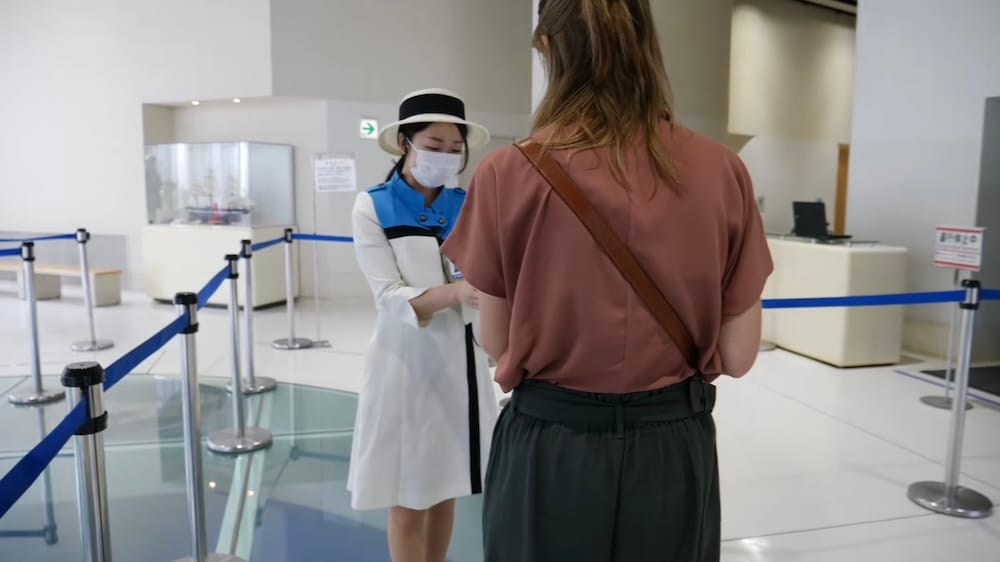
Admission is ¥1,200 for an adult, ¥900 for junior high and high school students and ¥600 for elementary school students, with younger children free. It’s open daily from 9:00 to 18:00, with the last ticket at 17:50. It was ¥1,000 when we went and rose to ¥1,200 in April 2025, so an older price on another page is out of date. A ticket is good for one entry, and once you leave the deck you can’t go back up.
There are two observation floors, at 86 and 90 metres, with room for about 500 people. The lower deck has a see-through floor, a gift shop and a cafe stand, and the upper deck holds a history gallery built around a 16-scene diorama. The lift takes about 30 seconds to climb, though it doesn’t serve the upper deck for the way down, so you leave from the lower one. To be honest, we mostly enjoyed the views and then the gelato on the way down, and I can’t tell you how the exhibits are.
That’s how I’d put the difference between the two. The park lets you walk through the history, and the tower explains it. If you want the story told, the gallery upstairs and the Magistrate’s Office interior are where that happens, and the park on its own won’t do it for you.
Free Walk or Paid View, Side by Side
Here are the two on the same terms.
| Variable | The park | The tower |
|---|---|---|
| Cost | Free | ¥1,200 adult (¥900 junior high and high school, ¥600 elementary, ¥600 with a disability certificate) |
| Hours | Grounds inside the moat 5:00 a.m.–7:00 p.m. (6:00 p.m. November–March) | 9:00–18:00 daily, last ticket 17:50 |
| Effort | Main paths are stepless gravel; the rampart trail has wooden steps | Lift up, lift down from the lower deck, one entry only |
| Weather | Open-air, so rain matters | Indoors; the view depends on how clear the day is |
| What you get | The place at ground level: moat, bridges, walls, the rampart trail, locals using it | The whole star shape, the harbour and the city, plus the history gallery |
| Crowds | Quiet early, busier later | The deck holds about 500 |
Neither side wins every row. The park takes cost, hours and feel, and the tower takes the one thing the park can’t give you.
Who Can Skip the Tower, and Who Shouldn’t
A budget traveller can skip the tower, but only if you’re truly counting yen. It’s ¥1,200 for a view that shows you something the park can’t, so I wouldn’t call it a luxury. Someone short on time who only wants the main attraction clusters in town can skip it as well, and in that case the park is the better use of a spare half hour. If you do go and you’re pressed for time, the tower alone is the quick version. I wouldn’t skip it if you want the history explained, since the gallery and the Office are where the park’s story gets told.
If you’d like that story told to you, and would rather not work it out as you go, there’s a private guided tour that runs about two and a half to three and a half hours, starts either at the fort or at the station (with the tram ride included if you begin there), and includes the tower’s observation deck and a visit to the Magistrate’s Office. That makes it a longer morning than the park and tower on your own. We haven’t taken it, so I can’t tell you how it paces things, and the listing is the place to check what the price covers, but if it sounds like your kind of visit you can compare start options and dates for the guided Goryokaku tour.
The practical side is friendlier than you might expect. The tower has lifts, a nursing room and a multipurpose toilet on the ground floor, and the park’s main paths are stepless, though the rampart trail has steps. I haven’t tried any of this with a pram, a wheelchair or a bad knee, so read that as how the place is set up and not how it went for us.
Paying Less
If the price is what’s holding you back, there’s one real way to bring it down, and it only works in particular cases. The Hakodate Special Ticket costs ¥3,700 and bundles a tram day-pass voucher with 12 points. The tower takes 4 of them, the Ropeway round trip takes 7, the Magistrate’s Office takes 2 and the Old Public Hall takes 1. The official example, a tram pass plus the Ropeway plus the tower plus the Old Public Hall, comes to ¥4,100 of use for ¥3,700. You can buy it without a reservation at the tourist information office inside JR Hakodate Station and a few other places, and it’s valid from April 2026 to the end of March 2027.
That saves about ¥400, but only if you also ride the Ropeway and use the tram pass. If all you want is the tower and a tram ride, the booklet costs more than it returns, so don’t buy it for that. There’s also a group rate of ¥1,080 for 30 or more people and a ¥600 rate with a disability certificate.
How I’d Spend the Money and the Morning
Walk the park, and go early if you can, because that’s when it feels like a local place and the paths are quiet. Then, if you’ve got ¥1,200 and half an hour spare, go up the tower once it opens at 9:00 and see the shape you couldn’t feel from the ground. Skip the tower if the money or the time says so, and don’t skip the park for anything. And if you’ve got the hours, do both, which is how we did it.
Frequently Asked Questions
Should I visit Goryokaku Park or Goryokaku Tower?
If I could only do one, I’d pick the park. It gave me a better sense of what the place was and how it’s used today, and it costs nothing. The tower is the add-on that shows the star shape, which we never felt from the ground, so if you have the time and ¥1,200, do both.
Is Goryokaku Park free?
Yes, the park is free. The grounds inside the moat are open from 5:00 a.m. until 7:00 p.m. between April and October (6:00 p.m. from November to March), and the outer loop around the moat is about 1.8 km, roughly half an hour at an easy pace.
How much does Goryokaku Tower cost?
Admission is ¥1,200 for an adult, ¥900 for junior high and high school students and ¥600 for elementary school students, with younger children free. It rose from ¥1,000 in April 2025, which is what we paid on September 15, 2023, so an older price on another page is out of date.
What does the Goryokaku Tower ticket get you?
Mainly the view. From the deck the star shape of the fort was very obvious, and we also saw the harbour, the whole port and how spread out the city is. The tower has two observation floors, at 86 and 90 metres, with the lower deck holding a see-through floor, a gift shop and a cafe stand and the upper deck a history gallery. We mostly enjoyed the views and the gelato on the way down.
Can you go back up Goryokaku Tower after you leave the deck?
No. A ticket is good for one entry, and once you leave the deck you can’t go back up. The lift doesn’t serve the upper deck on the way down, so you leave from the lower one.
Who can skip Goryokaku Tower?
A budget traveller can skip it, but only if you’re truly counting yen. Someone short on time who only wants the main attraction clusters in town can skip it as well. I wouldn’t skip it if you want the history explained, since the tower’s gallery and the Magistrate’s Office interior are where the park’s story gets told.
Is there a way to pay less for Goryokaku Tower?
There’s one real option, and it only works in particular cases. The Hakodate Special Ticket costs ¥3,700 and bundles a tram day-pass voucher with 12 points, with the tower taking 4 and the Ropeway round trip 7. It saves about ¥400 only if you also ride the Ropeway and use the tram pass, so don’t buy it for the tower alone. There’s also a group rate of ¥1,080 for 30 or more people and a ¥600 rate with a disability certificate.
Are Goryokaku Park and Goryokaku Tower accessible?
The tower has lifts, a nursing room and a multipurpose toilet on the ground floor, and the park’s main paths are stepless gravel, though the rampart trail has wooden steps. I haven’t tried any of this with a pram, a wheelchair or a bad knee, so read that as how the place is set up and not how it went for us.
This article is also available in Spanish. [Leé la versión en castellano: Parque Goryokaku vs Torre Goryokaku: ¿Caminata gratis o vista paga?]
This article contains affiliate links. If you book through one of these links, I may earn a commission at no extra cost to you.