
Hakodate turned out to be one of those cities where the word walkable needs a bit of explanation. We loved exploring it on foot and spent a huge portion of our visit walking, yet I would not recommend looking at a map, seeing a relatively modest-sized Japanese city and deciding you can simply walk everywhere from morning until night.
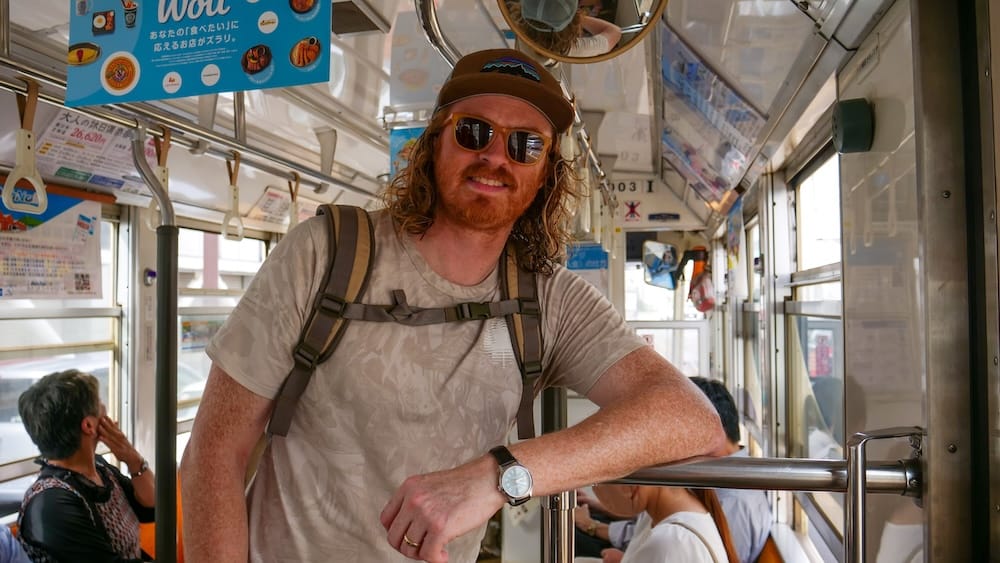
The attractions are spread across several distinct areas. Hakodate Station and the Morning Market form one cluster, the waterfront leads toward the Bay Area, Motomachi climbs the hills beneath Mt. Hakodate, and Goryokaku sits well away from all of that. Once we reached each area, walking was usually exactly how we wanted to explore it. Getting between those areas was another matter.
Our solution was wonderfully uncomplicated: we used the tram for the longer jumps and saved our legs for the walking that was actually part of the sightseeing. Lines 2 and 5 both passed near where we were staying, which mattered because our accommodation wasn’t particularly close to many of the attractions we wanted to visit.
We didn’t rent a car, and there wasn’t a moment during our central Hakodate sightseeing when I regretted that decision. We also didn’t use local buses extensively, although buses have some genuine advantages for specific routes. For a first trip concentrated around Hakodate’s main attractions, I would still build the transportation plan around walking and the tram, then bring buses or a rental car into the equation only when your itinerary gives them a clear job.
How We Actually Got Around Hakodate
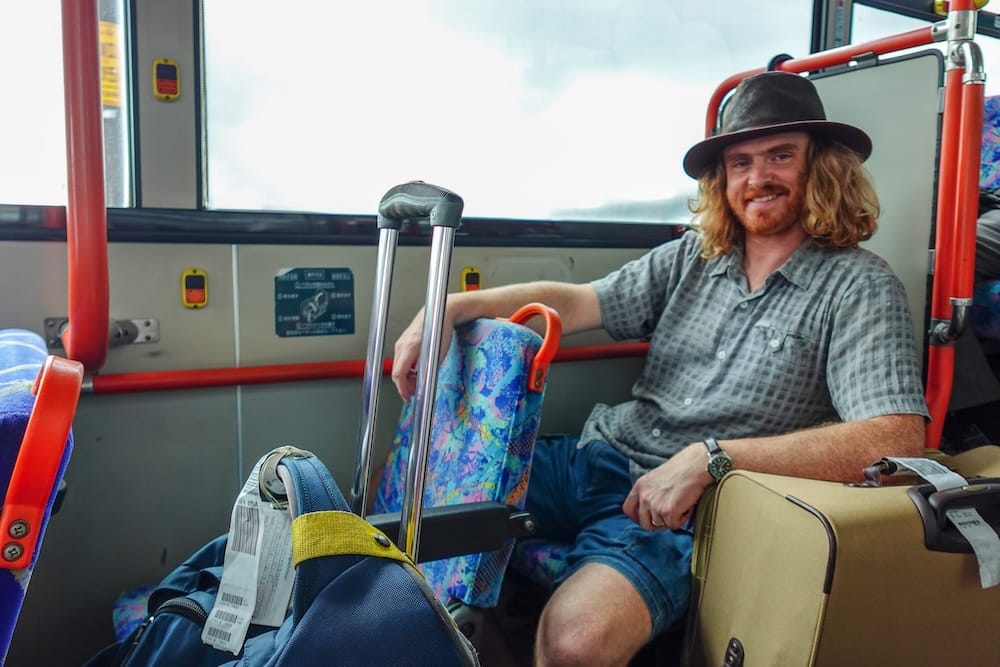
Our Hakodate trip was part of a longer Hokkaido journey, so transportation was already part of the story before we started sightseeing. We arrived from Tokyo by Shinkansen at Shin-Hakodate-Hokuto, which is an important distinction because the bullet train does not terminate at Hakodate Station in the centre of the city. We continued into Hakodate by bus.
At the end of our stay, we went the opposite direction in another sense, leaving Hakodate by JR for Noboribetsu as we continued across Hokkaido. Between those two longer-distance journeys, though, our daily transport inside Hakodate was remarkably simple. We walked a lot and took the tram whenever the distance between sightseeing areas wasn’t worth doing on foot.
That balance suited Hakodate particularly well because the city can feel compact while you’re inside one neighbourhood and surprisingly stretched out once you start connecting everything together. Looking down from Mt. Hakodate also drove home just how much city there was beyond the small historic and waterfront pocket we had been exploring.
If your hotel is close to the waterfront, Station area or Motomachi, your own balance may tilt more heavily toward walking. We were staying farther out, so having tram lines 2 and 5 close to our accommodation was extremely useful. If I were choosing a similar location again, proximity to the tram would be one of the first things I’d check.
Walking Is Best Once You’re in the Right Part of Hakodate
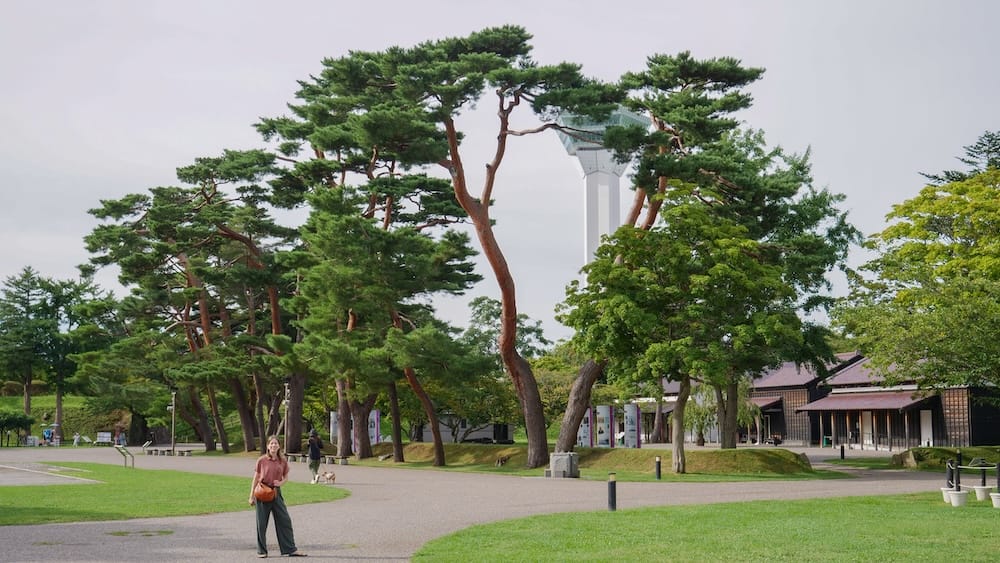
The fact that we used the tram frequently shouldn’t give the impression that Hakodate is a poor walking city. I thought the opposite. Once we reached an area we wanted to explore, being on foot was often the best part of the day.
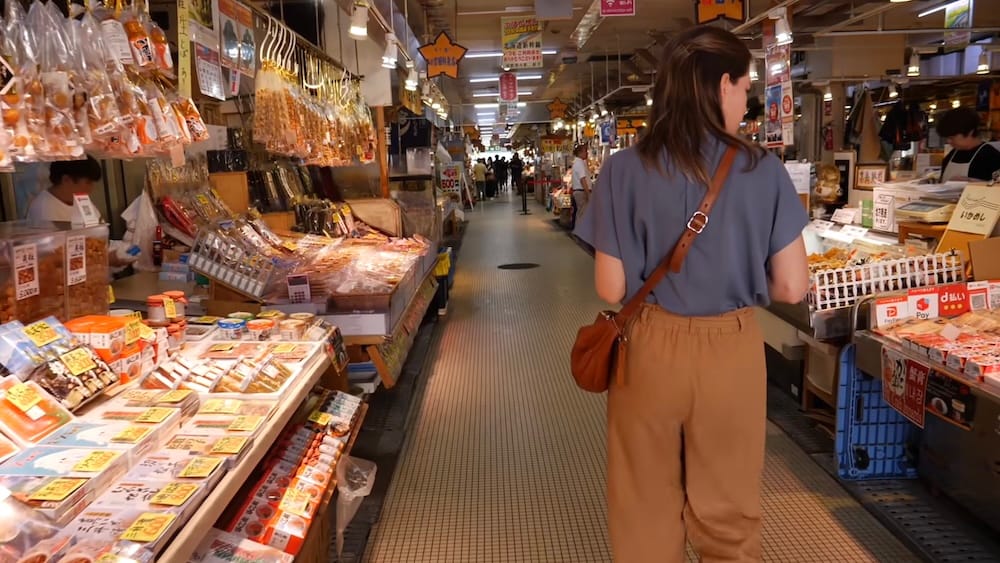
Around Hakodate Station, for example, the Morning Market is only a couple of minutes away. From there, the harbour and waterfront naturally pull you farther west. We wandered around without much of a plan and ended up discovering the Mashu-maru, the former railway ferry that is now a museum ship. It became one of our favourite unexpected stops in Hakodate, and it was exactly the sort of place we might have missed if we’d been treating every attraction as a point to drive between.
We continued through the port area toward the Kanemori Red Brick Warehouses, and this whole side of Hakodate made sense on foot. There are shops, old buildings, harbour views and smaller details connecting the bigger attractions. Walking wasn’t merely how we moved between them; it was part of seeing the city.
The same was true in Motomachi, although the physical experience was very different.
Motomachi Is Walkable, but You’ll Feel the Hills
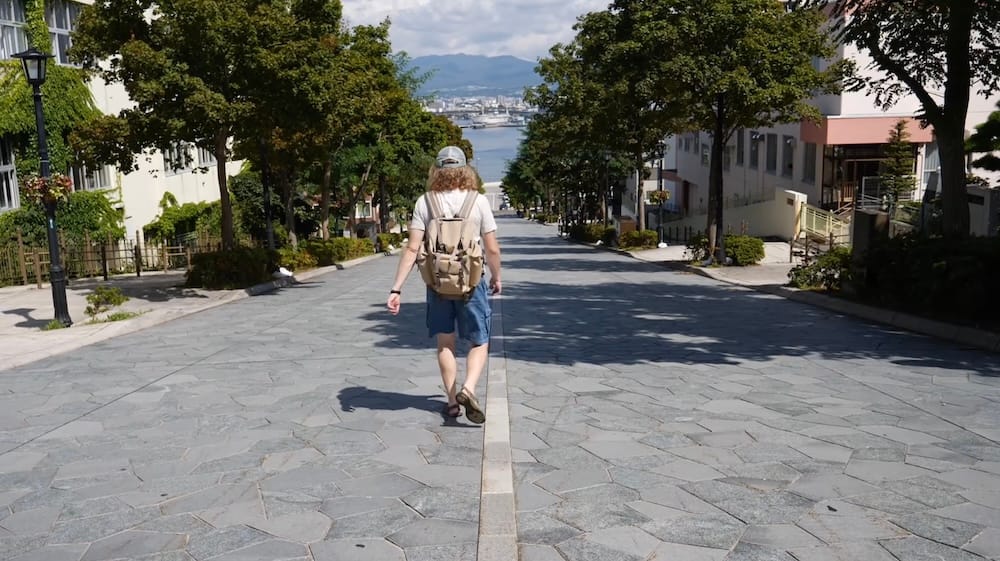
Motomachi rises sharply from the waterfront toward Mt. Hakodate, so this isn’t flat urban wandering. We climbed Hachimanzaka on a hot, humid day and definitely felt the effort. By the time you’re already several hours into sightseeing, those slopes have a way of reminding you that every unnecessary kilometre earlier in the day also counted.
The climb was worth it. We had no desire to skip Motomachi’s hills, churches and elevated harbour views simply because they required some effort, but that made me appreciate the tram even more. I would much rather spend my legs on Hachimanzaka than use them walking a long, ordinary stretch of city just to reach Hachimanzaka.
Later, coming back downhill through Motomachi Park toward the waterfront felt like the natural continuation of the sightseeing rather than transportation in the boring sense.
That’s the distinction I’d keep in mind when planning Hakodate: walking is excellent inside its main sightseeing areas. You don’t necessarily gain much by insisting on walking every gap between them.
Why the Tram Worked So Well for Us
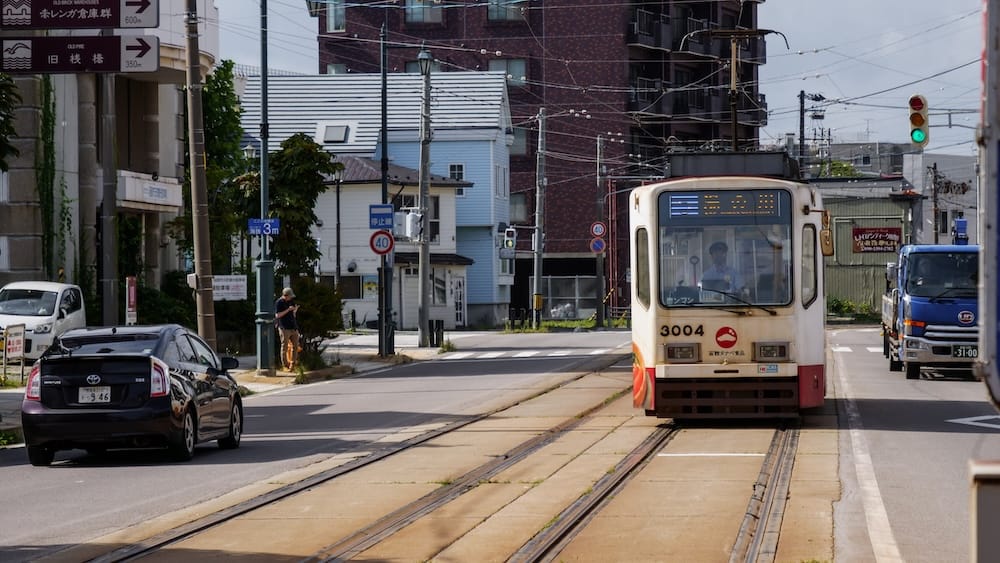
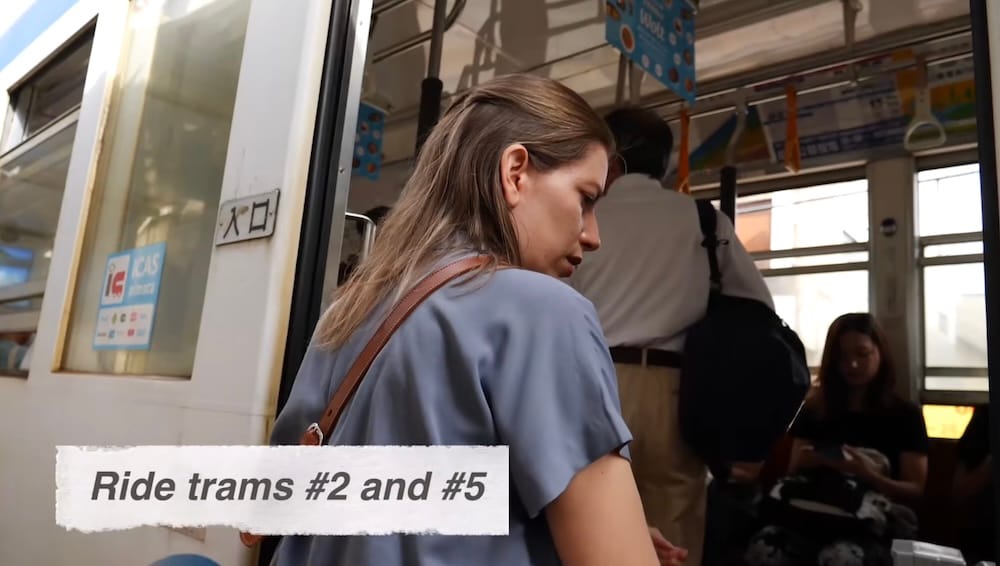
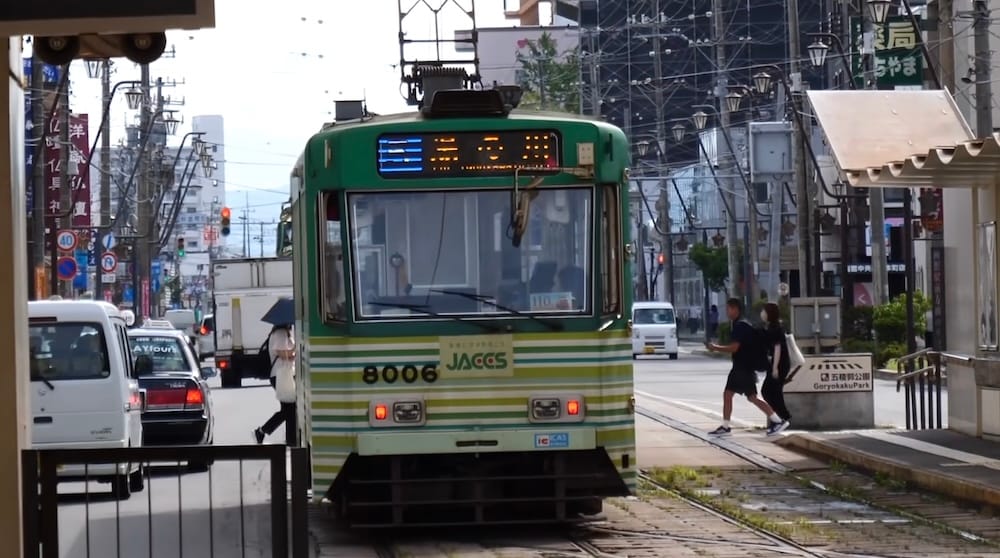
Hakodate’s tram became our default whenever the distance was long enough that walking felt wasteful. There are two routes, numbered 2 and 5, and they share the main corridor through much of the city before splitting west of Jujigai. That shared section connects useful visitor areas including Yunokawa, Goryokaku-koen-mae, Hakodate Station and the western sightseeing districts.
From a visitor’s perspective, I liked that the system wasn’t intimidating. After navigating transit systems in much larger Asian cities, Hakodate’s trams felt refreshingly straightforward. There are only two lines to get your head around, and because both served the stop near our accommodation, we could often use whichever one arrived first for the shared portion of the route.
They also have some character. I liked the slightly old-fashioned, rustic feel of riding them through the city. They reminded me a little of Hong Kong’s trams, minus the double-decker setup and the sheer intensity of Hong Kong around them.
The practical details are fairly easy too. Adult fares are currently distance-based, ranging from ¥250 to ¥300. You can use major nationwide IC cards such as Suica, PASMO and Kitaca, tapping when you board and again when you get off.
There is also an ¥800 one-day tram pass and a ¥1,130 24-hour tram pass, along with combined tram-and-bus passes. I wouldn’t turn a general Hakodate trip into a spreadsheet exercise unless the savings actually matter to you. If you’re expecting several rides, check the current pass options; if you’re only hopping on a couple of times, paying as you go keeps things simple.
Timetables can change, and Hakodate has revised its tram schedule relatively recently, so I’d also avoid building your itinerary around an old blog post promising a specific tram every X minutes. Service is frequent enough during the day for normal sightseeing, but check the current timetable when you’re making a connection that you can’t afford to miss.
For us, the real value was never the fare or the novelty of the tram anyway. It was arriving in another part of Hakodate with enough energy left to enjoy it.
When the Bus Is More Useful Than the Tram
We didn’t rely heavily on buses for sightseeing, so this is one area where our trip doesn’t give me the same firsthand comparison I have with walking and the tram. Still, current routes make it clear that buses can be the better tool for certain point-to-point trips.
Goryokaku is probably the best example. From Hakodate Station, direct buses can reach the Goryokaku Tower area in roughly 15 minutes. The tram takes around 17 minutes to Goryokaku-koen-mae, but from there you’re looking at another walk of roughly 13 minutes to the tower.
That wasn’t enough to bother us. We were going there to walk around Goryokaku Park anyway, so arriving with another short walk built into the journey was hardly a crisis. Someone trying to reduce walking, travelling with limited mobility or simply working with a tighter schedule might quite reasonably prefer the bus.
There are also bus connections serving the Mt. Hakodate Ropeway area, and some sightseeing routes operate seasonally around places such as Motomachi, the Bay Area and Goryokaku.
I see the two systems as serving slightly different planning styles. The tram is the easier default network to understand. Buses become interesting once you have a specific destination and discover that a particular route gets you substantially closer to it.
If I were visiting Hakodate again, I’d still start by looking at the tram and then check the bus whenever the tram leaves an inconvenient last walk.
If the part you dislike is not public transport itself but figuring out how to string Hakodate’s scattered areas together, there are also guided options. One current private Hakodate tour with a local guide can be arranged around public transport or a private-vehicle option, covering places such as the waterfront, Mt. Hakodate, Morning Market, Motomachi and Goryokaku. We didn’t take this tour, but it addresses a different problem from the tram itself: somebody else handles the route planning while you concentrate on the sightseeing.
Do You Need a Rental Car in Hakodate?
We didn’t rent one, and for the trip we took, I don’t think we needed one.
Our itinerary included the waterfront, Morning Market, Motomachi, Mt. Hakodate, museums, Goryokaku and a lot of wandering between smaller attractions. Trams and walking covered those plans well, and once we reached most of those areas, we wanted to be on foot anyway.
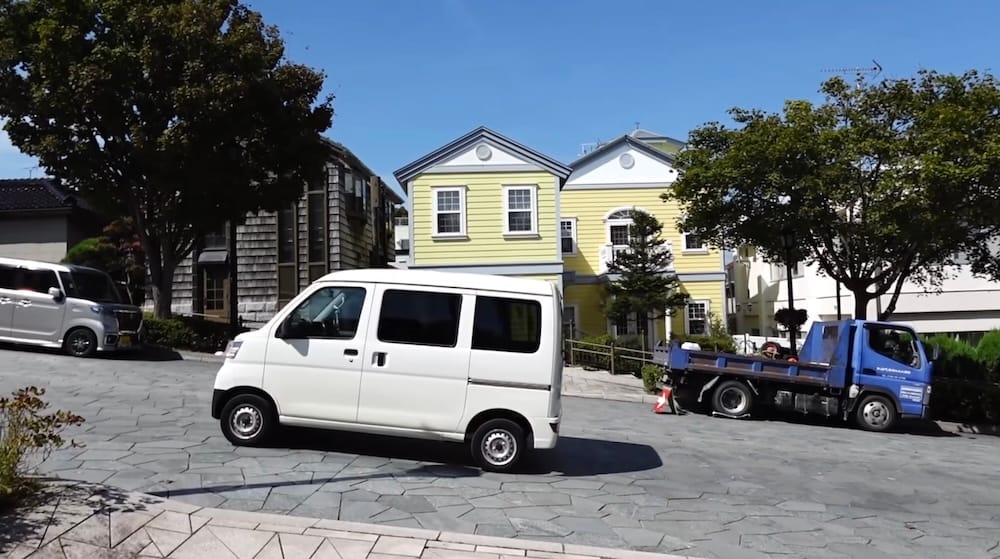
I also wouldn’t make the lazy argument that driving in Hakodate is awful or that there’s nowhere to park. There is municipal tourist parking around major sightseeing areas including Motomachi and Goryokaku, plus parking near the base of the Mt. Hakodate Ropeway. Central Hakodate isn’t some impossible motoring puzzle.
For me, the more relevant question is what the car is adding. If you’re renting a vehicle mainly to drive between places already well served by trams, buses and walking, you’ve added rental pickup, parking and driving to solve a transportation problem that may not exist.
The Rental-Car Calculation Changes Outside Central Hakodate
This is where I would stop generalizing from our own trip, because Hakodate Municipality extends far beyond the compact sightseeing core we explored.
The Hakodate Jomon Culture Center is a good example. From Hakodate Station, public transport currently involves roughly an 80-minute bus journey followed by around a 10-minute walk, whereas driving takes closer to 50 minutes.
The Ofune archaeological site stretches that contrast further: roughly 100 minutes by bus plus a short walk compared with about an hour by car.
We didn’t visit either site, so I can’t tell you what those drives feel like or whether I personally think the attractions justify renting a vehicle. What the numbers do show is where the transportation equation begins changing. Once you’re building an itinerary around outer Hakodate rather than the central sightseeing districts, a rental car starts buying you meaningful time and flexibility.
If that sounds closer to your itinerary, you can compare current car rentals in Hakodate before deciding whether the time saved outside the centre justifies having a vehicle for part or all of your stay.
Even then, having a car doesn’t mean unrestricted access everywhere. Mt. Hakodate, for example, has seasonal and time-based private-vehicle restrictions, and the mountain road closes to private and rental cars during the winter closure period.
So my own no-car experience shouldn’t be read as “nobody needs a car in Hakodate.” We didn’t need one for our Hakodate.
Your Hotel Location Matters More Than You Might Expect
Our accommodation wasn’t particularly close to most of the attractions we visited, but being near tram lines 2 and 5 rescued the location from becoming annoying.
That’s why my simplest accommodation-and-transport advice is this: if you’re staying outside one of Hakodate’s main sightseeing areas, try to stay near a tram line.
Being “a bit farther out” doesn’t matter much if you can walk a couple of minutes, board a tram and reach the city areas you want to explore. A hotel that appears closer on a map can be less convenient if every outing begins with an awkward walk to transport.
Different bases naturally produce different trips. Around Hakodate Station, you’re well positioned for the Morning Market and onward rail connections. The Bay Area and Motomachi make western Hakodate much easier to explore on foot. Goryokaku and Yunokawa put you in quite different parts of the tram corridor.
I wouldn’t chase one universally perfect neighbourhood. I’d look at the journeys you’ll repeat every day from the hotel and ask whether they seem easy. If you’re still choosing a base, it makes more sense to compare Hakodate hotels on a map and check their relationship to the tram line than to pick purely on the straight-line distance to one attraction.
Tram, Walking, Bus or Rental Car: Which One Fits Your Trip?
For most first-time visitors focusing on Hakodate’s main sights, I’d make tram + walking the starting point rather than trying to pick one transport mode for the entire trip.
| Transport | Where it works best | Main advantage | Main drawback |
|---|---|---|---|
| Walking | Morning Market, waterfront, Motomachi and individual sightseeing areas | You see more of the city and can explore spontaneously | Hills, weather and long distances between districts can wear you down |
| Tram | Moving between Hakodate’s main central sightseeing zones | Simple network that pairs extremely well with walking | Some attractions still require a walk from the stop |
| Bus | Specific direct journeys such as Station-to-attraction connections | Can reduce last-mile walking | Routes take more planning and some sightseeing services are seasonal |
| Rental car | Outer Hakodate and dispersed itineraries | Saves time and gives much greater geographic flexibility | Often unnecessary for a central-city trip and adds rental/parking logistics |
If I returned and followed a similar itinerary, I wouldn’t change much. I’d still use the tram to cover the uninspiring distance, get off in the part of Hakodate I actually wanted to see and then start walking.
That approach gave us the best of the city without turning the trip into an endurance test. After sweating our way uphill in Motomachi, I was perfectly happy to let the tram do some of the work.
Frequently Asked Questions
Is Hakodate easy to get around without a car?
Yes, for the central sightseeing trip we took. We relied mainly on walking and the tram, using public transport for the longer gaps and exploring individual areas on foot.
Is Hakodate walkable?
Hakodate is very enjoyable to explore on foot once you are in the right area, especially around the Morning Market, waterfront and Motomachi. The city is spread out enough that walking every gap between districts can become tiring.
How much does the Hakodate tram cost?
Adult tram fares currently range from ¥250 to ¥300 depending on distance. The article also notes an ¥800 one-day tram pass and a ¥1,130 24-hour tram pass.
Should you take the tram or bus to Goryokaku?
Both work, but they solve slightly different problems. The tram is simple to use, while a direct bus from Hakodate Station can reduce the final walk to the Goryokaku Tower area.
Do you need a rental car in Hakodate?
We did not need one for our central Hakodate itinerary. A rental car becomes more useful when your plans extend into outer Hakodate, where some public-transport journeys take considerably longer.
Where should you stay in Hakodate for easy transport?
If you are not staying in one of Hakodate’s main sightseeing areas, I would prioritize being near a tram line. That can make a farther-out hotel much easier to use day after day.
This guide is also available in Spanish. [Leé la versión en castellano: Cómo moverse por Hakodate: tranvía, caminata, colectivo o auto de alquiler]
This article contains affiliate links. If you book through one of these links, I may earn a commission at no extra cost to you.