
Yondaime was the first Hakodate shio ramen Audrey and I ate and, as best I remember, the first salt ramen we’d had that was actually labelled as salt. At the time we thought it was very good ramen. Looking back from a few years on, it’s a pretty standard ramen experience, and I mean standard by Japan’s standards, which is a high bar if you’re used to ramen outside Japan. It’s a good first bowl near Hakodate Station, and I wouldn’t plan a day around it.
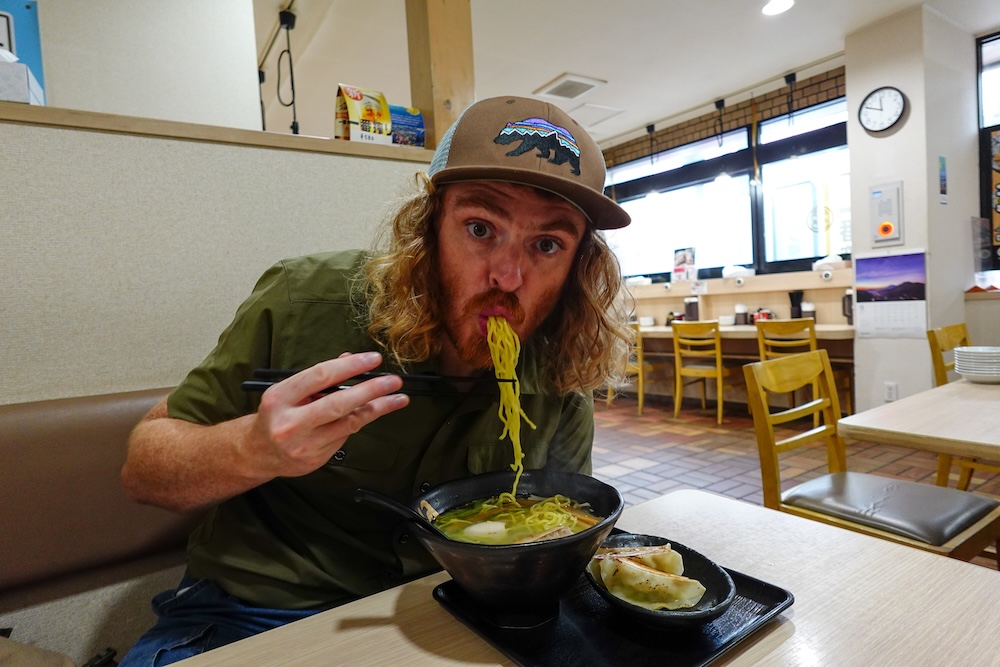
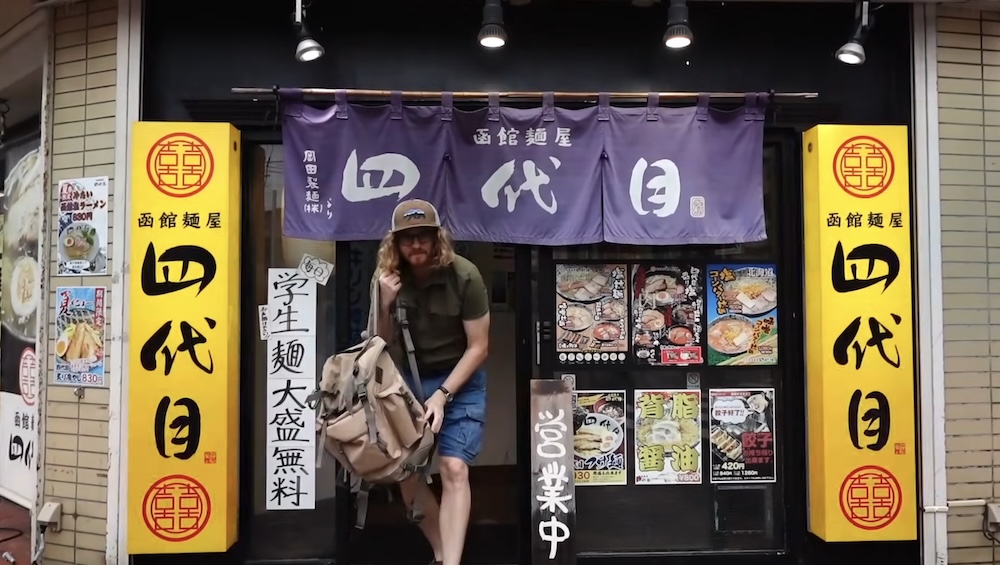
Finding Yondaime and What We Walked Into
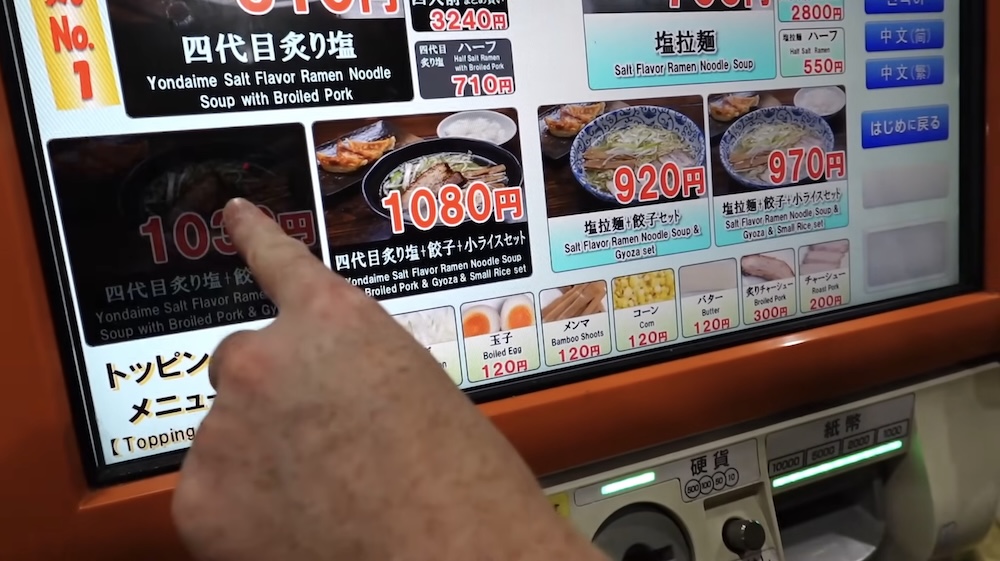
We knew we wanted ramen in Hakodate and had no plan for where, so we wandered until we found a shop with posters and photographs of bowls plastered around the entrance, and went in. That was the entire selection process. We couldn’t read the sign, so we couldn’t tell whether it was a chain or a family place. Yondaime means “fourth generation,” and Hakodate Menya Yondaime is a sister shop to the long-running Yumin, and it sits a few minutes’ walk from Hakodate Station. You order from a ticket machine just inside the door, which didn’t go perfectly for us, and I’ve written that up in our guide to ordering ramen from a ticket machine.
– Salt ramen with broiled pork
– Plain salt ramen
– Gyoza
We ate in a booth along a counter lined with yellow chairs. It was raining, and Audrey called her bowl the perfect meal for a rainy day.
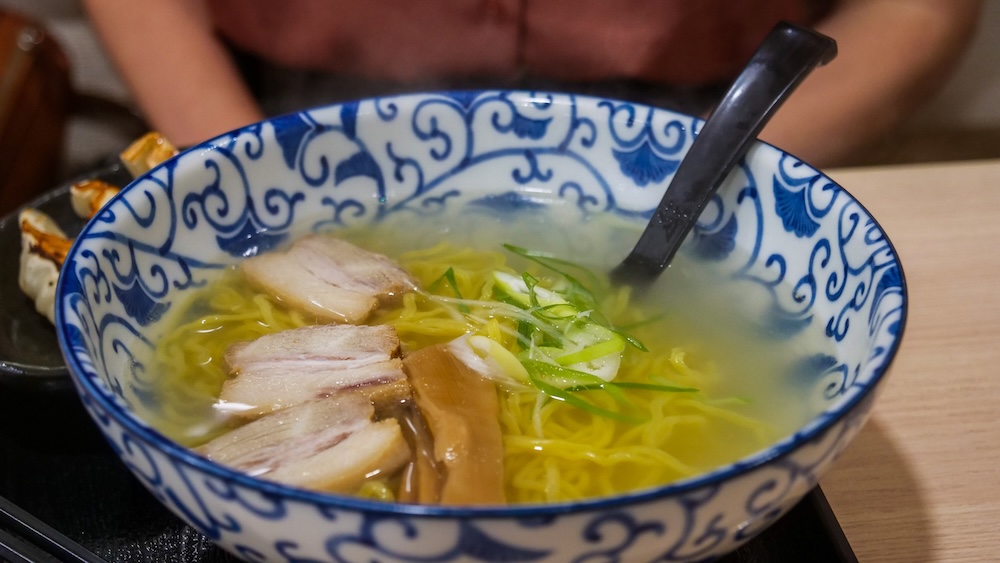
The Two Bowls: Seared Salt With Broiled Pork and Plain Salt
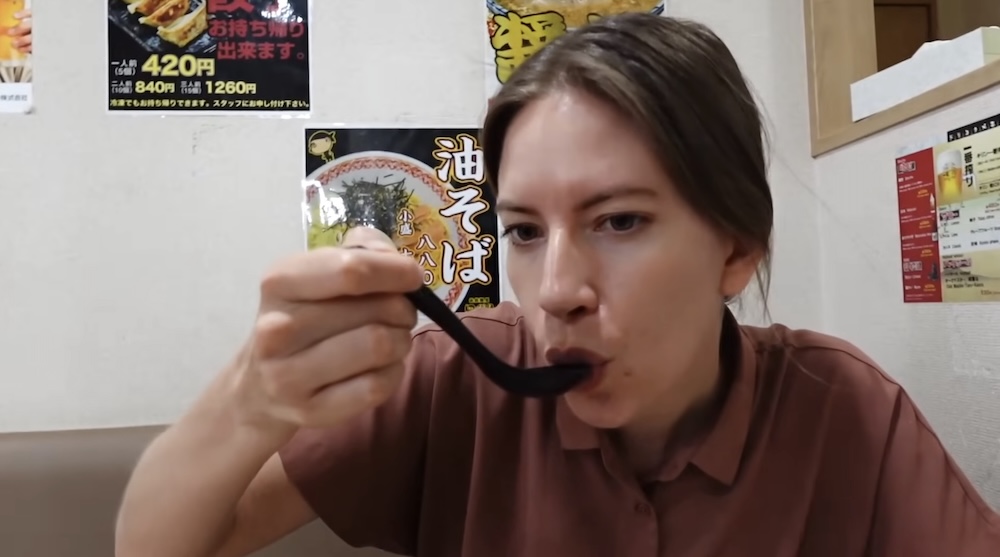
Because of the machine, we didn’t end up with the two bowls we’d planned. We ended up with two salt ramens that differed in one way: mine was the shop’s signature, the seared salt ramen with broiled pork, and Audrey’s was the plain salt ramen. Hers came in a blue-and-white bowl with a clear golden broth, yellow noodles, a few slices of pork, bamboo shoots and green onion. She’d read that salt ramen has a clear broth, and hers did, so she tasted it with a question in mind: “It is salty, but is it overly salty? I would say no.” She called it a light, somewhat clear broth, said she liked it, and was still happy with her order. She described the broth as chicken-based. I can’t confirm the shop’s recipe, but Hakodate-style salt broths are typically clear and built on chicken and kelp, so that fits.
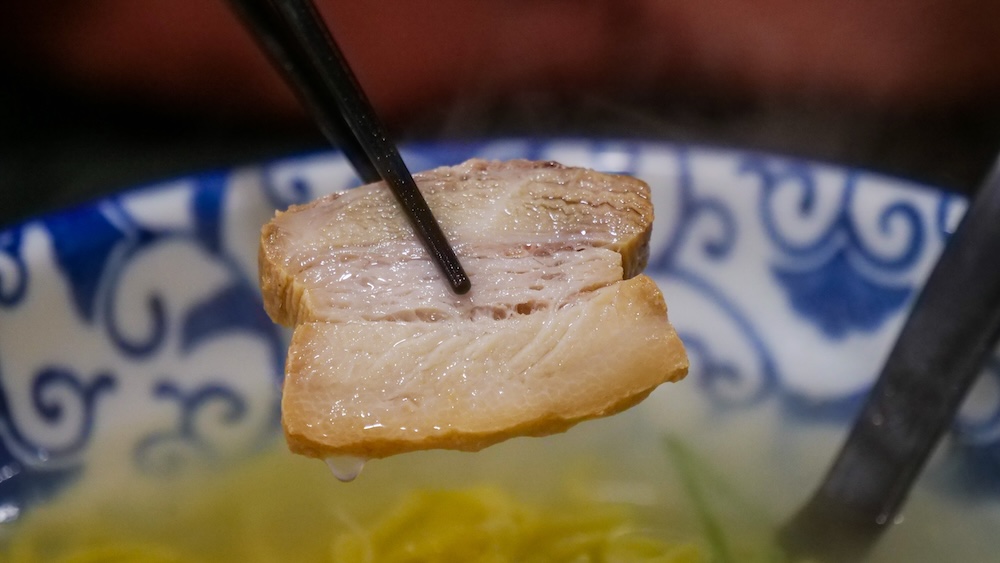
My bowl was close to hers, with the broiled pork on top. I couldn’t call my broth overpoweringly salty either, and we both noticed how chewy the noodles were. After tasting hers, Audrey’s verdict was that we’d got very similar bowls apart from my extra pork. If you’re choosing between them, the difference is the pork.
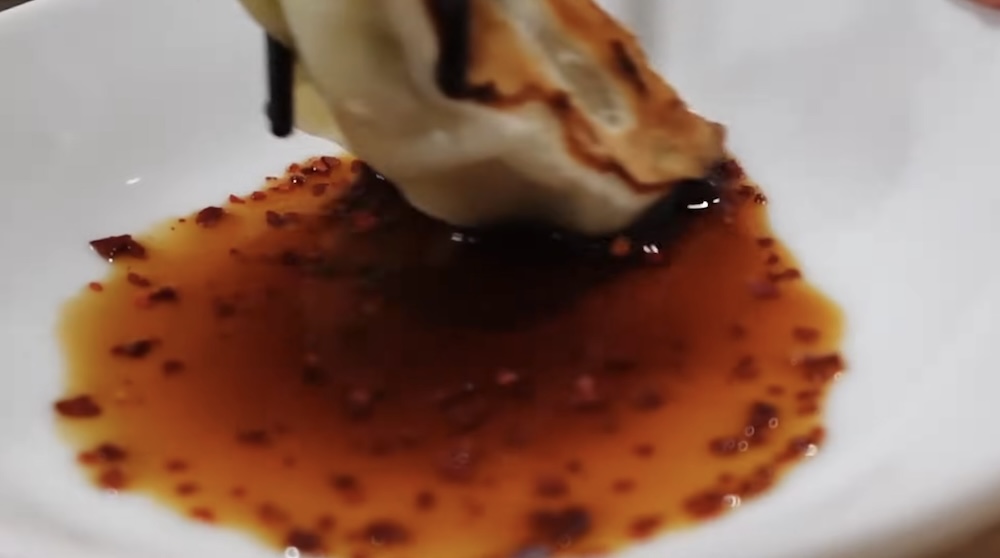
The Gyoza, the Price and the Value
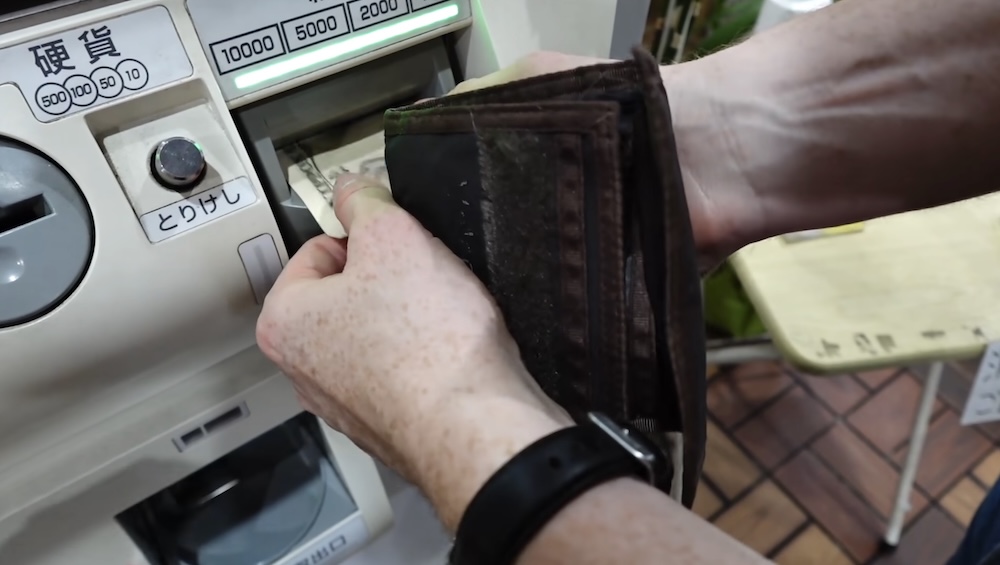
We each had three gyoza, dunked them in soy sauce and chili flakes, added vinegar, and agreed it was a tasty lunch. On the machine we took the middle option, ramen with gyoza and no rice, because we had more eating planned that day, and the two sets came to about ¥2,000. That was the price in 2023, so treat it as a ballpark, but for a full set I thought it was excellent value. The same screen offered half-size bowls, which would suit anyone pacing several meals in a day, though I can’t tell you whether they’re still offered. We paid in cash.
Standard by Japan’s Standards: How It Held Up
At the time I thought it was very good ramen, and I’m not retracting that. But all these years later it doesn’t stand out as unique, and I’d call it a pretty standard ramen experience all around. That needs a calibration, because standard here means standard for Japan. Audrey and I are big ramen fans who’ve eaten a lot of bowls in Japan, on an earlier trip and since Hakodate, and we’re used to ramen outside Japan, which in our experience is clearly a notch below what you get there. A bowl that’s standard by that measure is already a good one, it just doesn’t separate itself from the rest. I also can’t say how it compares with other Hakodate shops, because this is the only shio ramen we ate in the city.
Who Should Go, and Which Bowl to Order
If you want a first Hakodate salt ramen near the station, Yondaime does the job: it’s easy to find, the bowls are good and the sets are straightforward. I wouldn’t plan a day around it. Order the seared salt ramen with broiled pork if you want the shop’s signature, or the plain salt ramen if you’d rather have the lighter, classic bowl, which is the one Audrey had and enjoyed. If you’re eating more than once that day, ask whether half sizes are still on offer. The shop keeps long hours, but confirm them before you go. And if you’re still choosing where to stay, a hotel around Hakodate Station keeps it within easy walking distance. I won’t single out a property, but you can browse current hotels near Hakodate Station and check the walk for yourself.
We left full and very satisfied, which for a first bowl of Hakodate shio ramen is all it had to do.
Frequently Asked Questions
What is Yondaime Ramen, and where is it?
Hakodate Menya Yondaime is a ramen shop a few minutes’ walk from Hakodate Station. Yondaime means “fourth generation,” and it’s a sister shop to the long-running Yumin.
What did we order at Yondaime?
I had the shop’s signature, the seared salt ramen with broiled pork, and Audrey had the plain salt ramen. We each took the middle option on the machine, ramen with three gyoza and no rice.
How did the two salt ramen bowls compare?
They were very close, apart from the extra pork on mine. Audrey found hers salty but not overly so, a light, somewhat clear broth, and she was still happy with her order. I couldn’t call my broth overpoweringly salty either, and we both noticed how chewy the noodles were.
What is the broth made of?
Audrey described hers as chicken-based, but I can’t confirm the shop’s recipe. Hakodate-style salt broths are typically clear and built on chicken and kelp, so that fits.
How much did it cost at Yondaime?
The two ramen-and-gyoza sets came to about ¥2,000 in 2023, so treat that as a ballpark. The ticket machine also offered half-size bowls, though I can’t say whether they’re still offered, and we paid in cash.
Was Yondaime worth it?
At the time I thought it was very good ramen. Years later it’s a pretty standard ramen experience, which by Japan’s standards is already a good bowl, and I’d say it’s a fine first Hakodate salt ramen near the station but not worth planning a day around.
Which bowl should you order at Yondaime?
Order the seared salt ramen with broiled pork if you want the shop’s signature, or the plain salt ramen if you’d rather have the lighter, classic bowl. If you’re eating again soon, ask whether half sizes are still on offer, and confirm the shop’s hours before you go.
This article is also available in Spanish. [Leé la versión en castellano: Reseña de Yondaime Ramen: nuestro primer shio ramen en Hakodate]
This article contains affiliate links. If you book through one of these links, I may earn a commission at no extra cost to you.