
If there’s one neighbourhood I wouldn’t want you to miss in Hakodate, it’s Motomachi. You have steep streets running down toward the harbour, churches that look like they belong in entirely different countries, grand old buildings and viewpoints that pop up when you’re least expecting them. Audrey and I explored the area on foot, and I came away convinced that you haven’t properly experienced Hakodate without spending time here.
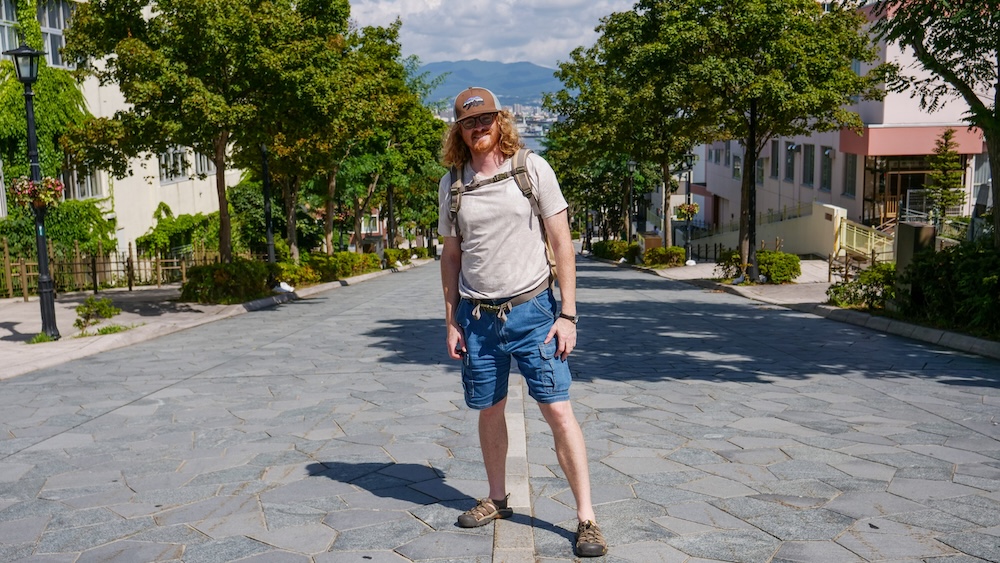
Mind you, our introduction to Motomachi involved rather more sweating than I’d anticipated. We were visiting in hot, humid weather, had already been doing a considerable amount of sightseeing, and then decided that climbing Hachimanzaka sounded like a perfectly reasonable addition to the day. As someone accustomed to the Canadian Rockies, I’d like to think I can handle a hill. Hakodate had other ideas.
Despite the exertion, I loved exploring Motomachi. The streets were relatively quiet during our visit, there was greenery everywhere, and the variety of architecture gave us plenty of reasons to keep wandering. Looking back, my biggest regret is that we squeezed the neighbourhood into such an ambitious sightseeing schedule. Given another day in Hakodate, I would have happily dedicated more time to exploring these streets properly.
In this walking guide, I’ll connect the churches, famous slopes, Old Public Hall, Motomachi Park and surrounding historic streets into a practical route. I’ll also explain where to start, how much time to allow and how to avoid exhausting yourself before you’ve seen half the neighbourhood.
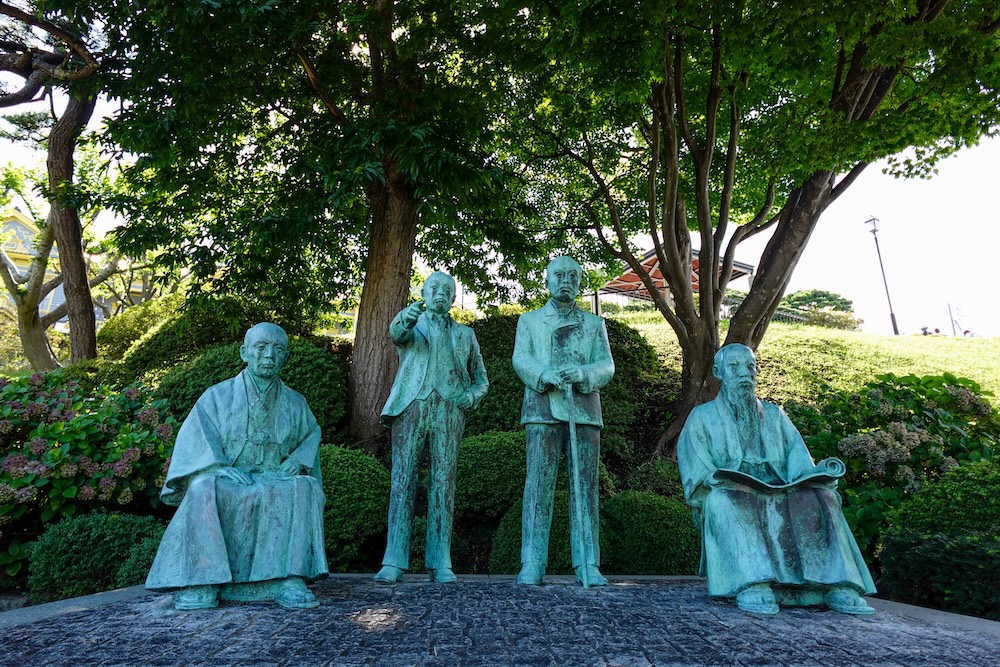
What makes Motomachi so special?
Hakodate is an interesting city because its neighbourhoods have such different personalities. Around the Morning Market, you have the bustle of a working port city and seafood stalls. Down by the waterfront, there are old warehouses and reminders of Hakodate’s maritime history. Head uphill into Motomachi, however, and the atmosphere changes again.
This part of Hakodate developed strong international connections during the nineteenth century, when the opening of the port brought foreign merchants, diplomats and missionaries to the city. Their influence remains visible in the neighbourhood’s churches, civic buildings and distinctive architectural styles.
08:16 – Motomachi District & Churches (Hakodate Orthodox Church, Motomachi Roman Catholic Church, Hakodate St. John Church)
09:02 – Mt. Hakodate Ropeway
11:10 – Old Public Hall of Hakodate Ward
12:17 – Motomachi Park
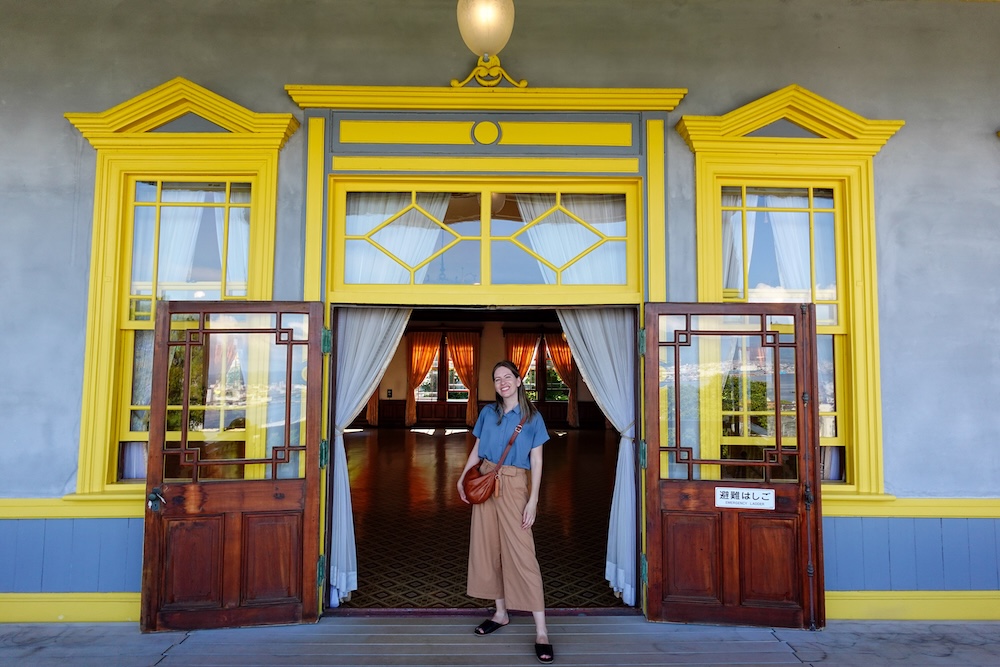
Within a few minutes of walking, you can encounter an Orthodox church with green domes, a Catholic church with a Gothic-style tower and an Anglican church with a modern, cross-shaped design. Then there’s the Old Public Hall, which looks rather grand overlooking the harbour with its blue-and-yellow exterior.
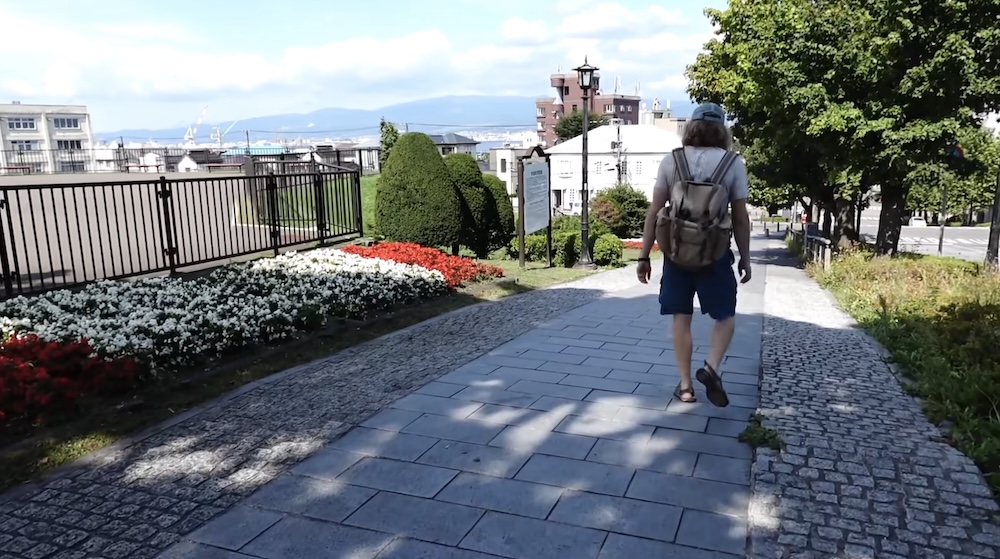
But what made Motomachi memorable for me was everything connecting those landmarks. We found ourselves walking along stone-paved streets, passing attractive buildings and green spaces, and stopping to appreciate views of the harbour from different elevations. Even when we weren’t visiting a specific attraction, the surroundings were interesting enough to keep us moving.
Hakodate has 19 historic slopes running toward the waterfront, each contributing something to the character of the western part of the city. You certainly don’t need to climb every one, especially if your legs are already protesting, but it’s worth understanding that the slopes themselves are part of Motomachi’s appeal.
For me, this neighbourhood offers one of the best opportunities to appreciate Hakodate’s history simply by walking around.
Where should you start your Motomachi walking tour?
The first thing to understand is that Motomachi occupies a hillside beneath Mt. Hakodate. Many of the main attractions are clustered fairly close together once you reach the upper streets, but getting there from the waterfront involves climbing.
That’s why I wouldn’t necessarily recommend one starting point for everyone. Your approach should depend on whether you want to experience the famous uphill streets from bottom to top or would prefer to conserve some energy for exploring the neighbourhood.
Starting from Suehirocho tram stop
Suehirocho is a convenient choice if you’re planning to visit Motomachi Park and the Old Public Hall early in your walk. Both are approximately six to seven minutes away on foot, making this a sensible starting point for exploring the northern part of the historic district.
From here, you can work your way through Motomachi Park, visit Old Public Hall, continue toward Hachimanzaka and eventually make your way into the church quarter.
This approach works particularly well if you want to spend time inside the Old Public Hall and then continue exploring the historic streets at a leisurely pace.
Starting from Jujigai tram stop
Jujigai is another practical option, particularly if you want to approach the churches via Daisanzaka. Allow approximately 10–15 minutes to walk uphill toward the church quarter, depending on your pace and which building you’re visiting first.
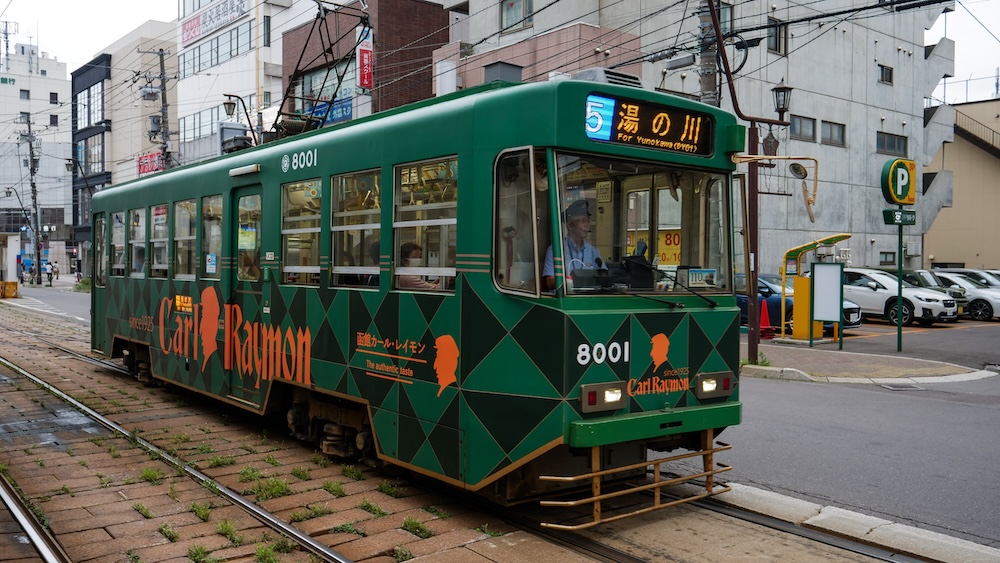
Hakodate tram lines 2 and 5 both serve Jujigai, while Suehirocho lies on the Line 5 branch toward Hakodate Dock-mae.
Audrey and I used the trams extensively during our Hakodate stay because, although the city is enjoyable to explore on foot, its attractions are spread out. Taking the tram between neighbourhoods allowed us to save our energy for the actual sightseeing, something that became particularly useful once hills entered the equation.
If you’re still deciding where to stay in Hakodate, I’d pay attention to tram access rather than choosing accommodation purely because it looks close to Motomachi on a map. A base near a convenient stop can work well for exploring this neighbourhood while also making it easier to reach Hakodate Station, the Morning Market and attractions elsewhere in the city. You can compare hotels in Hakodate and check their locations on the map before deciding whether you’d prefer the historic waterfront atmosphere or a more transport-focused base.
Starting from the waterfront
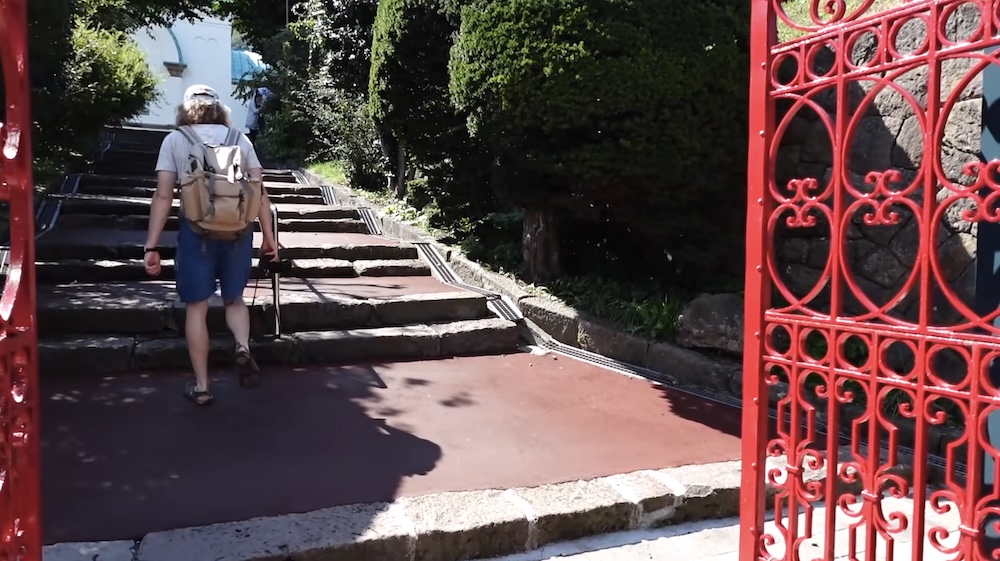
If you’re already exploring the Bay Area, walking up Hachimanzaka is a memorable way to reach Motomachi. You start closer to the harbour and gradually climb toward the famous viewpoint, with the street stretching straight down toward the water behind you.
This was the sort of uphill effort we experienced, and I can confirm that it becomes considerably more demanding when it’s hot and humid.
However, if you’re primarily interested in photographing Hachimanzaka’s harbour view, you can approach its upper end while exploring Motomachi. There’s no requirement to climb the entire hill simply to appreciate the panorama.
A walking route through Motomachi’s historic streets and landmarks
For a convenient walk, I’d suggest starting near Suehirocho, visiting Motomachi Park and Old Public Hall, continuing toward Hachimanzaka, and then working your way through the churches before descending around Daisanzaka toward Jujigai.
You can reverse that route or approach from the waterfront if you want the full Hachimanzaka climb. It’s a flexible route that connects the places we explored, rather than an attempt to retrace every turn of our original walk.
Hakodate has an established Motomachi walking course covering approximately 1.5 kilometres, with a recommended 2–3 hours including visits inside buildings. That’s a useful indication of the area’s scale, although the exact distance will depend on which slopes, viewpoints and interiors you choose.
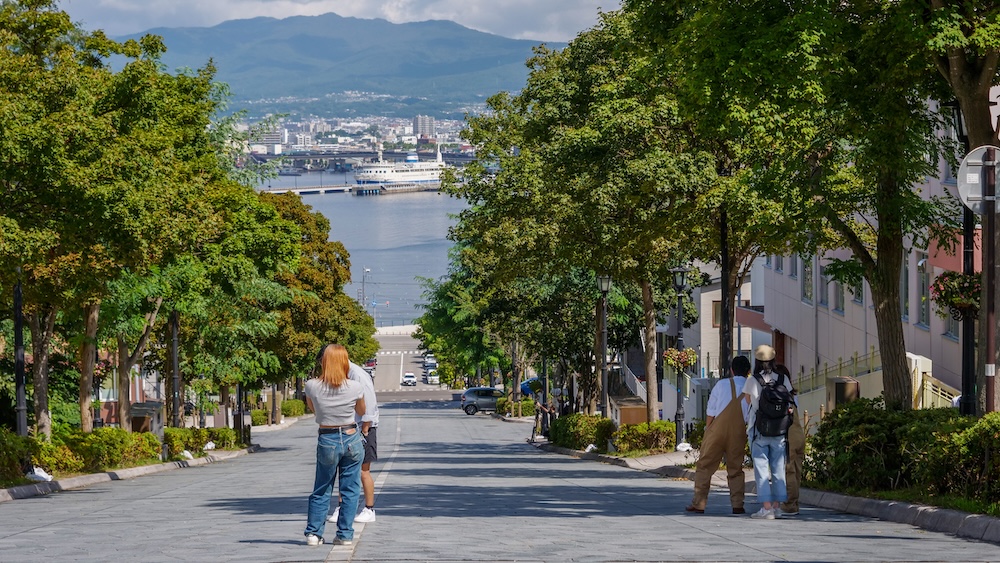
Hachimanzaka: the famous slope overlooking Hakodate Harbour
Hachimanzaka is probably Motomachi’s most recognizable street, and it’s easy to understand why. The road stretches downhill toward the harbour, creating a beautiful perspective with the waterfront and the former Mashu-maru ferry visible in the distance.
It’s one of those views that works particularly well in photographs, with the straight street leading your eye toward the water. You also get a sense of how Hakodate sits between the mountain and the harbour, something that becomes increasingly apparent as you explore the neighbourhood.
Of course, getting to the viewpoint can be another matter.
During our visit, the heat and humidity made the climb challenging, especially because Audrey and I had already been doing plenty of walking around the city. There was a point when the dominant thought was simply how hot it was. Being accustomed to hiking in the Canadian Rockies apparently doesn’t prepare you for every kind of uphill adventure.
Still, I thought the view was worth the effort, and Hachimanzaka would be one of my priorities if I were returning to Motomachi with limited time.
There are pedestrian areas and handrails along parts of the slope, but remember that this remains a functioning street. Keep an eye out for vehicles when taking photographs, particularly if you’re concentrating more on the harbour view than your immediate surroundings.
If you’d prefer to avoid the full climb, the upper viewpoint remains an excellent alternative. Nobody’s handing out medals for climbing the same hill twice.
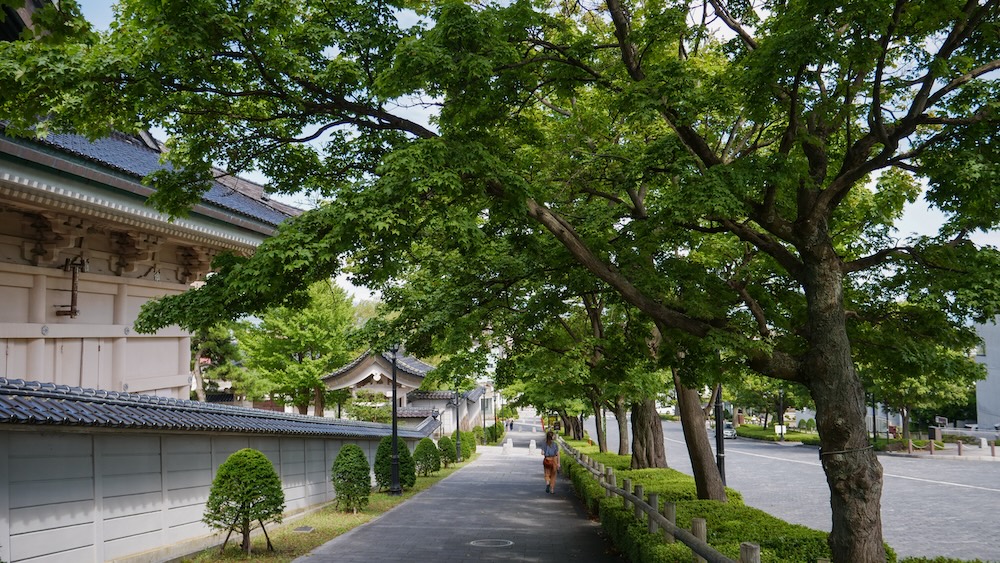
Daisanzaka and Motomachi’s other historic slopes
One of the pleasures of exploring Motomachi is discovering that Hachimanzaka isn’t the only interesting street in the neighbourhood.
Daisanzaka is another particularly attractive slope, with stone paving and historic buildings leading toward the church quarter. Rather than providing exactly the same harbour panorama as Hachimanzaka, its appeal comes from the architecture and atmosphere along the way.
I really enjoyed walking these streets because there was always something to catch our attention. Sometimes it was a church rising above the rooftops; elsewhere, it might be an attractive older building, some greenery or another unexpected glimpse of the harbour.
The relatively light traffic during our visit also made walking more pleasant. We weren’t constantly navigating crowded sidewalks or worrying about busy intersections, although that was simply our experience and shouldn’t be taken as a promise that the streets are always quiet.
Nearby Nijukkenzaka offers another interesting contrast. Its unusually wide roadway, approximately 36 metres across, reflects measures taken to prevent the spread of fires in historic Hakodate. It’s worth knowing about if you enjoy examining how a city’s history has shaped its streets, although I wouldn’t insist on including every nearby slope during a shorter visit.
That’s really how I would approach Motomachi: choose a few worthwhile streets, explore them properly and leave yourself enough flexibility to investigate whatever catches your eye.
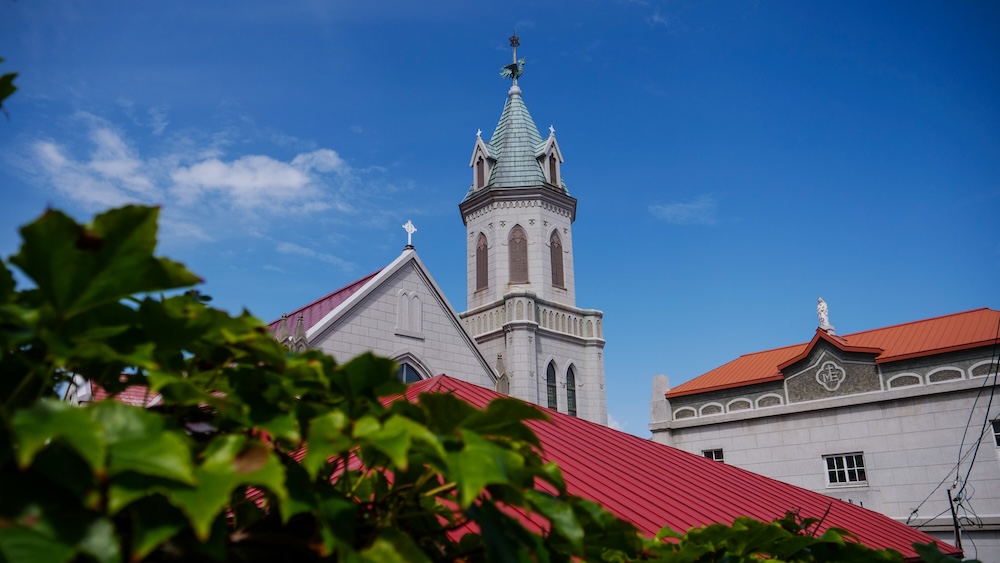
The three historic churches of Motomachi
The churches were among the biggest surprises of our walk. I hadn’t expected to find three such different examples of Christian architecture clustered together in a Japanese port city, particularly when each reflects a different strand of Hakodate’s international history.
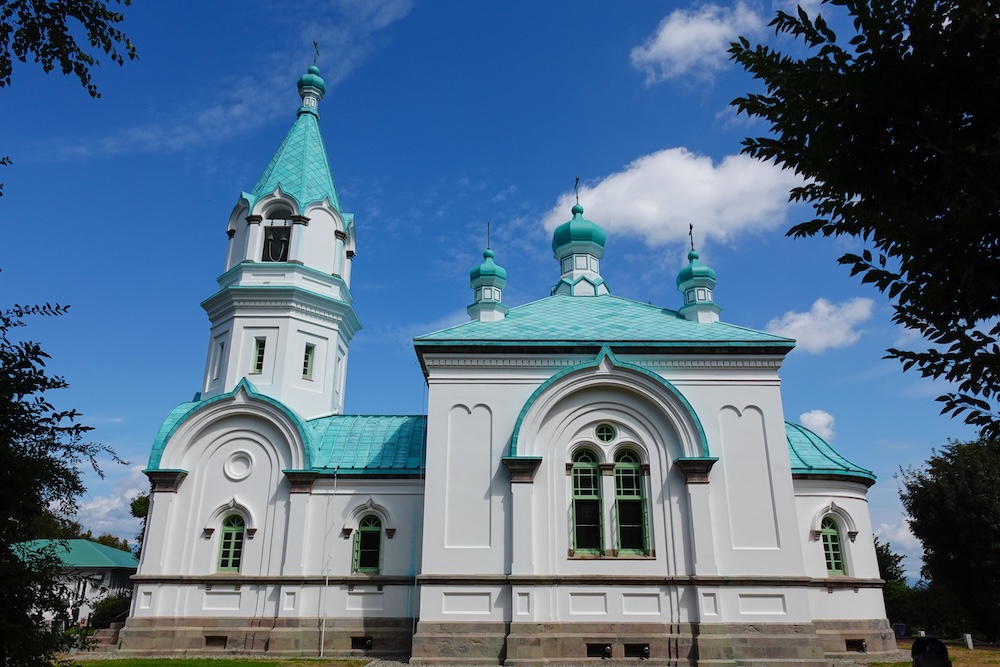
Hakodate Orthodox Church is probably the most visually distinctive, with its white exterior, green copper domes and elaborate architectural details. The present building dates to 1916, and Audrey was able to see its interior during our visit, including the religious artwork and decorative iconostasis.
Motomachi Roman Catholic Church provides a completely different appearance, with a tall Gothic-style bell tower and European-influenced architecture. I particularly liked how the tower rises above the surrounding rooftops as you approach through the historic streets.
Hakodate St. John’s Anglican Church, meanwhile, has a much more modern design. Completed in 1979, its white exterior, cross-shaped architectural elements and distinctive roof make it look remarkably different from its neighbours.
The churches are close enough that walking between neighbouring buildings takes only about a minute. This makes seeing all three relatively straightforward once you’ve reached the upper part of Motomachi.
If you have limited time, I’d concentrate on their exteriors rather than trying to coordinate three interior visits. The buildings are interesting enough from the street, and arranging entry introduces restrictions that can complicate an otherwise easy walk.
The churches remain active places of worship. Sightseeing access, photography rules and seasonal arrangements vary, with the Orthodox Church restricting ordinary winter interior visits and St. John’s potentially requiring advance arrangements. If seeing the Orthodox Church interior matters to you, check its current visiting hours and restrictions before heading uphill.
For a longer explanation of their architecture, history and visitor access, my separate Hakodate churches walking guide covers all three in greater detail.
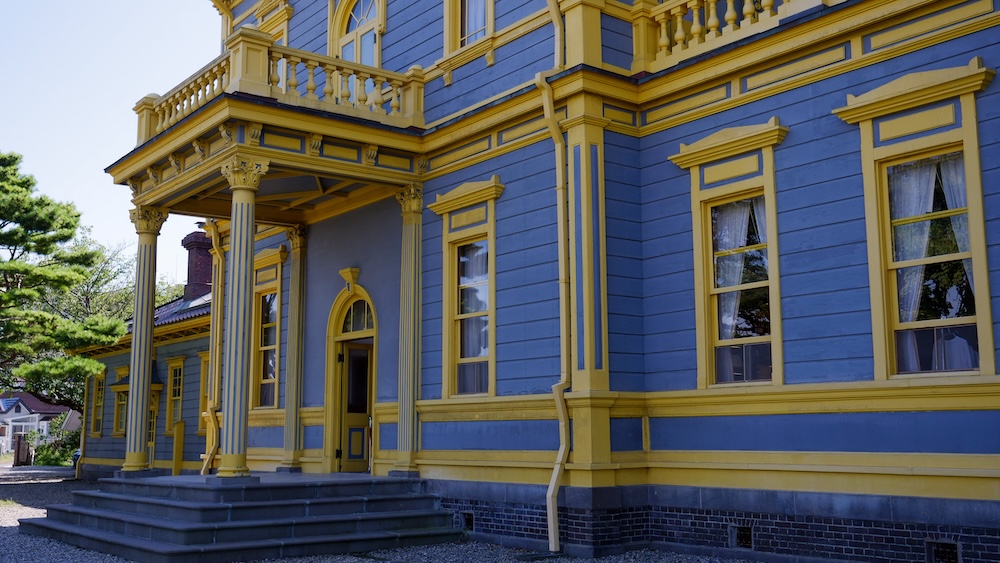
Old Public Hall of Hakodate Ward: the building I’d prioritize entering
If I were choosing just one building in Motomachi to visit inside, it would be the Old Public Hall of Hakodate Ward.
Completed in 1910, this impressive Western-style building has a blue-and-yellow exterior and occupies an elevated position overlooking the harbour. It’s a nationally designated Important Cultural Property, although you don’t need to know anything about historical classifications to appreciate how striking the building looks.
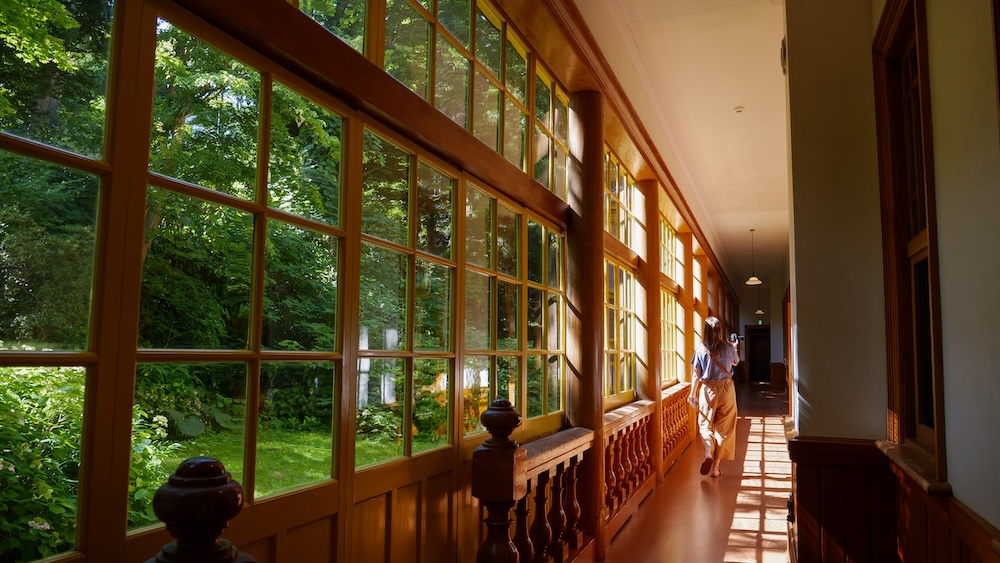
Audrey and I purchased admission tickets, removed our shoes and were given slippers before exploring the interior. Audrey and I wandered through the historic rooms, appreciating the period architecture and the opportunity to see more than another impressive exterior.
The building also offers elevated views toward the harbour, adding another reason to include it in a Motomachi walk. Personally, I thought the interior experience was worthwhile, which is why I’d make time for it even if that meant skipping a few smaller stops elsewhere.
Adult admission is currently ¥300, with ¥150 tickets for students and children under the relevant admission categories and free entry for preschoolers. Published opening hours from April through October are 9 a.m.–6 p.m. Tuesday through Friday and 9 a.m.–7 p.m. Saturday through Monday. During November through March, the usual hours are 9 a.m.–5 p.m., with final admission 30 minutes before closing.
There is one important current restriction. Beginning October 21, 2026, the hall’s operator has announced work affecting the theatre room and part of the usual visitor route, while other exhibition areas remain accessible. A full-day maintenance closure is also scheduled for November 17, 2026. If you’re planning to enter, check the latest Old Public Hall notices, as the reopening date for the affected areas hasn’t been firmly established.
Also remember that this is a historic building with stairs and changes in floor level. Strollers cannot be taken through the interior, and the layout may present difficulties for some visitors with limited mobility.
Motomachi Park: a pleasant place to slow down
Motomachi Park was another stop Audrey and I enjoyed while making our way downhill toward the waterfront. After spending time among the churches and historic streets, it provided a pleasant change of scenery with green spaces and more views toward the harbour.
The park occupies an area associated with Hakodate’s historical civic administration, and you’ll find the former Hokkaido Government Hakodate Branch Office building within its grounds. It’s worth taking a little time to appreciate the setting rather than treating the park purely as a shortcut.
For anyone feeling the effects of Motomachi’s hills, the park is also useful for practical reasons. There are places to rest, drinking water and two public toilet facilities, including accessible provisions. The toilets generally operate from 9 a.m.–5 p.m., even though the park itself can be accessed outside those hours.
I wouldn’t necessarily build an entire afternoon around the park alone, but it fits beautifully into a longer walk through the neighbourhood and provides somewhere to pause before continuing downhill.
How much time do you need for Motomachi?
This is where I think visitors should be a little more generous with their schedules than Audrey and I were.
It’s tempting to look at the short distances between attractions and assume you’ll be finished in an hour. However, that calculation doesn’t account for the uphill approach, photographs, resting along the way or entering a building like Old Public Hall.
The established 1.5-kilometre walking course allows approximately 2–3 hours, including visits inside buildings, and I think that’s a sensible starting point for a first-time visitor who wants to enjoy the area without constantly watching the clock.
| Time available | What I’d prioritize | Main trade-off |
|---|---|---|
| 60–90 minutes | Hachimanzaka viewpoint, the three church exteriors and potentially a brief Old Public Hall visit | The full Hachimanzaka climb and proper hall visit may not both fit comfortably |
| 2–3 hours | A connected walk covering the slopes, churches, Old Public Hall and Motomachi Park, with time for photographs | Some additional streets and interiors may still be skipped |
| Half a day or longer | More leisurely wandering, additional historic streets, viewpoints, interior visits and breaks | A substantial portion of your Hakodate sightseeing time goes to Motomachi |
If I had only 60–90 minutes, my personal priorities would be Hachimanzaka, walking past all three churches and going inside Old Public Hall. However, I’d be realistic about what that means. Starting from the lower waterfront and completing the entire climb could leave very little time for a proper hall visit, especially if you enjoy taking photographs.
With two or three hours, the whole experience becomes much more comfortable. You can explore the neighbourhood without feeling compelled to hurry along the streets that make it interesting in the first place.
And if you’re lucky enough to have an extra day in Hakodate, I certainly wouldn’t discourage you from giving Motomachi a more leisurely half-day or longer. That’s exactly what I wish we’d been able to do.
How physically demanding is walking around Motomachi?
Motomachi is relatively compact, but I wouldn’t describe it as an effortless walking destination.
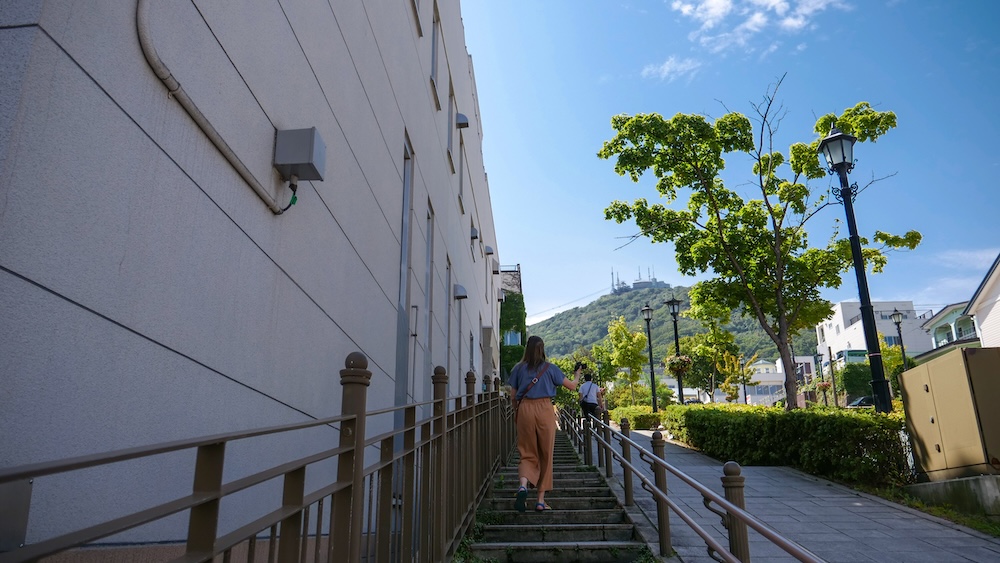
The important distinction is between reaching the upper neighbourhood and moving between its attractions. Once you’re around the churches, the distances are short and the walking becomes much more manageable. Starting down by the waterfront, however, introduces a substantial climb, particularly if you’re tackling Hachimanzaka in its entirety.
We felt that difference during our visit. The hot, humid conditions made the uphill section challenging, but once Audrey and I were exploring the historic streets, the architecture and viewpoints provided plenty of motivation to keep going. I certainly didn’t come away wishing we’d skipped the area simply because we’d had to work for the views.
I’d recommend comfortable walking shoes, especially for the stone-paved streets and inclines. It’s also worth allowing additional time during hot weather or when surfaces are wet, rather than assuming your normal walking pace will carry over perfectly.
Winter introduces its own considerations. Some streets, including sections around Hachimanzaka, have road heating, but that doesn’t mean every part of Motomachi will be clear of snow or ice. Historic buildings can also present separate accessibility challenges even when you’ve managed to reach their entrances.
If you’re visiting with a stroller, wheelchair or someone who struggles with steep gradients, I’d examine the individual approaches before committing to a continuous walking route. I wouldn’t promise that you can comfortably connect every major attraction without encountering steps or difficult inclines.
For anyone reasonably comfortable with hills, though, exploring on foot is exactly what I’d recommend. Just remember that taking a tram to the neighbourhood doesn’t necessarily eliminate the uphill walking once you arrive.
Should you combine Motomachi with the waterfront and Mt. Hakodate Ropeway?
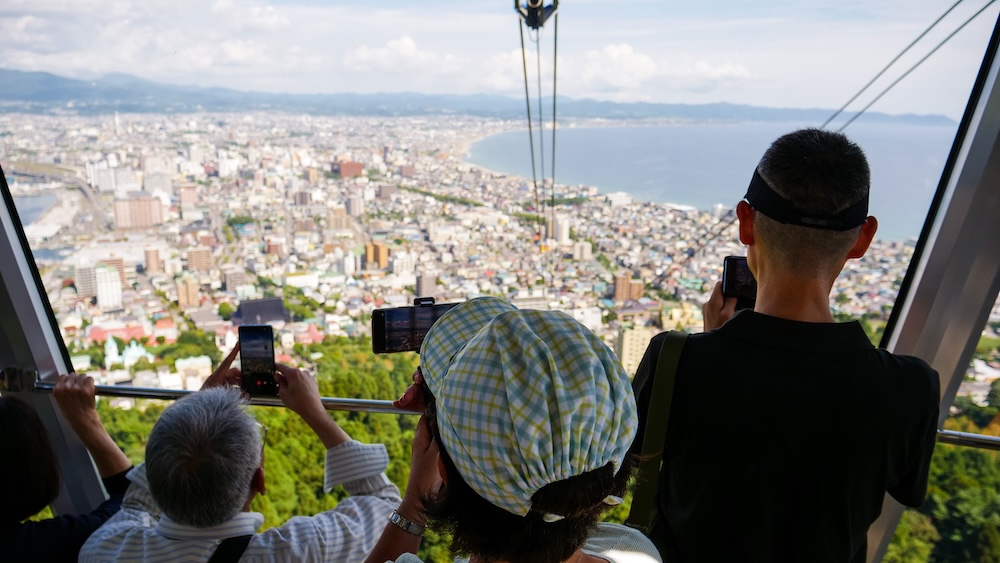
You certainly can, and geographically it makes a lot of sense. Motomachi rises directly above Hakodate’s Bay Area, while the lower station of the Mt. Hakodate Ropeway sits nearby on the mountain side of the historic district.
The trouble comes when you assume those nearby attractions won’t add much time to your day.
During our Hakodate visit, we managed to squeeze in the Morning Market, the Mashu-maru ferry museum, Motomachi and the Ropeway among a packed collection of sightseeing activities. We enjoyed the experiences, but I remember how much walking we’d accumulated, and Motomachi probably deserved more of our attention than it received.
If you’re combining the neighbourhood with the waterfront, I’d try to arrange the walk so that you’re not repeatedly descending toward the harbour and climbing back up again. A route that flows naturally downhill after exploring the upper streets is much more appealing than unnecessary backtracking.
The Ropeway is another sensible addition if you have the time and energy. Audrey and I rode it during daylight and enjoyed the city views, but it’s a separate experience that deserves its own allowance for getting to the station, riding up and exploring the summit.
If you specifically want to combine the historic waterfront, Motomachi and Mt. Hakodate with a guide, there’s also a private historic-port walk and Mt. Hakodate Ropeway tour currently listed with daytime and evening options. It combines guided walking through the waterfront and Motomachi with a Ropeway ride, but it still involves cobblestone streets and uphill sections. I haven’t taken this particular tour, and I’d check the selected departure, duration and ticket inclusions carefully before booking.
What I wouldn’t do again is treat Motomachi as something to race through between a string of other attractions simply because they’re all located in western Hakodate.
With an extra day, I’d happily give the neighbourhood a much more relaxed exploration. That doesn’t mean everyone needs a full day here; it means there’s enough to appreciate that rushing through it comes with a real opportunity cost.
Should you explore Motomachi independently or take a walking tour?
I’d explore independently again without hesitation.
One of my favourite things about Motomachi was being able to wander through the streets at our own pace, appreciating the buildings and viewpoints without worrying about keeping up with a group. The attractions are close enough that navigating between them is straightforward once you understand the general layout, and the neighbourhood itself rewards a little spontaneous exploration.
That said, there is a reasonable argument for joining a guided tour if you’re especially interested in Hakodate’s international history or prefer having someone explain the buildings as you walk.
One option is a three-hour guided Motomachi and Red Brick Warehouses walking tour. It starts at Hakodate Station and covers the waterfront, Hachimanzaka, the Orthodox and Catholic churches, and the exterior of Old Public Hall. The advertised group size is limited to ten participants. St. John’s Anglican Church isn’t specifically listed, and the Public Hall is an exterior stop, so this isn’t a substitute for independently entering every building.
It also involves moderate uphill walking and stairs, so don’t assume that paying for a guide means avoiding the physical demands of the neighbourhood. The benefit is historical interpretation and an organized route, rather than necessarily seeing more places or expending less effort. I haven’t taken the tour myself, and if you enjoy independent travel, I don’t think booking one is essential for experiencing Motomachi.
And that brings me back to what I liked most about the neighbourhood.
I certainly enjoyed the famous harbour view from Hachimanzaka, seeing three very different churches and exploring the beautiful Old Public Hall. But when I think back on Motomachi, I also remember the quieter streets, the greenery, the unexpected viewpoints and the feeling that there was always another interesting corner to explore.
If I returned tomorrow, I’d still want to see those main landmarks, but I wouldn’t spend the whole time trying to race between them. I’d allow a good few hours, give myself room to explore the smaller streets and leave some energy for whatever else the day might bring.
Hakodate has plenty of worthwhile attractions competing for your time. For me, though, Motomachi is one neighbourhood I’d make absolutely sure to include, even if it meant doing a little less somewhere else.
Frequently Asked Questions
How much time do you need to walk around Motomachi in Hakodate?
I would allow about 2–3 hours for the main historic streets, three church exteriors, Old Public Hall and Motomachi Park. You can see highlights in 60–90 minutes, but climbing all of Hachimanzaka and spending time inside the hall may be too much to fit comfortably.
Where should you start a Motomachi walking tour?
Suehirocho tram stop works well for starting near Motomachi Park and Old Public Hall. Jujigai is useful for approaching the churches via Daisanzaka. If you want the full Hachimanzaka climb, you can also start down by the waterfront.
Is the Motomachi walk difficult?
The churches are close together, but reaching the upper neighbourhood from the waterfront involves steep slopes and sometimes stairs. Audrey and I found the climb demanding in hot, humid weather. Take your time, particularly if you are approaching from below.
Can you visit the three historic Motomachi churches without going inside?
Yes. You can appreciate the Orthodox, Roman Catholic and Anglican churches from outside on a short walk. Interior access and photography rules vary, so check the churches individually if entering them is important to your plans.
Is Old Public Hall of Hakodate Ward worth entering?
I would prioritize it over trying to enter all three churches during a short visit. Audrey and I explored the historic rooms, and I thought the interior was worth the time. Check current visiting restrictions and partial closures before going.
Should you explore Motomachi independently or take a tour?
I would walk independently again because I enjoyed stopping at the viewpoints and exploring the streets at our own pace. A guided tour can add historical interpretation, but it does not necessarily remove the hills or include interior visits.
This guide is also available in Spanish. [Leé la versión en castellano: Guía a pie de Motomachi en Hakodate: iglesias, cuestas y calles históricas]
This article contains affiliate links. If you book through one of these links, I may earn a commission at no extra cost to you.