
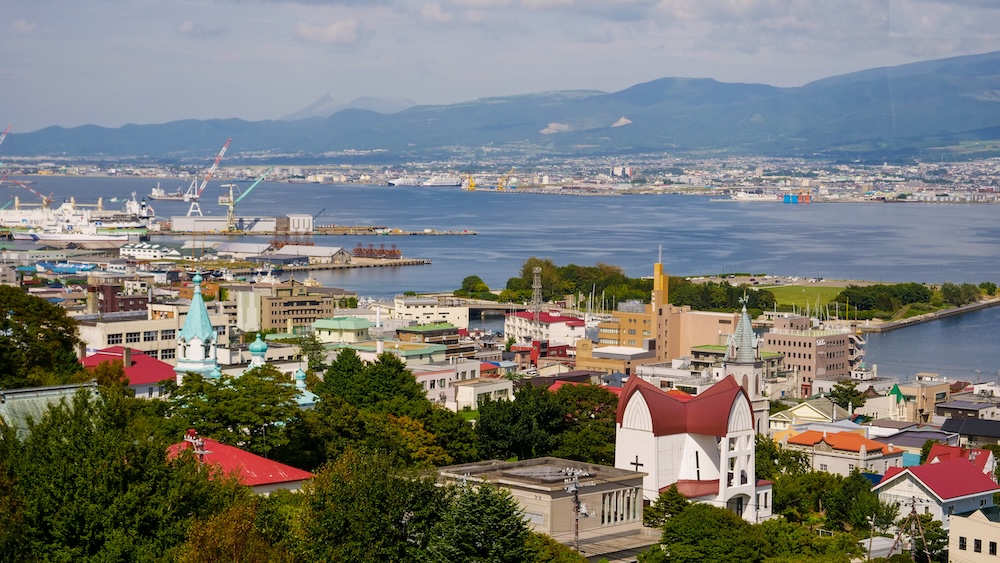
One of the things I wasn’t expecting to find in Japan was a Russian Orthodox church with green domes, a Gothic-style Roman Catholic church and an Anglican church with a distinctly modern design, all within a couple of minutes’ walk of one another. Yet that’s exactly what we discovered while exploring Motomachi, the historic hillside neighbourhood overlooking Hakodate’s harbour.
Audrey and I visited all three churches during our time in Hakodate, and I found the architectural differences fascinating. We’d already been doing quite a bit of sightseeing that day, so our legs weren’t exactly fresh, but fortunately the churches were close together. What surprised me was how much variety we encountered in such a small area, particularly because these buildings looked so different from the architecture I’d normally associate with Japan.
I’d absolutely recommend seeing all three, even if you don’t get the opportunity to go inside. They’re an important part of what makes Motomachi distinctive, and visiting them together helped me understand a side of Hakodate that I wouldn’t have appreciated nearly as much if we’d stuck to the waterfront. Here’s how to connect the churches on foot, what makes each one interesting, and what you should know about visiting their interiors.
Three Different Churches in One Small Corner of Hakodate
Hakodate’s international history helps explain why this unusual collection of churches exists. During the nineteenth century, the city became one of Japan’s early international ports, attracting foreign merchants, diplomats and missionaries. Different Christian communities established themselves in the area, and their places of worship gradually became part of Motomachi’s architectural landscape.
The Russian Orthodox presence was connected with the Russian consulate, French missionaries helped establish the Roman Catholic community, and British missionaries introduced the Anglican tradition. Although the buildings standing today were constructed at different times, their histories reflect the international connections that shaped this part of Hakodate.
What interested me was seeing those differences for myself. The Orthodox Church has its white walls and green domes, the Catholic Church has a tall Gothic-style bell tower, and St. John’s Anglican Church looks considerably more modern. You don’t need to know much about religious architecture to appreciate how different they are, especially when you can walk between them in about the time it takes to decide which one you want to photograph next.
It’s easy to visit Hakodate and focus on the seafood, harbour views and historic trams. We certainly enjoyed those things, too. But Motomachi tells another part of the city’s story, and I think you’d miss something important about Hakodate’s identity if you skipped this neighbourhood altogether.
How to Walk Between the Three Churches in Motomachi
The good news is that you don’t need an elaborate itinerary to visit the three churches. They’re concentrated in a small part of upper Motomachi, with published walking routes estimating approximately one minute between neighbouring buildings. Once you’ve reached the church area, getting from one to the next is remarkably straightforward.
The part that takes more effort is getting uphill in the first place. If you’re arriving by tram, Jujigai is a convenient starting point, served by Hakodate’s tram lines 2 and 5. From the stop, allow roughly 10–15 minutes to reach the churches, depending on your pace and the streets you take.
One practical approach is to head uphill toward Daisanzaka, one of Motomachi’s historic sloping streets, and connect the churches in this order:
- Motomachi Roman Catholic Church — start with the Gothic-style building and its prominent bell tower.
- Hakodate St. John’s Church — continue a short distance to the Anglican church with its unusual modern design.
- Hakodate Orthodox Church — finish at the white church with green domes, one of the most distinctive buildings in the neighbourhood.
If you’re already exploring upper Motomachi, you can reverse that sequence or simply start at whichever church is closest. There’s no prize for walking all the way downhill to Jujigai only to climb back up again, especially when the buildings are practically neighbours.
Audrey and I explored independently, which suited us because we could wander between the churches at our own pace. If you’d prefer someone to explain the neighbourhood’s port history and architecture as you walk, there’s also a three-hour guided Motomachi and waterfront walking tour. It includes the Orthodox and Catholic churches, along with Hachimanzaka, the red-brick warehouses and the Old Public Hall. St. John’s isn’t specifically listed, so don’t assume that this particular tour covers all three churches. It also involves uphill walking and stairs, rather than providing an easier physical alternative.
One thing I remember clearly is that we were already feeling the effects of a busy sightseeing day. Motomachi is built on a hillside, and although the churches were close together, we’d done enough walking beforehand that another uphill stretch wasn’t exactly what our legs were hoping for.
That’s worth keeping in mind when planning your own visit. The three-church portion is short, but the surrounding streets aren’t flat, and the approach can feel more demanding if you’ve already been wandering around Hakodate for hours. I’d work the churches into a sensible route through Motomachi rather than save them for the point when you’re completely exhausted. We managed just fine, but I suspect our legs would have appreciated slightly better planning. LOL.
Hakodate Orthodox Church: White Walls, Green Domes and a Beautiful Interior
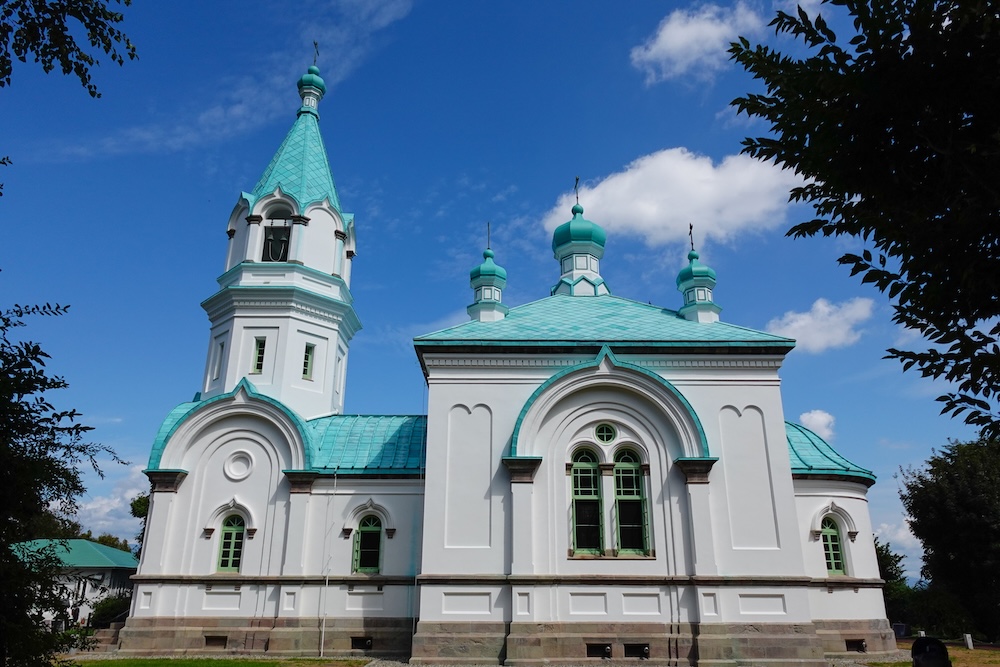
The Holy Resurrection Orthodox Church of Hakodate is probably the most immediately recognizable of the three buildings. Its white exterior, green copper roofs and multiple domes give it a striking appearance, particularly against the surrounding streets of Motomachi.
The church has an octagonal bell tower and several cupolas, features that reflect its Russian Orthodox architectural heritage. Its history goes back to the Russian mission’s arrival in Hakodate in 1858, followed by the construction of a chapel associated with the Russian consulate in 1860. The present building is considerably newer, having been completed in 1916 after a fire destroyed its predecessor.
The building and its iconostasis were designated Important Cultural Properties in 1983. The church also has the local nickname Gangan-dera, associated with the sound of its bells, which is a rather memorable bit of local history.
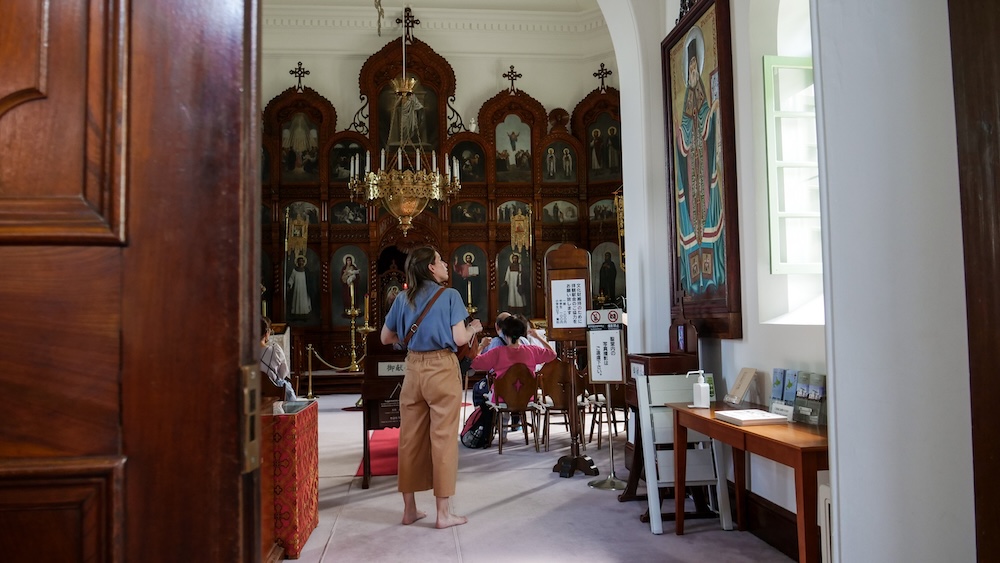
During our visit, Audrey actually went inside the Orthodox Church, so this was more than an exterior sightseeing stop for her. The sanctuary contains an elaborate iconostasis, a decorative screen displaying religious icons, along with intricate woodwork, religious imagery and a large chandelier hanging overhead.
It’s quite a different atmosphere from what you might imagine just looking at the predominantly white exterior. The amount of decorative detail inside adds another dimension to the building, and I can certainly understand why someone interested in religious art or architecture would want to see more than the green domes.
That said, I still consider the exterior alone worth visiting. The church has plenty of visual character, and standing outside gives you a good opportunity to appreciate how different it looks from the Catholic and Anglican churches nearby.
One caution if you’re hoping to go inside: this remains an active place of worship with restrictions on sightseeing and photography. The church requires permission for interior photography and certain photography-related activities on its grounds, so don’t assume that being allowed inside means you’re free to start taking pictures.
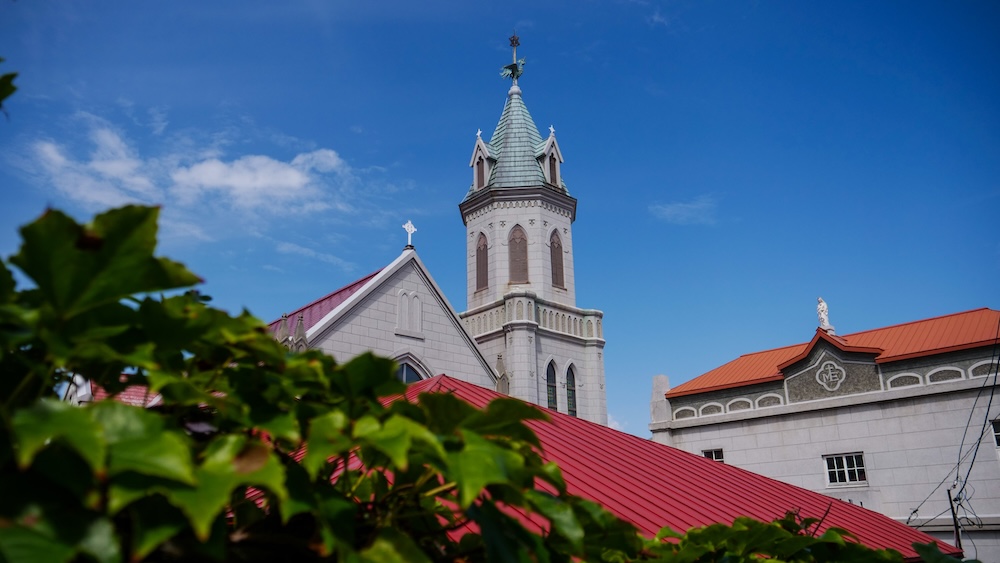
Motomachi Roman Catholic Church: A Gothic Tower and a Fascinating History
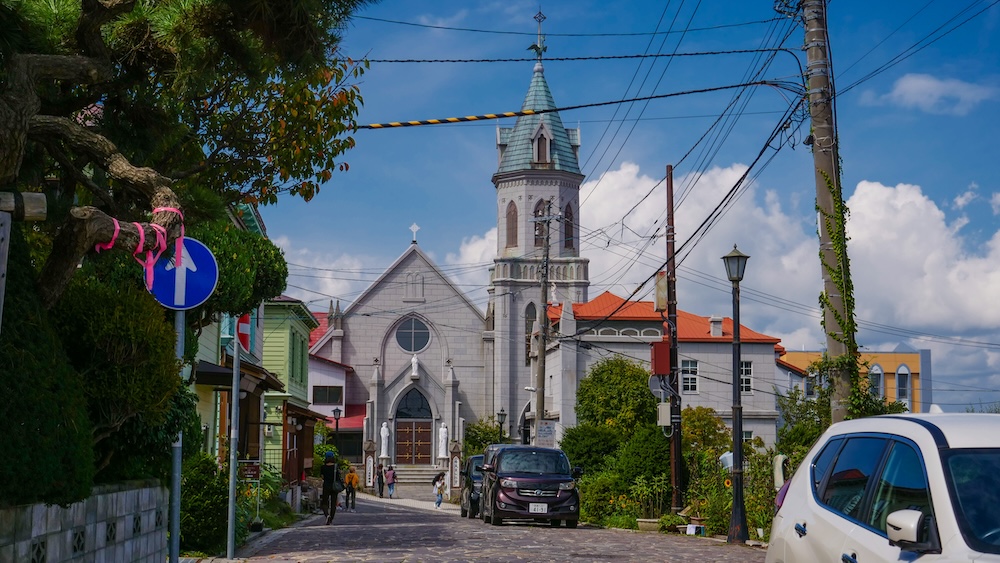
Motomachi Roman Catholic Church makes a particularly interesting contrast with the Orthodox Church because its architecture takes a completely different direction. Instead of green domes and rounded rooflines, you get a Gothic-style building with a tall, pointed bell tower rising approximately 33 metres above the surrounding streets.
The Catholic community’s history in Hakodate began in 1859, when French missionary activity led to the establishment of a temporary chapel. The church subsequently experienced several periods of rebuilding, with much of its present Gothic-style appearance developing during reconstruction following a major fire in 1921.
There’s also an interesting connection with Pope Benedict XV. The church’s altar and associated carved religious artwork have links to the pope, giving the interior historical significance beyond the building’s exterior design. It’s something worth appreciating if you have an opportunity to enter, although I wouldn’t suggest that we personally examined those details during our walk.
For me, the Catholic Church was another reminder of how unusual this little cluster felt. We’d been exploring a Japanese port city, and here was a Gothic-style church standing just a short distance from a Russian Orthodox building. Seeing those different influences expressed through architecture made the neighbourhood’s international history much easier to appreciate.
You certainly don’t need an extensive knowledge of Catholic history to enjoy this stop. The bell tower and architectural details are interesting from outside, and the short distance to the neighbouring churches makes it easy to appreciate the differences without turning each visit into a lengthy historical investigation.
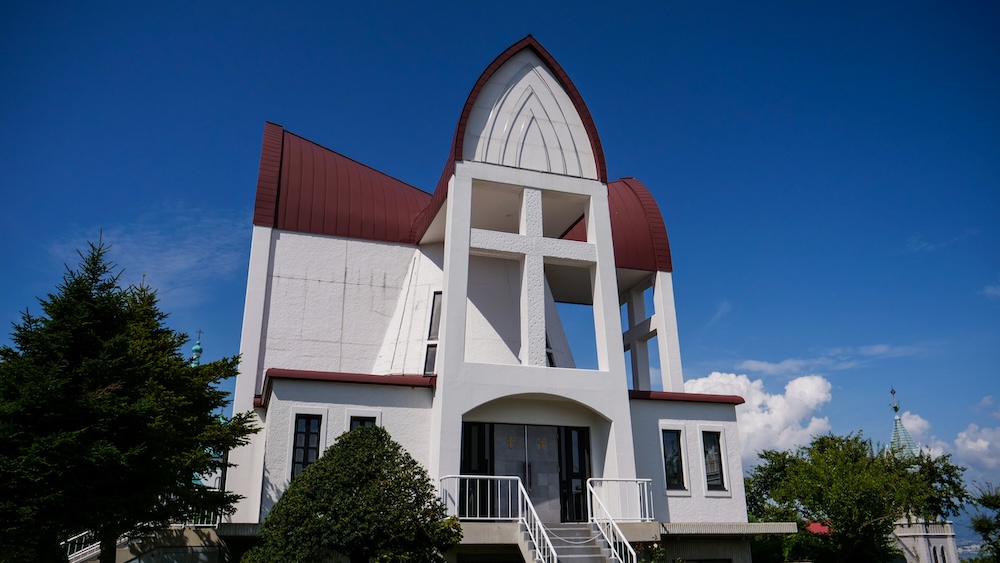
Hakodate St. John’s Church: The Modern Anglican Church
The third church, Hakodate St. John’s Church, represents the Anglican tradition and brings a more modern architectural style into the mix.
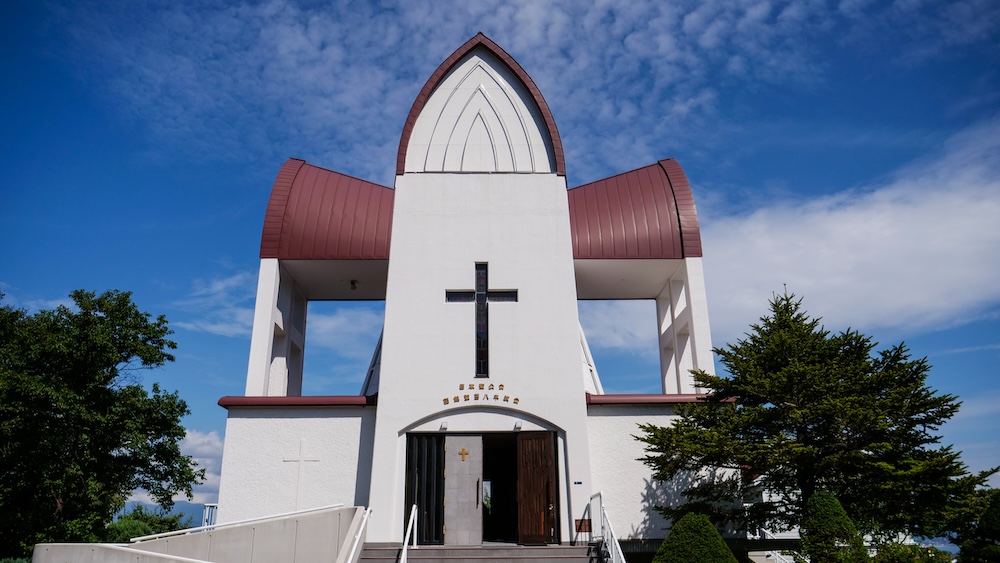
Anglican missionary activity in Hakodate began in 1874 with the arrival of British missionary Walter Dening. However, the present building was completed much later, in 1979, so its appearance reflects a different architectural period from the other two churches.
The white exterior features large cross motifs, while the brown roof is arranged in the shape of a cross. That roof design is particularly apparent when viewed from above, although you can still appreciate the building’s unusual form from street level.
The interior is also known for its domed ceiling, which is an interesting feature for an Anglican church. Interior access is more restricted here, however, so it’s worth keeping that distinction in mind rather than assuming you’ll be able to walk in during a casual visit.
I liked how St. John’s completed the experience. After seeing the more traditional European architectural influences represented by the Orthodox and Catholic churches, we encountered a building with a noticeably different design. It gave the three-church walk a little more variety than I had expected when we first started exploring Motomachi.
Can You Go Inside the Three Hakodate Churches?
This is probably the most important practical distinction between the three churches. Seeing all three exteriors is relatively straightforward, but visiting their interiors requires considerably more planning. Each building is still used for religious purposes, and services, seasonal restrictions and other events can affect sightseeing access.
Here’s how the published visiting arrangements compare:
| Church | Interior visiting arrangements | What to know |
|---|---|---|
| Hakodate Orthodox Church | Scheduled sightseeing hours, with seasonal restrictions | A maintenance contribution is requested; ordinary interior sightseeing closes during part of winter |
| Motomachi Roman Catholic Church | Generally open for free sightseeing from 10:00–16:00, subject to closures | Services and church events take priority over tourist visits |
| Hakodate St. John’s Church | Seasonal interior visits may be possible by advance arrangement | Don’t expect to arrive without a reservation and automatically gain entry |
The Orthodox Church has the most detailed published visiting schedule. Regular weekday hours are generally 10:00–17:00, with closing at 16:00 during November, December and March. Saturday sightseeing is normally 10:00–16:00, while Sunday visits are scheduled from 13:00–16:00.
There’s also a significant winter restriction: ordinary interior sightseeing is suspended from December 25 through the end of February. Religious services are a separate matter, so that closure shouldn’t be interpreted as the church shutting down all religious activity.
The church requests a maintenance contribution of ¥200 for adults and ¥100 for junior-high students, while elementary-school-aged children and younger can enter without a contribution. Funerals, religious services and other church events can affect access, so I’d check the Orthodox Church’s current visiting hours and restrictions before planning an interior visit.
Motomachi Roman Catholic Church generally permits free interior sightseeing between 10:00 and 16:00, although ordinary visits are restricted during services and special events. Sunday Mass is normally held at 11:00, and the church also lists a closure from December 30 through January 5. If seeing the interior is a priority, it’s worth consulting the Catholic Church’s official visitor information rather than assuming the doors will be open whenever you arrive.
St. John’s has the least straightforward arrangements for spontaneous visitors. Seasonal interior visits may be available from approximately May into early November, but advance arrangements are required, and the published seasonal boundaries aren’t completely consistent. You can review the St. John’s Church visiting information and contact the church directly before arranging your sightseeing around an interior visit.
Personally, I wouldn’t try to coordinate my entire Motomachi itinerary around getting inside every church. Audrey was able to enter the Orthodox Church during our trip, which added an interesting dimension to that particular stop, but the three buildings are still impressive from outside. If you happen to arrive when an interior is open to visitors, that’s a nice opportunity. Otherwise, I’d enjoy the architecture and carry on exploring rather than spend the afternoon trying to make three different visiting schedules line up.
How Much Time Should You Allow for the Three-Church Walk?
I’d allow roughly 20–30 minutes to see all three church exteriors, assuming you’re already in the church area. That’s enough time to walk between the buildings, appreciate their different styles and take a few photographs without feeling like you’re racing from one to the next.
If you enjoy architecture or photography and want to spend longer examining the details, 30–40 minutes would be a more comfortable allowance. These are practical planning estimates rather than the exact amount of time Audrey and I spent on our visit, and they don’t include the walk uphill from the tram stop.
Coming from Jujigai, remember to add approximately 10–15 minutes for the approach to the church cluster. Interior visits can extend your outing further, depending on which buildings are open, whether religious services are taking place and how much time you want to spend inside.
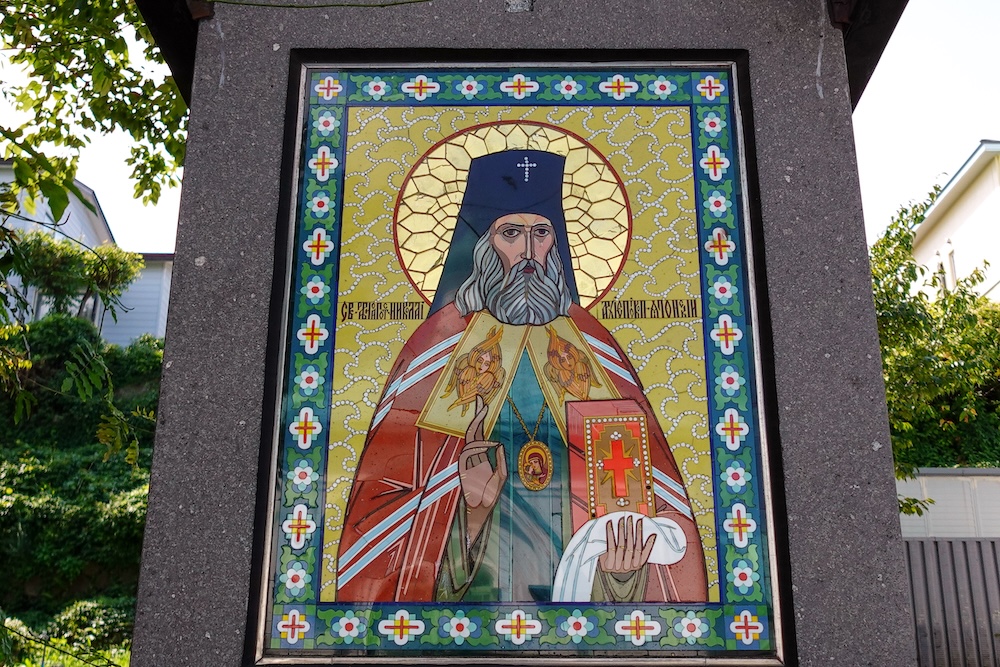
I’d also keep the terrain in mind. Although the churches are close together, Motomachi has steep streets, and I wouldn’t assume that every approach is suitable for wheelchairs or strollers. If you need step-free access or have particular mobility requirements, check the specific route and building entrances before visiting.
For most visitors who are comfortable walking uphill, the church-to-church portion is short enough that seeing all three makes sense. The important thing is to account for the effort of reaching the area, especially if you’re squeezing the walk into an already busy day.
Are All Three Churches Worth Visiting? My Verdict
Absolutely. If you’re already exploring Motomachi, I think you’d be missing something by visiting just one church and skipping the other two.
I wouldn’t rank them against one another because that wasn’t really how I experienced the walk. The Orthodox Church, Roman Catholic Church and St. John’s all have something different to offer architecturally, and the fact that you can see them so close together is what makes the experience particularly interesting.
We were already feeling somewhat tired from the rest of our sightseeing, but I’m glad Audrey and I made time for the whole cluster. Walking around these churches gave me a better appreciation of Hakodate’s international character, something that isn’t necessarily obvious when you’re exploring the city’s markets, waterfront or other attractions.
I also wouldn’t worry too much if the church interiors aren’t available during your visit. Audrey’s opportunity to go inside the Orthodox Church added something to our experience, but there’s enough architectural interest outside to make the walk worthwhile on its own.
My recommendation is to see all three churches together, approach from whichever side of Motomachi makes the most sense for your itinerary, and treat interior visits as a bonus rather than a necessity. You don’t need to dedicate half a day to this particular cluster, and there’s very little reason to skip one of the buildings once you’ve made it uphill.
For me, that was the real appeal of visiting the churches. They helped explain why Motomachi feels so different from other parts of Hakodate, and seeing all three gave us a much better sense of the neighbourhood than any one building could have managed on its own.
Frequently Asked Questions
Can you walk between all three historic churches in Hakodate?
Yes. Motomachi Roman Catholic Church, Hakodate St. John’s Church and Hakodate Orthodox Church are close together, with approximately one minute of walking between neighbouring buildings. You can visit them in a single short walk once you’ve reached upper Motomachi.
How long does the Hakodate three-church walk take?
I’d allow 20–30 minutes to see all three church exteriors, or 30–40 minutes if you enjoy taking photographs and examining the architecture. Add roughly 10–15 minutes for the uphill approach from Jujigai tram stop, plus additional time for any permitted interior visits.
Can you go inside the churches in Hakodate?
Interior access varies. Hakodate Orthodox Church has scheduled sightseeing hours and a winter closure for ordinary visits, while Motomachi Roman Catholic Church generally permits free entry outside services and special closures. St. John’s Church may offer seasonal interior visits by advance arrangement. Check the individual churches before visiting.
Which tram stop is best for visiting the Motomachi churches?
Jujigai is a convenient starting point, served by Hakodate tram lines 2 and 5. From there, you can walk uphill toward Daisanzaka and visit the Roman Catholic, Anglican and Orthodox churches in sequence. Allow approximately 10–15 minutes to reach the church area.
Is the three-church walk in Hakodate steep?
The connections between the churches are short, but Motomachi is a hillside neighbourhood with steep streets and some steps. Audrey and I were already tired from sightseeing when we visited, so I’d account for the uphill approach rather than judging the effort by the distance between churches alone.
Are Hakodate’s three historic churches worth seeing if you cannot enter?
Absolutely. I found the contrast between the Orthodox Church’s green domes, the Catholic Church’s Gothic-style tower and St. John’s modern design fascinating. Audrey entered the Orthodox Church, but I’d still recommend seeing all three from outside if their interiors aren’t available.
This guide is also available in Spanish. [Leé la versión en castellano: Guía a pie de las iglesias de Hakodate: tres templos históricos de Motomachi]
This article contains affiliate links. If you book through one of these links, I may earn a commission at no extra cost to you.