
Mt. Hakodate was the place where Hakodate finally made sense to me.
By the time Audrey and I rode the Ropeway, we had already spent a good chunk of time exploring the city at street level. We had wandered around the waterfront and Motomachi, ridden the trams, visited churches and historic buildings, and generally felt like we were getting our bearings. Then we went up the mountain and realized our mental map of Hakodate had been pretty rough.
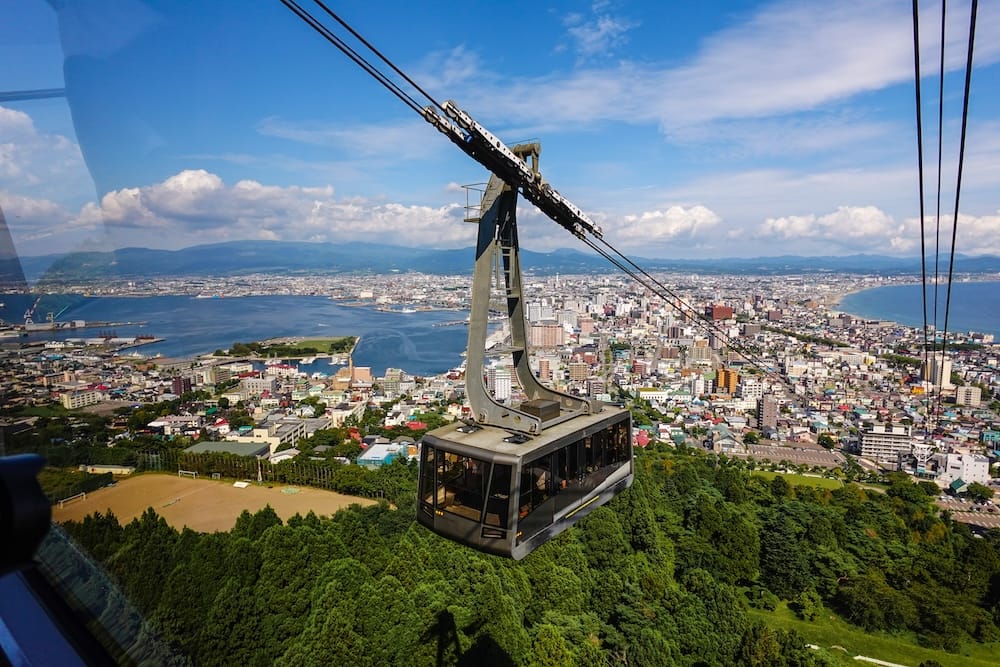
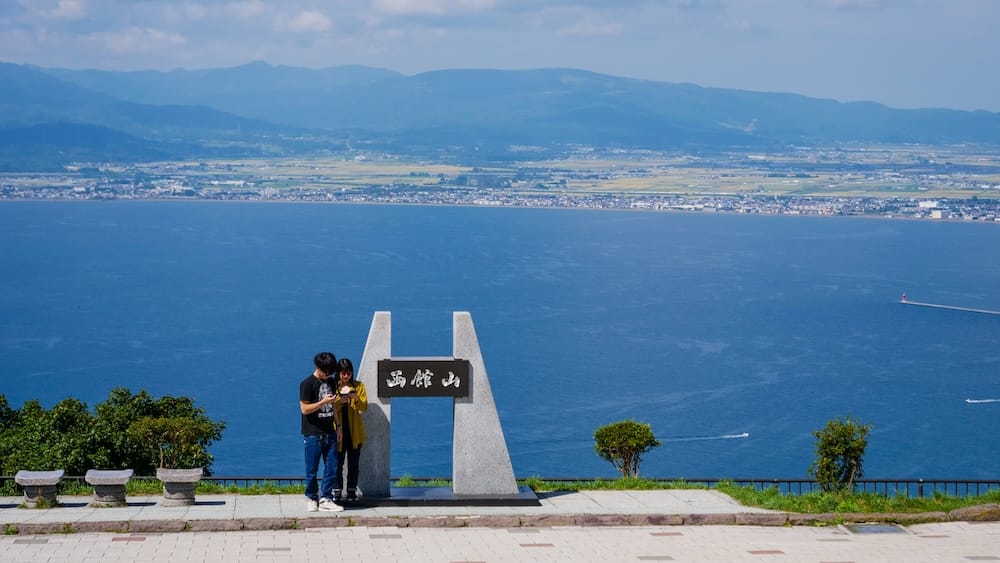
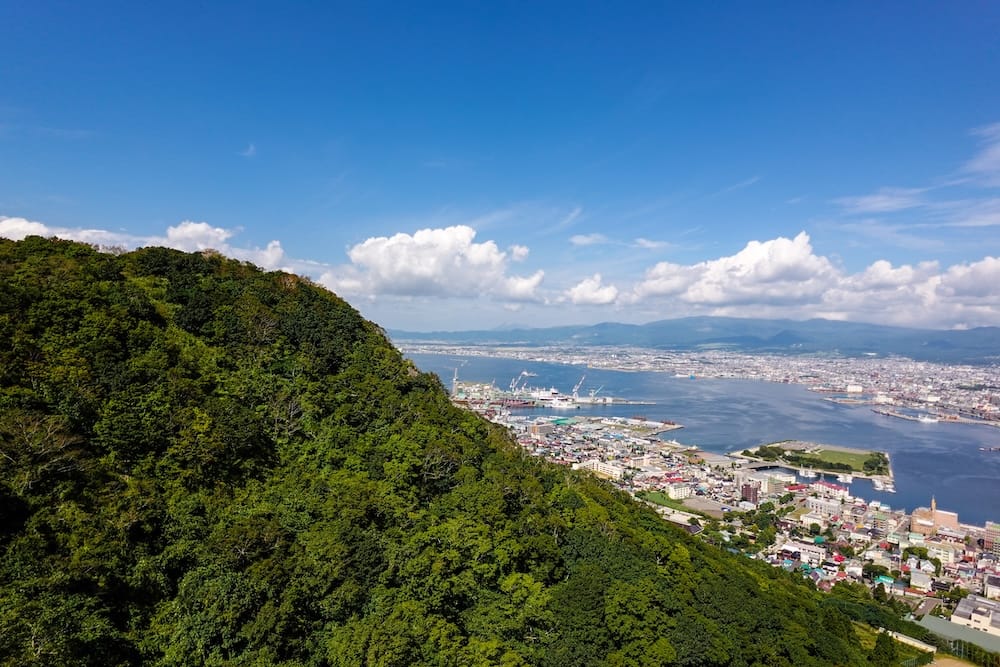
From the summit, the city looked far bigger than I had imagined. Water framed so much of the urban area, mountains rose around it, ships dotted the distance and development stretched much farther than what we had encountered on foot. Suddenly all of those separate neighbourhoods and attractions belonged to one landscape.
That was the real payoff for me.
Mt. Hakodate is famous for its night view, but we visited during the day and I would recommend the experience without hesitation. We had clear conditions, loved riding the Ropeway and came away understanding Hakodate in a way we simply hadn’t before.
The one thing I would change next time is our pace. This was part of one of those slightly ridiculous sightseeing days where you keep moving because there are still museums, neighbourhoods and other attractions waiting. We stayed long enough to appreciate Mt. Hakodate, but if I went back, I would leave more room to stand there without immediately thinking about what came next.
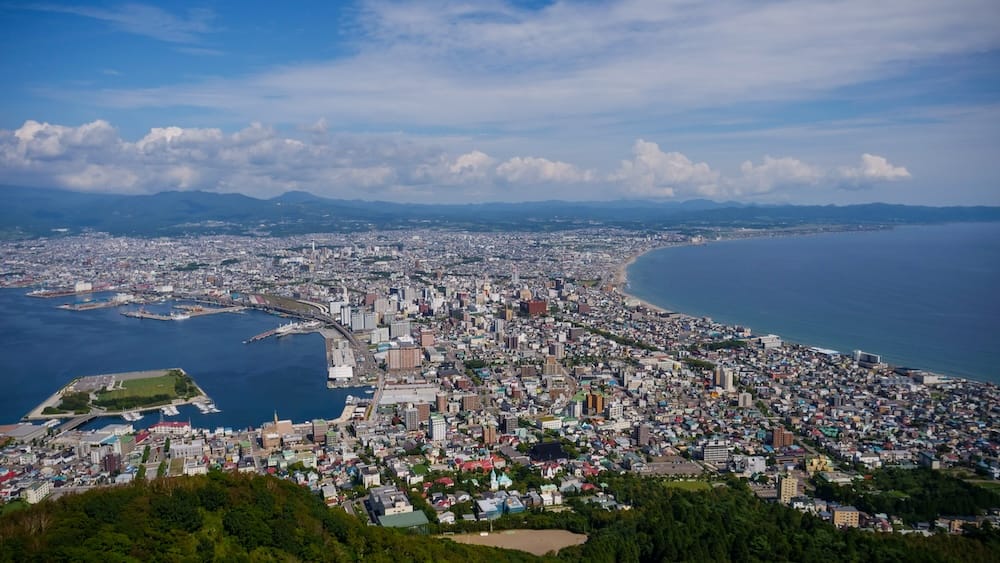
Why Mt. Hakodate changed how we saw the city
Mt. Hakodate rises about 334 metres above the city. That is high enough to give you a perspective that is surprisingly difficult to piece together from below.
Before going up, we had experienced Hakodate mostly as separate places: the harbour, Motomachi, the waterfront, commercial streets, tram stops and various attractions scattered between them. From the summit, those pieces finally connected.
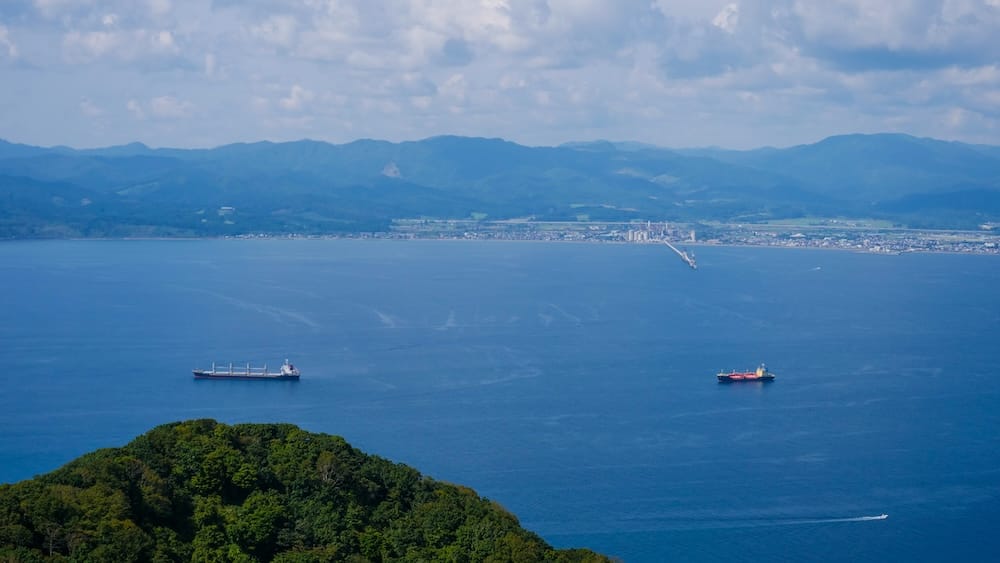
What surprised me most was the scale. We had mostly been exploring the harbour-facing side of Hakodate, so I hadn’t really understood how much city spread beyond the areas we had been walking through. From above, we could see water on different sides, ships, mountains in the distance and more open land farther out.
It made Hakodate seem bigger and more contained at the same time. The urban area stretched much farther than I expected, yet the surrounding water and mountains also made its physical boundaries much easier to understand.
That relationship is what stuck with me. The mountains and water are not simply nice scenery around Hakodate; they help define how the city looks and feels.
For me, that is one of the strongest reasons to visit in daylight. You can actually study the geography. Shorelines, urban areas and the surrounding landscape remain distinct, and places you have already visited begin slotting into a much clearer mental map.
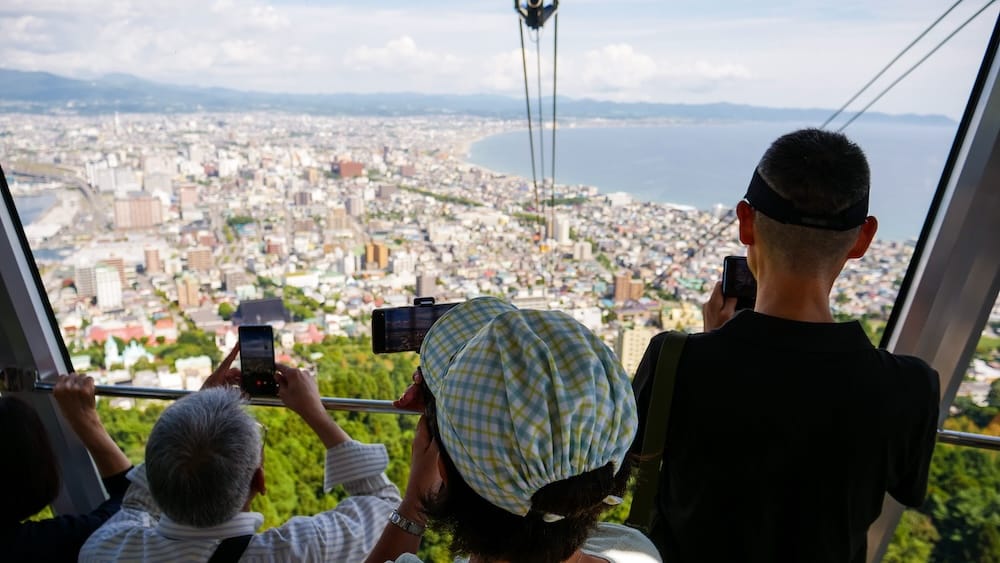
Riding the Mt. Hakodate Ropeway
The Ropeway wasn’t just transportation for us. I loved it.
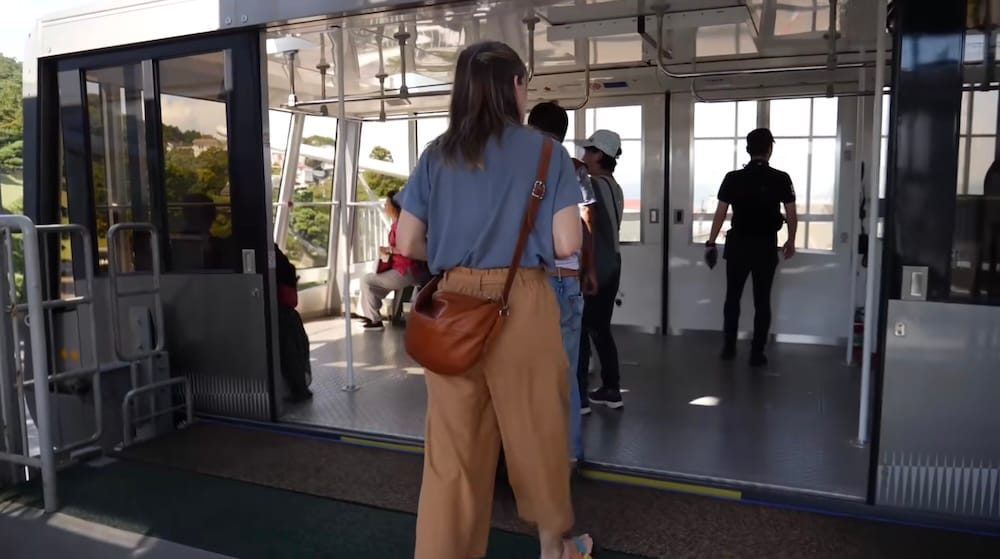
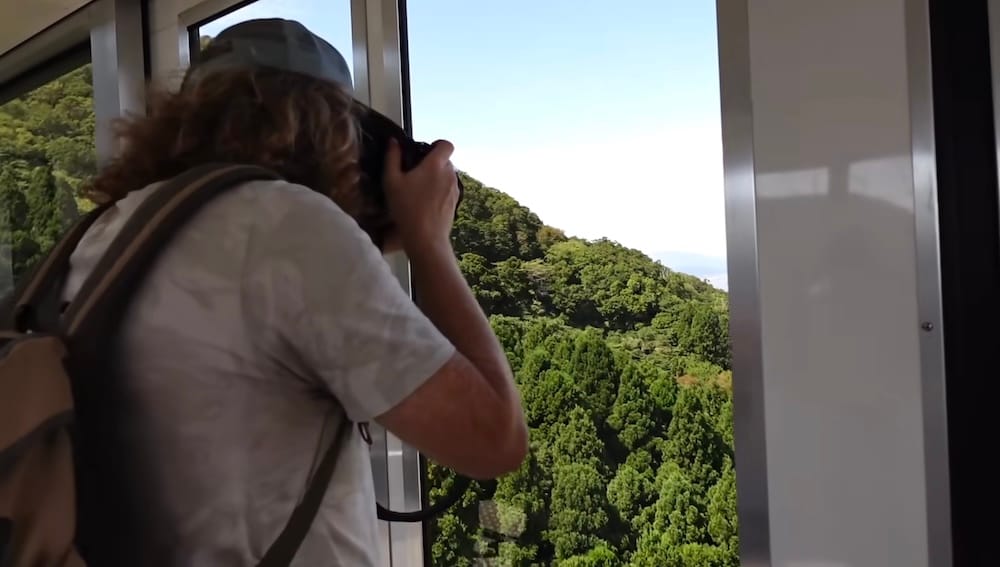
The ride itself only takes around three minutes, but the city starts opening beneath you almost immediately. On the way up, Audrey and I were in full travel-video mode: cameras out, taking photos, filming through the windows and trying to look in three directions at once. There was a genuine wow factor to that ascent, and we were both pretty much in awe.
The ride down felt different. By then we knew what was waiting outside the windows, so there was less pressure to capture every second and more opportunity to simply look. I remember being able to take the city in more calmly on the descent than I had while going up.
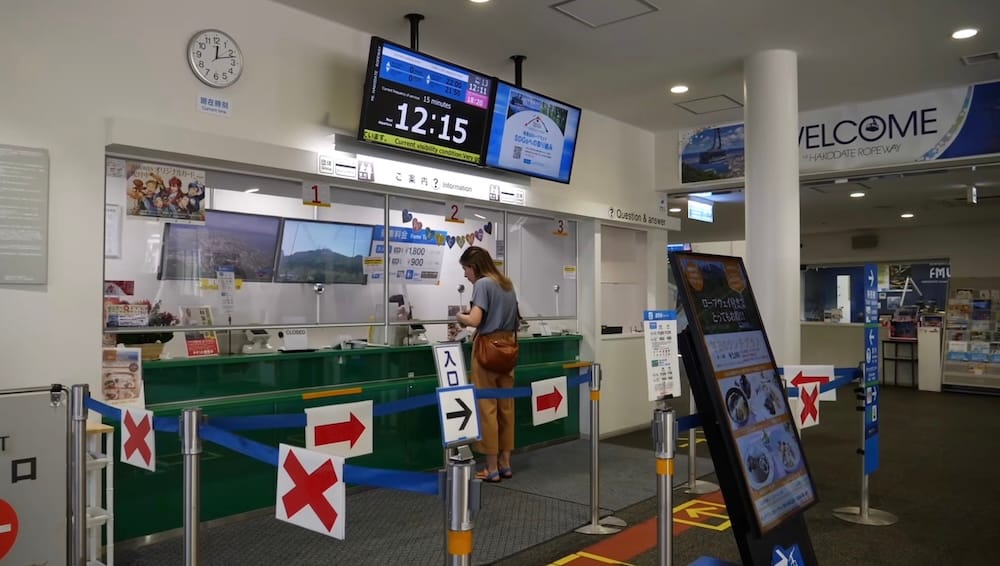
Current normal service is roughly every 15 minutes, generally at :00, :15, :30 and :45, although departures can become more frequent during busy periods. The actual gondola ride may be quick, but queues for tickets and boarding can add time, and you are not guaranteed to make the particular departure you had in mind.
Advance QR tickets can remove one small layer of hassle because you can go directly to the gate, but they do not come with priority boarding or a special queue. If everyone else is waiting for the gondola, you’re waiting too.
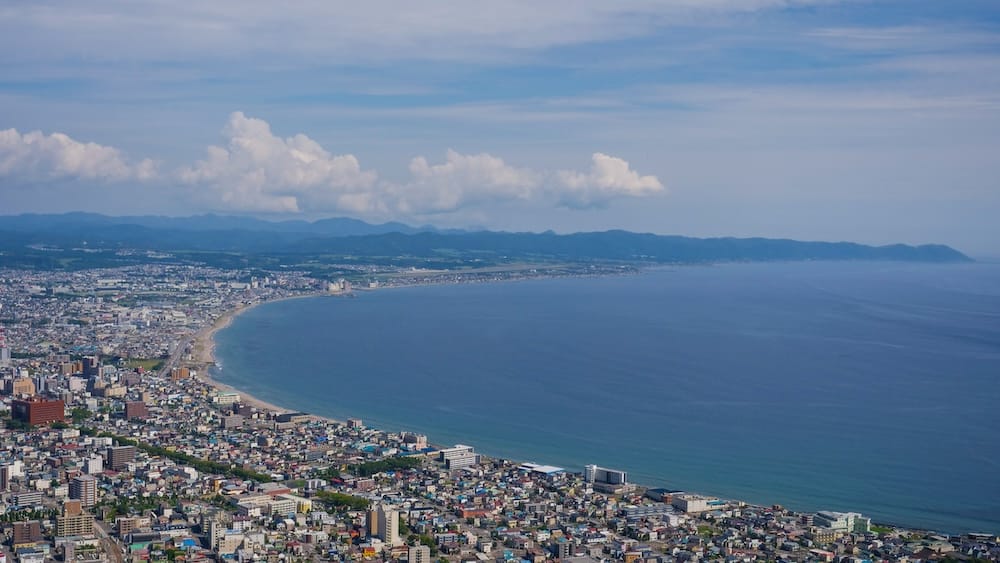
What the daytime view actually gives you
The obvious answer is a panoramic view of Hakodate. The more useful answer is that it shows you the shape of Hakodate.
From the summit, we could see the harbour area, ships on the water, the much broader urban footprint and mountains and more distant landscapes beyond the city. I had looked at maps while travelling around Hakodate, but there is a big difference between understanding where things are on a screen and seeing the entire arrangement with your own eyes.
You start noticing how much coastline surrounds the city, where the dense urban area spreads and where the landscape begins to open up. Neighbourhoods that felt disconnected while walking between them suddenly make more sense in relation to each other.
This is why I don’t consider a daytime visit some lesser version of Mt. Hakodate simply because the night panorama gets most of the attention.
We visited on a clear day and the view was incredible. Daylight was probably part of the reason the mountain changed my understanding of Hakodate so much: we could distinguish the harbour, coastline, city and mountains instead of seeing everything primarily as patterns of light.
It was also a hot sightseeing day, and reaching the summit came with the added bonus of a breeze. I remember that physical relief almost as clearly as some of the scenery.
I can’t tell you whether I personally prefer Mt. Hakodate by day or at night because we did not go after dark. Sunset and evening are typically the busiest periods, and if seeing the famous night view is one of the big reasons you are coming to Hakodate, that obviously affects when you should visit.
But if your itinerary only works during daylight, I would not skip the mountain because you think you’re settling for the inferior experience. You’re getting a different one, and ours ended up being one of the most useful viewpoints of the entire trip.
How much time should you allow at Mt. Hakodate?
The Ropeway ride takes about three minutes each way. Your visit does not.
You still need time to reach the lower station, wait for a gondola, ride up, move around the summit, take in the views and then queue for the journey back down. For a fairly straightforward independent visit in light conditions, I would budget roughly 60 to 90 minutes from the lower Ropeway station and back again.
That isn’t an official fixed visit length. It is a practical planning range based on the current Ropeway timings and the amount of time you are likely to want at the summit. Queues, sunset crowds, a meal, serious photography or simply not wanting to rush can easily stretch the visit beyond that.
Our own experience sat firmly on the efficient end. This was a full-on sightseeing day, we had already covered plenty before arriving and we still had more to do afterwards. We weren’t sitting at the summit for an hour in quiet contemplation while clouds floated poetically over Hokkaido.
We looked around, filmed, took photos and had enough time to genuinely appreciate where we were. Then we moved on.
I don’t think that was a mistake. But if I returned, I would give Mt. Hakodate more breathing room because there is a difference between having enough time to see the view and having enough time to stop thinking about your itinerary and simply absorb it.
How to get to the Mt. Hakodate Ropeway
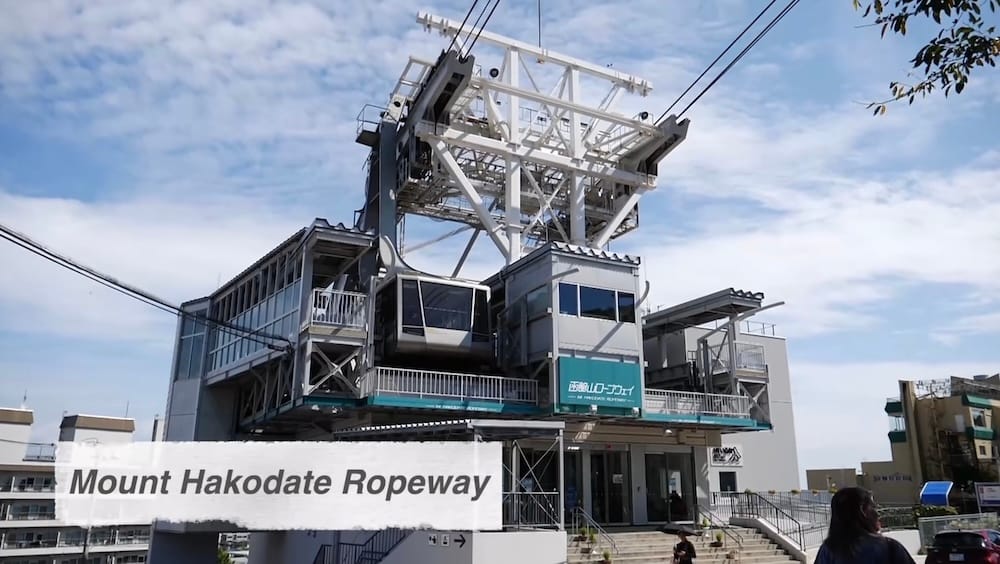
For most visitors staying around central Hakodate, the tram followed by a short walk is one of the simplest approaches.
From Hakodate Station, you can take the tram to Jujigai. The tram journey is roughly five minutes, followed by about a ten-minute walk to the lower Ropeway station.
The detail I wouldn’t ignore is the hill.
Mt. Hakodate rises directly behind Motomachi, and this part of the city is anything but flat. A ten-minute walk can feel rather different when the street keeps climbing underneath you, particularly on a hot day or if you’re carrying more than a small daypack.
The location does make Mt. Hakodate very easy to combine with Motomachi sightseeing. That’s essentially how our own day unfolded: we were already exploring the historic district before making our way toward the Ropeway.
If you are planning to see the churches, Hachimanzaka, Motomachi Park or other nearby sights, I would think of the mountain as part of the same broader sightseeing area rather than an isolated excursion that requires crossing the city twice.
Current Mt. Hakodate Ropeway tickets and hours
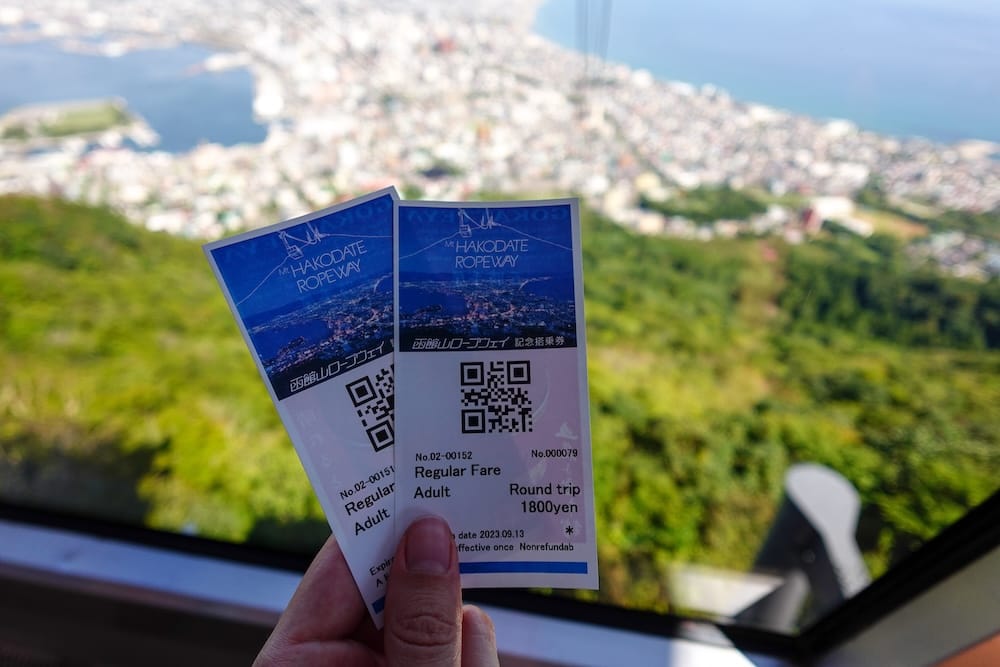
As of October 2026, regular Ropeway fares are:
- Adults: ¥1,800 round trip or ¥1,200 one way
- Children: ¥900 round trip or ¥600 one way
We bought round-trip tickets when we visited, but one-way fares are useful for travellers intentionally combining the Ropeway with another way up or down.
Current regular operating hours are:
- April 20 to September 30: 10:00–22:00, with the last ascent at 21:30
- October 1 to April 19: 10:00–21:00, with the last ascent at 20:30
Cards, transit IC/e-money and several QR payment systems are currently accepted. If you are planning to use stored electronic money, keep in mind that you cannot recharge it at the station.
These are exactly the sorts of details I would verify again shortly before visiting. Ropeway operations can change because of weather, maintenance or seasonal schedules, so an itinerary saved six months ago should not be treated as sacred text.
A temporary closure to know about in 2026
There is one particularly important date-specific exception if you’re visiting in late October or early November 2026.
The Ropeway is scheduled to stop operating from October 20 through November 8, 2026 for statutory maintenance. The summit observatory is expected to remain open during that period, but you will need another available form of transport to reach it.
If your trip falls inside those dates, don’t turn up at the lower station expecting the gondola to save the day. You can check the current maintenance notice before making your way over.
Check the Ropeway and the visibility before leaving
Weather matters more here than it does at an ordinary urban attraction.
Poor visibility can wipe out much of the reason you came, while strong winds can stop the Ropeway from operating altogether. On the day this guide’s current logistics were checked, for example, the Ropeway was suspended for the entire day because of strong winds. That is not a theoretical edge case.
The useful part is that you don’t have to guess. Before leaving, you can check the current Ropeway status and live summit camera, which gives you a much better idea of what is actually happening on the mountain.
A general Hakodate forecast might tell you that the city is cloudy, but what you actually want to know is whether the Ropeway is running and whether there is anything visible from the summit.
We were fortunate with our own visit. Conditions were clear enough that the geography of the city opened up beautifully, and that was obviously a major part of why we enjoyed it so much. I can’t honestly tell you whether I would pay for the Ropeway in thick cloud because that isn’t the experience we had.
If visibility looks terrible, at least make the decision with current information rather than discovering it after you have already travelled across town and bought a ticket.
What if you don’t take the Ropeway?
We used the Ropeway and loved it, so it would still be my default choice for a first visit. There are other ways up, though, and they become especially relevant during maintenance or when the gondola isn’t the experience you’re after.
Bus
A climbing bus currently runs from Hakodate Station toward Mt. Hakodate, passing through the Bay Area before reaching the summit. The current one-way fare is ¥700 for adults and ¥350 for children, and the journey takes roughly 30 minutes when traffic is moving normally.
The service does not operate during the winter road closure, so this is not a year-round substitute for the Ropeway.
Taxi
Taxis can reach the summit while the road is open, but there is a practical catch: you should not expect to arrive at the top and simply hail another taxi whenever you decide to leave.
If you use a taxi, arrange the return trip or have a different way down already worked out.
Hiking
There is also a hiking route from the Mt. Hakodate Fureai Center, with the walk to the summit taking roughly an hour.
We didn’t hike it, so I can’t give you a useful firsthand opinion about the difficulty. What I can say is that an hour walking uphill and a three-minute gondola ride are clearly different experiences, even though they eventually put you in the same place.
Choose based on how you actually want to spend your day rather than treating the hike as simply the cheaper Ropeway.
Driving
Private and rental cars can reach the summit at certain times of year, but access is restricted during busy evening periods and the road closes for winter.
For 2026, private and rental cars are restricted from:
- 17:00–22:00 from April 17 to September 30
- 16:00–21:00 from October 1 to November 8
The winter road closure is scheduled from November 9, 2026 at 11:00 until April 12, 2027 at 11:00.
These restrictions change with the season and year, so I would always check the current road information if driving is central to your plan.
What is actually at the summit?
Mt. Hakodate isn’t a mountain where the gondola drops you beside a fence and leaves you standing in the wind.
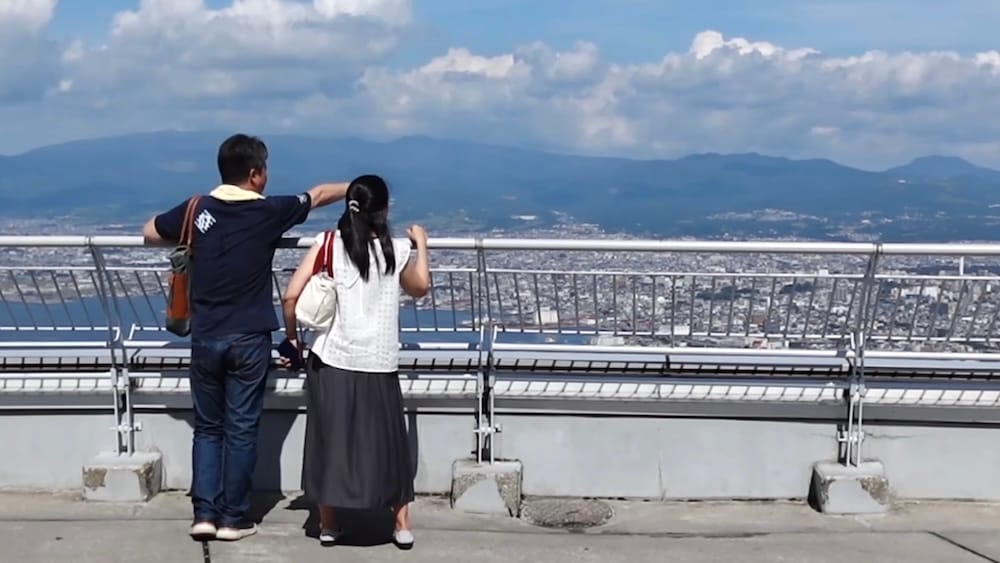
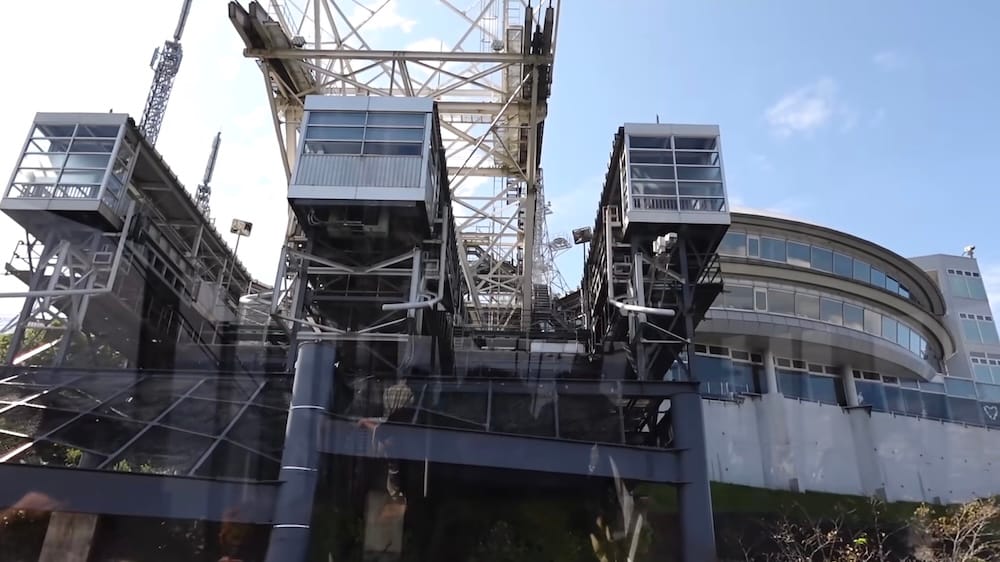
The summit observatory has multiple viewing areas, toilets, coin lockers, indoor spaces, shops, food and drink options, and a rooftop observation area. Large indoor windows also mean you can keep looking over Hakodate without spending the entire visit outside.
That makes lingering considerably easier, particularly when the temperature or wind at the top is less pleasant than conditions down in the city.
The Ropeway and summit observatory also have substantial accessibility provisions. Wheelchair users can remain in their chair in the gondola, elevators serve the relevant station and observatory levels, accessible toilets are available at both the base and summit, and a limited number of wheelchairs can be borrowed.
Those accessibility features apply specifically to the Ropeway station and summit-observatory system. I would not extend that description to hiking routes or every part of Mt. Hakodate.
Do you need a tour to visit Mt. Hakodate?
For the Ropeway itself, I don’t think so. We visited independently, and the experience is straightforward if you’re comfortable using Hakodate’s tram system and walking through Motomachi. You buy a ticket, take the gondola and explore the summit. There isn’t some hidden procedural challenge waiting to ruin your afternoon.
A guided visit becomes more useful when the thing you actually want solved is broader than the Ropeway: historical context through Motomachi, somebody else sequencing several Hakodate sights, or private transport when you do not want to stitch the day together yourself. I did not take either of the tours below, so I would choose between them based on the planning problem they solve rather than treating them as personal recommendations.
| Option | Best for | What it does | Main trade-off |
|---|---|---|---|
| Visit independently | Travellers mainly interested in the Ropeway and summit views | Use the tram/walk access, buy your own Ropeway ticket and control how long you stay | You handle the transport, timing and historical context yourself |
| Historic Port Walk & Mt. Hakodate Ropeway Tour | Travellers who want Motomachi and waterfront history tied into the mountain visit | A private English-guided outing of roughly 2–3.5 hours combining historic Hakodate with Mt. Hakodate and the Ropeway; current options include daytime and evening departures | More structure and expense than a viewpoint that is easy to visit independently |
| Hakodate private tour with licensed guide and vehicle | Travellers who want transport handled or need Mt. Hakodate folded into a wider sightseeing day | A six-hour private guided vehicle tour with pickup from the port or Hakodate city area and a choice of up to four Hakodate sights, including Mt. Hakodate | Mt. Hakodate is only one possible stop rather than the sole focus of the day |
If your main goal is simply to ride the Ropeway and look over Hakodate, independent still feels like the obvious baseline to me. The shorter guided option makes more sense when you want someone to connect the waterfront, Motomachi and the mountain into one story, while the private vehicle option solves a more practical transport problem and lets you combine Mt. Hakodate with several other sights.
How I would visit Mt. Hakodate next time
I would take the Ropeway again without much debate.
I loved the ride, loved watching Hakodate open up beneath us and especially loved finally understanding where the city sat between the water and mountains. What I would change is everything happening around the clock.
Our day was packed. We had already done plenty before reaching Mt. Hakodate and still had more sightseeing planned afterwards, which meant the visit was always going to have edges around it. We saw enough, enjoyed it enormously and never felt like the experience had failed because we didn’t spend hours at the summit.
But next time I would linger.
I would give myself more time to trace places we had already visited, look across both sides of the city and stop worrying quite so much about squeezing another attraction into the remaining daylight.
Before riding the Ropeway, Hakodate was still a collection of neighbourhoods and sights in my head. From the summit, it finally became one city.
Frequently Asked Questions
Is Mt. Hakodate worth visiting during the day?
We visited Mt. Hakodate during the day and I thought it was incredible. Daylight made it easier to understand Hakodate’s coastline, harbour, urban layout and surrounding mountains, even though we did not experience the famous night view.
How much time should I allow for Mt. Hakodate?
For a straightforward independent visit in light conditions, I would allow roughly 60 to 90 minutes from the lower Ropeway station and back again. Queues, sunset crowds, meals, photography or simply lingering at the summit can make the visit longer.
How do I get to the Mt. Hakodate Ropeway from Hakodate Station?
From Hakodate Station, you can take the tram to Jujigai in roughly five minutes, then walk about ten minutes to the lower Ropeway station. The approach is hilly, so the walk can feel more demanding than the distance suggests.
How much does the Mt. Hakodate Ropeway cost?
As of October 2026, the regular adult fare is ¥1,800 round trip or ¥1,200 one way, while children pay ¥900 round trip or ¥600 one way. Prices are the kind of detail I would verify again shortly before visiting.
What should I do if the Mt. Hakodate Ropeway is closed?
Bus, taxi, hiking and limited private-car access can provide alternatives, depending on the season, road restrictions and current conditions. I would check the live Ropeway status and road information before relying on any fallback.
Do I need a tour to visit Mt. Hakodate?
No. We visited independently, and the Ropeway itself is straightforward to use. A guided tour makes more sense if you also want Motomachi or waterfront history, private transport, or a structured sightseeing route.
This guide is also available in Spanish. [Leé la versión en castellano: Guía de Mt. Hakodate: reseña del Ropeway, vistas y cómo visitarlo]
This article contains affiliate links. If you book through one of these links, I may earn a commission at no extra cost to you.