
If Goryokaku is on your Hakodate list, there’s a ¥100 fishing museum in the same neighbourhood with a simulator that rocks you around for three minutes. Audrey and I went on a rainy day, as the second of two museums we used to wait out the weather, and I walked in with the bar set about as low as it goes.
It cleared the bar. The museum is small and a little specialised, but the fishing story behind it is real, the animals are good, and the simulator is more fun than it has any right to be at that price. What it isn’t is a reason to cross the city, because the whole case for it depends on you already being on the Goryokaku side. Below is what’s inside, what the simulator involves (including who should skip it), and the closure and transport details worth knowing before you go.
A ¥100 fishing museum on the Goryokaku side
Hokuyo (北洋) is the Japanese term for the Northern Pacific fisheries, which is the museum’s whole subject, and the full English name on most listings is the Hakodate City Northern Pacific Fishery’s Document Museum. I’ll stick with Hokuyo Museum. It’s run by the city, it opened in 1982, and its entrance sits beside the entrance to the Hakodate Performing Arts Center Harmony Goryokaku, so if you can find the arts centre, you’ve found it.
That puts it nowhere near Motomachi or the waterfront. You ride the tram to Goryokaku Koen-mae and walk about ten minutes from there, which makes it roughly half an hour from Hakodate Station door to door, and that half hour is the real cost of the visit, not the ¥100.
If Goryokaku is the plan and you’d like the fort explained rather than just photographed, there’s a guided history tour of the star fort and Goryokaku Tower, and you can see current availability for the guided Goryokaku tour. It covers the fort, the Magistrate’s Office and the tower, not this museum, so I’d fit the museum in before or after. Audrey and I wandered the park on our own, so I can’t vouch for the tour itself.
What’s on the floor besides the simulator
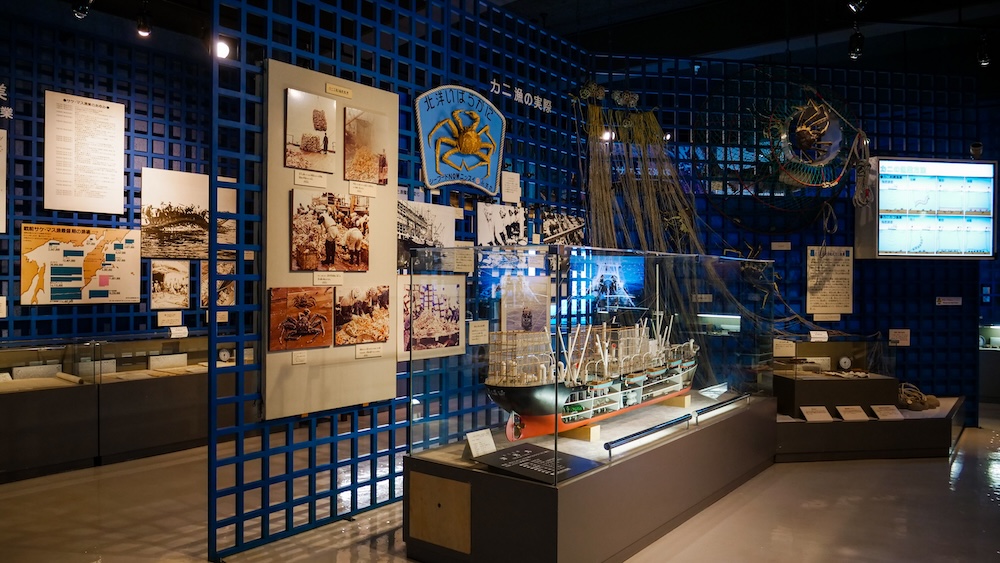
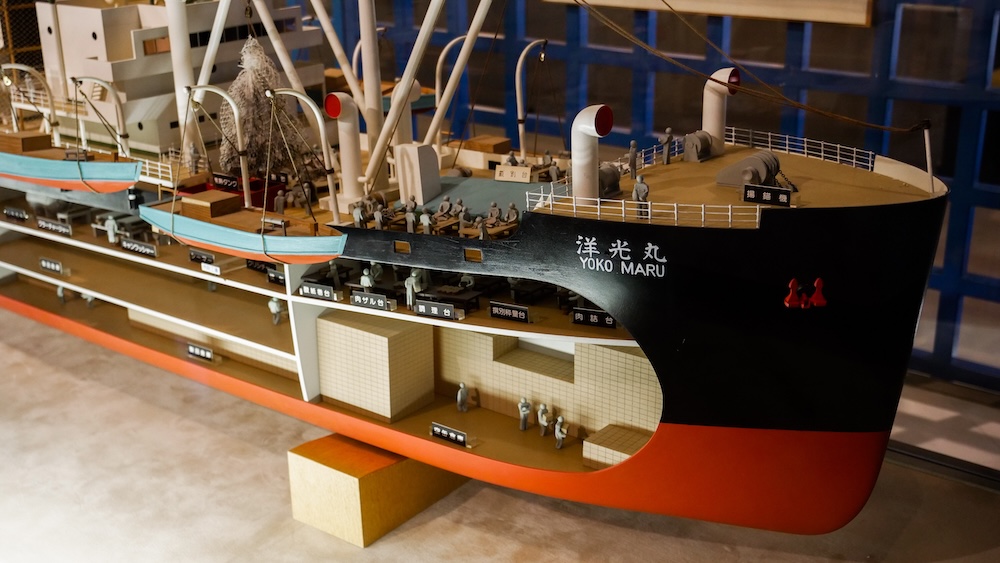
The museum’s first job is explaining why a Northern Pacific fisheries museum belongs in Hakodate at all. The city grew into a serious port partly by serving as the departure base for fishing in the Kuril and Okhotsk waters, and from 1929 until 1988 it was a base for mothership-style salmon and trout fishing. The displays follow that arc in three parts: the early northern fisheries, the history of Northern Pacific fishing, and the 200-nautical-mile era and the industry’s future.
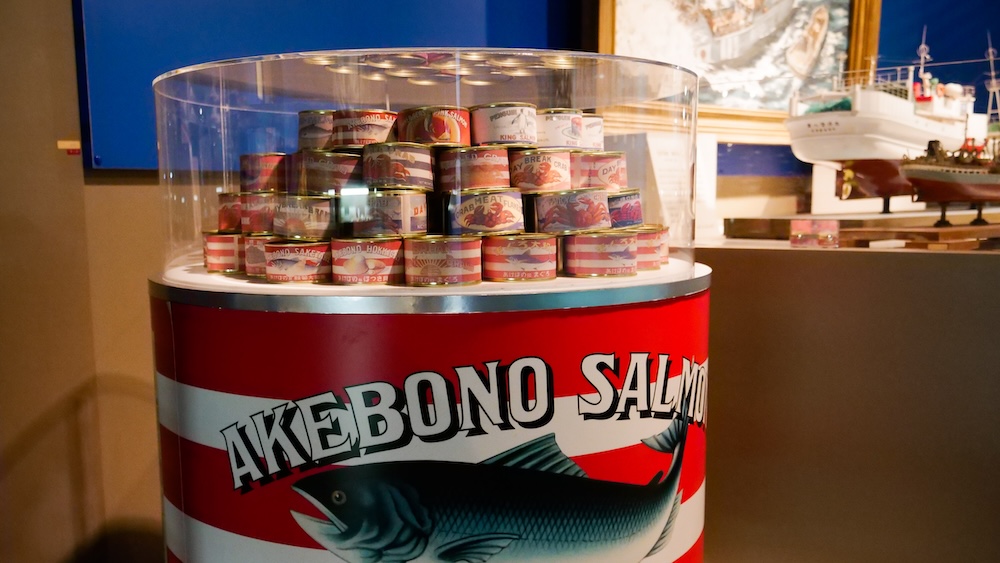
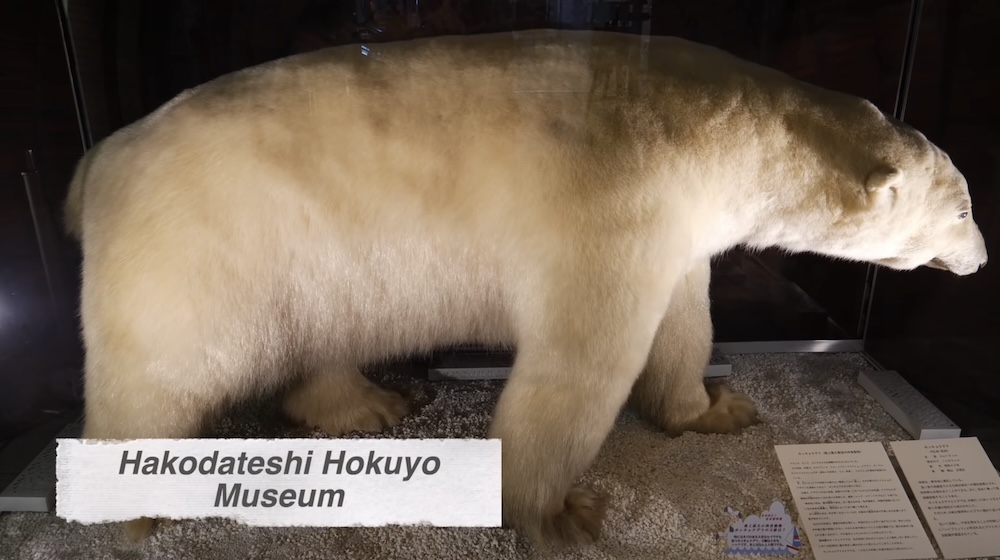
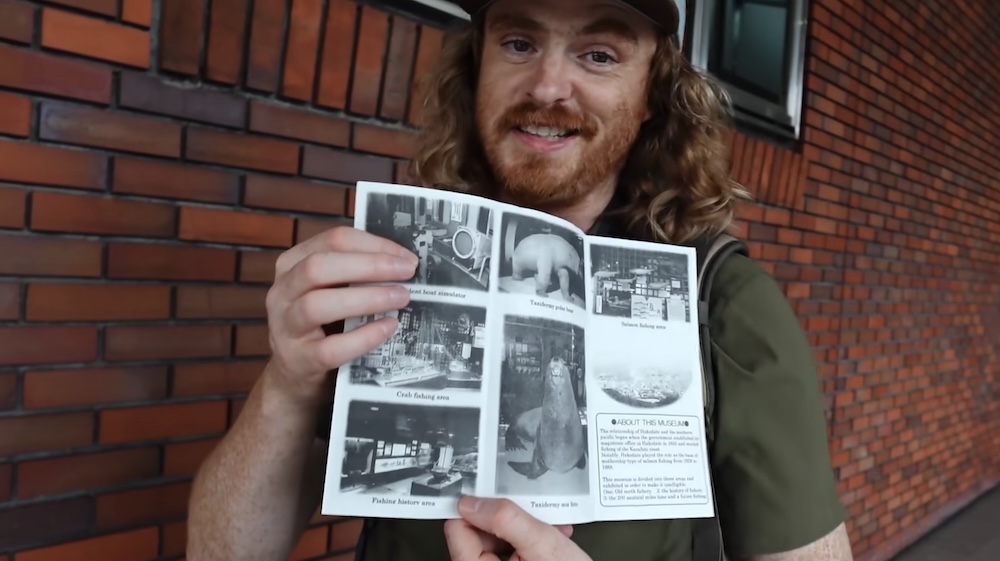
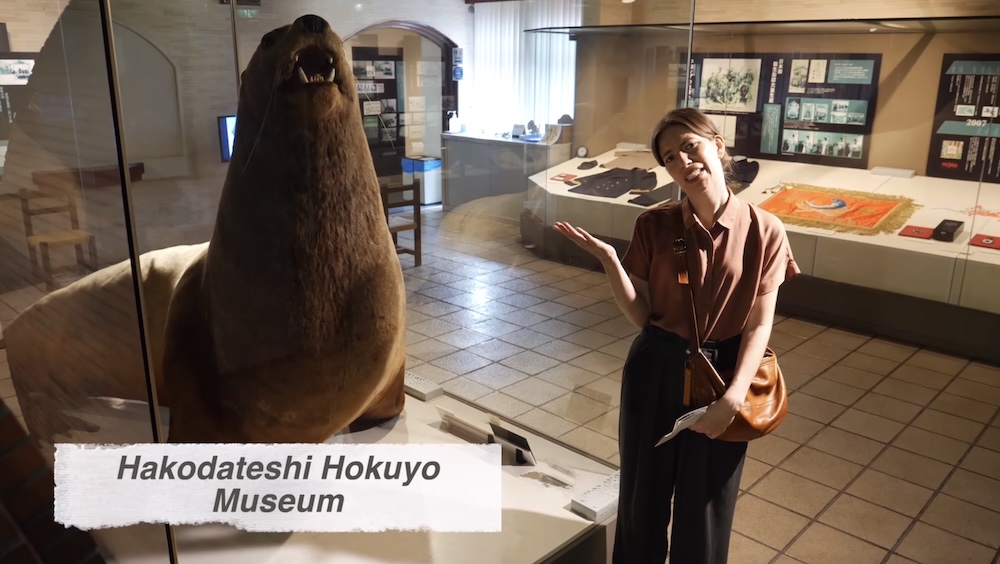
The city lists a single exhibition room, so don’t picture a sprawling place. The English pamphlet we picked up pictures a fishing-history area, a salmon-fishing area and a crab-fishing area, alongside the simulator and the taxidermy. Ship models, old photographs, fishing gear and a tower of vintage canned salmon fill out the working side of the story, and the animals are what stuck with me: a sea lion and a polar bear, with the polar bear stationed near the entrance. I keep announcing that I’m not a museum guy, and I still came out calling the displays fascinating, with the taxidermy at the top of the list.
The boat simulator: what it’s like and who should skip it
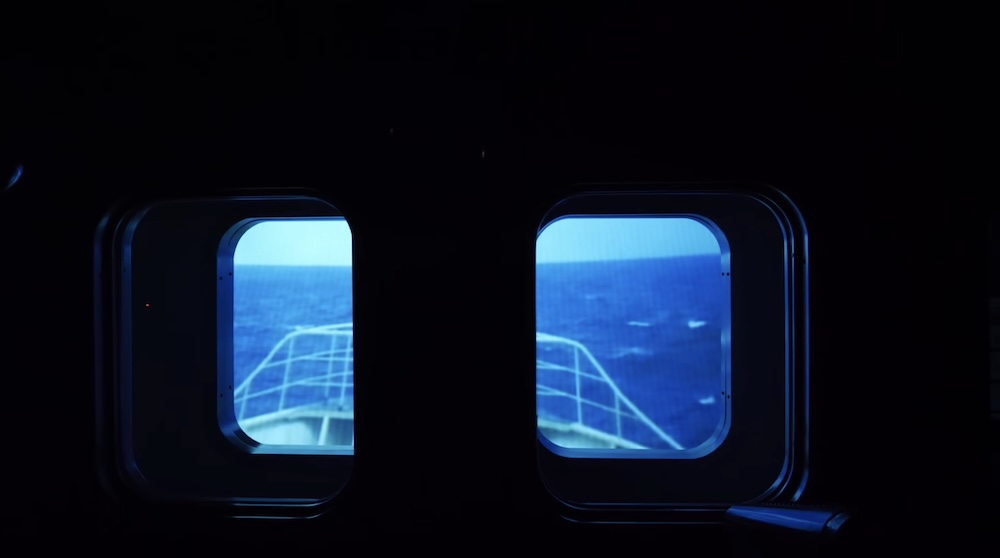
What the three minutes are like
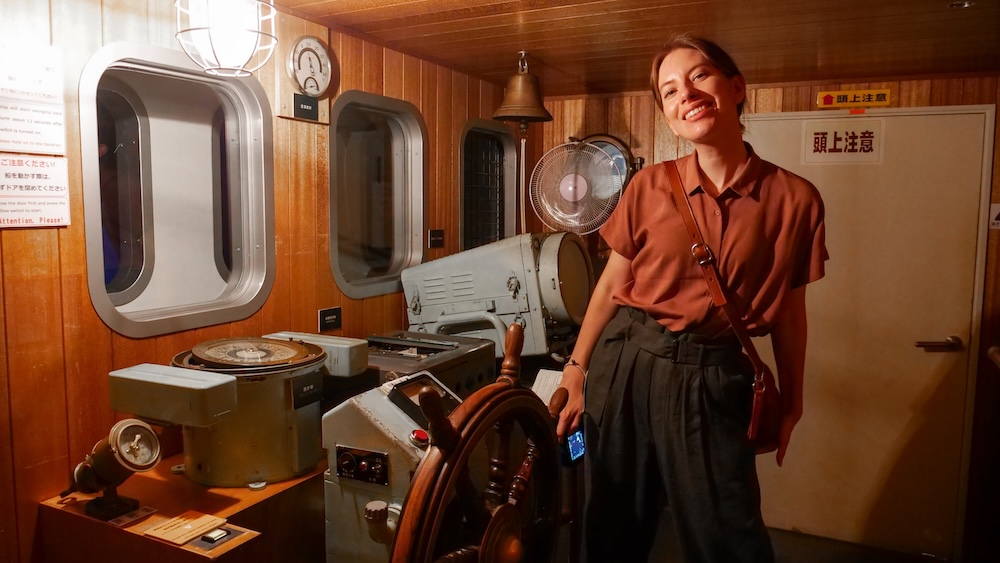
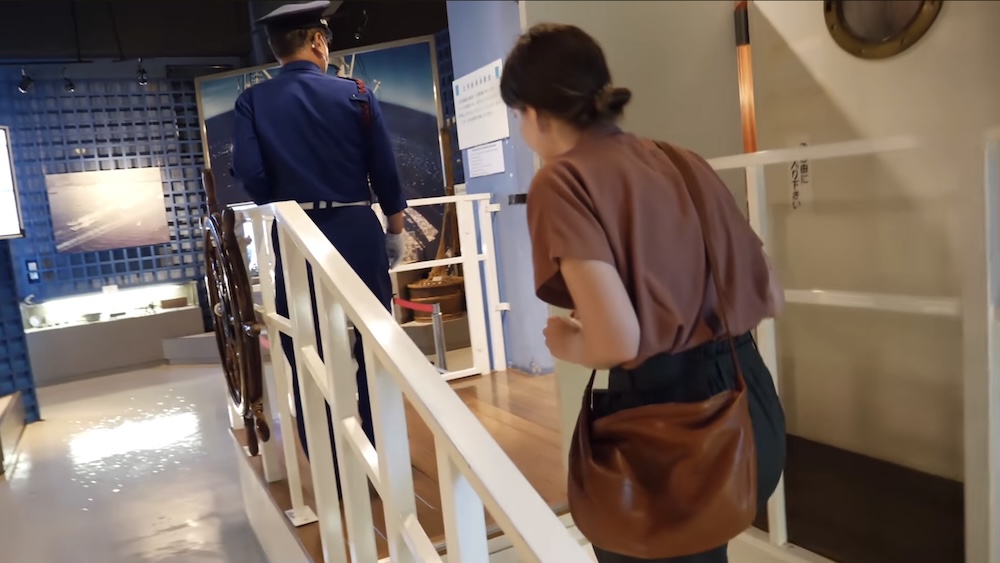
The simulator is a mock fishing-boat wheelhouse, ship’s wheel included, set on a raised platform with a railing. An attendant in a navy uniform and cap helped us get set up. We didn’t wait, nobody gave us rules that I remember, and arranging it took barely any effort. A screen puts rough seas in front of you while the booth rocks back and forth for about three minutes, and it’s currently listed as a three-minute run for up to twelve people at a time.
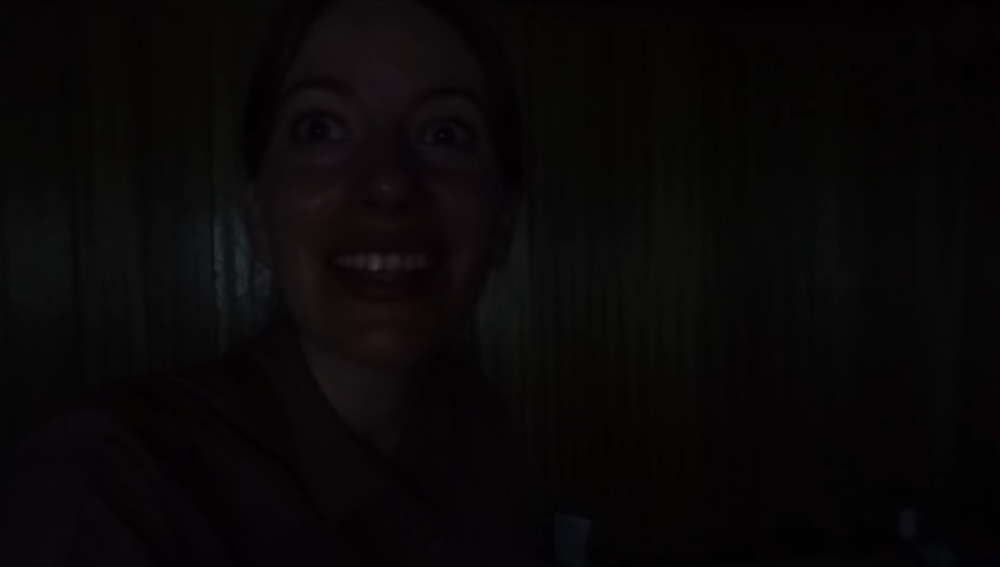
Audrey got dizzy, and afterwards she said she couldn’t imagine being a fisherwoman. I was happy when it stopped and still thought it was the most fun part of the museum. That’s the trick of it: three minutes of fake rocking, with a guaranteed exit, makes the subject physical in a way a glass case can’t.
Should you try it?
Yes, with two caveats. The first is motion sickness: three minutes was enough to make Audrey dizzy, so if you’re prone to it, I’d think twice. The second is access, since the booth sits up on that platform and I can’t tell you whether there’s a step-free way in, so ask if that matters.
The ¥100 admission was the whole bill for us, and I don’t know of any age or health rules, though I can’t promise none exist. Since the museum closes irregularly for maintenance, ask at the desk whether the simulator is running and included on the day you go.
¥100, irregular closures and the half-hour trip from the station
For what we expected and what it costs, this was an easy yes. The bar was low and I was pleasantly surprised, and on an otherwise bad-weather day I was just glad to have something to do. The catch is the calendar. Besides the New Year break, the museum shuts on irregular maintenance days, and the dates aren’t fixed, so if this is your rainy-day fallback, check first. The city’s museum page (in Japanese) is where changes to hours or closures show up.
Plan on 30 to 60 minutes. I didn’t time our visit, so that’s an estimate. We took photos inside, but I can’t vouch for the current photography rules, so ask at the desk before you start shooting. The pamphlet we picked up was in English, but I can’t promise English on the displays themselves.
Before you go (October 2026)
- Hours: 9:00–19:00 from April 1 to October 31; 9:00–17:00 from November 1 to March 31.
- Closed: December 31 to January 3, plus irregular maintenance days.
- Admission: ¥100 adults, ¥50 students.
- Getting there: tram to Goryokaku Koen-mae, then about a 10-minute walk (roughly 30 minutes from Hakodate Station). By bus, get off at Goryokaku Koen-iriguchi and walk about six minutes. A taxi from the station takes about 10 minutes.
- Parking: free for two hours with validation at the information desk, in a car park shared with the arts centre and the Hakodate Museum of Art.
Who should go, and who can skip it
Go if you’re already at Goryokaku Tower or the fort, if it’s raining, or if a ¥100 museum with a fake boat ride sounds like your kind of detour. Treat it as a bolt-on, an hour at most, and the simulator and the animals will make it better than the name suggests.
If you’re based around the station and Motomachi with limited time, I’d leave it, because half an hour each way costs more than the ticket price implies. And if you haven’t booked a bed yet and Goryokaku is on your list, a base near Goryokaku Tower puts the museum in the neighbourhood instead of half an hour away, so it’s worth a look at hotels near Goryokaku Tower before you settle. If you’re prone to motion sickness, skip the simulator and keep the museum.
My rule is to let Goryokaku make the decision. If you’re there anyway, spend the ¥100 and the hour, and if you’re not, spend that hour somewhere that’s already on your way.
Frequently Asked Questions
Is the Hakodate City Hokuyo Museum worth visiting?
If you’re already around Goryokaku, yes. I walked in with the bar set low and Audrey and I both enjoyed it more than we’d expected, with the ¥100 ticket, the simulator and the animals doing most of the work. Plan on 30 to 60 minutes, and I wouldn’t cross the city just for it.
What is the Hokuyo Museum’s full name?
Hokuyo (北洋) is the Japanese term for the Northern Pacific fisheries, and the full English name on most listings is the Hakodate City Northern Pacific Fishery’s Document Museum. I call it the Hokuyo Museum for short.
What is the boat simulator like?
It’s a mock fishing-boat wheelhouse, ship’s wheel included, on a raised platform with a railing. A screen puts rough seas in front of you while the booth rocks back and forth for about three minutes, and it’s currently listed as a run for up to twelve people at a time. An attendant helped us get set up and we didn’t wait.
Who should skip the simulator?
Anyone prone to motion sickness should think twice, since three minutes was enough to make Audrey dizzy. The booth also sits up on a platform and I can’t tell you whether there’s a step-free way in, so ask if that matters.
When is the museum open, and when is it closed?
As of October 2026 it’s open 9:00–19:00 from April 1 to October 31 and 9:00–17:00 from November 1 to March 31. It’s closed from December 31 to January 3 and on irregular maintenance days, so check first if this is your rainy-day fallback.
How much does it cost?
Adult admission is ¥100 and students pay ¥50, as of October 2026. The ¥100 was the whole bill for us, so I’d ask at the desk whether the simulator is running and included on the day you go.
How do I get there from Hakodate Station?
Take the tram to Goryokaku Koen-mae and walk about ten minutes, which makes it roughly half an hour from the station. By bus, get off at Goryokaku Koen-iriguchi and walk about six minutes, and a taxi from the station takes about ten minutes.
Is there English information inside?
The pamphlet we picked up was in English, but I can’t promise English on the displays themselves.
This guide is also available in Spanish. [Leé la versión en castellano: Guía del Museo Hokuyo de la Ciudad de Hakodate (Museo de Pesca del Pacífico Norte): historia pesquera y el simulador de barco]
This article contains affiliate links. If you book through one of these links, I may earn a commission at no extra cost to you.