
Two days in Hakodate is where the city starts to make a lot more sense.
With only one day, you have to make some fairly ruthless choices. Hakodate Morning Market, the waterfront, Motomachi and Mt. Hakodate naturally pull you toward the western side of the city, while Goryokaku sits far enough away that forcing it into the same sightseeing day creates unnecessary movement and a fair amount of clock-watching.
Give yourself two days and that problem mostly disappears.
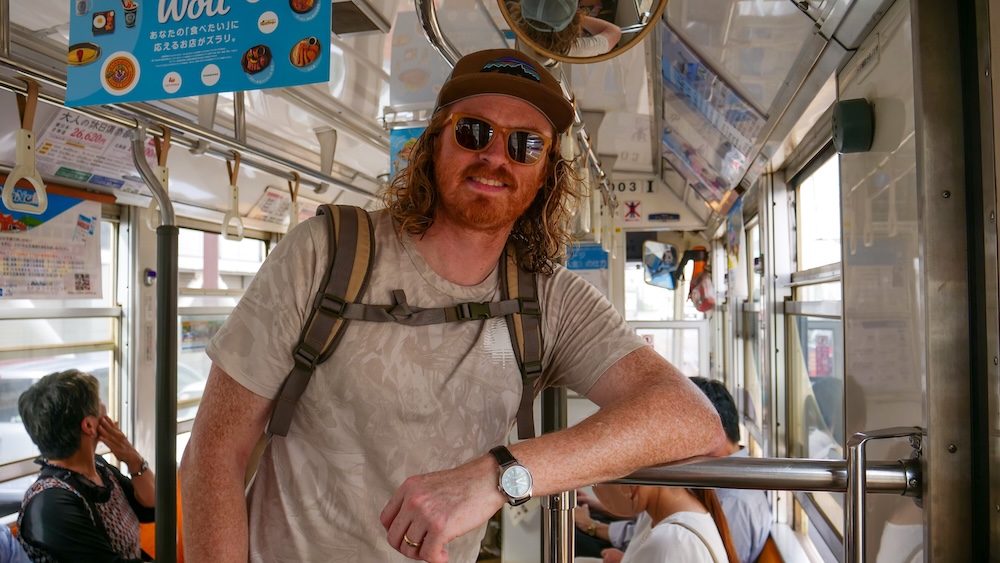
Audrey and I actually spent around three action-packed days in Hakodate, so this isn’t the exact sequence we followed in real time. It’s how I would organize two days now that we’ve experienced the city, walked the hills, ridden the trams, visited both major viewpoints and figured out that Hakodate is considerably more spread out than it first appears.
My four priorities would be straightforward: Hakodate Morning Market, Motomachi and Hachimanzaka, Mt. Hakodate, and Goryokaku. Everything else is negotiable.
I would make Day 1 the busier one, covering the market, waterfront and western historic district before finishing at Mt. Hakodate. Day 2 would deliberately be easier, with Goryokaku as the main event and enough space left over for a long meal, a museum, bad weather, tired legs or whatever else inevitably happens once an itinerary leaves the screen and meets an actual human body.
That matters because a good two-day itinerary shouldn’t just be a one-day itinerary with twice as many attractions rammed into it.
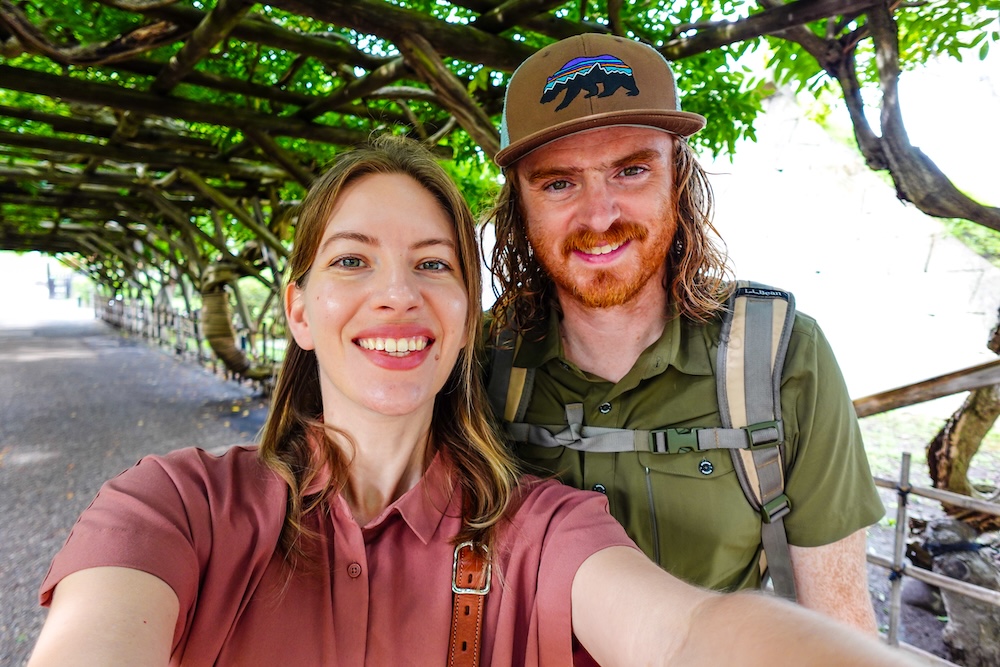
Is Two Days Enough for Hakodate?
For the main sights on a first visit, I think two days works very well.
I wouldn’t say two days is enough to finish Hakodate. We spent roughly three days here and still left feeling we could have stayed longer. Before arriving, I had thought of Hakodate more as a stopover on our way north through Hokkaido; by the end, we were talking about how easy it would have been to stay several more days.
But that’s a different question from whether you can have a satisfying first visit in two days. You can.
The reason is that Hakodate’s biggest first-visit attractions divide quite neatly into two sightseeing systems. Around Hakodate Station and the western side you have the Morning Market, waterfront, Motomachi, Hachimanzaka and Mt. Hakodate. Farther inland you have Goryokaku Park and Goryokaku Tower.
The trams connect these areas well, but this isn’t one compact district where you step outside your hotel and casually wander past everything. From Hakodate Station, reaching Goryokaku means a tram ride followed by additional walking. That’s perfectly reasonable when Goryokaku has its own day. It’s much less appealing when you’re trying to wedge it between a seafood breakfast, Motomachi’s hills and a trip up Mt. Hakodate.
That is what the second day really buys you: not just more attractions, but less logistical friction.
| Priority | How I’d Treat It |
|---|---|
| Morning Market | Protect |
| Motomachi and Hachimanzaka | Protect |
| Mt. Hakodate | Protect |
| Goryokaku Park and Tower | Protect |
| Mashu-maru | Add if time and interest allow |
| Museums | Excellent flex options |
| Extra shopping and historic interiors | Easy to trim |
| Onuma or distant side trips | Save for a longer stay |
Why I Would Make Day 1 Busier Than Day 2
I wouldn’t try to make both days equally full just because symmetry looks tidy on paper.
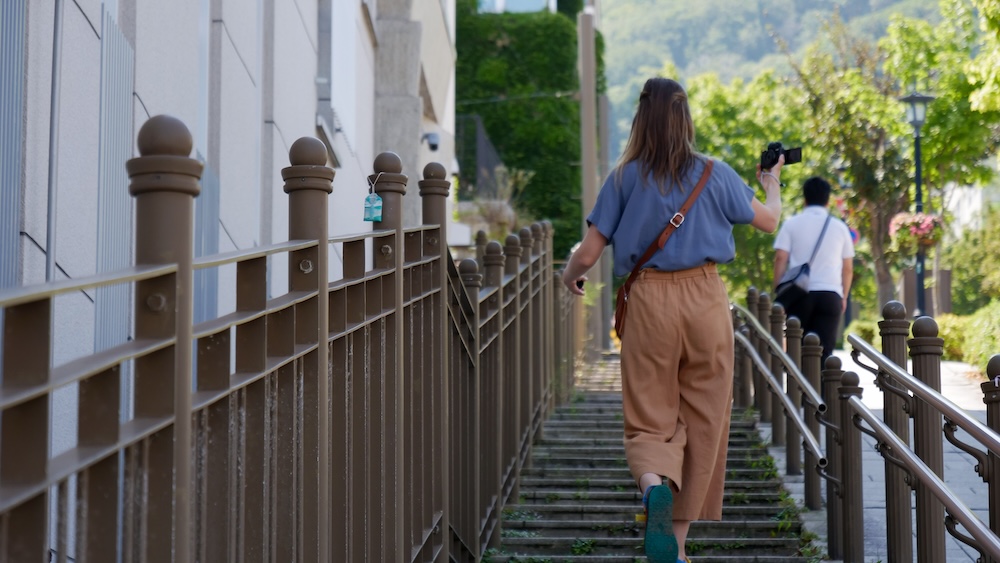
Day 1 naturally carries more walking, more elevation and more individual stops. You start around Hakodate Station, work your way along the waterfront, then climb into Motomachi before eventually heading up Mt. Hakodate. Day 2 can be much more concentrated around Goryokaku, with food and optional attractions added according to your energy rather than because some itinerary template says every hour needs to be occupied.
We found Hakodate pleasant to explore on foot, but it is more spread out than we initially expected. We regularly used the trams partly because they saved our legs for the sections where walking actually added something—especially the hills around Motomachi.
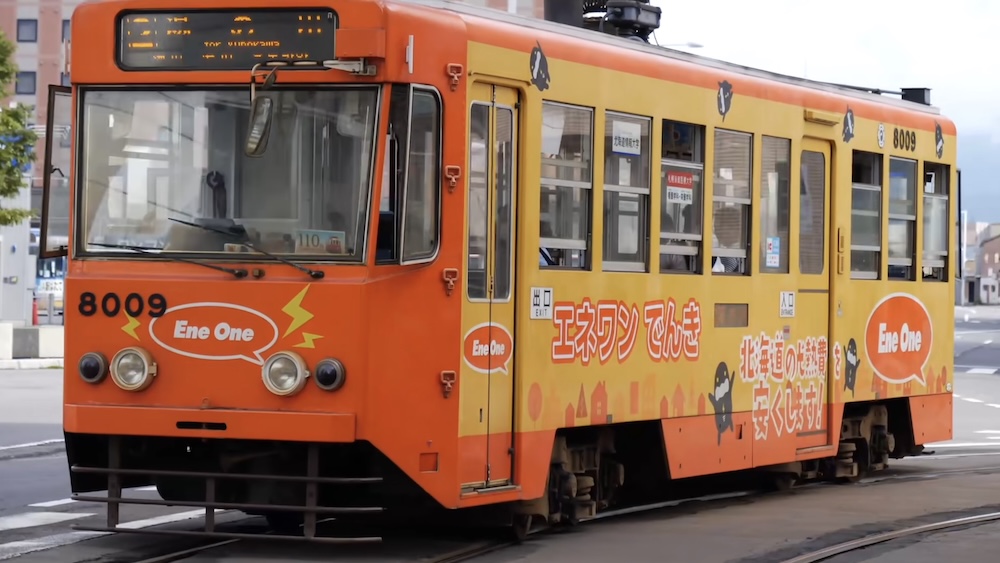
Current tram fares are distance-based, and a one-day tram pass is available if your movements justify it. I wouldn’t turn the entire itinerary into a transport calculation, though. My rule would be simpler: if a tram removes a dull cross-city walk and saves energy for somewhere interesting, take it.
You’ll get enough exercise later.
Where to Stay for This Two-Day Itinerary
We stayed outside Hakodate’s main centre, but tram lines 2 and 5 passed near our hotel, so being away from Hakodate Station wasn’t a major problem for us. For a short two-day visit, though, I would put convenience fairly high on the list. Day 1 begins around Hakodate Station and the Morning Market, while Day 2 requires moving toward Goryokaku, so a hotel near the station or with easy tram access keeps both halves of the itinerary straightforward.
I haven’t personally tested the current Hakodate hotel inventory, so I wouldn’t single out a property just to fill this section. If I were booking this itinerary now, I would compare current Hakodate hotel options on Booking.com and pay more attention to station and tram access than to being beside one particular attraction.
Day 1: Morning Market, Waterfront, Motomachi and Mt. Hakodate
This is the more ambitious day, but geographically it has a nice flow. You begin beside Hakodate Station, move west through the waterfront and then gradually climb into Motomachi and toward Mt. Hakodate instead of zigzagging back and forth across the city.
Start at Hakodate Morning Market
I would make Hakodate Morning Market your first stop.
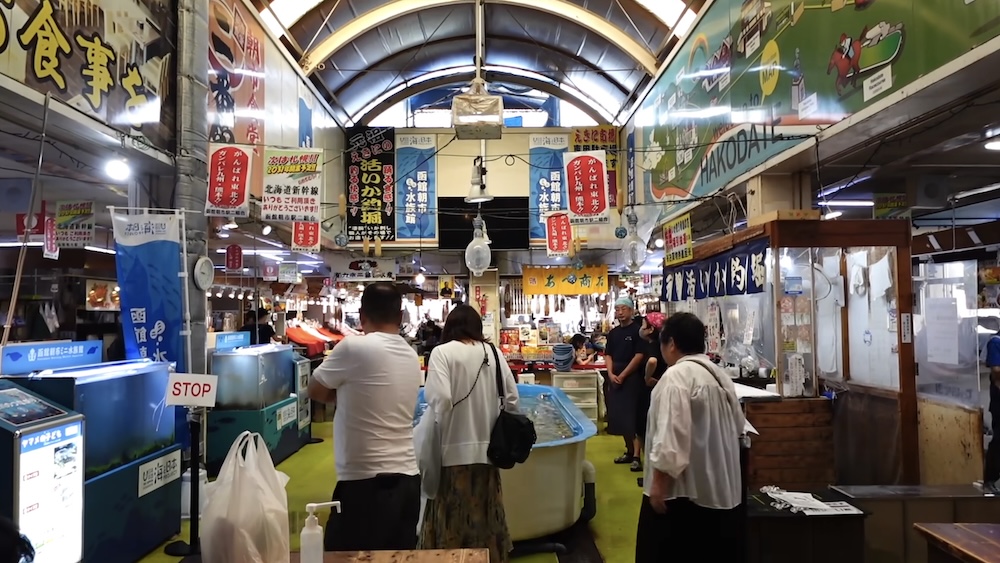
It sits almost beside Hakodate Station and operates from early morning into the early afternoon, although individual shops and restaurants keep their own schedules. That makes it a natural breakfast stop rather than something you should save until later and hope is still lively.
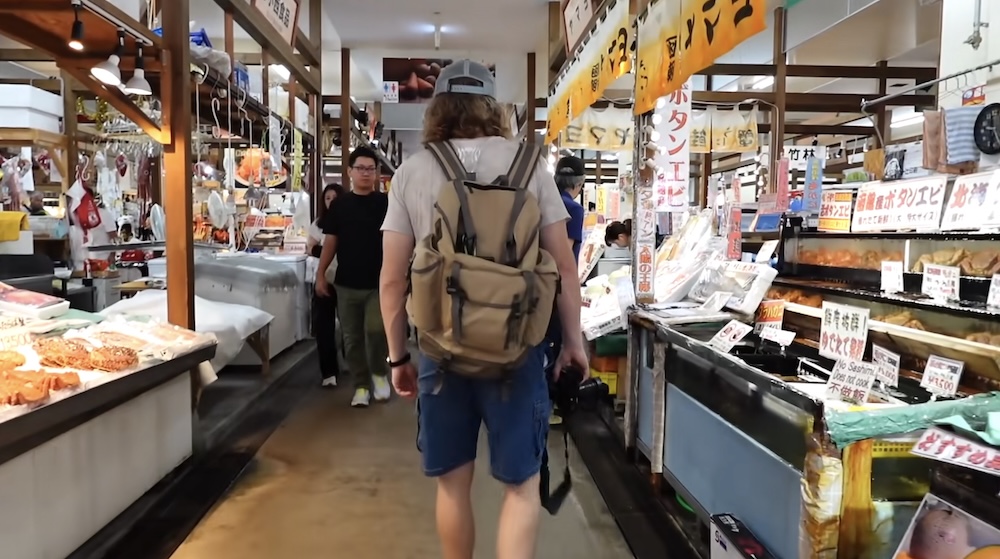
We arrived expecting a seafood market and ended up discovering something much larger than we’d imagined. We walked through one section, thought we had a reasonable sense of the place, and then found another larger food area beyond it. There were enormous crabs, fish laid out on display, sashimi being prepared and that unmistakable salty seafood smell hanging over everything.
I enjoyed that part. I also understand that being hit with the smell of fish early in the morning may not be everyone’s idea of a gentle introduction to the day.
We ate breakfast here, including fresh seafood over rice, and I tried fresh squid. I had eaten plenty of dried squid while living in South Korea, so what surprised me was how tender the fresh version was by comparison.
This is also one of the easiest places in the itinerary to combine food and sightseeing without creating a separate restaurant detour. Have breakfast, wander through the stalls, see what’s being sold and then move on. I wouldn’t try to sample everything simply because you have a second day available.
If food is one of your bigger reasons for visiting Hakodate and you’d rather have someone explain what you’re looking at instead of wandering independently as we did, there is also a current 1.5-hour private market tour with seafood tasting options. I haven’t taken that tour myself, but it fits neatly into the same morning window without changing the rest of this route. You can check current availability for the Hakodate Morning Market seafood tour.
There is still a lot of Hakodate ahead of you.
Follow the Waterfront and Decide Whether Mashu-maru Is Worth Your Time
From the market, continue toward the waterfront.
This is where one of our favourite accidental discoveries in Hakodate happened. We were wandering around the harbour without much of a plan—or much of a sense of direction—when we came across a huge ship called the Mashu-maru.
It turned out to be a former railway ferry that now operates as a museum, and we went aboard almost on impulse. You can move through parts of the old ship, see historic equipment up close and get surprisingly good views from the vessel itself. It had that rare museum quality of being educational without feeling like we’d accidentally signed up for homework.
I would still call Mashu-maru optional on a two-day itinerary.
That probably sounds strange given how much we liked it, but this is the kind of decision a short itinerary requires. Something can be excellent without being mandatory. The good news is that Mashu-maru sits right by the station and harbour, so adding it doesn’t create much geographic nonsense. Current adult admission is ¥500, and opening hours vary by season.
If ships, transportation history or quirky museums interest you, go aboard. If you’re already moving slowly or would rather preserve more time for Motomachi, keep walking.
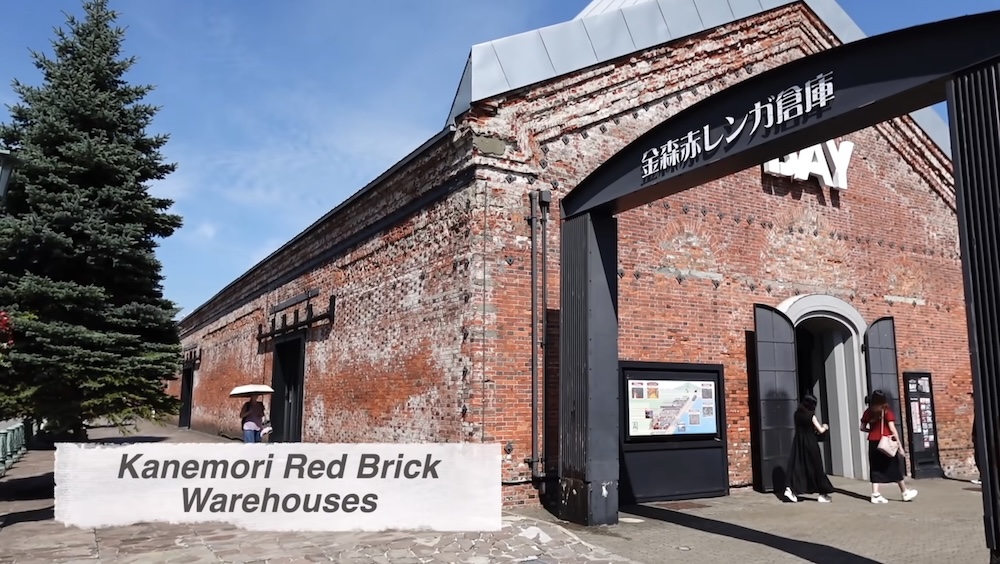
The Kanemori Red Brick Warehouses also fit naturally along this waterfront progression. We enjoyed looking around, but I wouldn’t turn them into a major time commitment unless shopping, cafés or souvenir hunting are genuinely part of what you want from the day. It’s very easy to spend an hour somewhere simply because there are shops in front of you. That doesn’t necessarily make it the best use of a limited two-day visit.
Climb Hachimanzaka and Explore Motomachi
Eventually the terrain stops being quite so cooperative.
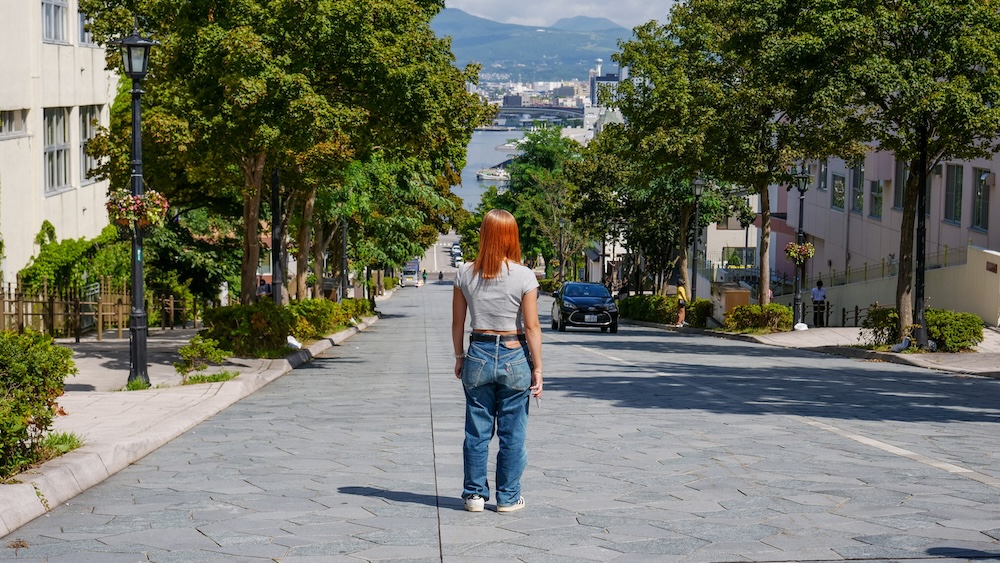
One of the most recognizable streets in Motomachi is Hachimanzaka, which climbs steeply away from the harbour. We did it on a hot and humid day, and I remember looking uphill and realizing this was not going to be one of those sightseeing stops where you jump out, take a picture and continue without breaking a sweat.
“The heat, the heat, the heat” was about where my sophisticated travel commentary landed.
We had been living around the Canadian Rockies and apparently considered ourselves mountain people by this point. Hakodate’s humidity offered a useful adjustment to that confidence.
The reward is the perspective back toward the harbour, and the climb also places you right in the Motomachi district. One current caution is worth taking seriously here: Hachimanzaka remains an active road, and Hakodate has specifically warned visitors not to stand in the roadway for photos or wander onto neighbouring private property and school grounds. Enjoy the view, take your photo from somewhere sensible and remember that people still use this street for things other than Instagram.
From there, I would simply wander through Motomachi rather than trying to attack it like a checklist. Audrey and I visited the Hakodate Orthodox Church, the Roman Catholic church and St. John’s Anglican Church, and the combination of steep streets, harbour views and Western-influenced architecture gives this part of Hakodate a look that feels quite different from many Japanese cities.
You don’t need to build the afternoon around entering every church. Current visiting hours differ between them, Sunday worship affects access and some buildings have seasonal closures, so I would think of interiors as a bonus rather than something the whole route depends on.
The neighbourhood itself is the experience. Walk the streets, see the churches, enjoy the changing views and let the district lead you toward the base of Mt. Hakodate.
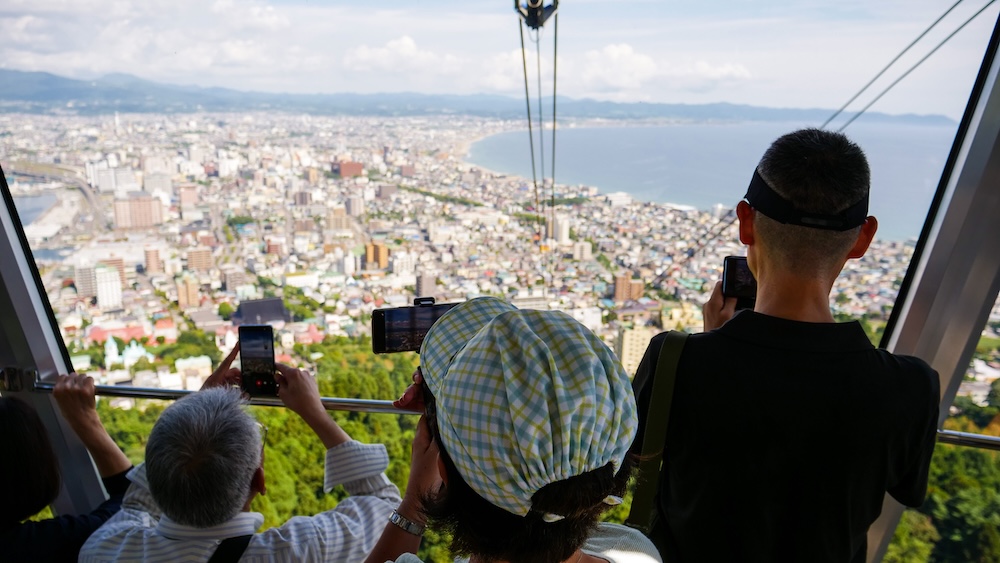
Finish the Day at Mt. Hakodate
Mt. Hakodate is one of the experiences I would protect even if something else has to disappear.
We rode the Ropeway during the day in excellent weather, and what stayed with me most wasn’t simply that the view was impressive. It was that I finally understood the shape of the city.
From street level, we had mostly experienced Hakodate from its harbour side. From the summit, suddenly there was another coastline, more of the city, mountains and farmland stretching away in the distance. Hakodate was much larger and more geographically varied than we’d realized while wandering around below.
The Ropeway itself takes roughly three minutes, and the current adult round-trip fare is ¥1,800. The bigger decision is when you want to go.
We only experienced Mt. Hakodate during daylight, and I was very happy with that. The visibility was excellent, we could properly study the geography around us, and there was a breeze at the top that felt fantastic after sweating our way through Motomachi.
The night view is the famous alternative, and if seeing Hakodate illuminated is important to you, it makes sense to use the evening here. Current operating guidance recommends roughly 30 minutes after sunset for the developed night view, but that overlaps with the busiest period; the rooftop observatory can be heavily crowded for one to two hours after sunset.
So I wouldn’t automatically tell everyone that night is better.
Daytime gave us a fantastic experience and made the city’s geography much easier to understand. Night offers a different atmosphere, but you should go knowing that you’re also choosing a potentially busier visit.
Buying an advance QR ticket doesn’t give you priority boarding, either. It saves you from exchanging a physical ticket, but you still join the Ropeway queue like everyone else. Weather, wind and scheduled maintenance can also affect service, so Mt. Hakodate is one attraction where I would check the current situation before heading over.
If you’d prefer to have someone handle the historic context and route through this part of the city, a current guided option combines the waterfront, Motomachi and Hachimanzaka with the Mt. Hakodate Ropeway in roughly two to three and a half hours, with daytime and evening versions available. We explored these places independently, so this isn’t a tour I’ve personally taken, but it is a sensible alternative for travellers who would rather concentrate the heritage-heavy part of Day 1 into one guided block. You can see current details for the Historic Port Walk and Mt. Hakodate Ropeway tour.
Once you’ve come down, I would be happy to call Day 1 finished. You’ve already covered the market, waterfront, a substantial uphill historic district and one of Hakodate’s major viewpoints.
You don’t need another attraction to prove you travelled hard enough. Go eat something.
Day 2: Give Goryokaku Room to Breathe
Day 2 is where I would deliberately change gears.
Rather than moving continuously across the city, head to Goryokaku and give the area enough time to work as both a park visit and an elevated viewpoint. This was one of the places that reminded me how different an attraction can feel from the ground compared with seeing it from above.
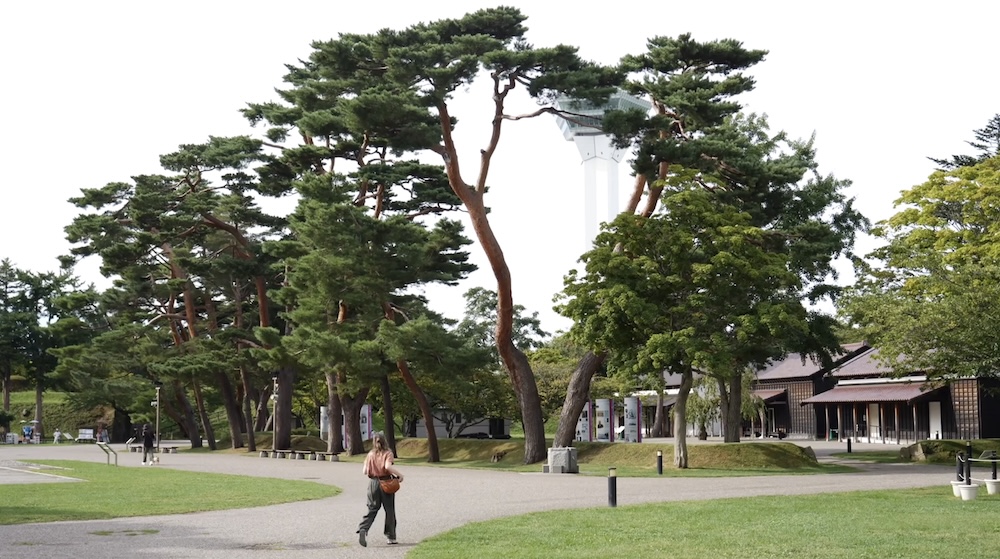
Walk Goryokaku Park Before Going Up the Tower
We arrived at Goryokaku before the Tower had opened, so we started by walking through the park. That turned out to be a very good sequence.
Goryokaku Park currently opens from 5:00 in the morning, several hours before the Tower’s regular 9:00 opening. I’m not suggesting you wake up before dawn and begin speed-walking through a star fort in the dark just because the gate technically allows it. This is supposed to be the less ridiculous day.
But the early access means the park can stand on its own rather than being treated as scenery you glance at from the Tower.
At ground level you see the moats, bridges, defensive walls and central spaces in a way the aerial view can’t replicate. We climbed onto sections of the fortifications and looked back across the water toward the mountains, but what I also remember is how normal the park felt.
Schoolchildren were cycling through. People were walking and jogging. Goryokaku wasn’t functioning only as a historical attraction preserved for visitors; local people were using it as part of their everyday environment.
That gave the place more life.
The park itself is free, so there’s no reason to hurry through it simply because you plan to pay for the Tower afterward.
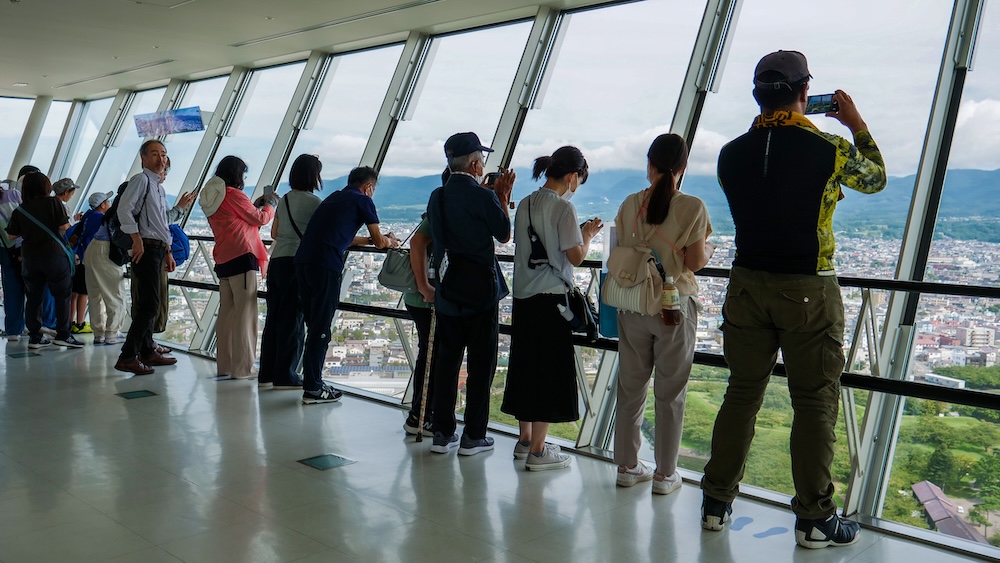
Then Go Up Goryokaku Tower
Once you’ve seen the fort from ground level, go up the Tower.
Current regular opening hours are 9:00 a.m. to 6:00 p.m., and adult admission is ¥1,200, although special seasonal hours can sometimes differ.
I originally assumed the main purpose of Goryokaku Tower would be to look down on the fort’s famous star shape. Obviously that’s a major part of the experience, but what surprised me was how much more of Hakodate we could see.
The view stretches across the city toward the harbour, Mt. Hakodate and the wider landscape. We happened to get beautiful blue skies, which certainly helped, but the bigger surprise was that the experience did not feel repetitive after Mt. Hakodate.
Before visiting, I wasn’t sure whether two paid viewpoints would be overkill. After doing both, I wouldn’t cut either from a two-day first visit.
Mt. Hakodate gives you the dramatic geography of Hakodate between the water, along with the wider landscape beyond the city. Goryokaku Tower is much more anchored to the urban landscape and the geometric fort directly below you.
They are different enough to earn separate places in the itinerary.
If the fort’s history is one of your main reasons for coming, there is also a current guided Goryokaku option that spends roughly two and a half to three and a half hours covering the park, Hakodate Magistrate’s Office and the Tower. We visited Goryokaku independently, so I can’t review the tour from personal experience, but it offers more historical interpretation than this itinerary needs to provide. You can check current availability for the Goryokaku Star Fort and Tower history tour.
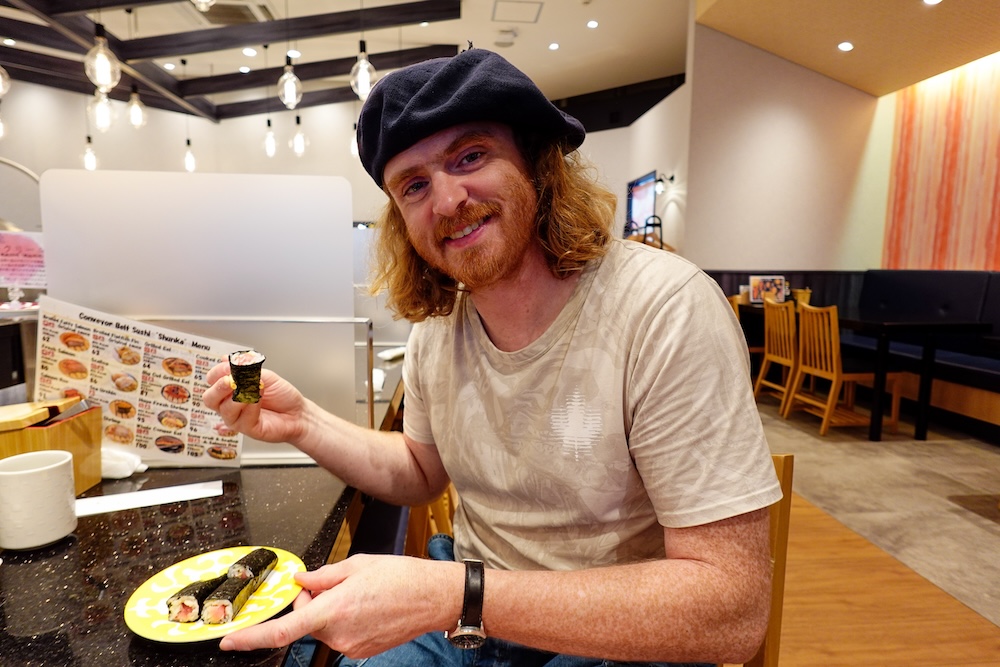
Let Lunch Be Part of Day 2 Instead of Another Deadline
One thing I like about giving Goryokaku most of the day is that lunch can actually feel like lunch.
We have several food memories from around this area, but none of them needs to become compulsory. Shunka Sushi nearby Goryokaku Tower is the strongest personal recommendation simply because we liked it enough to eat there twice.
Our first visit happened on the night we arrived in Hakodate, when we were so jet-lagged that filming wasn’t remotely appealing and staring blankly into space between bites was about the extent of our ambition. We liked the meal enough to come back later and properly enjoy the conveyor-belt sushi, udon and other dishes.
Shunka is still near the Tower with separate lunch and dinner service, so it’s an easy fit if sushi sounds good.
We also visited the Lucky Pierrot branch near Goryokaku. I had low expectations because the clown branding looked wonderfully cheesy, and we’d been seeing Lucky Pierrot signs around the city wondering what exactly was going on.
Then the burgers were better than I expected.
We tried the Chinese Chicken Burger and a tonkatsu burger, plus fries. It was fast food, absolutely, but it was fun fast food and the strange décor made the meal memorable. That branch is still operating near the Tower.
If you only want something sweet, Milkissimo inside the Tower building is another easy option. We tried berry, pumpkin and purple sweet potato gelato there. Audrey and I agreed that berry won. We disagreed about second and third place, which is about as serious as the gelato dispute became.
You don’t need to eat at all three places. That would turn a relaxed Goryokaku day into a competitive eating schedule.
Pick whatever sounds good and enjoy having enough time to sit down.
Add a Museum if You Still Want More
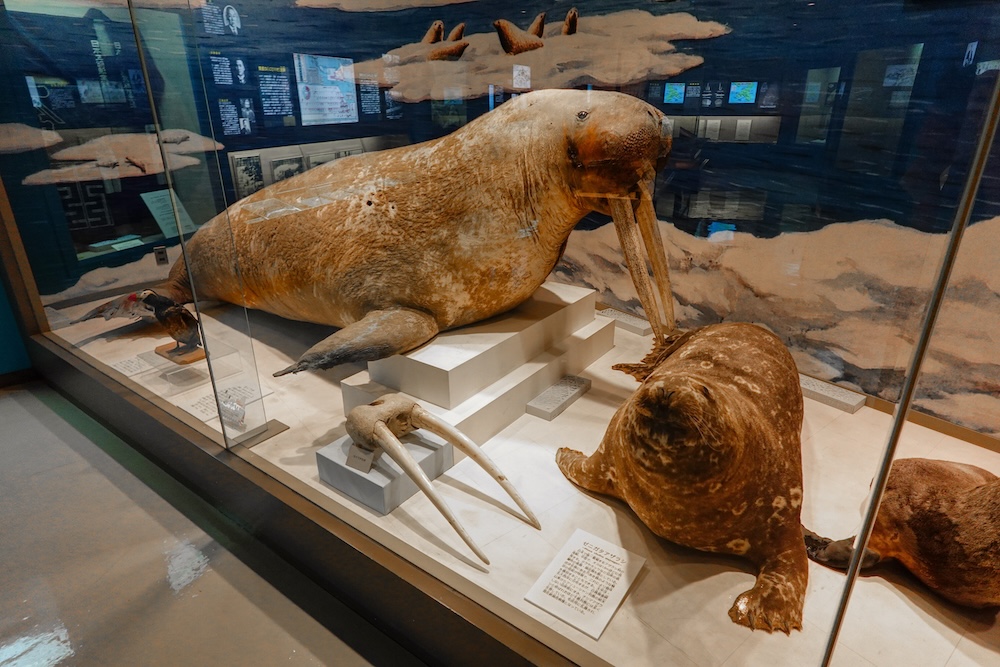
Hakodate surprised me with its museums.
I’m not a huge museum guy, and I said some version of that repeatedly while we were there, yet several of the museums ended up being genuinely enjoyable rather than things I endured because rain forced us indoors.
If you want another attraction after Goryokaku, the Hakodate City Hokuyo Museum makes geographic sense because it’s in the same broader area. Current general admission is only ¥100, and this is where we tried the fishing boat simulator that rocks you around as though you’re out at sea.
Audrey became dizzy pretty quickly. Three minutes was enough.
I enjoyed the museum itself much more than I’d expected, and it works well as the sort of optional stop you can add when you still have energy without derailing the day.
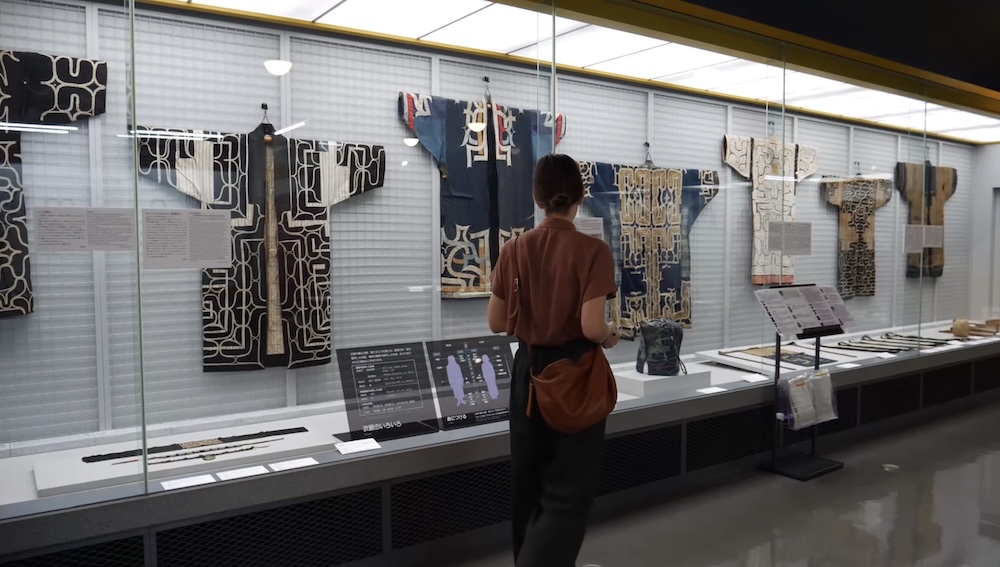
The Hakodate City Museum of Northern Peoples was another strong museum for us, but it sits over in western Hakodate. If weather forces you to reshuffle Day 1, that’s where I would use it rather than crossing the city on Day 2 simply because somebody told you it’s a good museum.
This is where I think two days becomes much more enjoyable than one. You can make choices based on how you’re actually feeling.
If Goryokaku has taken longer than expected, skip the museum. If you’re still energetic and want more, add it. If you feel like sitting over coffee or heading back to your hotel for a while, that is also a perfectly legitimate use of the afternoon.
You’ve already seen the important stuff.
What to Do if the Weather Doesn’t Cooperate
Our own Hakodate visit gave us hot and humid weather around Motomachi, rain that pushed us toward museums, and bright clear conditions at Goryokaku. After that experience, I would be reluctant to build a two-day itinerary where every attraction has to happen at one exact time or the whole thing falls apart.
Mt. Hakodate is the most obvious weather-sensitive piece.
If the summit is buried in cloud or the Ropeway isn’t running because of weather or maintenance, I wouldn’t throw away the entire western day. Keep the Morning Market, waterfront and Motomachi, then see whether Mt. Hakodate can move to Day 2 if conditions improve.
I also wouldn’t automatically swap both days wholesale. The Morning Market has its own useful early window, church access varies, museums have their own schedules and Goryokaku Tower doesn’t run on the same timetable as the park.
It’s easier to move individual pieces than reverse the whole machine.
On a rainy Day 1, the Museum of Northern Peoples can absorb some indoor time while you monitor conditions. If Day 2 starts beautifully clear after the previous day was miserable, prioritize the viewpoint you’ve missed and then return to the Goryokaku plan.
And if both days are clear, stop trying to optimize Hakodate like a spreadsheet. Enjoy the weather.
What I Would Cut Before Making the Itinerary Busier
Once people notice they have an open afternoon, there is a strange urge to treat that empty space as a planning failure.
Suddenly a pleasant two-day visit becomes Morning Market, Goryokaku, Motomachi, Yunokawa, a botanical garden, three museums, six meals and perhaps a regional side trip because somebody noticed a train exists.
I wouldn’t travel that way.
For this particular two-day first visit, extra museums would be among my first cuts unless museums are a major interest. We liked them, but liking something doesn’t automatically mean it needs to become mandatory for everyone.
I would also keep the Red Brick Warehouses relatively light unless you actually want to shop. The same applies to historic interiors around Motomachi: the neighbourhood works perfectly well when you don’t enter every building.
Yunokawa is another area I would save for a longer stay. We didn’t visit it ourselves, and I don’t see a reason to force it into this itinerary simply to increase the number of neighbourhoods covered.
Onuma Park is an even clearer case. It’s in Nanae rather than Hakodate itself and deserves to be treated as a proper excursion. If you have four or five days in the region, that becomes a much more interesting decision. With two days, I’d rather see Hakodate properly than spend part of the trip leaving it.
None of those places needs to be bad for them to lose the argument.
A two-day itinerary improves when you decide what you’re willing to leave for next time.
How I’d Adjust These Two Days for Different Energy Levels
If you’re energetic and the weather is cooperating, keep Mashu-maru on Day 1, explore more of Motomachi and add the Hokuyo Museum after Goryokaku on Day 2. That gives you more substance without changing the basic geography of either day.
If hills wear you down, use the tram without guilt. There is no prize for converting every connection into a walk, and Motomachi will provide enough climbing on its own. I would cut optional interiors or waterfront stops before sacrificing Hachimanzaka and the main Motomachi walk.
If Hakodate’s night view is one of your highest priorities, slow Day 1 rather than speeding it up. Spend more time around the waterfront and Motomachi, eat earlier and head toward the Ropeway closer to sunset, knowing that you’re deliberately choosing one of the busier periods.
If the forecast is unstable, keep Mt. Hakodate as the most movable part of the plan because visibility matters there far more than it does at the Morning Market or while walking through Goryokaku Park.
And if you wake up on Day 2 tired from walking all over western Hakodate, that’s exactly why I wouldn’t pre-book your brain into twelve more tasks. Go to Goryokaku, walk the park, head up the Tower and eat something good. If you feel like doing more afterward, you have options. If you don’t, you’ve still had a proper sightseeing day.
My Two-Day Hakodate Verdict
If I only had two days in Hakodate again, I wouldn’t use them to prove how much I could accomplish.
I would follow the natural line from the Morning Market through the waterfront and Motomachi to Mt. Hakodate on the first day, then give Goryokaku most of the second day and leave enough slack for food, one optional museum, poor weather or tired legs.
That is the real advantage two days gives you. You no longer have to decide whether Mt. Hakodate or Goryokaku deserves to survive the cut, and after experiencing both, I think both deserve the time.
One day in Hakodate is largely about prioritizing what you’re willing to miss. With two days, the main sights stop fighting each other for space, and you can finally experience the city without feeling like you’re late for the next version of it.
Frequently Asked Questions
Are two days enough to see Hakodate’s main attractions?
Yes. I would spend the first day around Hakodate Morning Market, the waterfront, Motomachi and Mt. Hakodate, then use the second day for Goryokaku Park and Tower. Audrey and I actually spent around three days in Hakodate, but this two-day arrangement covers the main sights without forcing everything into one exhausting route.
What should I do on the first day in Hakodate?
Start with breakfast at Hakodate Morning Market, continue through the waterfront and Kanemori Red Brick Warehouses, then explore Hachimanzaka and Motomachi before heading up Mt. Hakodate. Mashu-maru is a worthwhile optional stop if you enjoy ships and transport history, but I wouldn’t sacrifice time in Motomachi to squeeze it in.
Can I visit Hakodate without renting a car?
Absolutely. We used Hakodate’s trams to connect sightseeing areas and save our legs for the interesting walks. The tram is particularly helpful for getting between western Hakodate and Goryokaku, while the Morning Market and waterfront work naturally together on foot.
Should I visit Mt. Hakodate during the day or at night?
We rode the Ropeway in daylight and loved being able to see Hakodate’s coastline, neighbourhoods and surrounding mountains clearly. The illuminated night view is another option, but it can be busier around sunset. If you prioritize the night view, allow extra time and check Ropeway operations before going.
Is it worth visiting both Mt. Hakodate and Goryokaku Tower?
I would keep both. Mt. Hakodate helped us appreciate the city’s geography between the coastlines, while Goryokaku Tower provided a different perspective over the star-shaped fort and surrounding urban landscape. After experiencing both viewpoints, I wouldn’t consider them interchangeable.
How can I adapt this Hakodate itinerary if it rains?
Keep the Morning Market and other lower-elevation sightseeing where practical, and consider moving the Mt. Hakodate visit to a clearer period. We enjoyed the Hakodate City Museum of Northern Peoples in western Hakodate and the Hokuyo Museum near Goryokaku, so both offer useful indoor alternatives without requiring an entirely new itinerary.
This guide is also available in Spanish. [Leé la versión en castellano: Hakodate en 2 días: cómo visitar los principales lugares sin apuro]
This article contains affiliate links. If you book through one of these links, I may earn a commission at no extra cost to you.