
I’m not much of an art-gallery person. Audrey enjoys art far more than I do. I tend to need a little something extra to hold my attention. At Sapporo Art Park, that turned out to be a forest full of strange and wonderful sculptures, with enough winding paths, moss and running water that I sometimes forgot we were visiting an art museum at all.
We’d arrived after seeing the Moai statues at Makomanai Takino Cemetery, another stop on the southern outskirts of Sapporo. Our time was limited, and we made a fairly ruthless decision: skip the indoor attractions and see how much of the outdoor sculpture forest we could explore. About 45 minutes later, I was very glad we’d come. I also wished we’d given ourselves a lot longer.
If you’re considering the trip, there’s one distinction worth understanding before anything else. Sapporo Art Park is the larger cultural complex; the Open-Air Museum, also called the Sculpture Garden, is a ticketed attraction inside it. Their facilities, admission arrangements and opening seasons aren’t all the same. Here’s how I’d plan a visit knowing what I know now.

What Is Sapporo Art Park, and What’s Actually There?
Sapporo Art Park occupies about 40 hectares in the south of the city. There are exhibition spaces, craft studios, places for creative activities and plenty of landscaped grounds. Entry to the general park is free, although that doesn’t mean everything inside is free to visit.
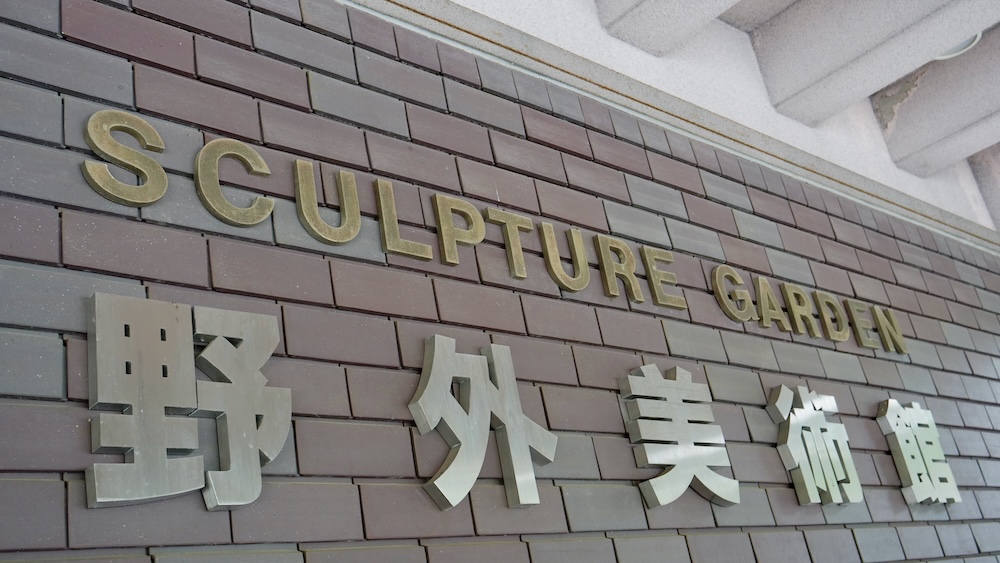
The part Audrey and I explored was the Sapporo Sculpture Garden, a 7.5-hectare outdoor museum with 74 works by 64 artists spread across forest and hillsides. This is where the experience gets interesting, especially if the words art museum normally make you picture quiet rooms, white walls and somebody telling you not to stand too close.
22:00 – Sapporo Art Forest Open-air Museum
There’s also the indoor Sapporo Art Museum, which hosts changing exhibitions; the Craft Studio, with hands-on activities; and the Sato Churyo Children’s Atelier. Some workshops require their own fees or reservations, and not every building is an attraction you can simply wander into. We passed through the wider complex but didn’t spend meaningful time inside those facilities, so I wouldn’t pretend to have reviewed their exhibitions or classes.
For a first visit, decide which part of the complex interests you and check its individual schedule and ticket arrangements.
What Walking Through the Sculpture Forest Is Really Like
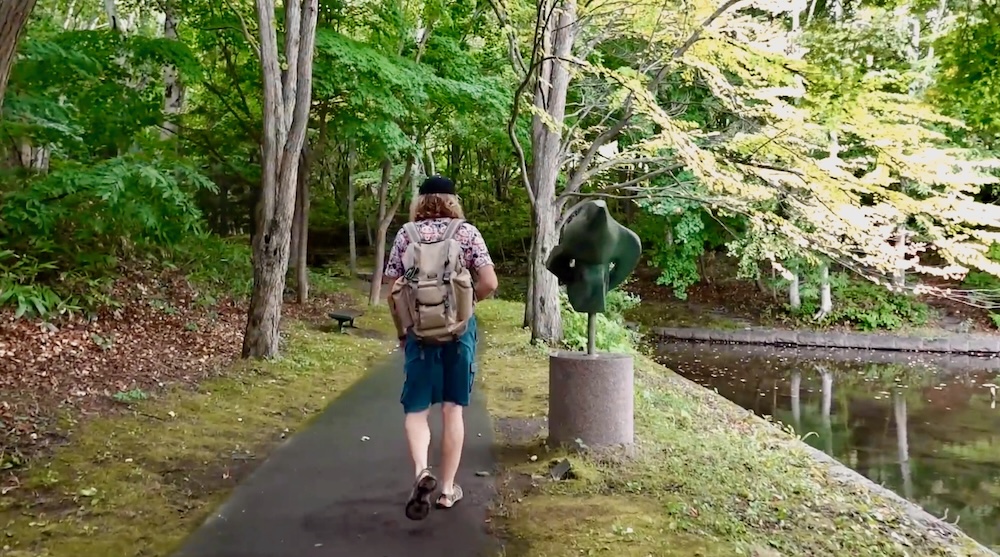
The first thing that surprised me wasn’t an artwork. It was how pleasant the walk itself was. We’d been exploring Sapporo, and suddenly we were following smaller paths through thick greenery, listening to water and spotting moss everywhere. There were stepping stones, streams and stairs that zigzagged up through the trees. It felt cool and wonderfully removed from the city.
And then, every so often, something completely unexpected would appear in the forest.

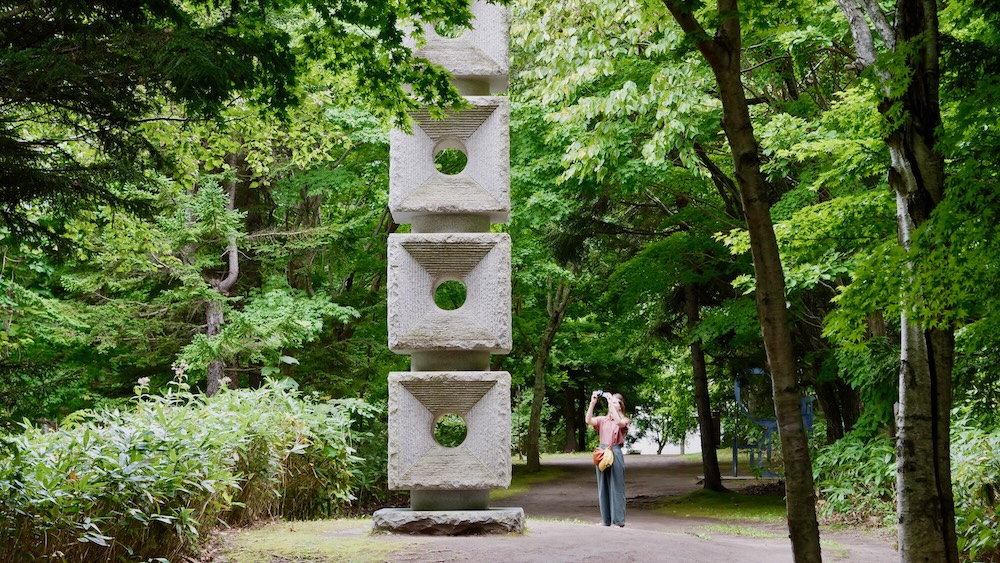
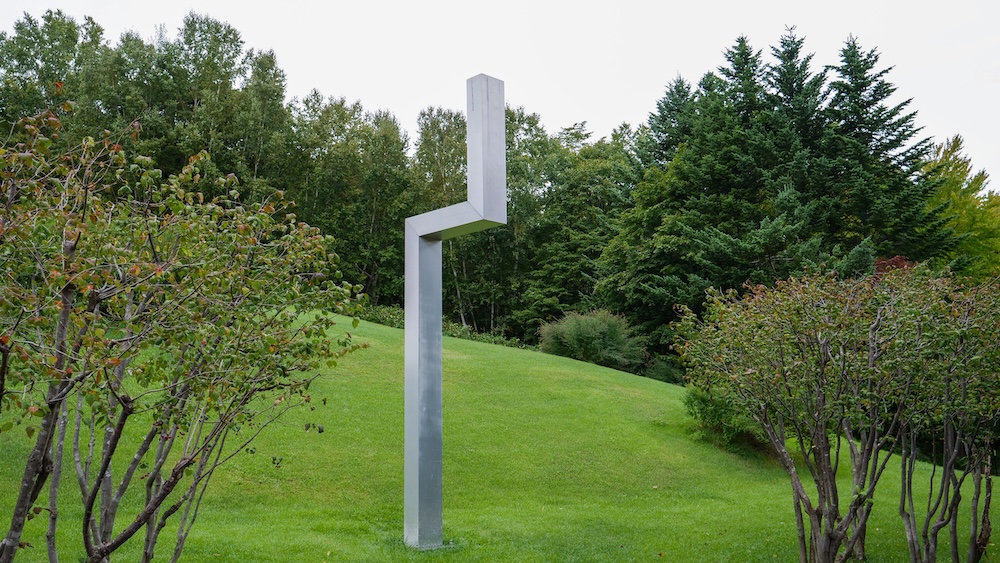
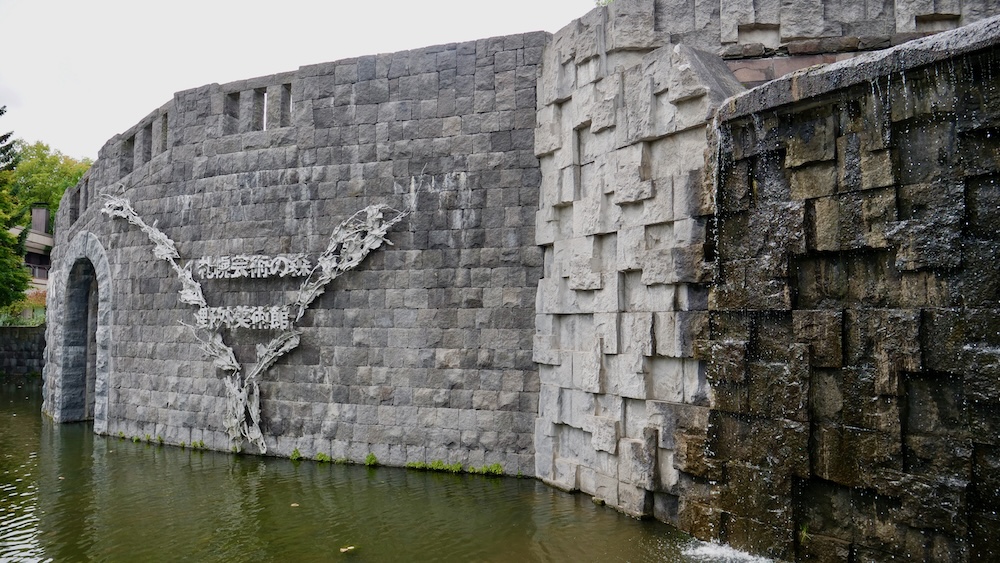
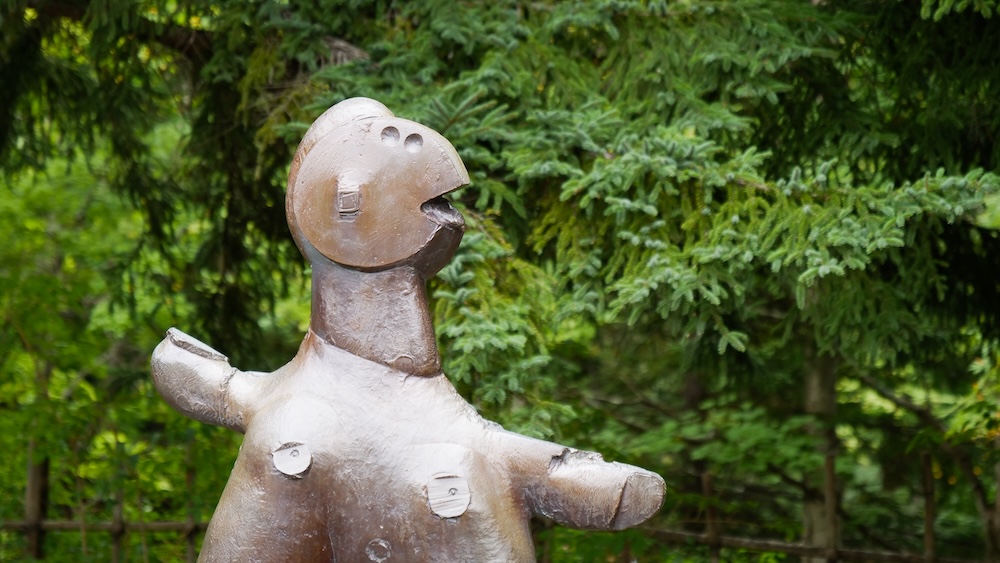
The sheer variety was what won me over. We’d come across a tall metal form, then a figure in a pose I couldn’t quite make sense of, then an abstract arrangement that looked more like a piece of architecture than a conventional statue. Other works were colourful, playful or a little peculiar. Looking back at what we saw, you’d hardly believe it was all part of the same collection. I mean that as a compliment: there was no danger of every piece blurring into the next.
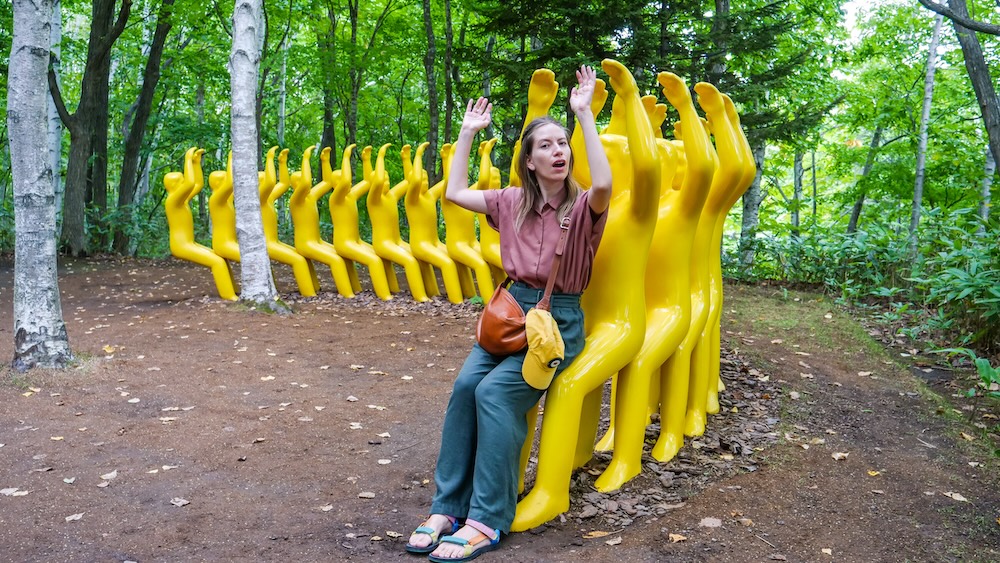
One of the most memorable was a whole gathering of shiny yellow seated figures with their arms raised. The work is You’re My Chair, I’m Yours, by Shigeo Fukuda. Seeing that procession of yellow bodies among the trees was gloriously odd. Those raised arms practically invite you to strike the same pose, which says more about the appeal of the installation than a solemn lecture ever could.
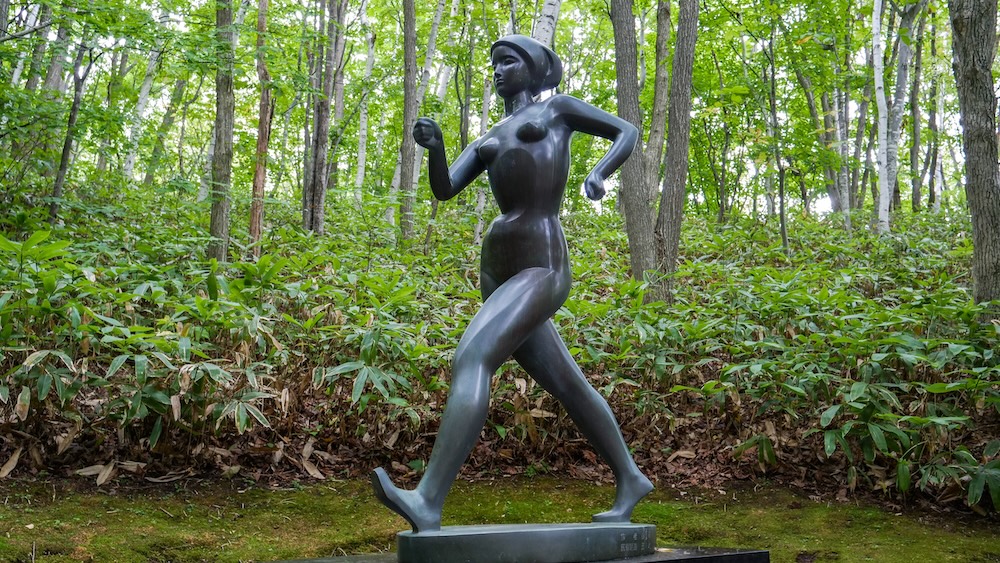
Elsewhere we photographed dark figurative works, animal-like shapes, geometric stone pieces and a striking red curved sculpture against a grassy slope. Some invited a close look at the surface; others made more sense when you stood back and took in the surroundings. Many works were designed with this particular landscape in mind, which helps explain why the forest and the art feel connected rather than stuck together as an afterthought.
What I liked most was never knowing what we’d encounter next. In a traditional gallery, you can usually see several things ahead of you. Here the trees hide the next surprise, and you have to walk to find it. You could enjoy the green setting without caring much about art, but the sculptures give you a reason to keep following the trail.
There’s a catch, of course: you really do have to walk. These aren’t 74 sculptures arranged around a courtyard. They’re scattered over a sizeable, hilly area, and our route included steps and changes in elevation. I enjoyed that part, but it’s a much bigger commitment if you have limited mobility or expect to see the entire collection.

Is Sapporo Art Park’s Open-Air Museum Worth Visiting?
I’d go back, and I’m saying that as somebody who doesn’t ordinarily plan sightseeing around sculpture. The art was more varied than I expected, while the surrounding forest made the visit enjoyable between pieces as well. It was a feast for the eyes without feeling like a lesson I was supposed to study for.
Audrey enjoyed it too. She has more of an appreciation for art than I do, so the collection appealed to her in its own right. I was just as taken with the greenery, the little waterways and the whole experience of wandering around looking for something unusual.
I think the Sculpture Garden works particularly well for photographers, people who enjoy being outdoors and visitors who are open to seeing art without needing to understand every piece. If you’re trying to squeeze ten central-Sapporo attractions into one day, though, travelling south for a forest walk may be a poor fit. There’s a subway and bus journey to consider, and once you arrive, rushing is a shame.
As for children, some of the brighter, stranger pieces look like the sort of thing that could grab their attention. The wider park has activities for younger visitors, too. My own impression is that adults may get more from lingering over the sculptures, but families aren’t an afterthought here. The real question is whether everyone in your group is happy to do the walking.

Sapporo Art Park Tickets: What’s Free and What Costs Money?
You can visit the general Sapporo Art Park grounds for free. The outdoor Sculpture Garden is different: adult admission is currently ¥800, and the ticket counter is cash only. Bring yen, not just a card; that’s a lousy surprise after the subway and bus ride.
| Sculpture Garden admission | Published price |
|---|---|
| Adults | ¥800 |
| Seniors aged 65 and over | ¥640 |
| High school and university students | ¥400 |
| Junior-high-school age and younger | Free |
There are discounted rates for eligible groups of 20 or more, including ¥700 per adult. The annual Sculpture Garden pass is ¥1,000, which is only ¥200 above a single adult admission and makes sense if you’ll genuinely return. It doesn’t, however, get you through the gate while the garden is closed for the season. Seniors should bring proof of age.
The indoor Art Museum has exhibition-dependent prices, and craft activities may cost extra or require reservations. Sometimes combination tickets are available, but don’t assume that paying for the sculptures grants access to an exhibition or workshop. The official admission information is the place to check before visiting, particularly if you’re interested in more than one part of the complex.
Opening Hours, Seasons and When I’d Visit
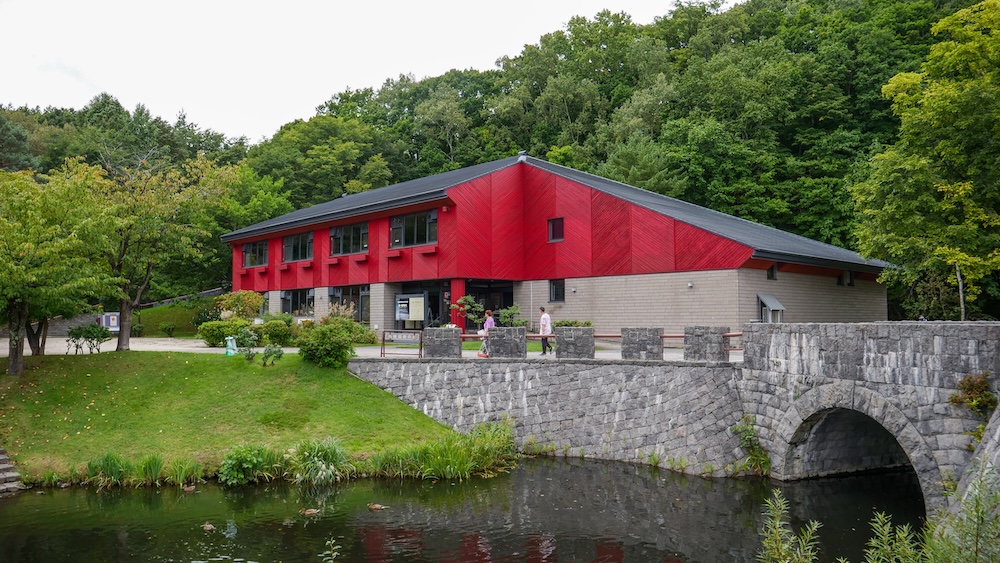
The big thing to know is that the outdoor Sculpture Garden isn’t a regular year-round attraction. Its normal operating season is April 29 through November 3. The broader Art Park still has things happening outside that window, but you can’t assume the forest sculptures will be accessible just because an indoor facility is open.
The published opening time is 9:45 a.m., with closing at 5:00 p.m. for most of the operating season and 5:30 p.m. from June through August. Last admission is 30 minutes before closing. The garden can also have exceptional closure dates during its usual season, so look at the current Sculpture Garden calendar rather than relying on the dates alone.
Winter visitors may see references to kanjiki snowshoe walks. Those are separately arranged seasonal experiences, not a sign that ordinary Sculpture Garden entry continues all winter. The indoor exhibition calendar and winter closing days also need checking on their own terms.
We visited with the trees full of green leaves, which made the place feel almost like a woodland retreat with artwork scattered throughout. The cooler forest air was lovely. Autumn would offer a different backdrop, but whichever part of the open season you choose, give the weather some thought. An outdoor museum becomes a different proposition when the paths are wet and you’re dressed as though you’ll be indoors all afternoon.
How Long Do You Need, and How Difficult Is the Walk?
Our roughly 45-minute visit was enjoyable, but we saw only a fraction of what was there. We were fitting it into a day that had already included the cemetery, and I would change that allocation if I could. The art deserves more time, and so does the forest.
For a visit focused on the sculptures, around two hours is a sensible starting point. That’s a planning allowance, not a guarantee that you’ll locate all 74 works, and keen photographers could easily want more. If you also want to see an exhibition or try a workshop, build extra time around its opening hours or booked session. You don’t have to see everything, either; a shorter visit can still be rewarding if you accept that you’re choosing a section rather than completing the museum.
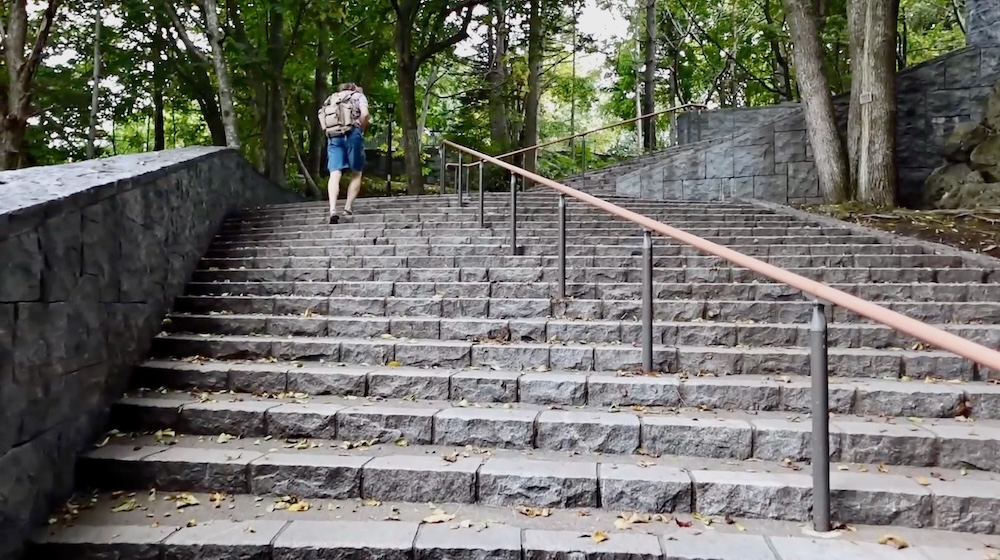
Terrain is the other consideration. It’s hilly woodland, with smaller paths and stairs in some areas, so I wouldn’t recommend arriving in shoes you only enjoy wearing on perfectly flat pavement. We encountered enough uphill walking to understand why a full visit takes effort.
There is a wheelchair-friendly model-route map available at the Sculpture Garden ticket counter, and wheelchairs may be borrowed at the Art Park Center, depending on availability. But some sculpture areas cannot be accessed by wheelchair. Strollers can also be borrowed at designated facilities, which shouldn’t be taken to mean every path is stroller-friendly. If stairs or uneven routes are a deciding factor, check the official accessibility information before travelling and ask which part of the collection you can realistically reach.
How to Get to Sapporo Art Park
If you’re still deciding where to stay, I wouldn’t book accommodation out by the Art Park just for this one outing. A base near a Namboku Line station in central Sapporo makes the journey to Makomanai straightforward while keeping you close to the rest of the city. You can compare Sapporo hotels and check how far each is from the subway before choosing.
From central Sapporo, take the Namboku subway line to Makomanai Station, then connect to a Chuo Bus from platform 2 serving the Art Park area. The published journey components are approximately 17 minutes from Sapporo Station to Makomanai by subway and another 15 minutes by bus. That’s not a full door-to-door estimate: you still have to allow for transfers, waiting and walking.
There are two bus stops worth distinguishing, and this is one detail I’d sort out before boarding. If your main destination is the outdoor Sculpture Garden or Art Park Center, aim for Geijutsu no Mori Center on a service that continues there. Geijutsu no Mori Iriguchi is the stop for the indoor Art Museum and craft facilities. Buses serving the area stop at Iriguchi, and from there you can walk to the Center in approximately eight minutes, so it isn’t a disaster if your bus doesn’t go farther.
The currently listed adult bus fare from Makomanai is ¥360, in addition to the subway fare. Check the return timetable as well, especially if you’re visiting close to closing time. The Art Park’s official access page has the route and stop information you’ll need to confirm for your travel day.
With a car, allow roughly 40 minutes from central Sapporo under ordinary conditions. Parking costs ¥500 per standard vehicle per entry. Parking Lot 2 is the more convenient choice for the Sculpture Garden and Art Park Center, while Lot 1 serves the indoor museum and craft side. Actual traffic and parking arrangements can vary, so don’t treat that driving estimate as a guarantee. If you’re also planning several outlying stops or travelling farther around Hokkaido, you can compare Sapporo rental cars to see whether driving makes sense. I wouldn’t rent one for the sculpture garden alone when the subway and bus are workable.
It also makes geographical sense to visit this part of the city when you’re exploring the Makomanai Takino Cemetery attractions. That’s what we did. I wouldn’t, however, cram the two together at the expense of your time in the sculpture forest if that’s what most interests you.
Food, Facilities and a Few Things I’d Keep in Mind
The Art Park Center near the sculpture entrance has restrooms and visitor facilities, and there are places to rest or pick up a drink around the complex. A restaurant called Gochiso Kitchen Hatake no Haru operates on its own seasonal lunch schedule. We didn’t eat there, so I wouldn’t build a lunch plan around it without checking opening times. Picnicking is another possibility in permitted areas.
The art may look playful, but that doesn’t make every sculpture playground equipment. The park permits touching certain bronze works; that doesn’t extend to climbing or sitting on everything that looks inviting. Follow the instructions beside individual pieces.
As for what I’d bring, it’s uncomplicated: cash for the ticket, shoes that can handle the forest paths, and enough time to enjoy the place without marching from sculpture to sculpture like you’re ticking off a grocery list. If your group has mobility needs, the route map matters more than any promise that the garden is an easy stroll.
When I think back on Sapporo Art Park, I remember those twisting pathways and little streams almost as clearly as the sculptures. Audrey had more reason than I did to be excited about the art, yet I ended up thoroughly enjoying it. That’s the surprise of this place. You don’t have to arrive as a sculpture enthusiast; you just need to enjoy seeing something unexpected among the trees. And, if you can manage it, give the forest more time than we did.
Frequently Asked Questions
Is Sapporo Art Park worth visiting?
I’d recommend the Open-Air Museum if you enjoy unusual artwork, forest walks or photography. I’m not much of an art-gallery person, but the variety of sculptures and woodland setting won me over. Audrey enjoyed it too. Just remember that it’s outside central Sapporo and involves a fair amount of walking.
Is Sapporo Art Park free to enter?
The general grounds of Sapporo Art Park are free to enter, but the outdoor Sculpture Garden requires a separate ticket. Standard adult admission is currently ¥800, and the ticket counter accepts cash only. Indoor exhibitions and craft activities may have additional charges.
How long do you need at Sapporo Art Park?
I’d allow around two hours for a sculpture-focused visit, with more time if you want to photograph lots of artworks or visit other facilities. Audrey and I spent approximately 45 minutes in the outdoor museum. We enjoyed it, but we only saw part of the collection and I wish we’d stayed longer.
Is the Sapporo Sculpture Garden open in winter?
Regular Sculpture Garden admission normally runs from April 29 through November 3. Special winter snowshoe events may take place, but they aren’t the same as ordinary museum access. Other Art Park facilities follow their own operating schedules, so check the relevant calendar before travelling.
How do you get to Sapporo Art Park from central Sapporo?
Take the Namboku subway line to Makomanai Station, then a Chuo Bus from platform 2. For the outdoor Sculpture Garden, use Geijutsu no Mori Center if your bus continues there. Geijutsu no Mori Iriguchi serves the indoor museum and is approximately an eight-minute walk from the Center.
Is Sapporo Art Park suitable for children or wheelchair users?
Families can enjoy the sculpture garden, and children of junior-high-school age and younger enter free. However, the forest is hilly, with stairs and uneven routes in places. A wheelchair-friendly model-course map is available, but some sculpture areas cannot be accessed by wheelchair.
Can you visit Sapporo Art Park and Makomanai Takino Cemetery on the same day?
Yes. Audrey and I visited Sapporo Art Park after seeing the Moai statues at Makomanai Takino Cemetery. The two attractions make geographical sense together, but our limited time meant we only explored part of the sculpture forest. I’d give the Art Park more time if the outdoor artwork is a priority.
This guide is also available in Spanish. [Leé la versión en castellano: Sapporo Art Park: guía y reseña del jardín de esculturas al aire libre, entradas, horarios y cómo llegar]
This article contains affiliate links. If you book through one of these links, I may earn a commission at no extra cost to you.