
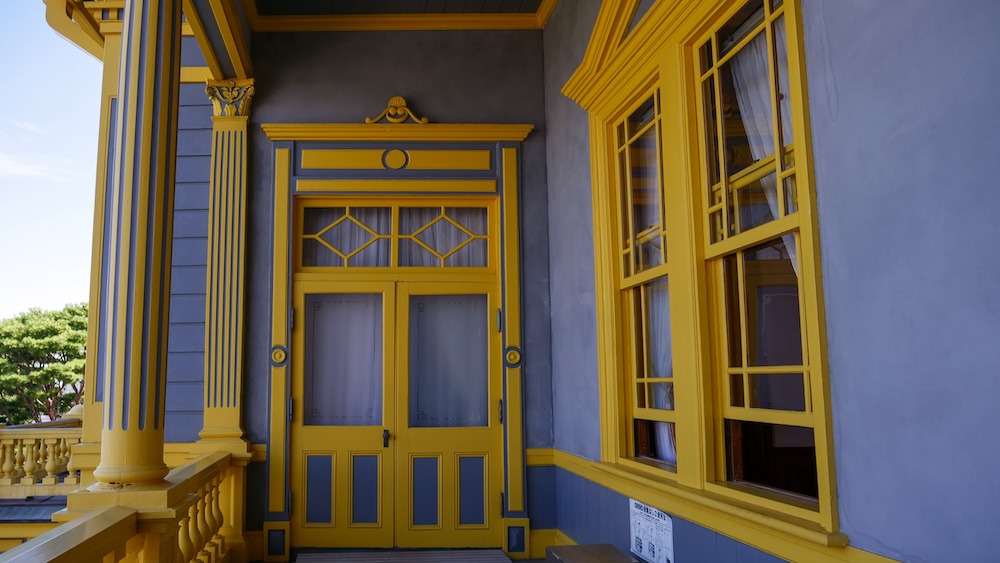
From the street, the Old Public Hall of Hakodate Ward does most of the work for you. It’s a blue-grey and yellow Western-style building on a slope above the harbour, and it photographs so well that you could fairly wonder whether the ticket is worth buying once you’ve taken the picture. Audrey and I paid and went in, and I got to see all of it, so I can answer that: I’d call it one of the best attractions in the city.
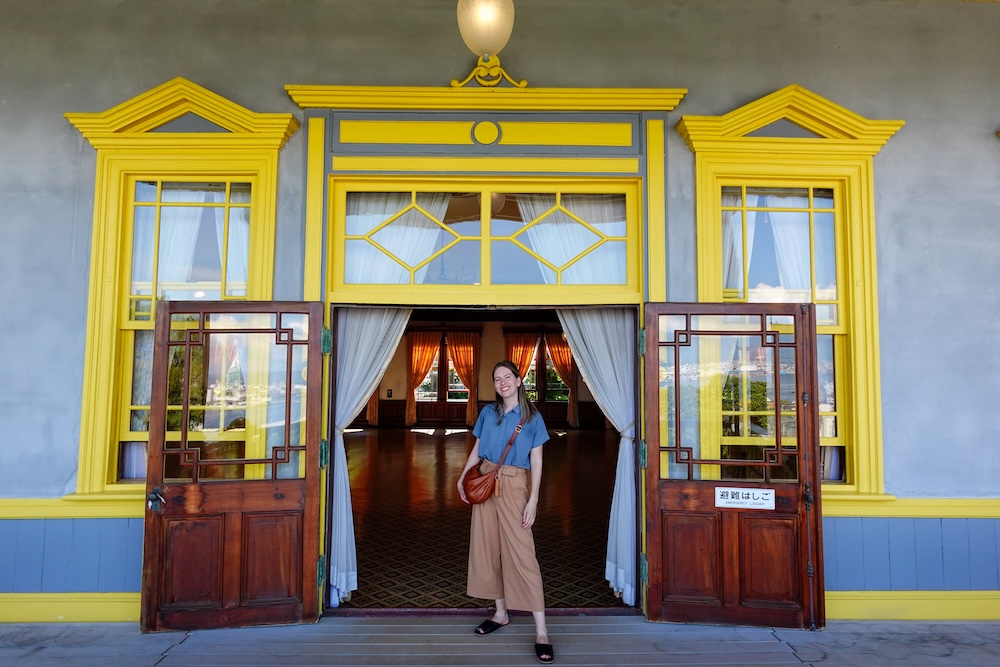
The short answer is yes, if you have about an hour. The facade is free to admire, but the ticket gets you the rooms where the Imperial family stayed, a great hall about six metres high and a balcony over the harbour. Below is what that looks like, how the shoes-off routine works, and the dates worth checking before you climb the hill.
What the street gives you, and what the ticket adds
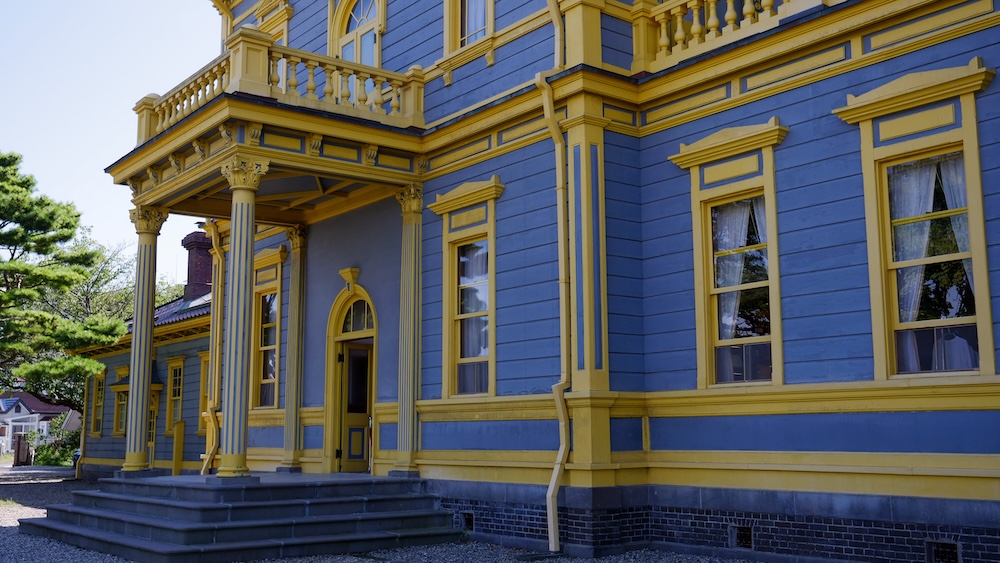
The facade is the part everyone photographs, and it costs nothing. The hall was completed in 1910 to replace the town hall that burned in the Great Fire of 1907, it has been a nationally designated Important Cultural Property since 1974, and the 2021 restoration put the blue-grey and yellow paintwork back to its original colours. All of that is visible from the front, and you could stop there.
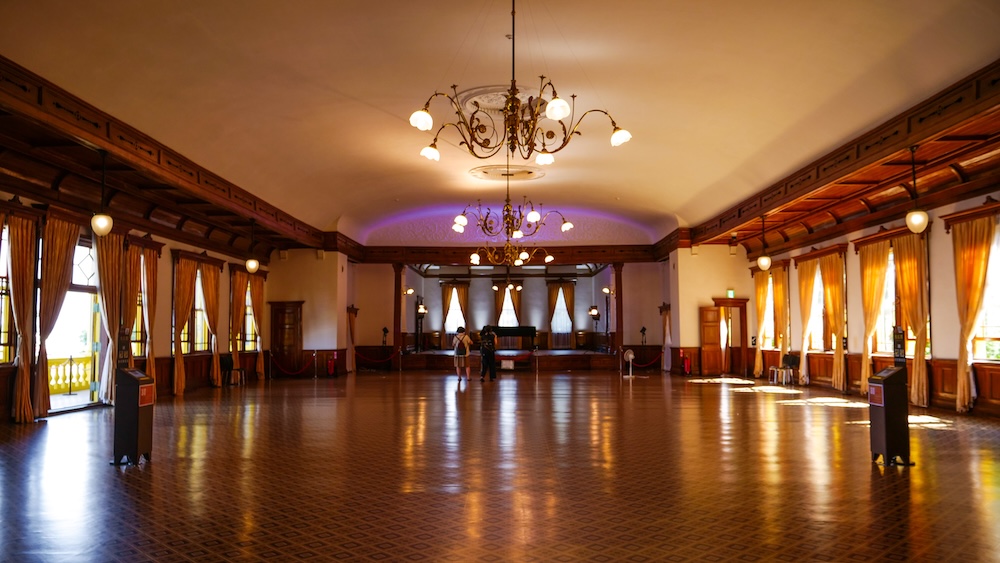
The ticket buys the inside, which is where the building stops being a pretty exterior and becomes a place. Upstairs are the rooms where members of the Imperial family stayed, beginning with the future Emperor Taisho’s visit in 1911, along with the great hall and a balcony that looks out over the harbour and the mountains beyond. It’s a period building, though, and not a gallery packed with objects, so the pleasure is in the rooms and the views, not in pages of labels to read.
Shoes off, slippers on: the routine at the door
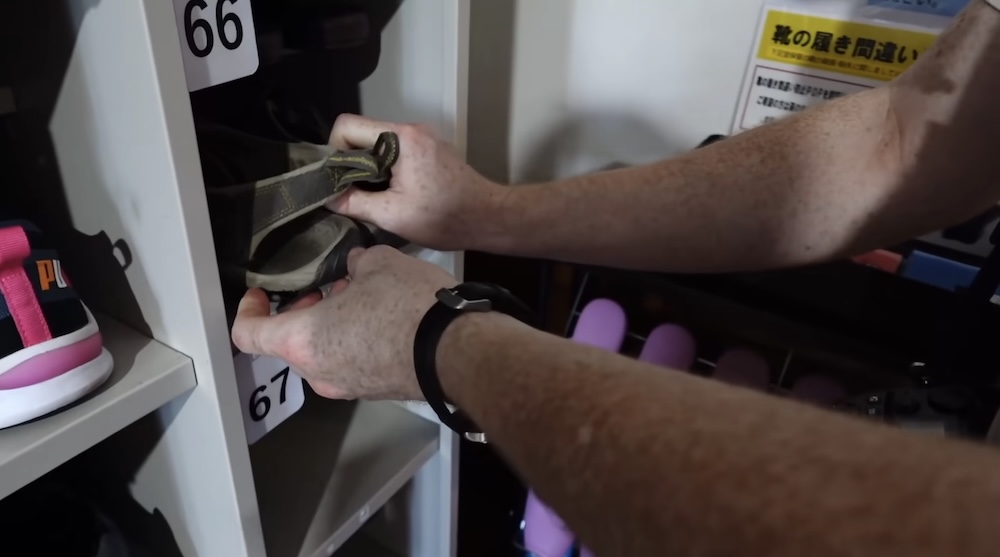
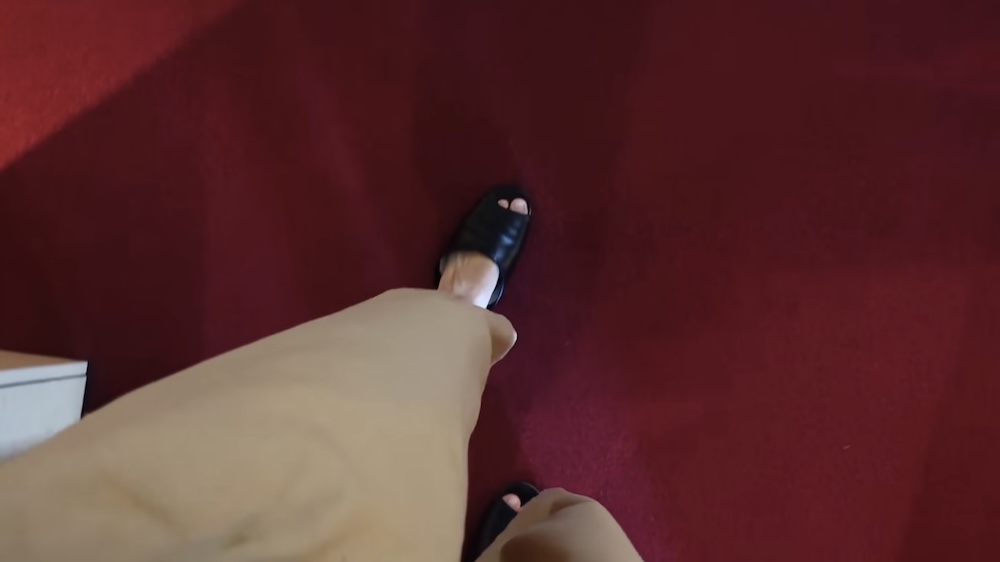
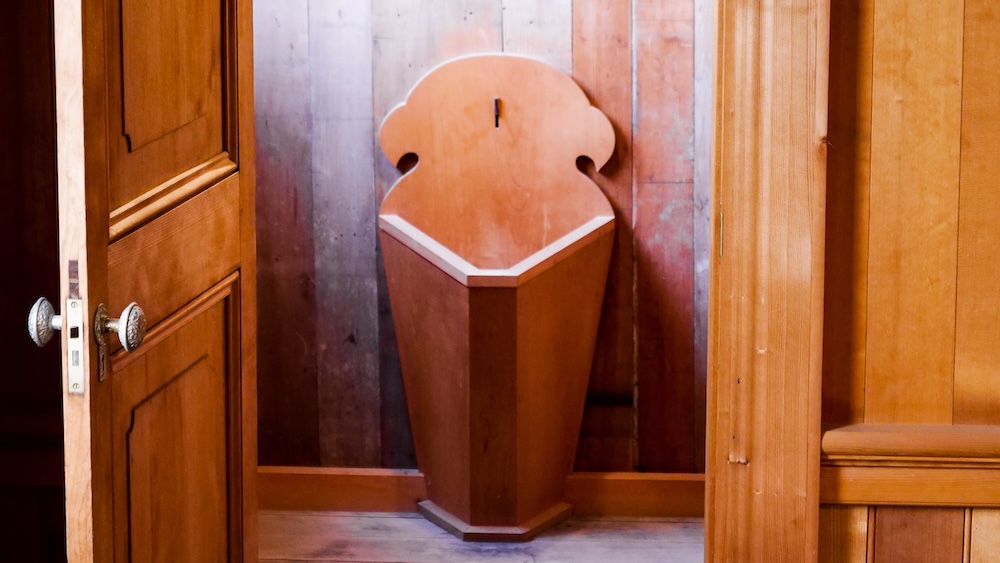
We bought our tickets, took our shoes off at the entrance and were handed slippers. Japan is all about being tidy, and for us the slippers weren’t optional. Shoes off is firm, but the hall does say that small children and anyone nervous about the steps and steep stairs can skip the slippers, which is a fair concession. It also takes no responsibility for lost or swapped shoes, so carry yours in a bag if that bothers you.
Two other things are worth knowing before you arrive. Strollers can’t go inside, and the hall keeps them at the entrance. There’s also no air conditioning, with only weak heating, so dress for the day you’re in.
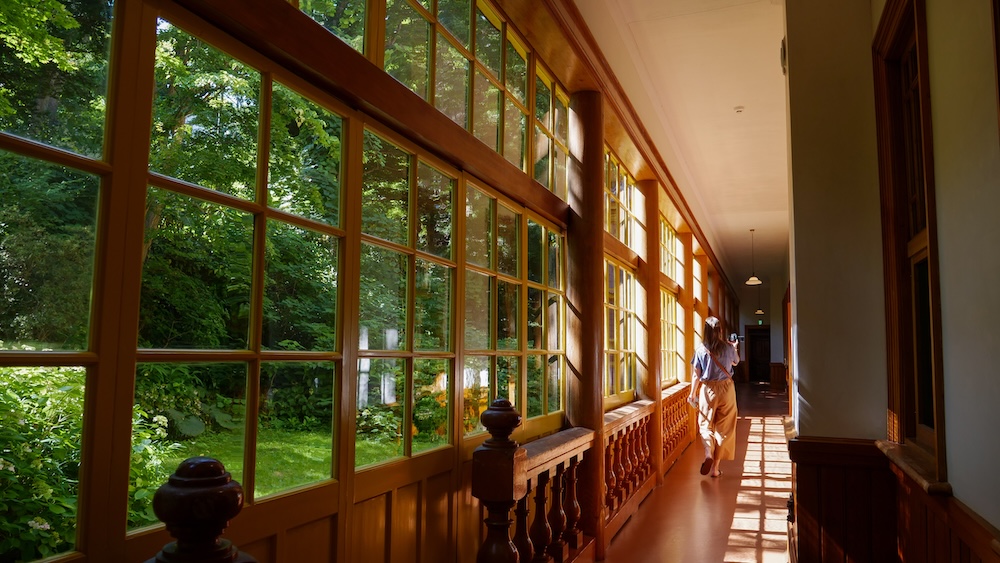
What’s inside
The rooms and the balcony
When we went, I got to see all of it, and it was a fascinating experience, the whole place just so nice to wander through. The first floor holds the old billiards room, now an exhibit, along with the chamber of commerce rooms from the days when Hakodate was the biggest city north of Tokyo and the Great Dining Room. That last one is a room name, not a restaurant: the hall had no kitchen, so meals were brought in.
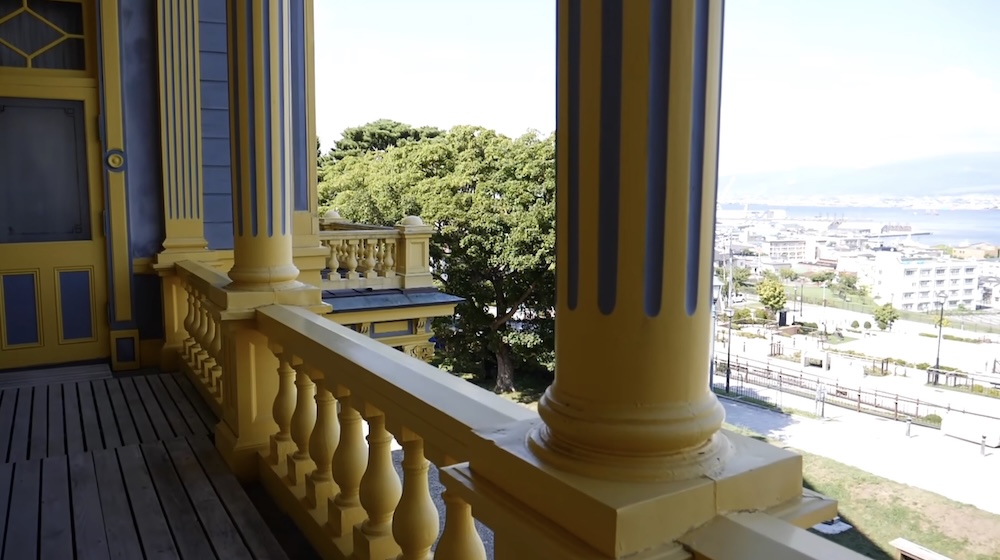
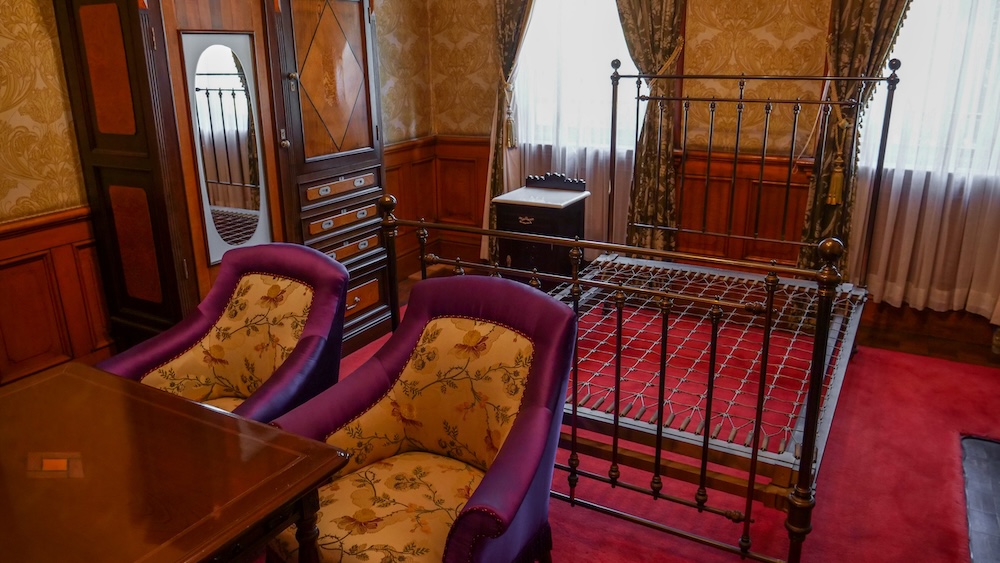
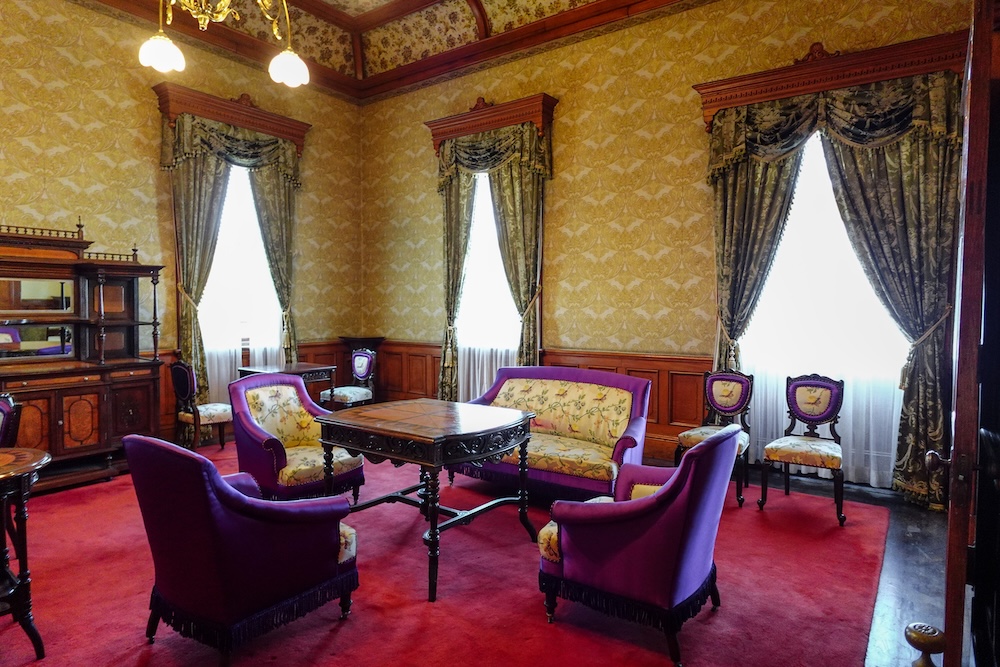
Upstairs, the imperial rooms still have their original furniture, restored, including a brass-pipe bed that counted as a luxury, and the imperial bathroom was added in a hurry for the Crown Prince’s stay in August 1911. The great hall, about six metres high, was built for concerts and lectures, and the balcony’s column tops are decorated with acanthus leaves. There’s also a Western bathroom with a cat-foot tub under a domed ceiling designed to stop the steam dripping.
AR codes around the hall work with the free COCOAR app if you install it beforehand, and the hall publishes an English leaflet, though I can’t promise English on every sign. One thing has changed since we went: from October 21, 2026, the theatre room and part of the viewing route are closed for construction. The rest of the exhibits are open as normal, and the theatre video can be watched in the Small Dining Room and the Great Dining Room’s video corner. No end date is given, so check the hall’s website (in Japanese) before you go.
The costume experience we skipped
The hall also has a costume house, and we chose just to explore the building. I can’t tell you what it’s like, but it rents dresses, tuxedos and kimono-style outfits, with children’s sizes from age three, and individuals don’t need to book. It takes cash only, photos aren’t allowed inside the costume house, and the costumes can’t be worn outside, apart from a limited May-to-October outing-kimono course. I’d ask about the price, and whether it’s on top of the hall’s admission, when you buy your tickets.
Hours, tickets and how long to allow
Plan on roughly an hour, 45 to 75 minutes, longer if you rent a costume. I didn’t time our visit, so that’s an estimate. Photography is allowed along the viewing route but not in the costume house or the shop.
The hours change by season and by weekday, and the hall publishes its maintenance closures in advance, so it’s worth checking the dates against your plans. If you’re also visiting the Museum of Northern Peoples, the Museum of Literature or the Former British Consulate, a joint ticket saves money, and each of those costs the same as the hall.
If you’d rather have Motomachi explained than wander it, there’s a three-hour guided walk through the district and the Red Brick Warehouses, and you can check current availability for the guided Motomachi walk. It’s a hillside district, and we explored on our own, so I can’t vouch for the tour. I’d look at the itinerary to see whether the hall is one of the stops and whether admission is included.
Before you go (October 2026)
- Hours: April 1 to October 31, 9:00–18:00 Tuesday to Friday and 9:00–19:00 Saturday to Monday; November 1 to March 31, 9:00–17:00. Last entry is 30 minutes before closing.
- Closed: December 31, 2026 to January 3, 2027, plus temporary closures on November 17, 2026 and January 26, 2027.
- Admission: ¥300 adults, ¥150 students and children, preschoolers free. Joint tickets cover two to four of the hall, the Museum of Northern Peoples, the Museum of Literature and the Former British Consulate, at ¥500, ¥720 and ¥840 for adults.
- Getting there: tram line 5 toward Hakodate Dock-mae to Suehirocho, then a seven-minute walk (about 16 minutes from Hakodate Station). A bus to Koukaido-mae is a three-minute walk, and a taxi from the station takes about 10 minutes.
- Parking: no dedicated lot, so use a nearby tourist car park.
- Inside: food isn’t allowed in the rooms, though the cafe in the Great Dining Room is open to everyone. Pets aren’t allowed (assistance dogs are), and a baby-changing table is in the first-floor women’s and accessible toilets.
Who should go inside, and who can stay outside
Go inside if you have an hour, if a balcony view over the harbour or a look at the original imperial rooms appeals, or if you like seeing how a historic building was actually used. For me it was totally worth it. The Museum of Northern Peoples is on the same Suehirocho side of the neighbourhood, so the two pair well, and walking down through Motomachi Park afterwards gave us harbour views on the way back to the waterfront.
If you haven’t booked a bed yet and Motomachi is where you want to spend your time, there are hotels a few hundred metres from the Old Public Hall, which takes the climb to the hall out of your commute.
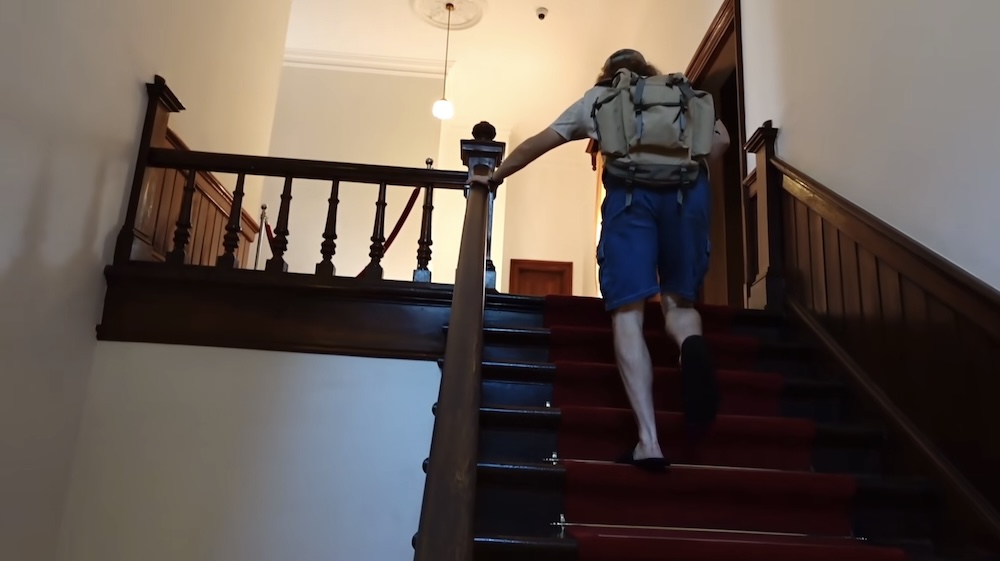
Stay outside if you’re short on time, can’t manage steep stairs, have a stroller with you or only want the facade photo, which is a perfectly good reason. If you’re deciding between the facade and the ticket, though, buy the ticket.
Frequently Asked Questions
Is it worth paying to go inside the Old Public Hall of Hakodate Ward?
Paying to go inside is well worth it if you have about an hour to spare, and I consider it one of the best attractions in the city. While the blue-grey and yellow 1910 facade is free to admire from the street, the ticket gives you access to the restored Imperial family rooms, the six-metre-high Great Hall, and the upstairs balcony looking out over the harbour.
How much does admission to the Old Public Hall of Hakodate Ward cost?
Adult tickets cost ¥300, students and children pay ¥150, and preschoolers enter for free. If you also plan to visit the Museum of Northern Peoples, the Museum of Literature, or the Former British Consulate, you can save money with a joint ticket covering two, three, or four sites for ¥500, ¥720, or ¥840 for adults.
How does the shoes-off and slippers routine work at the entrance?
Visitors take their shoes off at the entrance and are handed indoor slippers to wear through the building. Small children and anyone nervous about the steps and steep stairs are allowed to skip the slippers, and you should carry your shoes in a bag if you are concerned about lost or swapped footwear.
Can you bring a stroller inside the Old Public Hall of Hakodate Ward?
Strollers cannot go inside the rooms and are kept at the entrance during your visit. Exploring both floors also requires climbing steep stairs, though a baby-changing table is available in the first-floor women’s and accessible toilets.
What is closed during the October 2026 construction at the Old Public Hall?
From October 21, 2026, the theatre room and part of the viewing route are closed for construction with no announced end date. The rest of the exhibits remain open as normal, and the theatre video can be watched in the Small Dining Room and the Great Dining Room’s video corner.
How do you get to the Old Public Hall of Hakodate Ward from Hakodate Station?
Take tram line 5 toward Hakodate Dock-mae to the Suehirocho stop and walk seven minutes uphill, which takes about 16 minutes in total from Hakodate Station. You can also take a bus to Koukaido-mae for a three-minute walk or ride a taxi from the station in about 10 minutes.
This guide is also available in Spanish. [Leé la versión en castellano: Guía y reseña del Antiguo Salón Público del Distrito de Hakodate: ¿vale la pena entrar?]
This article contains affiliate links. If you book through one of these links, I may earn a commission at no extra cost to you.