
Rain in Hakodate sends you hunting for something indoors, and a museum called the Hakodate City Museum of Northern Peoples sounds like exactly the sort of place I’d skip, since I announce that I’m not a museum guy so often it has become a kind of disclaimer. Audrey and I went in anyway, as the first of two museums that wet day, and we both enjoyed it more than we’d expected to.
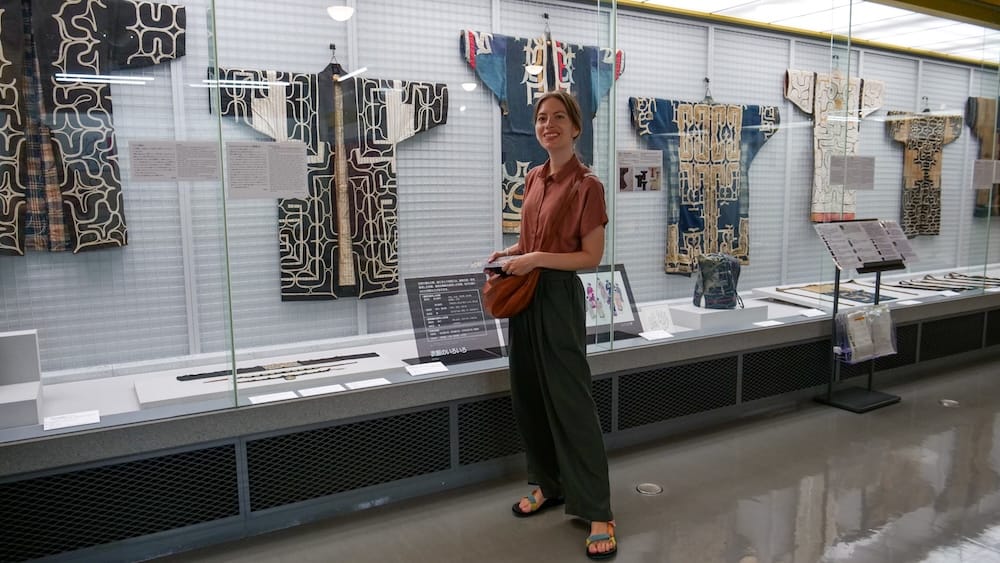
So, is it worth visiting? For most people with a free hour or so, yes. The name promises a little more than the collection delivers, because this is mainly an Ainu museum with a wider northern frame around it, and its closure pattern can lock you out on exactly the day you’re counting on it. Below is what’s inside, what it costs and how long it takes, and who I’d send somewhere else.
Mostly Ainu, with a wider northern world around the edges
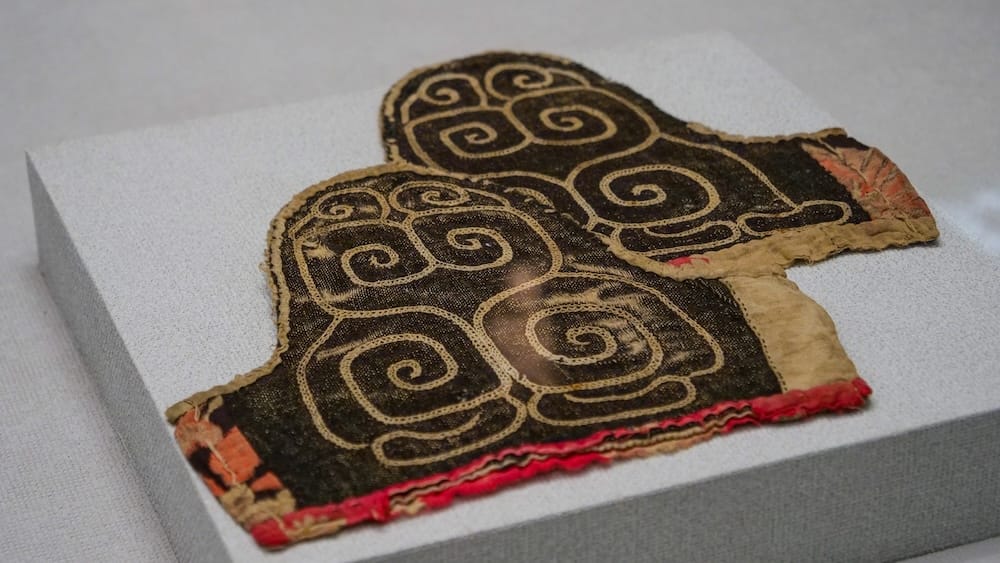
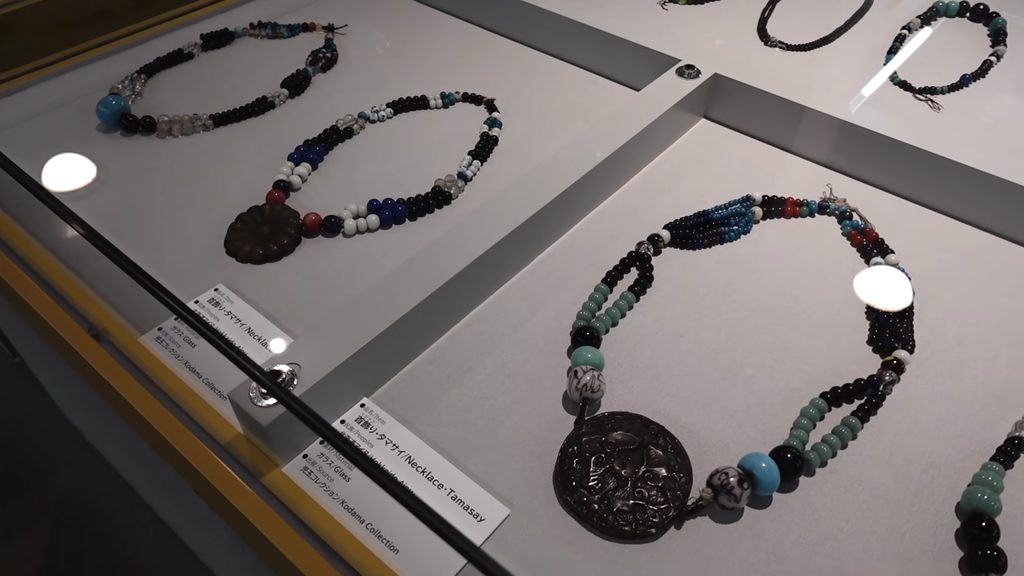
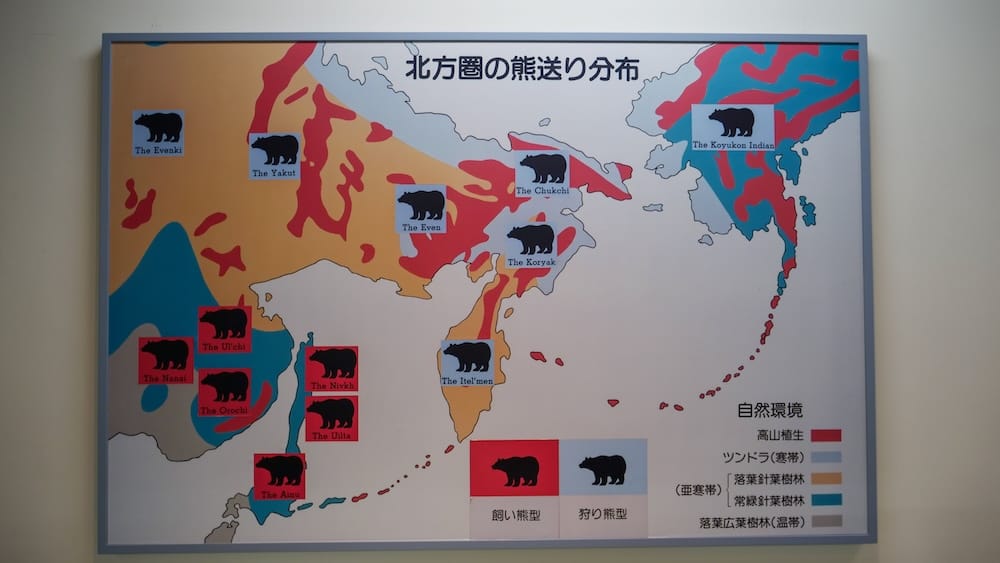
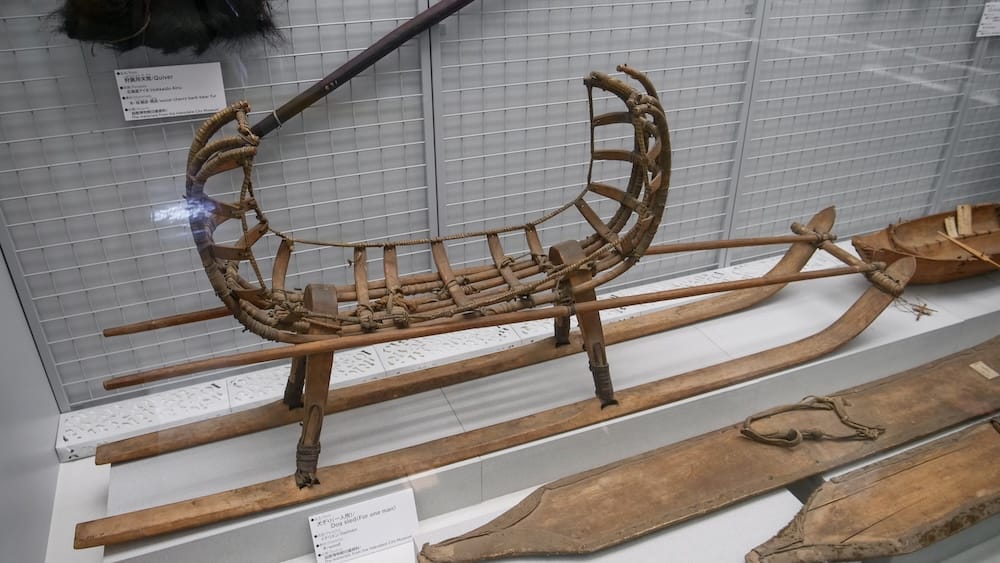
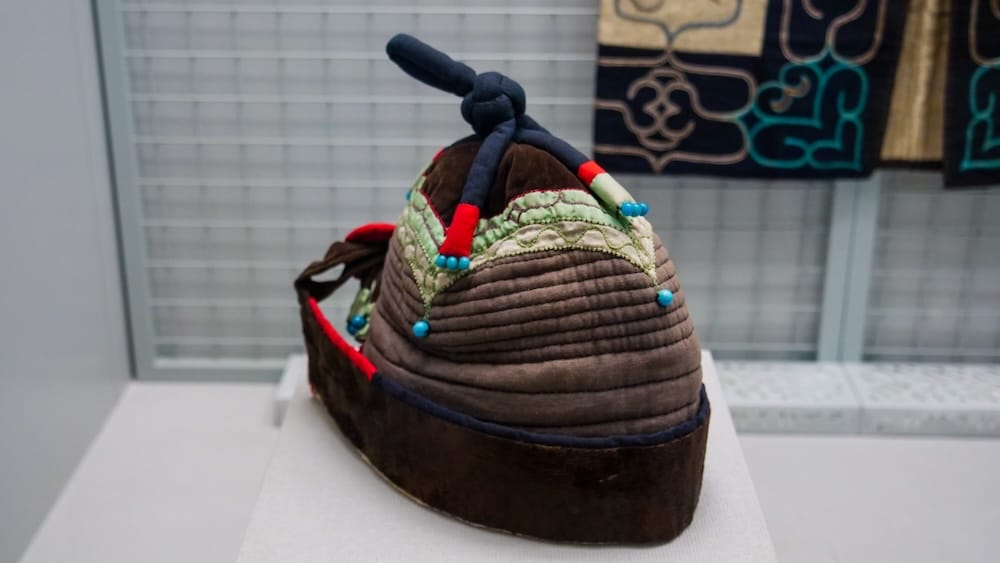
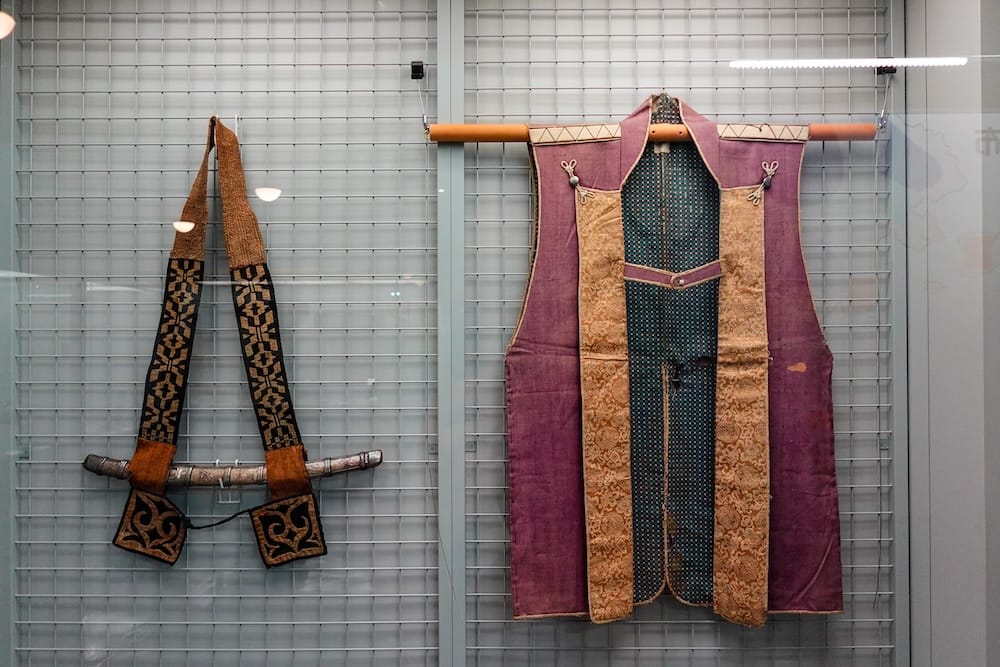
The name reads like a regional museum about northern Japan and Hokkaido, and the galleries reach well past that. They take in peoples who lived by hunting seals and fishing and who paddled dangerous northern water, from Sakhalin and the Kurils toward the Aleutians. That reach is real, but the museum’s centre of gravity sits closer to home. The collection runs past ten thousand items, far more than fits on the floor at any one time, and most of them relate to the Ainu, the Indigenous people of Hokkaido. One of the collections carries national designation as an Important Tangible Folk Cultural Property.
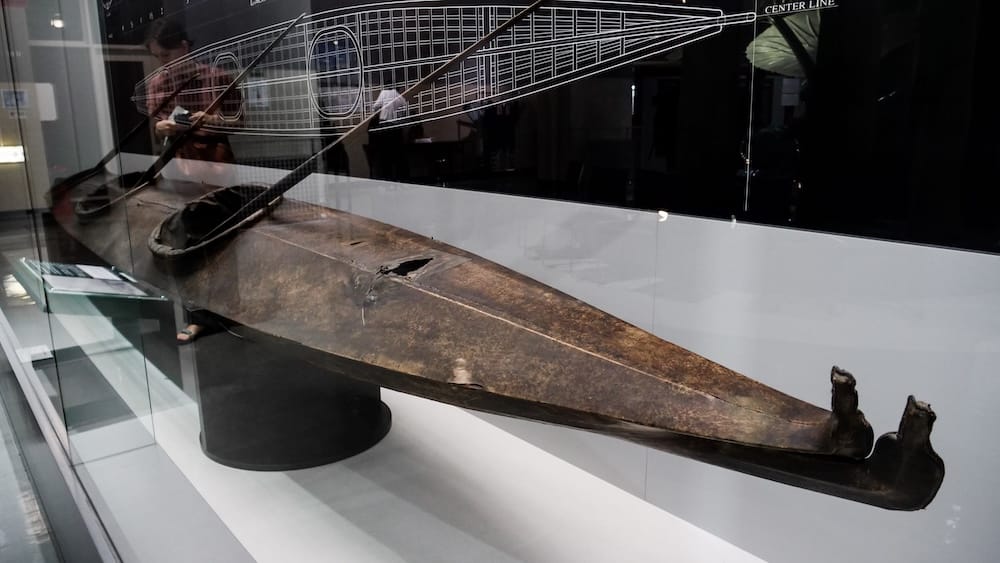
Around that core sit Uilta material from Sakhalin, official garments from Qing-dynasty China, and an Aleut skin boat nearly 6.4 metres long. It was collected in the central Kurils in 1875 and is one of the few of its kind to survive. Exhibits rotate, so I can’t tell you whether it was out the day we went or whether it will be on your visit.
One warning if you’re searching: the Hokkaido Museum of Northern Peoples in Abashiri is a different museum with a genuinely pan-polar remit, running from Greenland to Scandinavia. If the circumpolar version is what you want, you’re in the wrong city.
Seal skins, a bear-and-deer menu and a former bank
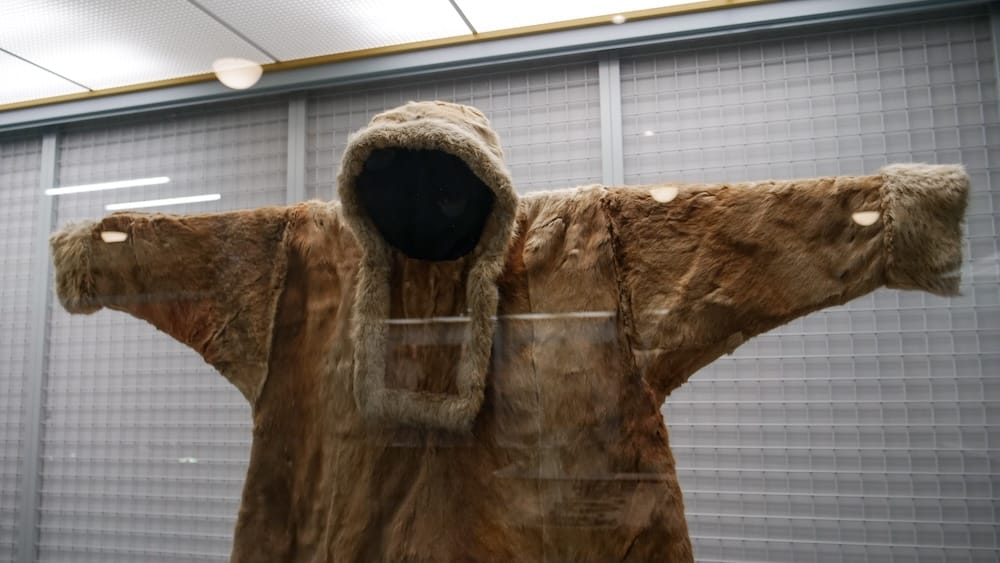
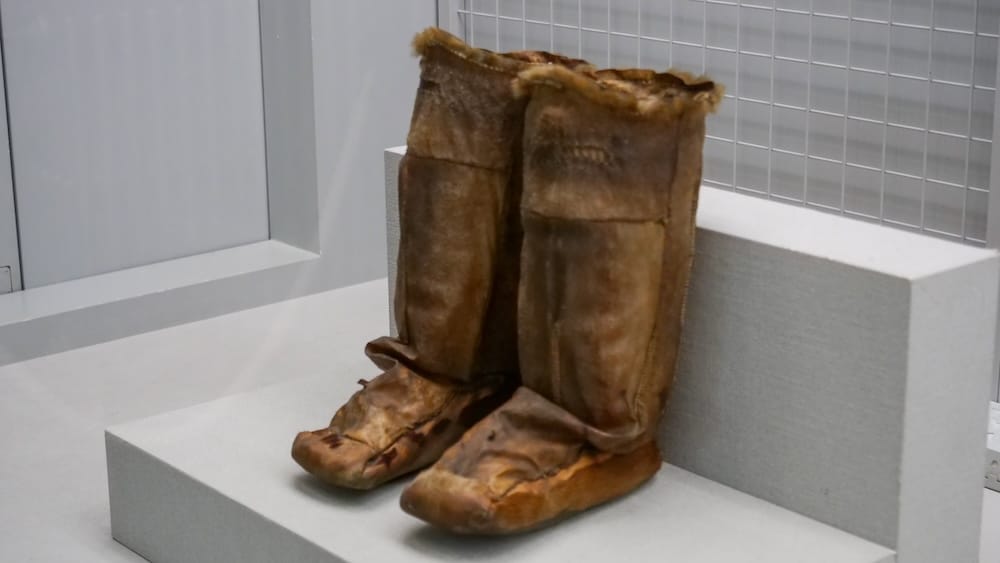
The clothing is what stayed with me: outfits cut from fur and seal skin, made by people for whom the alternative was freezing. Audrey and I come from a country where winter takes up half the year, and we still live with central heating and every modern convenience, so the idea of people getting through centuries of cold with none of it is hard to get your head around. It’s remarkable.
A small display laid out the traditional menu, and I read it out loud: soups heavy with meat, including bear, deer and seal, plus fish, kelp and raw fish. The collection leans on everyday objects like clothing, tools and the stuff of daily life, which is probably why it worked on someone who doesn’t usually do museums. You see how people lived without needing to care about dates.
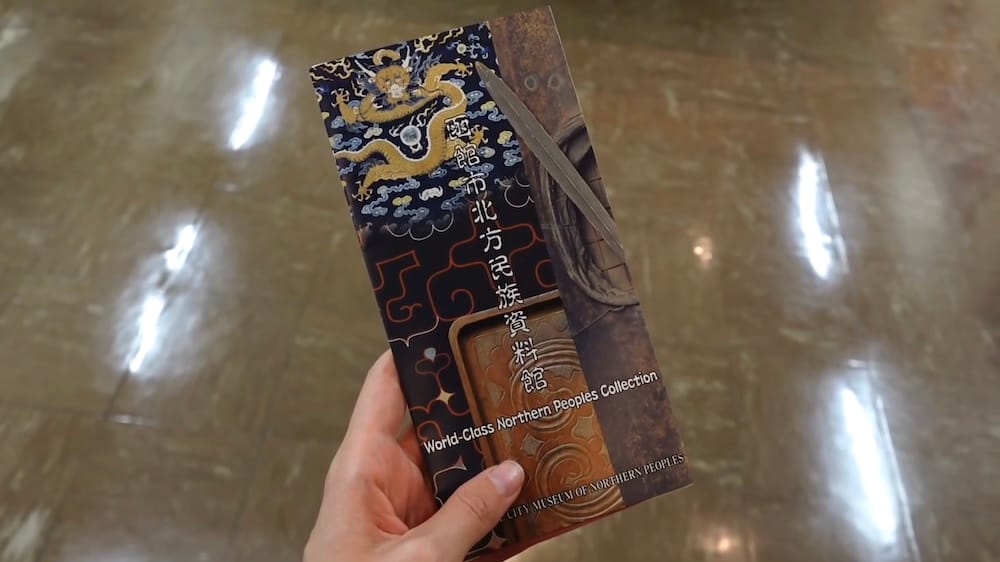
The building is worth a look too. It began as the Hakodate branch of the Bank of Japan in 1926 and turned a hundred this year. The bank’s original touches survive, and the second-floor exhibition room still has its wall tiles and revolving transoms. English commentary covers at least part of the displays, and there are English handouts you can carry around, though I wouldn’t promise English on every label.
If you want something hands-on, the museum runs mukkuri-making sessions (the mukkuri is an Ainu mouth harp) of about ninety minutes, which you book by phone and which run in Japanese only. There’s also a free paper-cutting activity.
If you’d rather have a guide than handouts, one private tour with a licensed, English-speaking guide lets you pick this museum as one of its stops: the four-hour version covers two to three sites and the six-hour version covers three to four. Audrey and I didn’t book it, so I can’t tell you how the museum fits into that day, but you can check the private tour’s current availability and see on the booking page whether entry fees are included.
Cost, closures and how long to allow
For what we expected and what it costs, it punched well above its weight. The catch is the calendar. Besides the New Year break, the museum shuts roughly one day a month for maintenance and sometimes temporarily for exhibit changes or fumigation, and those days aren’t fixed. If this is your rainy-day fallback, check first, because a locked door is a poor outcome in the rain. The city’s museum page (in Japanese) is where any change in hours or closures shows up.
Plan on somewhere between 45 and 90 minutes, longer if you read everything. There’s no official figure and I didn’t time our visit, so that’s an estimate. We took photos inside, but I can’t vouch for the current photography rules, so ask at the desk before you start shooting.
The museum sits a short walk from the Old Public Hall, the Former British Consulate and the Museum of Literature, and a joint ticket covers two to four of those buildings along with this one. It makes sense if you’re already working that stretch. It doesn’t extend to the waterfront museums. And if you haven’t booked a bed yet, the museum is a short tram ride from Hakodate Station, so a base near the station keeps it easy; you can compare Hakodate hotels and current availability before you settle.
Before you go (October 2026)
- Hours: 9:00–19:00 from April to October; 9:00–17:00 from November to March.
- Closed: December 31 to January 3, plus irregular maintenance and exhibit-change days.
- Admission: ¥300 adults, ¥150 students and children, preschoolers free. Joint tickets run ¥500 for two buildings, ¥720 for three and ¥840 for all four for adults (¥250, ¥360 and ¥420 for students).
- Payment: bring cash. Card payment isn’t listed as available.
- Getting there: tram from Hakodate Ekimae toward Hakodate Dock-mae to Suehirocho (about eight minutes, ¥210), then a one-minute walk. A taxi from the station is about 2 km and five minutes. There’s no parking.
- Accessibility: accessible restroom, slopes, a nursing room, and wheelchairs on request. The exhibits span more than one floor and I can’t confirm step-free access to the upper one, so ask if it matters.
Who should go, and who can skip it
Our verdict at the time was must-visit, and I’d keep it for anyone with a spare hour. We agreed it works as a rainy-day activity and also on a dry day if you like museums at all. It’s cheap, it’s compact, and it left us knowing something we hadn’t walked in with.
Go if you’ve got a flexible hour and a bit of curiosity, if you’ve always filed museums under homework, or if you care about Ainu history and want real objects in front of you. Golden Kamuy fans, whose series finishes in Hakodate, turn up here too.
Skip it or shorten it if you’ve got under about 45 minutes, if you expect a sweeping circumpolar museum (that’s Abashiri), if you need English on every label, or if step-free access to the upper floor is a requirement you haven’t confirmed. And check the closure days before you commit your wet afternoon to it.
Frequently Asked Questions
Is the Hakodate City Museum of Northern Peoples worth visiting?
For most people with a free hour or so, yes. Audrey and I went in on a wet day as the first of two museums, and we both enjoyed it more than we’d expected to. It’s cheap and compact, and we agreed it also works on a dry day if you like museums at all.
Is the museum only about the Ainu?
Mostly, but not only. The collection runs past ten thousand items, far more than fits on the floor at once, and most relate to the Ainu. Around that core sit Uilta material from Sakhalin, official garments from Qing-dynasty China and an Aleut skin boat, though exhibits rotate, so I can’t promise what will be out on your visit.
How long does a visit take?
Plan on somewhere between 45 and 90 minutes, longer if you read everything. There’s no official figure and I didn’t time our visit, so treat that as an estimate.
What are the opening hours, and when is the museum closed?
As of October 2026 the museum is open 9:00–19:00 from April to October and 9:00–17:00 from November to March. It’s closed from December 31 to January 3 and on irregular maintenance and exhibit-change days, roughly one a month, so check the city’s museum page before you commit a wet afternoon to it.
How much does it cost, and do I need cash?
Adult admission is ¥300, with ¥150 for students and children and free entry for preschoolers, as of October 2026. Joint tickets cover two to four of this museum, the Museum of Literature, the Old Public Hall and the Former British Consulate, at ¥500, ¥720 and ¥840 for adults. Bring cash, since card payment isn’t listed as available.
How do I get to the museum?
Take the tram from Hakodate Ekimae toward Hakodate Dock-mae to Suehirocho, about eight minutes and ¥210, then walk for a minute. A taxi from the station is about 2 km and five minutes, and there’s no parking.
Is there English information inside?
Partly. English commentary covers at least part of the displays, and there are English handouts you can carry around, but I wouldn’t promise English on every label.
Can I take photos inside the museum?
I took photos while we were there, but I can’t vouch for the current photography rules, so ask at the desk before you start shooting.
This guide is also available in Spanish. [Leé la versión en castellano: Guía del Museo de los Pueblos del Norte de la Ciudad de Hakodate: ¿vale la pena visitarlo?]
This article contains affiliate links. If you book through one of these links, I may earn a commission at no extra cost to you.