
Odori Park stretches roughly 1.5 kilometres through central Sapporo. You can walk all 12 blocks, but with other sights on your itinerary, should you?

Audrey and I visited in September, after looking down over the park from Sapporo TV Tower earlier in our sightseeing. We’d already been walking all morning, the temperature was around 30°C, and the humidity was doing us no favours. By the time we stopped for soft-serve ice cream, sightseeing had briefly become a contest between our ambitions and our legs. Then, just as we got back to exploring, we stumbled across Sapporo Autumn Fest. Our supposedly simple park stop took an unexpected turn toward eating.
Some visitors need 20 minutes; others can happily spend hours. It depends on how far you walk and what’s happening in the park.

Our Odori Park Review: A Good Place to Slow Down
From TV Tower, Odori Park looks like a green corridor through Sapporo’s blocks, the sort of feature that helps you make sense of the city from above. At street level, it’s somewhere to sit, enjoy the flowerbeds and catch your breath between buildings. I already liked Sapporo’s walkability, and the park reinforced that impression: you can work it into a day of sightseeing without having to make it the entire day’s objective.

Our visit wasn’t exactly a masterclass in energetic sightseeing. Audrey was struggling with the heat, and the ice cream helped bring her back to life. Between water, Pocari Sweat and resting our legs, a pleasant place to stop without paying admission felt like a genuine benefit, even if it doesn’t sound like tourism-poster material.
We carried on exploring after our break, in no particular rush to complete an official-sounding circuit. That’s how I’d approach Odori Park again: give it some time, then decide whether the next few blocks interest you more than whatever else is on your Sapporo itinerary.

What to See in Odori Park
The park runs from Nishi 1 to Nishi 12, with three distinct stretches worth considering.

The TV Tower End and Central Fountains
Sapporo TV Tower marks the eastern end at Nishi 1, making it a handy starting point after a visit to the observation deck. Nishi 1–2 also has landscaped areas and the Benson drinking fountain, a gift from Sapporo’s sister city of Portland.
Around Nishi 3–5 are some of the best-known flowerbeds and fountains. Nishi 3 has changing water patterns on a roughly 15-minute cycle when its fountain runs, while Nishi 4 has a flower-shaped fountain. This is where I’d linger if I wanted a pleasant introduction to the park rather than a mission to reach its far end. You have the familiar skyline nearby, with enough landscaping to make a stop worthwhile on its own.
Seasonal Tokibi Wagon stalls sell grilled and boiled corn around Nishi 3 and 4, although hours and rain policies vary. For a short visit with classic city views, this stretch does the job.
03:03 – Sapporo Clock Tower
03:52 – Odori Park
05:14 – Sapporo Autumn Fest
The Middle Blocks: Public Art and Places to Play
At Nishi 6–9 you’ll find an outdoor stage, a park information centre around Nishi 7 and Isamu Noguchi’s Black Slide Mantra at Nishi 8. Nishi 9 has play features and a shallow watercourse when it’s operating.
For families, the slide and play areas might justify the extra walk; art lovers have the Noguchi sculpture, which is designed to be used as a slide rather than merely admired from a distance. The Nishi 8–9 area is more connected than the earlier street-divided blocks, which also gives visitors a different sense of space. And there’s room to linger, which is the point of a park even if itineraries make sitting down feel suspiciously unproductive. We explored the park, though not every attraction along the way.
The Western End: Worth the Extra Walk?
At Nishi 10–11, you’ll encounter historical monuments including statues of Kiyotaka Kuroda and Horace Capron, along with the Maibaum, a decorative pole associated with Sapporo’s sister-city relationship with Munich. Nishi 12 has a sunken rose garden with around 60 varieties of roses and an 82-metre decorative canal.
The western garden rewards flower lovers, particularly when the roses are in bloom, though the decorative canal won’t necessarily be operating when you visit. It’s also the farthest stretch from the TV Tower end, something worth considering if you’ve already spent the day on your feet. The Sapporo City Archive Museum at Nishi 13 sits beyond the park boundary, as a separate possible stop.
I wouldn’t walk that far simply to reach the end. If roses and monuments aren’t your thing, save your legs.

How Much Time Should You Allow for Odori Park?
A continuous 1.5-kilometre walk takes roughly 20–30 minutes, before fountains, photographs, snacks or breaks. A first-time sightseeing itinerary might allow 40 minutes, while the western gardens and sculptures demand more. Plan around the kind of visit rather than a bare walking estimate.
Here’s how I’d divide the time, with the understanding that these are planning estimates rather than times we personally recorded:
| Time available | What I’d do |
|---|---|
| 15–25 minutes | Stay near the TV Tower end, get your photos and enjoy a brief look at the park. |
| 35–60 minutes | Explore the eastern and central blocks, with time for gardens, fountains or a proper rest. |
| 60–90 minutes | Walk approximately 1.5 km one way, continuing west for selected art, monuments and the rose garden. |
| 1–3 hours or longer | Take a relaxed park outing or spend time browsing and eating during a major festival. |
The full-length estimate is one-way; none of these times includes TV Tower or the Archive Museum. Weather, stops and walking pace matter, as our September heat made abundantly clear.
With other Sapporo attractions planned, I’d allow 35–60 minutes initially and extend the visit if the gardens tempt you farther west. If you’d rather have a guide connect the city’s landmarks, a 2–2.5-hour Sapporo walking tour includes Odori Park, the Clock Tower and TV Tower, with admission to the TV Tower observation deck listed as included. It’s a guided introduction to central Sapporo, not a tour of all 12 park blocks; for the park alone, I’d explore independently.

When Autumn Fest Takes Over the Park
We hadn’t arranged our visit around Sapporo Autumn Fest; suddenly there were food stalls to explore instead of a sightseeing plan. We tried tempura, including mozzarella and pumpkin varieties, and I ended up getting Indian food. After the heat we’d endured, this surprise was hardly a hardship.
Ordinarily you might walk through the central blocks in half an hour; during Autumn Fest, you can browse stalls, eat and keep exploring. The temptation isn’t just to grab one snack and leave when there are so many food choices under your nose. The 2026 edition occupied seven venue blocks—Nishi 4–8, 10 and 11—rather than one small corner, which gives you an idea of why a festival outing can consume hours without much effort.
Dates, vendors and layouts change, so check the current Sapporo Autumn Fest information. The park also hosts the Snow Festival, Lilac Festival, summer beer gardens and illuminations, although we only experienced Autumn Fest. Events can replace open space with installations and crowds, changing both the atmosphere and your timing.
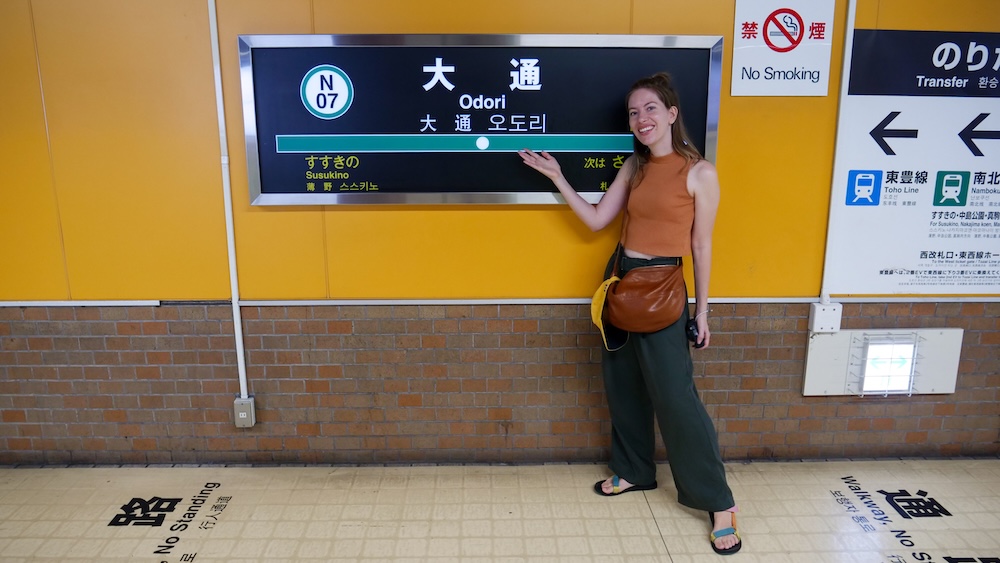
How to Get to Odori Park Without Unnecessary Backtracking
For TV Tower and the central sights, use Odori Station on the Namboku, Tozai or Toho lines. Exit 27 serves Nishi 1; exits 6 and 8 serve Nishi 3, with an elevator at exit 8.
For the western monuments and rose garden, consider Nishi 11-chome Station on the Tozai Line. Exits 4 and 1 serve Nishi 10–11, sparing you a walk across most of the park when the western sights are your priority.
From JR Sapporo Station, expect roughly 10–15 minutes on foot, depending on where you start. The Chi-Ka-Ho underground passage shelters the connection to the Odori area, although the park itself remains outdoors. Finish in the west and you can use Nishi 11-chome Station instead of retracing 1.5 kilometres.
If you’re still choosing where to stay in Sapporo, the Odori area makes a convenient base for these sights and subway connections. You can compare hotels near Odori Park, but check which end of this 12-block stretch a property is actually near.

Practical Tips for Enjoying Odori Park
A flat city park can still feel demanding in bad weather. Our September outing was far hotter and more humid than expected, so bring water, set a comfortable pace and make room for breaks if you’ve already been sightseeing. That one day isn’t a forecast for every autumn visit.
Odori Park is free to enter, but seasonal features keep different schedules. In 2026, the Nishi 9 watercourse and Nishi 12 canal stopped running on September 23, while the remaining fountains operated as late as October 20. A photograph of water flowing through the western garden doesn’t guarantee you’ll find it running in late autumn. Check the latest Odori Park notices for current water features, corn stalls, playground equipment and lending services.
Multipurpose toilets are at Nishi 3, 5, 7, 9 and 11. Wheelchair and stroller lending is seasonal and subject to conditions; neither it nor the regular paths guarantees accessibility during every event or weather condition. Cyclists are expected to walk their bikes in the park.
I’d include Odori Park in a first Sapporo itinerary, especially if you’re near TV Tower, but wouldn’t reserve two hours merely to be thorough. Stick to the eastern and central blocks when time is tight, continue west for art and gardens, and linger when there’s a festival. We came for a park and got a welcome rest and a surprise food outing. That’s worth more to me than ticking off 12 blocks while watching the clock.

Frequently Asked Questions
Is Odori Park worth visiting in Sapporo?
Yes. I’d include it on a first visit to central Sapporo, particularly if you’re already near TV Tower. The eastern and central blocks make a worthwhile short stop, while the western sections suit visitors who want more gardens, art and monuments.
How long do you need at Odori Park?
Allow about 35–60 minutes for the eastern and central sections, or 60–90 minutes for a full 1.5-kilometre one-way walk with stops. A quick visit can take 15–25 minutes, while festivals can easily extend the outing to several hours.
Is Odori Park free to enter?
Yes, Odori Park is free to enter. Nearby attractions such as the Sapporo TV Tower observation deck are separate, and you’ll pay for any food or other purchases during a festival.
What is there to see in Odori Park?
The eastern and central blocks have TV Tower views, flowerbeds and fountains. Farther west you’ll find Black Slide Mantra, play areas, historical monuments and a sunken rose garden at Nishi 12.
Where should you start walking through Odori Park?
Start near Sapporo TV Tower and Odori Station if you want the familiar central views. For the rose garden and western monuments, Nishi 11-chome Station is more convenient and can save you an unnecessary walk across the park.
Does Odori Park have festivals?
Yes. Sapporo Autumn Fest, the Snow Festival, the Lilac Festival, summer beer gardens and illuminations use the park at different times of year. Festival dates, layouts and operating conditions change, so check the current event details before visiting.
Can you walk through all of Odori Park in 30 minutes?
You can cover the roughly 1.5-kilometre length in about 20–30 minutes if you keep moving. For gardens, photographs, a rest or a festival, I’d allow substantially more time. That’s a one-way walk, not a return trip.
This guide is also available in Spanish. [Leé la versión en castellano: Parque Odori en Sapporo: guía y reseña, qué ver y cuánto tiempo dedicarle]
This article contains affiliate links. If you book through one of these links, I may earn a commission at no extra cost to you.