
In Sapporo, Audrey and I managed to spend about ¥2,800 on two bowls of ramen after getting a little too enthusiastic with the extra toppings. Another meal—a substantial seafood breakfast with crab, sashimi and a four-crab donburi—came to just over ¥3,000 for both of us. I was delighted with both, although my relationship with the ramen ticket machine could probably have been more financially responsible.

Those were prices from our visit, not today’s quotes. A single “Sapporo costs this much per day” figure tells you little about trips like ours, which mixed walking, subway rides, paid attractions and an outing into the outskirts. What you choose matters, but so does when you stay.
For an independent visit, I’d start around ¥9,000 per person per day on a budget, ¥16,000 for a comfortable midrange trip, or ¥32,000 and up for a higher-spend trip, assuming two adults sharing a hotel room. Here’s where that money goes.
How Much Should You Budget Per Day in Sapporo?
These are planning examples for ordinary, non-event dates, in yen, with one hotel room shared by two adults. They aren’t citywide averages or a reconstruction of our spending.

| Daily expense, per person | Budget-conscious | Midrange | Higher-spend |
|---|---|---|---|
| Accommodation (half of shared room) | ¥5,000 | ¥9,000 | ¥20,000 |
| Food and everyday drinks | ¥2,500 | ¥4,500 | ¥8,500 |
| Local transport | ¥500 | ¥600 | ¥1,000 |
| Sightseeing allowance | ¥500 | ¥1,200 | ¥2,500 |
| Accommodation tax | ¥300 | ¥300 | ¥400 |
| Daily total | ¥8,800 | ¥15,600 | ¥32,400 |
The hotel assumptions are ¥10,000, ¥18,000 and ¥40,000 per room per night before the separately listed accommodation tax. Food, transit and sightseeing are averaged across several days, balancing free afternoons against paid attractions.
Flights, airport transfers, shopping, regional trips, major tours, frequent taxis and expensive nights out are extra. Solo travellers paying for a private room lose the sharing advantage, and their accommodation-tax bracket can change too.
I’d start with the midrange column and substitute a real hotel quote. You can compare Sapporo hotel rates for your dates before deciding which column fits. Don’t count on the ¥10,000 budget-room assumption during a festival.
Accommodation: Where Your Sapporo Budget Can Change Dramatically
Our hotel overlooked Nakajima Park. I enjoyed having green space nearby, but I couldn’t tell you our exact nightly rate now.
What I would watch closely is the calendar. An October 2026 survey of roughly 260 Sapporo hotels put the median advertised room price for two people at about ¥14,900 for November 2026, rising to ¥28,900 for February 2027. For individual nights during the February 4–11 Snow Festival, the surveyed medians reached roughly ¥37,400–¥52,200. Those are dated advertised-price snapshots, not guaranteed rates for every hotel. The difference is still hard to ignore.
Imagine two people sharing a room: an extra ¥15,000 per night becomes ¥7,500 more per person, before you’ve ordered breakfast or gone anywhere. You can try to make that back by walking instead of using the subway, but you’d have to do an awful lot of walking. If you’re not going specifically for the Snow Festival, check alternate dates.
Then look at location. Odori gives you all three subway lines, and I’d compare hotels near Odori Station if I planned to use the subway constantly. Sapporo Station is useful for JR trains and onward travel, while Susukino puts restaurants and nightlife close at hand. We enjoyed the Nakajima Park area, though I wouldn’t automatically call it cheaper than the others. If a park-side base appeals, check rooms near Nakajima Koen Station against central alternatives for identical dates and cancellation terms. A bargain loses appeal if every outing becomes a nuisance.
There’s also an expense that wasn’t part of our earlier trip. Since April 2026, Sapporo and Hokkaido have charged a combined accommodation tax per guest, per night: ¥300 when the accommodation charge is below ¥20,000 per person, ¥400 from ¥20,000 to below ¥50,000, and ¥1,000 from ¥50,000 upwards. An ¥18,000 room shared by two means ¥600 in tax per night, unless already included in the quoted total.
I’d sort out dates and the real room price first. That’s where the biggest budget surprise is likely to be hiding.
Eating in Sapporo: Everyday Meals, Seafood and the Extras
I don’t travel to Hokkaido to eat the cheapest thing at every meal. Keeping breakfast simple to splurge on lunch, though? That makes sense.
At Ramen Alley, we used a ticket machine to order miso ramen with butter and corn. Somewhere between the buttons and my enthusiasm, I added extra butter and egg and generally lost track of what I’d selected. Audrey also had additional toppings. We ended up paying about ¥2,800 for the two of us, which we were perfectly happy about after eating. Did I need quite that much butter? Probably not. Would I order ramen in Sapporo again? In a heartbeat.
For a present-day reference, one Ramen Alley restaurant lists aged miso ramen at ¥1,000, butter-corn ramen at ¥1,300 and a more elaborate Hokkaido ramen at ¥1,650. That’s one restaurant’s menu, not where we ate or an alley-wide average. Extras add up.
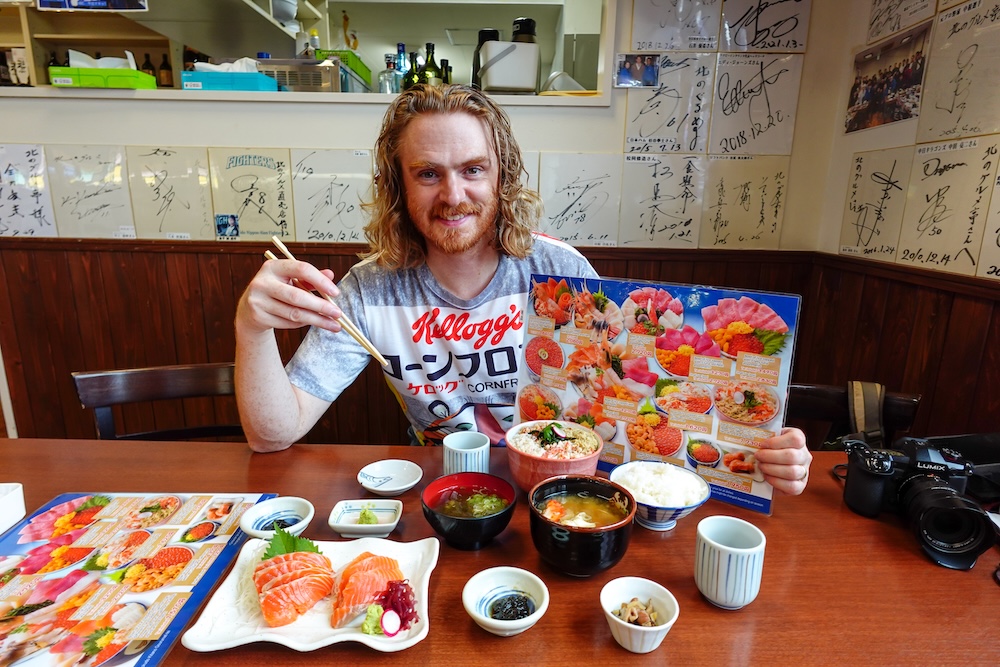
Our seafood breakfast near the Sapporo Central Wholesale Market was a completely different proposition. Crab soup, sashimi, rice, Audrey’s four-crab donburi—we ordered a serious spread. The total came to just over ¥3,000 for two, and both of us thought the quantity and variety were excellent value. I wouldn’t promise anyone that same feast for the same price now. A currently listed market restaurant, for instance, offers a daily seafood bowl at ¥2,500, a four-colour bowl at ¥4,620 and a sea urchin bowl at ¥5,780. Those are specific menu examples, not market-wide averages.
We also sampled beers at the Sapporo Beer Museum, stopped for Japanese sweets and tea, and stumbled into Sapporo Autumn Fest during our September visit. Add cold drinks and ice cream on a hot day, and a collection of small purchases starts looking like another meal. I’d rather budget for it than pretend every meal comes neatly priced.
With ¥2,500 a day, I’d be deliberate: inexpensive everyday meals, fewer extras and only occasional bigger treats. ¥4,500 provides more flexibility for restaurants, snacks and a special meal now and then. ¥8,500 gives considerably more room for seafood, drinks and pricier dining, though luxury meals can blow past even that. I’d save on ordinary meals to spend on the food I really wanted.
A more structured way to sample the food scene is a guided Sapporo food tour covering 10 or more dishes and drinks. The listed experience visits several venues with a guide; additional orders cost extra. We didn’t take it. I’d treat its price as a planned food experience, not tuck it into a normal day’s lunch allowance.
Getting Around Sapporo: What Transport Actually Adds to Your Costs
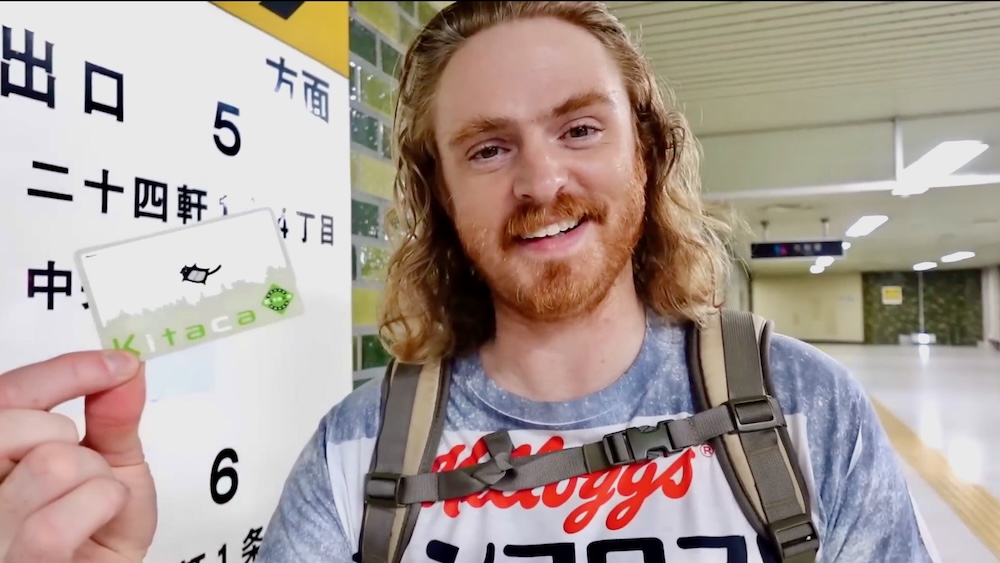
Sapporo was an easy city for us to navigate. We walked a lot and used Kitaca cards on the subway when attractions were farther apart. At one point we added ¥1,000 to a card at a station machine. That’s stored credit, not a ¥1,000 subway fare.
Adult subway fares are currently ¥210–¥380 per journey. Two ¥250 rides come to ¥500. If you need three ¥290 rides on a weekday, however, that’s ¥870, more than the ¥830 subway day pass. On eligible weekends and holidays the Donichika pass is ¥520. Eligible adult passengers paying with the same contactless bank card or device can also have their qualifying subway fares capped automatically at those daily amounts. Audrey and I used Kitaca, so that last option is something I’d consider on a return trip rather than a system I’m claiming to have tested.
The table’s transport allowance assumes walking and subway rides around the city. Subway-only passes exclude buses and streetcars, and frequent taxis cost extra. Families or travellers using several buses should budget differently.
The day we went south to Makomanai Takino Cemetery was different. We rode the subway to Makomanai and continued by bus into the wooded outskirts, where the journey started to feel a long way from central Sapporo. Today, the cemetery lists a ¥1,000 adult charge for the Hill of the Buddha and a ¥500 bus fare each way from Makomanai. That’s roughly ¥2,000 per adult for bus and admission, before the subway fare. The bus service has limited departures and seasonal timetables, so the current bus timetable matters just as much as the ticket price. Missing a bus may cost more time than the fare saves.

Attractions and Tours: Where Free Sightseeing Ends and Paid Experiences Begin
One of my favourite things about Sapporo is that you can spend a lot of time exploring without constantly handing over money. We wandered through Odori Park, Nakajima Park and Maruyama Park, explored around Hokkaido Jingu and walked the shopping streets. General access is free, though nearby museums and activities may charge. That leaves more money for dinner.
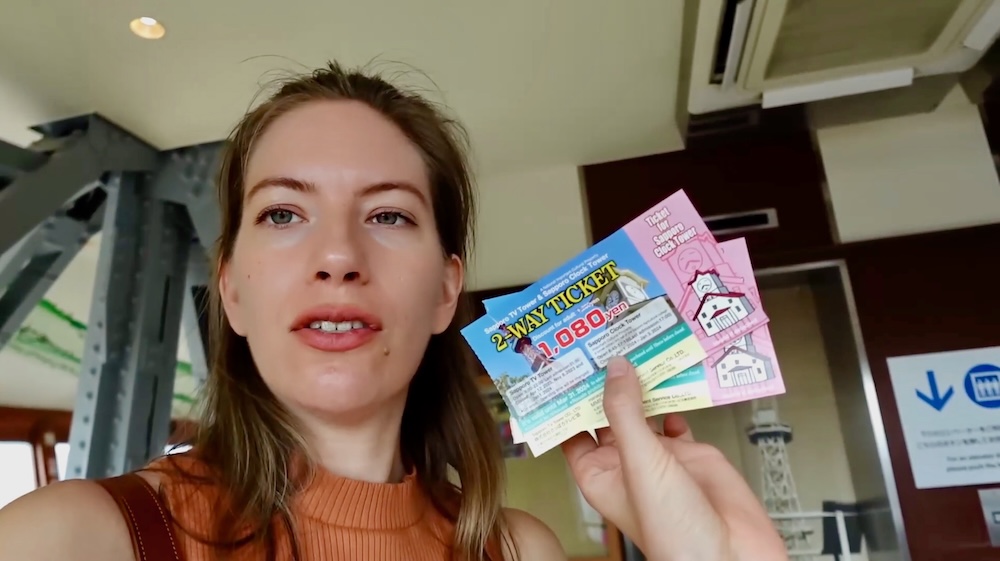
We paid for attractions too. At Sapporo TV Tower, I enjoyed the view more than the exposed elevator ride, which did very little for my nerves. We also visited the Clock Tower on a combined ticket. Current adult observatory admission at the TV Tower is ¥1,200, while an advertised ¥1,300 joint ticket includes the Clock Tower, saving ¥250 against the listed separate prices. That particular joint-ticket offer is published through March 2027, so don’t assume the same product will exist indefinitely.
At Sapporo Art Park Open-Air Museum, we followed wooded paths between outdoor sculptures. The admission I remember from our visit was ¥700; it’s now listed at ¥800 for adults, with seasonal operation rather than regular year-round outdoor-museum access. The seasonal opening matters as much as the ticket price.
The Sapporo Beer Museum is another example of how admission and extras need separate lines in your head. Adult self-guided entry is now listed at ¥1,000, with tastings costing additional money. We had fun trying the beers—Black Label was my favourite—though Audrey wasn’t nearly as invested in distinguishing one glass from another. Admission and tasting-room spending are two different expenses.
A guided excursion can take a much bigger bite out of the budget. One full-day Sapporo bus tour including the Hill of the Buddha also visits Hokkaido Jingu, the wholesale-market area and other stops. Its listed price covers the bus transport; lunch and paid admissions are extra. We went to the cemetery independently, so that’s the experience I can vouch for. A multi-stop tour may spare you the hassle of juggling connections, but compare the whole day’s cost rather than mistaking the bus-tour price for an all-inclusive outing.

Where I’d Save Money in Sapporo—and Where I’d Spend More
If I were going back, I’d make the hotel decision first, preferably with a little flexibility on dates. That one choice can add thousands of yen per person per day. Then I’d choose a room that worked with my itinerary. For early trains or several excursions around Hokkaido, I’d look at hotels around Sapporo Station rather than choose purely on the nightly rate.
Once there, I wouldn’t overcomplicate transport. Walking and the subway worked well for us, and I’d use them again for most of the city. I’d mix the paid sights with parks and neighbourhood walks.
But I wouldn’t try to economize all the enjoyment out of the food. Our two ramen bowls with a ridiculous amount of butter and our seafood breakfast were different kinds of meals, and I was glad we’d done both. I’d rather eat simply sometimes and splurge on something memorable.
So, how expensive is Sapporo? At ordinary hotel rates, an independent visit can be quite manageable, especially when two people share accommodation and use public transport. During a major event, or with pricier rooms, speciality dining and organized excursions, the budget can climb quickly. Start with the hotel price for your dates, give yourself an honest food allowance, and treat everything else as a choice. I might still manage to order too much butter, but at least it wouldn’t come as a surprise to the budget.

Frequently Asked Questions
How much money do you need per day in Sapporo?
For two adults sharing a hotel room during ordinary travel dates, I’d use approximately ¥8,800 per person per day for a budget-conscious trip, ¥15,600 for midrange travel or ¥32,400 for a higher-spend visit. These are illustrative planning budgets covering accommodation, everyday meals, local transport, sightseeing and accommodation tax. Flights, airport transfers, shopping, major tours and regional excursions are extra.
Is Sapporo expensive for tourists?
Sapporo can be manageable on a modest budget if you share accommodation, use public transport and mix free sightseeing with selected paid attractions. Hotels during major events, speciality seafood meals and organized excursions can increase spending considerably. I’d check accommodation prices for my actual dates before deciding how expensive the trip will be.
How much should I budget for accommodation in Sapporo?
Our three example budgets assume shared hotel rooms costing ¥10,000, ¥18,000 or ¥40,000 per night before accommodation tax. Actual prices vary by date, hotel standard and location. An October 2026 survey found substantially higher advertised room prices around the following February’s Snow Festival than during November, so ordinary-date budgets shouldn’t be used without adjustment for major events.
Does Sapporo charge an accommodation tax?
Yes. Sapporo and Hokkaido charge a combined accommodation tax per guest per night. It’s ¥300 when the accommodation charge is below ¥20,000 per person, ¥400 from ¥20,000 to below ¥50,000, and ¥1,000 from ¥50,000 upwards. Check whether the tax is already included in your booking total so you don’t count it twice.
How much does eating out cost in Sapporo?
It depends on what you order. One Ramen Alley restaurant lists ramen dishes from ¥1,000 to ¥1,650, while examples from a seafood-market restaurant range from ¥2,500 for a daily seafood bowl to ¥5,780 for a sea urchin bowl. Audrey and I spent about ¥2,800 combined on ramen with extra toppings during our visit, but that’s a historical bill, not a current price.
Is public transport expensive in Sapporo?
Adult subway rides cost ¥210–¥380, depending on the journey. The ordinary adult subway day pass costs ¥830, while the Donichika pass costs ¥520 on eligible weekends and holidays. Qualifying contactless bank-card payments can also receive automatic daily fare caps. We travelled with Kitaca cards and found the subway practical for exploring the city without relying on taxis.
Can you save money by visiting free attractions in Sapporo?
Absolutely. Audrey and I spent time exploring Odori Park, Nakajima Park, Maruyama Park and the grounds around Hokkaido Jingu without constantly buying admission tickets. General access to those public spaces is free, although some nearby buildings and activities charge admission. Combining those outings with a few paid attractions is how I’d keep sightseeing expenses under control.
This guide is also available in Spanish. [Leé la versión en castellano: ¿Qué tan caro es Sapporo? En qué se va tu presupuesto de viaje]
This article contains affiliate links. If you book through one of these links, I may earn a commission at no extra cost to you.