
We reached the Sapporo Beer Museum during a stretch of unusually hot, humid September weather. That’s the kind of afternoon that turns “should we visit a museum?” into “is there air conditioning, and do they serve beer?” Audrey and I took the subway, walked a few blocks and stood outside the old red-brick building with no real idea of what was inside. Mostly we were hoping the visit ended with a glass in hand. It did. We walked the exhibits and then settled into the tasting room with a three-beer set, some cheese and a small snack plate. There was also a glass of corn tea that Audrey ordered with high hopes and finished with considerably lower ones.

That was 2023. The museum you’ll visit isn’t quite the same one. In July 2026 it reopened after a renovation and stopped being free. A visit is now a choice between ticketed formats with different prices, different languages and different beers in your glass. Plenty of older guides online still describe the free walk-in museum, so the useful questions have shifted. They’re no longer just whether to go, but which ticket to buy and what each one actually gets you.
My short answer: if you drink beer and don’t speak Japanese, buy the self-guided ticket and finish with the three-beer set in the Tasting Hall. That’s essentially the afternoon Audrey and I had, and I still think it’s the best version of this place for most travellers. The rest of this guide explains why, when the guided tour is the smarter buy, and who should skip the museum entirely.

What the Sapporo Beer Museum Is (and What It Isn’t)
Nobody brews beer here. There’s no production equipment anywhere in the building, so if you’re picturing steel tanks and bottling lines, you’re picturing a factory, and that’s somewhere else. This is a museum about the story of Sapporo beer, housed in a building with a good story of its own.
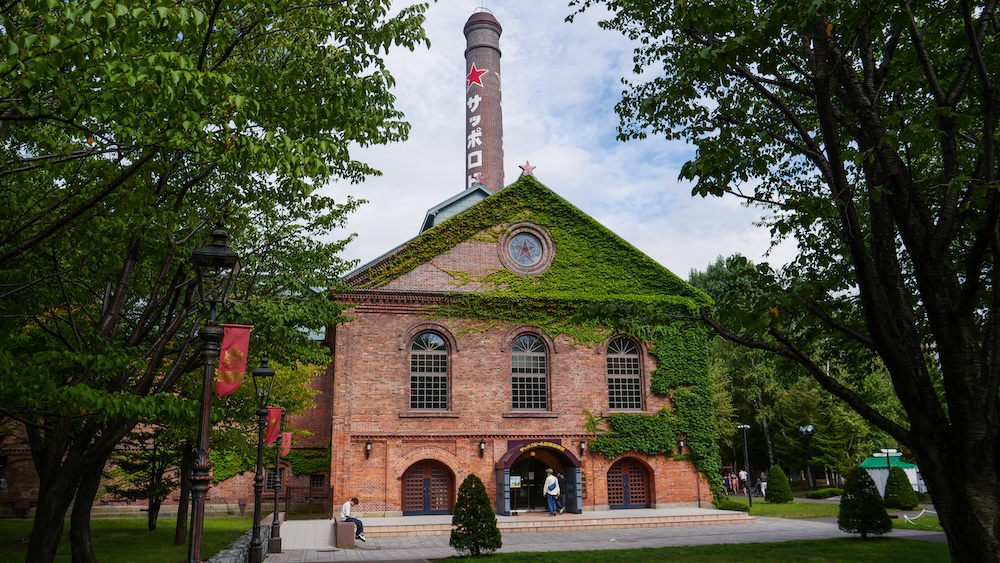
The building was finished in 1890 as a sugar factory. Sapporo’s brewing company later took it over as a malting plant, which it remained until 1965. It reopened in 1987 as Japan’s first beer museum, and it’s now a designated Hokkaido Heritage site. Honestly, the exterior did more to convince us the trip across town had been worthwhile than anything we’d read beforehand. The brick, the arched windows and the chimney make you feel you’ve arrived somewhere with history, even before you know any of it.

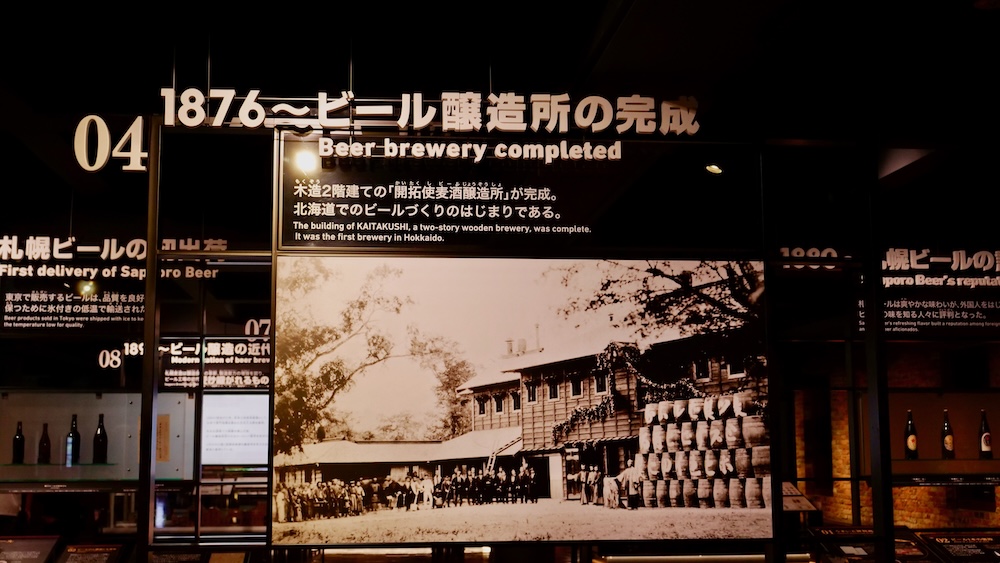
Why beer came to Sapporo. The history inside explains this, which is more interesting than a standard brand timeline. In 1876 the Kaitakushi, the Meiji government’s Hokkaido Development Commission, opened a beer brewery as part of its campaign to develop the island. Its brewmaster, Nakagawa Seibei, had trained at a brewery in Berlin. The plan had originally been to build in Tokyo. Murahashi Hisanari, the official in charge of construction, pushed for Sapporo instead, because German-style lager has to ferment and mature at low temperatures, and Hokkaido had the ice to make that reliable. Cold-brewed Sapporo Beer went on sale in 1877 under the Kaitakushi’s emblem, a five-pointed North Star. That star is still on the labels today, and you’ll spot it in red on buildings around the city, including this one.
“First” versus “oldest.” You’ll often see Hokkaido called the birthplace of Japanese beer, or Sapporo described as Japan’s first beer. Neither claim is accurate. William Copeland, a Norwegian-American brewer, was brewing in Yokohama around 1870, several years before the Kaitakushi brewery opened. His Spring Valley Brewery became the forerunner of Kirin, which launched its own beer in 1888.
Sapporo’s genuine claim is narrower but still impressive. It’s the oldest Japanese beer brand still on sale, and it came out of a government-founded brewery run by a German-trained Japanese brewmaster. That difference won’t change how the beer tastes. It does mean you can stand in front of the exhibits knowing which part of the story you’re actually looking at.

What Changed in July 2026
When we visited, admission was free. You wandered the exhibits at your own pace and paid only for what you drank. Since the renovation, there are two main tickets.
The self-guided ticket costs ¥1,000 for adults. It’s ¥500 for junior high school students up to age 19, and free for elementary school children and younger.
The guided tour costs ¥2,000 for adults and ¥1,000 for junior high school students up to age 19. Elementary school children go free. The tour price includes admission and two drinks.
Hokkaido residents get ¥300 off either ticket with photo ID showing a Hokkaido address. Those prices were current as of late 2026.
You can buy tickets online in advance or from the ticket machines inside the museum on the day. Cash and most cashless payment methods are accepted.
Two other things in older guides no longer hold. The museum itself doesn’t close on Mondays anymore: self-guided visits run every operating day from 11:00 to 18:00, with last entry at 17:30. The museum closes on December 31 and on the occasional temporary closure day. Only the guided tour skips Mondays. When a Monday is a public holiday, the tour runs that day and Tuesday’s tours are cancelled instead.
The renovation also changed what’s inside. Self-guided visitors now get a smartphone audio guide, and the guided tour adds a theater and a private tasting lounge. I haven’t experienced any of the new features. I’ll be clear throughout about what Audrey and I actually did in 2023 and what the museum offers now.
Prices and tour times can change, so check the official visitor information page before you go. It’s in Japanese, but browser translation handles it fine.

The Self-Guided Visit
The self-guided route doesn’t need a reservation. You take an elevator up to the third floor and work your way down through the second floor to the first. The route is one-way, with ramps and stairs. A small elevator stops at every floor for wheelchairs and strollers. Photos are allowed, but video isn’t, which is worth knowing if you’re the type who films everything. We are absolutely that type.
The main exhibit is the Sapporo Gallery on the second floor, which moves era by era from the Kaitakushi brewery to the modern brand. What stayed with me from our visit was the evolution of the beer labels. It’s a small design history of how a frontier government’s star turned into one of the country’s most recognisable logos, followed by the posters and advertising that sold it. If you have any interest in old graphic design, that’s the part to slow down for. The other stop worth making is the enormous brewing kettle once used at Sapporo’s factory, about 6.1 metres across and roughly 10 metres tall. In a museum with no working brewery, it’s the best sense you’ll get of what beer-making at industrial scale actually looked like.
The new audio guide, called “The Story of SAPPORO BEER,” plays through your own smartphone and earphones. Rental equipment is free if you need it. It covers 15 spots along the route in Japanese, English, Korean and both Traditional and Simplified Chinese. Finishing the spots earns you a sticker, which will mean nothing to most adults and quite a lot to some children. It didn’t exist when we visited, so I can’t tell you how well it works. On paper, though, it’s the most important change for English speakers, because it’s now the main way to follow the story without reading Japanese. I’d bring my own earphones rather than count on a rental.
The museum estimates 15 to 30 minutes for the route, or 15 to 40 with the audio guide. That matches my memory of a compact visit rather than a place you lose an afternoon in. So your ¥1,000 buys a short, well-made story in a beautiful building, plus access to the Tasting Hall at the end. As you’ll see, that last part matters more than it sounds.
The Guided Tour
We didn’t take the guided tour, which is now officially called the SAPPORO BEER MUSEUM Guide Tour. What follows is how it works rather than a review.
The tour starts at a desk on the first floor. You go up to a waiting hall on the third floor, then into a theater reserved for tour groups. A guide (the museum calls them “brand communicators”) leads you through the second-floor gallery and ends in a Premium Lounge on the first floor. There you get your two drinks: a glass of Black Label and a glass of Fukkoku Sapporo Sei Bakushu, a revival of the brewery’s founding-era beer that’s only poured on the tours. Guests who don’t drink can choose non-alcoholic beer or soft drinks instead, and under-20s get soft drinks.
The tour takes about 55 minutes including the tasting. It’s capped at 16 people. The first one starts at 11:30, and later start times vary by day. Online booking stays open until 9:30 a.m. on the day itself. After that, the tour desk takes walk-ups until 20 minutes before a start time, if seats remain. Preschool children can’t join, so families with small kids are limited to the self-guided route.

The language catch. The guided tours are conducted entirely in Japanese. For a Japanese speaker, that makes the tour the obvious bargain. For ¥2,000 you get admission, a guide, a theater the self-guided route doesn’t include, and two beers, one of which you can’t drink any other way. Everyone else is paying for the setting, the lounge and that revival beer while the commentary goes past them. If you’re tempted anyway, ask at the tour desk what English support is offered that day rather than assuming there is any.
A private English-speaking guide. If live English commentary is the whole reason you want a guide, the museum’s own tour can’t give you that, and that’s the gap private guides fill. One currently listed option pairs a private English-speaking guide with the beer museum and a tasting over about four hours. The itinerary is customised around your interests, which means the guide can also take in other parts of central Sapporo. It costs well over US$100 per person, and museum admission is listed as an optional extra, so check exactly what’s covered before you book. We haven’t taken it. It makes sense if being able to ask questions about the Kaitakushi and those labels matters more to you than the price.
Black Label THE PERFECT TOUR. Serious fans may also come across this tour, which runs about once a month on a weekday. It’s around 70 minutes and costs ¥3,000. It’s adults only, and families with small children can’t join. After the history segment, staff connect online from the barley and hop fields in Kamifurano, in central Hokkaido, to talk through what goes into Black Label. It finishes with the same two beers in the Premium Lounge. With only 16 places and dates announced on the museum’s website, it’s a nice bonus if the timing works, not something to plan a trip around.

The Tasting Hall
This is where self-guided visitors end up, and where Audrey and I spent the best part of our afternoon. It used to be called Star Hall. It’s open from 11:00 to 18:30, with last orders at 18:00. The beer comes straight from Sapporo’s working brewery in Hokkaido and from a small brewery on the company’s original founding site in the city.
As of late 2026, Black Label and the Hokkaido-only Classic are ¥450 each, Kaitakushi Beer is ¥550, and the three-beer set with all of them is ¥1,200. A non-alcoholic beer-style drink or a soft drink costs ¥200.
The rules. Seats are limited to 30 minutes, and when the hall is full you may have to wait. The museum had more than 700,000 visitors in 2025, so that’s a realistic possibility rather than fine print. The route is one-way, and the museum asks visitors not to use the Tasting Hall on its own. In practice it’s the end of the museum visit, not a drop-in bar. Japan’s drinking age is 20, so bring ID. The museum also won’t serve alcohol to anyone driving, cycling or riding a motorbike, or to anyone pregnant or breastfeeding.

Ordering. When we visited, ordering came with that very Japanese ritual of feeding a ticket machine. We pressed buttons for the tasting set, a tea, cheese and a snack, then handed over our tickets. Admission tickets are still sold from machines inside the museum, so some button-pressing is part of the deal either way.
Which beers each format gets you. This is where the choice of ticket matters most. The Tasting Hall set is the only way to line up Black Label, Classic and Kaitakushi side by side. The guided tour gives you Black Label and the revival beer instead. If the Hokkaido-only Classic is the beer you came to Sapporo for, it’s the self-guided route that pours it.

What We Tasted and Which One Won
On a hot, humid day, sitting in an air-conditioned room with cold beer in front of us, we agreed that it doesn’t get much better. From there, Audrey and I split the work very differently. She took charge of the descriptions, reading each card aloud because she didn’t want to miss a word. I took a more hands-on approach to research, which Audrey summarised as me “chugging it.” In my defence, I was thirsty, and my considered tasting note was: “Let me tell you, that’s a good beer.”
Black Label. That was the Black Label, Sapporo’s best-seller, and the card traced it back to 1977. It actually launched that year as “Sapporo Bin-Nama.” Drinkers nicknamed it after its dark label, and the nickname became the official name in 1989, which is a nice example of a company sensibly giving up and agreeing with its customers.
Classic. The Classic is sold only in Hokkaido. It launched in 1985 and is made partly with Hokkaido-grown barley and hops. It tasted way lighter to me, and my immediate thought was that this would be Audrey’s beer.
Kaitakushi. The third was the Kaitakushi beer, named for the development commission that built the original brewery. The card on the table described it as rich and mild.
My verdict. I didn’t agonise over it. Out of the three, I went with Black Label. As I put it at the time, the best-selling one was the best one in my opinion, and Audrey agreed that made sense. Best-sellers don’t always deserve their status, but on that afternoon this one did.
Audrey’s verdict. Audrey’s view was more useful than mine to anyone who doesn’t drink much beer. She liked the Classic and the Kaitakushi, but admitted all three tasted quite similar to her. As she put it: “Ask me about wine, guys, don’t ask me about beer.” I suggested she was just tired. She said she was tired from the heat, which was fair, because so was I. Her final verdict was simple: they were all refreshing, and if you need to cool down and have a beer, come to the tasting room.
That’s the right way to think about the three-beer set. If you drink beer regularly, the comparison is genuinely fun, and Black Label might surprise you with how good it tastes fresh at its source. If you don’t, the set is less about tasting notes and more about the room, the cold glass and the excuse to sit down for half an hour.

The corn tea. Audrey ordered it as her non-beer option, because corn turns up everywhere in Hokkaido, from ramen to desserts to pudding. One sniff and she decided it smelled like the water you boil corn in. She wouldn’t call it her favourite. I tried it too and couldn’t argue. It wasn’t bad, exactly, but I’d have taken plain water. The current menu just lists soft drinks, so I can’t promise corn tea is still there. If it is, you’ve been warned.

How Much Time Each Format Takes
The self-guided route takes 15 to 40 minutes depending on whether you use the audio guide, and the Tasting Hall caps your seat at 30 minutes. Combined, a self-guided visit with a tasting realistically takes about an hour to an hour and a quarter in the building, including a short wait if it’s busy. The guided tour runs about 55 minutes, plus time to check in at the desk first. Add the trip from central Sapporo and you’re looking at roughly two hours. If you add a meal at the beer garden next door, it becomes more of a half-day.
| Self-guided only | Self-guided + three-beer set | Guide Tour | Black Label THE PERFECT TOUR | |
|---|---|---|---|---|
| Adult price (late 2026) | ¥1,000 | About ¥2,200 | ¥2,000 | ¥3,000 |
| Time in the building | 15–40 minutes | Roughly 1 to 1¼ hours | About 55 minutes plus check-in | About 70 minutes |
| Booking | Not needed | Not needed | Online until 9:30 a.m. the same day; walk-ups if seats remain | Online; about once a month on a weekday |
| Language | Audio guide in five languages | Audio guide in five languages | Japanese only | Japanese only |
| What you drink | Nothing included | Black Label, Classic, Kaitakushi | Black Label and the tour-only revival beer | Black Label and the tour-only revival beer |
| Children | Elementary age and under free | Under-20s limited to soft drinks | No preschoolers | Adults only |
The guided tour is the least flexible option. Start times vary and there are only 16 places, so book it first and plan the rest of your day around it, not the other way round.

Visiting on Your Own vs Joining a Sapporo Beer Tour
We went independently, and I’d do it the same way again. The museum is easy to reach, the route is clearly signed, and the biggest hurdle is a ticket machine. Going on your own also means you can linger over the posters as long as you like and leave the Tasting Hall when your 30 minutes are up, not when someone with a flag says so.
The case for an outside tour comes down to two things: language, and not wanting to plan the logistics yourself. The museum’s own tours are in Japanese. If an English-speaking guide matters, the private option I mentioned above is the most museum-focused choice. Tours like that make sense if you want a guide for the whole day and the museum is one stop among several. They make less sense if the beer museum is the main event.
Group tours that include the museum. If you’d rather fold the museum into a bigger day out, a couple of group tours do exactly that:
- One full-day tour from Sapporo links the beer museum with Hill of the Buddha and Jozankei Onsen. The tasting at the museum is at your own expense, and I’d confirm whether the new admission fee is covered before booking.
- For history-minded travellers, there’s a guided day pairing the Historical Village of Hokkaido with the beer museum. The pairing makes sense, since both tell parts of the same story of Hokkaido’s development in the Meiji era.
We haven’t taken either. On any tour where the museum is one stop of several, you trade the freedom to linger for not having to sort out buses and timings yourself. If you want to see everything currently running in one place, browse current Sapporo beer and brewery tours and compare what each includes.
If you want to see beer actually being made. Skip the museum and look at Sapporo‘s working Hokkaido Brewery in Eniwa, between Sapporo and New Chitose Airport. It runs guided factory tours of about an hour, built around Sapporo Classic and finishing with a tasting. Reservations are required, and bookings open about four weeks ahead. The nearest station is Sapporo Beer Teien on the JR Chitose Line. The museum goes out of its way to warn visitors not to confuse the two, so double-check which one you’ve booked.

Getting to the Sapporo Beer Museum from Central Sapporo
The museum sits in Sapporo Garden Park in Higashi Ward, about 2 km northeast of Sapporo Station. That’s far enough that you won’t wander past it by accident, but close enough that getting there takes no planning heroics. The museum’s access page has current routes and links to bus timetables.
Bus from the station. The simplest option is Chuo Bus route 188, which runs direct from stop 2 at Sapporo Station’s north exit. Get off at the “Sapporo Beer-en” stop, right by the museum. That direct bus is one good reason to base yourself around Sapporo Station if you’re still choosing where to stay. It’s also convenient for most day trips out of the city. If that’s where you’re leaning, compare hotels near Sapporo Station before the good-value rooms go.
Bus via Odori Park. The loop route 88, called the Factory Line, starts on the south side of Sapporo Station and runs via Odori Park to the same stop.
Subway. Take the Toho Line to Higashi-Kuyakusho-mae Station. From exit 4 it’s about a 10-minute walk. That’s the sort of subway-plus-a-few-blocks journey we made.
JR train. Naebo Station on the Hakodate Main Line is about 8 minutes on foot from its north exit.
Taxi. It’s about 2 km from Sapporo Station’s north exit, about 3 km from Odori Park and about 3.5 km from Susukino.
Car. There’s shared parking on site. Museum visitors and diners at the restaurant next door park free for up to five hours if they bring the parking ticket inside. Drivers won’t be served alcohol, though, which at a beer museum rather defeats the point.
Eating next door. The Sapporo Beer Garden is on the same grounds, serving jingisukan, Hokkaido’s grilled mutton dish, with draft beer. It’s the natural next stop if you want to stretch the visit into an evening. We didn’t eat there, so I can’t vouch for it, but following a beer museum with a mutton barbecue next door seems like a fairly easy decision.
Is the Sapporo Beer Museum Worth Visiting?
For us, it was. The museum was one of the stops we’d decided not to miss in Sapporo, and the afternoon delivered exactly what we needed: a bit of history, a striking building and a cool room with three cold beers on a day when the weather had worn us both down. But the museum we visited was free, and the one you’ll visit isn’t. So the honest answer now depends on who you are and which ticket you buy.
If you drink beer and don’t speak Japanese: buy the self-guided ticket, use the audio guide and finish with the three-beer set. It costs about ¥2,200 and takes an hour or so, and it’s close to what Audrey and I did. It’s also the only way to taste the Hokkaido-only Classic next to Black Label and Kaitakushi, and that’s my main reason for putting it first.
If one brewery’s lineup isn’t enough: an evening craft beer tasting tour through central Sapporo covers ten beers across three stops. It starts near the TV Tower and finishes in the Tanukikoji arcade. It’s a different animal from the museum, small-batch brewing rather than a heritage brand, and we haven’t done it. But it’s the natural next move for anyone who walks out of the Tasting Hall wanting to know what else Sapporo pours.
If you understand Japanese, or collect rare beers: the guided tour is the better buy. You get the guide, the theater and a revival beer you can’t order anywhere else, for ¥2,000.
If you don’t drink much: take Audrey’s lead. Treat it as a short, attractive history stop for ¥1,000, and see the soft-drink menu as a way to cool down rather than a reason to come.
If you want to see brewing: go to Eniwa instead.
If the weather turns: on a hot or rainy day, the museum is one of the easier indoor afternoons in Sapporo. Audrey’s advice still applies: if you need to cool down and have a beer, come to the tasting room. Just decide which ticket you’re buying before you get there.

Frequently Asked Questions
Is the Sapporo Beer Museum still free?
No. Free admission ended when the museum reopened after its renovation on July 1, 2026. As of late 2026, the self-guided ticket costs ¥1,000 for adults and ¥500 for junior high school students up to age 19, while elementary school children and younger go free. The guided tour costs ¥2,000 for adults and includes admission and two drinks.
Is the guided tour at the Sapporo Beer Museum in English?
The guided tours are conducted entirely in Japanese. English speakers get more from the self-guided route, where the smartphone audio guide covers Japanese, English, Korean and both Traditional and Simplified Chinese. If you’re set on the tour anyway, ask at the tour desk what English support is offered that day.
Which beers can you taste at the Sapporo Beer Museum?
That depends on your ticket. Self-guided visitors finish in the Tasting Hall, where the ¥1,200 three-beer set lines up Black Label, the Hokkaido-only Classic and Kaitakushi Beer. Guided-tour guests get Black Label and Fukkoku Sapporo Sei Bakushu, a revival of the brewery’s founding-era beer that’s only poured on the tours.
How much time do you need at the Sapporo Beer Museum?
Plan on about an hour to an hour and a quarter for a self-guided visit with a tasting. The route itself takes 15 to 40 minutes, and Tasting Hall seats are limited to 30 minutes. The guided tour runs about 55 minutes plus check-in, and adding the trip from central Sapporo makes it roughly two hours.
Is the Sapporo Beer Museum closed on Mondays?
The museum itself isn’t. Self-guided visits run every operating day from 11:00 to 18:00, with last entry at 17:30, and the museum closes on December 31 and occasional temporary closure days. Only the guided tour skips Mondays.
Can you see beer being brewed at the Sapporo Beer Museum?
You can’t, because there’s no production equipment in the building. To watch beer being made, book a factory tour at Sapporo’s working Hokkaido Brewery in Eniwa, where reservations are required and open about four weeks ahead.
How do you get to the Sapporo Beer Museum from Sapporo Station?
The simplest option is Chuo Bus route 188 from stop 2 at Sapporo Station’s north exit to the Sapporo Beer-en stop, right by the museum. By subway, take the Toho Line to Higashi-Kuyakusho-mae and walk about 10 minutes from exit 4.
Which beer was best in the tasting set?
I went with Black Label, Sapporo’s best-seller, without much hesitation. Audrey liked the Classic and the Kaitakushi but found all three quite similar, and her verdict was simply that they were refreshing.
This guide is also available in Spanish. [Leé la versión en castellano: Guía y reseña del Museo de la Cerveza de Sapporo: visita autoguiada, tour guiado y degustación]
This article contains affiliate links. If you book through one of these links, I may earn a commission at no extra cost to you.