
I could have used another three days in Sapporo just for eating. Audrey and I stayed four nights, which gave us three full days to explore Hokkaido’s capital, and the number of meals we could squeeze into those days became a problem rather quickly. There was ramen to eat, crab to crack open, beer to sample and a food festival we hadn’t even known was happening until we walked straight into it. I also found myself ordering rather more butter than any reasonable person needs in one bowl of noodles.
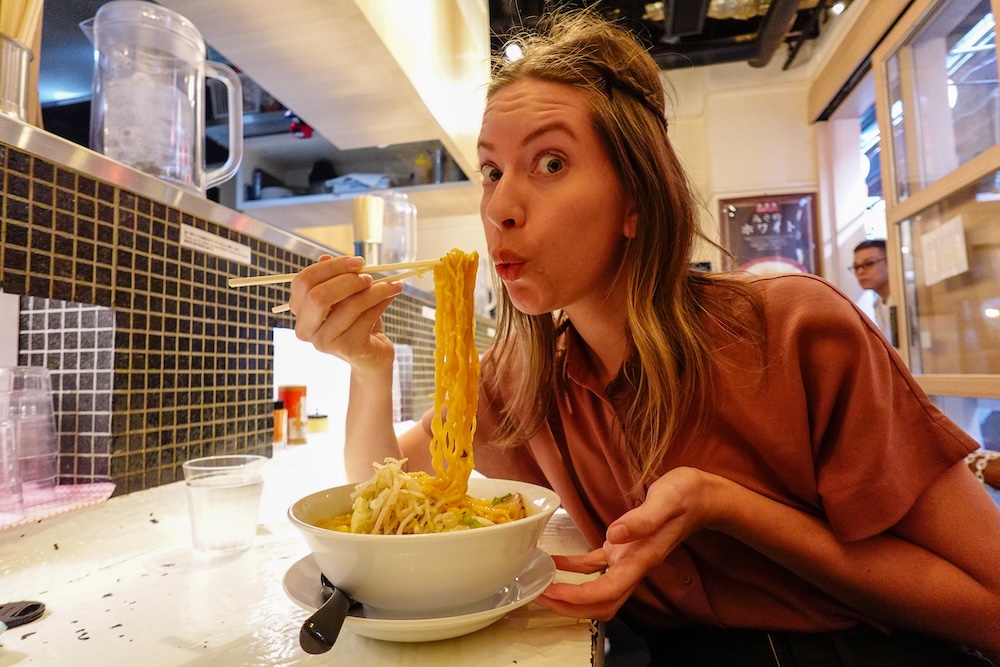
We ate exceptionally well, but I wouldn’t pretend we conquered Sapporo’s food scene. Not by any stretch of the imagination. We never got around to jingisukan or soup curry, and the city’s tradition of going out for elaborate parfaits after dinner is still on my list. Meanwhile, some of our favourite food stops took us well away from the downtown sights. We were quite happy to travel across town for a seafood breakfast, although I can understand why someone with only a day in Sapporo might have other ideas.
What follows is where we actually ate, what we ordered, what I’d go back for and what I’d change next time. I’ve also included a few restaurant options for the famous dishes we missed, because knowing what to eat in Sapporo isn’t much use if you have no idea where to find it. The places we tried are the ones I can tell you about properly, right down to what we ordered and where things went sideways.
What Should You Eat in Sapporo First?
My three priorities would be the same if I were planning our first visit all over again: Sapporo miso ramen, a proper seafood breakfast and the Sapporo Beer Museum. I’m cheating slightly with that last one. Beer tasting isn’t a full meal, but the museum was one of the most enjoyable food-related outings of the trip.
I’d then work jingisukan and soup curry into the remaining meals, depending on what sounded appealing and where I happened to be. And I’d save a little appetite for something sweet. Sapporo has a knack for making an already busy sightseeing day even busier once you start looking at restaurant menus.
| What to try | Where to look | When it fits best | What to know |
|---|---|---|---|
| Butter-corn miso ramen — we ate it | Misogin or other Ramen Alley shops in Susukino | Lunch or dinner | Easy central meal; check what toppings are included |
| Crab and fresh seafood — we ate it | Kita no Gurume-tei at Sapporo Curb Market | Breakfast or early lunch | Worth a separate trip if seafood matters to you |
| Sapporo beer — we tried it | Sapporo Beer Museum | Daytime outing | Tasting costs extra on top of admission |
| Jingisukan — we missed it | Matsuo Jingisukan or Sapporo Beer Garden | Lunch or dinner | Compare lamb cuts, set menus and dining formats |
| Soup curry — we missed it | Suage or GARAKU | Lunch or dinner | Choose your protein, broth, spice and rice |
| Shime parfait — we missed it | Susukino dessert bars | After dinner | Some venues stay open late but don’t take reservations |
| Autumn Fest street food — we ate it | Odori Park, during the festival | A relaxed lunch or evening | Seasonal, busy and full of changing stalls |
| Japanese sweets — we ate them | Jingu Chaya by Hokkaido Jingu | Afternoon | Better as part of a Maruyama outing |
The geography is worth paying attention to. Susukino makes dinner and dessert easy. The Curb Market is a morning excursion. The Beer Museum is another journey entirely. I’d rather organize the day around one particularly good meal than spend half my holiday zigzagging across the subway map.
Sapporo Miso Ramen: Our Slightly Excessive Meal in Ramen Alley
Butter, Corn, Miso and a Ticket Machine at Misogin
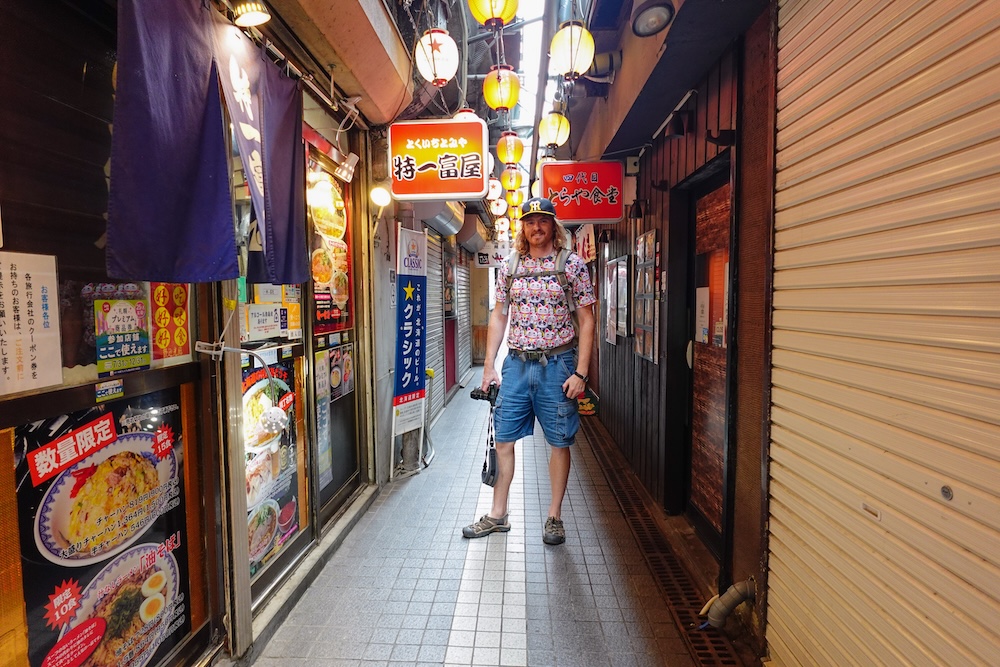
We’d been looking forward to butter-corn ramen since arriving in Hokkaido. Earlier in the trip, a restaurant-ordering mix-up in Hakodate meant we hadn’t quite managed to get the bowl we were after. Sapporo was supposed to put that right, and Susukino’s Ganso Ramen Yokocho seemed like an appropriate place to start. A whole alley devoted to ramen? I wasn’t about to argue.
We settled on Misogin (みそ吟), a small shop with a bright yellow sign and photographs of ramen bowls outside. There were only a handful of customers when we went in, and the room was so compact that we made an effort to speak quietly around the other diners. Some Japanese restaurants are wonderfully intimate, although they do make you aware of just how loudly two enthusiastic Canadians can talk about noodles.
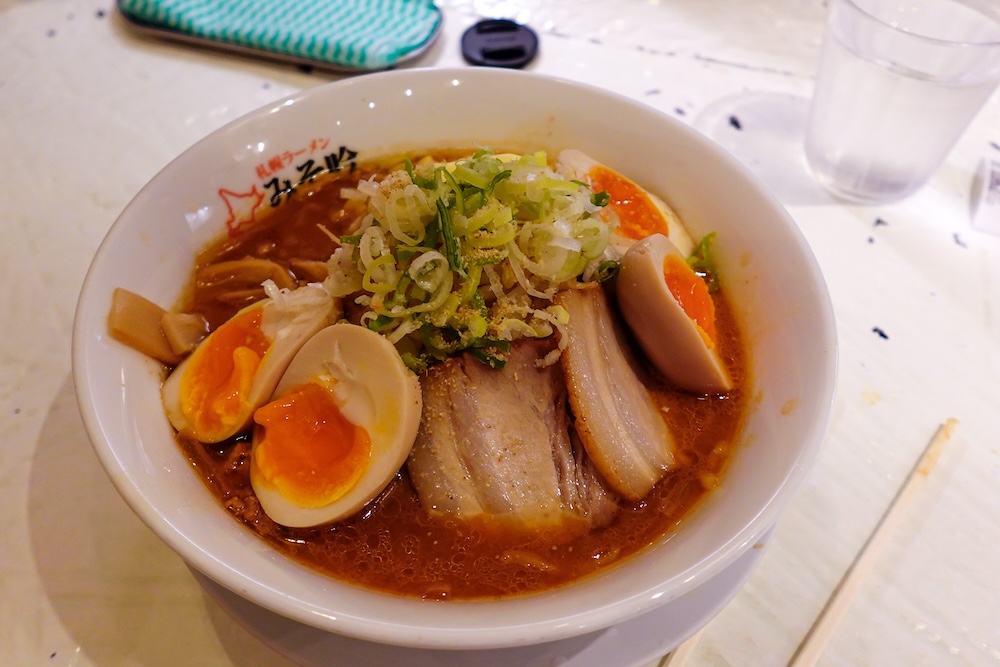
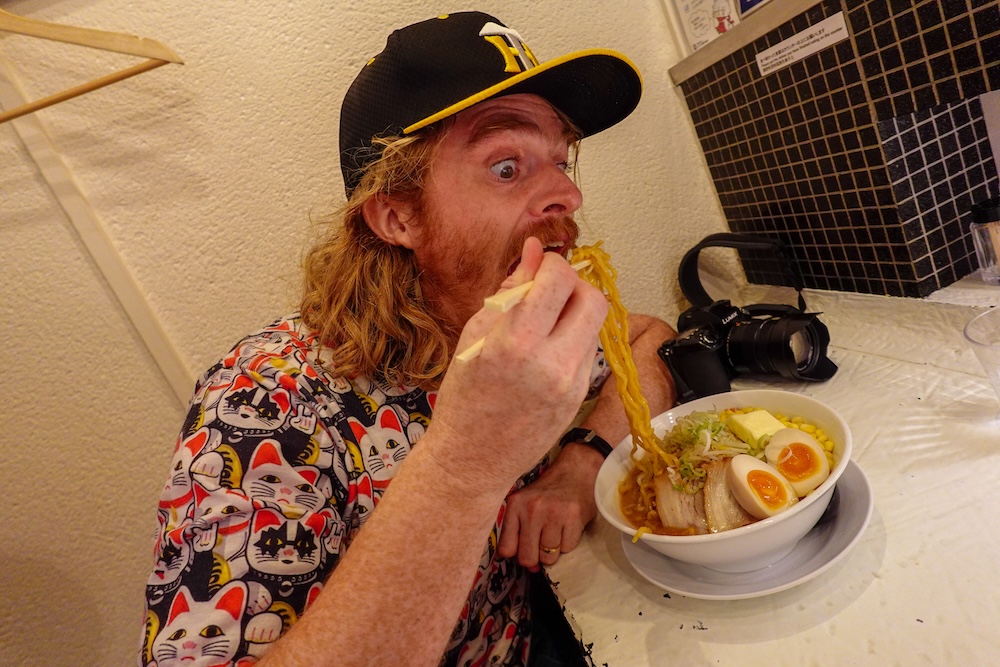
Then came the ticket machine. We’d barely sat down before I realized I’d been pressing buttons with reckless abandon. Extra butter? Absolutely. Extra corn? Why not. Eggs? Yes, those too. Audrey had ordered extras as well, and somewhere along the way neither of us was entirely sure what had already been included in the original bowl. It isn’t difficult to order ramen in Japan, but it’s easy to get carried away when every topping sounds like an improvement.
Audrey’s bowl arrived with four egg halves. That’s two whole eggs on top of a substantial serving of noodles, pork, vegetables and the butter and corn we’d come for. And then the other one, which was mine, had double butter. Yep, large double-duty slabs of butter was melting into the broth, making everything look even richer. At that point there was no point second-guessing the order. I tucked right in.
And it was terrific. I loved the broth immediately. It had a deep miso flavour, a slight kick and an almost nutty quality we couldn’t quite place. We wondered whether sesame might have something to do with it, but I don’t know the recipe. The noodles were satisfying, the corn worked beautifully with the savoury broth, and the pork was tender and fatty. Audrey was equally enthusiastic once she began tasting hers. We weren’t going to struggle to finish these bowls, however ridiculous my toppings situation looked.
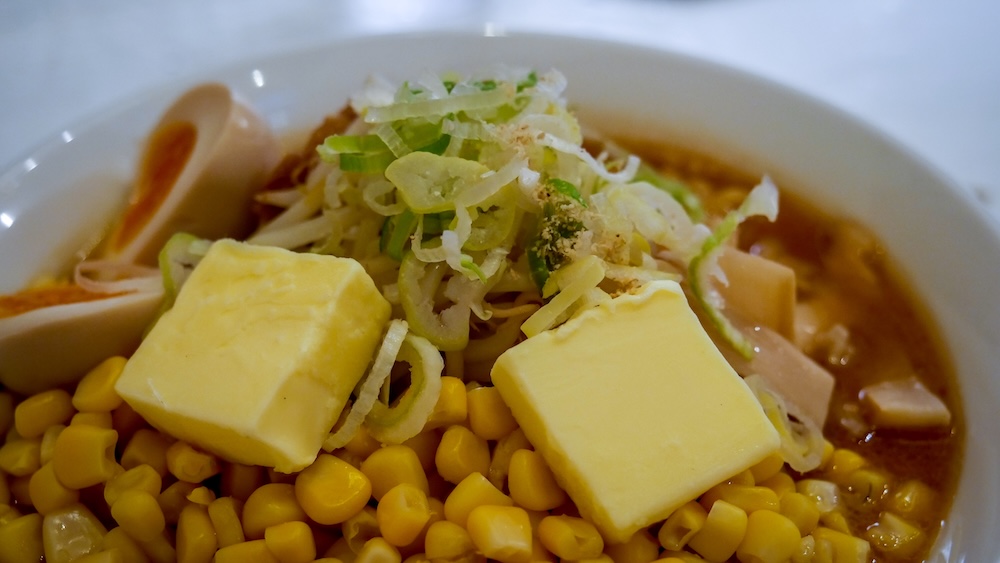
By the time we put down our chopsticks, I was extremely full and extremely happy. I even admitted that double butter probably hadn’t been necessary. It did make the broth glorious, though. We paid approximately ¥2,800 for the two of us, including all those extras. That was our bill at the time, not a current fixed price; a more ordinary order would have cost less.
Misogin still lists a miso-and-butter-corn ramen, and the Ramen Alley directory lists it at ¥1,380. The restaurant’s menu is the better place to check what is currently available, especially because toppings and prices can vary. If you’re using the ticket machine, have a proper look at the photograph and included ingredients before adding three more things. I say this as someone who very nearly turned lunch into an egg-eating competition.
Would I Return to Misogin?
I’d go back to Ramen Alley in a heartbeat, but I would probably eat at another shop. That’s not because Misogin disappointed me. It was one of the standout meals of our Sapporo visit, and I’d happily recommend it based on what we ate. But with 17 ramen shops along that little lane, exploring is part of the attraction. Unless I’ve just had the best bowl of ramen of my life and need to repeat it immediately, I want to see what the next counter has to offer.
Not every restaurant in the alley serves the same style or keeps the same hours, and a good bowl of miso ramen isn’t restricted to Susukino. Aji no Sanpei, on the fourth floor of Daimaru Fujii Central near Odori, is closely associated with Sapporo’s miso-ramen history. Menya Saimi, around Misono Station, is another option if you don’t mind travelling outside the main downtown restaurant area. We haven’t eaten at either, so I can’t give you a taste comparison. For a first evening, I’d happily browse Ramen Alley; with extra time, I’d explore farther.
If comparing styles sounds more appealing than making one enormous commitment to a single bowl, there’s also a guided Sapporo ramen tasting with three mini bowls at different shops. We explored independently, but having someone explain the broths and ordering systems could be useful, especially if you’d rather sample a few styles than order my accidental mountain of eggs.
Fresh Seafood and Hokkaido Crab: Our Breakfast at Sapporo Curb Market
Four Kinds of Crab, Salmon Sashimi and an Unusually Large Breakfast
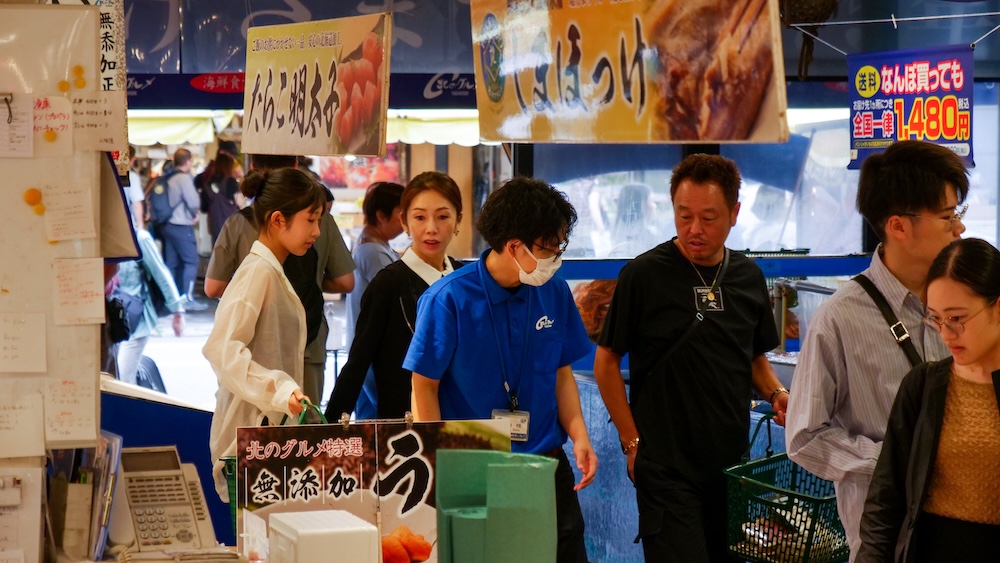
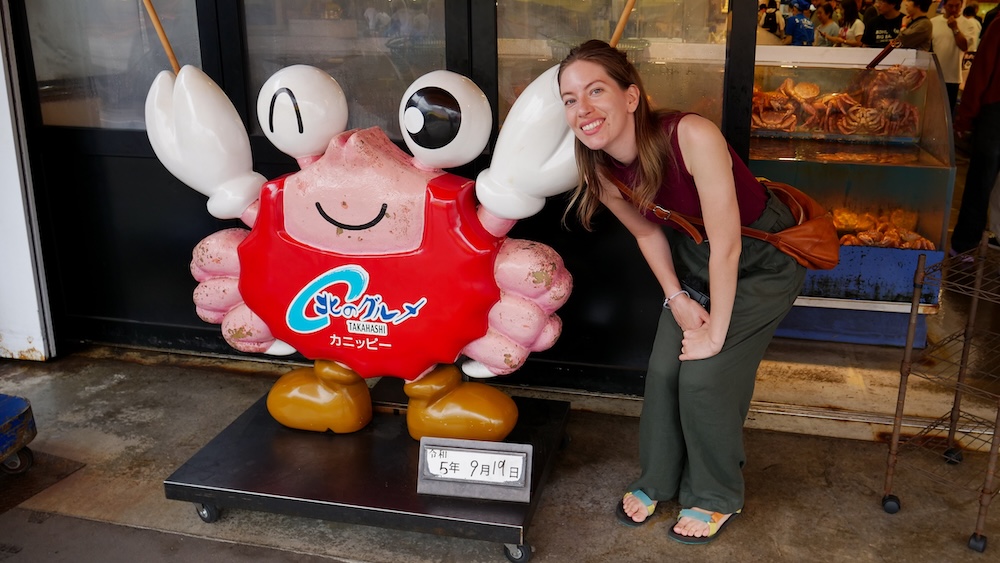
If the ramen was the most indulgent meal, the seafood breakfast is the one I’d most like to repeat. Audrey had researched a restaurant called Kaisen Shokudo Kita no Gurume-tei (海鮮食堂 北のグルメ亭), in the Curb Market area beside Sapporo Central Wholesale Market. That meant taking the Tozai subway line to Nijuyonken and walking over rather than grabbing something near our hotel. We arrived around 9:30 in the morning, which is not normally an hour when I sit down to a seafood feast.
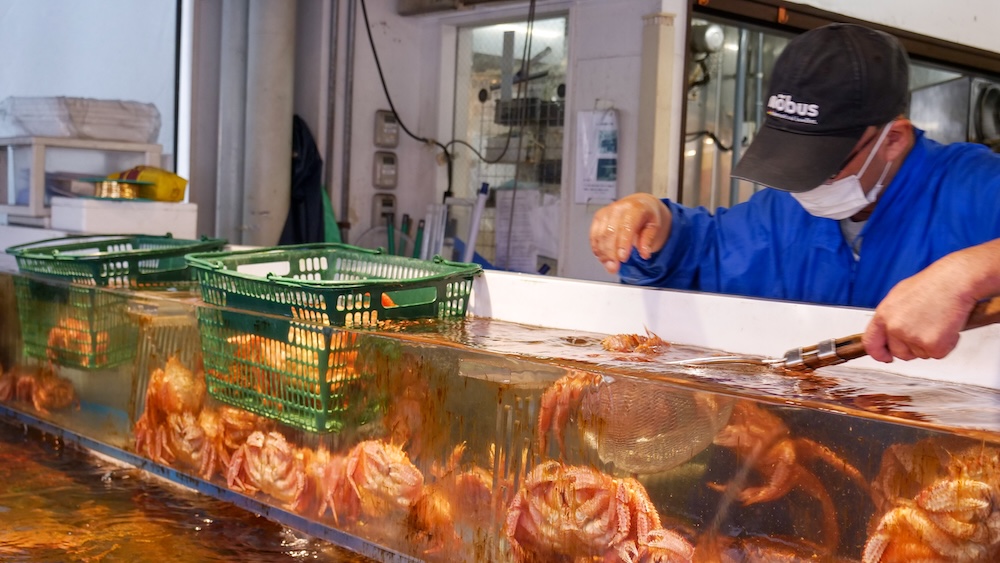
The market itself was half the pleasure. There were tanks of live crabs, seafood displays and plenty of things we had to stop and inspect. I’ve always enjoyed wandering markets like these, even when I can’t name half of what’s on sale. It reminded me a little of our seafood-market experiences in Hakodate and Busan. Give me a collection of strange-looking shellfish and I’ll be entertained for longer than I probably should be.
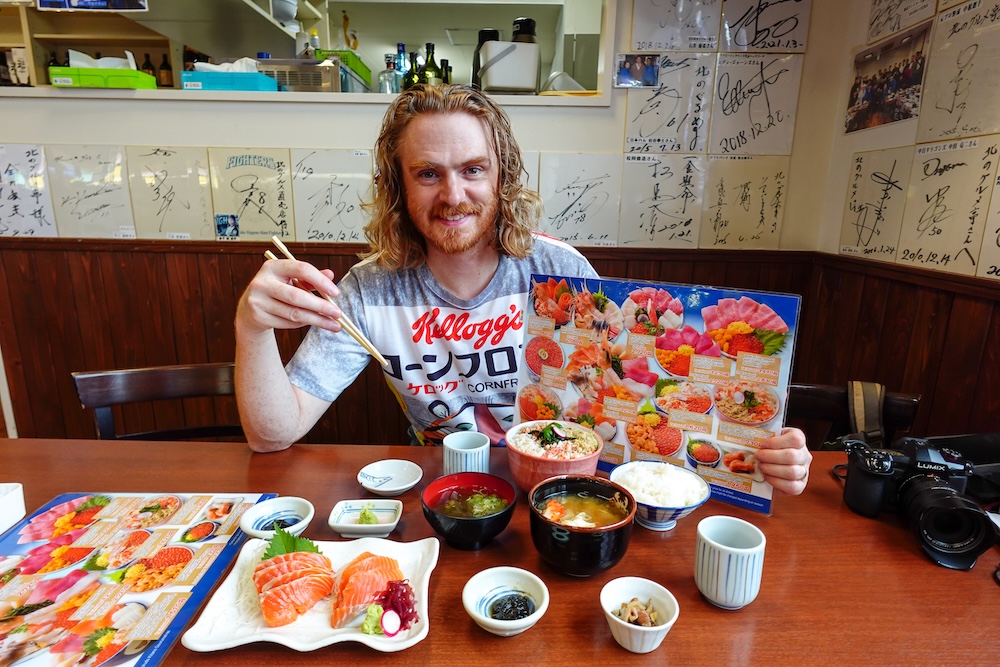
Inside the restaurant we were handed an English picture menu, which was a relief because the options were extensive. You could have seafood raw, boiled or grilled, with rice, in soup or in substantial bowls that looked almost too good to disturb. We ended up ordering quite differently, which worked out well because we shared.
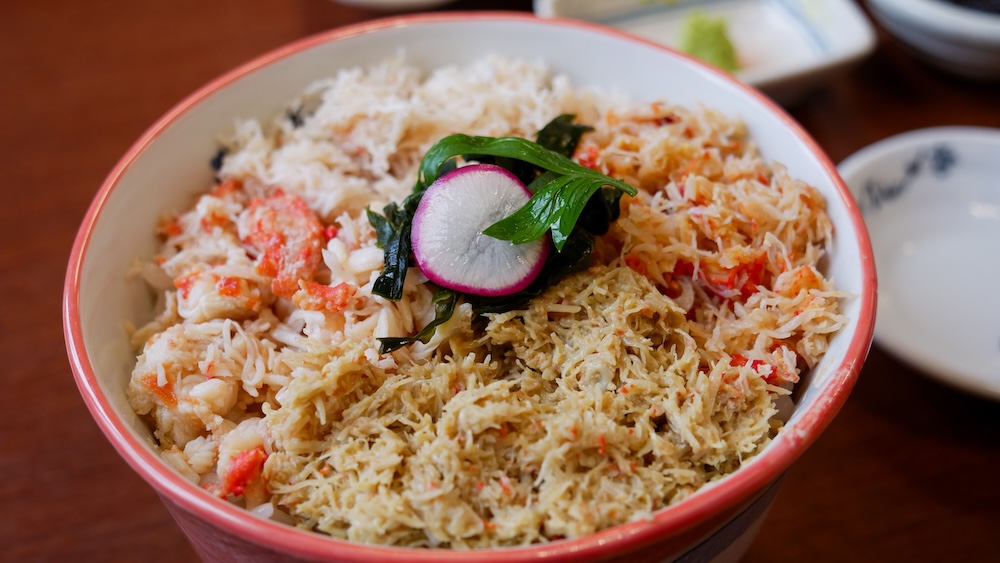
Audrey went for the four-crab donburi, a rice bowl with king crab, snow crab, hair crab and a fourth variety identified on the English menu as blue king crab. She had four distinct portions spread across the bowl, almost begging to be compared. And compare them she did.
One was especially soft and tender. Another tasted saltier, with a texture Audrey likened to canned tuna. A third had a stronger flavour, while the palest portion was milder. She picked the third one as her favourite, although she was the first to point out that she couldn’t tell which species was which. I am not a crab expert, was her assessment. Fair enough. We weren’t about to become crab specialists over breakfast, but sharing that bowl let us taste differences we might otherwise have missed.
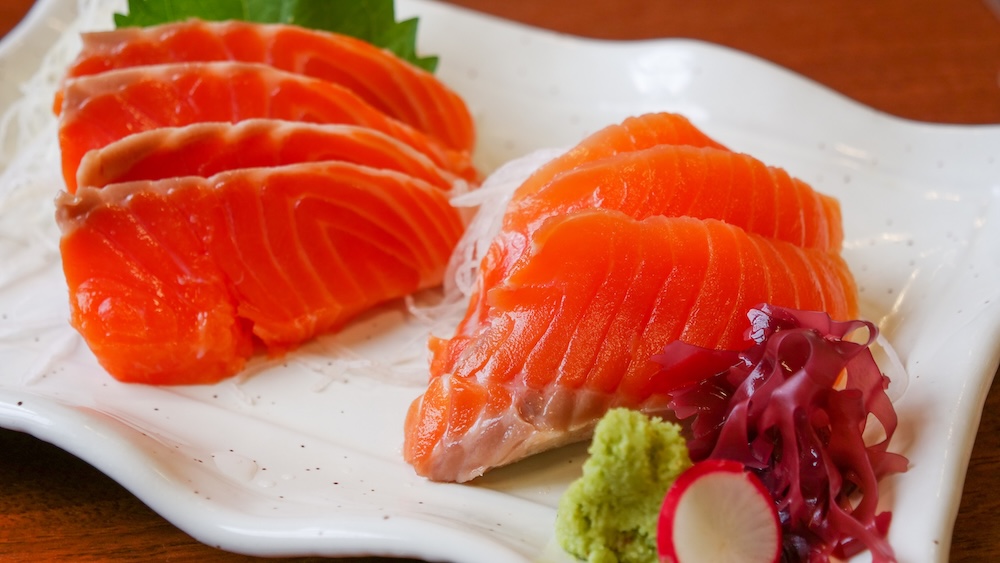
I ordered salmon sashimi, rice, soup and a selection of side dishes, plus an additional crab miso soup. I was delighted with the thick salmon slices, and I added a healthy amount of wasabi before getting started. I also tried one of the sauces with the rice, which had an unexpectedly seaweedy, slightly sweet flavour. It was the kind of breakfast where every little dish gave you something else to taste.
Then I started wrestling with the crab leg in my soup. I’d worked out that the miso broth was delicious, but getting the remaining meat out of the shell was another matter. We didn’t have scissors, and I was trying to figure out the proper technique as I went. Eventually I managed to extract a few substantial flakes. A simple salmon fillet would have been easier, but this was more entertaining.
There was so much food on the table that we started laughing about how rarely we eat this much for breakfast. Audrey and I were even talking about making miso soup at home when we got back to Canada. It had made that much of an impression on her. We’d arrived wanting fresh seafood and somehow ended up discussing our future pantry supplies between mouthfuls of crab.
We still have the original receipt, and the total was ¥3,060 including tax: ¥1,730 for the four-crab bowl, ¥1,050 for my salmon set and ¥280 for the additional crab soup. I thought that was excellent value for the amount and variety we ate. Seafood prices have changed since our visit, though, and the exact four-crab bowl we shared isn’t clearly listed on the current menu. Don’t arrive expecting to reproduce our order for that amount.
The restaurant’s current seafood menu lists a mixed seafood bowl at ¥3,600 for a regular portion, while more substantial crab dishes cost considerably more. If you love crab, my advice is to make room in the budget for it. Audrey’s bowl was the highlight of the meal, and we both got to enjoy it. If crab isn’t your thing, the salmon sashimi was also excellent. There’s no reason to order an expensive crustacean just because it’s on the menu.
Kita no Gurume-tei currently advertises hours of 7 a.m. to 3 p.m., with last orders at 2:30 p.m. It’s a breakfast or early-lunch destination, not somewhere to turn up for dinner. The restaurant also advertises advance-arranged shuttles from selected pickup points, though we used the subway and I’d check any shuttle arrangements directly. I cover the experience and market in greater detail in my Sapporo Curb Market guide.
Curb Market or Nijo Market?
This is where Sapporo’s size comes into play. Sapporo Curb Market, the public-facing area beside the Central Wholesale Market, is a deliberate excursion from the centre. Nijo Market is downtown, close to Odori and Tanukikoji, so it fits more naturally into an ordinary sightseeing walk.
We didn’t eat at Nijo, and I’m not going to tell you it’s better or worse than Curb Market based on a meal we never had. If seafood breakfast is one of your main reasons for visiting Sapporo, I’d be happy to make the journey to Kita no Gurume-tei again. The atmosphere and food justified it for us. If you’ve only got a handful of hours and don’t want to spend them on a separate trip west, the convenience of Nijo is a perfectly sensible consideration. Just check the individual restaurant’s hours and menu rather than assuming the entire market operates as one business.
If you’d like someone to show you the downtown side of Sapporo before lunch, there’s a guided Nijo Market seafood lunch and history walk that starts around the Clock Tower and finishes at the market. That’s a different outing from our Curb Market breakfast, but it makes sense for anyone who’d rather combine food with a guided central walk.
Sapporo Beer Museum: A Tasting Worth the Detour
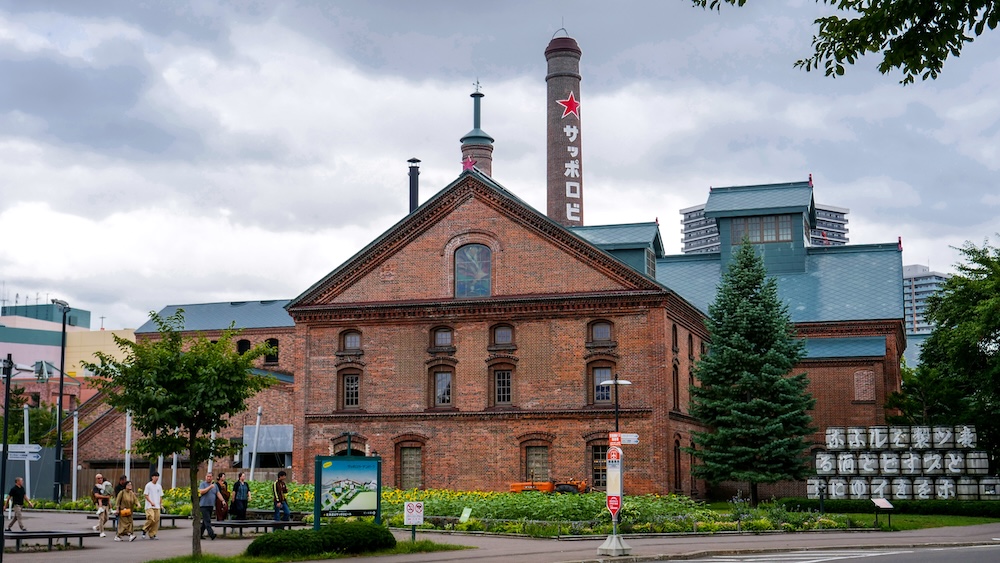
I was already looking forward to the Sapporo Beer Museum before we arrived. There’s something about a historic brewery building that draws me in: old brickwork, industrial equipment, vintage signs and decades of branding that somehow make a beer label seem fascinating. The museum delivered on that side of the visit, and then we reached the tasting room.
It had been a hot, humid day. We’d spent a fair amount of time walking and travelling on public transport, so sitting down somewhere air-conditioned with three cold glasses of beer was an appealing prospect. Even the ordering involved a ticket machine. We were getting plenty of practice with those in Sapporo, although this time I managed not to request twice the normal amount of anything.
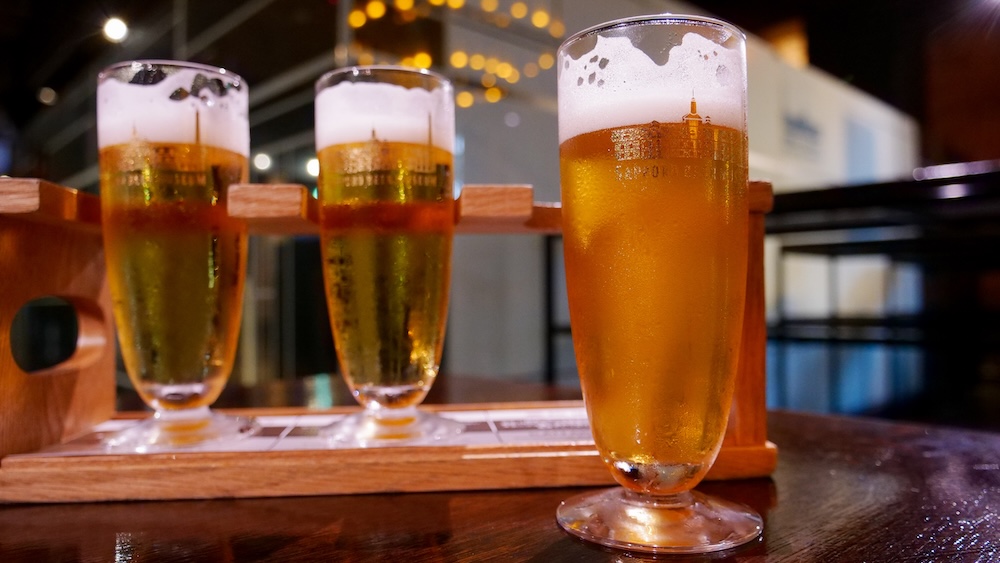
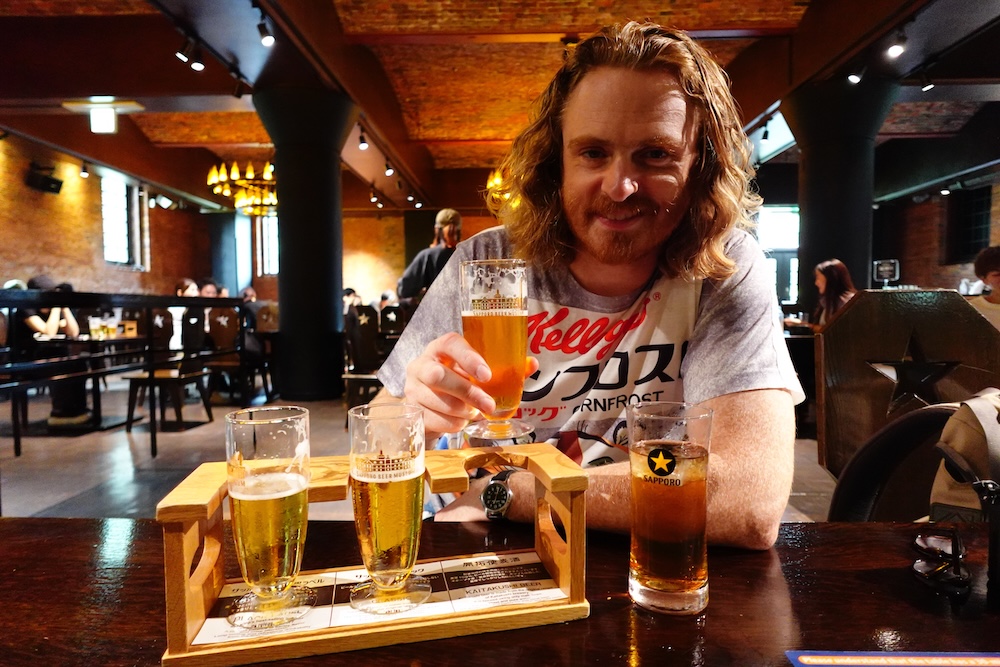
We chose the flight of Sapporo Black Label, Sapporo Classic and Kaitakushi Beer, and added cheese and a few savoury snacks. I worked through the beers, reading the descriptions and comparing them as we went. Black Label was my favourite; I liked its balance and finish. Classic struck me as lighter, while Kaitakushi gave us another style to try. None of that makes me an expert beer judge, but I know which glass I’d happily order again.
Audrey was less interested in making fine distinctions. She’s more of a wine drinker and thought the beers were quite similar, though she liked Classic and Kaitakushi and found the whole thing refreshing. Considering the heat we’d been dealing with, there were worse places to spend an afternoon.
Then came her corn tea. Hokkaido grows plenty of corn, and we’d already had it in our ramen, so she thought trying it as a drink might be interesting. It looked innocent enough. She took a sniff and said it smelled like the water left over after boiling corn. After tasting it, she wasn’t exactly converted. I had a go myself and was equally underwhelmed. I normally like trying unusual food and drink, but on this occasion plain water sounded more appealing. Fortunately, we had three perfectly decent beers sitting on the table.
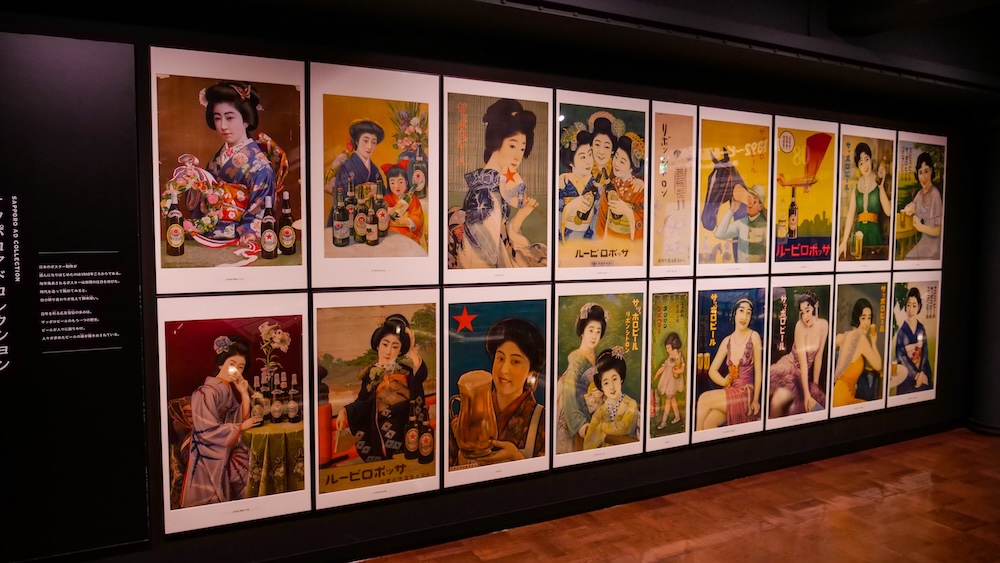
The museum experience has changed since our visit. Adult self-guided admission is now ¥1,000, with the three-beer flight another ¥1,200, so budget ¥2,200 per adult for that combination before snacks. There’s also a guided tour with different included beers and booking arrangements. Check the museum’s current ticket and tasting details before going, especially if you’ve read older advice describing admission as free.
One useful distinction: this is a museum devoted to brewing history, not a tour through an operating beer factory. For me, the exhibits and old red-brick building were part of the attraction. I would still make the journey even knowing there was an admission charge, because the whole visit was enjoyable rather than just the last half-hour with the tasting glasses.
If you want a substantial meal with your beer, Sapporo Beer Garden occupies the same general area but is a separate restaurant operation. Its different dining halls offer jingisukan and other meal formats, and restaurant reservations are separate from museum tickets. We didn’t eat there, so I can’t review the lamb or the atmosphere firsthand. You can check Beer Garden restaurant options if you’re thinking of combining the two. My separate Sapporo Beer Museum guide goes into the visit itself in more detail.
Jingisukan: The Lamb Barbecue We Still Want to Try
Jingisukan is first on my list for a return visit. It’s a Hokkaido favourite built around lamb or mutton grilled with vegetables, often on a domed grill. Some restaurants marinate the meat in advance while others use a dipping sauce. You can order individual portions, tasting sets or, at certain establishments, all-you-can-eat plans. I’d choose based on the kind of meal I wanted rather than assuming every jingisukan restaurant works the same way.
Two options interest me for different reasons. Matsuo Jingisukan, near Sapporo Station in the Nippon Life Sapporo Building, specializes in marinated meat and has useful tasting sets. Its six-cut set is listed at ¥4,300, including vegetables and accompaniments. That’s a set meal, not unlimited meat, and dinner reservations are worth considering. Its current menu makes the options fairly clear.
Sapporo Beer Garden is the alternative I’d consider for a bigger beer-hall outing, particularly if I wanted to spend more time on the museum grounds. Its restaurants have different meat sets and all-you-can-eat arrangements, so I’d compare the specific plan rather than just the headline price. We haven’t tried either place. For me, the decision would come down to station-area convenience at Matsuo versus the atmosphere of a lamb-and-beer evening at the garden.
Soup Curry: Another Sapporo Meal We Missed
Soup curry was another casualty of having more appetites than mealtimes. It’s a Sapporo specialty with a thinner, spiced broth than the usual thick Japanese curry, often packed with vegetables and a chicken leg or other protein. Rice is typically served separately. At some restaurants you choose the soup, meat, spice level, rice portion and toppings, so it’s worth studying the ordering system instead of pointing at the first photograph.
For a central option, Suage+ in Susukino currently lists chicken-leg curry at ¥1,650, alongside vegetable and zangi versions. It doesn’t take advance table reservations and accepts cash or PayPay rather than credit cards—a detail I’d rather know before arriving hungry. Suage4, near Sapporo Station, offers a handy alternative and accepts major credit cards. Both are useful starting points depending on where you’re staying; see Suage’s current store details.
GARAKU, east of the main downtown streets, has a different Japanese-dashi-based approach. Its chicken-leg-and-vegetable curry is listed at ¥1,480, and the restaurant operates separate lunch and dinner periods, sometimes finishing when the soup sells out. Check GARAKU’s current location, as older listings may point elsewhere.
I can’t tell you which tastes better because we ate at neither. I’d probably start with whichever fits the day’s plans, choose my spice level conservatively and enjoy finally crossing soup curry off the list. If you need vegetarian food, ask about the stock even when a dish is full of vegetables.
Sapporo Autumn Fest: The Lunch We Hadn’t Planned
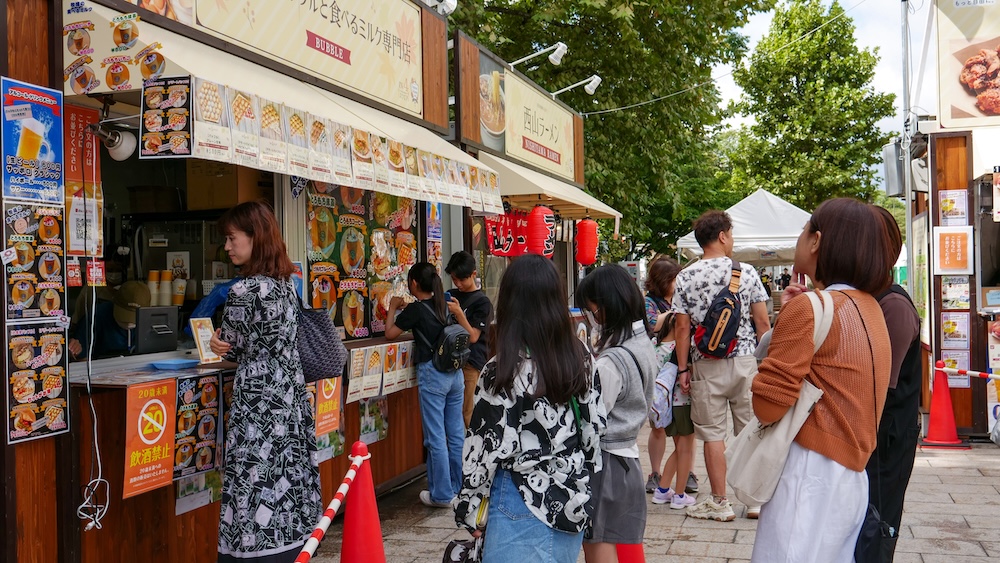
Autumn Fest was the kind of discovery that can ruin a perfectly good itinerary in the best possible way. We were walking through Odori Park and suddenly there were rows of food stalls, people queuing and menus advertising everything from local produce to international dishes. We’d originally been thinking about going for ramen somewhere else. Once we started looking around, that plan didn’t stand much chance.
We decided to wander first and choose a few different things. The opening round was tempura and a potato-based snack whose name had escaped us almost as soon as we’d read it. It had a smooth, chewy consistency with a mixture of sweetness and savouriness. Audrey and I were trying to make sense of it between bites, which is a fairly typical situation when we find something unfamiliar and order it before we’ve worked out exactly what it is.
Then came the pumpkin tempura. I’ve always thought pumpkin is one of those vegetables that tastes excellent even without much help, and the batter improved matters. That was my favourite of the first few bites. The mozzarella tempura was another story: the cheese stretched out dramatically as we tried to eat it, and any attempt to look dignified went straight out the window. Delicious, though.
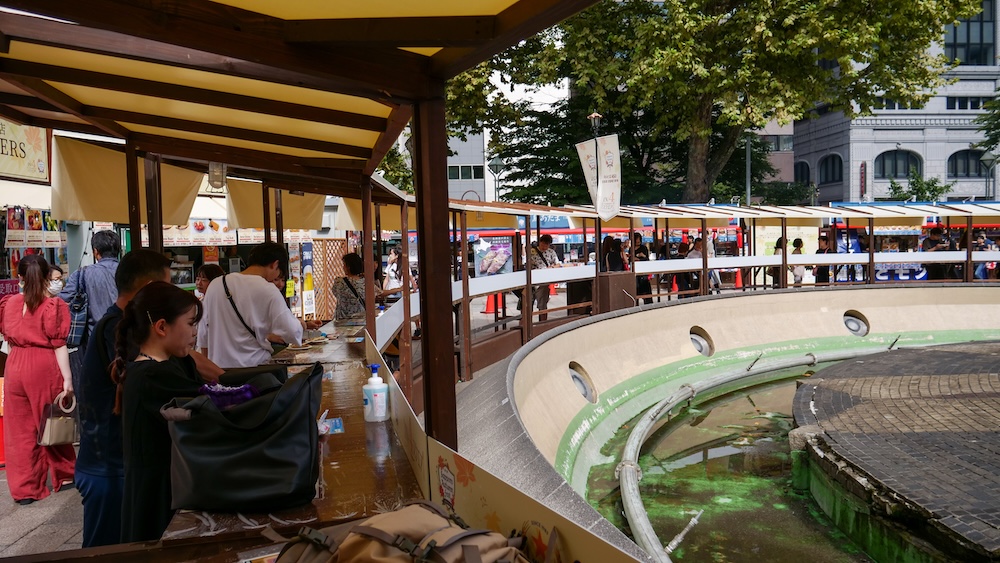
The festival was busy, and we spent a fair amount of time standing in queues. That didn’t bother me particularly because wandering from stall to stall was the whole point. It’s not the place I’d choose for a quick meal before catching a train. It’s a place for changing your mind three times because you’ve seen somebody carrying food that looks better than your original plan.
Our next decision was Indian food. I know that sounds like a peculiar choice when you’ve come all the way to Hokkaido, but we weren’t tired of Japanese cuisine. We’d only recently begun this leg of our Japan trip. We wanted to enjoy the international side of the festival too, and I couldn’t stop watching the preparation of cheese naan at a stall called Taj Mahal.
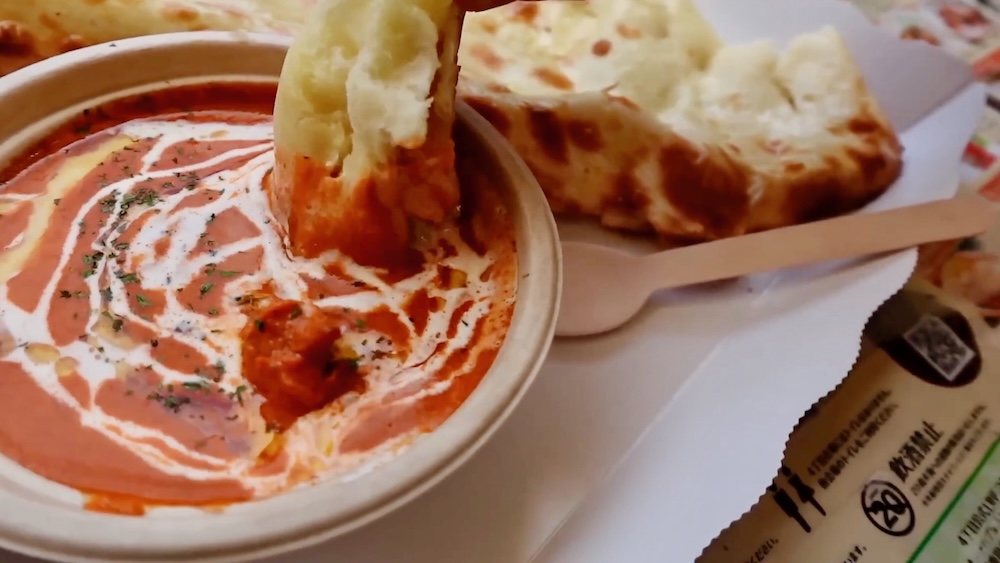
I watched the dough being handled, stuffed with cheese and cooked in the tandoor. By the time I brought it back with butter chicken, it was so hot I probably should have shown more patience. I didn’t. The naan was packed with melted cheese, the curry was rich, and there was something satisfying about finding such a good Indian meal at a festival in northern Japan. I’d have missed it entirely if I’d insisted on sticking to our original lunch plan.
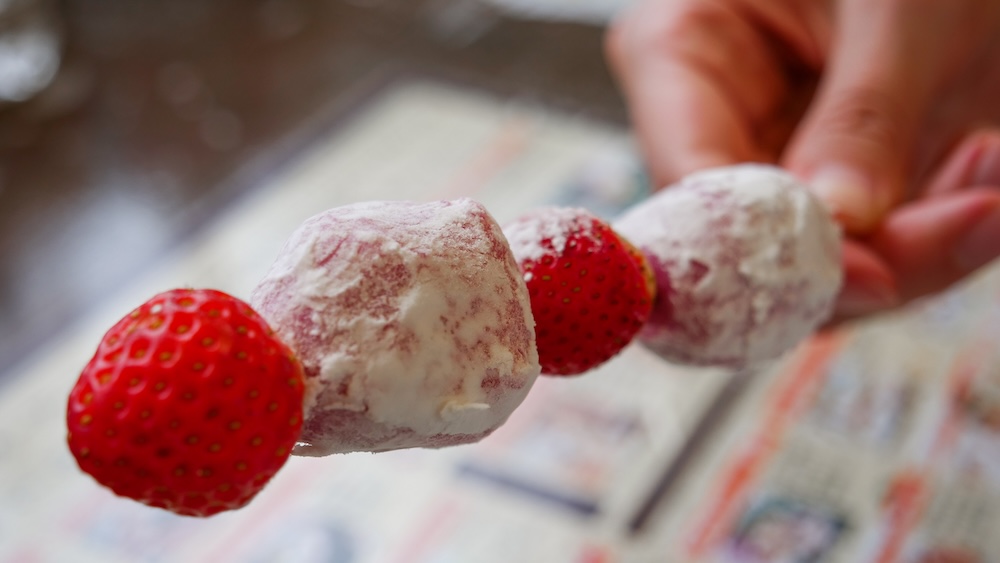
We finished with mochi containing strawberry and red-bean paste. At some point our few snacks had become a full lunch, followed by dessert, and we’d still been browsing more stalls as if the possibility of eating again were entirely reasonable.
Sapporo Autumn Fest isn’t a permanent food market. It’s a seasonal event spread across Odori Park, and the vendors and dishes change between editions. If your visit coincides with it, check the official event information and leave enough time to look around. The queues are part of the experience, but so is the fun of discovering something you hadn’t planned to eat. I’d happily let it disrupt lunch again.
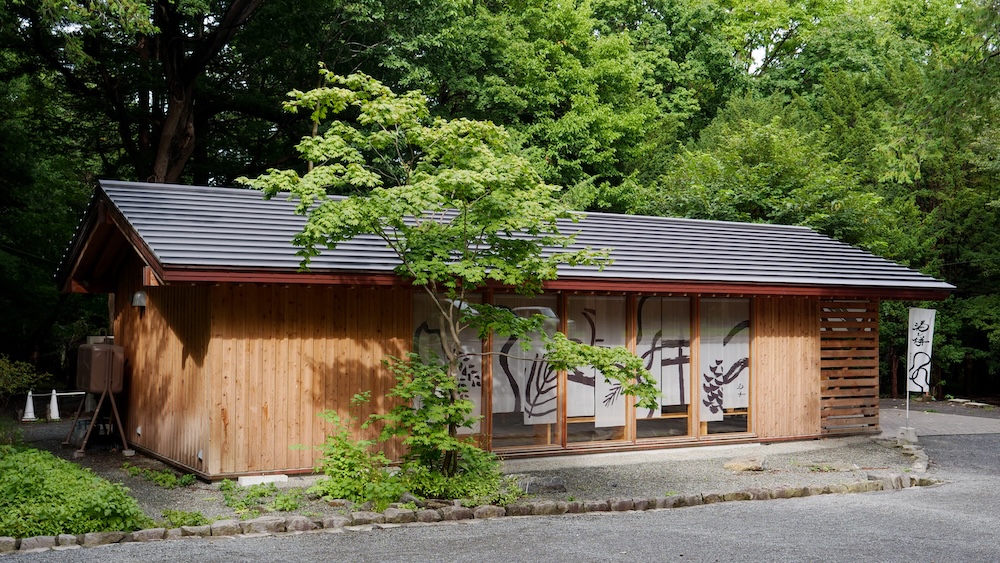
Tea, Mochi and Something Sweet by Hokkaido Jingu
The food stop at Hokkaido Jingu was a complete contrast to Autumn Fest. We’d been exploring Maruyama Park, the shrine and the surrounding forest, appreciating just how much greenery Sapporo has within reach of a major city. By the time we found Jingu Chaya, tea and a few sweets sounded like exactly the right way to finish the outing.
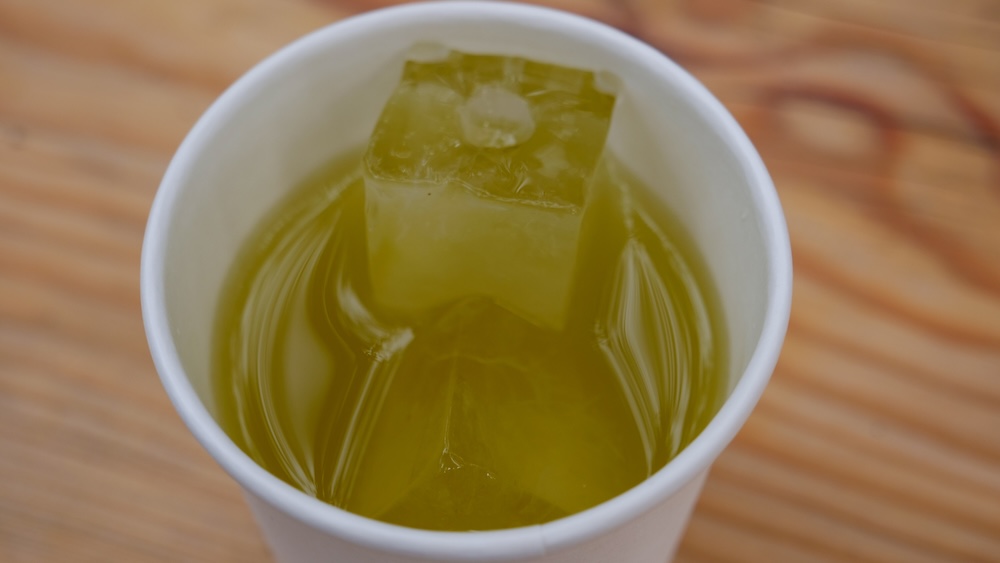
We ordered iced green tea and a selection of little treats, roughly three each. The display had all sorts of tempting things, but the names didn’t always tell us what we were getting, and I had a remarkable ability to forget them a few seconds after ordering. Audrey tried a leaf-shaped biscuit, a waffle-like sweet and something that appeared to involve sweet potato or bean paste. She liked how the sweetness was relatively mild, letting the textures come through without the feeling of eating a huge slab of cake.
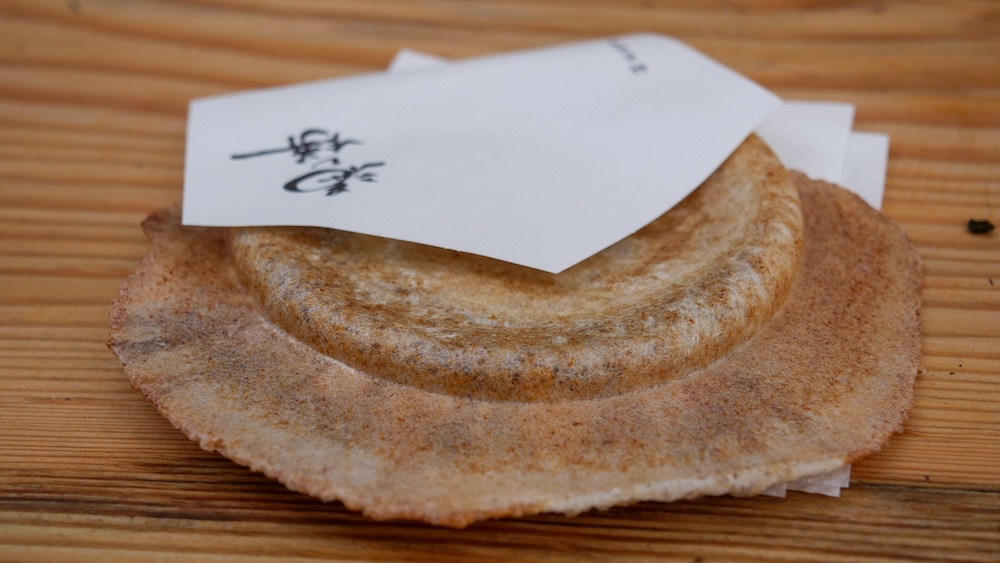
I tried Fukure Mochi (福レ餅), which we’d watched being prepared in a heated press. It came out with a toasted, lightly crisp exterior and a soft, chewy middle. I thought there might be bean paste inside, though I wasn’t certain of the filling. The contrast between the outside and the middle was what I remember most. The shop also makes a separate product called Jingu Chaya Mochi, so if you’re looking at the menu, don’t assume the two sweets are identical.
One of the nutty cakes was called Mori no Wasuremono, or “Lost Article of the Forest,” which seemed particularly appropriate after we’d spent the afternoon wandering through Maruyama’s enormous trees.
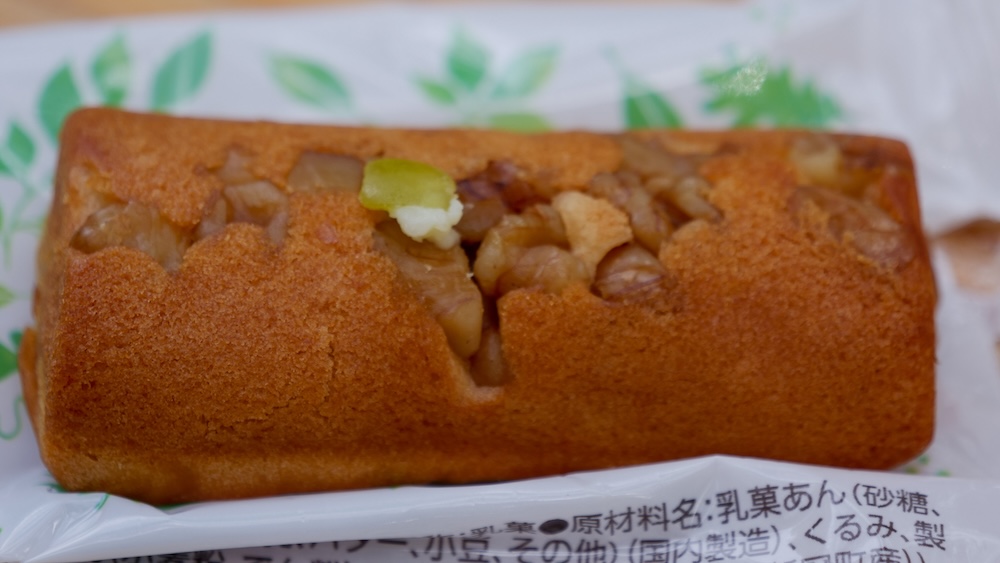
Another brought to mind the King Kong sweet we’d tried in Peru, with its biscuit-like layers and filling; one tasted almost like a butter tart. It was all thoroughly enjoyable, even if my attempts to identify ingredients weren’t going particularly well. We spent more time tasting and comparing than worrying about getting every name right.
I wouldn’t travel across Sapporo solely for this teahouse. It’s the combination I recommend: explore Maruyama Park and Hokkaido Jingu first, then sit down with a drink and something sweet. It’s a lovely reward after walking among the trees, and you can enjoy it without feeling as though you need to rush to the next attraction. Jingu Chaya’s current menu and hours are worth checking, particularly in winter when it generally closes earlier.
We also had soft-serve ice cream during a separate stop in Odori Park, mainly because the September heat had worn us down. It was approaching 30°C and cold ice cream seemed like better trip planning than another hour on our feet. Hokkaido dairy is worth enjoying when you encounter it; you don’t need to build an expedition around every cone.
And What About Sapporo’s Shime Parfaits?
We missed this one. A shime parfait is an elaborate dessert people go out for after dinner or drinks, and Susukino has shops geared toward that late-night tradition. Parfaiteria PaL and Nanakamado are two options in the area, with extended hours on some nights and no ordinary table reservations. Some parfaits contain alcohol, and the operator has restrictions affecting children and younger guests, so check the current shop details rather than assuming every dessert suits everyone.
A late-night parfait would be a fun way to finish a future Sapporo evening, provided I still had room after dinner. That last part could be the biggest challenge.
Where to Eat in Sapporo Without Spending All Day in Transit
Here’s how I’d approach a food-focused visit after learning the hard way just how spread out some of the experiences are.
Susukino is an easy place to spend an evening eating. Ramen Alley, Misogin, Suage+ and several parfait bars are all in the wider district. You could try ramen one night and soup curry on another without making a special trip across town each time. If you’re staying nearby, it makes sense to keep a few evening meals flexible.
Odori and the central streets offer Aji no Sanpei, Nijo Market and other restaurants that can fit alongside sightseeing. During Autumn Fest, Odori Park becomes a food destination in its own right. Sapporo Station works well for a practical meal before or after a train journey, with options such as Matsuo Jingisukan and Suage4.
We stayed at HOTEL MYSTAYS Sapporo Nakajima Park and used the Namboku subway line regularly. I liked coming back to a quieter neighbourhood and having the park nearby. We weren’t sleeping above Ramen Alley, but I was happy with that trade-off. If a calm base and subway access sound appealing, you can check rooms at HOTEL MYSTAYS Sapporo Nakajima Park, the property where we actually stayed.
If you’d rather walk back after ramen and a late-night parfait, it may make more sense to compare hotels in Susukino. Staying close to the meals you’re likely to eat at night can spare you extra journeys, but I’d still check the actual property’s distance from a useful subway station. One ramen restaurant isn’t a reason to spend four nights in the wrong part of town.
The Curb Market is the one I’d actively plan for in the morning. The Beer Museum deserves a separate block of time for the displays and tasting, possibly followed by a meal at the Beer Garden if that’s what you want. Jingu Chaya makes the most sense when you’re already seeing Maruyama Park and the shrine. These distinctions matter more than trying to find a supposedly perfect restaurant for every meal.
And yes, we ate other food. We took Sapporo’s tram—the only tram ride of our stay—to go for sushi one day. I no longer remember the restaurant’s name or the details of the meal, so I’m not going to invent a sushi recommendation. We had convenience-store meals too, because sometimes you’re hungry, tired and don’t feel like making another restaurant into a sightseeing activity.
If unfamiliar menus are the part of travelling that makes you hesitate, there are guided alternatives. A small-group Sapporo food walk with ten or more dishes visits several venues over an evening, while a private customizable Sapporo food tour with six to eight tastings gives you more say in what you try. We didn’t book a food tour ourselves. I’d choose one if I wanted help navigating unfamiliar dishes, not because Sapporo is impossible to eat in independently.
A few practical cautions are worth remembering. Check lunch breaks and closing times before making a special journey. Compare the cost of a seafood bowl with a larger crab order rather than assuming they’re interchangeable. At a ramen ticket machine, confirm which toppings you’re buying. Soup-curry shops may have different spice scales and payment rules. For lamb barbecue, look carefully at whether you’re buying a set meal or an all-you-can-eat package. None of this is complicated, but it becomes irritating when you discover it standing outside a restaurant with an empty stomach.
For a short visit I’d choose one seafood breakfast, one ramen meal and one other substantial specialty, then fit in the Beer Museum, festival food or sweets if the schedule allows. You can enjoy Sapporo’s food without turning the whole holiday into a race between restaurants. The meals we remember best were the ones we allowed enough time to enjoy.
What We’d Eat Again—and What We’d Try Next
I’d return to Kita no Gurume-tei for another seafood breakfast and make crab the main event. I’d head back to Ramen Alley but pick a different shop, simply because there are so many bowls still waiting to be tried. And I’d gladly repeat the Beer Museum outing, preferably with another three-beer tasting and absolutely no corn tea.
Then I’d find somewhere for jingisukan, make proper time for soup curry and, if my appetite survived, finish an evening with a shime parfait. The fact that we left Sapporo with that much still to eat says plenty about the city. Three days gave us some terrific meals, a few ordering lessons and one memorably excessive amount of butter. Another visit would not be difficult to justify.
This article contains affiliate links. If you book through one of these links, I may earn a commission at no extra cost to you.