
Audrey and I were staying at a hotel overlooking Nakajima Park in Sapporo, and after spending time exploring other parts of the city, we figured it was high time we got to know our own neighbourhood. Among the buildings we encountered was Hoheikan, an elaborate blue-and-white wooden construction that immediately struck me as something special.
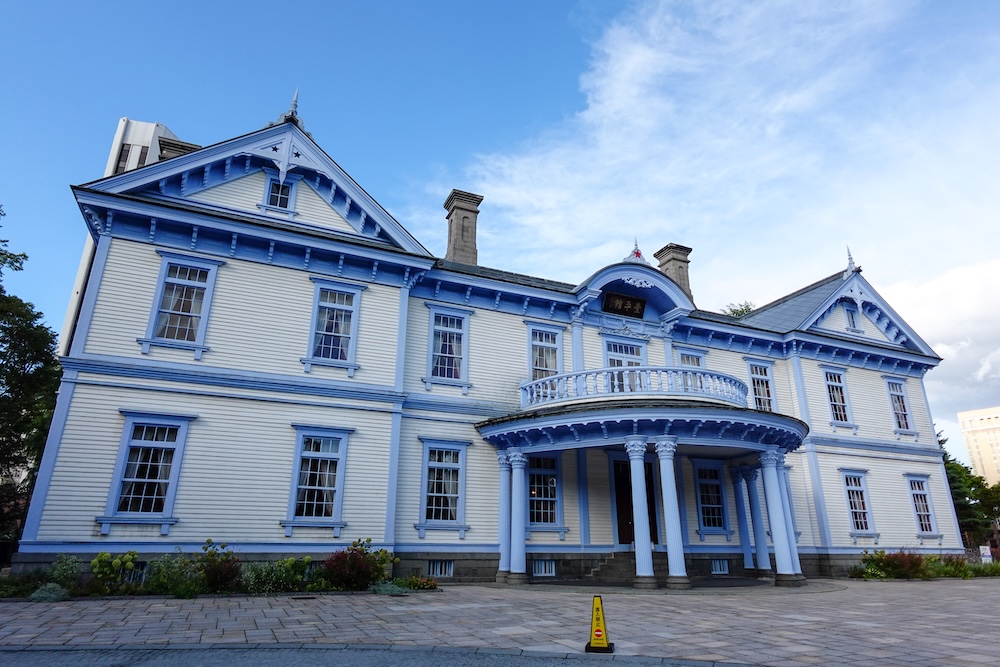
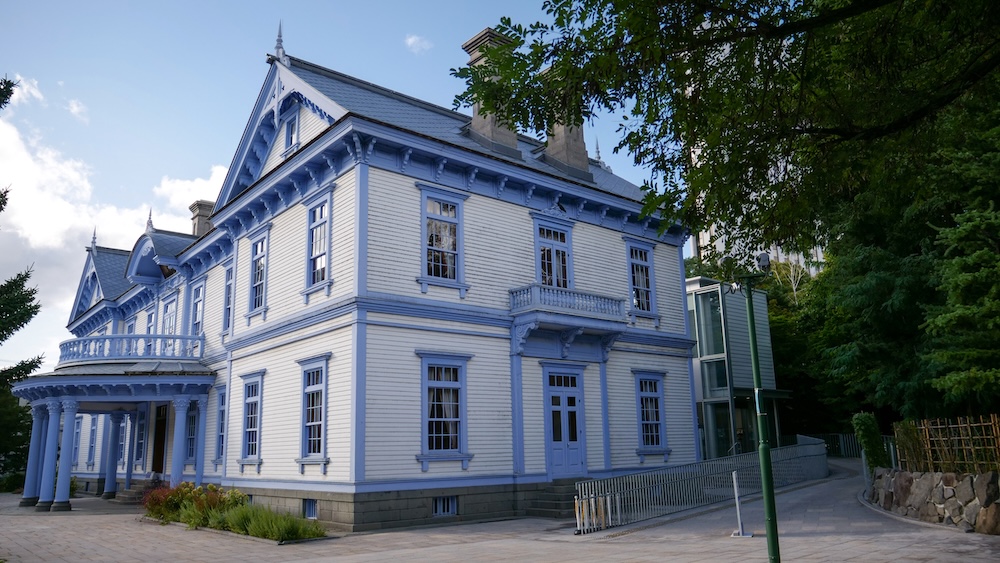
The setting certainly helped. Surrounded by greenery, with curved balconies, ornate columns and beautifully detailed blue woodwork, Hoheikan looked important even to somebody like me who couldn’t tell you a great deal about architectural styles. Audrey was considerably better versed in its history, which is generally how things go when we visit historical attractions together.
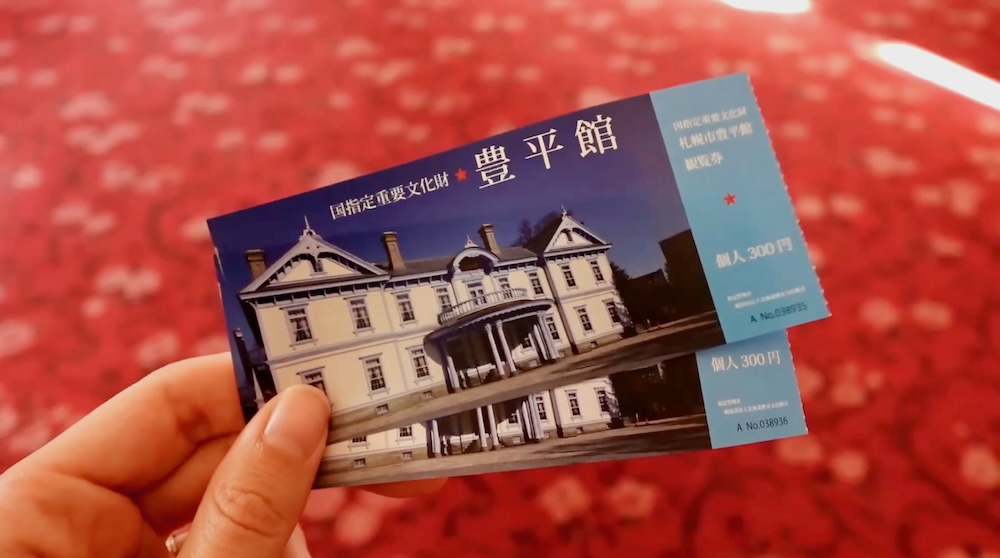
We paid ¥300 each to go inside and probably spent no more than 20 minutes exploring. Although I appreciated the chandeliers, furnishings and decorative details, some rooms felt a little bare compared with what I’d anticipated from the exterior. We enjoyed our visit, but it didn’t hold our attention for particularly long.
What I hadn’t fully appreciated was that this former hotel had accommodated three generations of Japan’s imperial family, temporarily housed a department store, narrowly escaped demolition, been dismantled and rebuilt in another part of Sapporo, and become the setting for thousands of weddings. That’s quite a life for a wooden building! Knowing its story now, there are several things I’d pay considerably more attention to if I went back.
Why Sapporo Built a Western-Style Hotel in the Meiji Era
Hoheikan has the distinction of being Japan’s oldest surviving wooden hotel building and the only hotel constructed by the Meiji government. Its origins are closely tied to the development of Sapporo during a period of extraordinary political, economic and cultural change in Japan.
In 1869, the government established the Kaitakushi, or Hokkaido Development Commission, which moved its administrative headquarters to Sapporo in 1871. Government officials and foreign specialists arrived to work on agricultural, industrial and infrastructure projects across an island that had long been home to Indigenous Ainu communities. This period of government-directed development brought profound changes to their lands and lives.
Sapporo needed accommodation befitting its administrative role, and existing facilities were increasingly insufficient. Construction of a dedicated Western-style hotel began in February 1879, with the main building completed in November 1880. Work on the surrounding grounds and additional facilities continued until August 1881, which explains why both 1880 and 1881 appear so frequently in accounts of Hoheikan’s early history.
The Development Commission’s building department, led by Yoshiyuki Adachi, handled the design and supervision, with Sukemon Ooka undertaking construction. British architect Josiah Conder was consulted during the design process, but the execution of these Western architectural ideas owed a great deal to Japanese builders and craftspeople.
Having spent a fair bit of time around Odori Park, I find it particularly interesting that Hoheikan originally stood near its eastern end, on the site now occupied by Kanamoto Hall. Its landscaped grounds, designed under the direction of horticultural specialist Louis Boehmer, extended towards the area where Sapporo TV Tower stands today. It’s quite something to imagine this ornate wooden hotel occupying a piece of real estate in what has become the bustling heart of downtown Sapporo.
The Hotel That Hosted Emperor Meiji
Hoheikan couldn’t have asked for a more prestigious first guest. Emperor Meiji arrived on August 30, 1881, during an imperial visit to Hokkaido, staying until September 2. Private operators began running the accommodation and Western-style restaurant in November, meaning the newly constructed hotel had already accommodated the emperor before opening for regular business.
Two more generations of the imperial family would follow. Crown Prince Yoshihito, the future Emperor Taisho, stayed in 1911, while Crown Prince Hirohito, who would become Emperor Showa, visited in 1922 while serving as regent.
All three visits are associated with the upstairs Ume Room, named after the Japanese plum blossoms decorating its ceiling. The imperial accommodation has been recreated with period-style furnishings, while neighbouring rooms had functions ranging from bathing and changing facilities to accommodation for imperial attendants. The spacious upstairs hall served as an audience chamber.
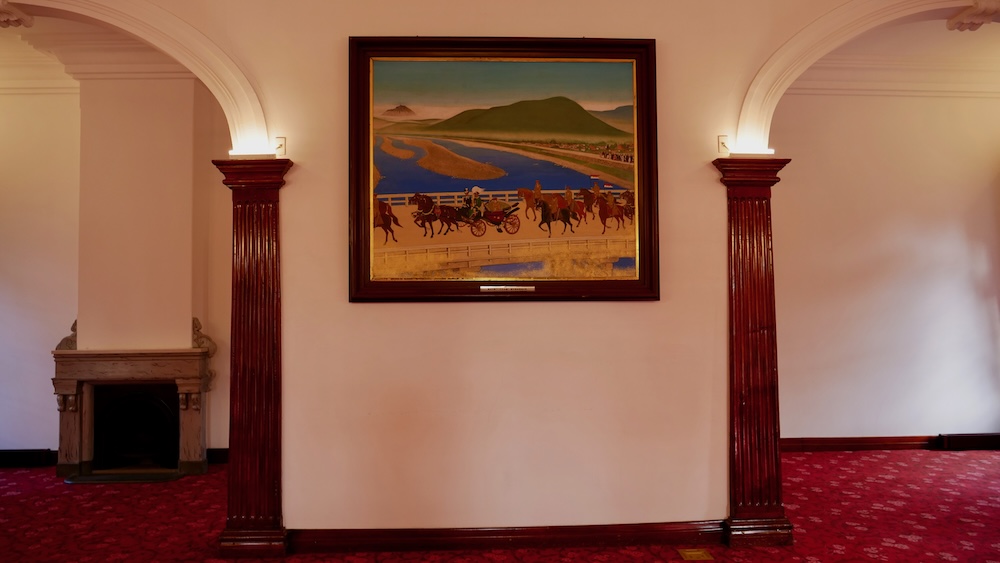
Among the paintings we photographed inside Hoheikan was a colourful scene depicting a horse-drawn carriage crossing a bridge, accompanied by mounted figures, with a river and mountains stretching into the background. It turns out the scene depicts Crown Prince Yoshihito crossing Sapporo’s Toyohira Bridge on August 28, 1911. A painting commemorating the event was produced in 1939 for an exhibition at Hoheikan, although I can’t establish whether the version we saw was the original or a reproduction.
I find that painting far more interesting now that I understand what it represents. It’s the sort of artwork you can glance at for a few seconds before continuing into the next room without realising you’re looking at a specific moment in the city’s history. That’s one of the recurring themes of our Hoheikan visit.
The Story Behind Hoheikan’s Blue-and-White Architecture
Why Is Hoheikan Painted Blue and White?
Of all the architectural features at Hoheikan, the colour scheme is what grabbed my attention first. The white horizontal wooden siding contrasts beautifully with the ultramarine-blue window surrounds, columns, balconies and decorative mouldings, giving the building an appearance quite unlike anything else we’d encountered in Sapporo.
Ultramarine was historically a prized colour, with natural ultramarine pigment traditionally produced from lapis lazuli, a valuable blue mineral. It carried associations with expense and prestige, making it a particularly striking choice for a nineteenth-century government hotel. That doesn’t mean the paint we’re admiring today consists of crushed gemstones; extensive conservation work has restored the building’s historical colour scheme.
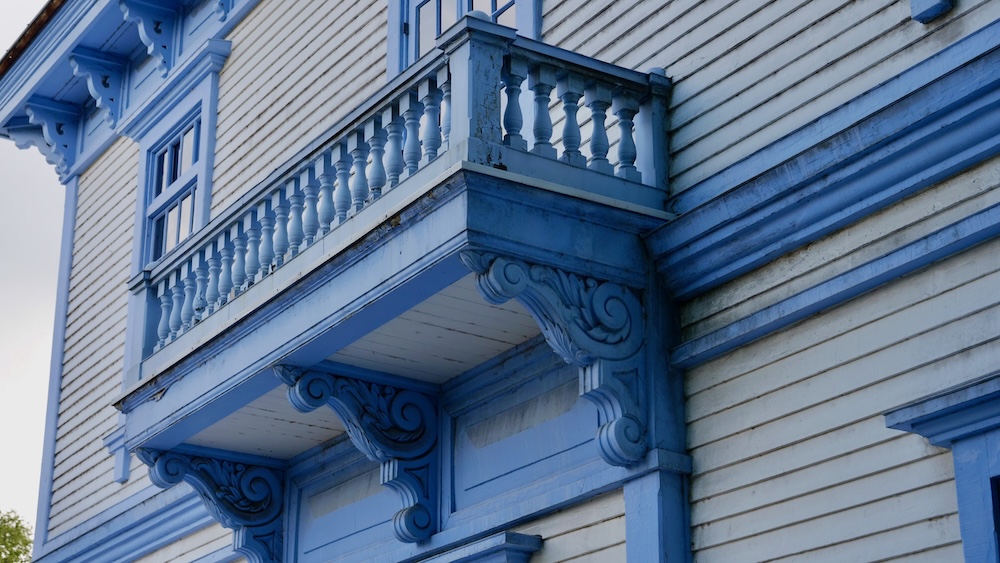
I’d encourage you to walk around Hoheikan rather than photograph it exclusively from the front. One of my favourite architectural photographs from our visit shows a smaller side balcony with turned balusters and wonderfully elaborate blue scroll-shaped brackets underneath. There’s an astonishing amount of decorative work in a relatively small section of the building, and you don’t need an architectural education to appreciate it.
American Architecture, European Details and Japanese Craftsmanship
Hoheikan draws heavily on American architectural traditions while incorporating European elements and Japanese craftsmanship. Its semicircular carriage porch has fluted columns with ornate Corinthian capitals supporting a curved balcony above. Projecting gabled wings, tall multi-pane windows, chimneys and ornamental roof detailing complete the facade.
Look above the central entrance and you’ll spot a red five-pointed star. Known as the Goryo Star, it was the emblem of the Hokkaido Development Commission. You’ll encounter it on other buildings associated with the Kaitakushi, including Sapporo Clock Tower, which Audrey and I also visited during our time in the city.
Hoheikan and the Clock Tower reminded me of the churches and historic public buildings we’d encountered in Hakodate. Hokkaido was the first part of Japan where this kind of architecture really stood out to me, having previously become accustomed to seeing traditional Japanese buildings or the modern architecture of its larger cities.
What’s funny is that these Western-style buildings initially seemed somewhat out of place to me, yet the more time we spent travelling around Hokkaido, the more I began to associate them with the island. Hoheikan felt strangely at home in Sapporo, especially once you consider the particular historical circumstances under which the city developed.
How a Historic Hotel Ended Up in Nakajima Park
Hoheikan gradually expanded beyond its original function as a hotel and restaurant, becoming a venue for banquets, public gatherings and cultural activities. By 1927, a large public hall capable of accommodating approximately 1,500 people had been completed behind the original building. Hoheikan was becoming as much a part of Sapporo’s civic life as its hospitality industry.
The Second World War interrupted civilian operations when the Japanese military took over the premises in 1943. Following Japan’s defeat, occupation forces requisitioned the building for accommodation, setting the stage for one of the more unusual chapters in the history of a former imperial guest hotel.
In 1946, Hoheikan temporarily housed Mitsukoshi Department Store. The company’s regular Sapporo premises had been requisitioned by occupation forces, and it needed somewhere else to conduct business. Imagine coming here to do your shopping!
The building returned to municipal control in 1947, but plans to construct a new civic hall on the same site in 1956 threatened its survival. Citizens and architectural specialists supported preserving Hoheikan, and the solution involved dismantling the wooden building in 1957 and reconstructing it in Nakajima Park, where work was completed in May 1958. Its original landscaped grounds weren’t recreated, meaning the attractive park setting we enjoy today belongs to a much later chapter of its history.
Following a brief stint as an exhibition venue, Hoheikan became a municipal wedding hall, a function it retained for more than half a century. At the height of its popularity, more than 1,000 weddings took place there annually, with the 10,000th ceremony recorded in 1968.
I rather like this part of its history. After all the imperial visits, government functions and wartime upheaval, Hoheikan became a place where thousands of ordinary Sapporo residents celebrated their marriages. For many local families, its significance must be considerably more personal than its association with Emperor Meiji.
The building received national Important Cultural Property status in 1964, underwent extensive restoration between 1982 and 1986, and closed for further conservation work between 2012 and 2016. The latter project included earthquake strengthening, restoration of historical features and the addition of modern visitor facilities. It reopened to the public in June 2016, and given everything the building has been through, we’re fortunate to have it to explore today.
What It’s Like Inside Hoheikan
The Architectural Details Worth Looking For
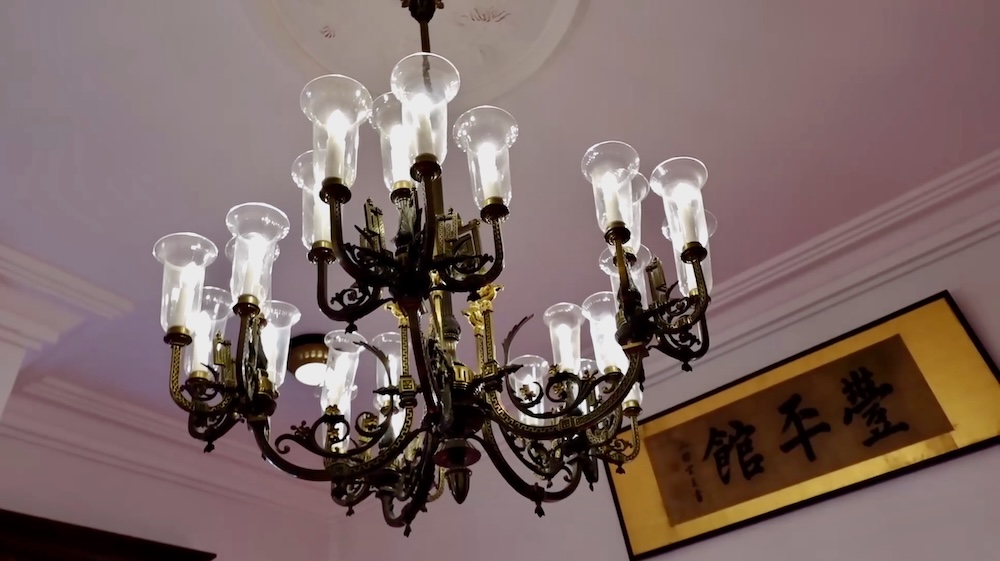
If there’s one thing I’d encourage you to do inside Hoheikan, it’s to look up. Some of the building’s most valuable historical features are considerably closer to the ceiling than they are to the display cases, something I didn’t fully appreciate during our relatively quick tour.
Hoheikan contains eight historic chandeliers, four dating from its original installation and four others from the same period that were repaired during restoration. The hotel originally used gas and candle lighting, with electricity introduced around the time of Crown Prince Hirohito’s visit in 1922. Some fixtures still have their old gas stopcocks despite having been adapted to operate electrically.
Above the chandeliers are decorative ceiling medallions made using kote-e, a traditional Japanese plaster-relief technique. Fifteen survive from the original construction, with another two restored or reconstructed. Their intricate designs incorporate plum blossoms, chrysanthemums, grapes, peonies and camellias, with individual rooms taking their names from these decorations.
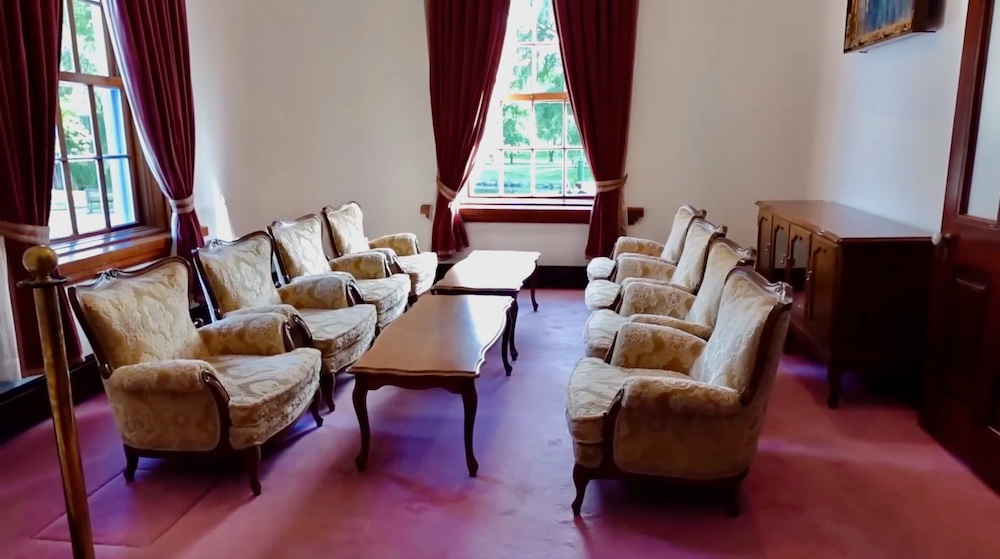
The fireplaces are equally intriguing. Their mantelpiece tops are marble, but much of the elaborate surrounding decoration is plaster skilfully finished to resemble stone. Even the burgundy curtains have a story: they’re reproductions of historical textiles featuring traditional Japanese peony and scrolling foliage patterns, originally understood to have been woven in Kyoto’s Nishijin district using Western weaving methods.
Looking back through our interior photographs, I’m particularly struck by the mixture of Japanese craftsmanship and Western decorative influences. I’d photographed the chandeliers, fireplaces and woodwork because they looked attractive, but there’s far more to appreciate when you understand the techniques involved.
The Furnishings and Former Hotel Rooms
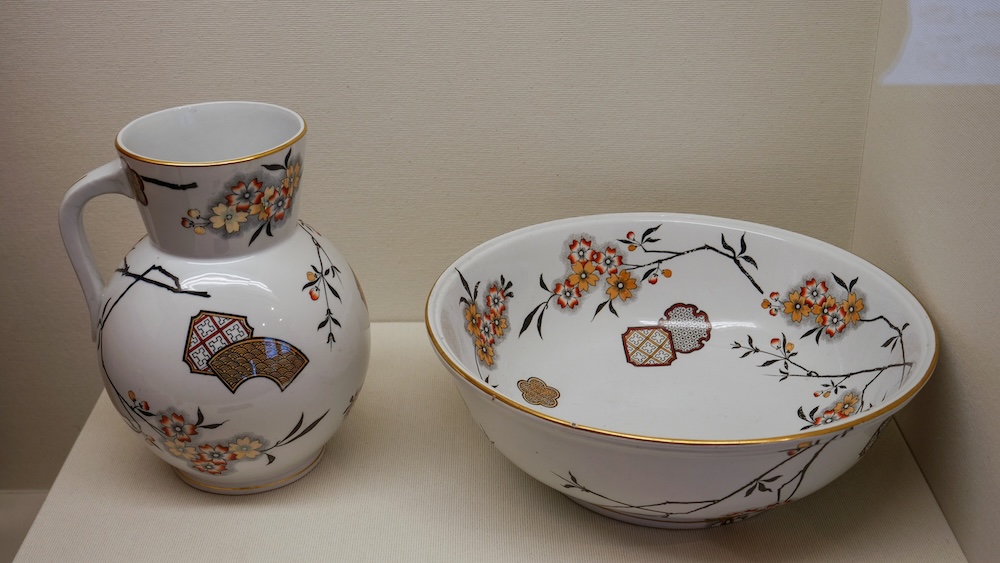
We encountered rooms with upholstered armchairs and sofas, dark wooden tables, framed artwork and beautiful burgundy curtains. Among the smaller objects we photographed was a matching ceramic water pitcher and washing basin decorated with flowering branches, geometric patterns and gold-coloured rims.
That washing set offers a reminder of how different hotel life was in those days. Attendants could deliver hot water to guests in the morning, and sleeping in a Western-style bed was still relatively unusual in a Japanese hotel when Hoheikan opened. Several rooms have been recreated with separate living and sleeping areas, illustrating how the building originally functioned, although much of the furniture consists of reproductions rather than the actual possessions of its nineteenth-century guests.
Why Our Visit Was Relatively Short
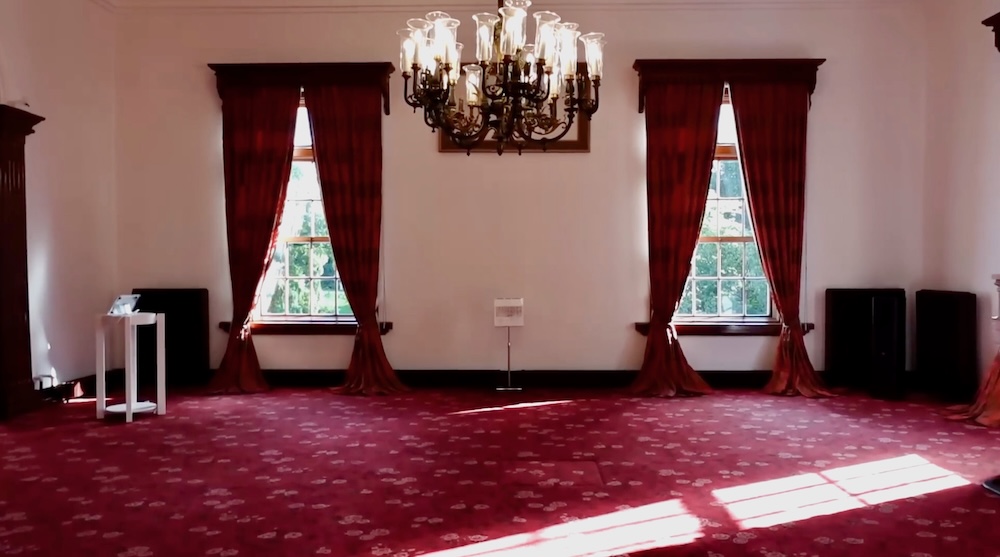
Having admired that incredibly detailed exterior, I’d expected to find more historical objects and furnishings inside. Some of the spaces we entered consisted mainly of red carpeting, tall windows, curtains and chandeliers, with relatively little occupying the floor. If you look at our photographs, you’ll probably understand why I described the interior as a bit bare in our original Sapporo travel video.
In fairness, Hoheikan has a history of hosting formal receptions and public gatherings, and its largest hall and adjoining space cover approximately 172 square metres. A room designed to accommodate a gathering of people isn’t necessarily going to benefit from being stuffed full of furniture. There are also historical exhibits, video presentations and imperial displays that reward a more attentive visit.
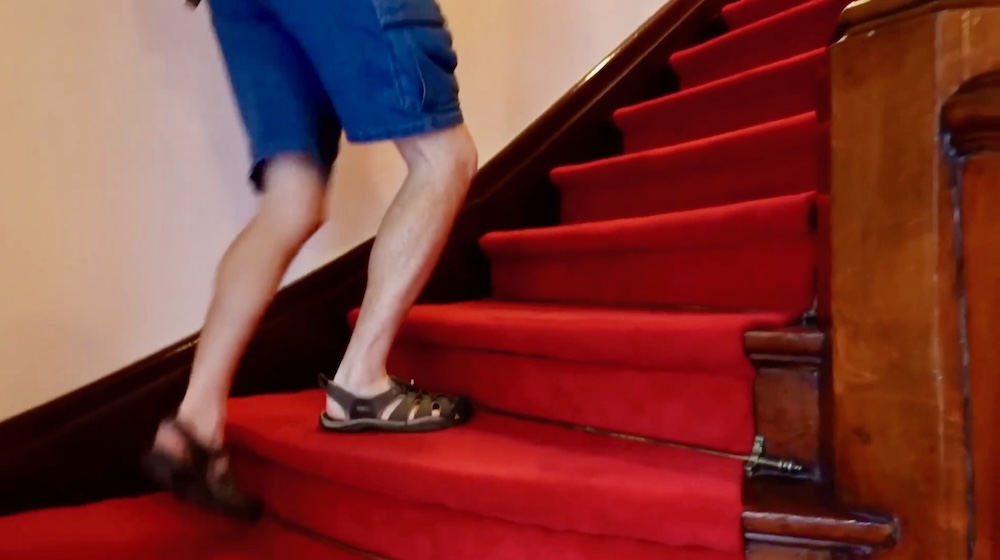
Audrey tends to have a better eye for historical and architectural details than I do, which is why she’s usually the one doing most of the explaining when we film these types of attractions. I suspect I’d have benefited from doing a little more homework before heading up that red-carpeted staircase.
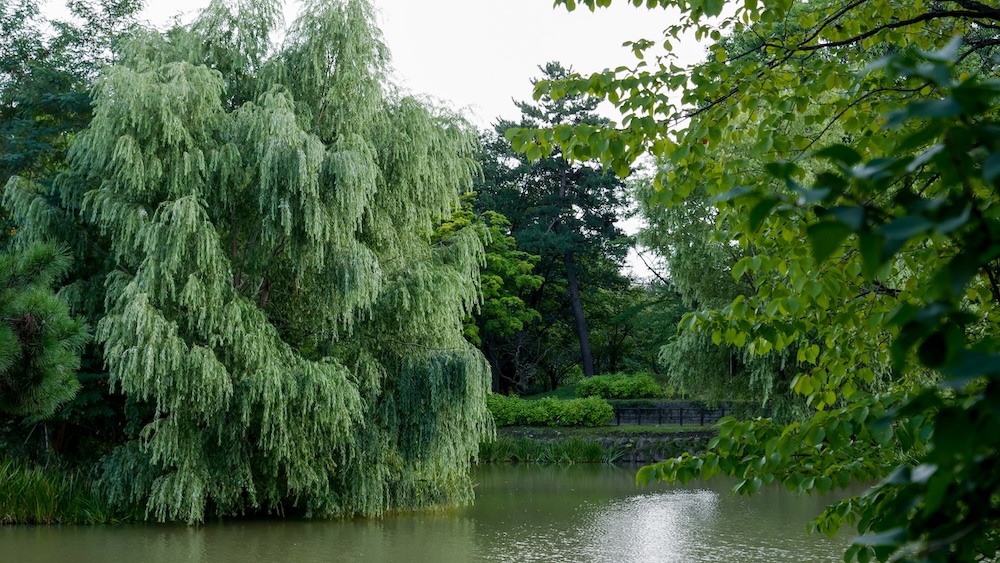
Still, I certainly didn’t leave feeling we’d wasted our time or money. For ¥300 apiece, we got to explore an important historic building, admire some lovely craftsmanship and continue enjoying Nakajima Park, including its Japanese Garden, which we particularly liked. We simply didn’t find enough to occupy us inside Hoheikan for much longer than 20 minutes.
How to Visit Hoheikan in Sapporo
Admission, Opening Hours and Getting There
General adult admission is ¥350, only slightly more than the ¥300 printed on our original tickets. High school and university students pay ¥150, while junior high school students and younger children enter free. Cashless payment options are available.
Hoheikan normally opens from 9 a.m. to 5 p.m., with last admission at 4:30 p.m. It’s closed on the second Tuesday of each month, or the following weekday if that Tuesday is a public holiday, and from December 29 to January 3. Selected evening openings also take place.
The easiest approach is a five-minute walk from Exit 3 of Nakajima Koen Station on the Namboku subway line. You can also reach Hoheikan from Horohira-Bashi Station or the Nakajima Koen-dori streetcar stop. There’s no general visitor parking, although designated accessible parking is available. The modern glazed annex beside the historic building houses an elevator, and accessible toilets and wheelchair lending are available.
Check the official Hoheikan website for current admission, special events and potential room closures before heading over.
How Much Time Should You Allow?
I’d allow 20–30 minutes for a casual interior visit or 40–60 minutes if you’re keen to explore the historical displays and architectural details. Hoheikan offers volunteer-guided visits lasting up to approximately 40 minutes, something I’d investigate on a return visit. Check guide availability and language options beforehand.
Ordinary personal photography is permitted, while organised or professional photography and filming require additional arrangements. There’s also Café Harunire inside the building, serving drinks, light meals and sweets. It’s an option for lingering a little longer, although admission to Hoheikan is required. A combined admission-and-drink ticket is available.
Where to Stay Near Nakajima Park
Having based ourselves beside Nakajima Park, I can recommend the neighbourhood itself. I liked having an attractive green space nearby while still being able to reach other parts of Sapporo by subway. You certainly don’t need to stay here specifically for Hoheikan, but it’s a convenient alternative to basing yourself in the busiest parts of downtown.
Two properties worth comparing for their locations are Premier Hotel Nakajima Park Sapporo, situated beside the park with park-view room options, and Hotel Mystays Premier Sapporo Park, approximately two minutes on foot from Nakajima Koen Station. These are location-based suggestions rather than personal hotel reviews. I’d compare room sizes, views and rates for your dates.
Exploring More of Sapporo’s History
If Hoheikan sparks your curiosity about Hokkaido’s development, consider a guided visit to the Historical Village of Hokkaido, an open-air museum preserving historic buildings from across the island. For a broader introduction to the city, a customisable Sapporo tour with a licensed local guide offers four- and six-hour options, with potential stops including Sapporo Clock Tower and the former Hokkaido Government Office. We haven’t taken these particular tours, but both offer ways to put individual landmarks into a wider historical context.
Is Hoheikan Worth Visiting?
If you’re already visiting Nakajima Park, I’d recommend giving Hoheikan a go. At ¥350, the financial commitment is hardly substantial, even if you end up finding the interior somewhat underwhelming. Architecture enthusiasts and history buffs could easily spend considerably longer than we did examining the craftsmanship, imperial exhibits and historic lighting fixtures. If museums really aren’t your thing, there’s nothing wrong with photographing the building from outside and carrying on through the park.
On a two-to-four-night trip to Sapporo, I wouldn’t go out of my way to visit Hoheikan if Nakajima Park wasn’t otherwise on my itinerary. However, having stayed in the neighbourhood and enjoyed exploring its green spaces, I’d happily go inside again if I found myself back there.
This time, rather than spending so much of my attention on what was or wasn’t furnishing the rooms, I’d look more closely at the ceiling decorations, the old gas-light fittings and the craftsmanship that went into making plaster resemble marble. Hoheikan hasn’t become a more interesting building since Audrey and I visited. I simply understand it better now.
This article contains affiliate links. If you book through one of these links, I may earn a commission at no extra cost to you.