
Four days in Sapporo sounds generous until you look at a map of Hokkaido. You’ve got a capital city with plenty to keep you occupied, but there’s also Otaru, an old port town a short train ride away, and Jozankei, where you could spend part of the day soaking in a hot spring. So what do you do with that extra day: keep exploring Sapporo or finally leave it?

Audrey and I spent longer than four days in Sapporo, and the city grew on us. We ate tremendous bowls of ramen, explored forests that hardly felt urban and ventured south by subway and bus to a cemetery filled with Moai statues. I loved how easy it was to get around without a car; Audrey was particularly taken with the trees and parks. Even after all that, we hadn’t exhausted Sapporo.
But if our time in Hokkaido were limited, I’d spend the fourth day in Otaru. Three proper days give Sapporo a fair hearing, including its less obvious southern attractions. The fourth gives us another destination. With more time, I’d stay in the city; Jozankei would be my hot-spring alternative. Here’s how I’d choose between two four-day routes.

First, Make Sure You Actually Have Four Sightseeing Days
I mean four full days, with arrival and departure handled separately. If you arrive on Monday afternoon and fly out early Thursday, that isn’t four days of sightseeing, however enthusiastic your hotel booking may be. You have two full days plus fragments; I’d use a shorter itinerary rather than squeeze in Otaru.
For either four-day version I’d keep the same hotel in Sapporo. Our hotel overlooked Nakajima Park and made walks around the pond easy. For a central base, I’d compare hotels around Odori or look at Susukino accommodation, keeping subway access ahead of extras. Remember that Otaru trains depart from JR Sapporo Station, whereas the southern excursion starts with the Namboku subway line to Makomanai. Choosing a hotel for one distant attraction could complicate the other days.
The shared plan is straightforward: Day 1 covers downtown landmarks, beer history and ramen; Day 2 moves from a seafood breakfast into shrines and green spaces; Day 3 is the longer outing to Makomanai Takino Cemetery and Sapporo Art Park. For Day 4, either take the train to Otaru or explore a different part of Sapporo, with Jozankei as a hot-spring substitution. Those first three days are based on places we visited during a longer stay, not a claim that we followed this exact four-day schedule.
There’s also a seasonal catch. The outdoor sculpture garden at Sapporo Art Park normally operates from April 29 through November 3. If you’re visiting in winter, the shared third day needs changing; more on that below.

Days 1–3: The Sapporo Experiences I’d Keep

Day 1: Clock Tower, TV Tower, Beer Museum and Ramen
Start at Sapporo Clock Tower, which looks almost comically small surrounded by modern office buildings. Audrey and I went inside and enjoyed the clock mechanism and historic building itself; it’s worth doing more than just snapping the obligatory exterior picture. It normally opens at 8:45 AM and current adult admission is ¥350, making it a sensible morning starting point.
Sapporo TV Tower is a short walk away. The observation deck sits roughly 90 metres up, with views along Odori Park towards the mountains. I loved those views, although coming out of the elevator with sweaty hands was a reminder that I’m not entirely comfortable with heights. The tower normally opens 9 AM–10 PM, with adult admission currently ¥1,200. A combined Clock Tower and TV Tower ticket is listed at ¥1,300 through March 31, 2027, rather than ¥1,550 separately. Check the current TV Tower prices and closure dates before relying on that offer.
If you prefer someone to organize the central sights, there’s a customizable four- or six-hour private Sapporo tour; transport and admissions cost extra, and it would replace part of this independent route. Spend time in Odori Park without walking its entire 1.5 kilometres. During an unusually hot September spell, Audrey was struggling after our morning outdoors, and a soft-serve ice cream and cold drinks became more important than squeezing in another landmark. We also came across Sapporo Autumn Fest, although you’d need to be visiting during the event to find the same food stalls.
Then head northeast to Sapporo Beer Museum. We enjoyed the historic displays before trying three beers; Black Label was my winner, while Audrey is more of a wine person. The museum normally opens at 11 AM, and current self-guided adult admission is ¥1,000. Tasting is separate, including a listed three-beer set for ¥1,200, so don’t assume entry covers your drinks. Allow around 90 minutes to two hours. A separate four-hour private Beer Museum tour with guided tastings is available, but it would demand a different afternoon; we didn’t book it. Finish in Susukino with miso ramen at Ramen Alley; I managed to order even more butter for a bowl that already had plenty. Tanukikoji shopping arcade is nearby if you’ve got anything left in the tank. A private Sapporo food tour is another way to organize dinner, but it replaces independent ramen-hunting rather than adding time to the day; we didn’t take it.

Day 2: Curb Market, Hokkaido Jingu and a Bit of Breathing Room
I’d begin at the public-facing Curb Market beside Sapporo Central Wholesale Market, not Nijo Market in the centre. Audrey ordered a rice bowl featuring four kinds of crab, and I worked my way through sashimi, rice and soup. This was not one of our dainty breakfast mornings. Take the Tozai subway line to Nijuyonken and walk about seven minutes; some restaurants serve breakfast from around 7 AM, but individual hours vary. Give yourself at least an hour to eat, or skip the market altogether if seafood in the morning isn’t your thing.
From Nijuyonken, Maruyama-koen is only two subway stops away. Hokkaido Jingu and Maruyama Park follow naturally without doubling back downtown. We wandered along wooded paths after rain, with towering trunks and enough greenery to make us forget we were still in a big city. Audrey loved that side of Sapporo. Keep the forest extension manageable: walking among the trees isn’t the same as committing to a summit hike, and we encountered bear-warning signs. Check current city wildlife and trail notices before heading farther into natural areas.
Nakajima Park makes sense later if time cooperates, especially if you’re staying nearby. We explored the pond, Hoheikan and the Japanese Garden; I preferred the old blue-and-white building’s exterior, while the garden stayed with me more. The interiors and garden have operating-hour or seasonal limits. I’d rather linger around Maruyama than rush across town just to discover a locked door.

Day 3: Moai Statues, Hill of the Buddha and Art Park
This was Audrey’s surprise for me. After taking the Namboku subway to Makomanai and continuing by bus, we left Sapporo’s built-up streets behind and arrived at a cemetery with huge Moai statues. It was quite a change from the Clock Tower. Makomanai Takino is a functioning memorial landscape, so enjoy the strange assortment of monuments without treating the grounds as a free-for-all photography playground.
The main attraction for me was Hill of the Buddha, where a 13.5-metre seated statue sits largely hidden beneath a landscaped hill. The approach through a tunnel makes the eventual reveal more interesting than simply walking up to the statue. Current adult admission is ¥1,000; visiting hours shorten in winter and memorial services can restrict access. Check the cemetery’s current visitor information.
I’d give the better part of the afternoon to Sapporo Art Park. Its outdoor sculpture garden winds through a forest of steps, moss, streams and artworks. I found it more rewarding over time than the cemetery’s quirky monuments. Allow roughly 90 minutes to two and a half hours for the garden; current adult admission is ¥800, cash only, during its normal April 29–November 3 season.
The transport here is the part I wouldn’t improvise. Public routes 106 and 108 serve different points near the cemetery; the useful onward stop towards Art Park is Takino Toge, which may not be where you arrived. For the sculpture garden, look for Geijutsu no Mori Center, rather than confusing it with Geijutsu no Mori Iriguchi. Study the Art Park access instructions and cemetery bus guidance together, including the return journey. We travelled independently, but a missed last bus is nobody’s idea of fun. A private car tour including the Moai and Hill of the Buddha avoids those connections, although Art Park is only a possible customized stop: confirm it and adequate time there before booking.
Day 4, Option A: Take the Train to Otaru
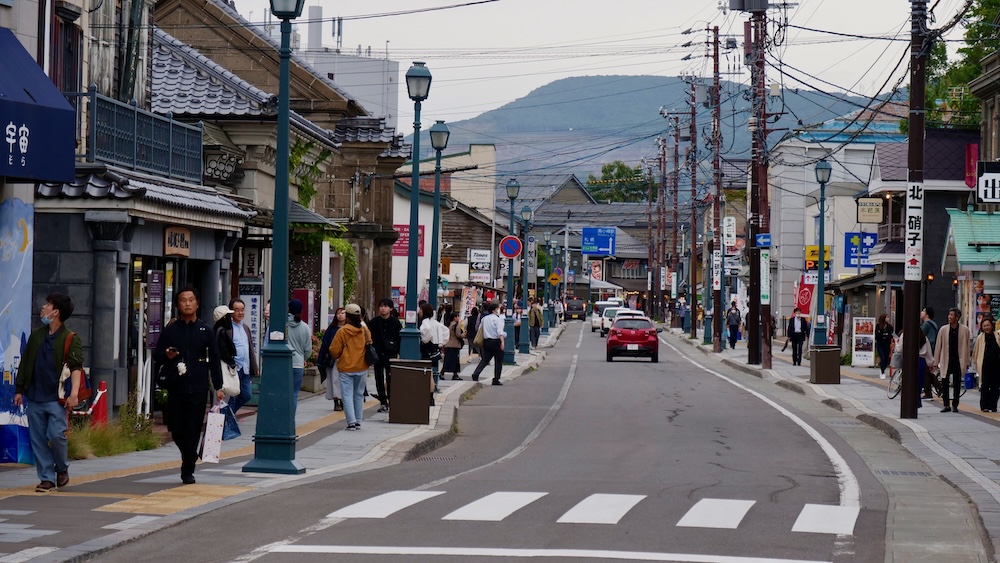
This is my choice if Hokkaido time is limited. Otaru gives you another town, not another variation on the Sapporo parks and museums you’ve just explored. Its canal and old commercial streets make an easy day trip from the same hotel. We didn’t take this Otaru excursion during the Sapporo visit described above, so what follows is the route I’d plan rather than a story about shops and restaurants we’ve personally tested.
Getting There Without a Car
Take JR from Sapporo Station to Otaru. Rapid trains generally take around 30–40 minutes, with a current adult non-reserved fare of ¥800 one way for the Sapporo–Otaru station pair, or ¥1,600 return. Reserved seats cost extra; a supported IC card generally works for ordinary travel. Check JR Hokkaido’s services for your date rather than treating those approximate timings as a train schedule.
The hotel-to-Otaru journey is longer than the train ride. If you’re staying near Susukino or Nakajima Park, you must first reach JR Sapporo Station and allow for the platform and any waiting. Still, this is relatively straightforward independent travel, especially compared with coordinating less frequent buses for southern Sapporo.

The Otaru Walk I’d Build the Day Around
Sankaku Market is about a minute from Otaru Station and makes a convenient first stop if you’re hungry. There are seafood stalls and places to eat, although hours differ by business. If Day 2’s Curb Market breakfast has already satisfied your craving for crab, there’s no obligation to eat another mountain of it. Browsing briefly before walking towards the canal is perfectly fine.
Otaru Canal is roughly ten minutes on foot from the station. Spend time along the waterside promenade and among the old warehouses, rather than arriving for a single photograph and ticking the place off. The main canal stretch needn’t consume the whole day. A canal cruise is optional—typically about 40 minutes—with departures and availability depending on the date. I’d only fit one in if I genuinely wanted the boat perspective, not because the itinerary needed another paid attraction.
Continue into the historic Sakaimachi district for lunch and an afternoon of glass shops, sweets and music boxes. This is where I’d leave room for browsing, because the point of Otaru is partly enjoying a different town at a different pace. The Otaru Orgel Doh Music Box Museum is a natural southern stop, with the main building currently listing 9 AM–6 PM hours. Those who want local context can compare a private four- or six-hour Otaru walking tour; it covers the canal, market and craft shops, but train fares, meals and admissions are extra. We didn’t take it. Shops along Sakaimachi keep their own schedules, and evening canal lights don’t mean the shopping street stays open late.
A useful geographical trick is to finish around Minami-Otaru Station instead of walking all the way back to your arrival station. The Music Box Museum is relatively close, making a one-way daytime route possible: Otaru Station, canal, Sakaimachi, then Minami-Otaru. Check the actual Minami-Otaru return fare and departure; the ¥800 figure above is specifically for the Sapporo–Otaru station pair.
Should You Stay Until the Canal Lights Come On?
That’s the one decision I’d make before leaving Sapporo. Otaru Canal’s lamps normally illuminate the waterfront from sunset, and warehouse lighting continues into the evening. Depending on when you visit, dusk could arrive conveniently during your day or leave you with quite a long wait after the shops close.
If you want evening canal photographs, you may need to walk back north from Sakaimachi rather than finish at Minami-Otaru. That turns the one-way walk into a longer outing. If you’re tired after three active Sapporo days, the daytime route is already a satisfying use of the fourth. I’d stay in Sapporo for this itinerary; on a longer Hokkaido journey, you could compare hotels in Otaru for a separate overnight.

Day 4, Option B: Stay in Sapporo and Explore Somewhere New
An extra Sapporo day isn’t a consolation prize. Audrey and I liked the city enough that I’d welcome more time there, especially with a longer Hokkaido trip ahead of us. But I’d give that extra day an identity of its own rather than spend it zigzagging between attractions that didn’t fit earlier.
Moerenuma Park: The Whole Landscape Is the Artwork
My leading researched choice would be Moerenuma Park, designed around Isamu Noguchi’s idea of an entire landscape functioning as one sculpture. Its Glass Pyramid and geometric landforms offer a strikingly different artistic experience from the wooded sculpture paths we enjoyed at Sapporo Art Park. The park was developed on a former waste-disposal site, an interesting transformation even without an architecture degree.
The grounds are free and generally open year-round. Facilities aren’t: fountains, bicycle rentals and other seasonal features operate at particular times, while the Glass Pyramid has its own hours and closure days. From central Sapporo, public transport can mean taking the Toho subway to Kanjo-dori-higashi and then a bus. The east entrance still leaves roughly fifteen minutes on foot to the Glass Pyramid, and the west entrance is farther away and can close in snow. Check Moerenuma Park’s current access and seasonal details before setting out.
I’d allow several hours, follow a manageable circuit and resist turning the park into a race between distant features. Return to the city for a relaxed evening and a meal rather than adding another complicated cross-town transfer. I haven’t personally visited Moerenuma, so that’s a route recommendation based on the park’s layout and access, not a claim that I’ve tested every path.
When Shiroi Koibito Park Is a Better Fit
If a large outdoor park sounds exhausting—or the weather looks miserable—Shiroi Koibito Park offers a substantially different sort of day: confectionery exhibits, shops and paid activities instead of open landscapes. It normally advertises 10 AM–6 PM hours, with last paid-area entry at 4:30 PM. Current adult paid admission is ¥1,200, although there are also free areas; older prices still appear elsewhere, so use the attraction’s own current information.
I’d choose this instead of Moerenuma, rather than trying to visit both on opposite sides of Sapporo. Neither is an attraction Audrey and I visited on our documented stay. Choose according to the experience you want, then leave room for the spontaneous food stop or neighbourhood wander that made Sapporo enjoyable for us in the first place.
What If You’d Rather Spend Day 4 at a Jozankei Onsen?
There’s a third route worth considering if your legs are less interested in another sightseeing marathon than in a long soak. Jozankei is a hot-spring district within Sapporo’s municipal boundaries, but it feels like an excursion into the valley rather than a casual stop in the centre. I’d consider it when bathing and slowing down were the point of the day.
The crucial decision comes before booking a bus: pick an onsen that actually accepts day visitors. A hotel having hot-spring baths doesn’t automatically mean you can turn up and use them. Current examples show how much the options differ. Yunohana Jozankeiden lists ¥1,180 adult admission, generally 10 AM–9 PM hours and towel rental separately. Jozankei Shikanoyu lists ¥1,500, day-use access from around 1 PM and towels included. Hoheikyo Onsen lists ¥1,300 and later hours, but sits at a different stop from the central onsen area. Confirm the particular bath’s hours, conditions and towel arrangements before planning the journey.
The direct Kappa Liner from Sapporo takes approximately an hour to the Jozankei area and runs on reservations. The currently published standard fare for the relevant terminal-area journey is ¥1,700 one way, with a qualifying advance-online-payment fare of ¥1,460. Published service notices and the operator’s main timetable don’t agree neatly on departure counts, so I wouldn’t give you a blanket frequency and hope for the best. Find the bookable outbound and return services for your date using the Kappa Liner timetable and reservation information. Local buses via Makomanai may suit particular facilities, but you still need the right stop.
That return journey matters as much as the outward one. Leave time to change, enjoy the bath and relax; a hot-spring day shouldn’t end with a frantic dash for the last usable bus. We didn’t visit a Jozankei onsen during this Sapporo stay, so I won’t pretend to have a favourite bath. I’d make the decision based on the facility and the schedule rather than the appeal of the word onsen alone.
Otaru, More Sapporo or Jozankei: What Are You Actually Choosing?
Here’s how I’d compare them if all three sounded appealing. The transport figures are the principal rail or bus legs, not total hotel-to-attraction times. That distinction matters: Moerenuma is within Sapporo but requires a transfer and walking, while the train to another city may feel simpler.
| Day 4 choice | What you get | Transport and starting cost | Main catch |
|---|---|---|---|
| Otaru | Historic canal town, shops and a change of scene | JR from Sapporo, around 30–40 minutes; ¥1,600 adult return for the stated non-reserved station pair | Walking distance, shop closing times and possible return to the canal for dusk |
| Moerenuma Park | Landscape design, Glass Pyramid and a slower Sapporo day | Subway and bus; park grounds free | Seasonal facilities, internal distances and outdoor exposure |
| Jozankei | Day-use hot springs and relaxation | Reserved direct bus around an hour; standard terminal-area return approximately ¥3,400, plus bath entry | Bath-specific access and matching your booking to return transport |
The table doesn’t include meals, optional activities, hotel transfers or towel costs. Exact prices can change, and a different station or Jozankei stop may alter fares. What it does clarify is the trade-off: Otaru offers another destination with a relatively simple railway journey; Moerenuma keeps you in Sapporo but still demands travel; Jozankei rewards planning with a completely different kind of day.
Winter, Bad Weather and Shorter Trips
A winter version needs more than swapping Otaru for another excursion. Sapporo Art Park’s normal outdoor sculpture garden closes November 4–April 28, and Hill of the Buddha operates under shorter hours and different seasonal conditions. That changes Day 3 itself. Moerenuma remains accessible, but some facilities and entrances have winter restrictions; Otaru’s historic centre can be snowy and slippery; Jozankei’s bus and bath arrangements still need confirming. Audrey and I haven’t tested this four-day combination in winter, and I wouldn’t pretend the walking or connections are identical to September.
Bad weather or limited mobility may also push the decision away from a long walking day, but don’t assume every indoor attraction or onsen is universally accessible without checking. If you’re travelling with less than four full days, protect the parts you care most about instead of treating every location in this itinerary as compulsory. The southern cemetery-and-art day is particularly unforgiving of a late start or missed connection.
Where I’d Spend My Fourth Day
If Audrey and I returned with four full days based in Sapporo and little time elsewhere in Hokkaido, I’d take the train to Otaru. The first three days already give the city proper attention, from ramen and red-brick beer history to shrines, wooded paths and that delightfully strange cemetery excursion. I’d rather use the additional day to see a different town than stretch another Sapporo sightseeing list just because we can.
With a longer Hokkaido trip, that calculation changes. I’d happily give Sapporo another relaxed day, and Moerenuma looks like a worthwhile way to see a different side of it. If the point was a hot soak instead of more walking, I’d sort out a Jozankei bath and the return bus and go that way. With limited time, I’d choose Otaru without much hesitation.
Frequently Asked Questions
Do I need four full days for this Sapporo itinerary?
Yes. This itinerary assumes four full sightseeing days, with arrival and departure handled separately. If you have only two complete days between flights, I’d follow a shorter Sapporo plan instead.
Should I spend Day 4 in Sapporo or take a day trip to Otaru?
If my time in Hokkaido were limited, I’d choose Otaru after three substantial days in Sapporo. With more time in the region, I’d happily explore another part of the city, such as Moerenuma Park.
Can I visit Otaru from Sapporo without a car?
Yes. Rapid JR services generally take 30–40 minutes from Sapporo Station to Otaru. The stated adult non-reserved fare is ¥800 one way for that station pair; allow extra time to reach the station from your hotel.
Is it worth staying in Otaru until the canal lights come on?
That depends on how much you value the evening atmosphere. The more direct daytime walk can finish near Minami-Otaru Station, while seeing the illuminated canal after Sakaimachi may mean retracing your steps.
Can I follow the four-day itinerary in winter?
Not unchanged. Sapporo Art Park’s outdoor sculpture garden normally operates from April 29 through November 3, so Day 3 needs adjusting in winter. Hill of the Buddha also has shorter seasonal visiting hours.
Can I visit a Jozankei onsen as a day trip from Sapporo?
Yes, provided you choose a facility offering day-use bathing and match its hours to your transport. The direct Kappa Liner is reservation-based, and each onsen has its own admission and towel arrangements.
Do I need to rent a car for these four days?
No. Otaru is accessible by JR, while the southern Sapporo sights and Moerenuma Park use subway-and-bus connections. Jozankei also has bus options, but its bath and return journey require more planning.
This guide is also available in Spanish. [Leé la versión en castellano: Itinerario de 4 días en Sapporo: ¿más ciudad o una excursión por Hokkaido?]
This article contains affiliate links. If you book through one of these links, I may earn a commission at no extra cost to you.