
Sapporo plays a neat trick on a map. The sights everyone photographs (the TV Tower, the Clock Tower and the long green ribbon of Odori Park) are only a few blocks apart, so it’s easy to conclude the city deserves a night or two before you move on to somewhere more famous in Hokkaido. The more generous planning advice usually settles on three days, but look closely and one of those days tends to be a train ride to Otaru.
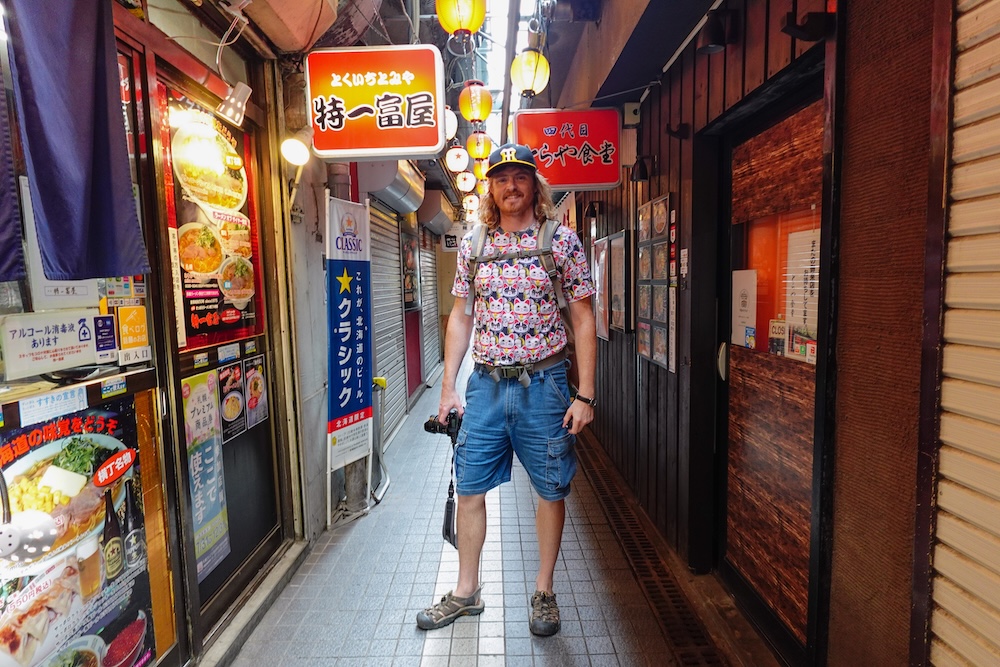
Audrey and I gave Sapporo four nights, and we needed every one of them. It was the third main stop of our trip, after a single night in Tokyo and then Hakodate and Noboribetsu, with Otaru and an overnight ferry to Niigata still waiting for us. Every night we spent in Sapporo was a night we couldn’t spend elsewhere, and we didn’t spend any of them on day trips. They all went into Sapporo itself, a city far more sprawling than its tidy downtown suggests, where some of our favourite days were the ones that took real effort to reach.
What follows is the day count I’d recommend, what each extra day actually buys you, how heat and season shift the maths, and the situations where you can honestly get away with less.
The Short Answer: How Many Days We’d Plan in Sapporo
For a first visit, I’d plan three full days in Sapporo. Once you account for arriving and leaving, that usually means four nights. Three days lets you see the centre, at least one of the city’s green escapes, and the southern outskirts. The outskirts were where Sapporo stopped feeling like a pleasant regional capital and became somewhere I’d genuinely recommend going out of your way for. If you want day trips, stack them on top of those three days instead of carving them out.
Here’s how the trade-off looks at each length:
| Time in Sapporo | What’s realistically in reach | What you give up | Best for |
|---|---|---|---|
| 1 day | The central landmark cluster: TV Tower, Clock Tower, Odori Park, Tanukikoji and a bowl of ramen | Everything beyond downtown | Travellers passing through on a tight schedule |
| 2 days | The centre plus one area beyond it: Maruyama Park and Hokkaido Jingu, the outer market and the Beer Museum, or Nakajima Park | The southern outskirts and most of the city’s green character | Busy Japan itineraries where Sapporo competes with bigger names |
| 3 full days (usually 4 nights) | Adds the southern outskirts: the Moai, Hill of the Buddha and Sapporo Art Park, best from late April to early November | Breathing room if heat, rain or a festival eats into your plans | A first visit that wants more than the postcard version |
| 4 days or more | Slack for weather and pacing, plus options like Mount Moiwa, Shiroi Koibito Park, the Historical Village of Hokkaido or Moerenuma Park, or a day trip on top | Very little | Slower travellers and anyone using Sapporo as a Hokkaido base |
If you’re already leaning towards the three-day version, the one booking worth sorting early is your base, since you’ll be unpacking in the same room for four nights. You can compare hotels across Sapporo now. Which neighbourhood fits which kind of trip is covered further down, because it affects how far each of those days stretches.
Why Sapporo Takes Longer Than It Looks
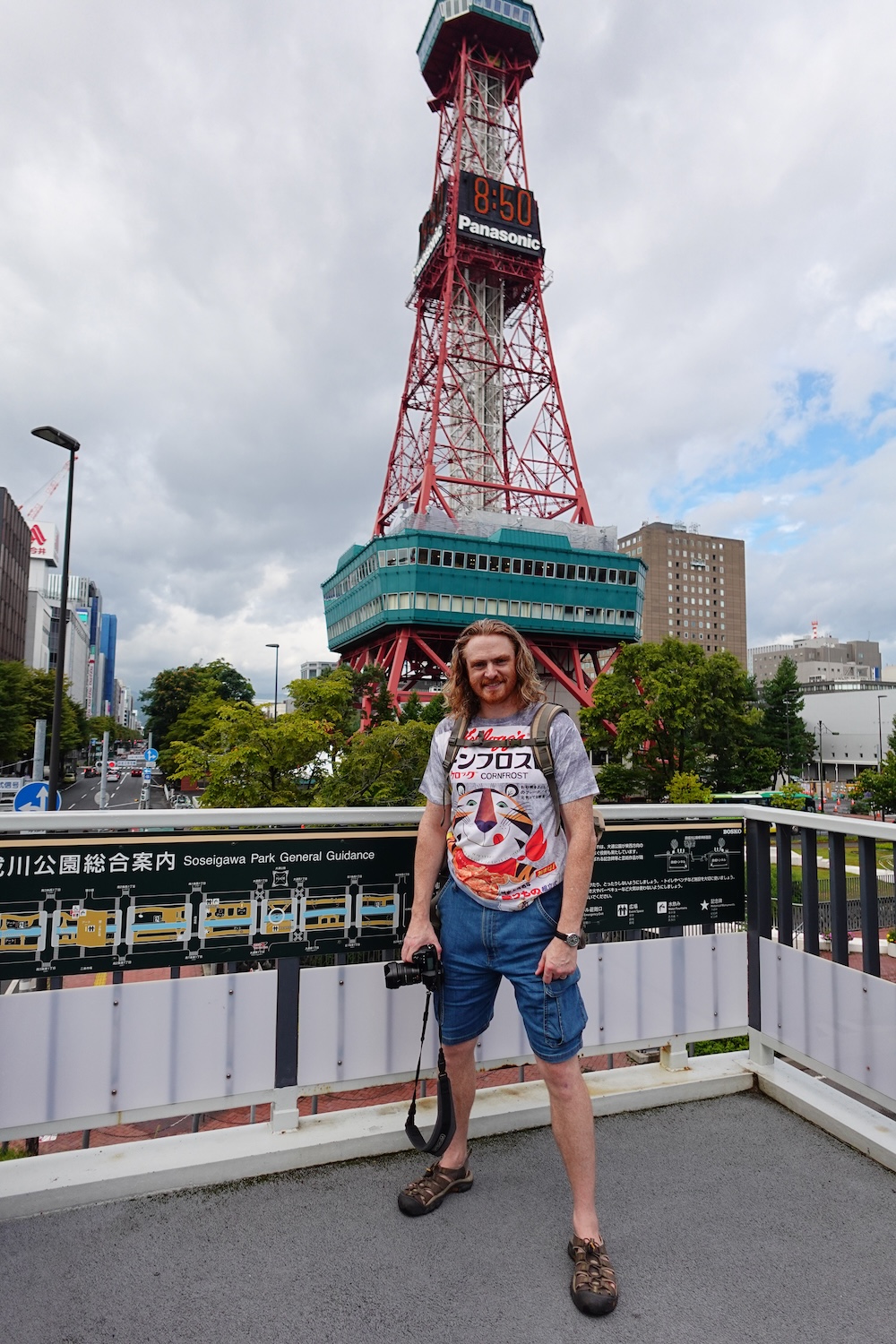
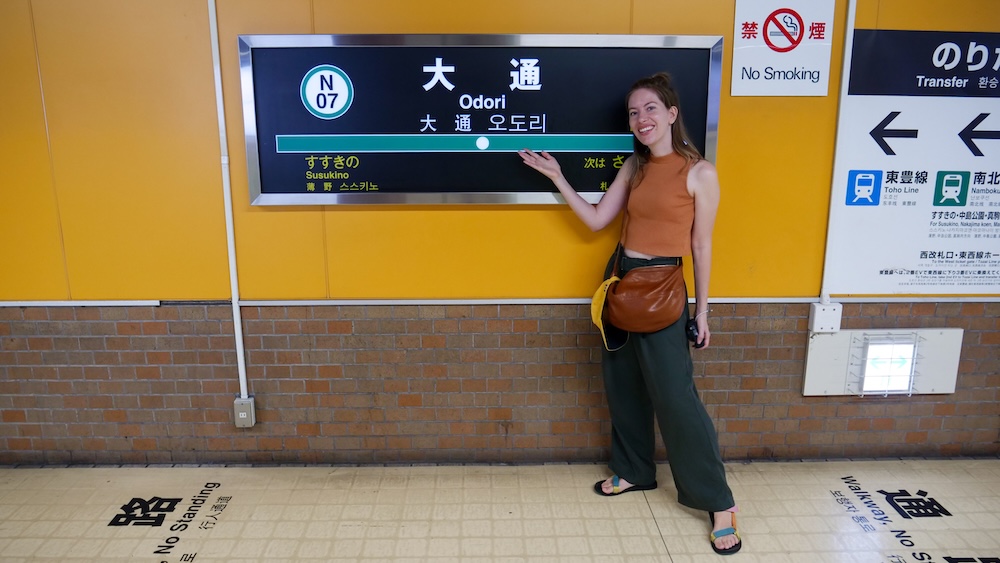
Our first morning started at the top of the TV Tower, and once my sweaty palms had recovered from the open-sided elevator ride, the view delivered the most useful planning lesson of the whole trip: the city just keeps going, rolling out in every direction towards the mountains. Downtown is compact, and getting around it is easy. I came away convinced the transport system is excellent and the city is genuinely pedestrian-friendly. The catch is that a lot of what made Sapporo memorable for us sits outside that core, in separate pockets you have to deliberately travel to.
Even places I’d have filed under “central” involved a bit of commuting. To reach the Sapporo Beer Museum, we hopped on the metro and then walked a few blocks. Our late seafood breakfast at the outer market beside the Central Wholesale Market was the first time we’d properly left the middle of the city, and it felt like a completely different environment from the shopping arcades and office towers we’d been circling. You could smell the fish before you saw it. Maruyama Park and Hokkaido Jingu sit at the western end of Sapporo, while Nakajima Park lies south of Susukino.
The famous sights we didn’t get to follow the same pattern, and their logistics are worth knowing before you decide how many days to book. Mount Moiwa involves a streetcar ride of about 20 minutes, a 10-minute walk to the base station, then a ropeway and a mini cable car to the summit. That makes a fine evening, but you won’t slot it into a spare hour. Shiroi Koibito Park is the easiest of the bunch: roughly 15 minutes on the Tozai Line to Miyanosawa at the end of the line, then a 7-minute walk. The Historical Village of Hokkaido means a train or subway to Shin-Sapporo followed by a bus of about 18 minutes, and Moerenuma Park is roughly 25 minutes by bus from Kanjo-dori-higashi subway station. None of these is difficult, but each one takes a meaningful bite out of your day before you’ve seen a thing.
The Southern Outskirts Are a Full Day, Not a Stop
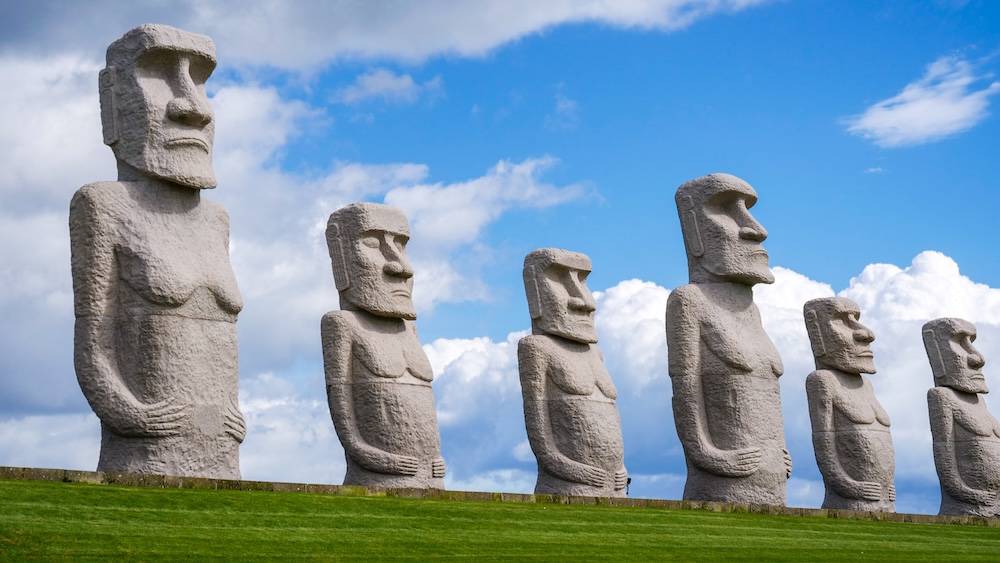
The day that convinced me Sapporo deserves more time than it usually gets was entirely Audrey’s doing. She’d found Makomanai Takino Cemetery on a list of obscure things to do in Sapporo and decided not to tell me where we were going. All I knew was that we rode the metro all the way to the end of the line at Makomanai, then boarded what felt like a rural bus and stayed on it for a good long while. By the time we got off, I couldn’t see any houses at all, just forest, mountains and a row of stone-faced Moai statues staring back at us. My first reaction was something along the lines of, “I didn’t know we were going back to Easter Island today.”
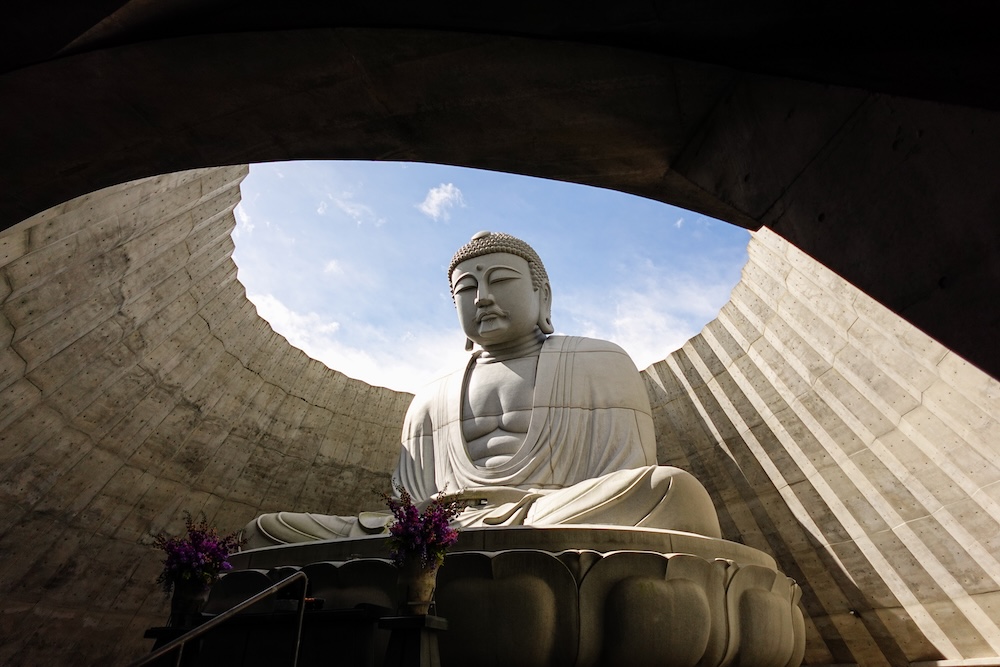
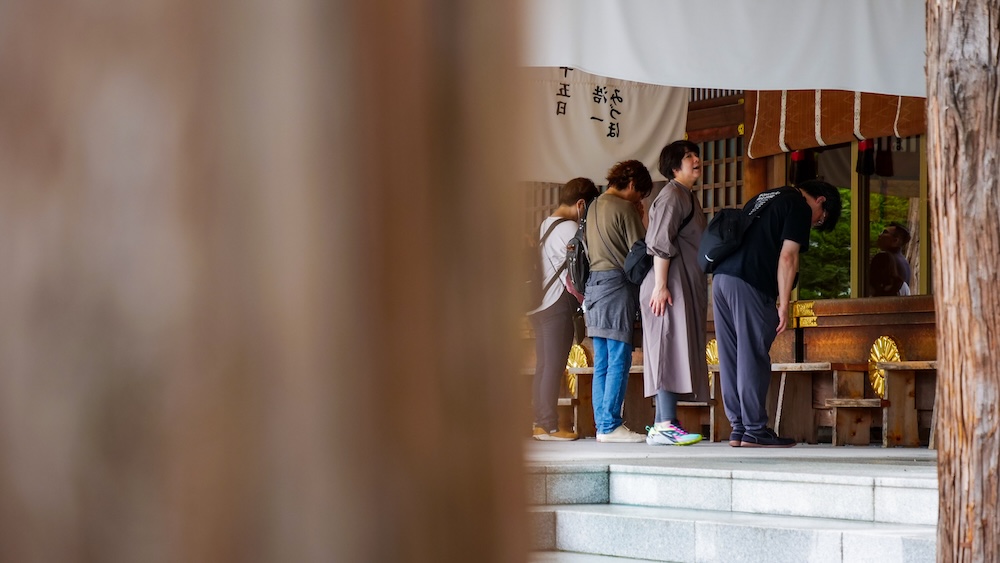
Beyond the Moai, the cemetery holds a replica of Stonehenge (no walking on the grass, so my zoom lens did the work) and the Hill of the Buddha, where the statue sits hidden inside a hill planted with lavender. You approach past a still pool of water and through a tunnel before suddenly finding yourself face to face with the seated Buddha. Audrey’s verdict was that it was well worth the journey, and I wouldn’t argue. It’s also an active cemetery, so it calls for a quieter brand of sightseeing than an afternoon in Tanukikoji.
From there we carried on to Sapporo Art Park, and this is where the day ran out of road. The park has galleries, ceramic studios and theatres, and we admitted on the spot that we’d barely scratch the surface. We focused on the sculpture garden instead: 74 works spread across a hilly 7.5-hectare forest of streams, stepping stones, ferns and moss. It’s the kind of shaded spot I’d happily retreat to in the middle of summer. It was beautiful, and it still wasn’t everything. The two places together took up most of our day, and although it was cooler than the muggy start to our stay, I was walking around like a zombie by mid-afternoon.
The transport explains why it swallows so much time. Two bus routes serve the cemetery from Makomanai Station. Route 106, which we took, stops at Takino Toge by the main gate, right beside the Moai. Route 108 runs into the cemetery itself and stops near the Hill of the Buddha. Allow roughly an hour to an hour and a half each way from central Sapporo, depending on how your connections line up. The 108 runs roughly hourly and only through the morning and early afternoon, so its last trip back leaves early. The bus onward to the Art Park departs from the Takino Toge stop, not the one by the Buddha, and it also runs about once an hour. There’s no taxi stand at the cemetery either, so if you miss a bus you simply wait for the next one. Check the current timetable on the cemetery’s official visitor page before heading out, because these schedules change.
You can technically chain the Hill of the Buddha, the Art Park and a couple of downtown sights into one marathon day if you keep every stop short and hit every connection. With buses this infrequent, I wouldn’t stake a trip on that kind of precision, least of all on a warm day. Give the southern outskirts a day of their own.
We did the whole thing independently on the metro and buses, and I’d happily do it that way again, but I know that staring at an hourly timetable in a cemetery car park isn’t everyone’s idea of a holiday. If that’s you, there are guided ways out there, though I haven’t tried any of them myself. One option sticks to the local trains and buses but hands the navigating to a guide, pairing the Hill of the Buddha with Butsugan-ji Temple, the TV Tower and a sake bar. If that sounds right, you can see the guided Buddha Hill and TV Tower tour. If you’d rather design the day yourself, a customizable private day with a licensed guide can be built around the Hill of the Buddha and other outlying sights. Most coach day tours that include the Buddha treat it as one stop of roughly 40 to 50 minutes on the way somewhere else, such as Jozankei, Lake Toya or Noboribetsu’s Hell Valley. That spares you the bus waits but turns the Hill of the Buddha into a quick visit. If that trade-off works for you, compare the current Hill of the Buddha tours.
What Each Extra Day Actually Buys You
One Day: The Central Landmark Sapporo
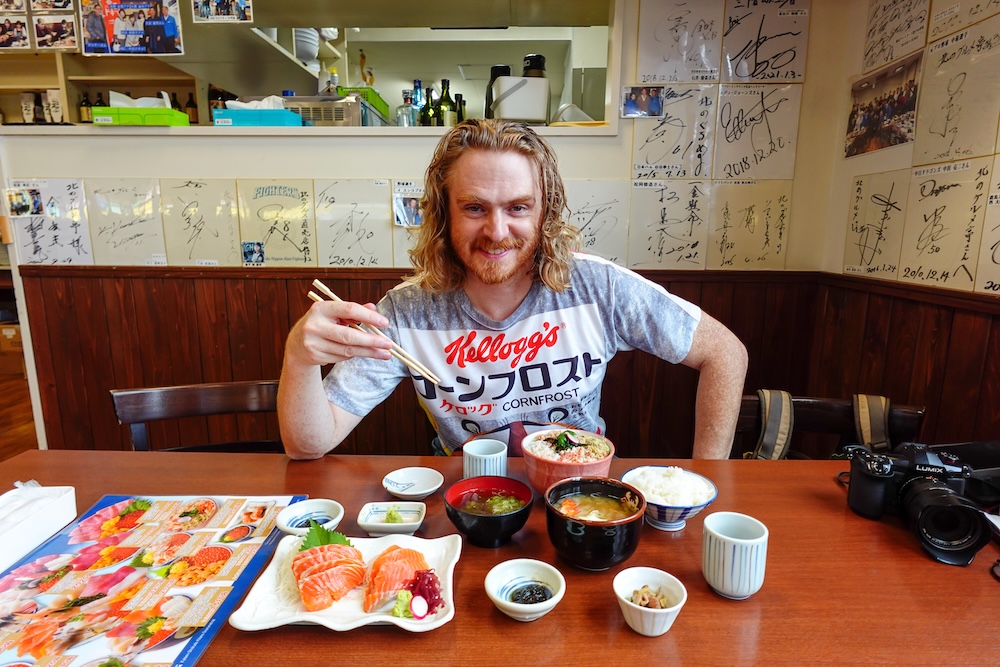
A single day covers the walkable core comfortably. You can head up the TV Tower, walk a couple of blocks over to the Clock Tower, stroll Odori Park and duck under the covered kilometre or so of Tanukikoji. Finish with a bowl of Sapporo’s signature miso ramen with butter and corn, which in our case was enormous because we got carried away pressing extra-topping buttons on the ticket machine. It’s a satisfying day, and it’s the version of Sapporo most visitors already expect. It also turned out to be the least distinctive slice of the city we saw.
Two Days: Adding Green Sapporo or the Market
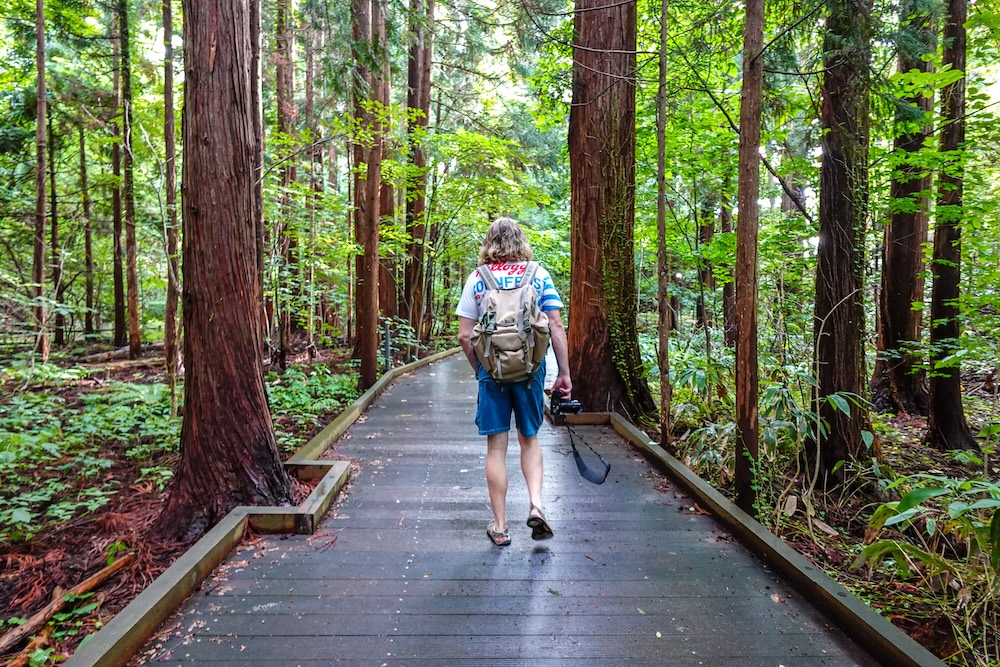
A second day lets you choose one area beyond downtown, and this is where Sapporo starts revealing its real personality. We reached Maruyama Park and Hokkaido Jingu just after it had rained, with the massive cedars looking even greener than usual and hardly another soul around. On the trail into the primeval forest, Audrey marvelled at finding a slice of paradise in a big city where you could escape the population and have it all to yourself. If forests aren’t your thing, a morning at the outer market followed by the Beer Museum makes an equally good second day: come with an empty stomach, because breakfast there is not a light affair. Nakajima Park and its Japanese garden are a gentler option. We found the interior of Hoheikan a bit bare and kept that part brief, which is worth knowing if your time is tight.
Three Days: When the Southern Outskirts Become Realistic
A third day is the one I’d fight hardest to keep, because it’s what opens up the Moai, the Hill of the Buddha and the Art Park. Timing matters here, though. The sculpture garden is open from late April until early November and closed through winter, so the full version of this day belongs to the warmer half of the year.
Four Days or More: Why We Needed All Four Nights
Our fourth night didn’t buy a longer checklist so much as room for the trip to go sideways, which it happily did. On one of our days we were planning to head off for ramen in another part of town when we stumbled into Sapporo Autumn Fest in Odori Park, a huge food festival that runs from roughly mid-September to early October. Lunch became pumpkin tempura, mochi and cheese naan made from scratch in front of us with a bowl of butter chicken, and the afternoon rearranged itself around it. The weather shifted across the stay as well: humid heat, then rain, then our first real sunshine at Nakajima Park, then a cooler day in the outskirts, until it felt as though the calendar had finally flipped from summer to autumn. Having that slack meant a bad afternoon never cost us an entire part of the city.
By the end, we were both struck by how fast the time had gone. There was more to see and do than we’d expected, and that genuinely surprised us. A fourth day is also where you’d fit the places we never reached, like an evening up Mount Moiwa, Shiroi Koibito Park, the Historical Village of Hokkaido or Moerenuma Park, or a day trip, which deserves its own section further down.
How Heat, Weather and Pacing Change the Count
Sapporo is usually a mild place to visit in late summer. The long-term average daily high in September is about 23°C. Our first days in the city ran closer to 30°C, with heavy humidity that made it feel worse, and it changed how the trip unfolded. Audrey was really struggling, and we had to stop in Odori Park for soft-serve ice cream so she wouldn’t pass out. We’d already been chugging water and Pocari Sweat all morning and kept telling ourselves it had to cool down at some point. Later we ducked into Tanukikoji mainly because it was air-conditioned, and the Beer Museum’s tasting room felt as much like a refuge as an attraction. By the end of the tasting, Audrey admitted she was just plain tired from the heat.
That’s the hidden cost of a spread-out city. In a compact one, a sweltering afternoon costs you a few blocks. In Sapporo, it can cost you a whole area, because riding the subway to the end of the line and then waiting on an hourly bus demands exactly the energy heat drains first. Our approach when it’s hot and humid and we feel zapped after lunch is to squeeze in a siesta, which gives us much more energy for the late afternoon and early evening. I’d recommend it in Sapporo too, but be honest with yourself that a siesta means fewer usable hours per day. That’s another reason I’d book four nights rather than three.
Rain matters as well. September is, on average, Sapporo’s wettest month, and our rainy spell before Maruyama was a reminder that plans outside the centre are always the first to wobble when the weather turns.
Visiting in Winter or for the Snow Festival
We haven’t been to Sapporo in winter, so take this as planning context rather than experience. The 2027 Sapporo Snow Festival runs from February 4 to 11 across Odori Park, Susukino and the Tsudome site. Winter changes what your days hold as much as how many you need. The Art Park’s sculpture garden closes from early November until late April. The Hill of the Buddha shortens its hours to 10 a.m. to 3 p.m., and its water garden is drained through the snowy months. Average daytime highs in January hover just below freezing. In winter, the centre claims more of your time while the southern outskirts offer less, so the balance of the trip tilts towards downtown.
If the festival is the reason you’re going, it makes sense to sleep close to the main sculptures and the subway hub instead of out by the parks. Once your dates are locked in, check hotels around Odori for festival week.
Fitting Sapporo Into a Hokkaido or Japan Itinerary
Few people plan Sapporo in isolation. On our trip it had to compete with Hakodate, Noboribetsu and Otaru, and it still earned four nights. If your Hokkaido time is tight, that’s the honest comparison to make: is Sapporo worth taking a night away from somewhere else? For anyone interested in more than the downtown core, I think it is.
Arrival days are kinder than you might expect. The Rapid Airport train from New Chitose Airport reaches Sapporo Station in about 37 minutes, so even a mid-afternoon landing can still give you an evening in the centre. We arrived by train from Noboribetsu, which was just as painless, and it’s where we bought the Kitaca transit card we used for the rest of our stay.
Adding a Day Trip From a Sapporo Base
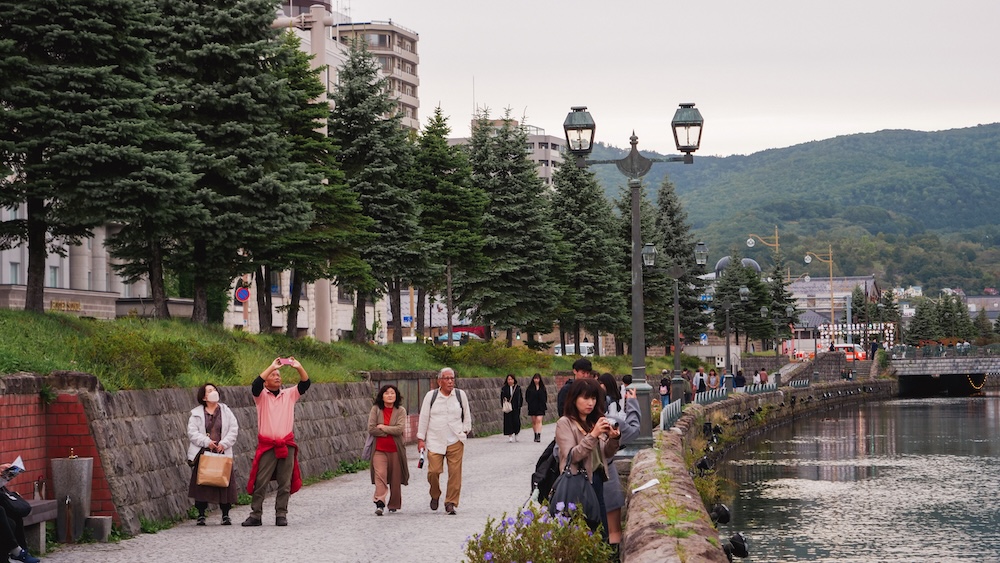
The one rule I’d stick to is to treat a day trip as an extra day, never as part of your Sapporo allowance. Otaru is only around half an hour away by train, which makes it tempting to squeeze in, but it deserves its own time. Jozankei shows how vast Sapporo really is: the hot-spring town actually lies within the city limits, yet it’s about an hour away on the Kappa Liner bus, which requires a reservation, or about 70 minutes if you take the subway to Makomanai and then a local bus. If either is on your list, add a night.
Since Jozankei shares the southern side of the city with the Hill of the Buddha, some guided days combine the two, along with Hokkaido Jingu, so you’re not juggling separate bus routes. If you want to fold both into one outing, you can look at a full-day tour pairing the Buddha with Jozankei. For anything farther afield, it’s easier to browse the current day trips from Sapporo and then add the nights to match.
Where to Stay So Your Days Go Further
Your base won’t create extra days, but it can stop you wasting the ones you have. We stayed in a hotel overlooking Nakajima Park and liked the neighbourhood a lot: it’s green, calmer than Susukino next door, and a pleasure to wander when you finally get some sun. It also sits on the Namboku Line. Nakajima-koen Station is about five minutes from Sapporo Station, and the same line runs south to Makomanai, the jumping-off point for the cemetery and the Art Park. If the southern outskirts are on your list, staying anywhere along that line spares you a transfer at both ends of what’s already a long day. If you’d like a base like ours, browse hotels around Nakajima Park.
The other main areas each solve a different problem. Sapporo Station is the practical choice for airport trains and day trips by rail, so look for a room near Sapporo Station if you’ll be coming and going a lot. Odori is where all three subway lines meet and puts you right in the landmark cluster, and you can see what’s available around Odori Park. Susukino makes sense if nightlife and late-night food matter more to you than quiet, and it’s still on the Namboku Line. If that sounds like you, compare places to stay in Susukino.
We only stayed by Nakajima Park, so I can’t vouch for the others firsthand. If your trip leans towards the centre and day trips, Sapporo Station or Odori are the logical picks. If it leans towards parks and the outskirts, Nakajima is hard to fault.
When Fewer Days Are Enough
Sapporo doesn’t have the jaw-dropping headline sights of some other Japanese cities, and I’m not going to pretend otherwise. My own takeaway was that it may lack a few of the epic attractions you’ll find elsewhere in Japan. It’s also the most livable big Japanese city I’ve visited: packed with green space, easy to get around and simply pleasant to be in. What stuck with Audrey was how green it is, with tree-lined avenues and parks everywhere, and how much more room you feel you have up north compared with Tokyo.
That difference is your decision rule. If you’re coming for the landmark centre, a good bowl of ramen and a seafood breakfast before moving on, one or two days will do the job without leaving you feeling short-changed. If the green, livable side of the city appeals to you (the cemetery up in the hills, the sculpture garden in the forest, the shrine among the cedars), give Sapporo three full days and four nights, and more if it’s hot or you want a day trip on top. We needed every one of our four nights, and the days I’d have been tempted to cut beforehand turned out to be the ones we enjoyed most.
Frequently Asked Questions
How many days do you need in Sapporo?
For a first visit, I’d plan three full days, which usually means four nights once you account for arriving and leaving. That covers the centre, at least one green area like Maruyama Park, and a full day in the southern outskirts.
Is one day in Sapporo enough?
It’s enough for the central landmark cluster: the TV Tower, the Clock Tower, Odori Park, Tanukikoji and a bowl of ramen. You’ll miss everything beyond downtown, including the city’s green side and the southern outskirts.
Why does the Hill of the Buddha need a full day?
Reaching it means riding the subway to Makomanai at the end of the Namboku Line, then catching a bus that runs roughly hourly. Combine it with Sapporo Art Park and the connections alone fill most of the day, so check the current timetable before you go.
Should day trips count toward my Sapporo days?
No. Treat Otaru, Jozankei and other day trips as extra days on top of your Sapporo time. Otaru is only around half an hour away by train, but it deserves its own day, so add a night if it’s on your list.
Does visiting in winter change how many days you need?
It changes what the days hold. The Art Park’s sculpture garden closes from early November until late April and the Hill of the Buddha keeps shorter winter hours, while the centre claims more of your time during the Snow Festival, which runs from February 4 to 11 in 2027. We haven’t visited in winter, so treat this as planning context.
Where should you stay to make the most of your days?
We stayed by Nakajima Park, a calm, green area on the Namboku Line, which runs south to Makomanai for the outskirts. Sapporo Station suits airport trains and day trips, Odori puts you where all three subway lines meet, and Susukino suits nightlife and late-night food.
When are fewer days in Sapporo enough?
If you mainly want the landmark centre, a good bowl of ramen and a seafood breakfast, one or two days will do the job. Sapporo may lack a few of Japan’s epic headline attractions, so the extra days pay off most for travellers drawn to its parks and outskirts.
This guide is also available in Spanish. [Leé la versión en castellano: ¿Cuántos días se necesitan en Sapporo?]
This article contains affiliate links. If you book through one of these links, I may earn a commission at no extra cost to you.
Glad you gave Otaru a night of its own instead of squeezing it into a Sapporo day. I spend part of the year there, and in winter the Snow Light Path is worth planning around if you come back for the Snow Festival. Did the bus out to the Moai take your Kitaca, or was it cash only?